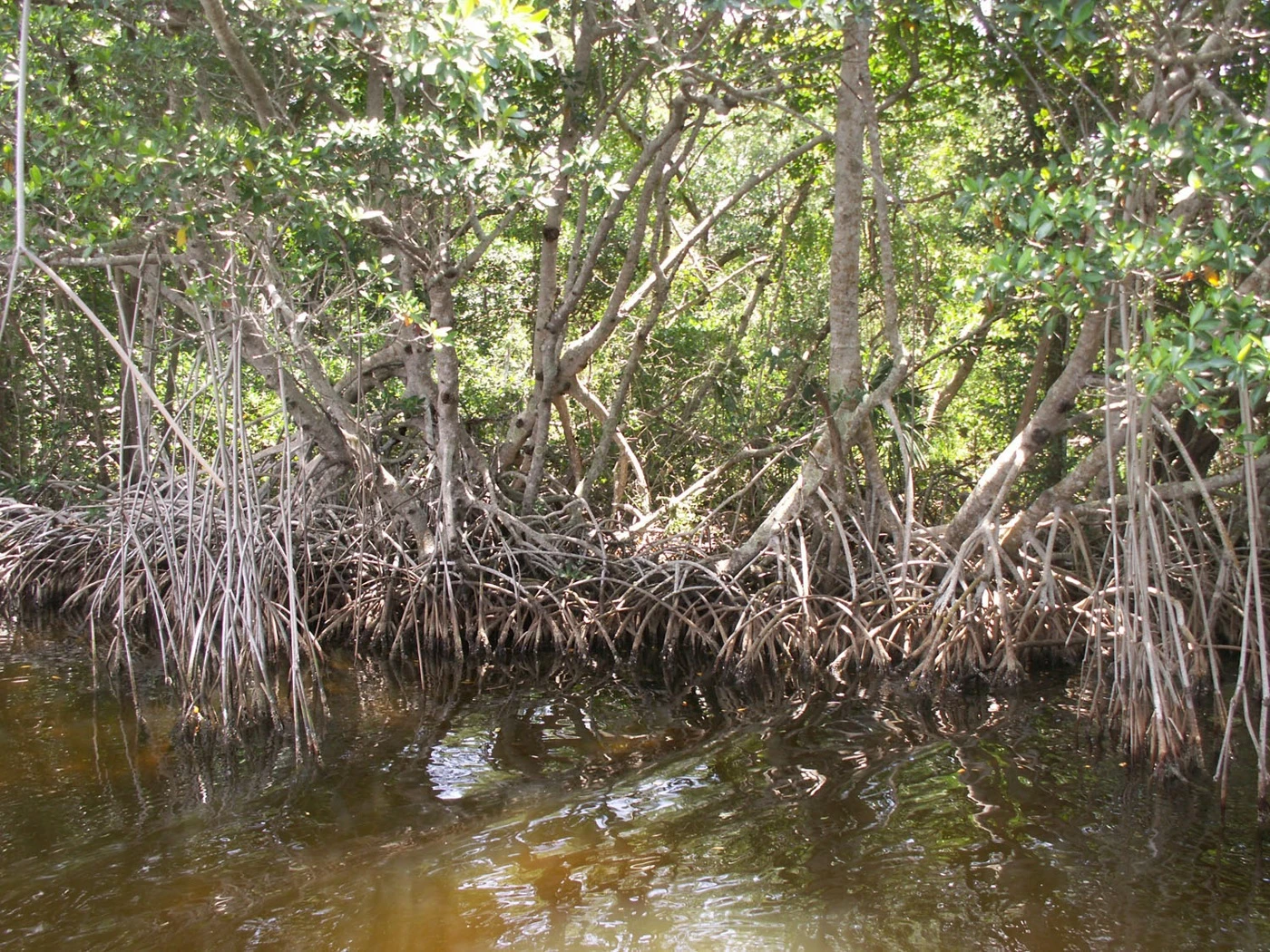
Red mangrove roots beside Buttonwood Canal near Flamingo, Everglades National Park, Florida, United States.

United States of America · Habitat field guide

Mangroves & estuaries

Everglades mangroves occupy a tidal coastal setting. Their saltwater–freshwater context is retained separately from inland marshes and the terrestrial forest examples.

Red mangrove roots beside Buttonwood Canal near Flamingo, Everglades National Park, Florida, United States.

Photograph: Moni3 at English Wikipedia · Image source · Public domain. Cropped to fill the hero; darkened for text legibility.

Understanding the environment

A sense of the habitat.

Everglades mangroves occupy a tidal coastal setting. Their saltwater–freshwater context is retained separately from inland marshes and the terrestrial forest examples.

Geographic scope
United States of America; source locality matters.
Evidence scale
Landscape descriptions are separate from species records.
Source date
Retain the cited publication date; reviewed 16 October 2026.

Explore the structure · Select a layer to compare details retained in a field record.

Read the locality in three layers.

Select a zone to see what changes.

Tidal channels

Tidal channels

Retain the estuary or tidal creek named by the source.

Check this detail in the original record before assigning a species to the habitat.

These reading prompts are conceptual, not a transect or an occurrence map.

Sources: US National Park Service · Everglades habitats

Field notes · 01

The documented setting

Everglades mangroves occupy a tidal coastal setting. Their saltwater–freshwater context is retained separately from inland marshes and the terrestrial forest examples.

Sources: US National Park Service · Everglades habitats

Field notes · 02

Connect the setting to a species

A habitat description and a country record answer different questions. Follow the linked species account for evidence of habitat use; an empty filtered collection indicates missing extracted evidence, not biological absence.

Pressures on United States of America’s habitats

What is at risk?

A site-specific assessment of pressures has not yet been extracted for this guide. The landscape sources below provide context; they do not establish a current threat level for each snake species.

What helps this habitat

Consult the source’s own conservation context and dates before interpreting habitat change. A broad landscape pressure does not establish a measured decline for every snake.

The connected collection

Snakes with habitat evidence.

These 4 species have supported country occurrence and an explicit habitat association in the shared account. The association may come from elsewhere in their range. This is not a complete local habitat inventory; the places above are landscape examples, not asserted collecting sites.

4 species · showing 4

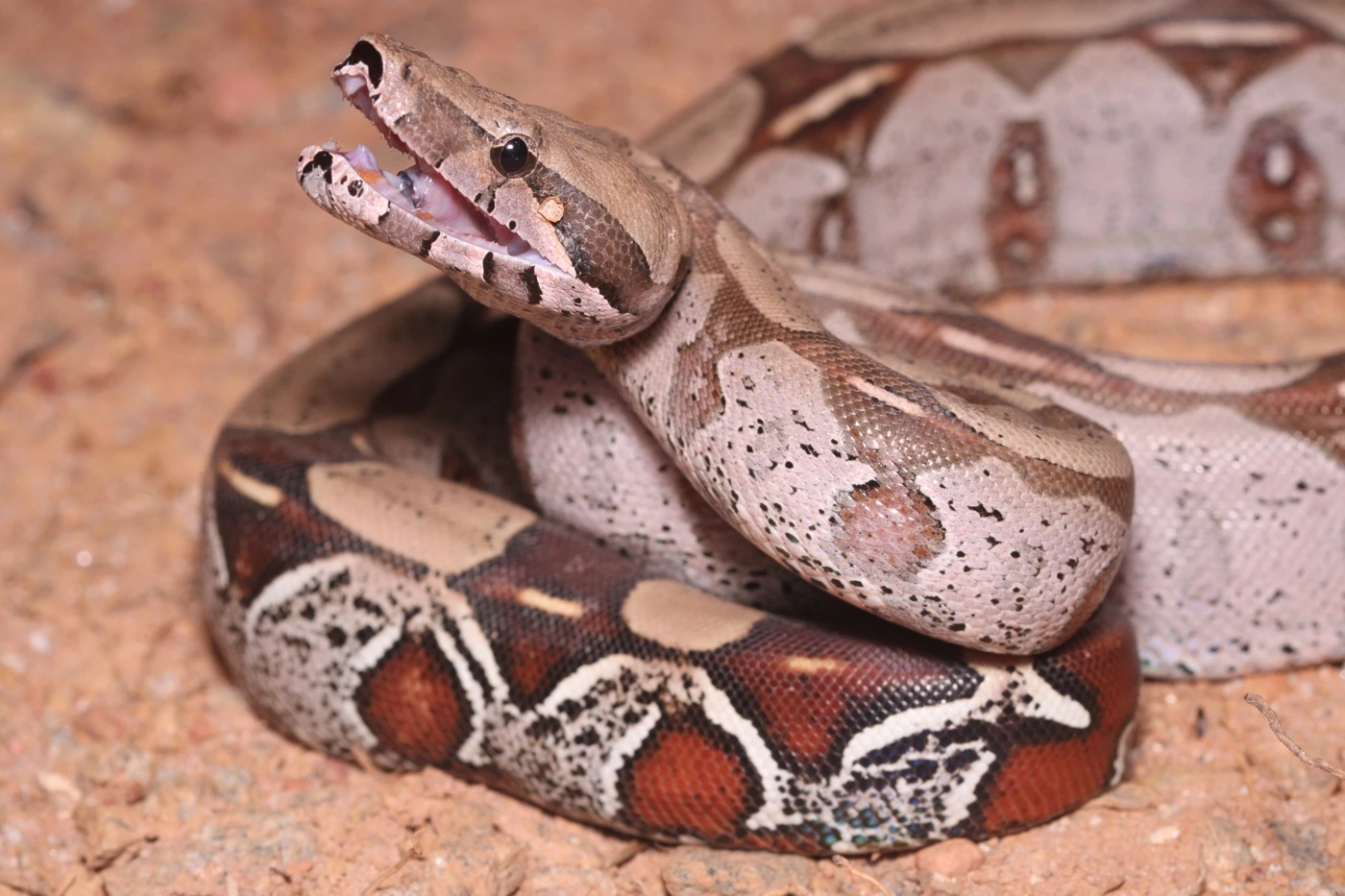
Boa constrictor. Species portrait from the credited source. No additional state, province or wild occurrence is inferred. Original watermarks, where present, are retained.

001 · Boidae

Boa Constrictor

Boa constrictor

LINNAEUS, 1758

Non-venomous

The checked taxonomic distribution account explicitly lists United States of America. Country-level evidence does not establish continuous occupancy or a complete national inventory. The source population is treated as introduced. The treatment names these subdivisions in its United States of America distribution clause: Florida. They are assigned to the…

Read the species account →

Arnaud Aury · CC BY 4.0 · https://creativecommons.org/licenses/by/4.0
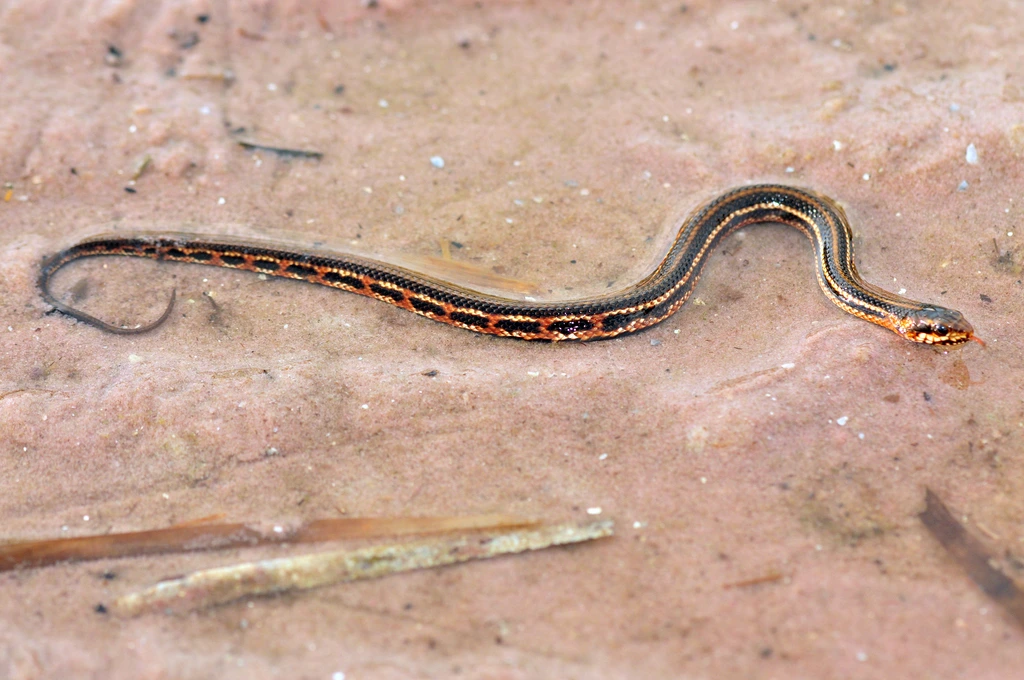
Nerodia clarkii. Species portrait; the complete source frame is retained. Original observation dated 2013-08-19. This photograph does not establish occurrence in any additional state or province.

002 · Colubridae

Salt Marsh Snake

Nerodia clarkii

(BAIRD & GIRARD, 1853)

Venom unknownNot yet assessed

The checked taxonomic distribution account explicitly lists United States of America. Country-level evidence does not establish continuous occupancy or a complete national inventory. The treatment names these subdivisions in its United States of America distribution clause: Mississippi, Louisiana, Florida, Texas, Alabama. They are assigned to the…

Read the species account →

Tom Kennedy · CC BY 4.0 · https://creativecommons.org/licenses/by/4.0/

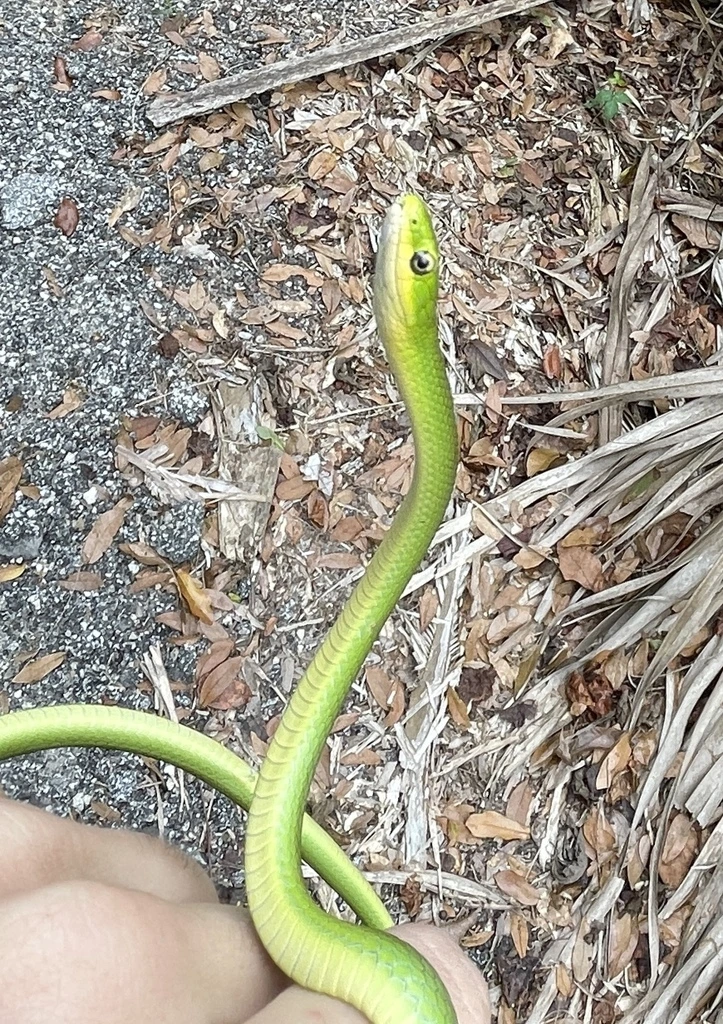
Opheodrys carinatus. Handled specimen identified under the historical subspecies name. Original observation dated 2026-03-19. This photograph does not establish occurrence in any additional state or province.

003 · Colubridae

Florida Rough greensnake

Opheodrys carinatus

GROBMAN, 1984

Venom unknownNot yet assessed

The checked taxonomic distribution account explicitly lists United States of America. Country-level evidence does not establish continuous occupancy or a complete national inventory. The treatment names these subdivisions in its United States of America distribution clause: Florida. They are assigned to the declared atlas navigation groups; this is not a…

Read the species account →

Nathaniel Isabella · CC BY 4.0 · https://creativecommons.org/licenses/by/4.0/

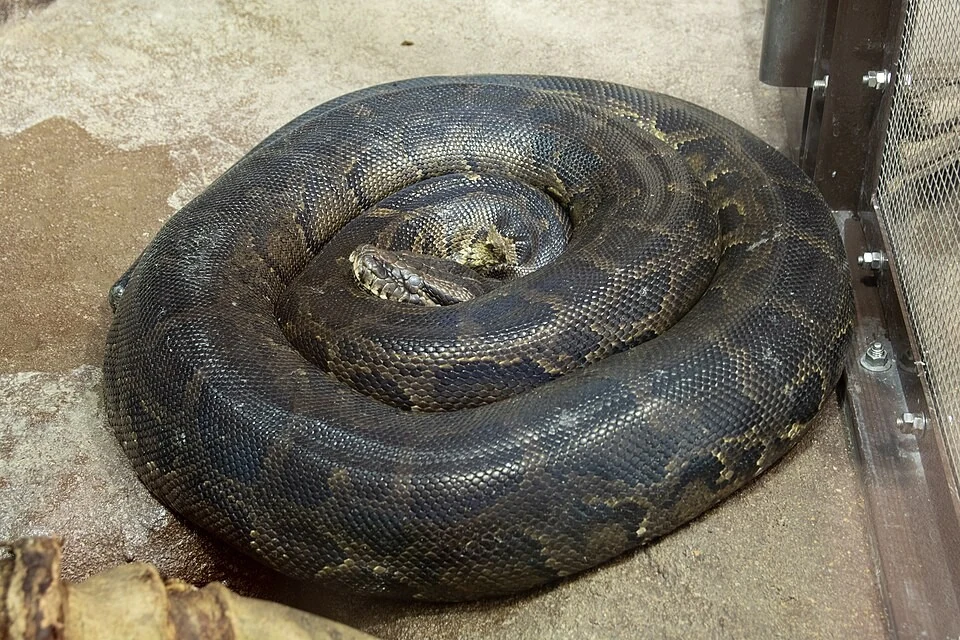
Python bivittatus — real specimen photograph; identification follows the linked source.

004 · Pythonidae

Burmese Python

Python bivittatus

KUHL, 1820

Non-venomous

Explicitly introduced in the checked distribution source. The Florida Museum documents an introduced, established population in southern Florida. The existing introduced national status is retained; this is not a native-range claim.

Read the species account →

Σ64 · CC BY 4.0 · https://creativecommons.org/licenses/by/4.0
All 177 species in the country collection →

Read further

Evidence & sources.

Guide reviewed 16 October 2026. Source dates and geographic scope matter; landscape photographs do not establish species occurrence.

  1. US National Park Service · Everglades habitats

    Named Florida habitat example, not a national landscape inventory.

Continue through United States of America

Explore another habitat.

01

Forest & woodland

The Everglades example distinguishes hardwood hammocks and pine rocklands. Small changes in local setting can separate wooded habitats within the wider wetland landscape.

02

Highland environments

In the Rincon Mountains of Saguaro National Park, desert vegetation gives way with elevation to oak woodland, pine-oak woodland, pine forest and mixed conifer forest. This Arizona example is an elevation gradient, not a description of all US mountains.

03

Scrubland & dry country

In Arizona, Saguaro National Park contrasts Sonoran desert scrub with desert grassland. Cacti and drought-adapted shrubs are part of a vegetated desert, with rocky slopes and drainage channels adding local variation.

04

Grassland & savanna

The mixed-grass prairie of Badlands National Park, South Dakota, sits between wetter tall-grass country and the drier short-grass plains. Different grass heights and open ground create a changing surface-level landscape.

05

Rivers & wetlands

The Everglades example includes freshwater marshes, sloughs and wet prairies. Water depth, timing and duration help distinguish these habitats; this Florida example does not describe all US wetlands.