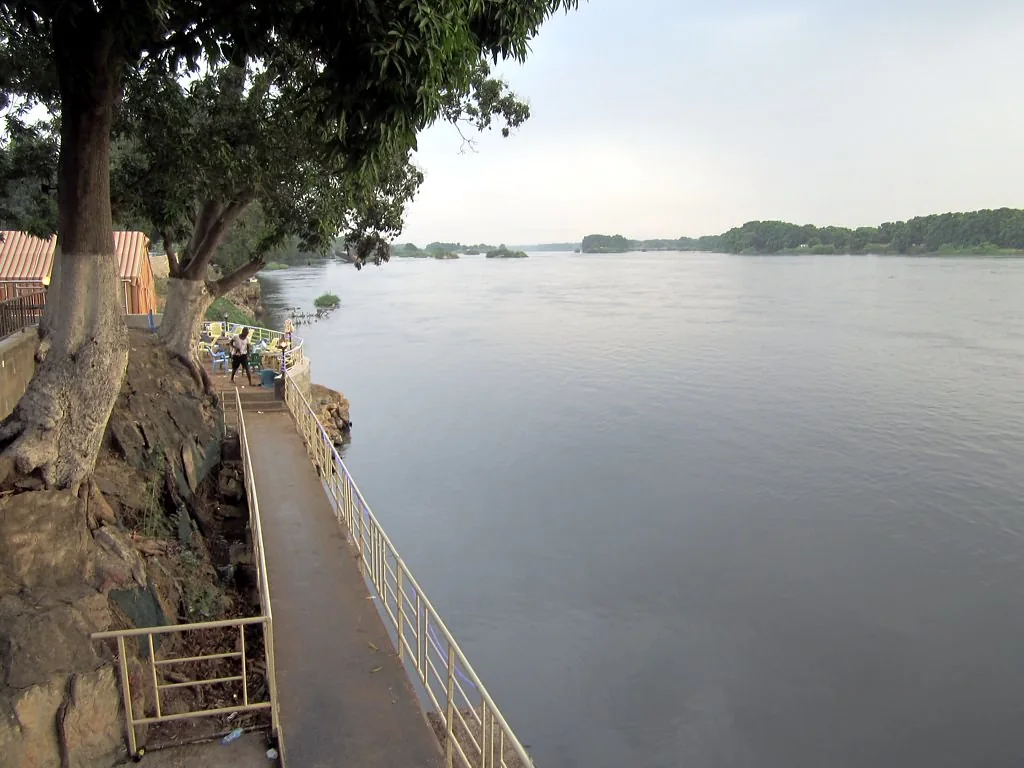
The White Nile at Juba, Central Equatoria, South Sudan, with wooded riverbanks and an existing riverside terrace.

South Sudan · Place guide

Central Equatoria

Explore Central Equatoria through the named places in its sourced species records.

8species with extracted evidence
5families
10region guides

The White Nile at Juba, Central Equatoria, South Sudan, with wooded riverbanks and an existing riverside terrace.

Photograph: David Stanley · Image source · CC BY 2.0. Cropped to fill the hero; darkened for text legibility.

Geography & biotopes

Read the landscape.

Explore Central Equatoria through the named places in its sourced species records.

This navigation guide uses the credited boundary snapshot for Central Equatoria. Its boundaries identify an atlas group, not a single vegetation type. South Sudan Information Management Working Group (IMWG), National Bureau of Statistics (NBS), and OCHA, OCHA South Sudan; geoBoundaries gbOpen ADM1, 2020 snapshot; Creative Commons Attribution 3.0 Intergovernmental Organisations (CC BY 3.0 IGO).

Ecological connections

The country habitat guides explain the environments documented in the landscape sources. Only species records assigned to this particular mapped area appear in the regional collection; a shared habitat elsewhere does not establish local occurrence.

Explore the setting

Open an individual species account to retain its original locality, observation or collection date, and source. Historical administrative names are preserved as aliases for this map snapshot.

This guide indexes these source names: Central Equatoria. A country-only record is not automatically assigned to this place. Map markers identify navigation destinations, not collection sites.

Map boundaries, snapshot and group membership →

Ramsar · Sudd information sheet →
Geography is part of the record

Find your way through South Sudan.

Select a named region to open its evidence page. The complete directory below keeps every guide accessible, including places where locality evidence has not yet been extracted.

17 of 127 listed species have at least one indexed region record. 110 remain country-only. Even a nonzero count is not a complete regional inventory.

Habitats & living landscapes

Explore the living
landscapes.

Explore 2 guides to the environments, places and conservation pressures that shape this country. Each guide connects to the regional map and shared species accounts.

Landscape photographs & credits

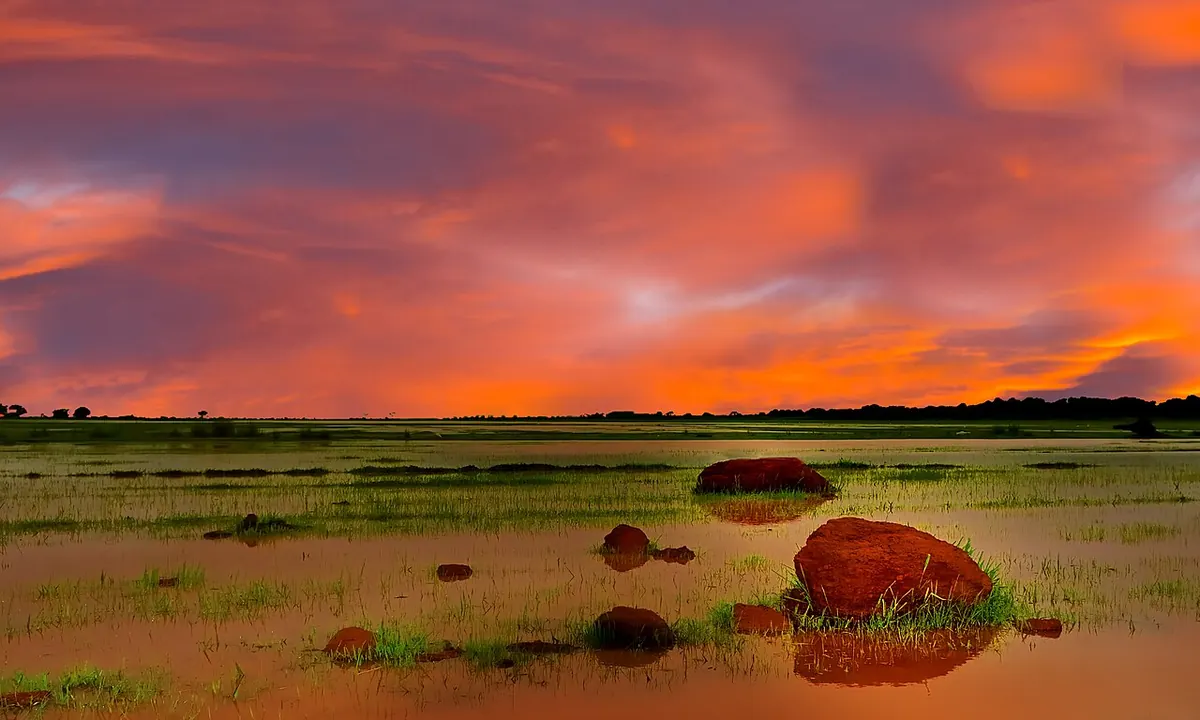
Shallow water and grass-covered floodplain beside the Jur River, in the upper Bahr al-Ghazal system of South Sudan, photographed in June 2008. This is a named national example of flooded grassland, not a photograph identified as the Sudd. — Michael Walsh. Original photograph · CC BY 3.0. Cropped for the cards; photographs do not establish snake occurrence.

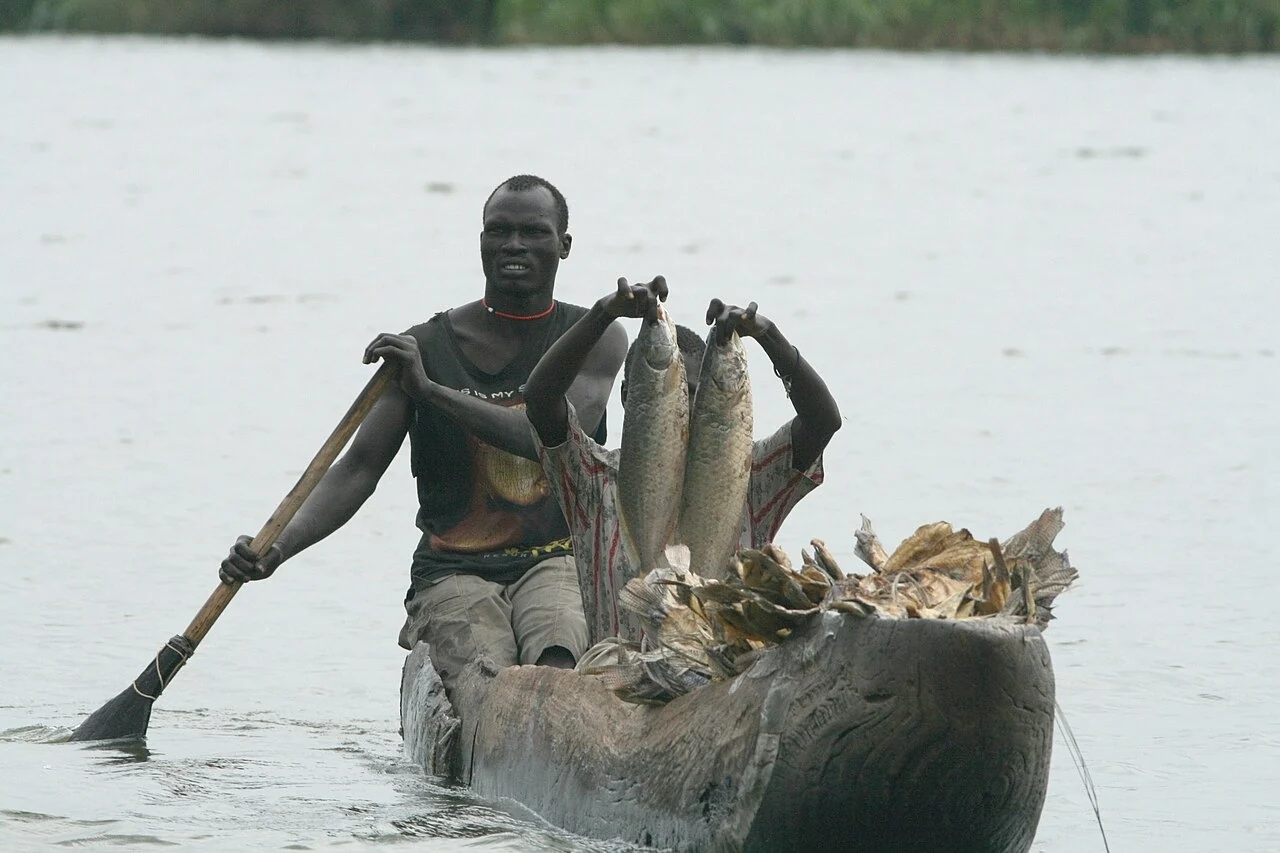
Fishing in the Sudd wetland, South Sudan; source photograph from the Nile Basin project. — Water, food and livelihoods in River Basins, Photographer: Karen Conniff. Original photograph · CC BY 2.0. Cropped for the cards; photographs do not establish snake occurrence.

The species catalogue

Snakes · Central Equatoria.

Only records naming this place appear below. These are extracted locality records, not complete island or regional inventories.

8 species · showing 8

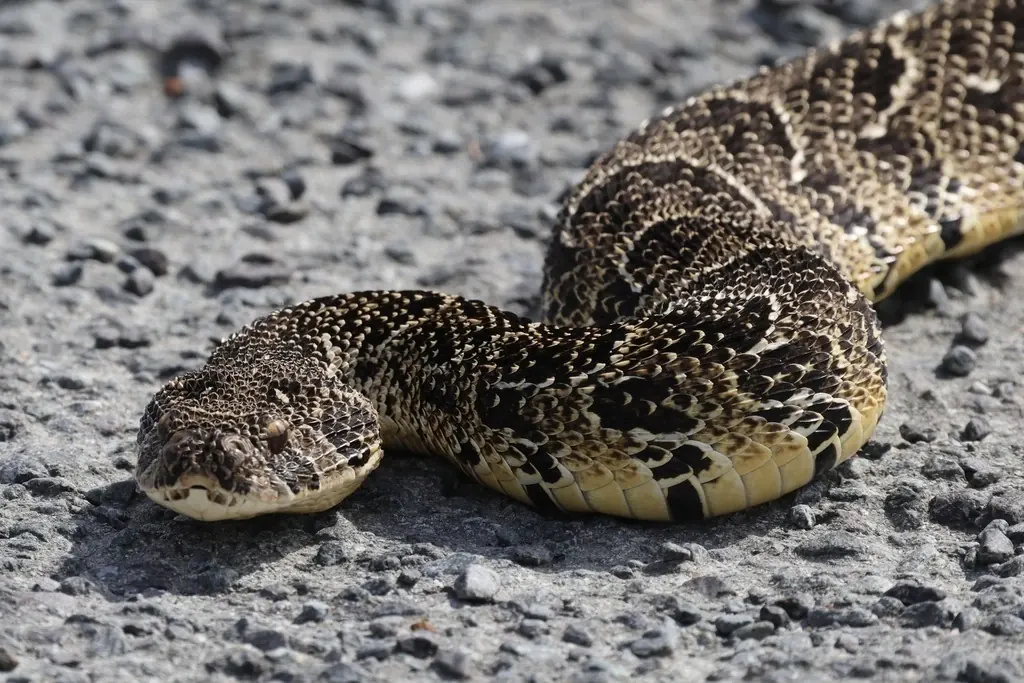
Bitis arietans. Identification follows the linked source community.

001 · Viperidae

Puff Adder

Bitis arietans

(MERREM, 1820)

VenomousClinical severity not established

Explicit country record in the current species treatment. The current taxonomic treatment explicitly lists this country. This is country-scale checklist evidence, not a claim of continuous occupancy or a complete regional inventory. Central Equatoria: iNaturalist observation 277041214, recorded 2025-04-30. The current original record has agreeing…

Read the species account →

Cricket Raspet · CC BY 4.0 · https://creativecommons.org/licenses/by/4.0/

Causus maculatus; Lesio-Louna Reserve - Iboubikro, Republic of the Congo; photographed 2006-07-20.

002 · Viperidae

Spotted Night Adder, West-African Night Adder

Causus maculatus

(HALLOWELL, 1842)

VenomousClinical severity not established

The current taxonomic treatment explicitly lists this country. This is country-scale checklist evidence, not a claim of continuous occupancy or a complete regional inventory. Central Equatoria: iNaturalist observation 401459897, recorded 2026-09-19. The current original record has agreeing research-grade identification, wild status and unrestricted…

Read the species account →

Tony King · CC BY 4.0 · https://creativecommons.org/licenses/by/4.0/

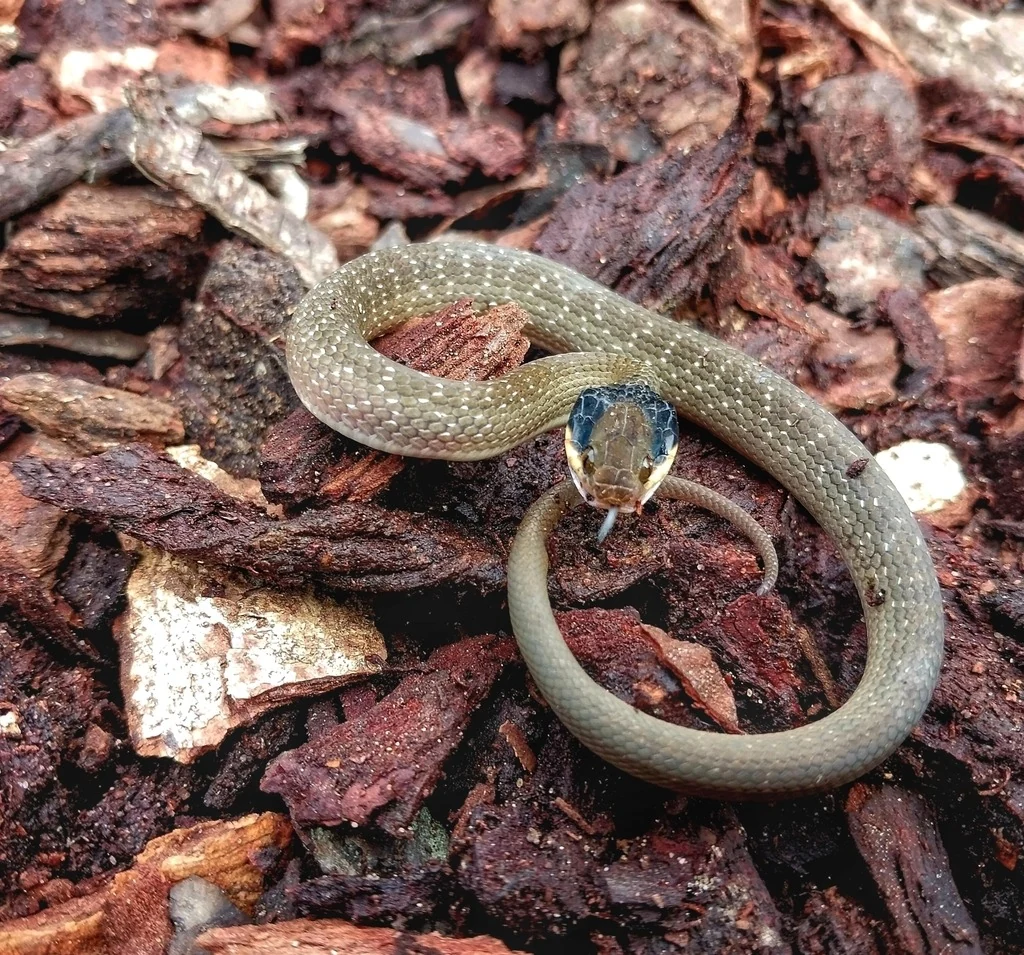
Crotaphopeltis hotamboeia; Campher's Drift, George, 6529, South Africa; photographed 2023-10-13.

003 · Colubridae

White-lipped Herald Snake, Red-lipped Snake

Crotaphopeltis hotamboeia

(LAURENTI, 1768)

Venom unknownNot yet assessed

The current taxonomic treatment explicitly lists this country. This is country-scale checklist evidence, not a claim of continuous occupancy or a complete regional inventory. Eastern Equatoria: iNaturalist observation 382687536, recorded 2026-07-18. The current original record has agreeing research-grade identification, wild status and unrestricted…

Read the species account →

no rights reserved · CC0 · https://creativecommons.org/publicdomain/zero/1.0/

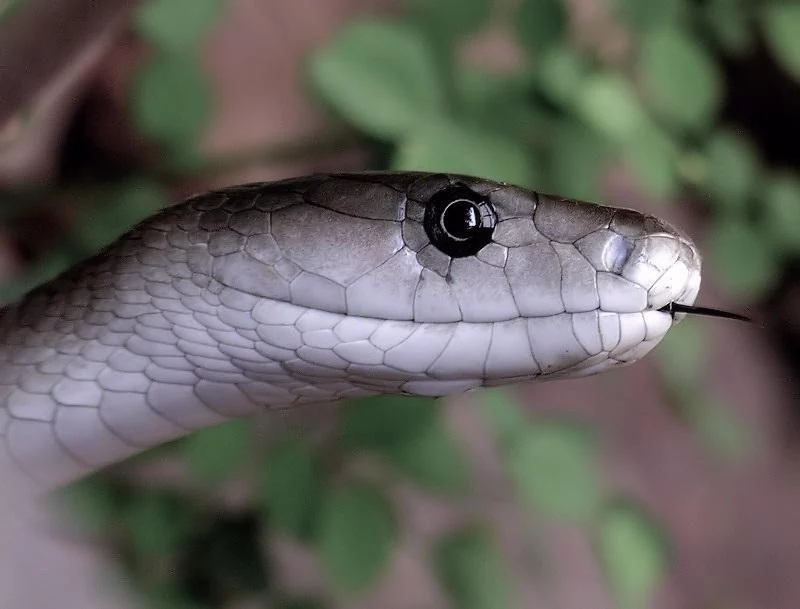
Dendroaspis polylepis; Blyde River bushveld and wetlands near Hoedspruit: Grassy woodland interspersed with seasonal pans, vleis and river channels.; photographed 2014-10-03.

004 · Elapidae

Black Mamba

Dendroaspis polylepis

GÜNTHER, 1864

VenomousPotentially life-threatening

The current taxonomic treatment explicitly lists this country. This is country-scale checklist evidence, not a claim of continuous occupancy or a complete regional inventory. Central Equatoria: iNaturalist observation 402788326, recorded 2026-09-23. The current original record has agreeing research-grade identification, wild status and unrestricted…

Read the species account →

Wynand Uys · CC BY 4.0 · https://creativecommons.org/licenses/by/4.0/

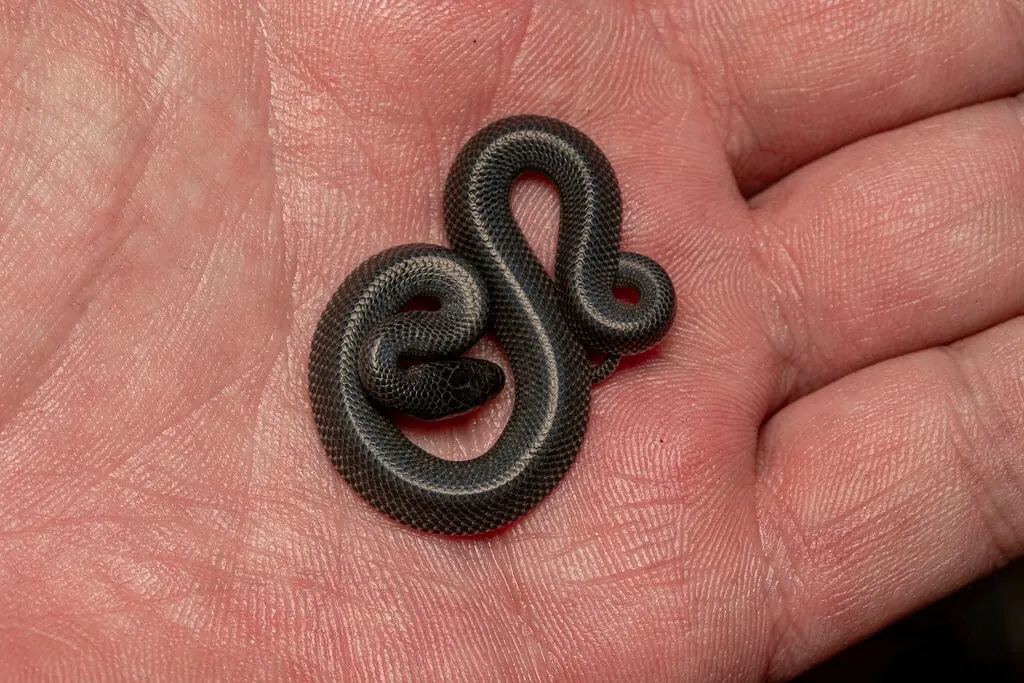
Lycophidion capense. Identification follows the linked source community.

005 · Lamprophiidae

Cape Wolf Snake

Lycophidion capense

(SMITH, 1831)

Non-venomous

Explicit country record in the current species treatment. The current taxonomic treatment explicitly lists this country. This is country-scale checklist evidence, not a claim of continuous occupancy or a complete regional inventory. Central Equatoria: iNaturalist observation 287572500, recorded 2025-06-07. The current original record has agreeing…

Read the species account →

Rudolph Steenkamp · CC BY-SA 4.0 · https://creativecommons.org/licenses/by-sa/4.0/

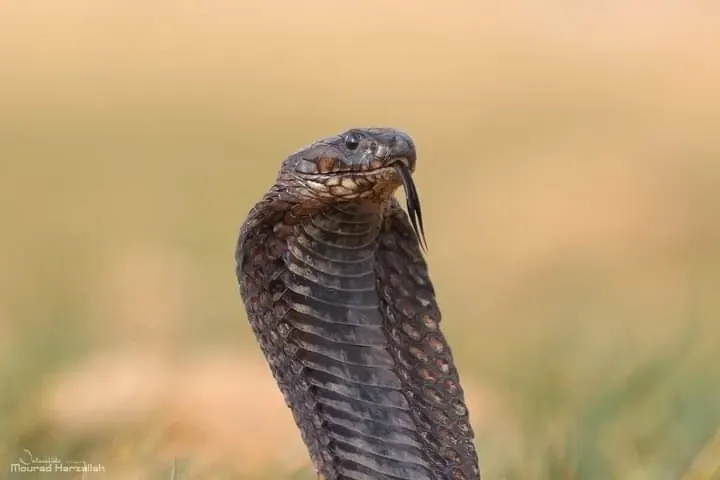
Naja haje. Identification follows the linked source community.

006 · Elapidae

Egyptian Cobra

Naja haje

(LINNAEUS, 1758)

VenomousClinical severity not established

The current taxonomic treatment explicitly lists this country. This is country-scale checklist evidence, not a claim of continuous occupancy or a complete regional inventory. Central Equatoria: iNaturalist observation 377663839, recorded 2026-07-03. The current original record has agreeing research-grade identification, wild status and unrestricted…

Read the species account →

Mourad Harzallah · CC BY 4.0 · https://creativecommons.org/licenses/by/4.0/

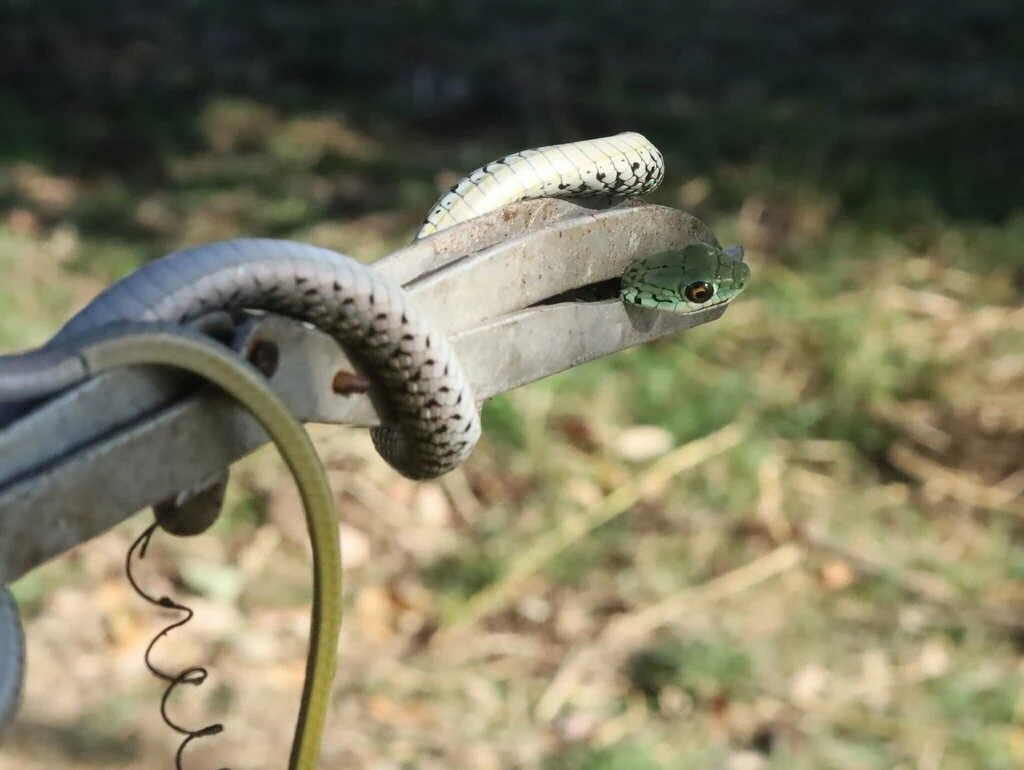
Philothamnus semivariegatus, photographed 2023-07-03. Identification follows the linked research-grade observation. The animal is temporarily held in the source photograph.

007 · Colubridae

Spotted Bush Snake, Spotted Green Snake, Variegated Green Snake

Philothamnus semivariegatus

(SMITH, 1840)

Venom unknownNot yet assessed

The current taxonomic treatment explicitly lists this country. This is country-scale checklist evidence, not a claim of continuous occupancy or a complete regional inventory. Central Equatoria: iNaturalist observation 283877166, recorded 2025-05-25. The current original record has agreeing research-grade identification, wild status and unrestricted…

Read the species account →

Paul Hoekman · CC BY 4.0 · https://creativecommons.org/licenses/by/4.0/

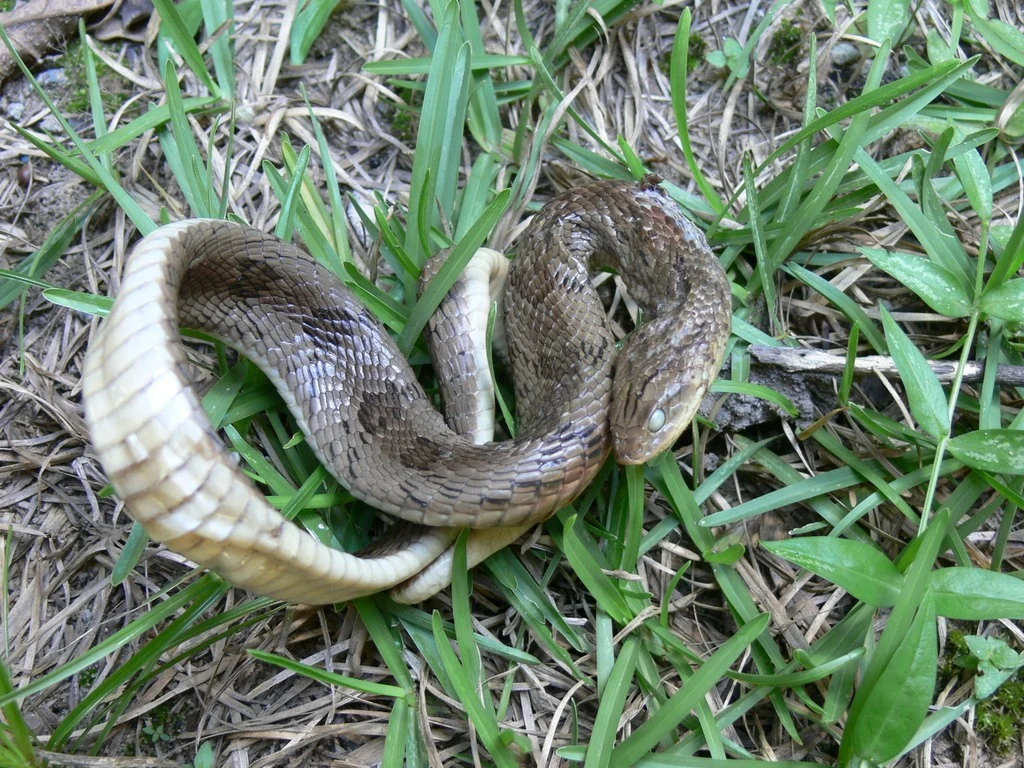
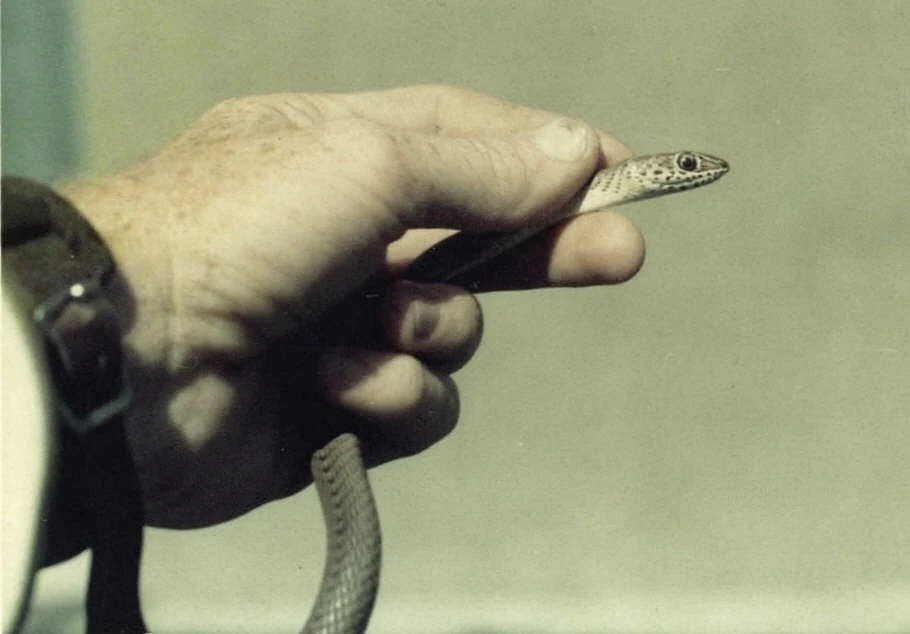
Psammophis mossambicus; Chizarira National Park; photographed 1980-11-30.

008 · Psammophiidae

Olive Whip Snake, Olive Grass Snake,

Psammophis mossambicus

PETERS, 1882

VenomousClinical severity not established

The current taxonomic treatment explicitly lists this country. This is country-scale checklist evidence, not a claim of continuous occupancy or a complete regional inventory. Central Equatoria: iNaturalist observation 865909, recorded 2013-10-27. The current original record has agreeing research-grade identification, wild status and unrestricted…

Read the species account →

i_c_riddell · CC BY 4.0 · https://creativecommons.org/licenses/by/4.0/

Explore all 127 country records →

The research library

Sources & the checklist.

This edition lists 127 species with supported country records from checked taxonomic treatments and cited field studies. It is not a claim of a complete national inventory. Each account retains its source and check date; individual evidence entries retain their own review dates.

Range and taxonomy review

Country links use a single accepted species identity. Revised names and disputed records are kept visible here; uncertain records do not enter the listed collection or regional totals.

Psammophis sibilans

Uncertain — excluded from the listed total

The checked treatment contains a conflicting, superseded or insufficiently corroborated country report. It is retained for review and excluded from positive counts; this is not an assertion of absence.

Source 1 ↗

Amblyodipsas unicolor

Uncertain — excluded from the listed total

The checked treatment contains a conflicting, superseded or insufficiently corroborated country report. It is retained for review and excluded from positive counts; this is not an assertion of absence.

Source 1 ↗

Atheris squamigera

Uncertain — excluded from the listed total

The checked treatment contains a conflicting, superseded or insufficiently corroborated country report. It is retained for review and excluded from positive counts; this is not an assertion of absence.

Source 1 ↗

Dasypeltis fasciata

Uncertain — excluded from the listed total

The checked treatment contains a conflicting, superseded or insufficiently corroborated country report. It is retained for review and excluded from positive counts; this is not an assertion of absence.

Source 1 ↗

Polemon christyi

Uncertain — excluded from the listed total

The checked treatment contains a conflicting, superseded or insufficiently corroborated country report. It is retained for review and excluded from positive counts; this is not an assertion of absence.

Source 1 ↗

Telescopus variegatus

Uncertain — excluded from the listed total

The checked treatment contains a conflicting, superseded or insufficiently corroborated country report. It is retained for review and excluded from positive counts; this is not an assertion of absence.

Source 1 ↗

Toxicodryas pulverulenta

Uncertain — excluded from the listed total

The checked treatment contains a conflicting, superseded or insufficiently corroborated country report. It is retained for review and excluded from positive counts; this is not an assertion of absence.

Source 1 ↗

How the map and counts work

Search results were checked against distribution text and taxonomic qualifications. A geographic name alone does not establish a political country: New Guinea, the Solomon archipelago and Micronesia span more than one country or territory. Introduced and unresolved records require separate interpretation.

Place counts require explicit named localities, including valid type localities. Counts can overlap where sources name multiple places. Regional maps group historical boundary snapshots for navigation, while island outlines use Natural Earth; neither is a species range or an observation map. Small islands can be below the outline dataset’s resolution, so geographic reference markers and the directory remain available.

South Sudan Information Management Working Group (IMWG), National Bureau of Statistics (NBS), and OCHA, OCHA South Sudan; geoBoundaries gbOpen ADM1, 2020 snapshot; Creative Commons Attribution 3.0 Intergovernmental Organisations (CC BY 3.0 IGO). Map provenance →

Exclusions & qualifications (7)

Amblyodipsas unicolor

The checked treatment contains a conflicting, superseded or insufficiently corroborated country report. It is retained for review and excluded from positive counts; this is not an assertion of absence.

Read source 1 ↗

Atheris squamigera

The checked treatment contains a conflicting, superseded or insufficiently corroborated country report. It is retained for review and excluded from positive counts; this is not an assertion of absence.

Read source 1 ↗

Dasypeltis fasciata

The checked treatment contains a conflicting, superseded or insufficiently corroborated country report. It is retained for review and excluded from positive counts; this is not an assertion of absence.

Read source 1 ↗

Polemon christyi

The checked treatment contains a conflicting, superseded or insufficiently corroborated country report. It is retained for review and excluded from positive counts; this is not an assertion of absence.

Read source 1 ↗

Psammophis sibilans

The checked treatment contains a conflicting, superseded or insufficiently corroborated country report. It is retained for review and excluded from positive counts; this is not an assertion of absence.

Read source 1 ↗

Telescopus variegatus

The checked treatment contains a conflicting, superseded or insufficiently corroborated country report. It is retained for review and excluded from positive counts; this is not an assertion of absence.

Read source 1 ↗

Toxicodryas pulverulenta

The checked treatment contains a conflicting, superseded or insufficiently corroborated country report. It is retained for review and excluded from positive counts; this is not an assertion of absence.

Read source 1 ↗
  1. Boundary source and declared group membership ↗

    Historical geography and navigation only.

  2. Ramsar · Sudd information sheet ↗

    Historical site description of the Sudd, now in South Sudan; no transfer of old country-only Sudan species labels.

  3. Map boundaries, snapshot and group membership ↗
  4. Ramsar · Sudd information sheet ↗
  5. The Reptile Database

    Individual treatments and locality evidence are linked from each species account.

  6. Meiri (2024): SquamBase 1.0

    Species-level literature measurements and ecological traits. Exact-name matches only; imputed or ambiguous fields are omitted. These summaries are not local observations.

  7. Natural Earth: public-domain geographic data

Continue through the Africa atlas →