

Natrix natrix
Older broad grass-snake labels are not current-identity records; western populations require helvetica or astreptophora reconciliation.
Portugal · Place guide
This guide covers Lisbon & Tagus districts using the credited source outlines. Its named source units are Lisboa, Santarém, Setúbal.
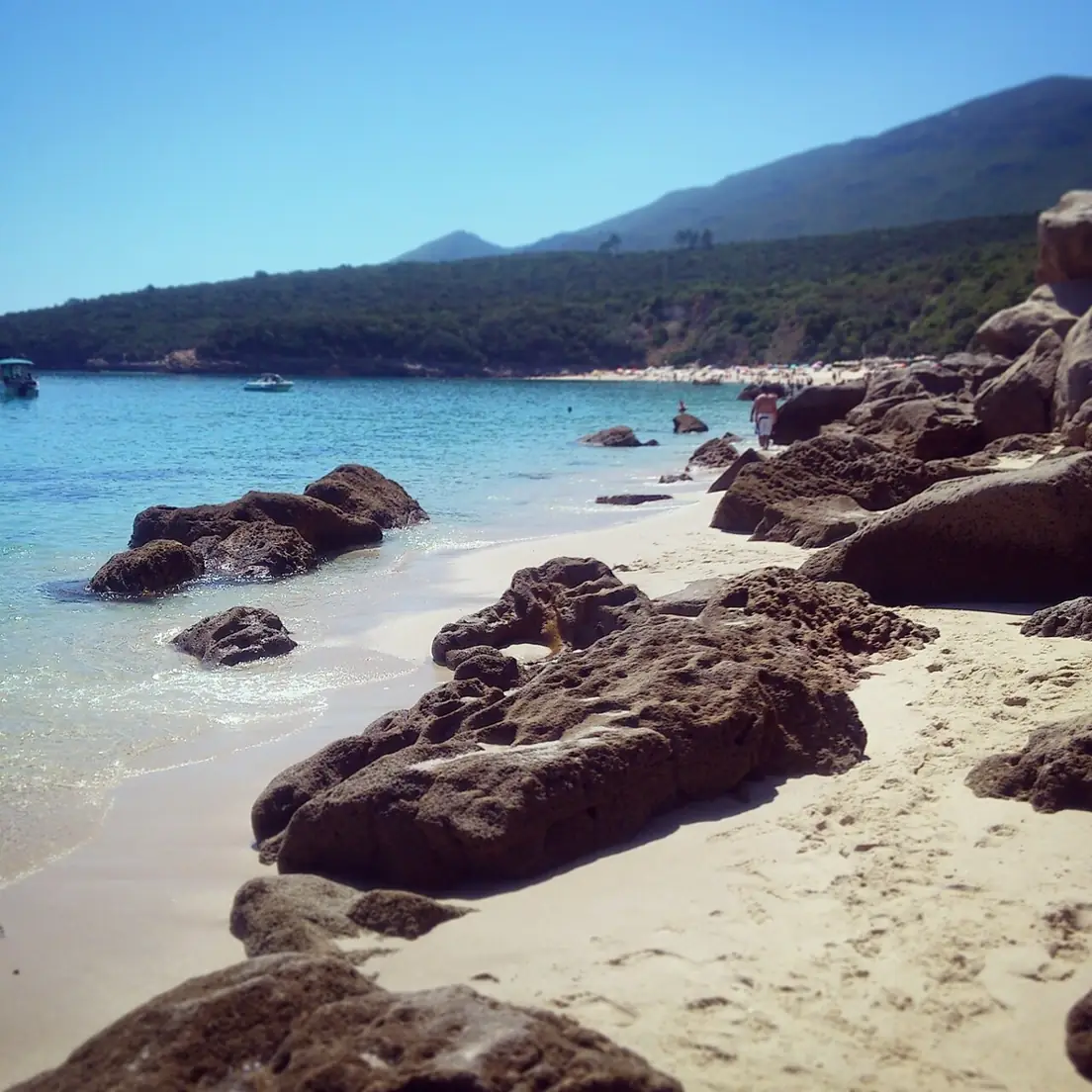
A rocky beach and wooded slopes on Portugal's Arrábida coast.
Geography & biotopes
This guide covers Lisbon & Tagus districts using the credited source outlines. Its named source units are Lisboa, Santarém, Setúbal.
National geographic context: The mainland and Atlantic archipelagos combine forest and agricultural ecosystems with diverse coastal and island habitats. This describes the broader setting; the habitat at an individual locality still needs its own evidence.
Record the place name, date, elevation where available, and the actual vegetation or substrate at the observation point. Keep a species identification separate from the surrounding landscape description; a suitable-looking habitat is not a presence record.
Use the responsible local authority’s current access information. Respect restricted sites and avoid disturbing animals or revealing sensitive breeding localities. Historical map boundaries do not establish present access conditions.
This guide indexes these source names: Lisboa, Santarém, Setúbal, Santarem, Setubal. A country-only record is not automatically assigned to this place. Map markers identify navigation destinations, not collection sites.
Habitats & living landscapes
Explore 2 guides to the environments, places and conservation pressures that shape this country. Each guide connects to the regional map and shared species accounts.
Habitat · 01
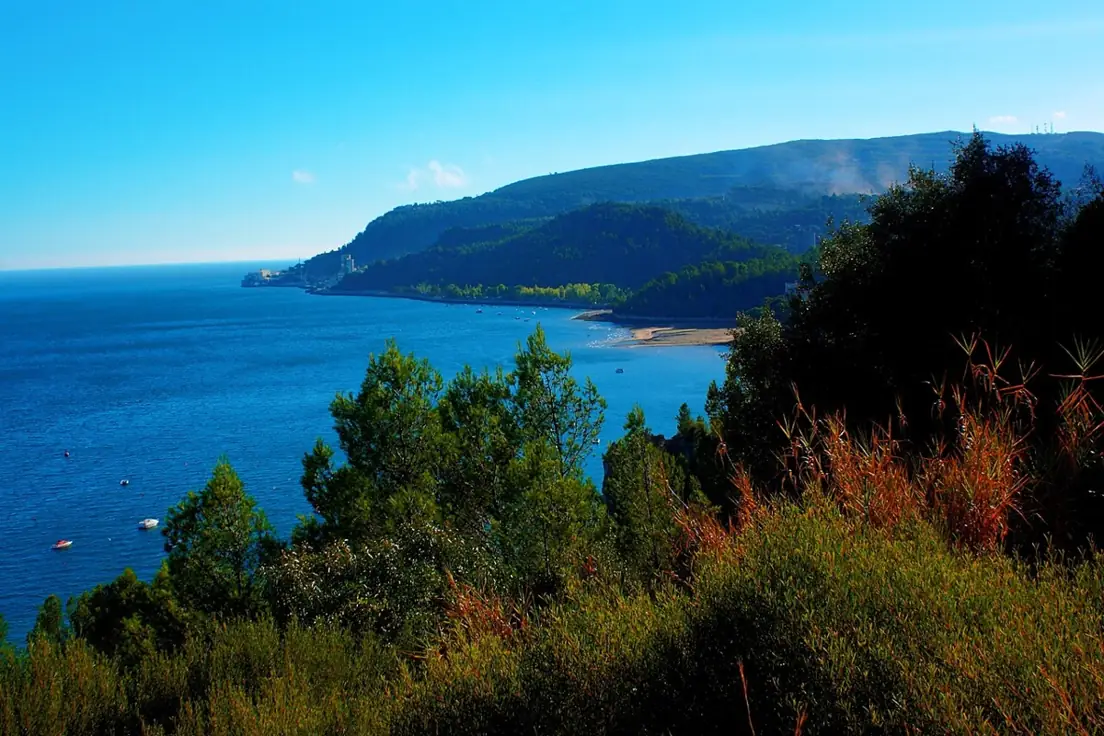
Explore Arrábida slopes through the documented landscape and its visible structure. The named example anchors this guide; it does not represent every habitat in the country.
Explore the habitat ↗Habitat · 02
Explore Arrábida through the documented landscape and its visible structure. The named example anchors this guide; it does not represent every habitat in the country.
Explore the habitat ↗Wooded and scrub-covered Arrábida slopes near Outão, Portugal, above the coast, photographed in May 2015. — Muaddib2015. Original photograph · CC BY-SA 4.0. Cropped for the cards; photographs do not establish snake occurrence.
A rocky beach and wooded slopes on Portugal's Arrábida coast. — Ze Caetano. Original photograph · CC BY 2.0. Cropped for the cards; photographs do not establish snake occurrence.
The species catalogue
Only records naming this place appear below. These are extracted locality records, not complete island or regional inventories.
No supported locality records have been extracted for this selection. This is a research gap, not evidence that snakes are absent.
0 species · showing 0
Try another name or clear the filters. Absence from a regional list does not establish absence in nature.
The research library
This edition lists 11 species with supported country records from checked taxonomic treatments and cited field studies. This total includes 1 record marked as introduced; it is not a native-species total. It is not a claim of a complete national inventory. Each account retains its source and check date; individual evidence entries retain their own review dates.
11 documented current or explicitly qualified country records. This is a source-backed working inventory; recent national completeness and locality coverage remain under review. This European chapter does not transfer overseas-territory records to mainland Europe.
Individually reviewed taxonomic treatments and cited primary records ↗
Older broad grass-snake labels are not current-identity records; western populations require helvetica or astreptophora reconciliation.
Country links use a single accepted species identity. Revised names and disputed records are kept visible here; uncertain records do not enter the listed collection or regional totals.
Introduced occurrence
Introduced populations; Portuguese evidence here is Madeira and Spanish evidence the Canary Islands, not mainland occurrence. Four specimens from São Martinho in July–August 2012 established the Madeira record; morphology and mitochondrial sequences supported identification. The paper uses the historical genus Ramphotyphlops. It does not document occurrence throughout Madeira or on Porto Santo.
Uncertain — excluded from the listed total
Older broad grass-snake labels are not current-identity records; western populations require helvetica or astreptophora reconciliation.
Search results were checked against distribution text and taxonomic qualifications. A geographic name alone does not establish a political country: New Guinea, the Solomon archipelago and Micronesia span more than one country or territory. Introduced and unresolved records require separate interpretation.
Place counts require explicit named localities, including valid type localities. Counts can overlap where sources name multiple places. Regional maps group historical boundary snapshots for navigation, while island outlines use Natural Earth; neither is a species range or an observation map. Small islands can be below the outline dataset’s resolution, so geographic reference markers and the directory remain available.
DG Territory; geoBoundaries gbOpen ADM1; 2016; Open Data Commons Open Database License 1.0. Generalised navigation outlines, not species ranges. Map provenance →
Geographic or habitat context from the named authority; individual sites are examples, not evidence of country-wide snake occurrence.
DG Territory; geoBoundaries gbOpen ADM1; 2016; Open Data Commons Open Database License 1.0. Generalised navigation outlines, not species ranges.
Individual treatments and locality evidence are linked from each species account.
Species-level literature measurements and ecological traits. Exact-name matches only; imputed or ambiguous fields are omitted. These summaries are not local observations.