


TyphlopidaeAcutotyphlopsPhotograph not yet documented
001 · Typhlopidae
Bismarck sharp-nosed blindsnake
Acutotyphlops subocularis
Non-venomousPapua New Guinea: New Britain; New Ireland.
Read the species account →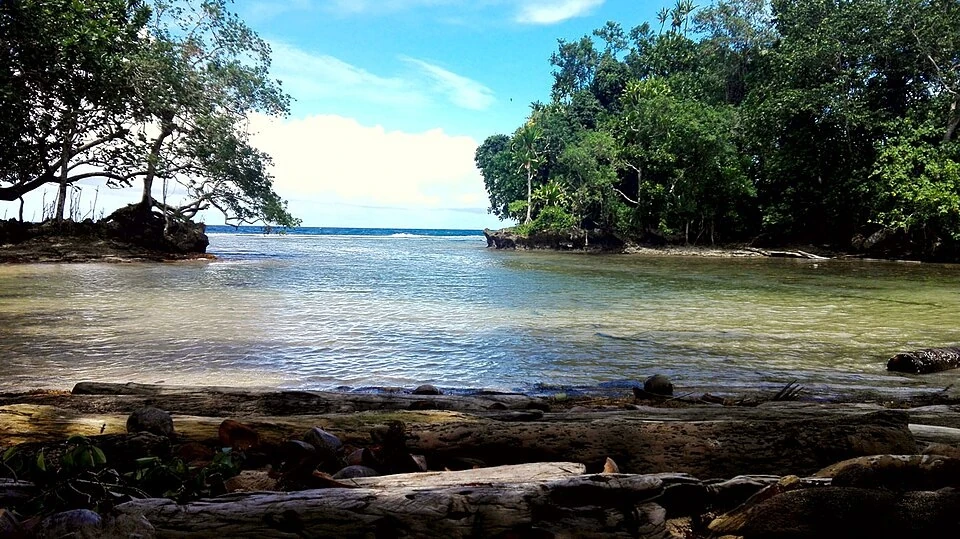
Papua New Guinea · Place guide
New Ireland combines a long main island with offshore groups; a provincial name alone can conceal which island a record actually concerns.
Lamsbie Bay on New Ireland, Papua New Guinea.
Geography & biotopes
New Ireland combines a long main island with offshore groups; a provincial name alone can conceal which island a record actually concerns.
The Tourism Promotion Authority describes coastal estuaries, inland waterfalls and several offshore island groups. Community mangrove and seagrass plans reported in 2025 provide a separate example of coastal stewardship.
Retain the individual island or coast whenever the source supplies it. A mangrove-management example does not establish the same habitat or snake assemblage throughout the province.
Seek local guidance and permission. Describe the visited place precisely and treat management announcements as evidence of plans, not automatically of ecological recovery.
This guide indexes these source names: New Ireland. A country-only record is not automatically assigned to this place. Map markers identify navigation destinations, not collection sites.
Papua New Guinea: Sixth National Report to the Convention on Biological Diversity →
Habitats & living landscapes
Explore 6 guides to the environments, places and conservation pressures that shape this country. Each guide connects to the regional map and shared species accounts.
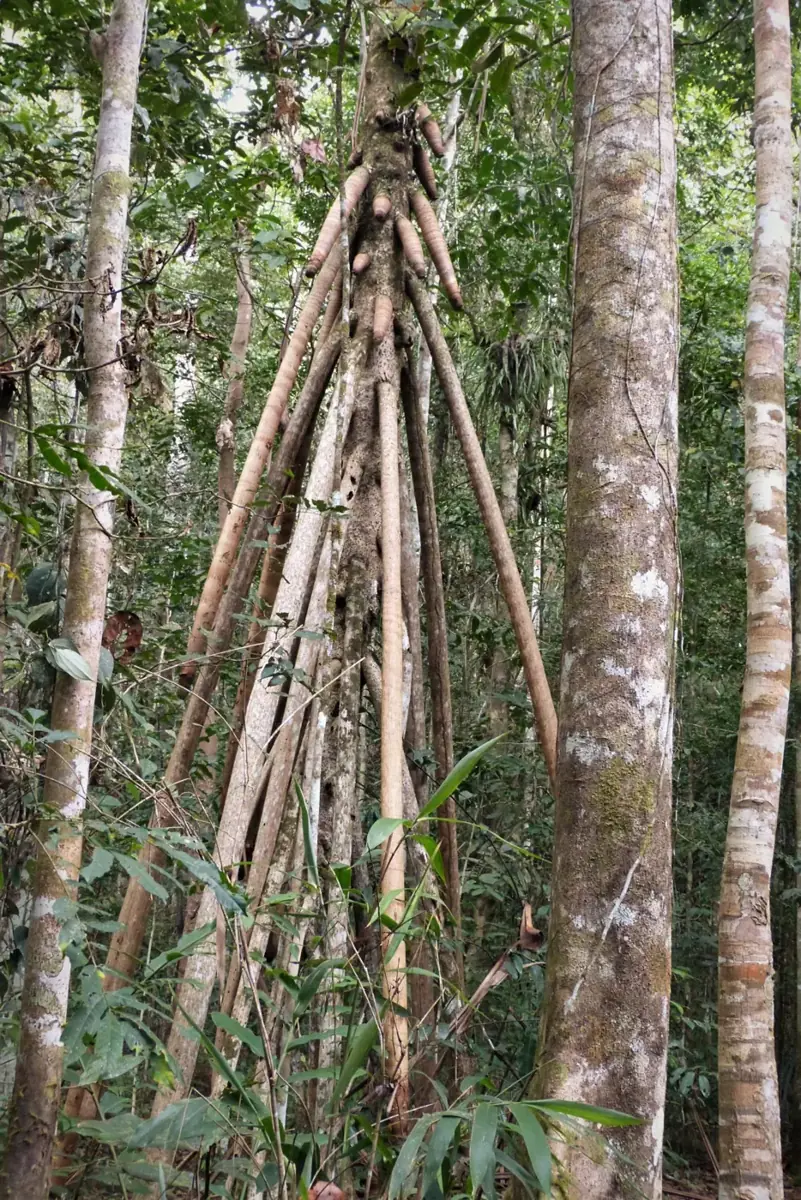
Habitat · 01
Forest changes across mainland slopes and separate island groups. These examples describe Papua New Guinea; they do not extend the country page into Indonesian Papua.
Explore the habitat ↗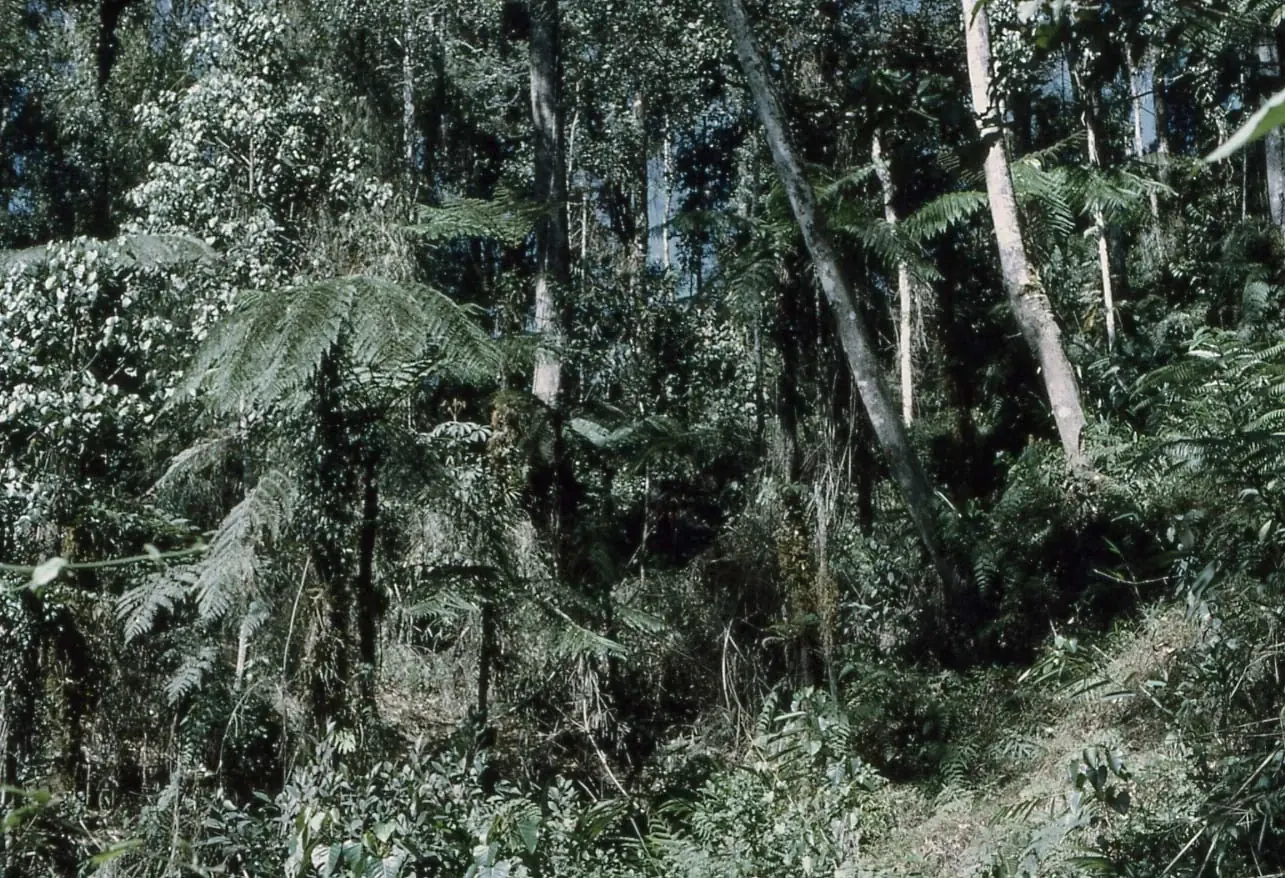
Habitat · 02
Mainland mountain landscapes include wooded valleys, cool upper slopes and open high country. Elevation and vegetation must be recorded separately rather than inferred from a mountain name.
Explore the habitat ↗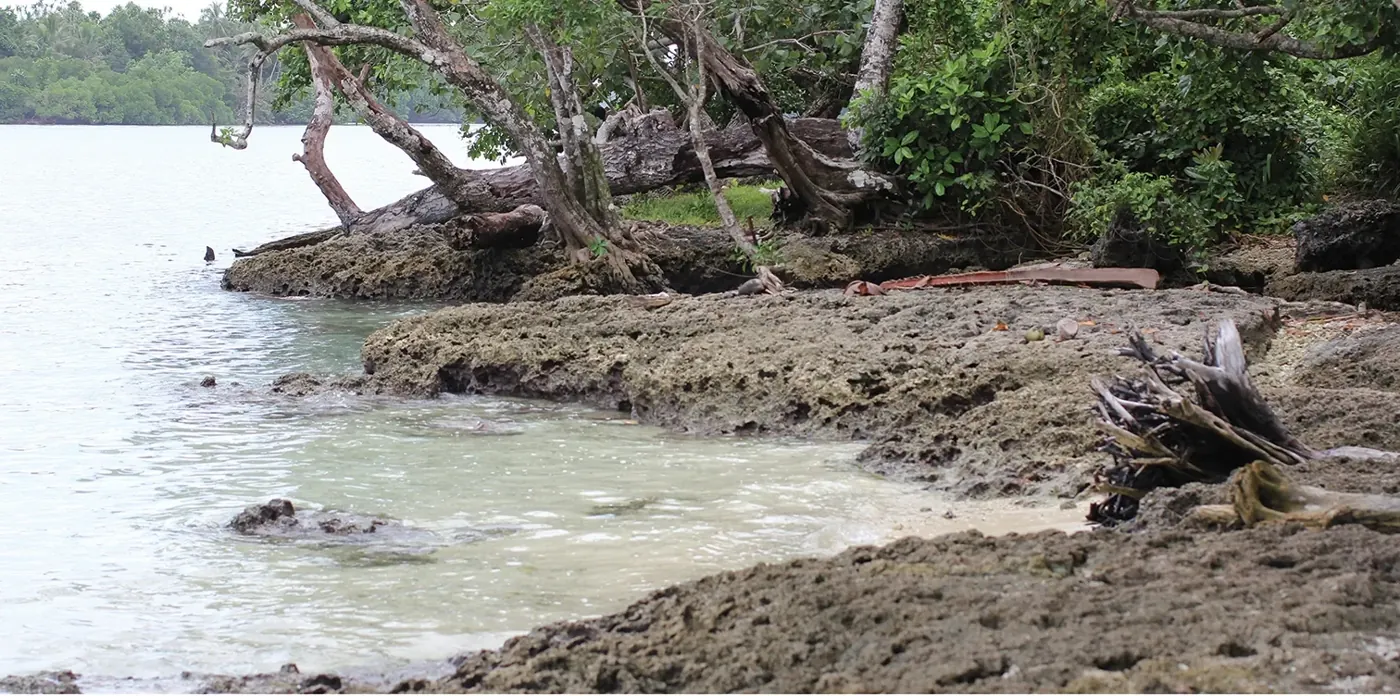
Habitat · 03
Karst connects forested surfaces, limestone openings and underground drainage. The mainland and New Britain examples are separate systems with their own geography.
Explore the habitat ↗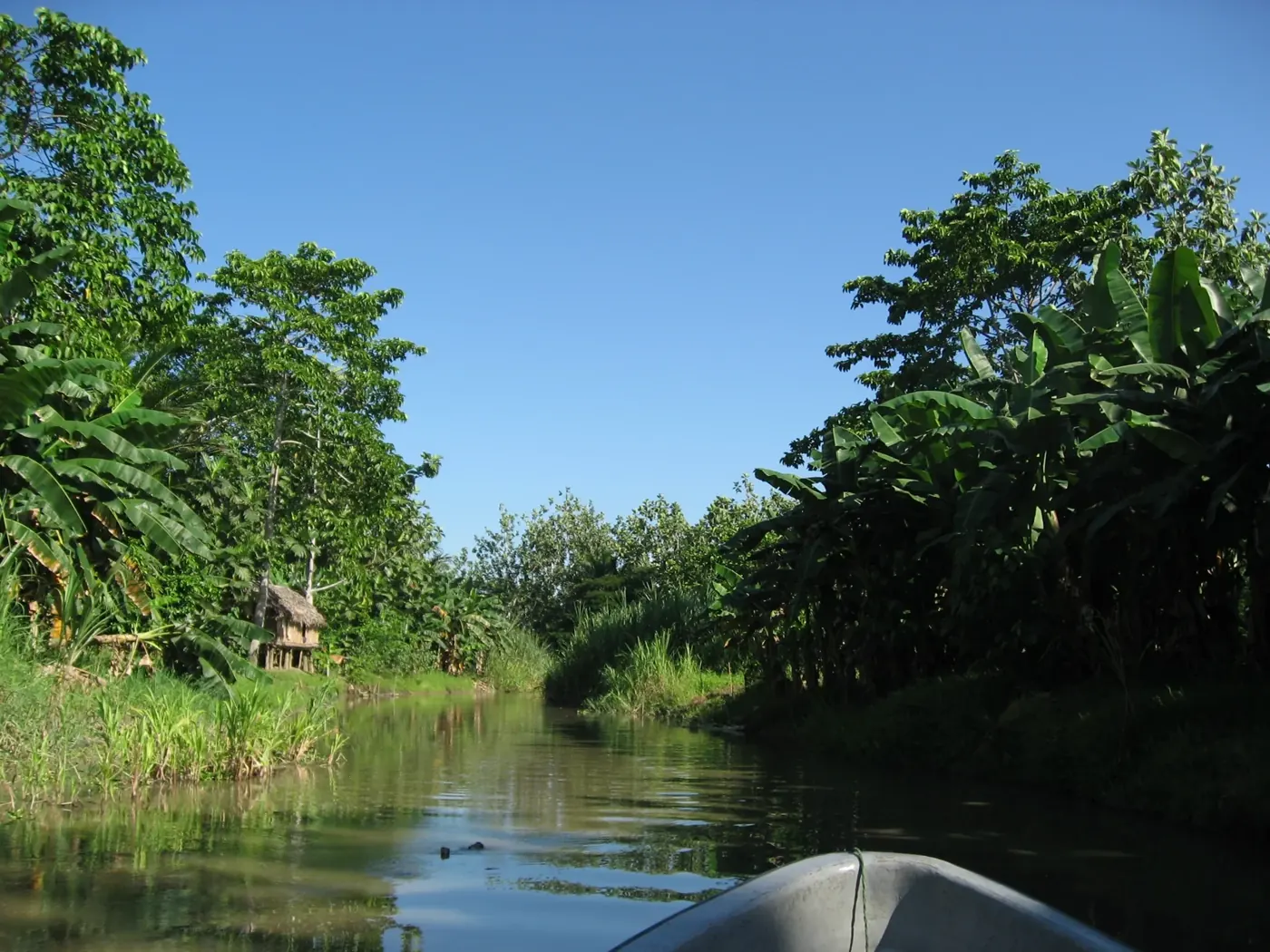
Habitat · 04
Mainland river basins and upland lakes provide very different freshwater settings. Their shoreline, flooded vegetation and upstream catchment belong together in a field description.
Explore the habitat ↗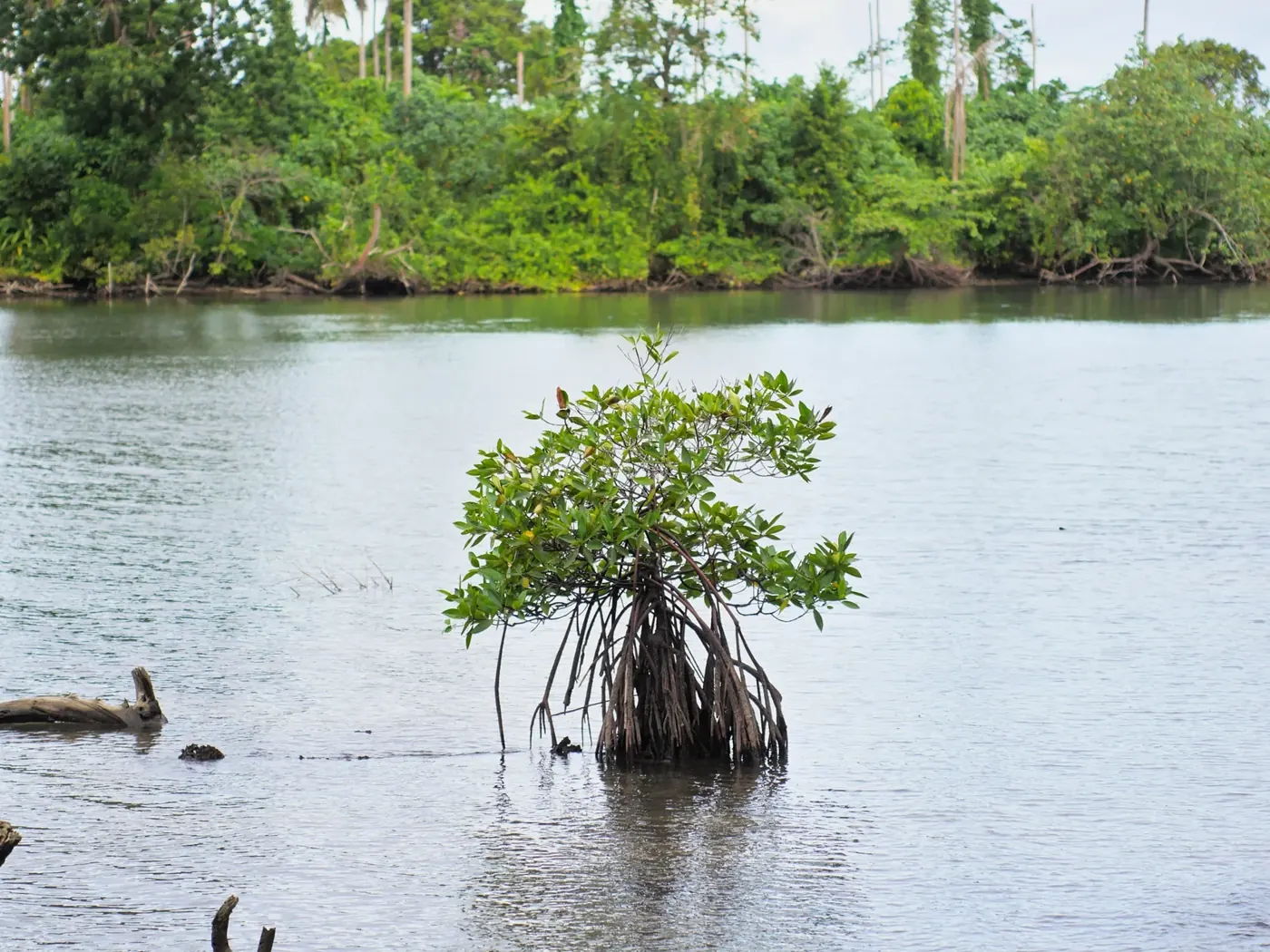
Habitat · 05
Tidal forests occupy parts of mainland deltas and island shores. Their connection to river water, tides and neighbouring seagrass means that a simple coastal outline cannot describe the whole habitat.
Explore the habitat ↗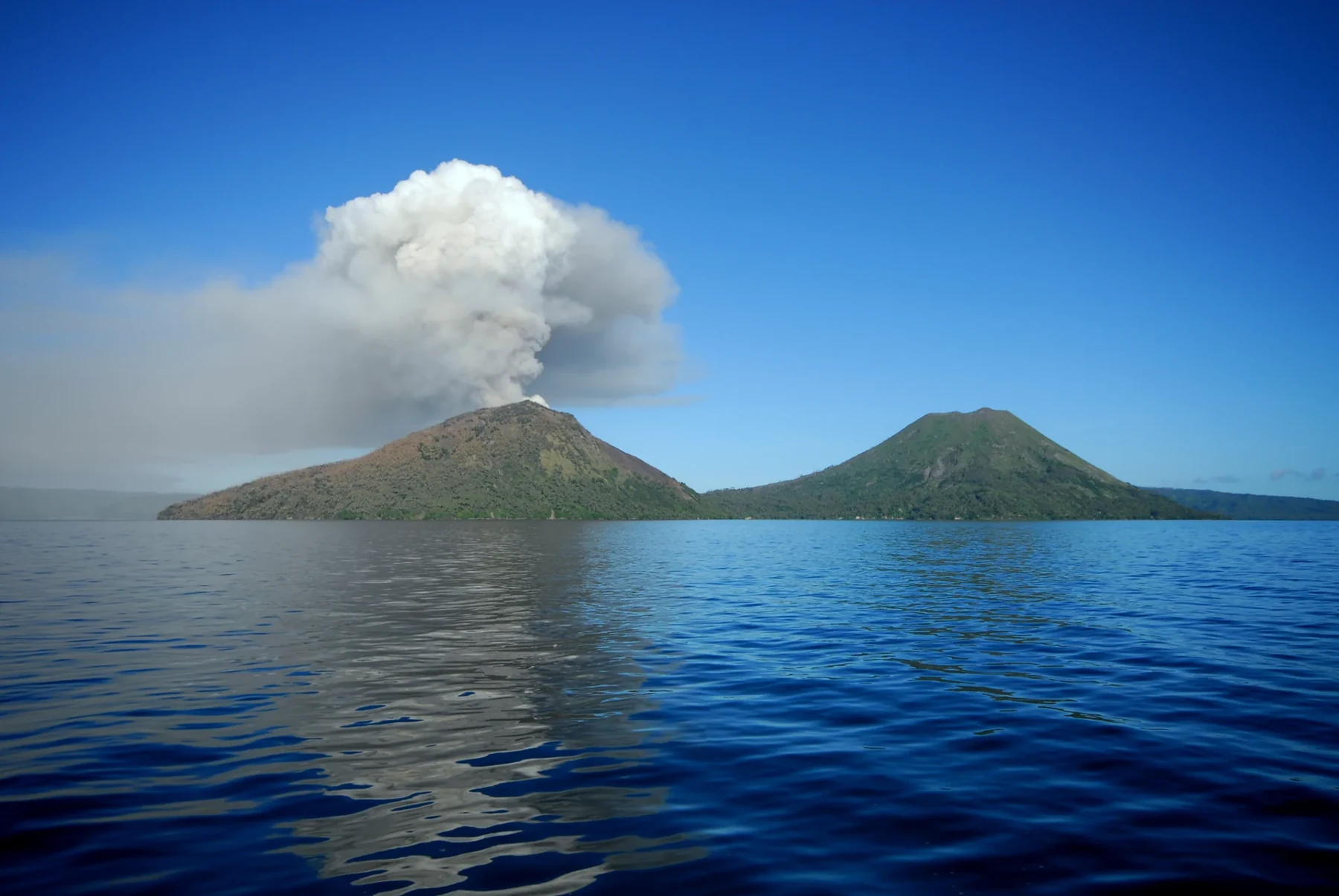
Habitat · 06
Separate island groups and mainland shores contain distinct coastal settings. Keep reef, beach, lagoon and open water visible rather than converting a provincial name into one continuous habitat.
Explore the habitat ↗Rainforest interior and aerial roots at Varirata National Park, near Port Moresby, Papua New Guinea. — gailhampshire from Cradley, Malvern, U.K. Original photograph · CC BY 2.0. Cropped for the cards; photographs do not establish snake occurrence.
Montane forest along the Bulldog Track in the Owen Stanley Range, Papua New Guinea. — Colin Freeman. Original photograph · CC BY-SA 3.0. Cropped for the cards; photographs do not establish snake occurrence.
Limestone intertidal rock and tree roots at Madang, Papua New Guinea. A coastal limestone example. — Dayrat B, Goulding TC, Apte D, Aslam S, Bourke A, Comendador J, Khalil M, Ngô XQ, Tan SK, Tan SH (2020) Systematic revision of the genus Peronia Fleming, 1822 (Gastropoda, Euthyneura, Pulmonata, Onchidiidae). ZooKeys 972: 1-224.. Original photograph · CC BY 4.0. Cropped for the cards; photographs do not establish snake occurrence.
Vegetated channel in the Sepik River area, Papua New Guinea, photographed from a boat. — David Bacon. Original photograph · CC BY 2.0. Cropped for the cards; photographs do not establish snake occurrence.
Mangrove roots in tidal water near Madang, Papua New Guinea. — myrmecophil (iNaturalist). Original photograph · CC0. Cropped for the cards; photographs do not establish snake occurrence.
Turanguna and Kombiu above the water in the Rabaul caldera, East New Britain, Papua New Guinea. — Taro Taylor. Original photograph · CC BY 2.0. Cropped for the cards; photographs do not establish snake occurrence.
The species catalogue
Only records naming this place appear below. These are extracted locality records, not complete island or regional inventories.
6 species · showing 6
001 · Typhlopidae
Bismarck sharp-nosed blindsnake
Papua New Guinea: New Britain; New Ireland.
Read the species account →002 · Pythonidae
(Bismarck) Ringed python
Papua New Guinea: New Britain; New Ireland.
Read the species account →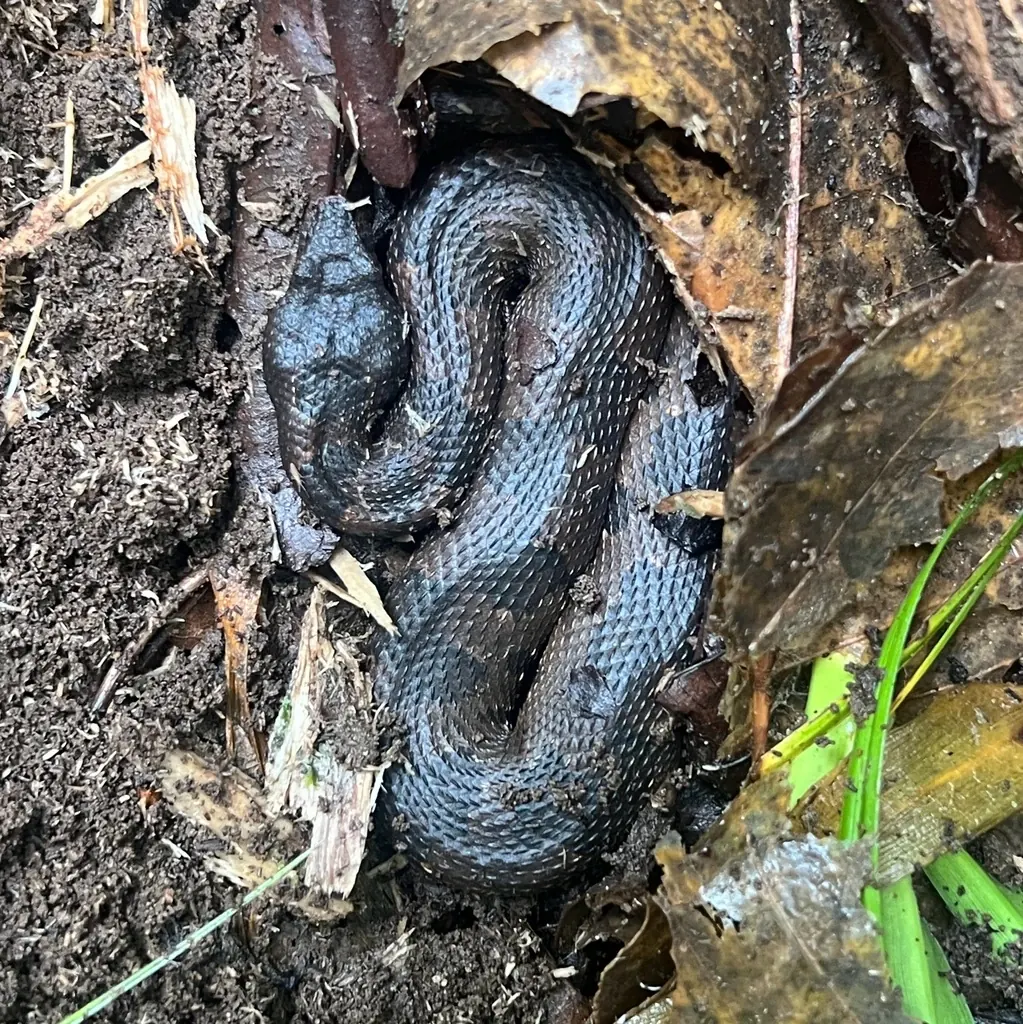
003 · Boidae
New Guinea ground boa
Papua New Guinea: Sepik; New Britain; New Ireland; Manus, Admiralty Islands.
Read the species account →James K. Douch · CC BY-SA 4.0 · https://creativecommons.org/licenses/by-sa/4.0/
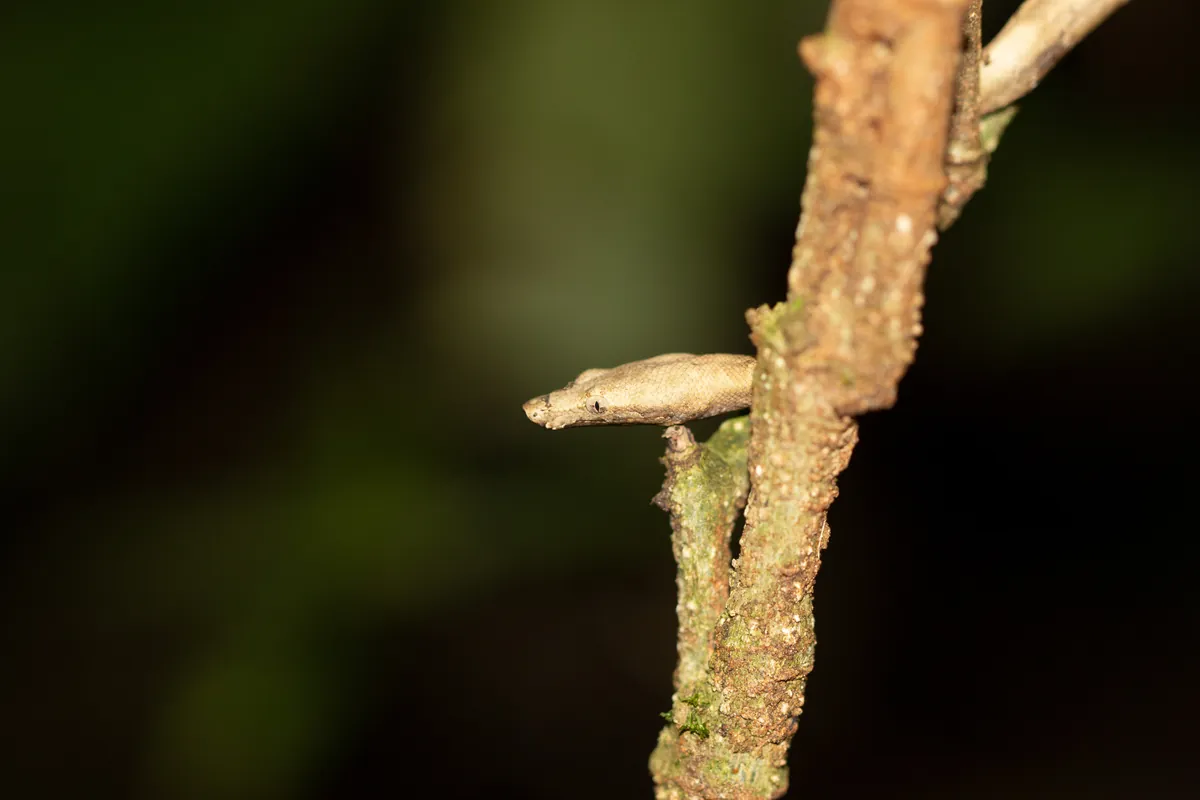
004 · Boidae
Pacific boa
Papua New Guinea: Lae; New Britain; New Ireland; Admiralty Islands.
Read the species account →Romain Boisseau / iNaturalist · CC BY-SA 4.0 · https://creativecommons.org/licenses/by-sa/4.0/
005 · Gerrhopilidae
Species account
Papua New Guinea: New Ireland.
Read the species account →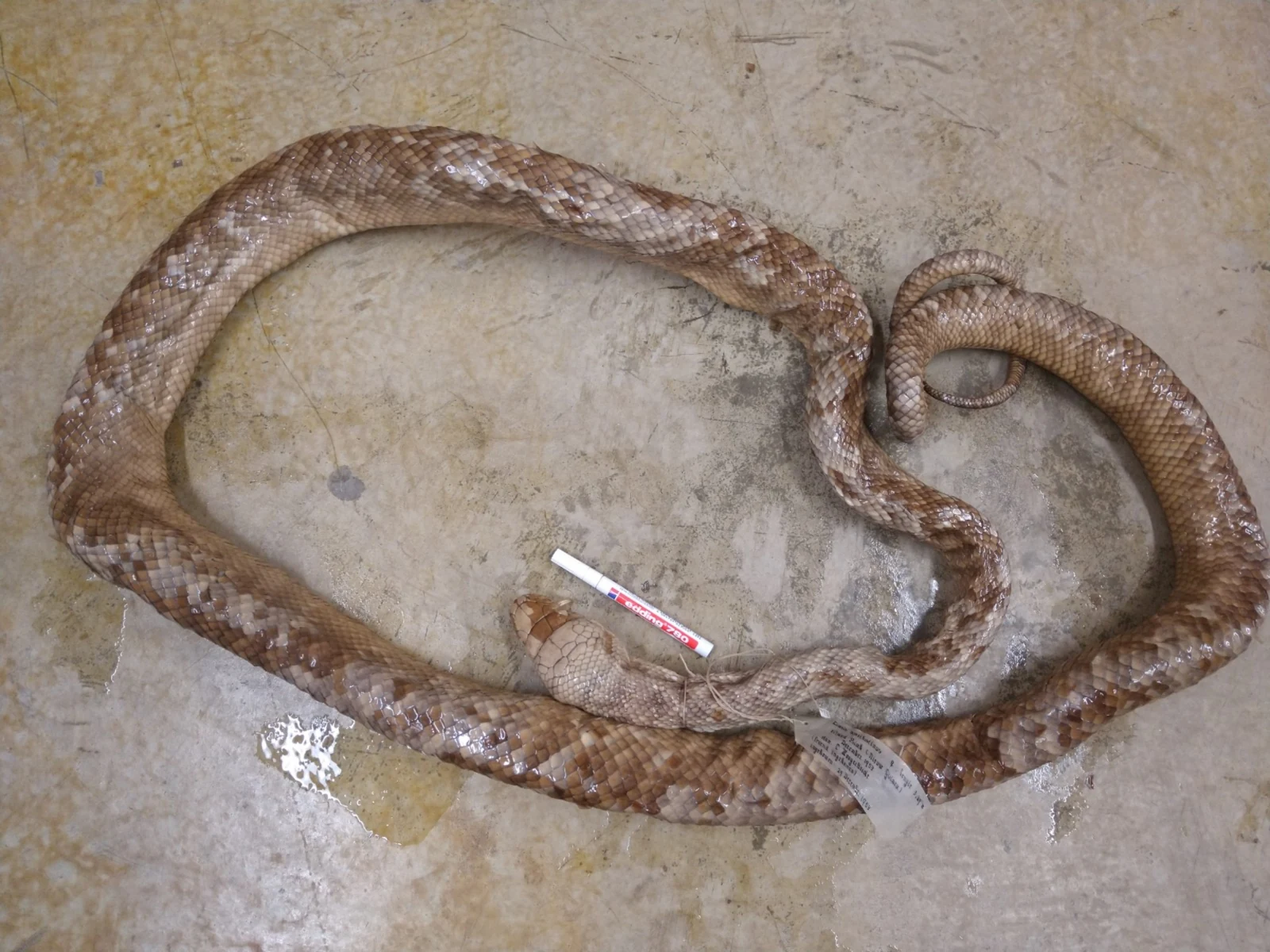
006 · Pythonidae
Amethystine or scrub python
Papua New Guinea: New Britain; New Ireland; Ferguson; Louisiade Archipelago.
Read the species account →Naturalis Biodiversity Center · CC0 1.0 · https://creativecommons.org/publicdomain/zero/1.0/
The research library
This edition lists 143 species with supported country records from checked taxonomic treatments and cited field studies. This total includes 1 record marked as introduced; it is not a native-species total. It is not a claim of a complete national inventory. Each account retains its source and check date; individual evidence entries retain their own review dates.
The dated reference lists 133 native names. The comparison has added six missing native-name records, including Ramphotyphlops erycinus (listed there as Anilios erycinus), plus an introduced Indotyphlops braminus record. Historical names and current country records are not directly comparable totals. Review remains incomplete.
RepFocus: Papua New Guinea native-snake checklist (dated compilation) ↗
Museums Victoria specimen D 2308 is catalogued from Papua New Guinea. No more precise collecting locality is supplied, so no island is assigned.
Museums Victoria: Hydrelaps darwiniensis, D 2308 ↗Supplementary Table S1 of the 2022 Miralia study lists Myron richardsonii voucher LSUMZ 96944 from Daru Island, Papua New Guinea, citing Bernstein et al. (2021). Daru has no separate guide in this edition; the record is not assigned to mainland New Guinea.
Phylogenetic placement and diet of Miralia alternans (2022): Supplementary Table S1 ↗Roberts et al. (2024), Table 1, list PNG samples ABTC 45572 from Hela and LSUMZ 129271 from Central Province. These named samples establish an eastern New Guinea record independently of the database's Indonesian distribution text.
Roberts et al. (2024): Systematics and biogeography of a Sunda-Papuan snake lineage, Table 1 ↗Roberts et al. (2024), Table 1, identify BPBM 23454 (field number FK 11480) as Tropidonophis picturatus from West Sepik, PNG. The paper also includes an Indonesian sample; only the PNG specimen supports this country assignment.
Roberts et al. (2024): Systematics and biogeography of a Sunda-Papuan snake lineage, Table 1 ↗Introduced occurrence
McCoy (1980), p. 57, records the species under Typhlina bramina on Bougainville. This supports PNG, not an inferred mainland record. The author considers human introduction likely; its timing is uncertain.
McCoy (1980): Reptiles of the Solomon Islands, pp. 57–58 ↗Wallach et al. (2007) document Bougainville specimens, including MCZ 65999 from Buin. Only Bougainville is assigned here; the Alotau record is questioned in the checked taxonomic treatment.
Wallach et al. (2007): Synopsis of Acutotyphlops, range and examined specimens ↗The checked treatment places the historical type locality in northeastern Papua New Guinea. The older name Anilios erycinus refers to this same species, not an additional taxon.
The Reptile Database: Ramphotyphlops erycinus — reviewed locality text ↗The distribution comment explicitly records Bougainville and San Cristobal. Bougainville supports PNG; the suggested intervening islands are possibilities, not confirmed localities.
The Reptile Database: Ramphotyphlops mansuetus — reviewed locality text ↗Hydrophis curtus, H. melanosoma, H. platurus, H. schistosus, H. stokesii, Laticauda colubrina and Microcephalophis gracilis still require a country-specific, taxonomically current evidence check. Broad New Guinea ranges and historical species concepts are insufficient.
Conflicting Papua New Guinea / SE Irian Jaya geography remains withheld pending an unambiguous locality.
The older checklist and New Guinea type locality conflict with the current restricted distribution. A historical locality alone is not accepted.
The older species concept needs reconciliation with revised New Guinean taxa before changing counts.
Records absent from this dated reference also need review, particularly broad historical concepts such as Acanthophis antarcticus, Dendrelaphis punctulatus and Liasis mackloti. They have not been removed merely because the lists differ.
Country links use a single accepted species identity. Revised names and disputed records are kept visible here; uncertain records do not enter the listed collection or regional totals.
Uncertain — excluded from the listed total
Despite its name, the current treatment regards this species as Australian, occurring in Western Australia, the Northern Territory and Queensland. Old New Guinean assignments require the separate D. vestigiata treatment.
Introduced occurrence
McCoy (1980), p. 57, records the species under Typhlina bramina on Bougainville. This supports PNG, not an inferred mainland record. The author considers human introduction likely; its timing is uncertain.
Search results were checked against distribution text and taxonomic qualifications. A geographic name alone does not establish a political country: New Guinea, the Solomon archipelago and Micronesia span more than one country or territory. Introduced and unresolved records require separate interpretation.
Place counts require explicit named localities, including valid type localities. Counts can overlap where sources name multiple places. Regional maps group historical boundary snapshots for navigation, while island outlines use Natural Earth; neither is a species range or an observation map. Small islands can be below the outline dataset’s resolution, so geographic reference markers and the directory remain available.
Natural Earth 1:10m · public domain. Island label positions are geographic references, not observations. Map provenance →
The checked distribution does not establish this political country or territory. A search match or broad ocean/archipelago name alone is insufficient.
Read source 1 ↗The localities are in Indonesian West Papua; the phrase West Papua New Guinea is not a record for the country Papua New Guinea.
Read source 1 ↗The localities are in Indonesian West Papua, not Papua New Guinea.
Read source 1 ↗The localities are in Indonesian West Papua, not Papua New Guinea.
Read source 1 ↗The distribution pairs Papua New Guinea with SE Irian Jaya. That conflicting geography needs resolution before inclusion.
Read source 1 ↗The cited Vogelkop locality is in Indonesian New Guinea. The conflicting country label is not accepted without a verified PNG locality.
Read source 1 ↗The checked distribution does not establish this political country or territory. A search match or broad ocean/archipelago name alone is insufficient.
Read source 1 ↗The checked distribution does not establish this political country or territory. A search match or broad ocean/archipelago name alone is insufficient.
Read source 1 ↗The checked distribution does not establish this political country or territory. A search match or broad ocean/archipelago name alone is insufficient.
Read source 1 ↗The checked distribution does not establish this political country or territory. A search match or broad ocean/archipelago name alone is insufficient.
Read source 1 ↗The checked distribution does not establish this political country or territory. A search match or broad ocean/archipelago name alone is insufficient.
Read source 1 ↗The checked distribution does not establish this political country or territory. A search match or broad ocean/archipelago name alone is insufficient.
Read source 1 ↗The checked distribution does not establish this political country or territory. A search match or broad ocean/archipelago name alone is insufficient.
Read source 1 ↗The checked distribution does not establish this political country or territory. A search match or broad ocean/archipelago name alone is insufficient.
Read source 1 ↗The checked distribution does not establish this political country or territory. A search match or broad ocean/archipelago name alone is insufficient.
Read source 1 ↗The checked distribution does not establish this political country or territory. A search match or broad ocean/archipelago name alone is insufficient.
Read source 1 ↗The checked distribution does not establish this political country or territory. A search match or broad ocean/archipelago name alone is insufficient.
Read source 1 ↗The taxonomic comment restricts the species to Niue, superseding the broader distribution string.
Read source 1 ↗The checked distribution does not establish this political country or territory. A search match or broad ocean/archipelago name alone is insufficient.
Read source 1 ↗The checked distribution does not establish this political country or territory. A search match or broad ocean/archipelago name alone is insufficient.
Read source 1 ↗The treatment repeats a broader carpet-python distribution including other named taxa; it does not establish this species in PNG.
Read source 1 ↗The checked distribution does not establish this political country or territory. A search match or broad ocean/archipelago name alone is insufficient.
Read source 1 ↗The checked distribution does not establish this political country or territory. A search match or broad ocean/archipelago name alone is insufficient.
Read source 1 ↗The checked distribution does not establish this political country or territory. A search match or broad ocean/archipelago name alone is insufficient.
Read source 1 ↗Coast, estuaries, waterfalls and offshore geography; tourism description, not a species inventory.
Four community mangrove and seagrass plans launched in 2025. A plan is not proof of completed restoration.
Individual treatments and locality evidence are linked from each species account.
Species-level literature measurements and ecological traits. Exact-name matches only; imputed or ambiguous fields are omitted. These summaries are not local observations.
Original descriptions and collection environments for four island species.