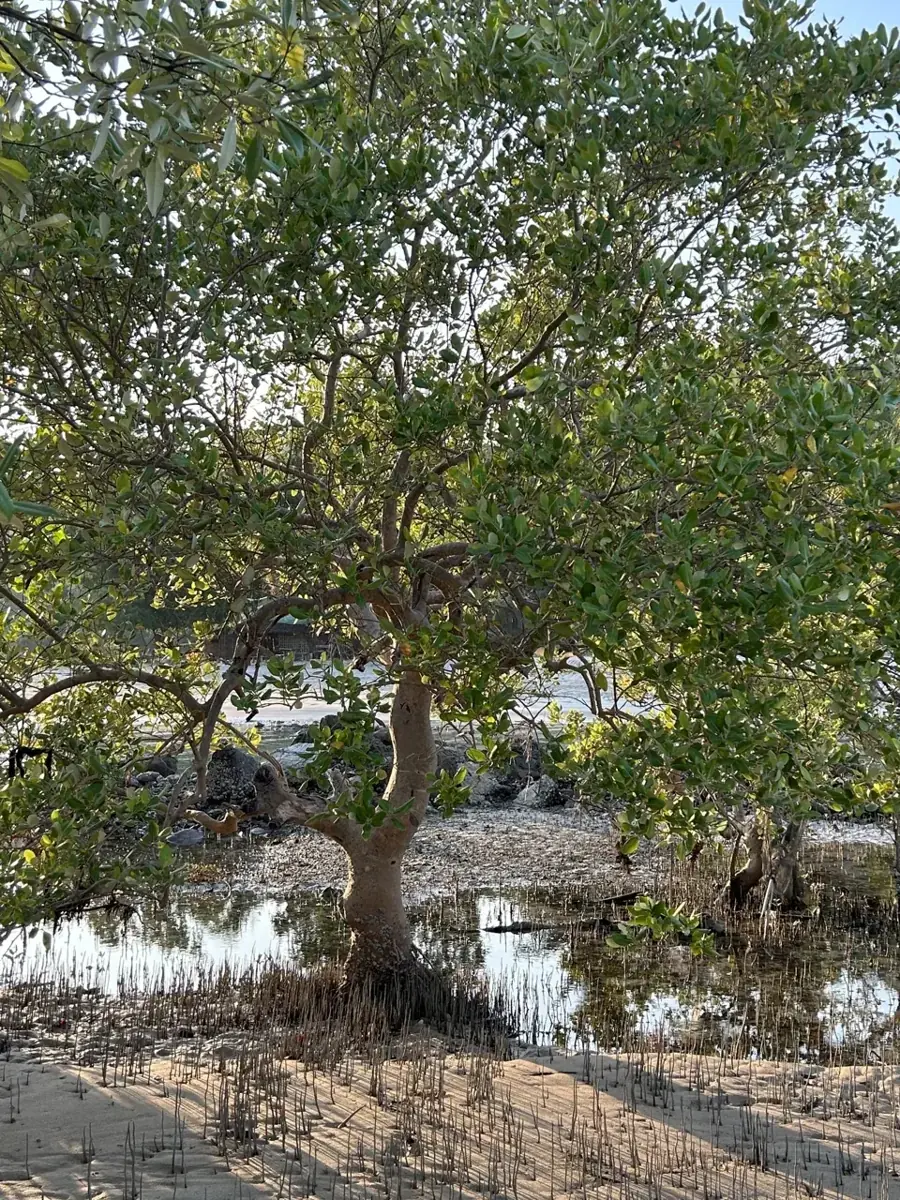
Avicennia mangroves and exposed roots on the Rakhine coast, Myanmar.

Myanmar · Habitat field guide

Mangroves & tidal forest

Mangroves and tidal flats form a connected estuarine mosaic.

Avicennia mangroves and exposed roots on the Rakhine coast, Myanmar.

Photograph: no rights reserved · Image source · CC0. Cropped to fill the hero; darkened for text legibility.

Understanding the environment

A sense of the habitat.

Mangroves and tidal flats form a connected estuarine mosaic.

Read closely
Vegetation, water and substrate
Local example
Meinmahla Kyun
Evidence scale
Named sites, not country-wide occurrence

Explore the structure · Select a zone to compare its structure and details worth recording.

Read the habitat

Select a zone to see what changes.

Watch the water

Tidal channel

Record tidal stage and channel setting.

Observation prompts do not establish that a particular snake occurs in this zone.

Conceptual zones, not a measured transect or a map of snake occurrences.

Sources: Ramsar · Meinmahla Kyun Information Sheet

Field notes · 01

Landscape context

Meinmahla Kyun’s Ramsar assessment describes mangrove forest, tidal mudflat and estuarine channels. Keep these substrates separate even within the same protected wetland.

Sources: Ramsar · Meinmahla Kyun Information Sheet

Field notes · 02

From habitat to an observation

Keep the locality, date and habitat description together. A landscape source explains the setting; only a verified species record establishes occurrence. The collection below may be smaller than the variety of environments described here.

Pressures on Myanmar’s habitats

What is at risk?

A site-specific assessment of pressures has not yet been extracted for this guide. The landscape sources below provide context; they do not establish a current threat level for each snake species.

What helps this habitat

Retain the local habitat mosaic and its connections. Interpret pressures using the cited site evidence and current local management guidance.

The connected collection

Snakes with habitat evidence.

These 8 species have supported country occurrence and an explicit habitat association in the shared account. The association may come from elsewhere in their range. This is not a complete local habitat inventory; the places above are landscape examples, not asserted collecting sites.

8 species · showing 8

Acrochordus granulatus Portrait

001 · Acrochordidae

Little filesnake

Acrochordus granulatus

(SCHNEIDER, 1799)

Non-venomous

Myanmar is explicitly listed in the checked individual taxonomic treatment.

Read the species account →

Mario Lutz · Copyright Mario Lutz. Authorised for display in this atlas; no third-party reuse licence granted.
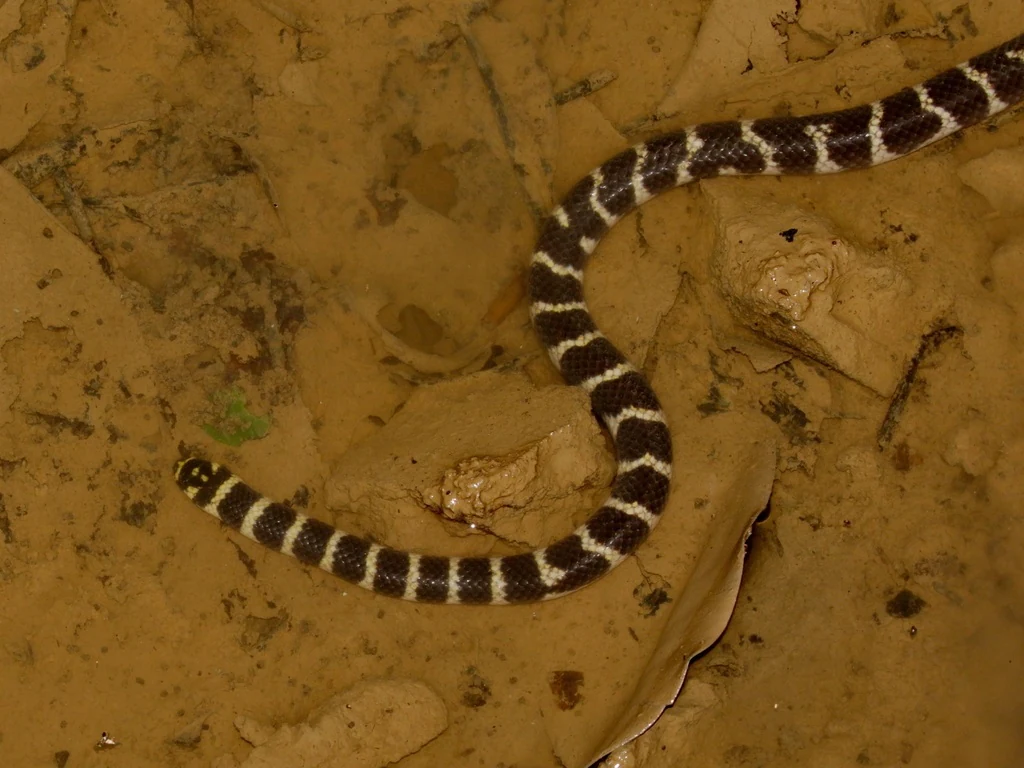
Cantoria violacea — Thailand, 2021-12-17. The head and banded body are visible in shallow muddy water.

002 · Homalopsidae

Cantor's Water Snake

Cantoria violacea

GIRARD, 1858

VenomousClinical severity not established

Myanmar is explicitly listed in the checked individual taxonomic treatment.

Read the species account →

Ian Dugdale · CC BY 4.0 · https://creativecommons.org/licenses/by/4.0/

Cerberus rynchops — real specimen photograph; identification follows the linked source.

003 · Homalopsidae

South Asian Bockadam, New Guinea bockadam, Dog-faced Water Snake

Cerberus rynchops

(SCHNEIDER, 1799)

VenomousClinical severity not established

Myanmar is explicitly listed in the checked individual taxonomic treatment.

Read the species account →

Swati Sidhu · CC BY-SA 4.0 · https://creativecommons.org/licenses/by-sa/4.0

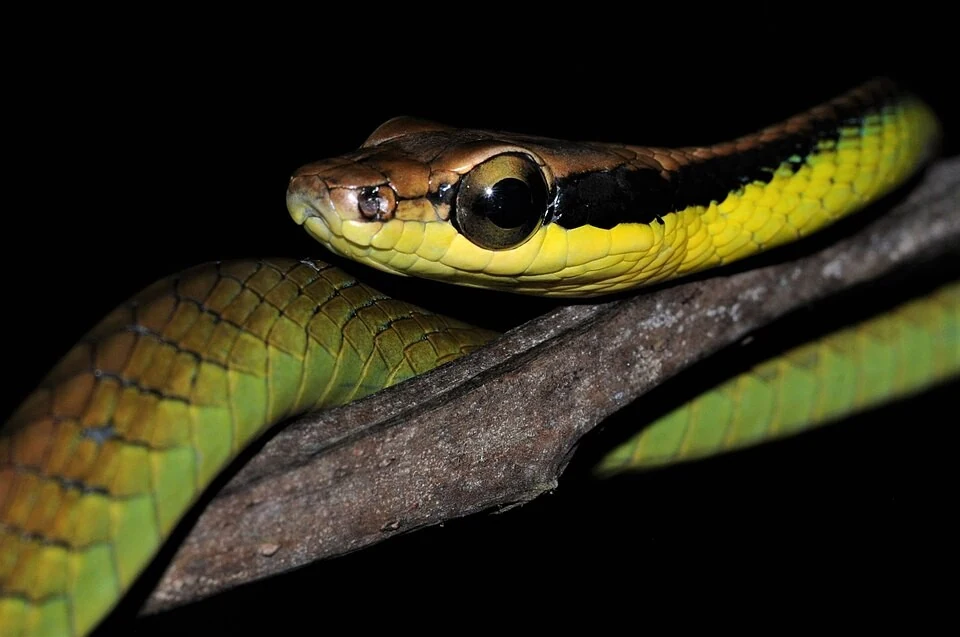
Dendrelaphis cyanochloris — real specimen photograph; identification follows the linked source.

004 · Colubridae

Wall's Bronzeback

Dendrelaphis cyanochloris

(WALL, 1921)

Non-venomous

Myanmar is explicitly listed in the checked individual taxonomic treatment.

Read the species account →

Marius Burger · CC0 · https://creativecommons.org/publicdomain/zero/1.0/deed.en

Fordonia leucobalia — real specimen photograph; identification follows the linked source.

005 · Homalopsidae

Crab-eating (Water) Snake

Fordonia leucobalia

(SCHLEGEL, 1837)

VenomousClinical severity not established

Myanmar is explicitly listed in the checked individual taxonomic treatment.

Read the species account →

Samuel GUIRAUDOU · CC BY 4.0 · https://creativecommons.org/licenses/by/4.0

Gerarda prevostiana — India, 2023-10-14.

006 · Homalopsidae

Gerard's Water Snake

Gerarda prevostiana

(EYDOUX & GERVAIS, 1837)

VenomousClinical severity not established

Myanmar is explicitly listed in the checked individual taxonomic treatment.

Read the species account →

Ramesh Shenai · CC BY 4.0 · https://creativecommons.org/licenses/by/4.0/

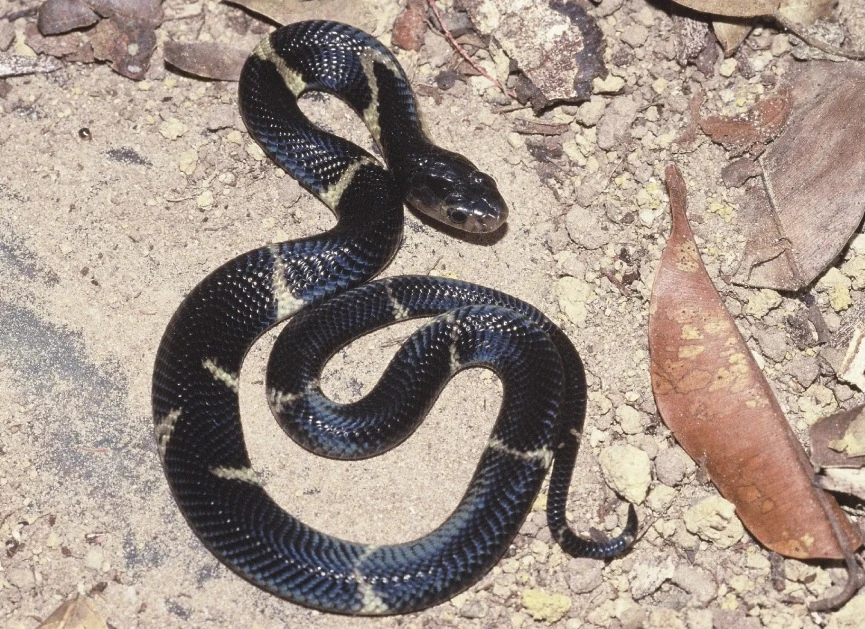
Naja sumatrana — juvenile photographed on the Santubong Peninsula, Sarawak, Malaysian Borneo.

007 · Elapidae

Equatorial Spitting cobra

Naja sumatrana

MÜLLER, 1887

VenomousMedically significant effects

Myanmar is explicitly listed in the checked individual taxonomic treatment.

Read the species account →

Johan van Rooijen · CC BY 3.0 · https://creativecommons.org/licenses/by/3.0

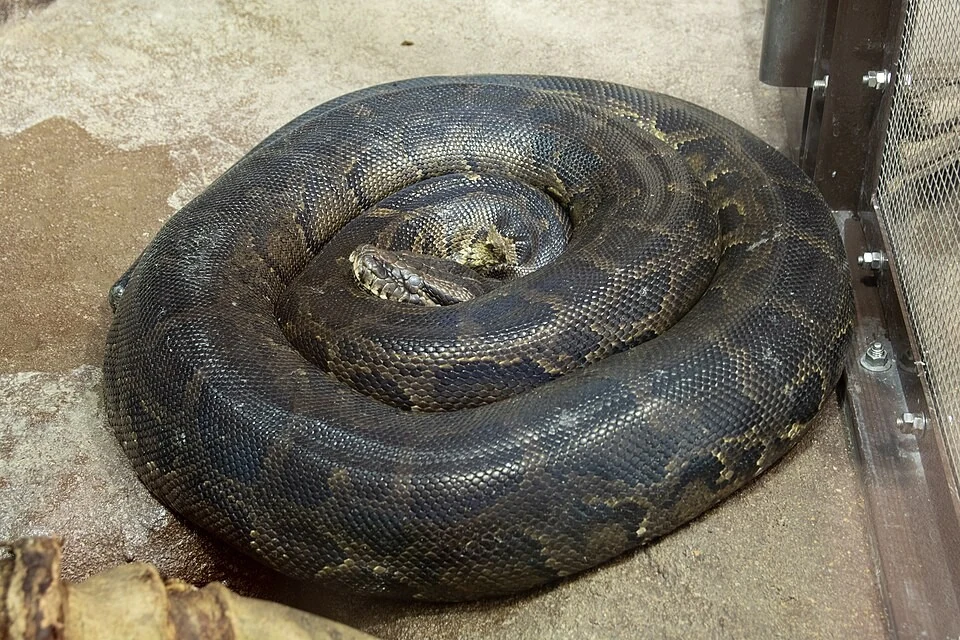
Python bivittatus — real specimen photograph; identification follows the linked source.

008 · Pythonidae

Burmese Python

Python bivittatus

KUHL, 1820

Non-venomous

Myanmar is explicitly listed in the checked individual taxonomic treatment.

Read the species account →

Σ64 · CC BY 4.0 · https://creativecommons.org/licenses/by/4.0

All 199 species in the country collection →

Read further

Evidence & sources.

Guide reviewed 11 October 2026. Source dates and geographic scope matter; landscape photographs do not establish species occurrence.

  1. Ramsar · Meinmahla Kyun Information Sheet

    Designation-era delta mangrove and mudflat description; older conservation labels not imported.

Continue through Myanmar

Explore another habitat.

01

Forests & woodland

Northern catchments and southern forest corridors are distinct landscapes.

02

Mountain habitats

Northern mountains and the Chin Hills have separate elevation gradients.

03

Limestone & coral-rock forest

Limestone landscapes connect rock, groundwater and surface wetlands.

04

Rivers, lakes & wetlands

Lakes, flooded margins and watersheds are connected but different.

05

Coastal & marine landscapes

Mottama demonstrates a strongly tidal coast.