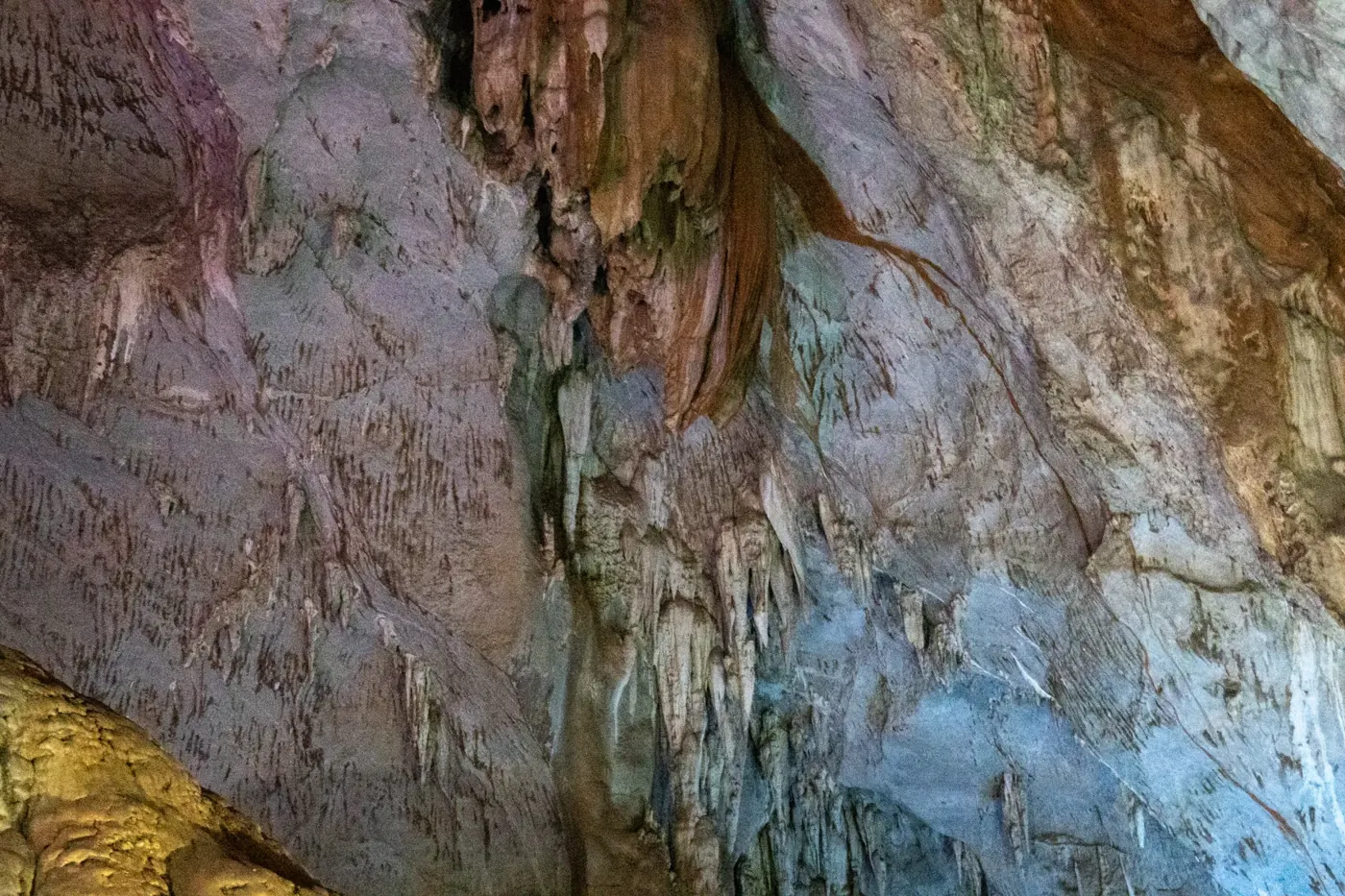
Limestone formations inside Saddan Cave, Hpa-An, Myanmar.

Myanmar · Habitat field guide

Limestone & coral-rock forest

Limestone landscapes connect rock, groundwater and surface wetlands.

Limestone formations inside Saddan Cave, Hpa-An, Myanmar.

Photograph: PsamatheM · Image source · CC BY-SA 4.0. Cropped to fill the hero; darkened for text legibility.

Understanding the environment

A sense of the habitat.

Limestone landscapes connect rock, groundwater and surface wetlands.

Read closely
Vegetation, water and substrate
Local example
Inlay Lake catchment
Evidence scale
Named sites, not country-wide occurrence

Explore the structure · Select a zone to compare its structure and details worth recording.

Read the habitat

Select a zone to see what changes.

Identify the substrate

Rock surface

Observe carbonate rock from established paths.

Observation prompts do not establish that a particular snake occurs in this zone.

Conceptual zones, not a measured transect or a map of snake occurrences.

Sources: UNESCO · Inlay Lake Biosphere Reserve

Field notes · 01

Landscape context

UNESCO describes Inlay Lake within a limestone landscape shaped by dissolution, with caves, sinkholes, springs and intermittent streams. These landforms explain its setting; a cave or lake name alone does not establish a snake locality.

Sources: UNESCO · Inlay Lake Biosphere Reserve

Field notes · 02

From habitat to an observation

Keep the locality, date and habitat description together. A landscape source explains the setting; only a verified species record establishes occurrence. The collection below may be smaller than the variety of environments described here.

Pressures on Myanmar’s habitats

What is at risk?

A site-specific assessment of pressures has not yet been extracted for this guide. The landscape sources below provide context; they do not establish a current threat level for each snake species.

What helps this habitat

Retain the local habitat mosaic and its connections. Interpret pressures using the cited site evidence and current local management guidance.

The connected collection

Snakes with habitat evidence.

These 1 species have supported country occurrence and an explicit habitat association in the shared account. The association may come from elsewhere in their range. This is not a complete local habitat inventory; the places above are landscape examples, not asserted collecting sites.

1 species · showing 1

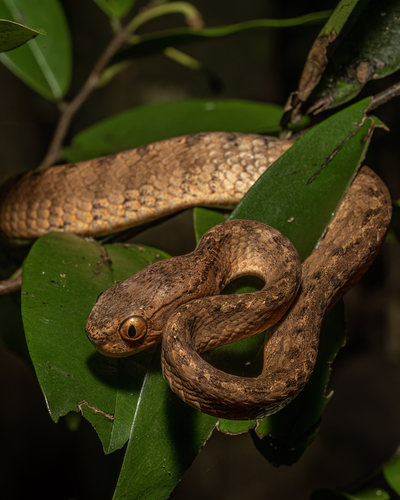
Pareas berdmorei

001 · Pareidae

Mengla Snail-eating Snake

Pareas berdmorei

THEOBALD, 1868

Non-venomous

Myanmar is explicitly listed in the checked individual taxonomic treatment. Regional evidence: Mon. Named records do not imply continuous occurrence throughout a region.

Read the species account →

James Hunt · CC-BY · https://www.inaturalist.org/photos/320100175

All 199 species in the country collection →

Read further

Evidence & sources.

Guide reviewed 11 October 2026. Source dates and geographic scope matter; landscape photographs do not establish species occurrence.

  1. UNESCO · Inlay Lake Biosphere Reserve

    Shan highland lake, limestone dissolution and connected wetlands; not a current snake checklist.

Continue through Myanmar

Explore another habitat.

01

Forests & woodland

Northern catchments and southern forest corridors are distinct landscapes.

02

Mountain habitats

Northern mountains and the Chin Hills have separate elevation gradients.

03

Rivers, lakes & wetlands

Lakes, flooded margins and watersheds are connected but different.

04

Mangroves & tidal forest

Mangroves and tidal flats form a connected estuarine mosaic.

05

Coastal & marine landscapes

Mottama demonstrates a strongly tidal coast.