Conversion and fire
The 2014 Natma Taung proposal identifies tea expansion, logging and fire. Those observations are historical, not current trend measurements.
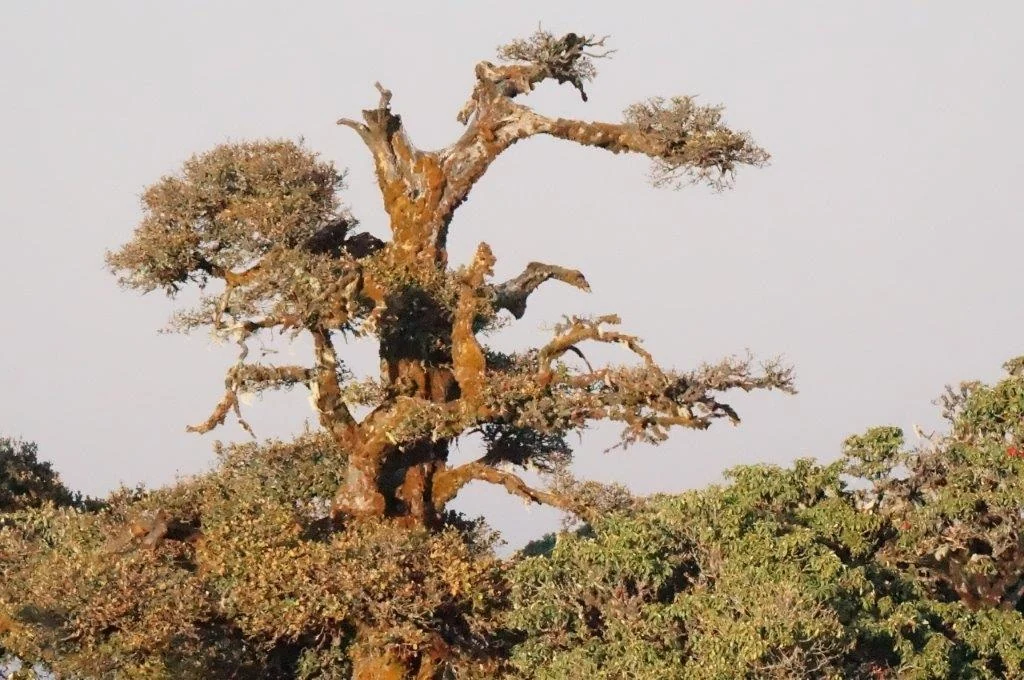
Myanmar · Habitat field guide
Northern mountains and the Chin Hills have separate elevation gradients.
Trees on Nat Ma Taung in the Chin Hills, Myanmar.
Understanding the environment
Northern mountains and the Chin Hills have separate elevation gradients.
Explore the structure · Select a zone to compare its structure and details worth recording.
Select a zone to see what changes.
Start with elevation
Keep valley and slope records separate.
Observation prompts do not establish that a particular snake occurs in this zone.
Conceptual zones, not a measured transect or a map of snake occurrences.
Sources: Myanmar / UNESCO · Hkakabo Razi proposal · Myanmar / UNESCO · Natma Taung proposal
Field notes · 01
Natma Taung’s proposal describes dipterocarp, pine, oak and oak–rhododendron forests along its slopes. Hkakabo Razi is a separate northern landscape; records from one do not establish presence in the other.
Sources: Myanmar / UNESCO · Hkakabo Razi proposal · Myanmar / UNESCO · Natma Taung proposal
Field notes · 02
Keep the locality, date and habitat description together. A landscape source explains the setting; only a verified species record establishes occurrence. The collection below may be smaller than the variety of environments described here.
Pressures on Myanmar’s habitats
The 2014 Natma Taung proposal identifies tea expansion, logging and fire. Those observations are historical, not current trend measurements.
Retain the local habitat mosaic and its connections. Interpret pressures using the cited site evidence and current local management guidance.
The connected collection
These 6 species have supported country occurrence and an explicit habitat association in the shared account. The association may come from elsewhere in their range. This is not a complete local habitat inventory; the places above are landscape examples, not asserted collecting sites.
6 species · showing 6
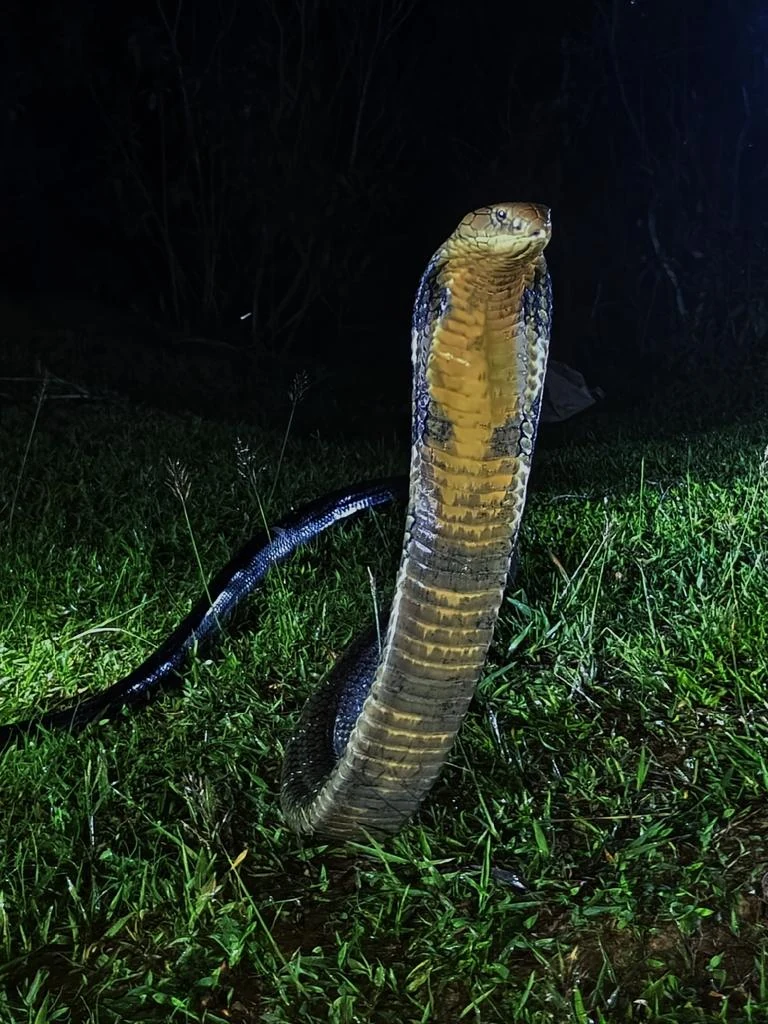
001 · Elapidae
Hamadryad, King Cobra
Myanmar is explicitly listed in the checked individual taxonomic treatment.
Read the species account →Ankur Nandi · CC BY 4.0 · https://creativecommons.org/licenses/by/4.0/
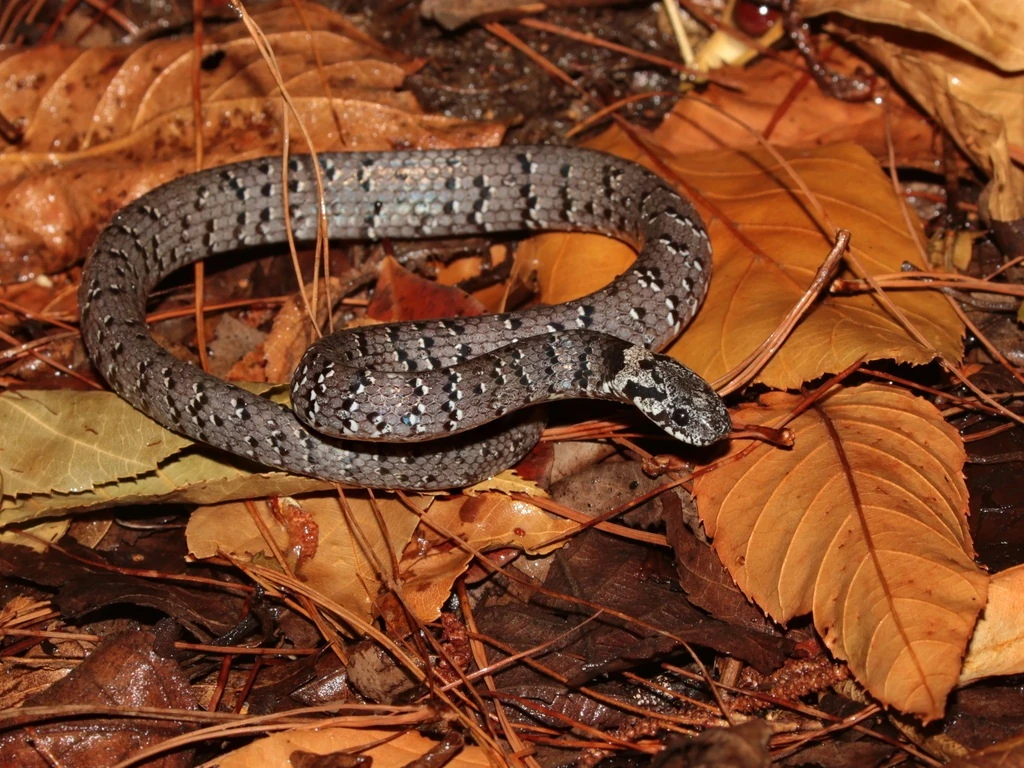
002 · Pareidae
Mountain Slug Snake
Myanmar is explicitly listed in the checked individual taxonomic treatment. Regional evidence: Kachin; Shan; Mandalay, Yangon; Mon, Tanintharyi, Tenasserim. Named records do not imply continuous occurrence throughout a region.
Read the species account →Ian Dugdale · CC BY 4.0 · https://creativecommons.org/licenses/by/4.0/
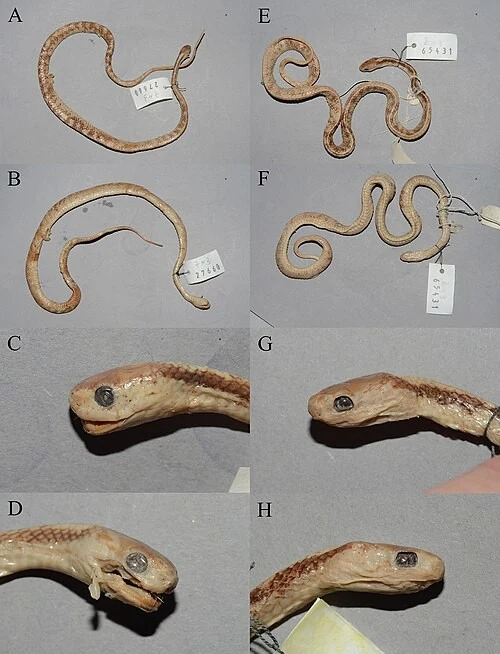
003 · Pareidae
Yunnan Slug Snake
Myanmar is explicitly listed in the checked individual taxonomic treatment.
Read the species account →Gernot Vogel, in Liu et al. (2023) · CC BY 4.0 · https://creativecommons.org/licenses/by/4.0
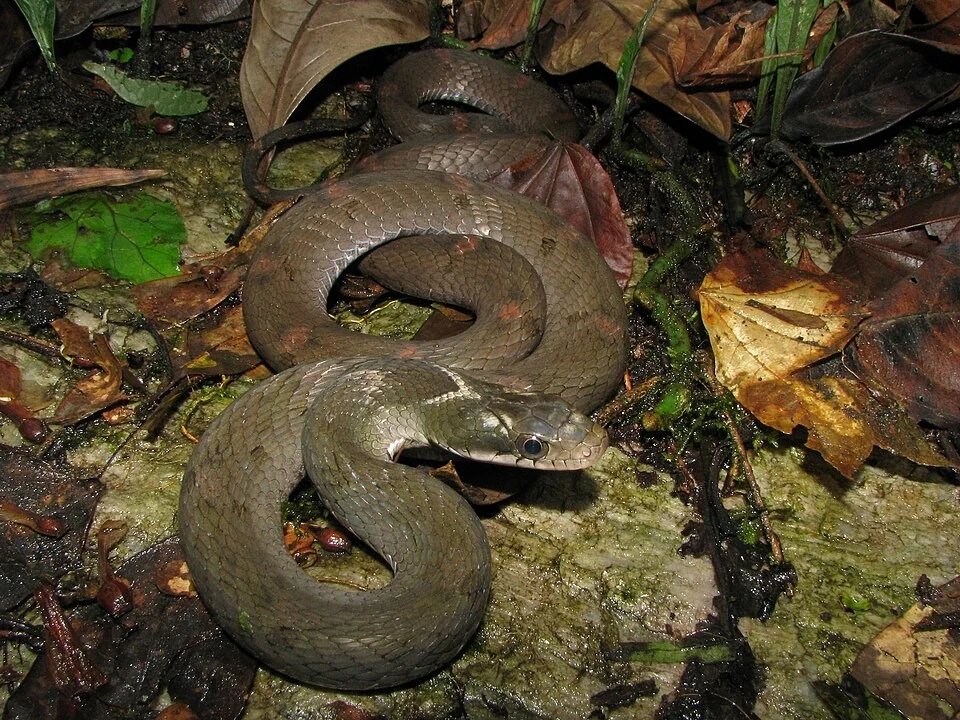
004 · Colubridae
(Large-eyed or) Big-eyed Bamboo Snake, Mock Cobra
Myanmar is explicitly listed in the checked individual taxonomic treatment.
Read the species account →Umeshsrinivasan · CC BY-SA 3.0 · https://creativecommons.org/licenses/by-sa/3.0
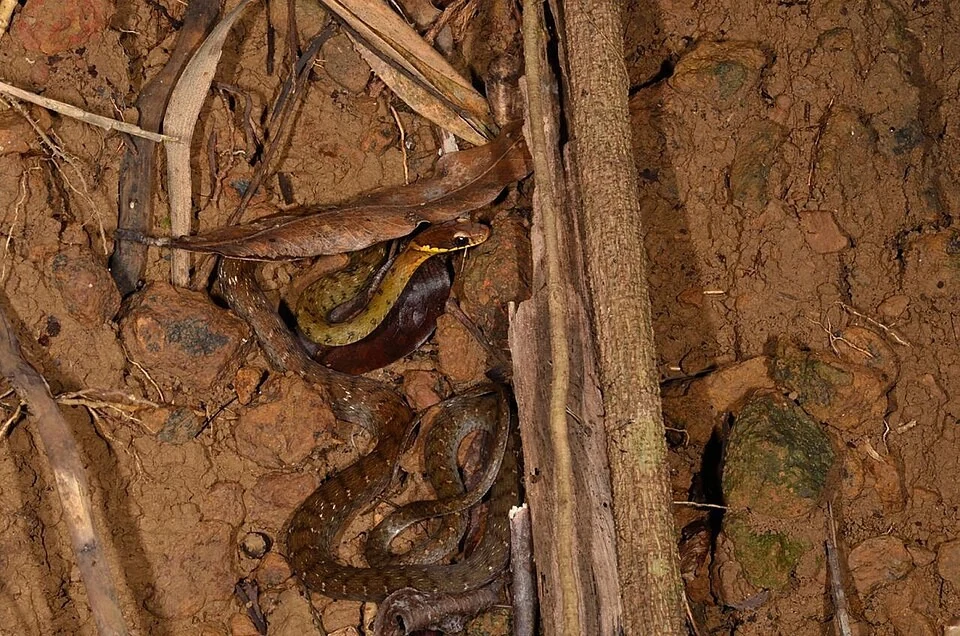
005 · Colubridae
Specklebelly Keelback
Myanmar is explicitly listed in the checked individual taxonomic treatment. A named locality in the cited account; no continuous regional range is inferred.
Read the species account →Eugene Popov · CC BY 4.0 · https://creativecommons.org/licenses/by/4.0
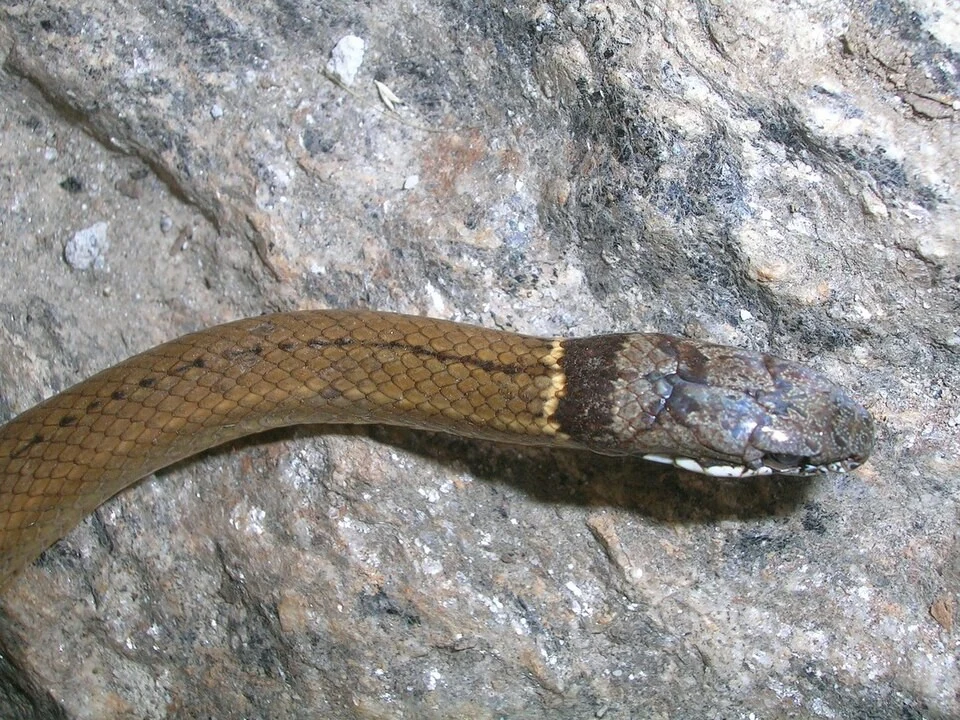
006 · Colubridae
Common Many-tooth Snake
Myanmar is explicitly listed in the checked individual taxonomic treatment.
Read the species account →L. Shyamal · CC BY-SA 3.0 · https://creativecommons.org/licenses/by-sa/3.0
Read further
Guide reviewed 11 October 2026. Source dates and geographic scope matter; landscape photographs do not establish species occurrence.
2014 Tentative List mountain-forest account; not World Heritage inscription.
2014 Tentative List Chin Hills vegetation and historical conversion/fire pressures.
Continue through Myanmar
Northern catchments and southern forest corridors are distinct landscapes.
02Limestone landscapes connect rock, groundwater and surface wetlands.
03Lakes, flooded margins and watersheds are connected but different.
04Mangroves and tidal flats form a connected estuarine mosaic.
05Mottama demonstrates a strongly tidal coast.