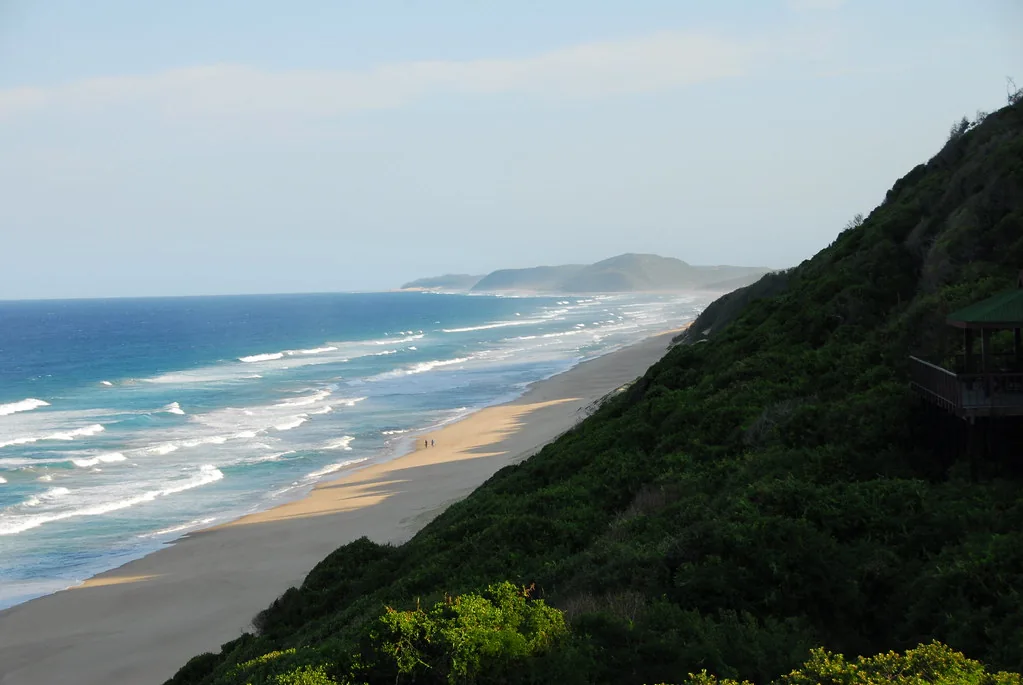
Vegetated coastal slopes, beach and Indian Ocean surf at Ponta do Ouro, Maputo Province, Mozambique.

Mozambique · Place guide

Maputo

Explore Maputo through the named places in its sourced species records.

14species with extracted evidence
9families
10region guides

Vegetated coastal slopes, beach and Indian Ocean surf at Ponta do Ouro, Maputo Province, Mozambique.

Photograph: F Mira · Image source · CC BY-SA 2.0. Cropped to fill the hero; darkened for text legibility.

Geography & biotopes

Read the landscape.

Explore Maputo through the named places in its sourced species records.

This navigation guide uses the credited boundary snapshot for Maputo. Its boundaries identify an atlas group, not a single vegetation type. OpenStreetMap, Wambacher; geoBoundaries gbOpen ADM1, 2017 snapshot; Open Data Commons Open Database License 1.0.

Ecological connections

The country habitat guides explain the environments documented in the landscape sources. Only species records assigned to this particular mapped area appear in the regional collection; a shared habitat elsewhere does not establish local occurrence.

Explore the setting

Open an individual species account to retain its original locality, observation or collection date, and source. Historical administrative names are preserved as aliases for this map snapshot.

This guide indexes these source names: Maputo. A country-only record is not automatically assigned to this place. Map markers identify navigation destinations, not collection sites.

Map boundaries, snapshot and group membership →

Convention on Biological Diversity · Mozambique national profile →

Geography is part of the record

Find your way through Mozambique.

Select a named region to open its evidence page. The complete directory below keeps every guide accessible, including places where locality evidence has not yet been extracted.

30 of 96 listed species have at least one indexed region record. 66 remain country-only. Even a nonzero count is not a complete regional inventory.

Habitats & living landscapes

Explore the living
landscapes.

Explore 3 guides to the environments, places and conservation pressures that shape this country. Each guide connects to the regional map and shared species accounts.

Landscape photographs & credits

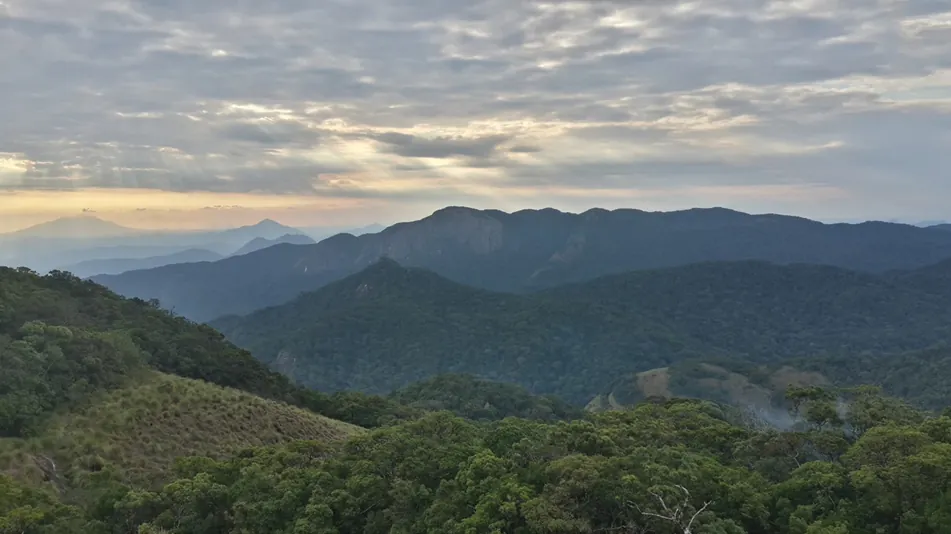
Forested mountain slopes at Mount Mabu in northern Mozambique. This landscape panel comes from the cited research figure. — Conradie et al. (2016). Original photograph · CC BY 4.0. Cropped for the cards; photographs do not establish snake occurrence.

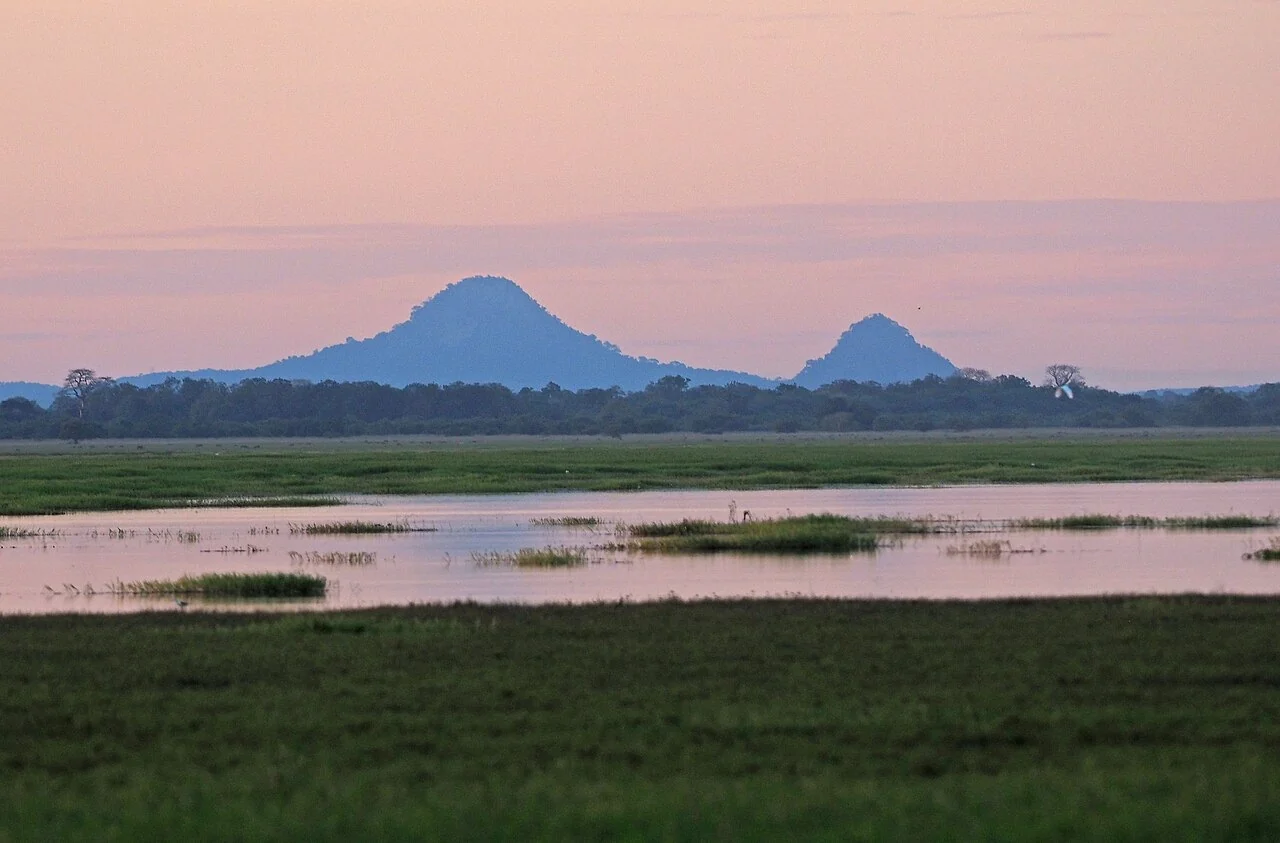
Open grassy vegetation interspersed with water in Gorongosa National Park, Mozambique, with Mount Gorongosa in the distance. This wetland-grassland mosaic should not be read as permanently dry savanna. — Judy Gallagher. Original photograph · CC BY 2.0. Cropped for the cards; photographs do not establish snake occurrence.

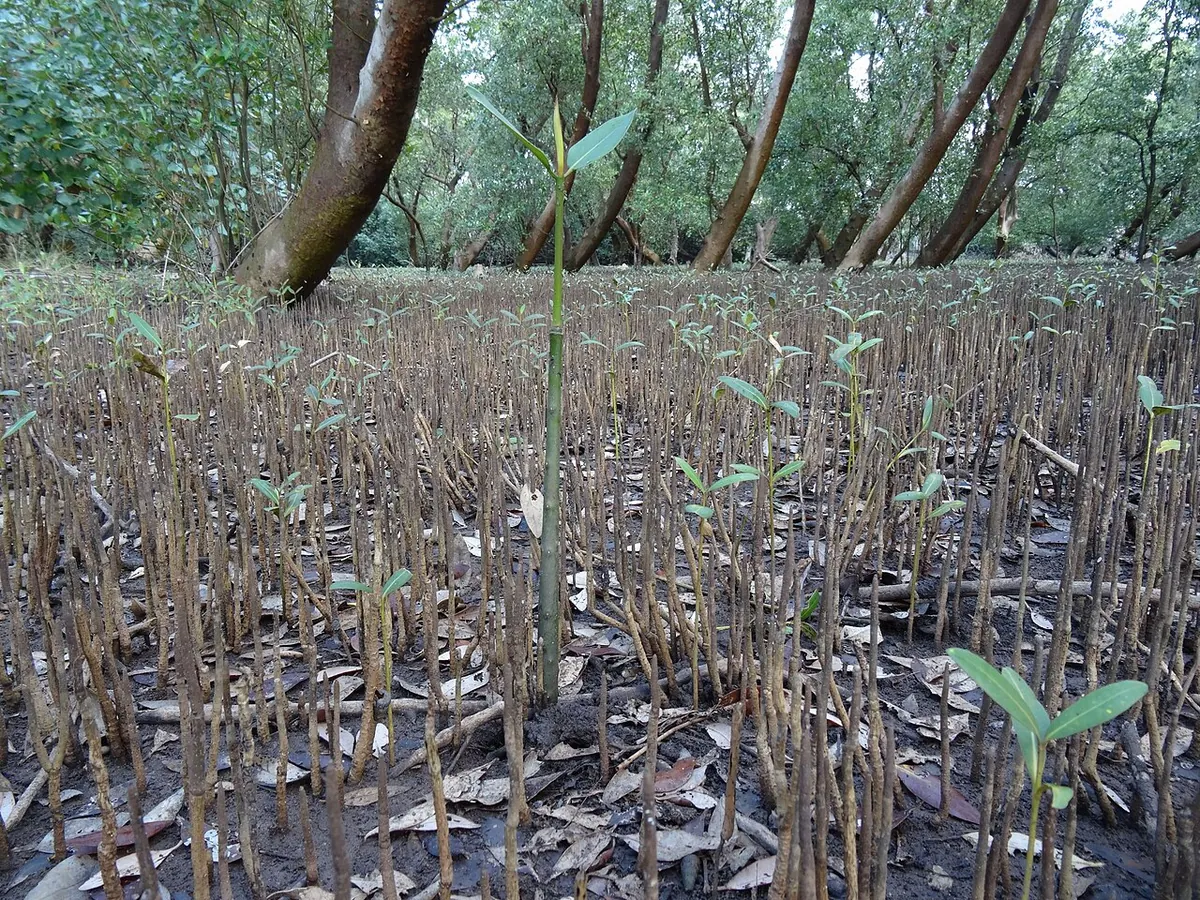
Mangrove trunks, aerial roots and seedlings on exposed ground at the Limpopo River mouth, Mozambique. — Ton Rulkens from Mozambique. Original photograph · CC BY-SA 2.0. Cropped for the cards; photographs do not establish snake occurrence.

The species catalogue

Snakes · Maputo.

Only records naming this place appear below. These are extracted locality records, not complete island or regional inventories.

14 species · showing 14

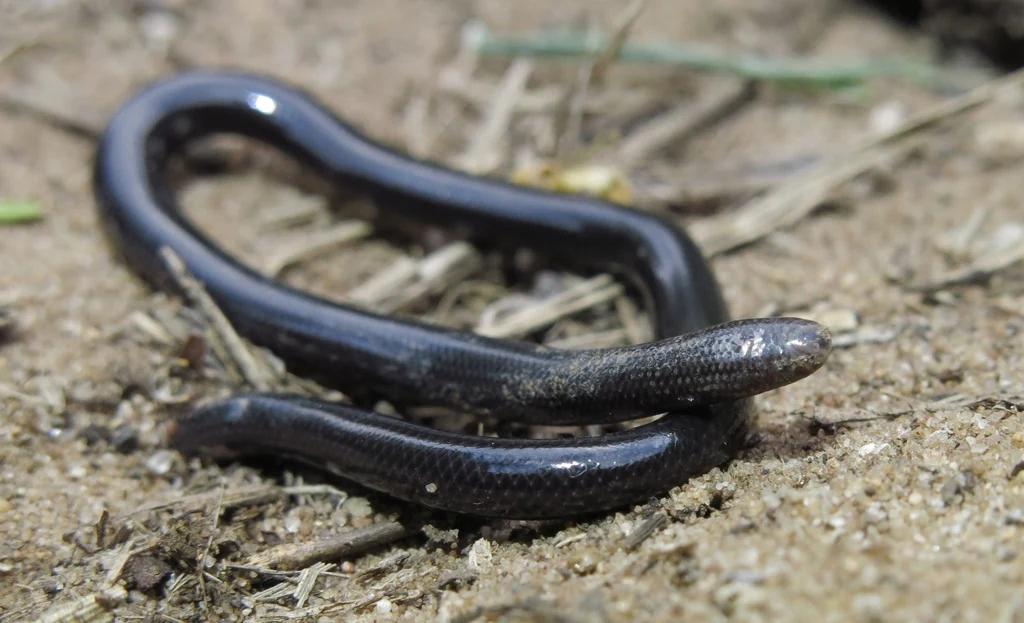
Afrotyphlops fornasinii, photographed 2019-12-16. Identification follows the linked research-grade observation.

001 · Typhlopidae

Fornasini's Blind Snake

Afrotyphlops fornasinii

(BIANCONI, 1849)

Non-venomous

The current taxonomic treatment explicitly lists this country. This is country-scale checklist evidence, not a claim of continuous occupancy or a complete regional inventory. Inhambane: museum voucher MUHNAC IICT/R 1159-1948 (1948). The museum record's reported coordinate uncertainty footprint lies within the mapped region. Inhambane: museum voucher…

Read the species account →

Ryan van Huyssteen · CC BY 4.0 · https://creativecommons.org/licenses/by/4.0/
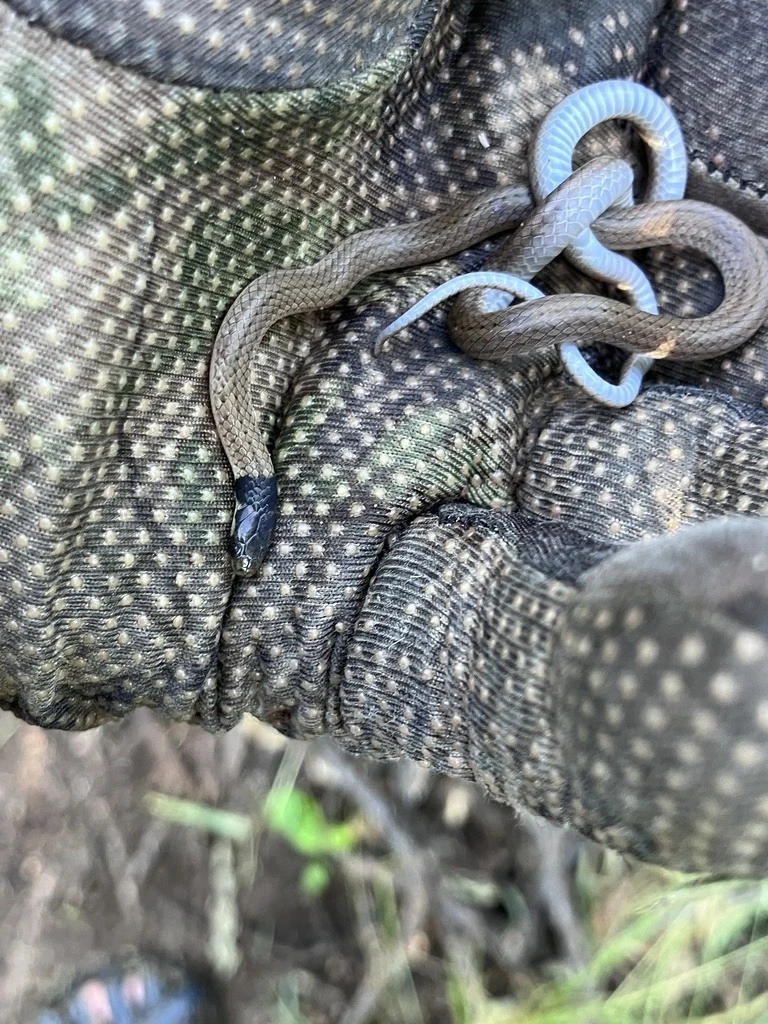
Aparallactus capensis; Kruger National Park, Musina, LP, ZA; photographed 2024-01-22.

002 · Atractaspididae

Black-headed Centipede Eater, Cape Centipede Eater

Aparallactus capensis

SMITH, 1849

VenomousClinical severity not established

The current taxonomic treatment explicitly lists this country. This is country-scale checklist evidence, not a claim of continuous occupancy or a complete regional inventory. Maputo: observation GBIF 6422470902 (2026). The original iNaturalist entry was rechecked for research-grade identification, wild status and unrestricted coordinates; its reported…

Read the species account →

no rights reserved · CC0 · https://creativecommons.org/publicdomain/zero/1.0/

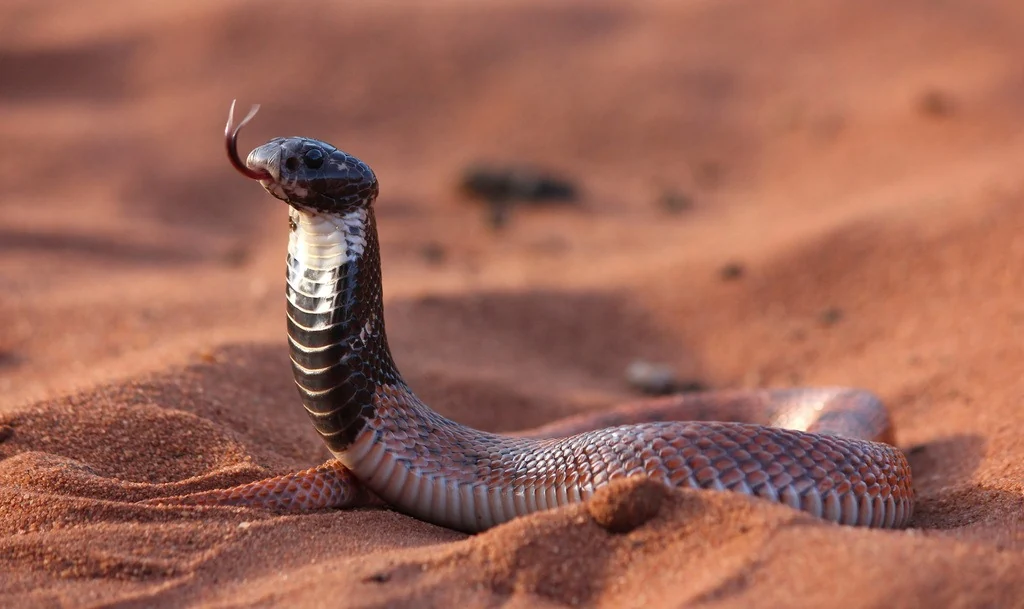
Aspidelaps scutatus; Far North, South Africa; photographed 2019-11-11.

003 · Elapidae

scutatus: Common Shield Cobra, Shield-nose Snake

Aspidelaps scutatus

(SMITH, 1849)

VenomousClinical severity not established

The current taxonomic treatment explicitly lists this country. This is country-scale checklist evidence, not a claim of continuous occupancy or a complete regional inventory. Inhambane: museum voucher MUHNAC IICT/R 1174-1948 (1948). The museum record's reported coordinate uncertainty footprint lies within the mapped region. Inhambane: museum voucher…

Read the species account →

Ryan van Huyssteen · CC BY 4.0 · https://creativecommons.org/licenses/by/4.0/
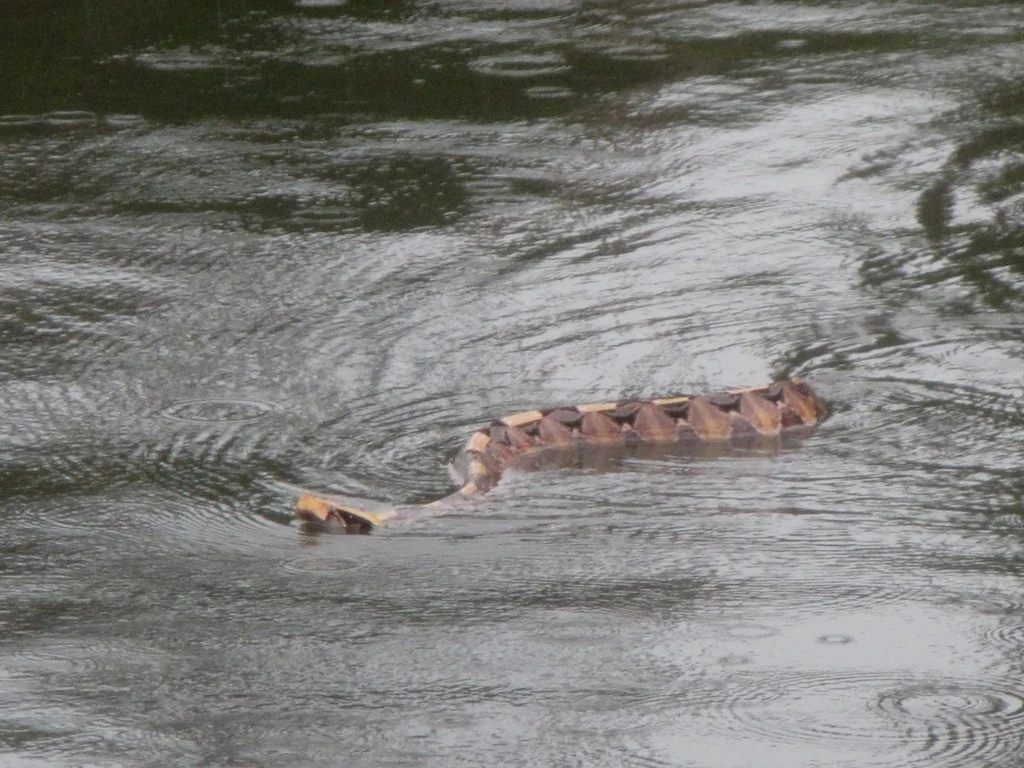
Bitis gabonica; Lake Tissongo, Cameroon; photographed 2016-05-18.

004 · Viperidae

Gaboon Adder, Gaboon Viper

Bitis gabonica

(DUMÉRIL, BIBRON & DUMÉRIL, 1854)

VenomousClinical severity not established

The current taxonomic treatment explicitly lists this country. This is country-scale checklist evidence, not a claim of continuous occupancy or a complete regional inventory. Maputo: observation GBIF 4512368474 (2009). The original iNaturalist entry was rechecked for research-grade identification, wild status and unrestricted coordinates; its reported…

Read the species account →

Lucy Keith-Diagne · CC BY 4.0 · https://creativecommons.org/licenses/by/4.0/
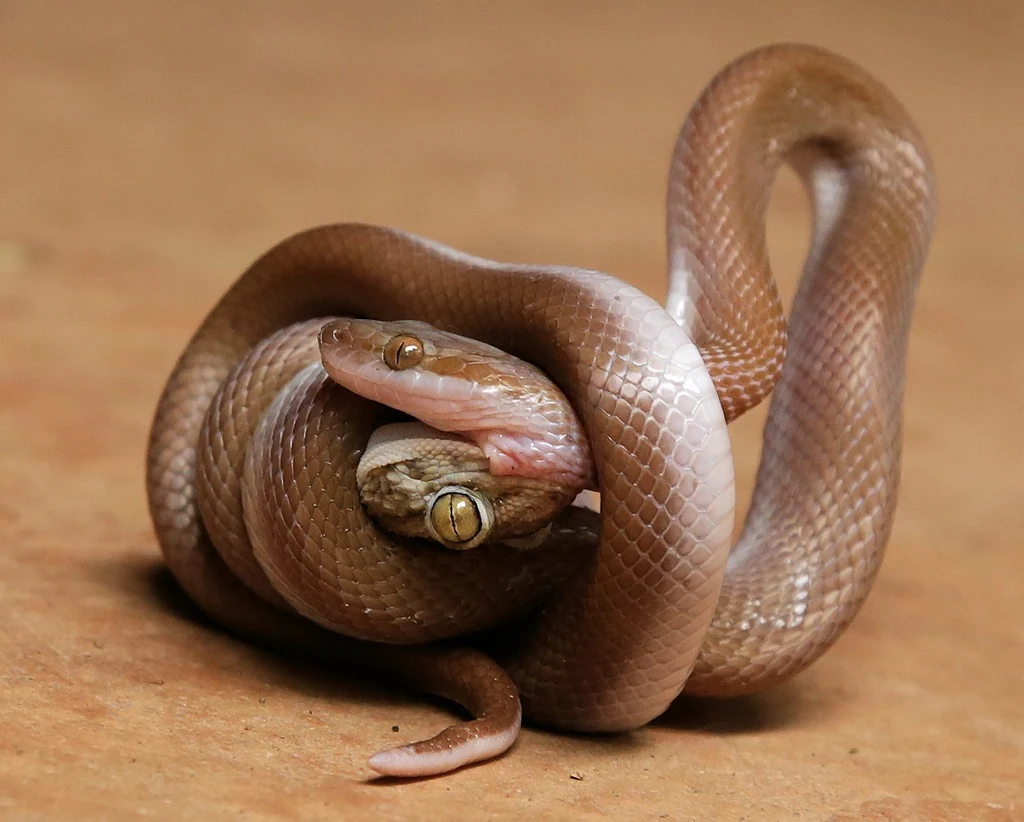
Boaedon capensis; Mopani, South Africa; photographed 2018-11-23.

005 · Lamprophiidae

Common House Snake, Brown House Snake

Boaedon capensis

DUMÉRIL, BIBRON & DUMÉRIL, 1854

Non-venomous

The current taxonomic treatment explicitly lists this country. This is country-scale checklist evidence, not a claim of continuous occupancy or a complete regional inventory. Inhambane: museum voucher MUHNAC IICT/R 1248-1948 (1948). The museum record's reported coordinate uncertainty footprint lies within the mapped region. Inhambane: observation GBIF…

Read the species account →

Wynand Uys · CC BY 4.0 · https://creativecommons.org/licenses/by/4.0/
Crotaphopeltis hotamboeia; Campher's Drift, George, 6529, South Africa; photographed 2023-10-13.

006 · Colubridae

White-lipped Herald Snake, Red-lipped Snake

Crotaphopeltis hotamboeia

(LAURENTI, 1768)

Venom unknownNot yet assessed

The current taxonomic treatment explicitly lists this country. This is country-scale checklist evidence, not a claim of continuous occupancy or a complete regional inventory. Sofala: museum voucher MUHNAC IICT/R 53-1955 (1955). The museum record's reported coordinate uncertainty footprint lies within the mapped region. Sofala: museum voucher MUHNAC…

Read the species account →

no rights reserved · CC0 · https://creativecommons.org/publicdomain/zero/1.0/

Duberria variegata, photographed 2015-03-21. Identification follows the linked research-grade observation.

007 · Pseudoxyrhophiidae

Variegated or Spotted Slug Eater

Duberria variegata

(PETERS, 1854)

Venom unknownNot yet assessed

The current taxonomic treatment explicitly lists this country. This is country-scale checklist evidence, not a claim of continuous occupancy or a complete regional inventory. Maputo: observation GBIF 4867895647 (2024). The original iNaturalist entry was rechecked for research-grade identification, wild status and unrestricted coordinates; its reported…

Read the species account →

Nick Schaller · CC BY 4.0 · https://creativecommons.org/licenses/by/4.0/
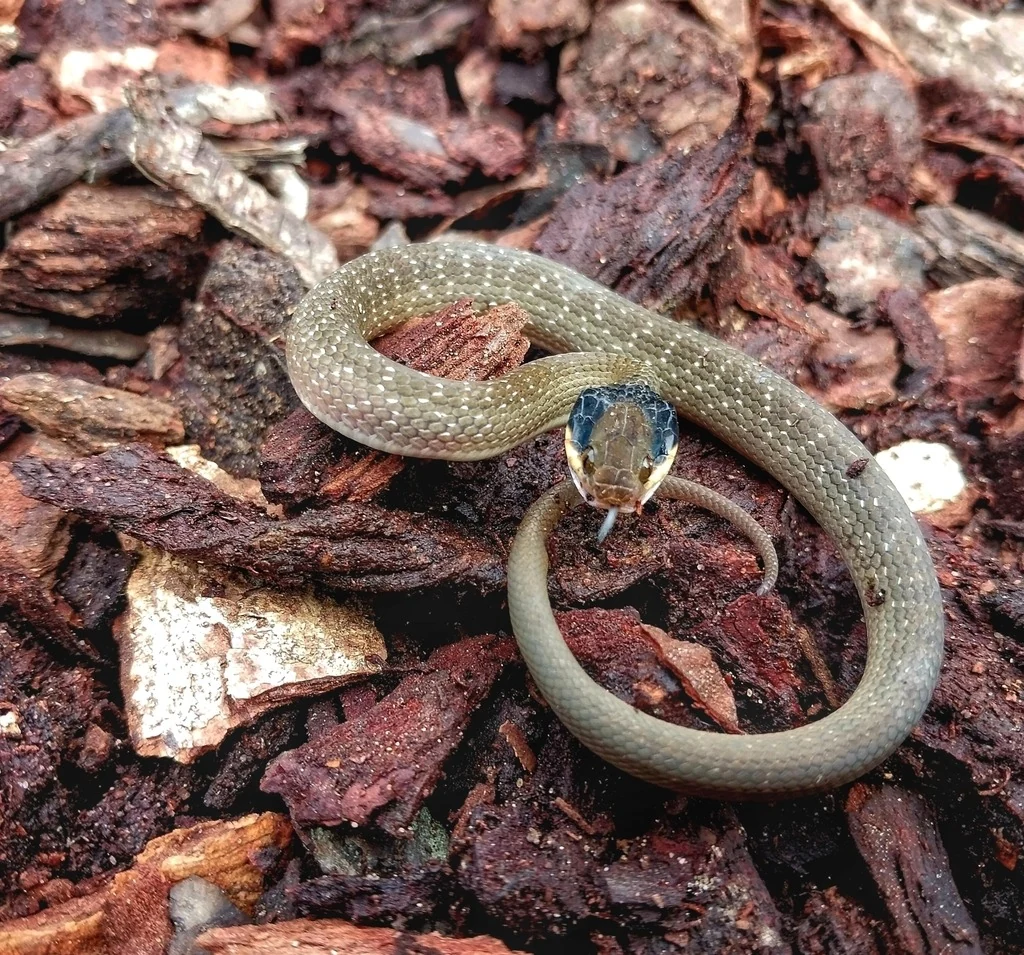
Lycophidion capense. Identification follows the linked source community.

008 · Lamprophiidae

Cape Wolf Snake

Lycophidion capense

(SMITH, 1831)

Non-venomous

Explicit country record in the current species treatment. The current taxonomic treatment explicitly lists this country. This is country-scale checklist evidence, not a claim of continuous occupancy or a complete regional inventory. Maputo: observation GBIF 6479506719 (2026). The original iNaturalist entry was rechecked for research-grade identification,…

Read the species account →

Rudolph Steenkamp · CC BY-SA 4.0 · https://creativecommons.org/licenses/by-sa/4.0/

Naja annulifera; Mana Pools National Park; photographed 1989-01-07.

009 · Elapidae

Snouted Cobra, Banded Cobra

Naja annulifera

PETERS, 1854

VenomousClinical severity not established

The current taxonomic treatment explicitly lists this country. This is country-scale checklist evidence, not a claim of continuous occupancy or a complete regional inventory. Gaza: observation GBIF 6479461625 (2026). The original iNaturalist entry was rechecked for research-grade identification, wild status and unrestricted coordinates; its reported…

Read the species account →

i_c_riddell · CC BY 4.0 · https://creativecommons.org/licenses/by/4.0/
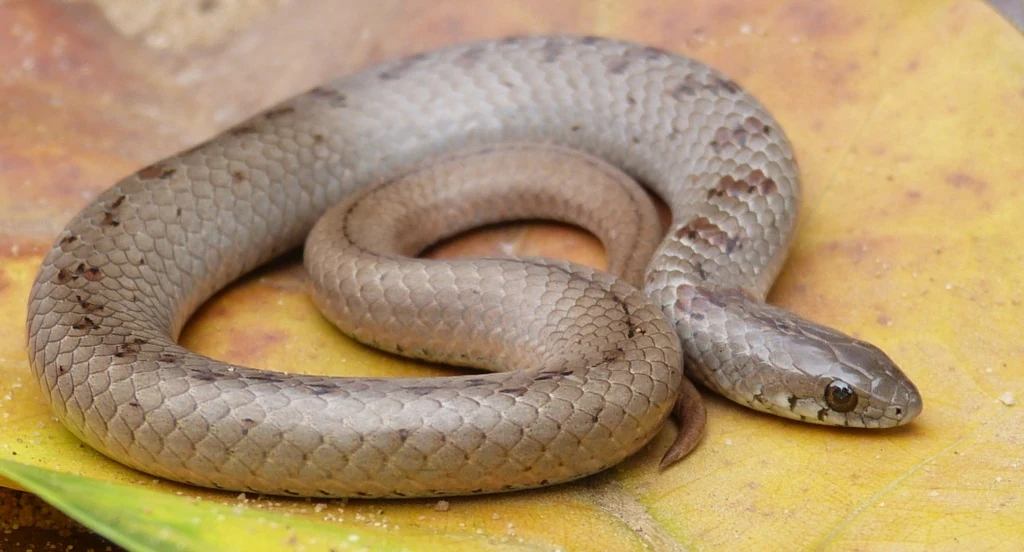
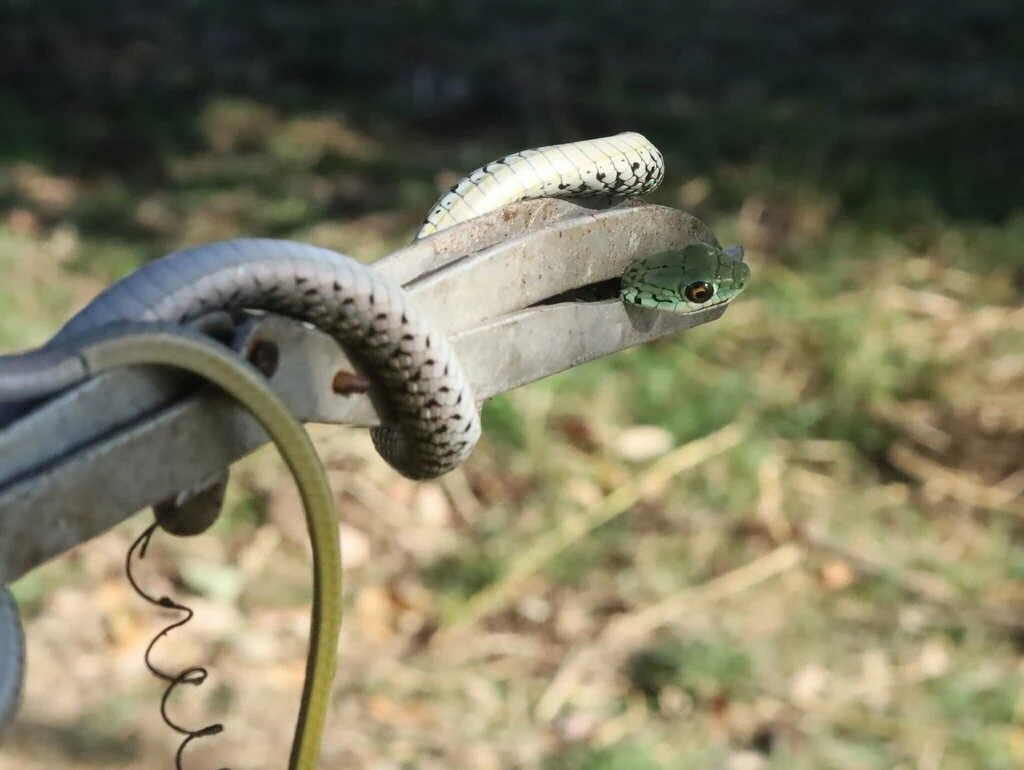
Philothamnus semivariegatus, photographed 2023-07-03. Identification follows the linked research-grade observation. The animal is temporarily held in the source photograph.

010 · Colubridae

Spotted Bush Snake, Spotted Green Snake, Variegated Green Snake

Philothamnus semivariegatus

(SMITH, 1840)

Venom unknownNot yet assessed

The current taxonomic treatment explicitly lists this country. This is country-scale checklist evidence, not a claim of continuous occupancy or a complete regional inventory. Nampula: observation GBIF 6441530387 (2026). The original iNaturalist entry was rechecked for research-grade identification, wild status and unrestricted coordinates; its reported…

Read the species account →

Paul Hoekman · CC BY 4.0 · https://creativecommons.org/licenses/by/4.0/
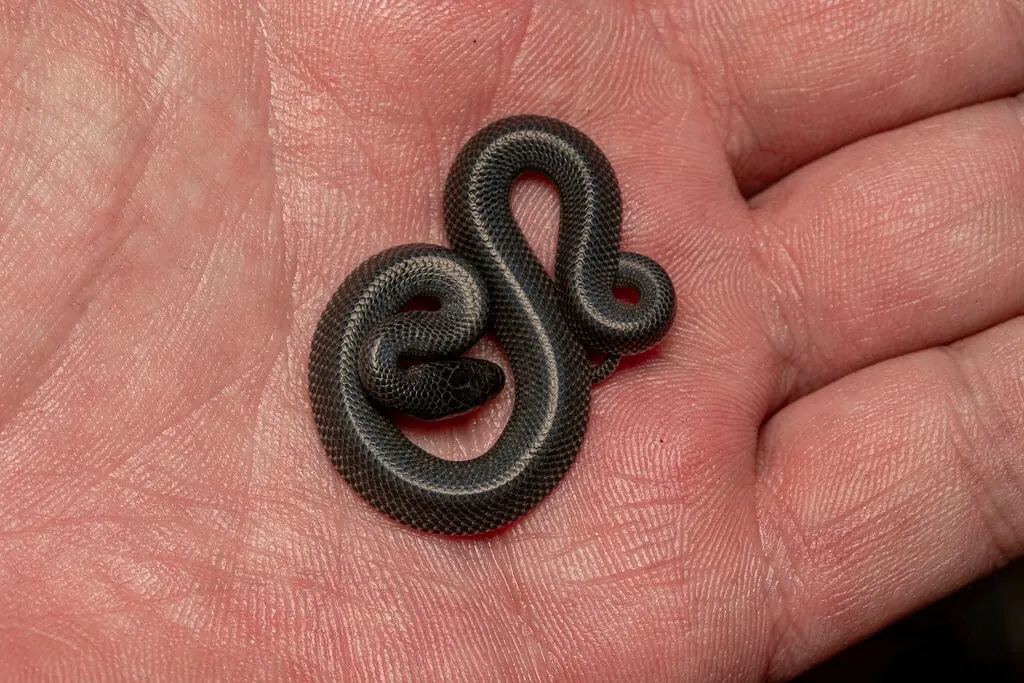
Prosymna janii, photographed 2015-11-07. Identification follows the linked research-grade observation.

011 · Prosymnidae

Mozambique Shovel-snout, Keel-scaled Shovel-snout

Prosymna janii

BIANCONI, 1862

Venom unknownNot yet assessed

The current taxonomic treatment explicitly lists this country. This is country-scale checklist evidence, not a claim of continuous occupancy or a complete regional inventory. Gaza: observation GBIF 5063688300 (2025). The original iNaturalist entry was rechecked for research-grade identification, wild status and unrestricted coordinates; its reported…

Read the species account →

Nick Schaller · CC BY 4.0 · https://creativecommons.org/licenses/by/4.0/
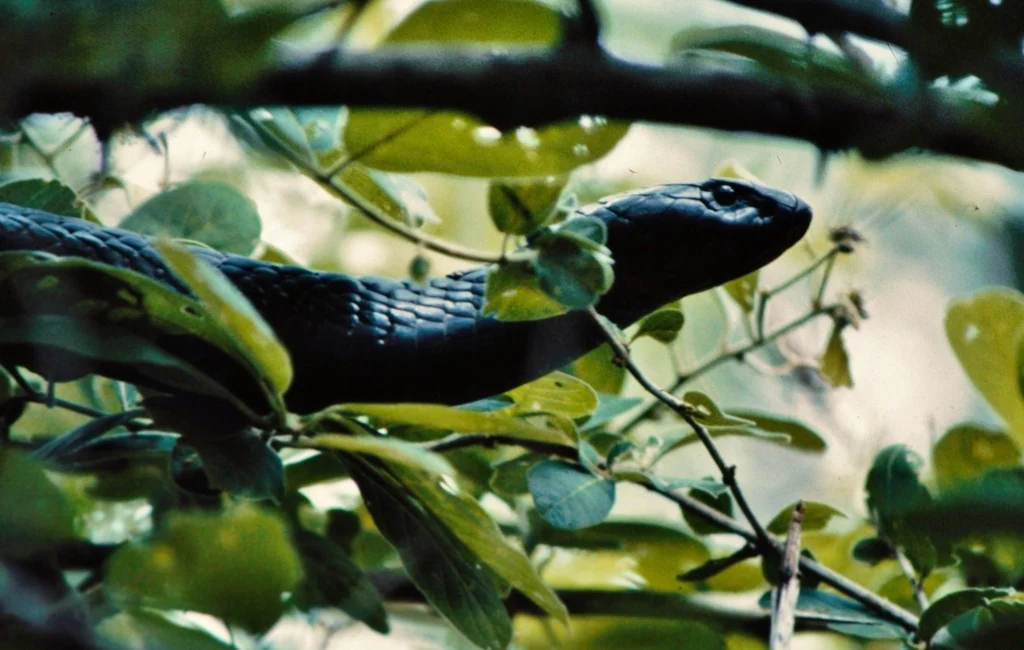
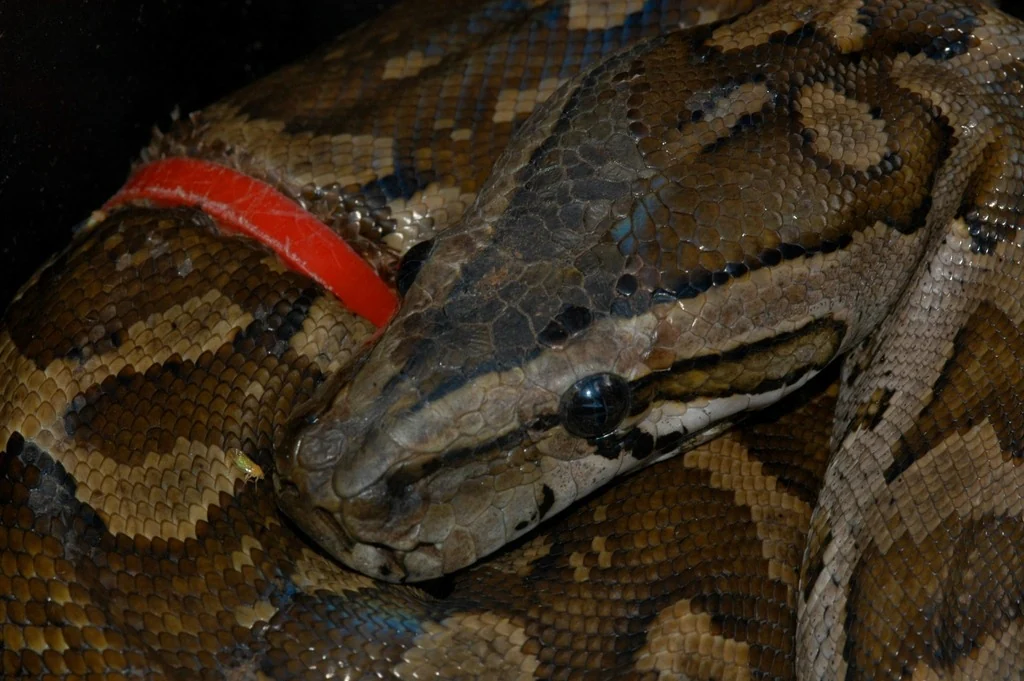
Python natalensis; Rooibos Street, Phalaborwa; photographed 2010-12-10.

012 · Pythonidae

Southern African Python, Lesser African Python

Python natalensis

SMITH, 1840

Non-venomous

The current taxonomic treatment explicitly lists this country. This is country-scale checklist evidence, not a claim of continuous occupancy or a complete regional inventory. Manica: observation GBIF 6188550644 (2026). The original iNaturalist entry was rechecked for research-grade identification, wild status and unrestricted coordinates; its reported…

Read the species account →

no rights reserved · CC0 · https://creativecommons.org/publicdomain/zero/1.0/

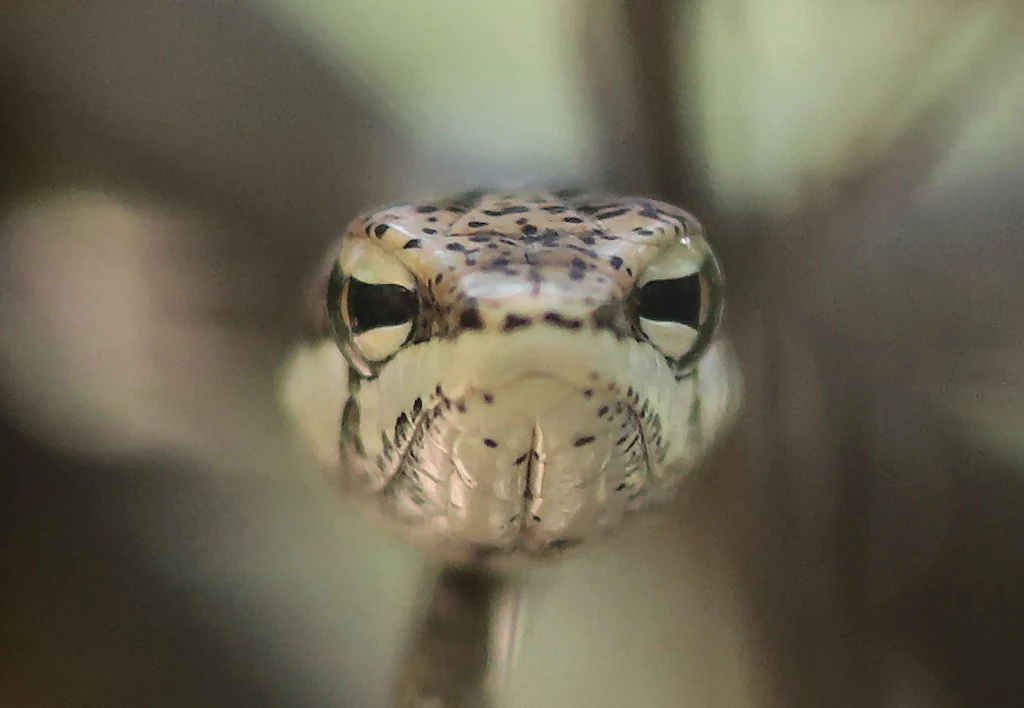
Thelotornis capensis; Mopani, South Africa; photographed 2018-10-28.

013 · Colubridae

Southern Twig Snake, Savanna Vine Snake, Twig Snake, Vine Snake

Thelotornis capensis

SMITH, 1849

VenomousClinical severity not established

The current taxonomic treatment explicitly lists this country. This is country-scale checklist evidence, not a claim of continuous occupancy or a complete regional inventory. Maputo: observation GBIF 6518977368 (2026). The original iNaturalist entry was rechecked for research-grade identification, wild status and unrestricted coordinates; its reported…

Read the species account →

Wynand Uys · CC BY 4.0 · https://creativecommons.org/licenses/by/4.0/
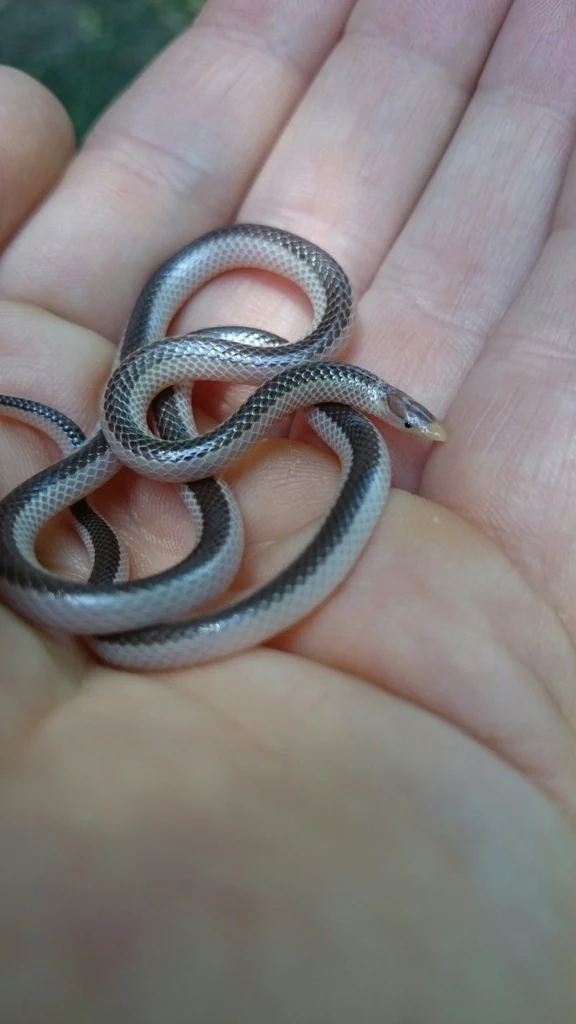
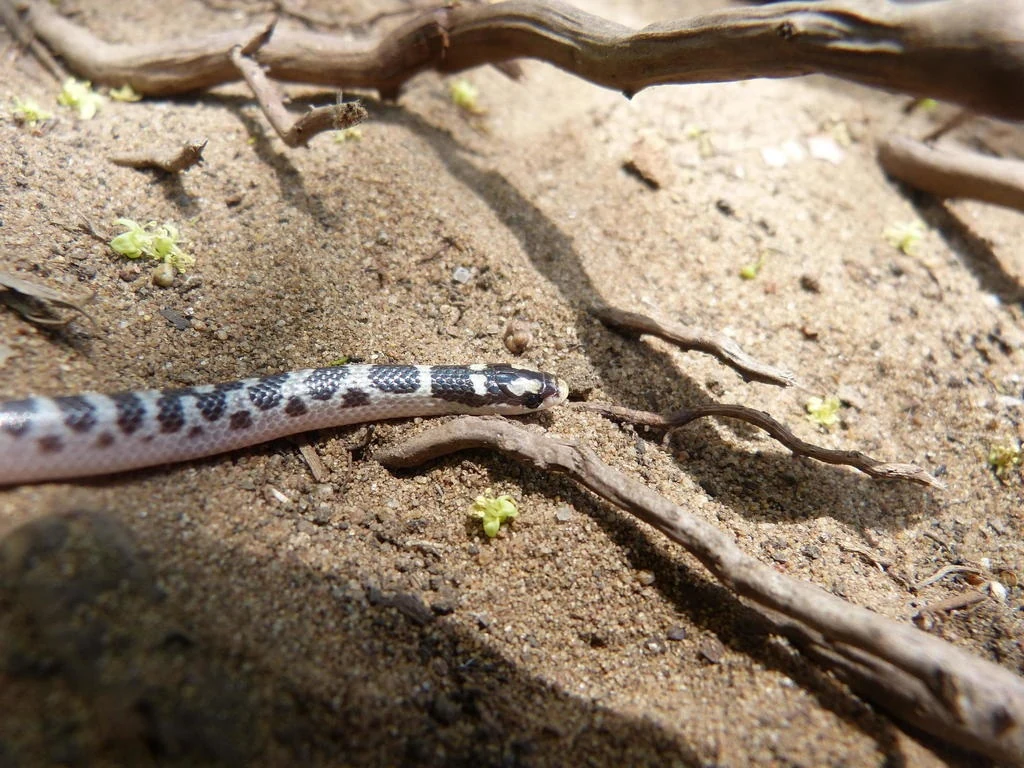
Xenocalamus bicolor; P522, Mpophomeni, South Africa; photographed 2017-12-25.

014 · Atractaspididae

Slender Quill-snouted Snake

Xenocalamus bicolor

GÜNTHER, 1868

Venom unknownNot yet assessed

The current taxonomic treatment explicitly lists this country. This is country-scale checklist evidence, not a claim of continuous occupancy or a complete regional inventory. Maputo: museum voucher MUHNAC IICT/R 1589-1948 (1948). The museum record's reported coordinate uncertainty footprint lies within the mapped region. Maputo: museum voucher MUHNAC…

Read the species account →

Nick Schaller · CC BY 4.0 · https://creativecommons.org/licenses/by/4.0/
Explore all 96 country records →

The research library

Sources & the checklist.

This edition lists 96 species with supported country records from checked taxonomic treatments and cited field studies. This total includes 1 record marked as introduced; it is not a native-species total. It is not a claim of a complete national inventory. Each account retains its source and check date; individual evidence entries retain their own review dates.

Range and taxonomy review

Country links use a single accepted species identity. Revised names and disputed records are kept visible here; uncertain records do not enter the listed collection or regional totals.

Indotyphlops braminus

Introduced occurrence

Cosmopolitan transported species: countries denotes supported occurrence, not a claim of native status. IntroducedCountries captures explicit source introductions; native/introduced status of the remaining localities is unresolved. Broad New Guinea and Micronesia are not converted to countries. The current taxonomic treatment explicitly lists this country. This is country-scale checklist evidence, not a claim of continuous occupancy or a complete regional inventory. This population is treated as introduced rather than native.

Source 1 ↗

How the map and counts work

Search results were checked against distribution text and taxonomic qualifications. A geographic name alone does not establish a political country: New Guinea, the Solomon archipelago and Micronesia span more than one country or territory. Introduced and unresolved records require separate interpretation.

Place counts require explicit named localities, including valid type localities. Counts can overlap where sources name multiple places. Regional maps group historical boundary snapshots for navigation, while island outlines use Natural Earth; neither is a species range or an observation map. Small islands can be below the outline dataset’s resolution, so geographic reference markers and the directory remain available.

OpenStreetMap, Wambacher; geoBoundaries gbOpen ADM1, 2017 snapshot; Open Data Commons Open Database License 1.0. Map provenance →

  1. Boundary source and declared group membership ↗

    Historical geography and navigation only.

  2. Convention on Biological Diversity · Mozambique national profile ↗

    Historical draft prepared by the CBD Secretariat; awaiting Party approval. Used for landscape context; older statistics are not presented as current monitoring or a snake inventory.

  3. Map boundaries, snapshot and group membership ↗
  4. Convention on Biological Diversity · Mozambique national profile ↗
  5. The Reptile Database

    Individual treatments and locality evidence are linked from each species account.

  6. Meiri (2024): SquamBase 1.0

    Species-level literature measurements and ecological traits. Exact-name matches only; imputed or ambiguous fields are omitted. These summaries are not local observations.

  7. Natural Earth: public-domain geographic data

Continue through the Africa atlas →