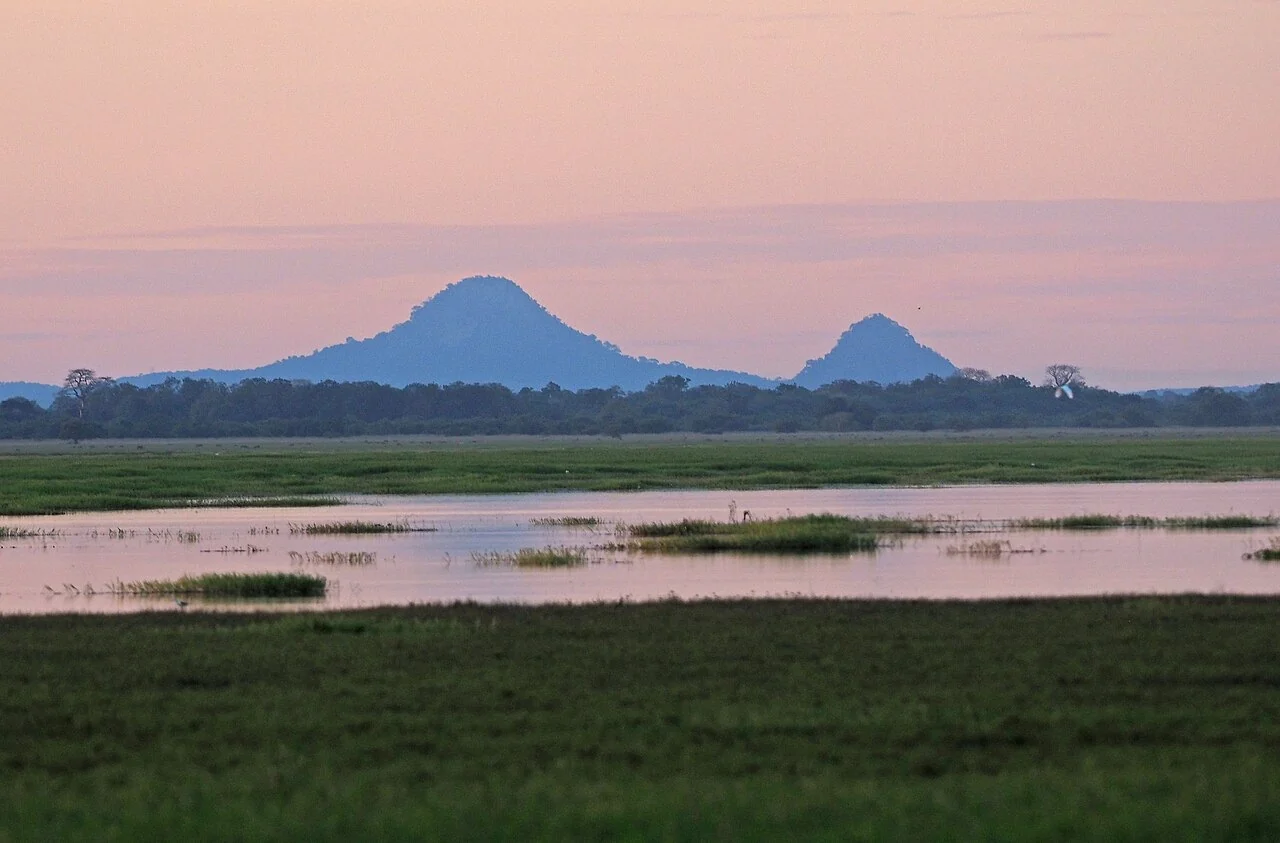
Open grassy vegetation interspersed with water in Gorongosa National Park, Mozambique, with Mount Gorongosa in the distance. This wetland-grassland mosaic should not be read as permanently dry savanna.

Mozambique · Habitat field guide

Savanna & grassland

The Zambezian coastal flooded savanna combines open vegetation with changing water conditions, unlike permanently dry grassland.

Open grassy vegetation interspersed with water in Gorongosa National Park, Mozambique, with Mount Gorongosa in the distance. This wetland-grassland mosaic should not be read as permanently dry savanna.

Photograph: Judy Gallagher · Image source · CC BY 2.0. Cropped to fill the hero; darkened for text legibility.

Understanding the environment

A sense of the habitat.

The Zambezian coastal flooded savanna combines open vegetation with changing water conditions, unlike permanently dry grassland.

Geographic scope
Mozambique; named examples and source scope matter.
Evidence scale
Landscape context is separate from species locality evidence.
Source chronology
Consult the original publication date; checked 12 October 2026.

Explore the structure · Select a layer to compare the details a locality record can preserve.

Read the setting in three layers.

Select a zone to see what changes.

Open ground

Open ground

Distinguish grassland from recently cleared or cultivated ground.

Compare this detail with the original field or museum record before assigning a habitat association.

These reading prompts explain how to interpret evidence; they do not assert that every feature occurs at every site.

Sources: Convention on Biological Diversity · Mozambique national profile

Field notes · 01

The documented landscape

The Zambezian coastal flooded savanna combines open vegetation with changing water conditions, unlike permanently dry grassland.

Sources: Convention on Biological Diversity · Mozambique national profile

Field notes · 02

Connect habitat and locality

Use the species account to check whether a habitat statement applies to this country or elsewhere in the species’ range. A landscape photograph illustrates its own named place; it is not evidence of snake presence.

Pressures on Mozambique’s habitats

What is at risk?

A site-specific assessment of pressures has not yet been extracted for this guide. The landscape sources below provide context; they do not establish a current threat level for each snake species.

What helps this habitat

Retain natural vegetation and water connections where local conservation evidence supports them. Consult the linked national or site account for the pressures and management actions actually reported there.

The connected collection

Snakes with habitat evidence.

These 11 species have supported country occurrence and an explicit habitat association in the shared account. The association may come from elsewhere in their range. This is not a complete local habitat inventory; the places above are landscape examples, not asserted collecting sites.

11 species · showing 11

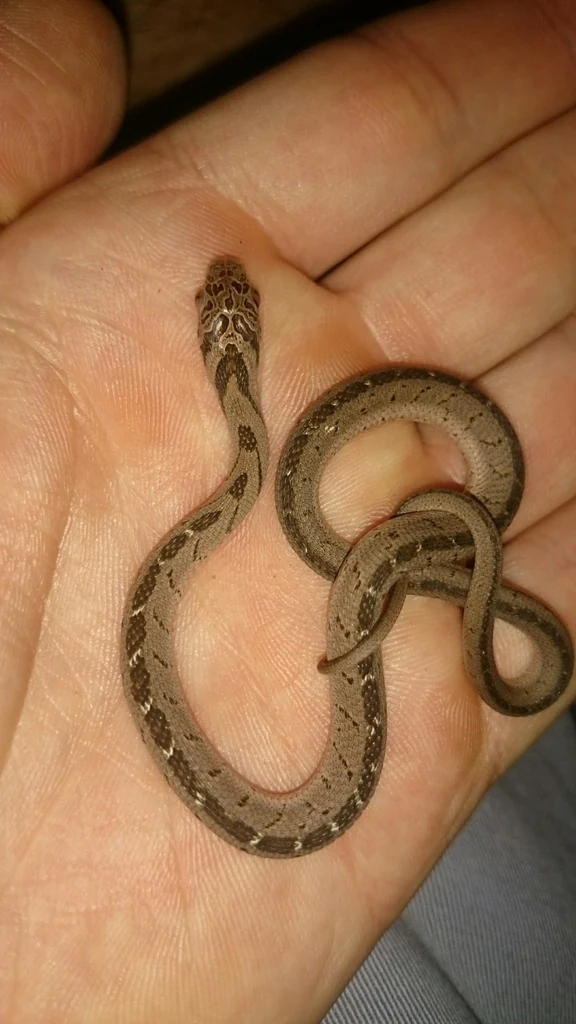
Dasypeltis medici; Eastern Shores, isimangaliso Wetland Park; photographed 2019-03-30.

001 · Colubridae

Eastern Forest Egg-eater, East African Egg Eater

Dasypeltis medici

BIANCONI, 1859

Venom unknownNot yet assessed

The current taxonomic treatment explicitly lists this country. This is country-scale checklist evidence, not a claim of continuous occupancy or a complete regional inventory.

Read the species account →

Nick Schaller · CC BY 4.0 · https://creativecommons.org/licenses/by/4.0/
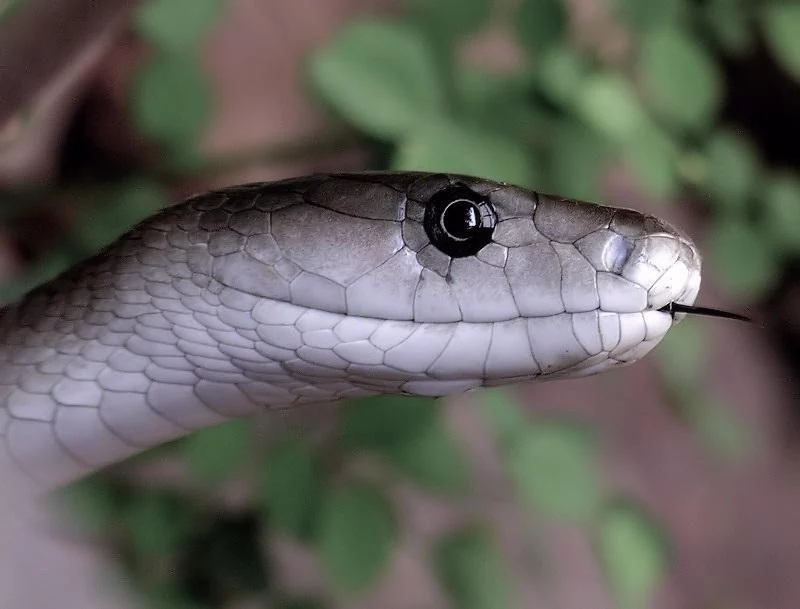
Dendroaspis polylepis; Blyde River bushveld and wetlands near Hoedspruit: Grassy woodland interspersed with seasonal pans, vleis and river channels.; photographed 2014-10-03.

002 · Elapidae

Black Mamba

Dendroaspis polylepis

GÜNTHER, 1864

VenomousPotentially life-threatening

The current taxonomic treatment explicitly lists this country. This is country-scale checklist evidence, not a claim of continuous occupancy or a complete regional inventory.

Read the species account →

Wynand Uys · CC BY 4.0 · https://creativecommons.org/licenses/by/4.0/
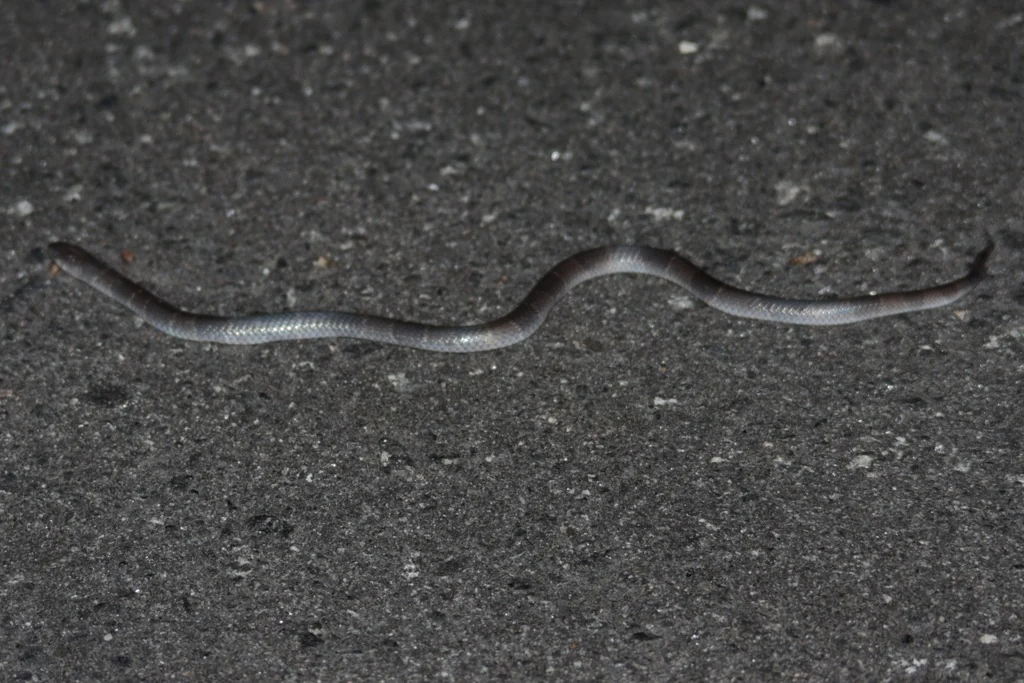
Elapsoidea semiannulata; Yankari, Nigéria; photographed 2008-07-15.

003 · Elapidae

Angolan Garter Snake

Elapsoidea semiannulata

BOCAGE, 1882

VenomousClinical severity not established

The current taxonomic treatment explicitly lists this country. This is country-scale checklist evidence, not a claim of continuous occupancy or a complete regional inventory.

Read the species account →

Fábio Olmos · CC BY 4.0 · https://creativecommons.org/licenses/by/4.0/
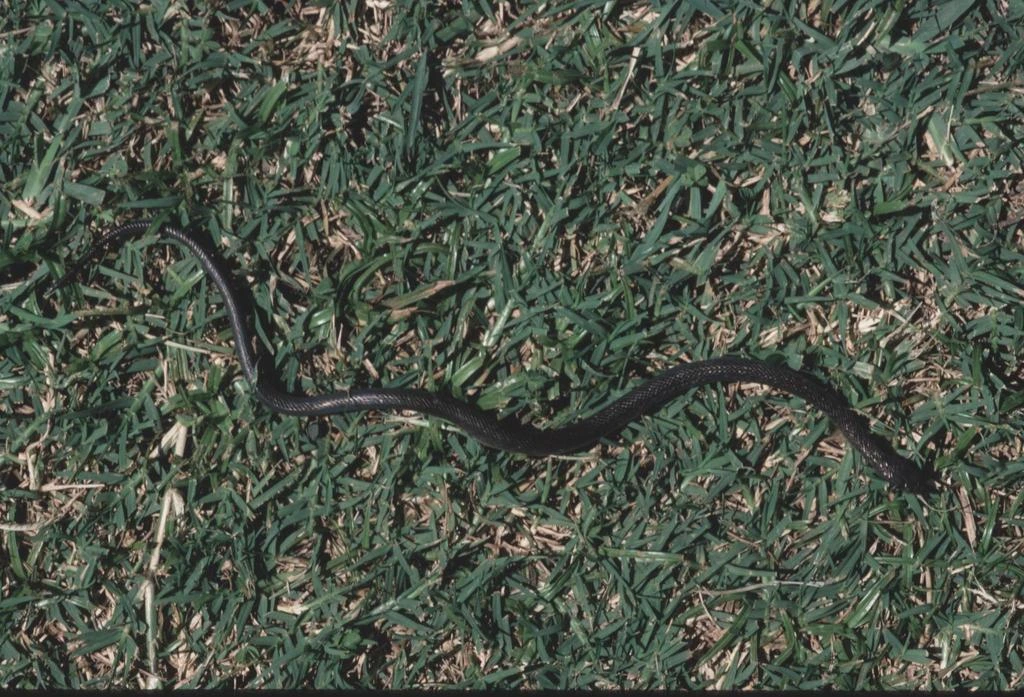
Lycodonomorphus mlanjensis. Photographed in Malawi; the complete original frame is retained. Original observation dated 1983-12-24; this portrait does not establish occurrence in other countries.

004 · Lamprophiidae

Mlanje White-bellied Water-Snake

Lycodonomorphus mlanjensis

LOVERIDGE, 1953

Non-venomous

The current taxonomic treatment explicitly lists this country. This is country-scale checklist evidence, not a claim of continuous occupancy or a complete regional inventory. Nampula: observation GBIF 4867711946 (2024). The original iNaturalist entry was rechecked for research-grade identification, wild status and unrestricted coordinates; its reported…

Read the species account →

no rights reserved · CC0 1.0 · https://creativecommons.org/publicdomain/zero/1.0/

Naja subfulva; Katunguru Queen Elizabeth National Park, Katunguru, Uganda; photographed 2023-03-05.

005 · Elapidae

Brown forest cobra

Naja subfulva

LAURENT, 1955

VenomousClinical severity not established

The current taxonomic treatment explicitly lists this country. This is country-scale checklist evidence, not a claim of continuous occupancy or a complete regional inventory.

Read the species account →

Sidnei Dantas · CC BY-SA 4.0 · https://creativecommons.org/licenses/by-sa/4.0/

Psammophis angolensis; Kafue National Park, Kabwe, ZM; photographed 2021-09-07.

006 · Psammophiidae

Dwarf Sand Snake

Psammophis angolensis

(BOCAGE, 1872)

VenomousClinical severity not established

The current taxonomic treatment explicitly lists this country. This is country-scale checklist evidence, not a claim of continuous occupancy or a complete regional inventory. Sofala: observation GBIF 5108445816 (2025). The original iNaturalist entry was rechecked for research-grade identification, wild status and unrestricted coordinates; its reported…

Read the species account →

no rights reserved · CC0 · https://creativecommons.org/publicdomain/zero/1.0/

Psammophis crucifer; Vergelegen Helderberg Rural, Sir Lowry's Pass, 7130, South Africa; photographed 2015-03-01.

007 · Psammophiidae

Cross-marked Grass Snake, Montane Grass Snake

Psammophis crucifer

(DAUDIN, 1803)

VenomousClinical severity not established

The current taxonomic treatment explicitly lists this country. This is country-scale checklist evidence, not a claim of continuous occupancy or a complete regional inventory.

Read the species account →

linkie · CC BY 4.0 · https://creativecommons.org/licenses/by/4.0/
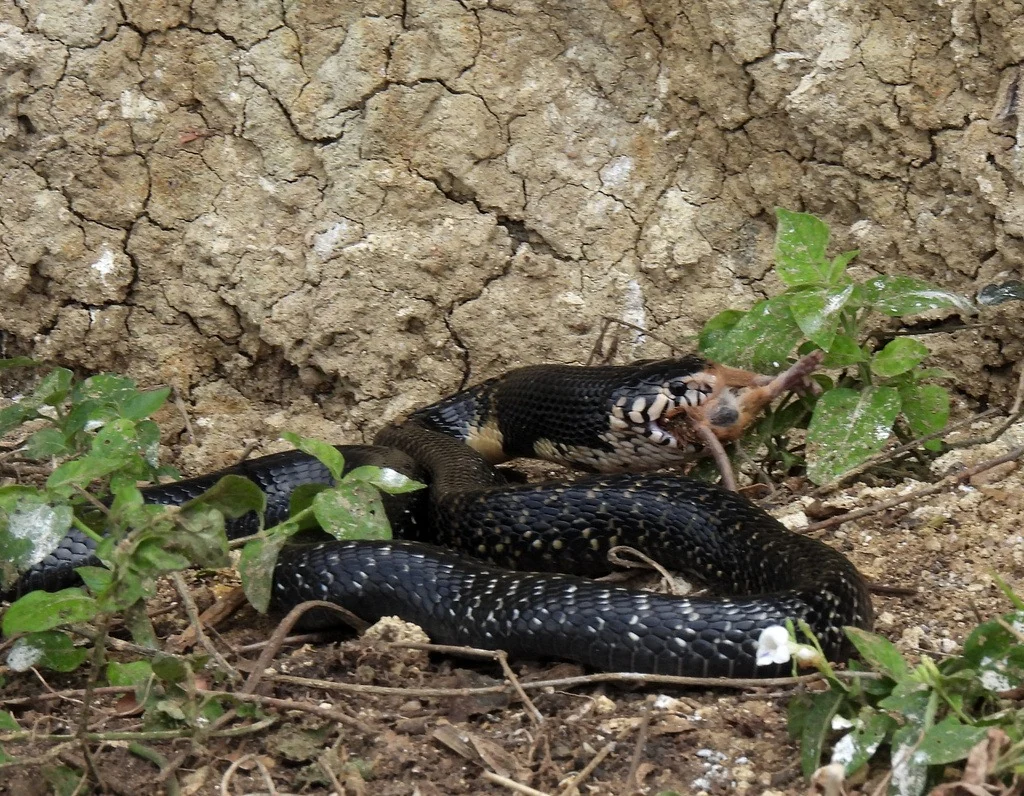
Psammophis mossambicus; Chizarira National Park; photographed 1980-11-30.

008 · Psammophiidae

Olive Whip Snake, Olive Grass Snake,

Psammophis mossambicus

PETERS, 1882

VenomousClinical severity not established

The current taxonomic treatment explicitly lists this country. This is country-scale checklist evidence, not a claim of continuous occupancy or a complete regional inventory.

Read the species account →

i_c_riddell · CC BY 4.0 · https://creativecommons.org/licenses/by/4.0/
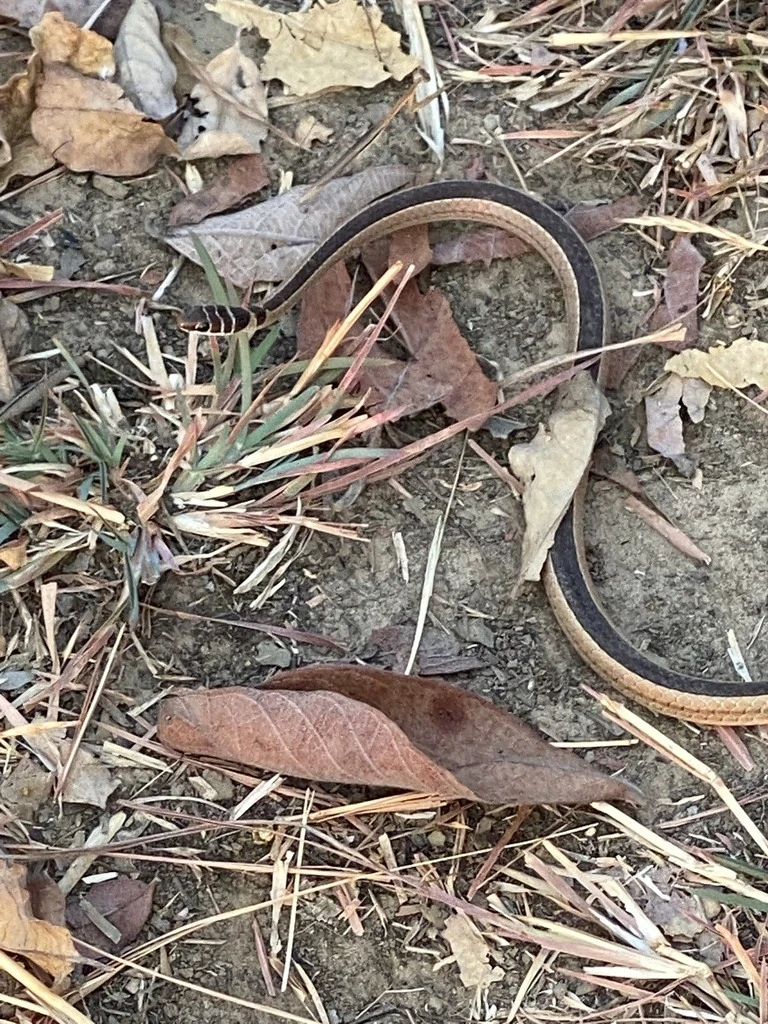
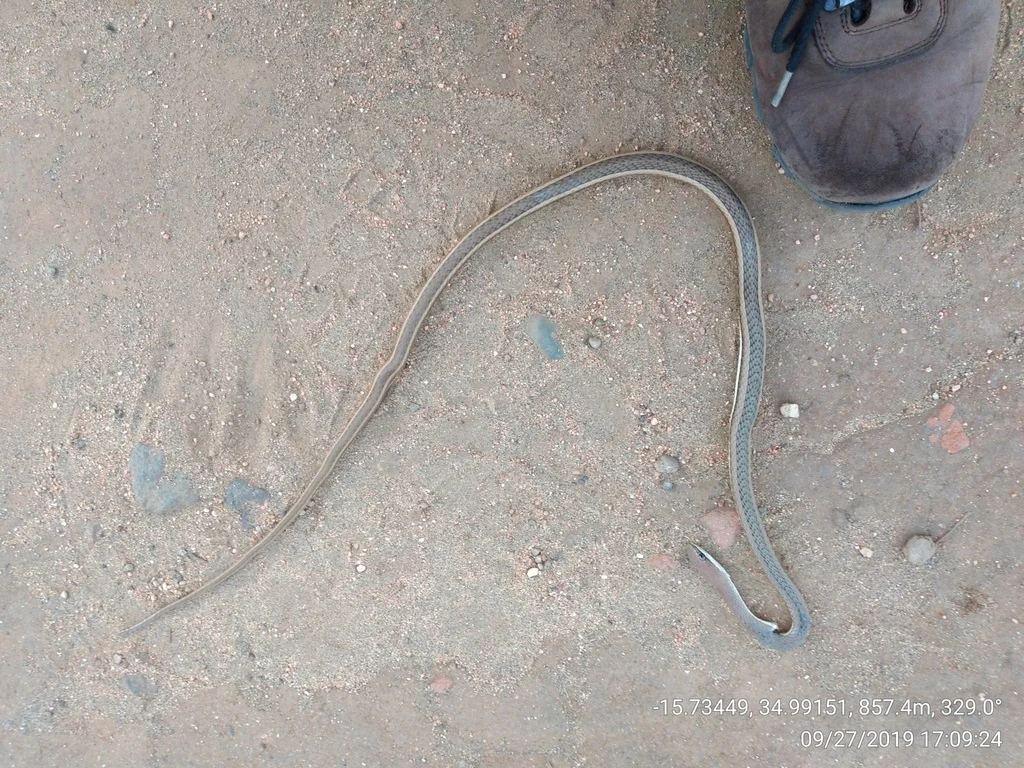
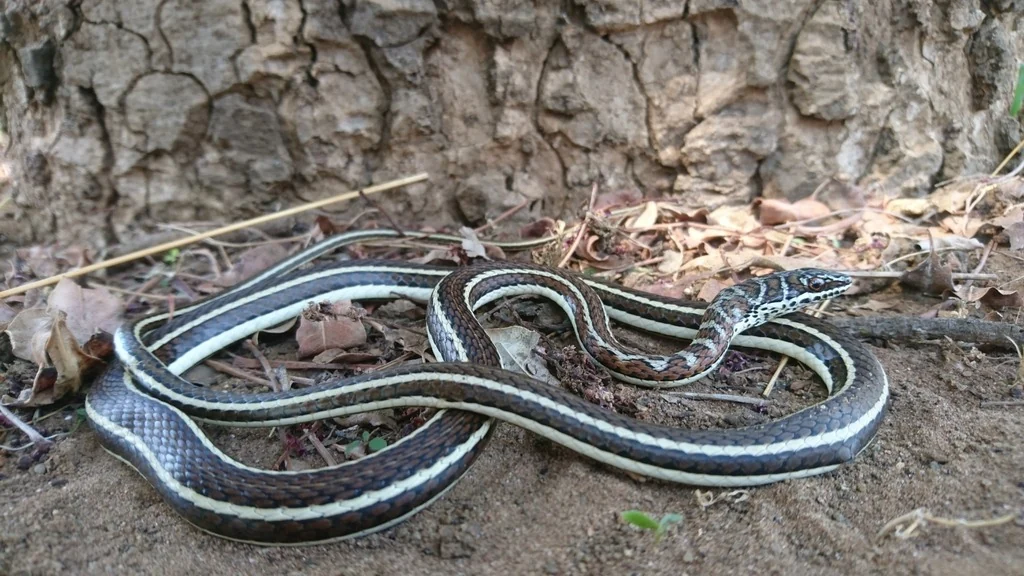
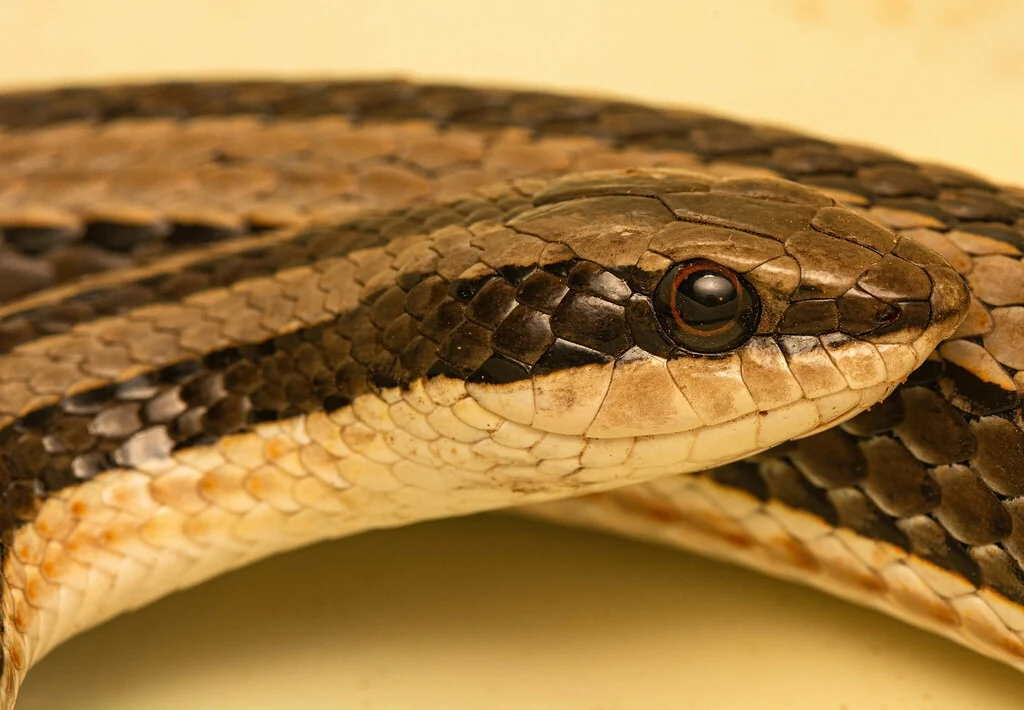
Psammophis orientalis, photographed 2019-09-27. Identification follows the linked research-grade observation.

009 · Psammophiidae

Eastern Stripe-bellied Sand Snake

Psammophis orientalis

BROADLEY, 1977

VenomousClinical severity not established

The current taxonomic treatment explicitly lists this country. This is country-scale checklist evidence, not a claim of continuous occupancy or a complete regional inventory. Cabo Delgado: observation GBIF 6320260612 (2026). The original iNaturalist entry was rechecked for research-grade identification, wild status and unrestricted coordinates; its…

Read the species account →

Seth Musker · CC BY 4.0 · https://creativecommons.org/licenses/by/4.0/
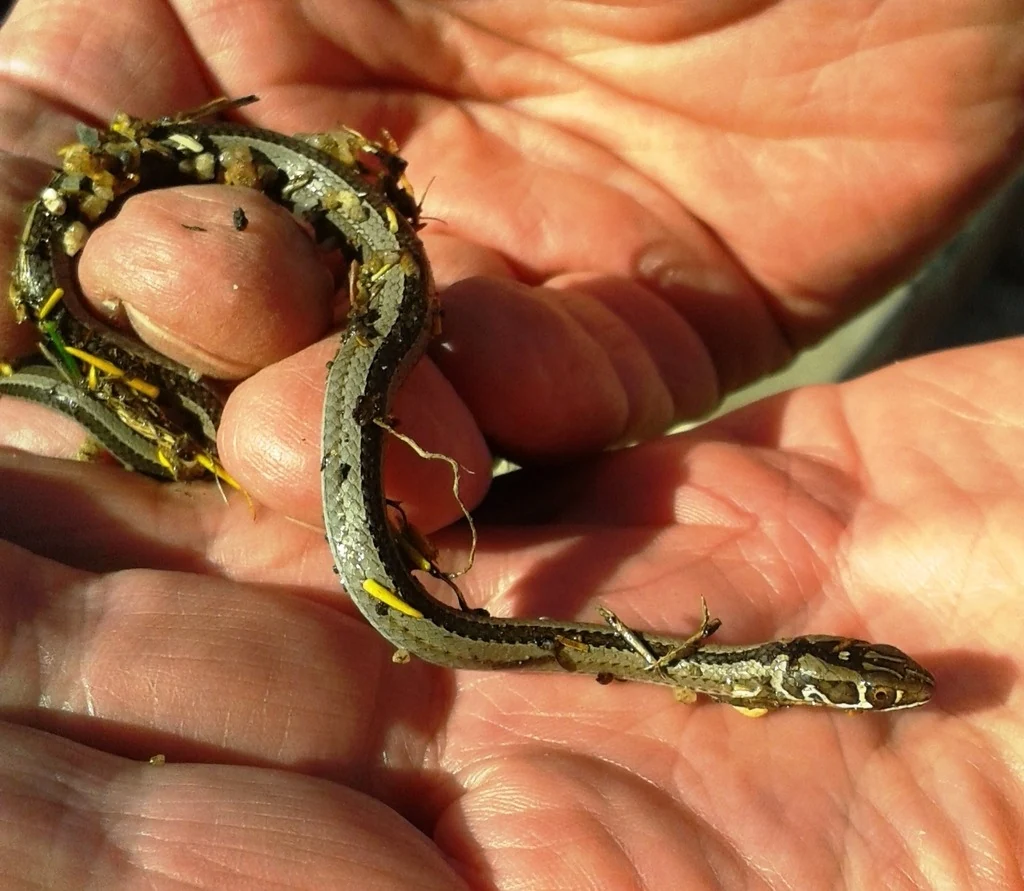
Psammophis subtaeniatus; Mkhuze Game Reserve; photographed 2019-10-20.

010 · Psammophiidae

Western Yellow-bellied Sand Snake, Stripe-bellied Sand Snake

Psammophis subtaeniatus

PETERS, 1882

VenomousClinical severity not established

The current taxonomic treatment explicitly lists this country. This is country-scale checklist evidence, not a claim of continuous occupancy or a complete regional inventory. Gaza: observation GBIF 6500094251 (2026). The original iNaturalist entry was rechecked for research-grade identification, wild status and unrestricted coordinates; its reported…

Read the species account →

Nick Schaller · CC BY 4.0 · https://creativecommons.org/licenses/by/4.0/
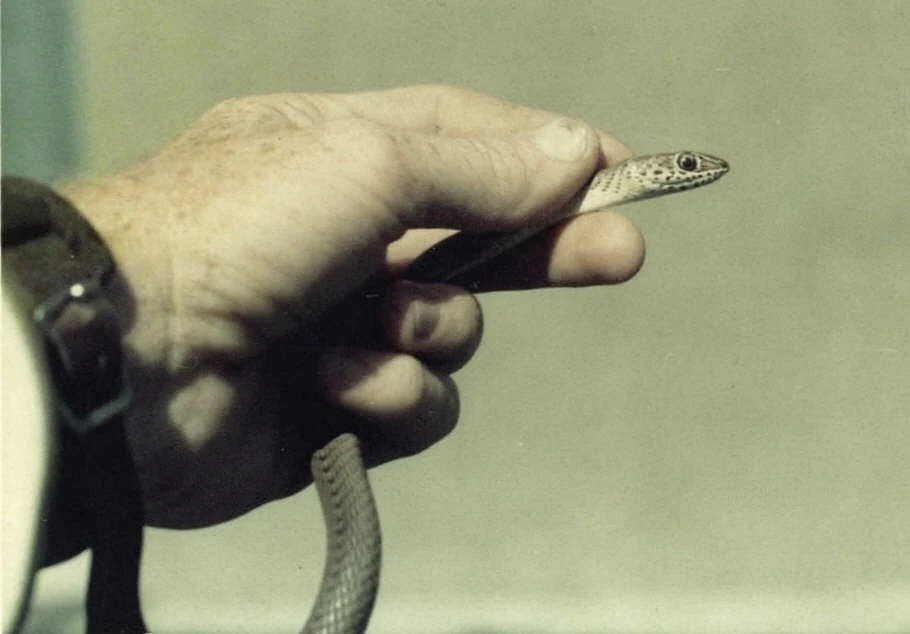
Psammophylax tritaeniatus; Spitskop Small Holdings, Bloemfontein, 9301, South Africa; photographed 2023-02-26.

011 · Psammophiidae

Three-lined Grass Snake, Striped Skaapsteker

Psammophylax tritaeniatus

(GÜNTHER, 1868)

Venom unknownNot yet assessed

The current taxonomic treatment explicitly lists this country. This is country-scale checklist evidence, not a claim of continuous occupancy or a complete regional inventory.

Read the species account →

Rudolph Steenkamp · CC BY-SA 4.0 · https://creativecommons.org/licenses/by-sa/4.0/

All 96 species in the country collection →

Read further

Evidence & sources.

Guide reviewed 12 October 2026. Source dates and geographic scope matter; landscape photographs do not establish species occurrence.

  1. Convention on Biological Diversity · Mozambique national profile

    Historical draft prepared by the CBD Secretariat; awaiting Party approval. Used for landscape context; older statistics are not presented as current monitoring or a snake inventory.

Continue through Mozambique

Explore another habitat.

01

Forest & woodland

Miombo, mopane and other woodland formations occur within Mozambique’s vegetation mosaic. The Chimanimani and Gorongosa mountain landscapes add local contrasts.

02

Mangroves & tidal woodland

Mangroves, coral reefs and seagrass form separate coastal habitats. The national account identifies clearing and salt-pan construction among mangrove pressures.