


ColubridaeCalamariaPhotograph not yet documented
001 · Colubridae
Two-colored Dwarf Snake
Calamaria bicolor
Non-venomousMalaysia: Sabah; Sarawak.
Read the species account →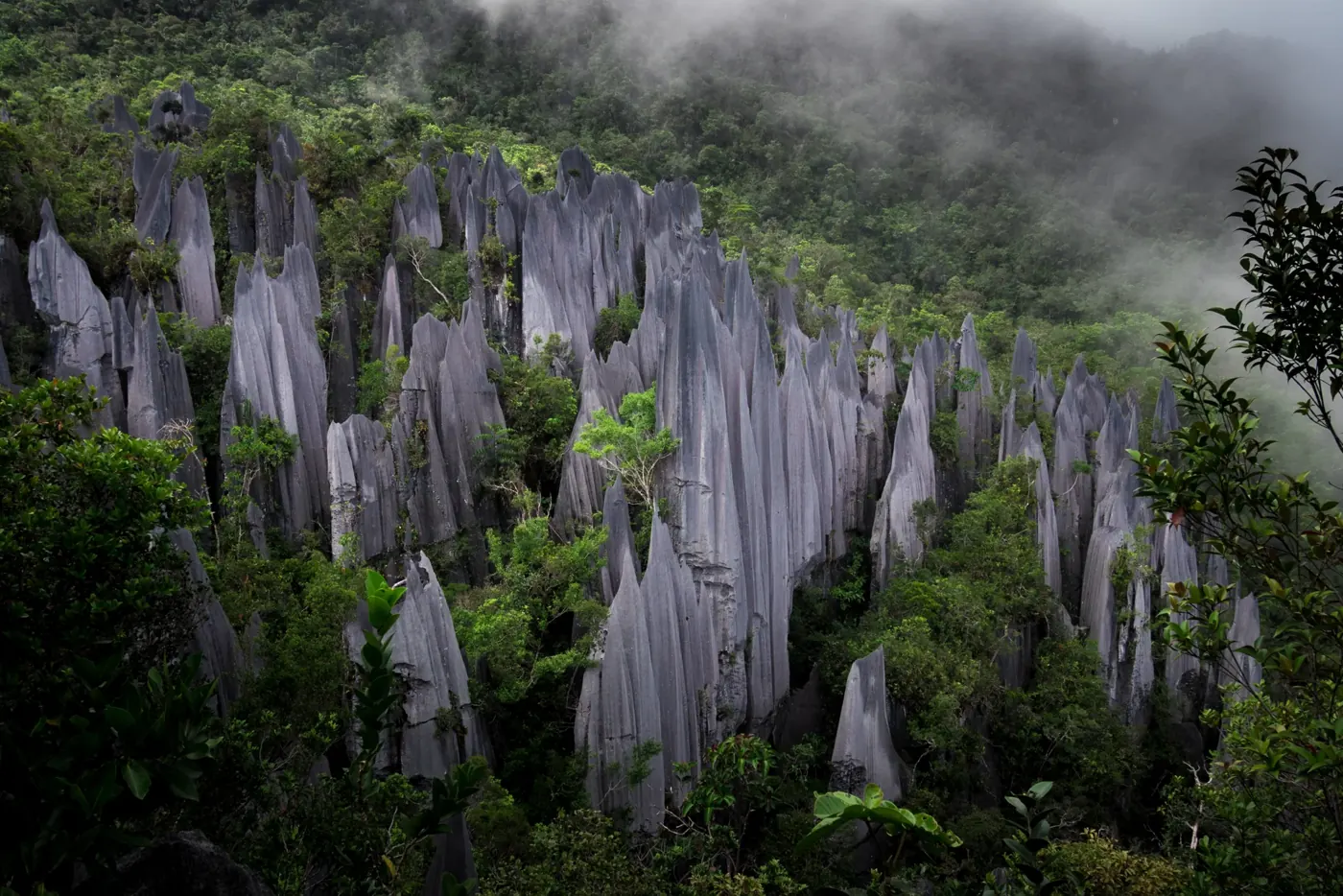
Malaysia · Regional field guide
Forested karst, broad river systems and tidal wetlands shape western Malaysian Borneo.
Limestone pinnacles above forest near Mount Api in Gunung Mulu National Park, Sarawak.
Geography & biotopes
Forested karst, broad river systems and tidal wetlands shape western Malaysian Borneo.
Gunung Mulu brings limestone formations, caves and tropical forest together in a single landscape. Its pinnacles illustrate exposed karst; they are not a substitute for the shaded forest and cave-edge environments mentioned in species descriptions.
Kuching Wetlands represents the tidal end of the landscape, with mangroves and mudflats. The species index retains explicit Sarawak records; a mention of Borneo alone is insufficient because the island also includes Sabah, Brunei and Indonesian Kalimantan.
UNESCO: Gunung Mulu National Park → Malaysia Biodiversity Information System: Ramsar sites →
Read the environment
Real Malaysian landscapes introduce the evidence behind each habitat collection.
Habitat · 01
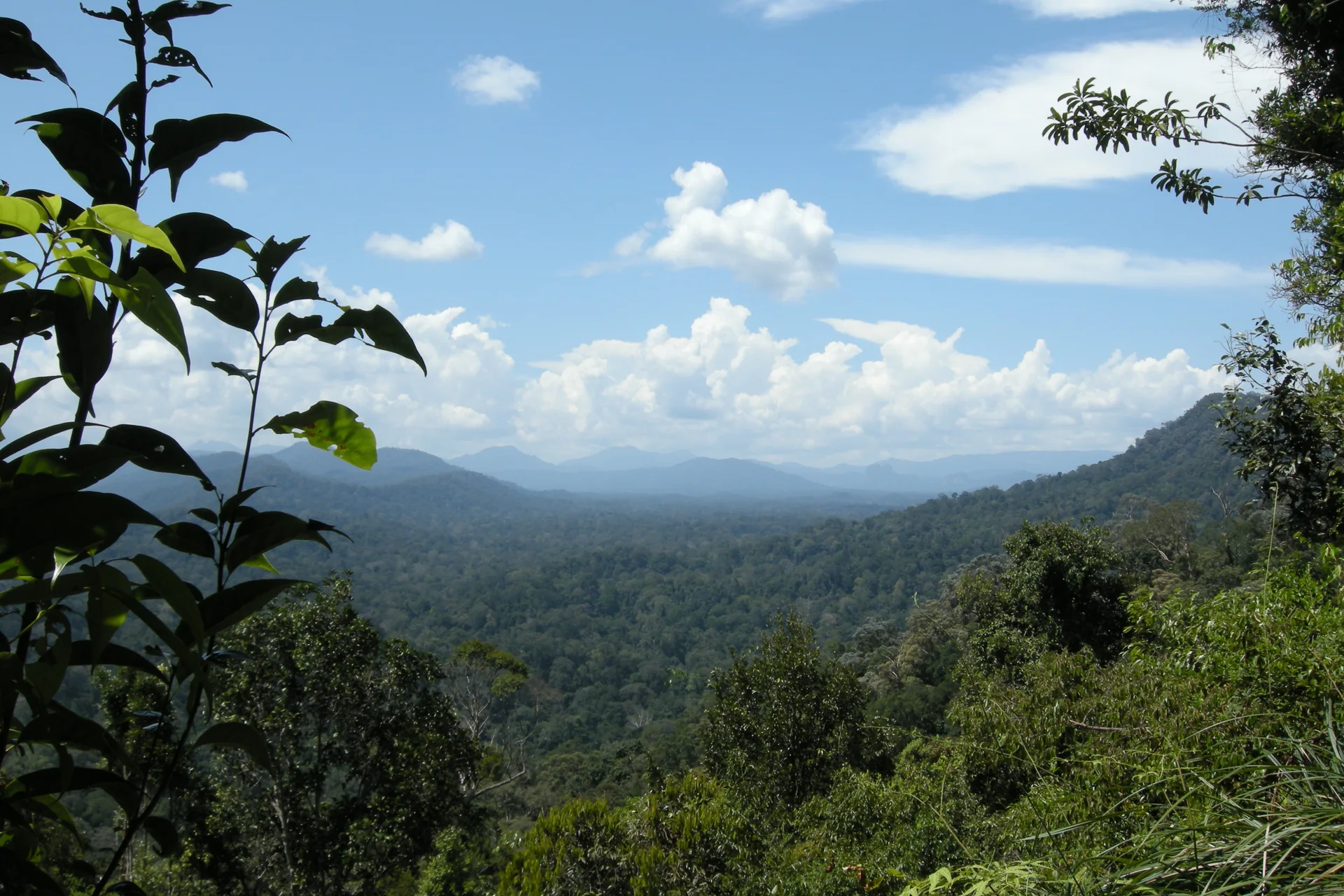
Read the forest from its canopy to the leaf litter.
Explore the habitat ↗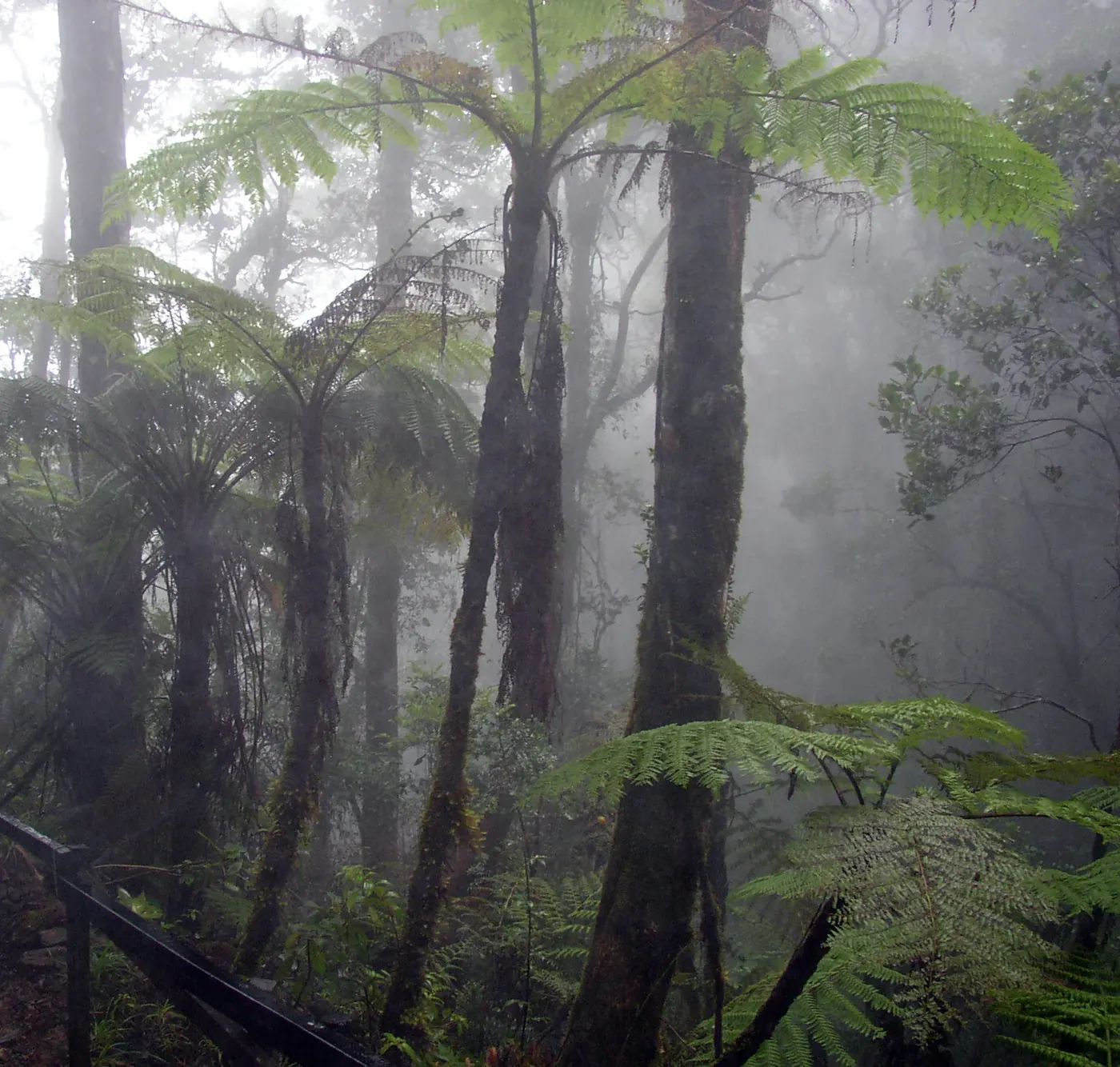
Habitat · 02
Follow cooler, misty forest along an elevation gradient.
Explore the habitat ↗Habitat · 03
Explore wooded limestone, shaded rock and cave margins.
Explore the habitat ↗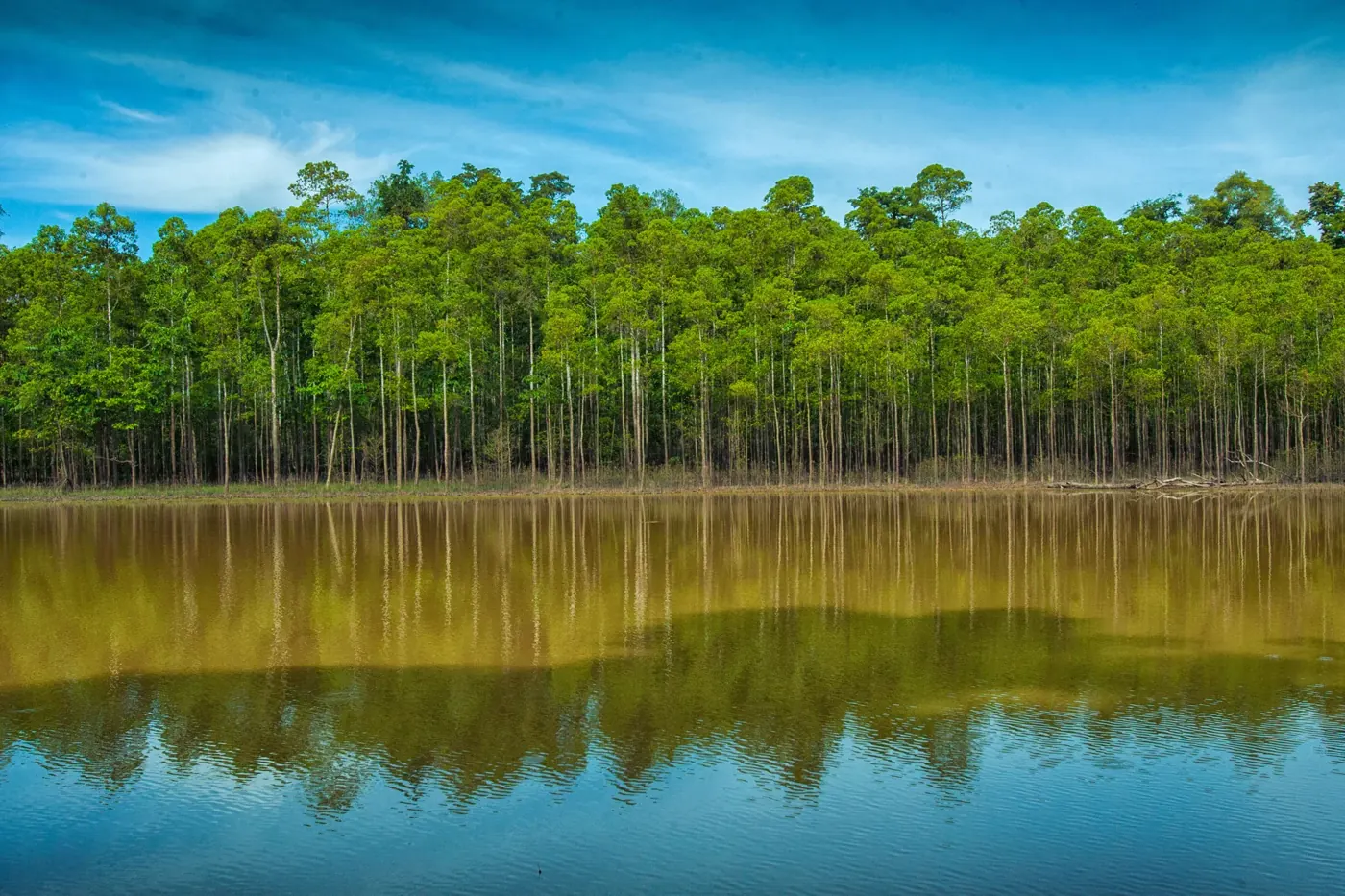
Habitat · 04
Trace rivers, freshwater wetlands and peat-swamp settings.
Explore the habitat ↗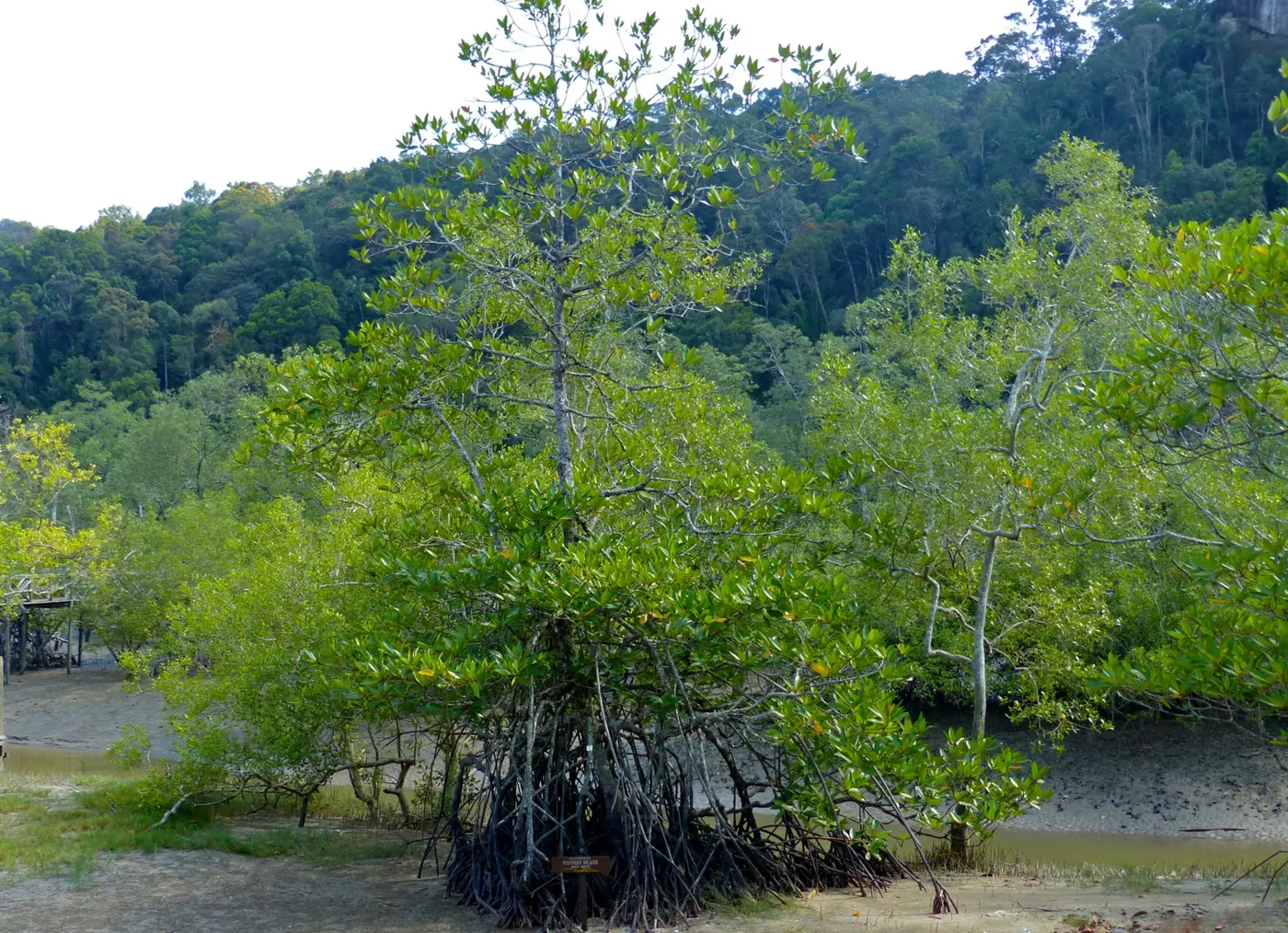
Habitat · 05
Meet the tidal boundary between land and sea.
Explore the habitat ↗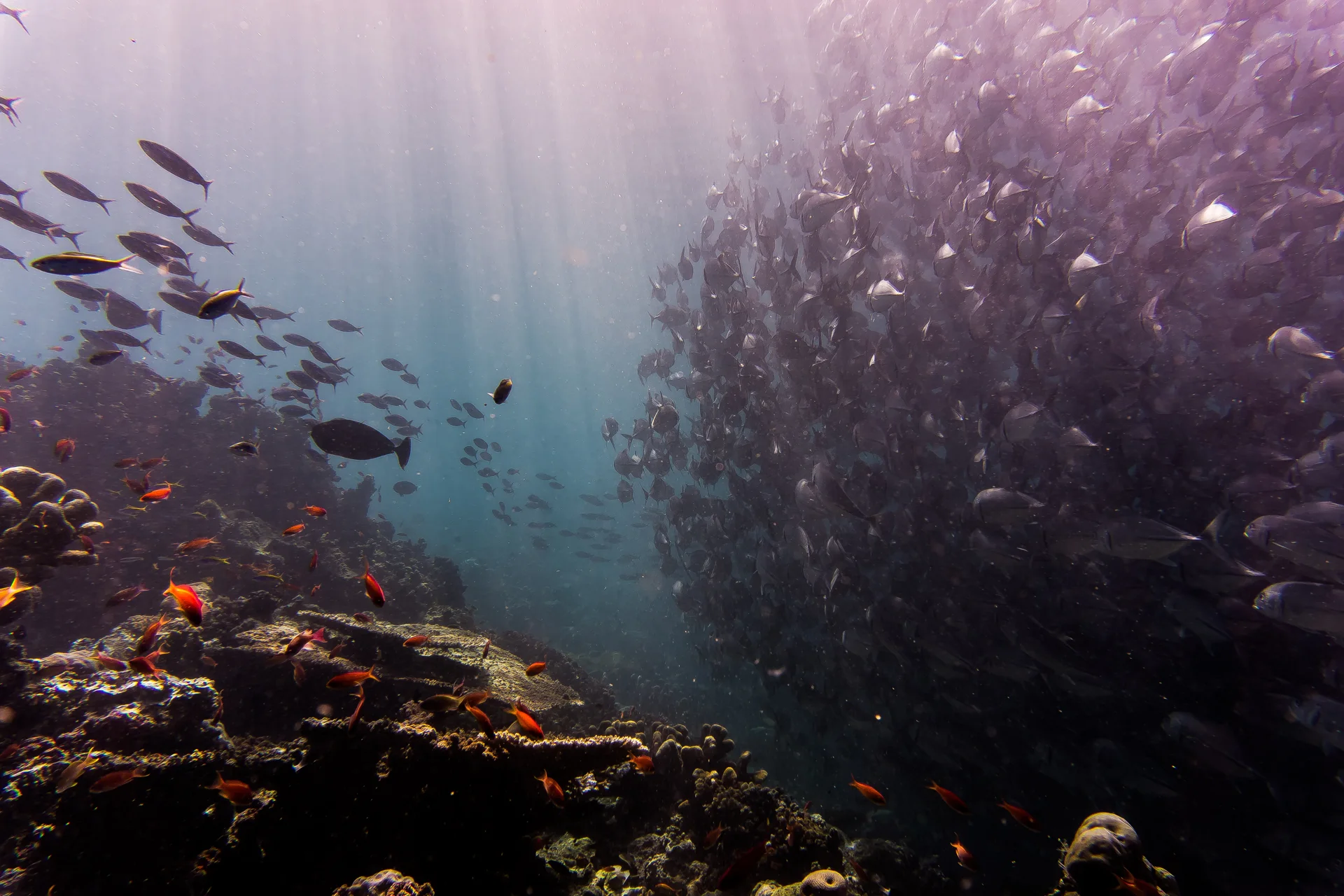
Habitat · 06
Continue beyond the shoreline into the marine landscape.
Explore the habitat ↗Primary rainforest at Taman Negara National Park, Peninsular Malaysia. — Vyacheslav Argenberg. Original photograph · CC BY 4.0. Resized and converted to WebP; cropped for display.
Cloud forest on Mount Kinabalu, Sabah, Malaysian Borneo. — No machine-readable author provided. NepGrower~commonswiki assumed (based on copyright claims).. Original photograph · CC BY-SA 2.5. Resized and converted to WebP; cropped for display.
Limestone pinnacles above forest near Mount Api in Gunung Mulu National Park, Sarawak. — Nur Nafis Naim. Original photograph · CC BY-SA 4.0. Resized and converted to WebP; cropped for display.
Forested banks and still water in the Lower Kinabatangan Wildlife Sanctuary, Sabah. — Artchenphoto. Original photograph · CC BY-SA 4.0. Resized and converted to WebP; cropped for display.
Mangrove trees and stilt roots in Bako National Park, Sarawak, Malaysian Borneo. — Bernard DUPONT from FRANCE. Original photograph · CC BY-SA 2.0. Resized and converted to WebP; cropped for display.
Fish schooling above a reef off Sipadan Island, Sabah, Malaysian Borneo. — Johnny Chen. Original photograph · CC0. Resized and converted to WebP; cropped for display.
The species catalogue
Only records with explicit regional localities appear here. These counts are not complete regional inventories.
49 species · showing 24
001 · Colubridae
Two-colored Dwarf Snake
Malaysia: Sabah; Sarawak.
Read the species account →002 · Colubridae
Species account
Malaysia: Sabah; Sarawak.
Read the species account →003 · Colubridae
Species account
Malaysia: Sabah; Sarawak.
Read the species account →004 · Colubridae
Species account
Malaysia: Sarawak.
Read the species account →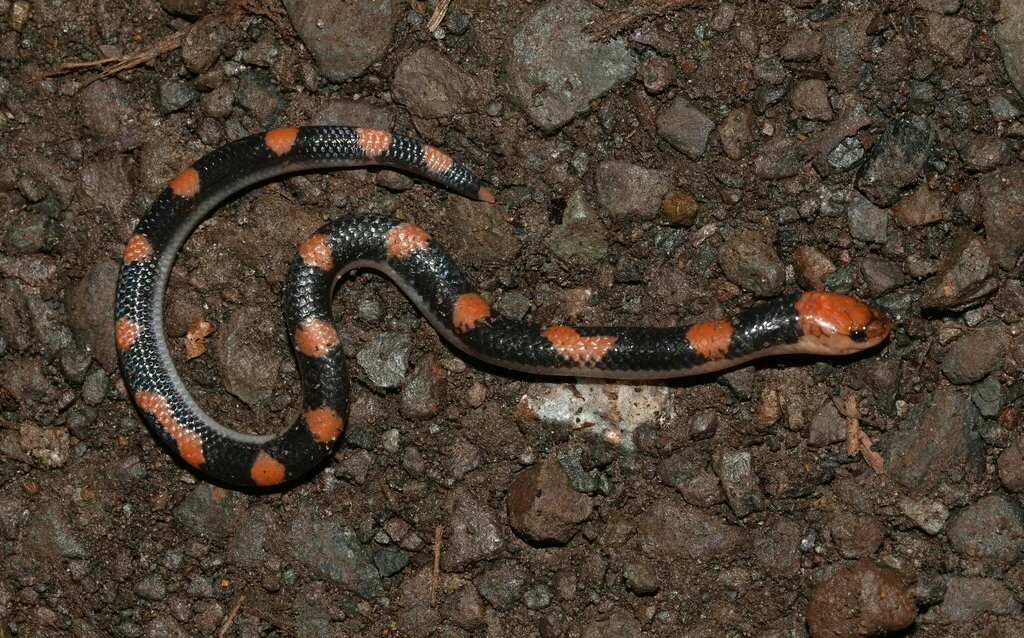
005 · Colubridae
Species account
Malaysia: Sabah; Sarawak.
Read the species account →Chrissy McClarren and Andy Reago · CC0 1.0 · https://creativecommons.org/publicdomain/zero/1.0/
006 · Colubridae
Ampat Lawang Dwarf Snake
Malaysia: Sabah; Sarawak.
Read the species account →007 · Colubridae
Lowi’s Reed Snake
Malaysia: W Malaysia, Kelantan; Sabah; Sarawak.
Read the species account →008 · Colubridae
Variable Reed Snake
Malaysia: W Malaysia, Tioman; Sabah; Sarawak.
Read the species account →Mario Lutz · Copyright Mario Lutz. Authorised for display in this atlas; no third-party reuse licence granted.
009 · Colubridae
Species account
Malaysia: Sarawak.
Read the species account →010 · Colubridae
Sulu Reed Snake; Yellow-bellied Reed Snake
Malaysia: Sabah; Sarawak.
Read the species account →Mario Lutz · Copyright Mario Lutz. Authorised for display in this atlas; no third-party reuse licence granted.
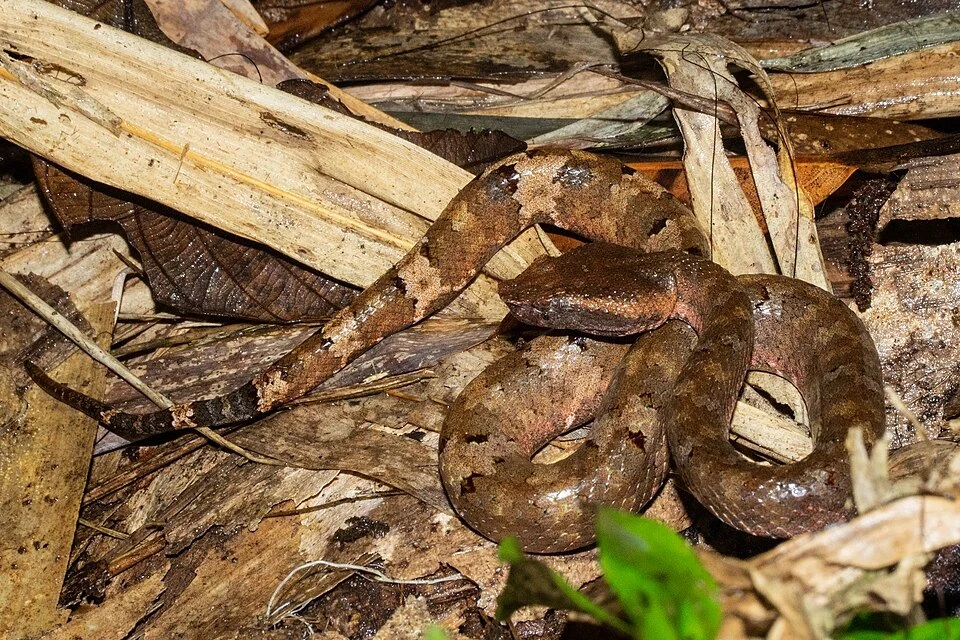
011 · Viperidae
Borneo Pit Viper
Malaysia: Sarawak.
Read the species account →Carey_Knox_Southern_Scales · CC0 · https://creativecommons.org/publicdomain/zero/1.0/deed.en
012 · Cylindrophiidae
Species account
Malaysia: Sarawak.
Read the species account →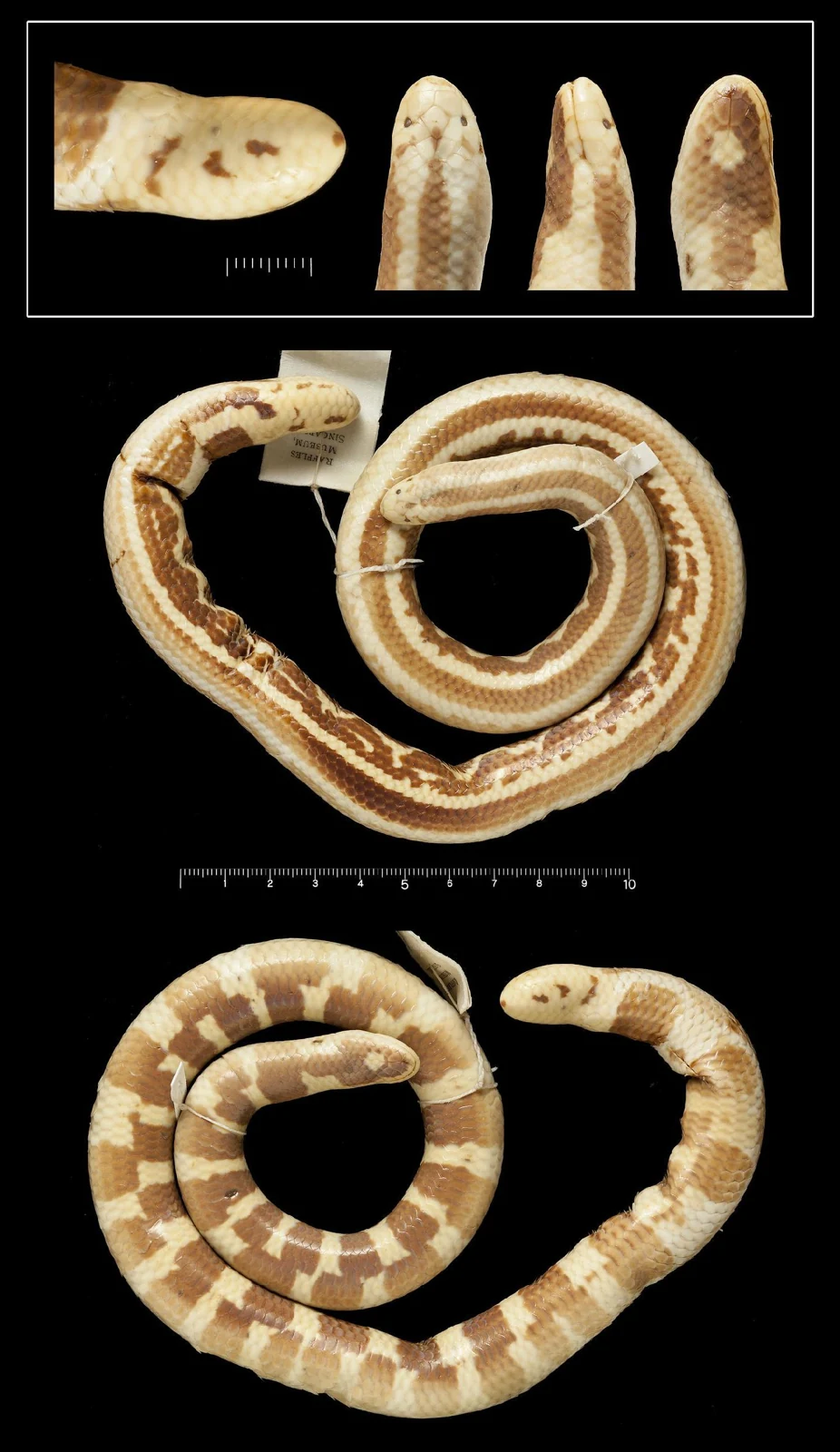
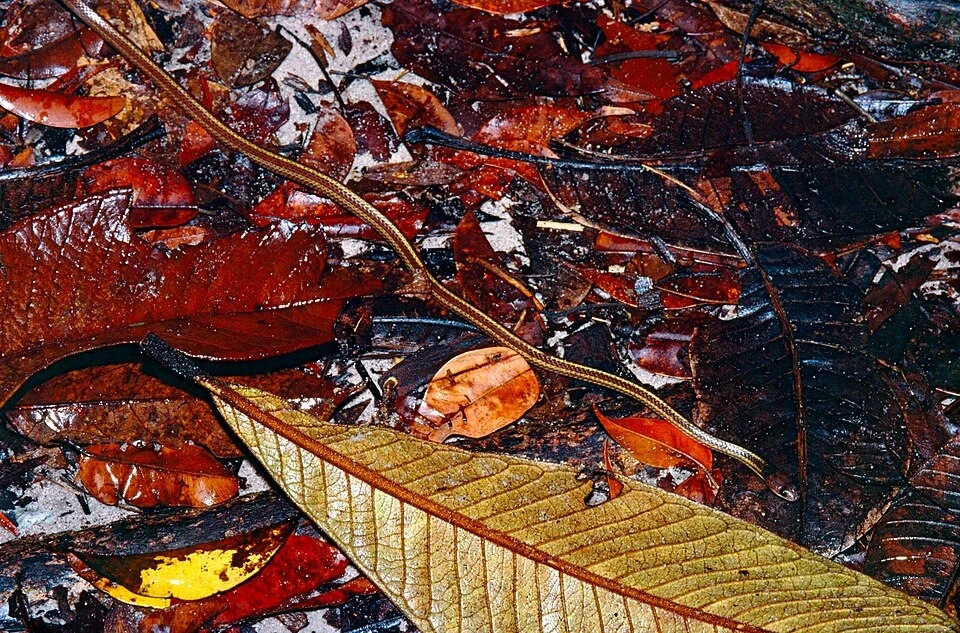
013 · Cylindrophiidae
Blanford's Pipe Snake
Malaysia: Sarawak.
Read the species account →NHM Photo Unit / The Trustees of the Natural History Museum, London · CC BY 4.0 · https://creativecommons.org/licenses/by/4.0/
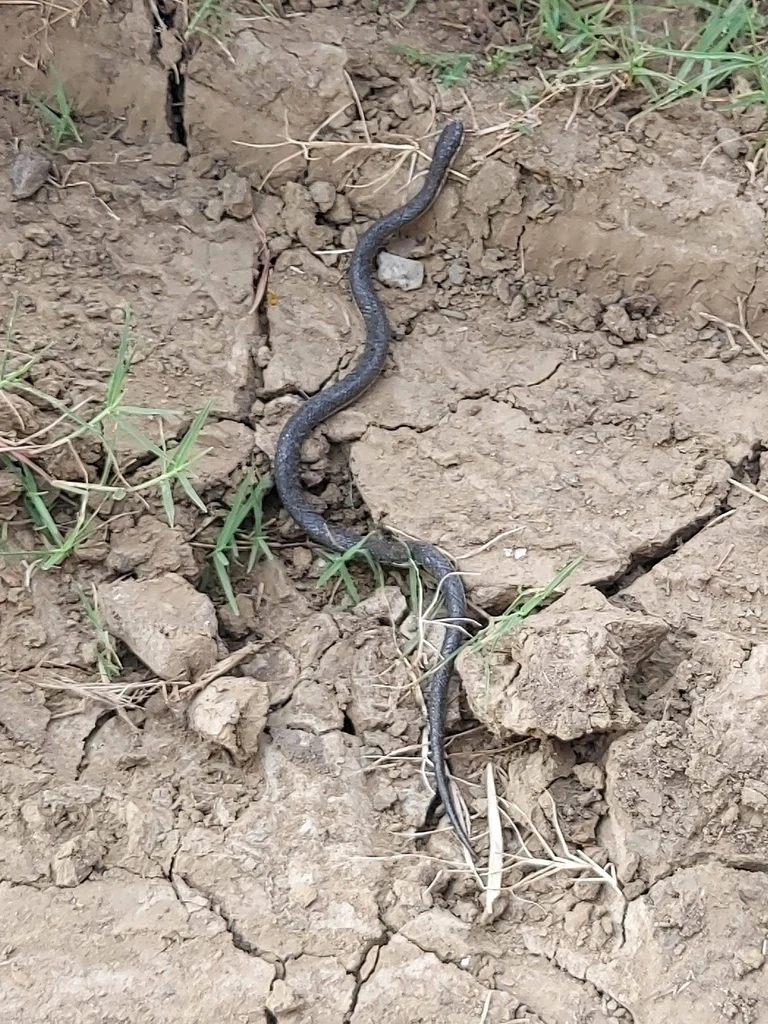
014 · Colubridae
Species account
Malaysia: Sabah; Sarawak.
Read the species account →Bernard DUPONT from FRANCE · CC BY-SA 2.0 · https://creativecommons.org/licenses/by-sa/2.0
015 · Homalopsidae
Gerard's Water Snake
Malaysia: West Malaysia; Sarawak.
Read the species account →Ramesh Shenai · CC BY 4.0 · https://creativecommons.org/licenses/by/4.0/
016 · Colubridae
Peters' Smooth Snake
Malaysia: Malaya; Sabah; Sarawak.
Read the species account →017 · Colubridae
Rainbow Tree Snake
Malaysia: West Malaysia; Sarawak.
Read the species account →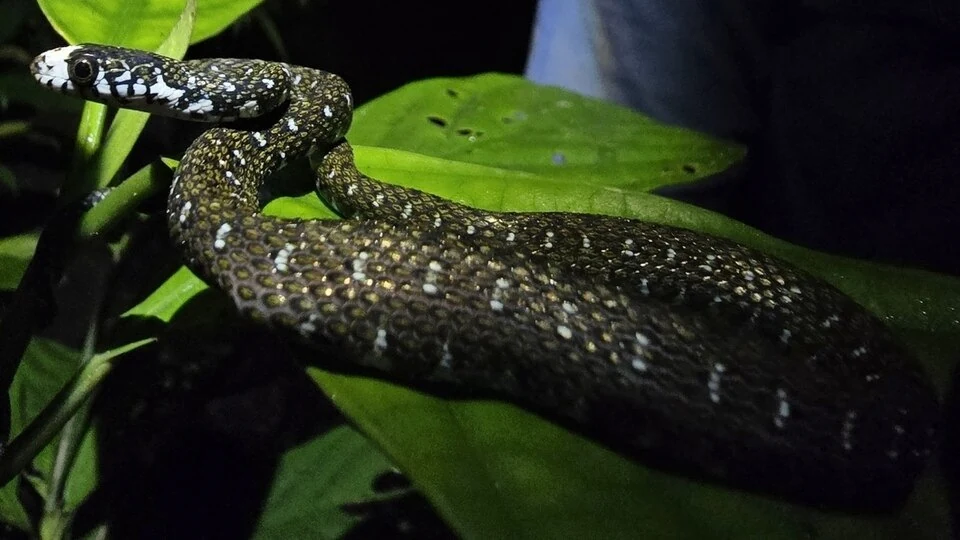
018 · Colubridae
Sabah Keelback
Malaysia: Sabah, Kinabalu; Sarawak.
Read the species account →Max Tibby · CC0 · https://creativecommons.org/publicdomain/zero/1.0/deed.en
019 · Colubridae
Species account
Malaysia: Sarawak.
Read the species account →020 · Colubridae
Peters' Keelback
Malaysia: Malaya; Sarawak.
Read the species account →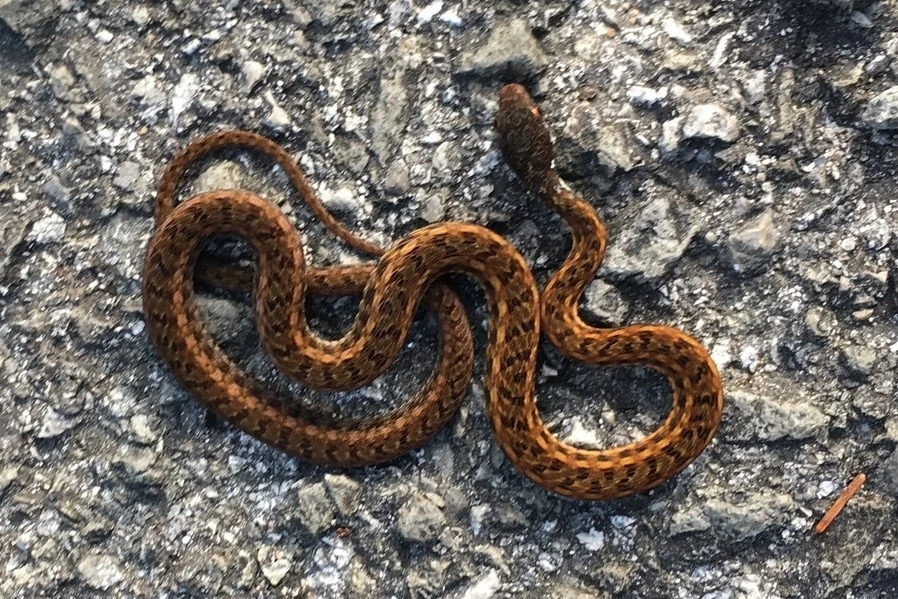
021 · Colubridae
Sarawak Keelback
Malaysia: West Malaysia; Sarawak.
Read the species account →iNaturalist user: daxkifa · CC BY 4.0 · https://creativecommons.org/licenses/by/4.0
022 · Homalopsidae
Sarawak Mud Snake, Sarawak Water Snake, Blotched-Lipped Mud Snake
Malaysia: Sarawak.
Read the species account →023 · Colubridae
Olive Small-eyed Snake
Malaysia: Sabah; Sarawak.
Read the species account →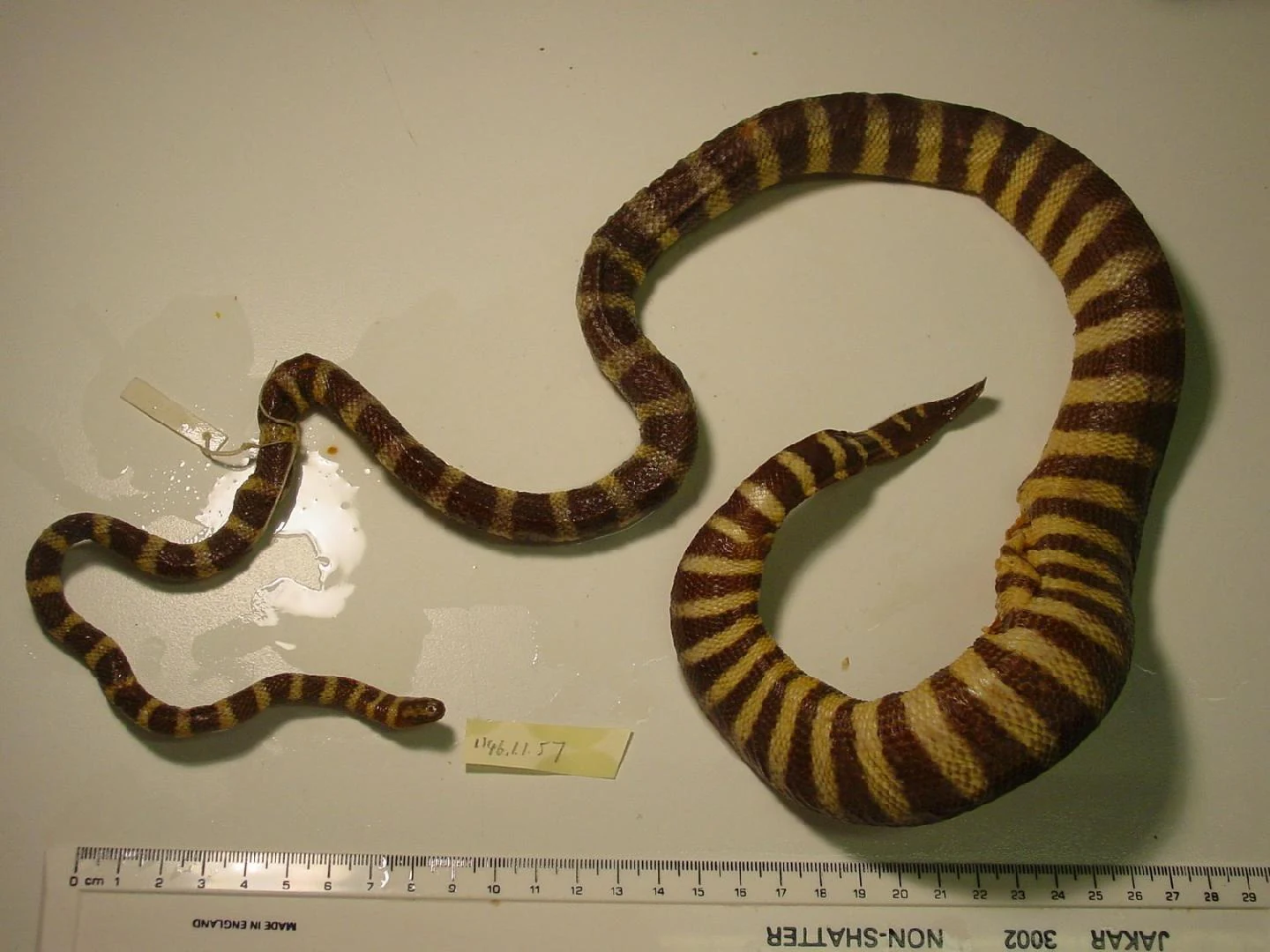
024 · Elapidae
Species account
Malaysia: Sarawak.
Read the species account →Patrick Campbell / The Trustees of the Natural History Museum, London · CC BY 4.0 · https://creativecommons.org/licenses/by/4.0/
The research library
This edition lists 222 species from individual Reptile Database treatments and a supplementary MyBIS locality checked on 8 October 2026. It is a documented atlas collection, not a claim of a complete national inventory. Search results were checked against distribution fields and taxonomic qualifications.
Regional membership requires a named Malaysian locality. Borneo alone does not establish Sabah or Sarawak. A country record without finer resolution stays in the national collection. Labuan is a separate federal territory and has no dedicated species guide in this edition. Habitat selections require explicit habitat text; missing selections mark research gaps.
Geographic boundaries are navigation references from the 2017 geoBoundaries snapshot, not species ranges or a statement about disputed boundaries. Boundary provenance · OpenStreetMap contributors / ODbL 1.0.
excluded · The treatment identifies the Malaysian type locality as erroneous; the current range does not establish Malaysia.
Read the taxonomic treatment ↗regional qualification · The treatment rejects Borneo reports. Only the documented peninsular record is retained.
Read the taxonomic treatment ↗regional qualification · Sarawak is qualified as possible. Only Sabah is assigned in the regional index.
Read the taxonomic treatment ↗regional qualification · The treatment attributes Borneo reports to misidentified A. laevis; no Borneo locality is assigned.
Read the taxonomic treatment ↗excluded · The current distribution field does not establish Malaysian occurrence.
Read the taxonomic treatment ↗regional qualification · The treatment questions historical Borneo reports; they are not used in the regional index.
Read the taxonomic treatment ↗excluded · The current distribution field does not establish Malaysian occurrence.
Read the taxonomic treatment ↗regional qualification · The treatment rejects Borneo occurrence; no Borneo locality is assigned.
Read the taxonomic treatment ↗regional qualification · The Sarawak report is qualified as possible. It is not included in the Sarawak total.
Read the taxonomic treatment ↗excluded · The current distribution field does not establish Malaysian occurrence.
Read the taxonomic treatment ↗excluded · Search match only: the distribution treatment does not list Malaysia, Sabah, Sarawak or Malaya.
Read the taxonomic treatment ↗excluded · The current distribution field does not establish Malaysian occurrence.
Read the taxonomic treatment ↗excluded · The current distribution field does not establish Malaysian occurrence.
Read the taxonomic treatment ↗excluded · The treatment assigns older West Malaysian records to Gonyosoma coeruleum following David et al. (2022).
Read the taxonomic treatment ↗excluded · The current distribution field does not establish Malaysian occurrence.
Read the taxonomic treatment ↗excluded · The current distribution field does not establish Malaysian occurrence.
Read the taxonomic treatment ↗excluded · The current distribution field does not establish Malaysian occurrence.
Read the taxonomic treatment ↗excluded · The current distribution field does not establish Malaysian occurrence.
Read the taxonomic treatment ↗excluded · The current distribution field does not establish Malaysian occurrence.
Read the taxonomic treatment ↗excluded · The revised treatment restricts this name to Sumatra and Java; older Malaysian reports are obsolete.
Read the taxonomic treatment ↗excluded · The current distribution field does not establish Malaysian occurrence.
Read the taxonomic treatment ↗excluded · The current distribution field does not establish Malaysian occurrence.
Read the taxonomic treatment ↗excluded · The current distribution field does not establish Malaysian occurrence.
Read the taxonomic treatment ↗supplementary national record · MyBIS provides a Terengganu record under the revised name; this supplements the shorter taxonomic distribution field.
Read the taxonomic treatment ↗Each species account links its checked treatment and any additional biological sources. Regional and habitat counts reflect extracted evidence, rather than automatic assignment across the country.