PareidaeAsthenodipsasPhotograph not yet documented
001 · Pareidae
Bornean Dark-necked Slug Snake
Asthenodipsas borneensis
Non-venomousMalaysia: Sabah.
Read the species account →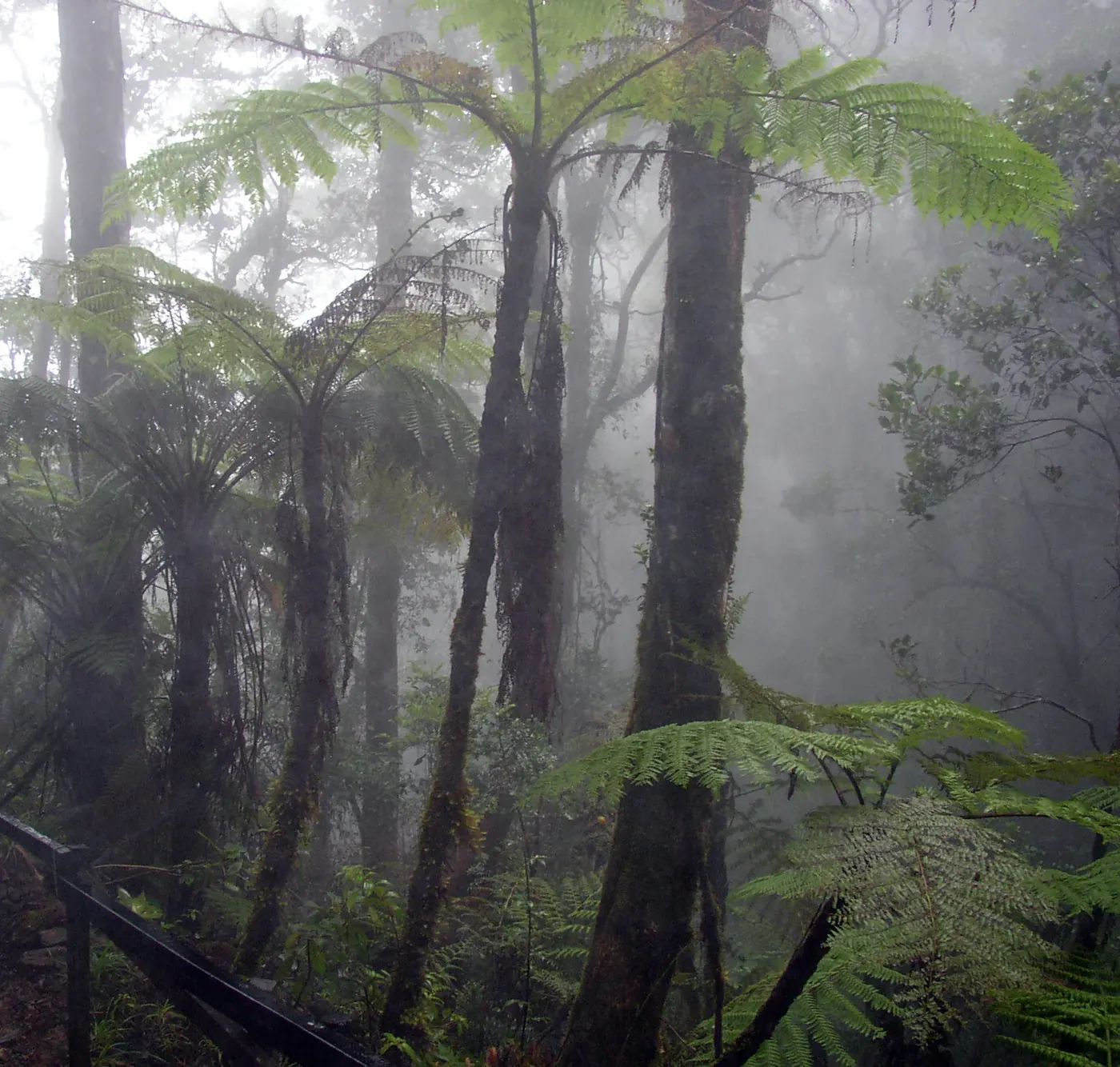
Malaysia · Habitat guide
Follow cooler, misty forest along an elevation gradient.
Cloud forest on Mount Kinabalu, Sabah, Malaysian Borneo.
Geography & biotopes
Follow cooler, misty forest along an elevation gradient.
At Kinabalu, forest composition changes with elevation before giving way to higher vegetation zones. “Mountain” describes a geographic setting; a species found at one elevation is not thereby documented throughout the mountain.
Only accounts with an explicit mountain-forest habitat statement enter this selection. A type locality containing a mountain name does not by itself establish a habitat preference.
The species catalogue
These accounts contain explicit habitat statements. An empty selection means evidence has not yet been indexed, not that snakes are absent.
9 species · showing 9
001 · Pareidae
Bornean Dark-necked Slug Snake
Malaysia: Sabah.
Read the species account →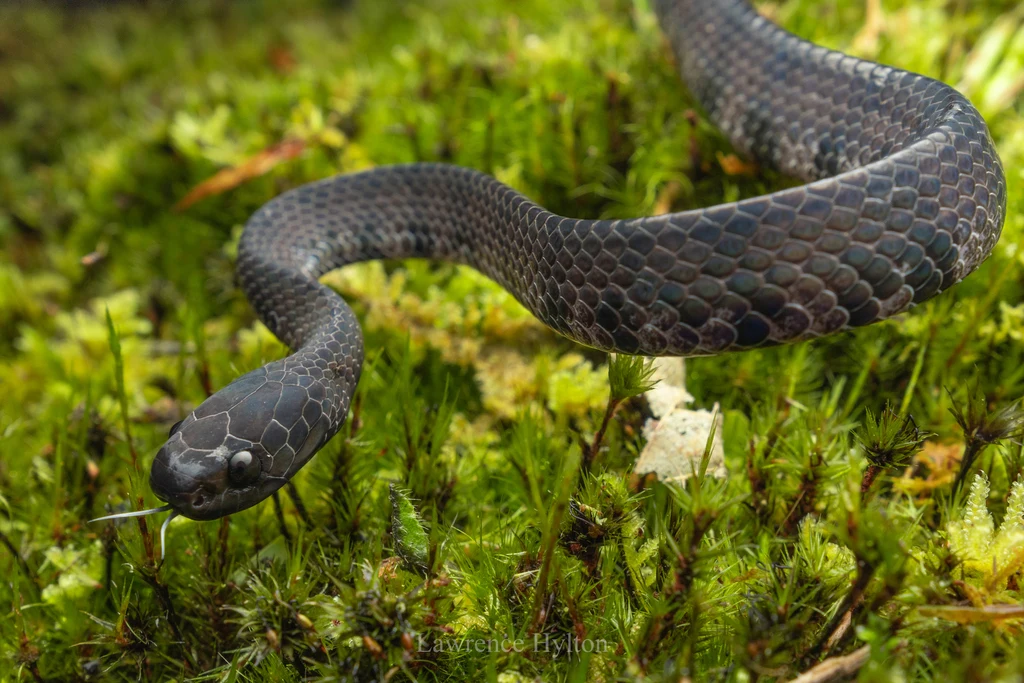
002 · Pareidae
Sabah Mountain Slender Slug Snake
Malaysia: Sabah.
Read the species account →Lawrence Hylton · CC BY 4.0 · https://creativecommons.org/licenses/by/4.0/
003 · Pareidae
Sabah Mountain Smooth Slug Snake
Malaysia: Sabah.
Read the species account →004 · Colubridae
Golden-bellied Reed Snake
Malaysia: West Malaysia, Pahang.
Read the species account →005 · Colubridae
Tweedie's Mountain Reed Snake
Malaysia: West Malaysia, Selangor, Pahang.
Read the species account →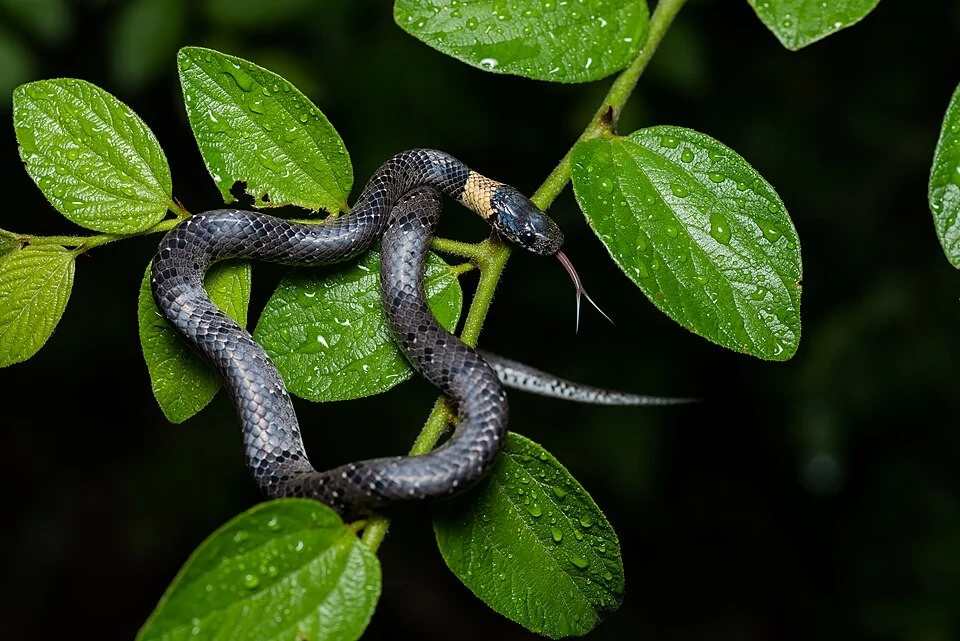
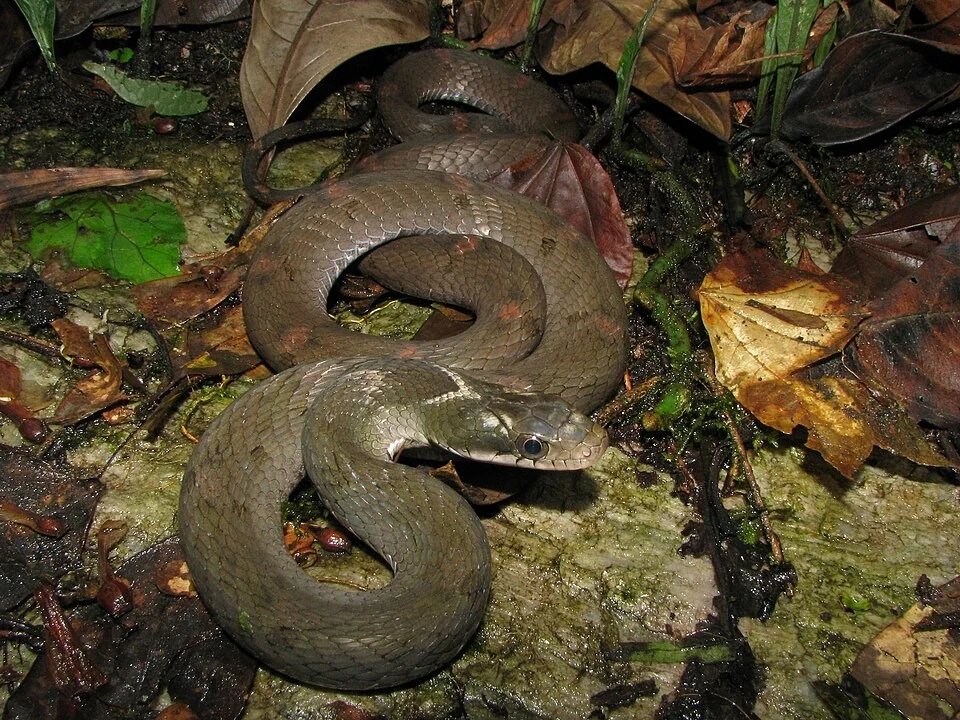
006 · Pareidae
Mountain Slug Snake
Malaysia: West Malaysia.
Read the species account →Rushenb · CC BY-SA 4.0 · https://creativecommons.org/licenses/by-sa/4.0
007 · Colubridae
(Large-eyed or) Big-eyed Bamboo Snake, Mock Cobra
Malaysia: West Malaysia.
Read the species account →Umeshsrinivasan · CC BY-SA 3.0 · https://creativecommons.org/licenses/by-sa/3.0
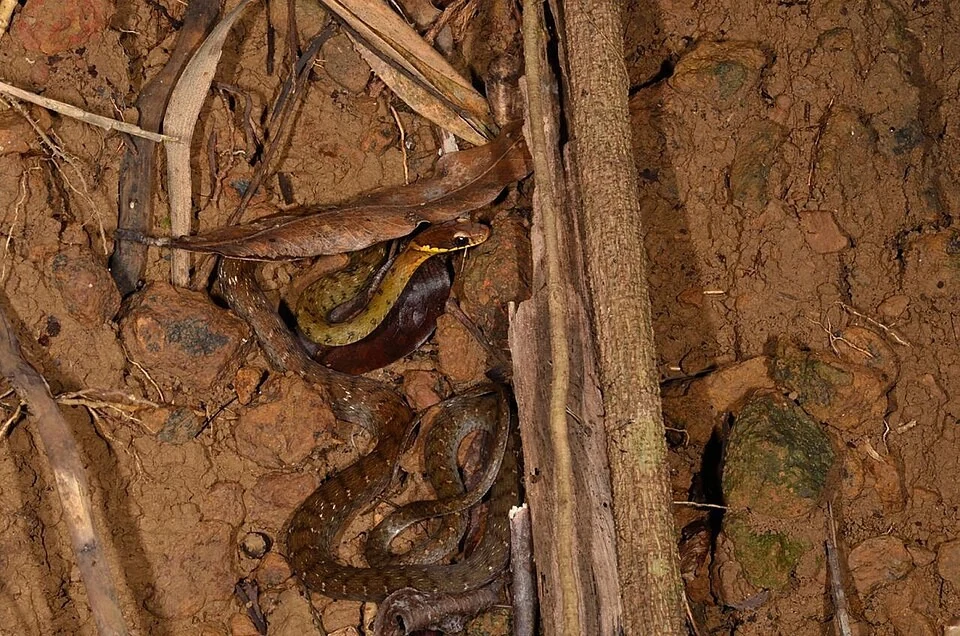
008 · Colubridae
Specklebelly Keelback
Malaysia: Malaya, Tioman.
Read the species account →Eugene Popov · CC BY 4.0 · https://creativecommons.org/licenses/by/4.0
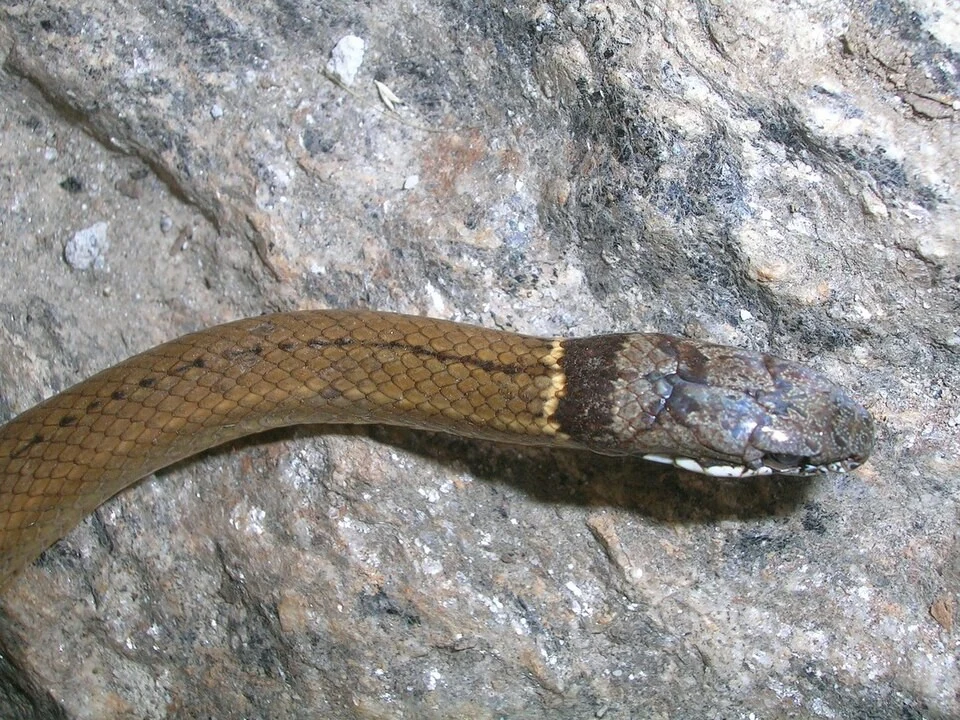
009 · Colubridae
Common Many-tooth Snake
Malaysia: West Malaysia.
Read the species account →L. Shyamal · CC BY-SA 3.0 · https://creativecommons.org/licenses/by-sa/3.0
The research library
This edition lists 222 species from individual Reptile Database treatments and a supplementary MyBIS locality checked on 8 October 2026. It is a documented atlas collection, not a claim of a complete national inventory. Search results were checked against distribution fields and taxonomic qualifications.
Regional membership requires a named Malaysian locality. Borneo alone does not establish Sabah or Sarawak. A country record without finer resolution stays in the national collection. Labuan is a separate federal territory and has no dedicated species guide in this edition. Habitat selections require explicit habitat text; missing selections mark research gaps.
Geographic boundaries are navigation references from the 2017 geoBoundaries snapshot, not species ranges or a statement about disputed boundaries. Boundary provenance · OpenStreetMap contributors / ODbL 1.0.
excluded · The treatment identifies the Malaysian type locality as erroneous; the current range does not establish Malaysia.
Read the taxonomic treatment ↗regional qualification · The treatment rejects Borneo reports. Only the documented peninsular record is retained.
Read the taxonomic treatment ↗regional qualification · Sarawak is qualified as possible. Only Sabah is assigned in the regional index.
Read the taxonomic treatment ↗regional qualification · The treatment attributes Borneo reports to misidentified A. laevis; no Borneo locality is assigned.
Read the taxonomic treatment ↗excluded · The current distribution field does not establish Malaysian occurrence.
Read the taxonomic treatment ↗regional qualification · The treatment questions historical Borneo reports; they are not used in the regional index.
Read the taxonomic treatment ↗excluded · The current distribution field does not establish Malaysian occurrence.
Read the taxonomic treatment ↗regional qualification · The treatment rejects Borneo occurrence; no Borneo locality is assigned.
Read the taxonomic treatment ↗regional qualification · The Sarawak report is qualified as possible. It is not included in the Sarawak total.
Read the taxonomic treatment ↗excluded · The current distribution field does not establish Malaysian occurrence.
Read the taxonomic treatment ↗excluded · Search match only: the distribution treatment does not list Malaysia, Sabah, Sarawak or Malaya.
Read the taxonomic treatment ↗excluded · The current distribution field does not establish Malaysian occurrence.
Read the taxonomic treatment ↗excluded · The current distribution field does not establish Malaysian occurrence.
Read the taxonomic treatment ↗excluded · The treatment assigns older West Malaysian records to Gonyosoma coeruleum following David et al. (2022).
Read the taxonomic treatment ↗excluded · The current distribution field does not establish Malaysian occurrence.
Read the taxonomic treatment ↗excluded · The current distribution field does not establish Malaysian occurrence.
Read the taxonomic treatment ↗excluded · The current distribution field does not establish Malaysian occurrence.
Read the taxonomic treatment ↗excluded · The current distribution field does not establish Malaysian occurrence.
Read the taxonomic treatment ↗excluded · The current distribution field does not establish Malaysian occurrence.
Read the taxonomic treatment ↗excluded · The revised treatment restricts this name to Sumatra and Java; older Malaysian reports are obsolete.
Read the taxonomic treatment ↗excluded · The current distribution field does not establish Malaysian occurrence.
Read the taxonomic treatment ↗excluded · The current distribution field does not establish Malaysian occurrence.
Read the taxonomic treatment ↗excluded · The current distribution field does not establish Malaysian occurrence.
Read the taxonomic treatment ↗supplementary national record · MyBIS provides a Terengganu record under the revised name; this supplements the shorter taxonomic distribution field.
Read the taxonomic treatment ↗Each species account links its checked treatment and any additional biological sources. Regional and habitat counts reflect extracted evidence, rather than automatic assignment across the country.