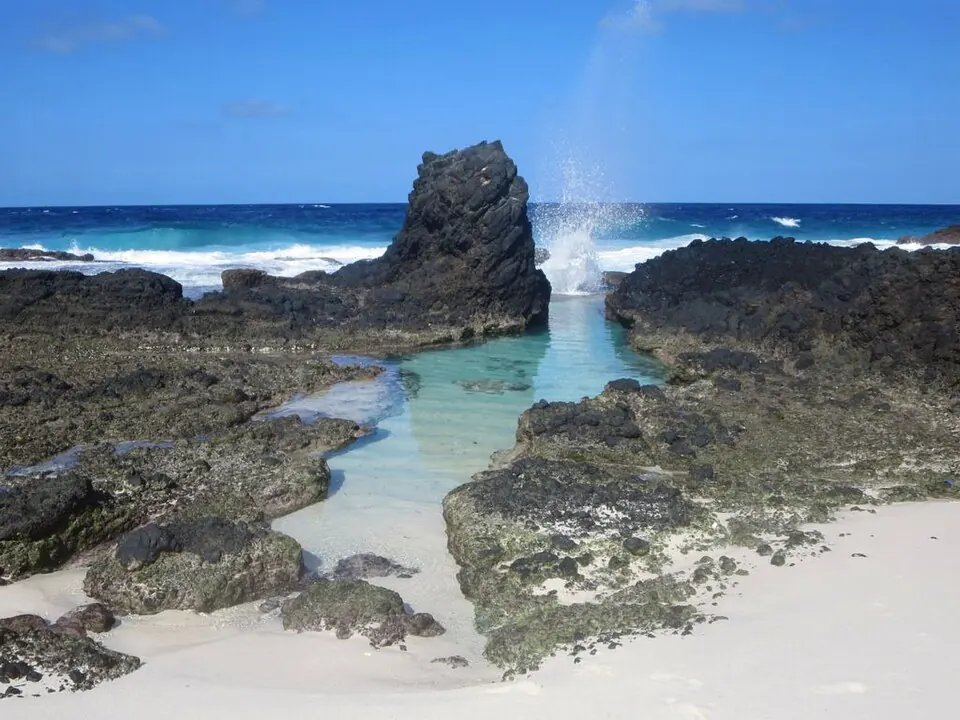
Basalt rocks, coral sand and a coastal bathing pool at Dolly Beach, Christmas Island, Australia.

Indian Ocean Territories · Place guide

Christmas Island

Christmas Island is a steep oceanic island with a forested plateau and coastal terraces.

4species with extracted evidence
3families
2island guides

Basalt rocks, coral sand and a coastal bathing pool at Dolly Beach, Christmas Island, Australia.

Photograph: David Stanley from Nanaimo, Canada · Image source · CC BY 2.0. Cropped to fill the hero; darkened for text legibility.

Geography & biotopes

Read the landscape.

Christmas Island is a steep oceanic island with a forested plateau and coastal terraces.

Limestone overlies volcanic rock, and cliffs dominate much of the coast. Small bays interrupt the cliff line; the central plateau carries rainforest.

Ecological connections

Deep soils support tall evergreen forest, while shallower slopes and terraces have lower, partly deciduous forest. These habitat differences should remain attached to the actual locality in a species record.

Explore the setting

Use current park notices and established access routes. Geographic markers provide orientation and do not identify wildlife-search sites.

This guide indexes these source names: Christmas Island, Christmas Island, Indian Ocean. A country-only record is not automatically assigned to this place. Map markers identify navigation destinations, not collection sites.

Australian Government · Australian territories →

Australian Government · Christmas Island environment →

Geoscience Australia · Cocos (Keeling) Islands →

Geography is part of the record

Find your way through Indian Ocean Territories.

Select a named island to open its evidence page. The complete directory below keeps every guide accessible, including places where locality evidence has not yet been extracted.

4 of 4 listed species have at least one indexed island record. 0 remain country-only. Even a nonzero count is not a complete regional inventory.

Habitats & living landscapes

Explore the living
landscapes.

Explore 2 guides to the environments, places and conservation pressures that shape this country. Each guide connects to the regional map and shared species accounts.

Landscape photographs & credits

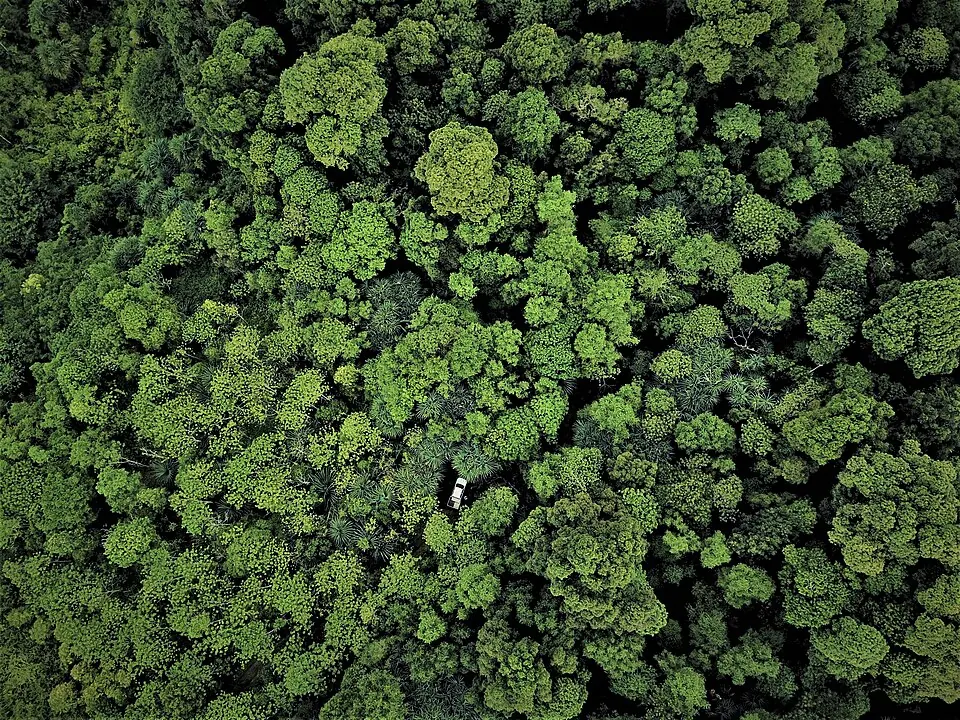
Dense rainforest canopy on Christmas Island, Australia, photographed from a drone by Christina Lipka during conservation research in April 2018. — Christina Lipka. Original photograph · CC BY 4.0. Cropped for the cards; photographs do not establish snake occurrence.

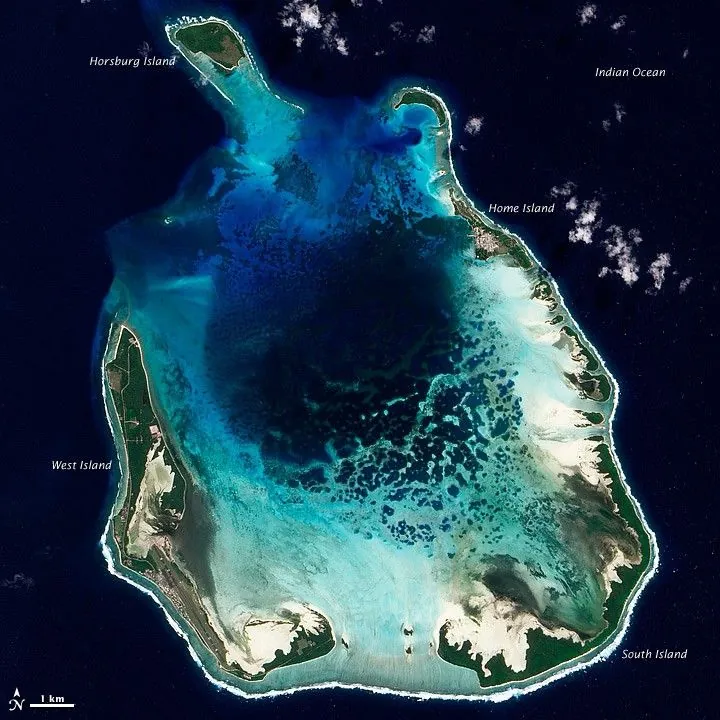
South Keeling atoll in the Cocos (Keeling) Islands, imaged by NASA EO-1 ALI on 31 July 2009. This orbital view provides coastal context; it does not show Christmas Island or establish current coral condition or snake occurrence. — NASA Earth Observatory / Jesse Allen and Robert Simmon; EO-1 ALI data: NASA EO-1 team. Original photograph · NASA educational and informational use. Cropped for the cards; photographs do not establish snake occurrence.

The species catalogue

Snakes · Christmas Island.

Only records naming this place appear below. These are extracted locality records, not complete island or regional inventories.

4 species · showing 4

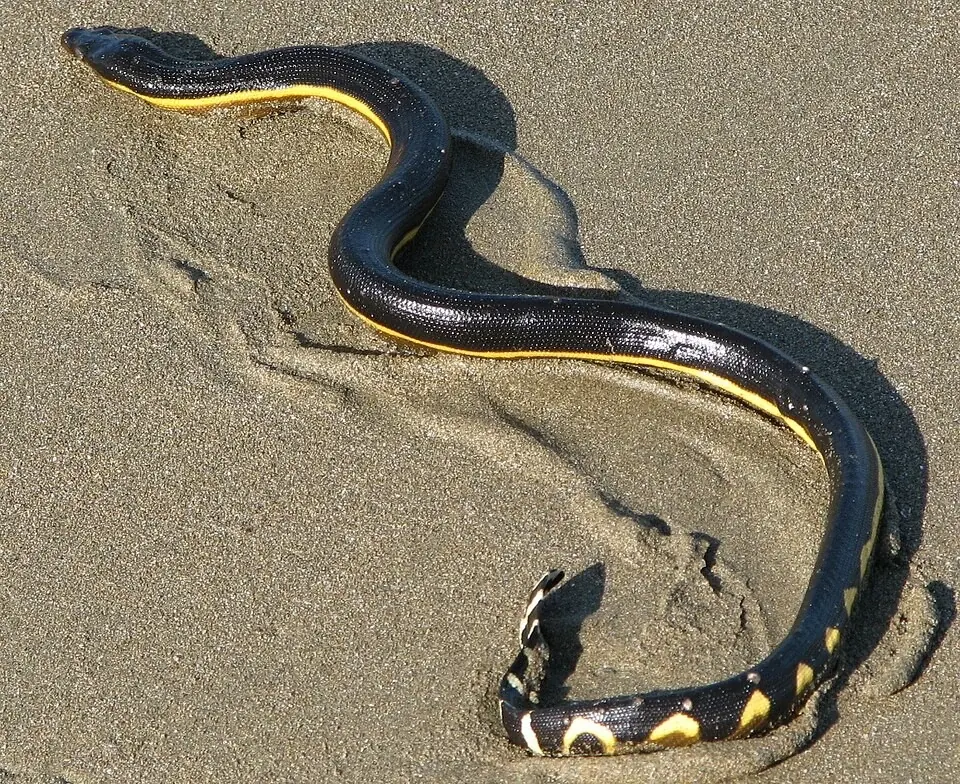
Hydrophis platurus — real specimen photograph; identification follows the linked source.

001 · Elapidae

Yellowbelly Sea Snake

Hydrophis platurus

(LINNAEUS, 1766)

VenomousClinical severity not established

Museum-vouchered at Flying Fish Cove in 1999. Historical Cocos reports need reconciliation with the 2009 marine review; Cocos is not mapped as confirmed. Museums Victoria Z 7827 is tissue from D 73493, collected on 20 June 1999 at Flying Fish Cove. The anomalous preparation date 2099 is not used as the collection date.

Read the species account →

Aloaiza · CC BY 3.0 · https://creativecommons.org/licenses/by/3.0

Indotyphlops braminus — photographed on Ko Pha-ngan, Thailand.

002 · Typhlopidae

Flowerpot Snake

Indotyphlops braminus

(DAUDIN, 1803)

Non-venomous

Introduced on Christmas Island. The Cocos assessment lists presence but does not resolve its origin there; no native status or occurrence on every islet is inferred. The conservation plan treats Christmas Island animals as introduced by the 1940s. The 2014 Cocos assessment lists the taxon as present; its summary does not supply a particular islet for…

Read the species account →

Cook-Price, Makchai & Suwanwaree (2026); photographs credited collectively to the author, James Covert and Vikas Kumar · CC BY 4.0 · https://creativecommons.org/licenses/by/4.0/

Lycodon capucinus — photographed on Ko Pha-ngan, Thailand.

003 · Colubridae

Common Wolf Snake

Lycodon capucinus

BOIE, 1827

Non-venomous

Introduced around 1987; subsequently widespread on Christmas Island. No Cocos occurrence is inferred. Fritts (1993) reports the conservator’s observations from the wharf and Kampong. These are historical named localities, not new field observations.

Read the species account →

Cook-Price, Makchai & Suwanwaree (2026); photographs credited collectively to the author, James Covert and Vikas Kumar · CC BY 4.0 · https://creativecommons.org/licenses/by/4.0/

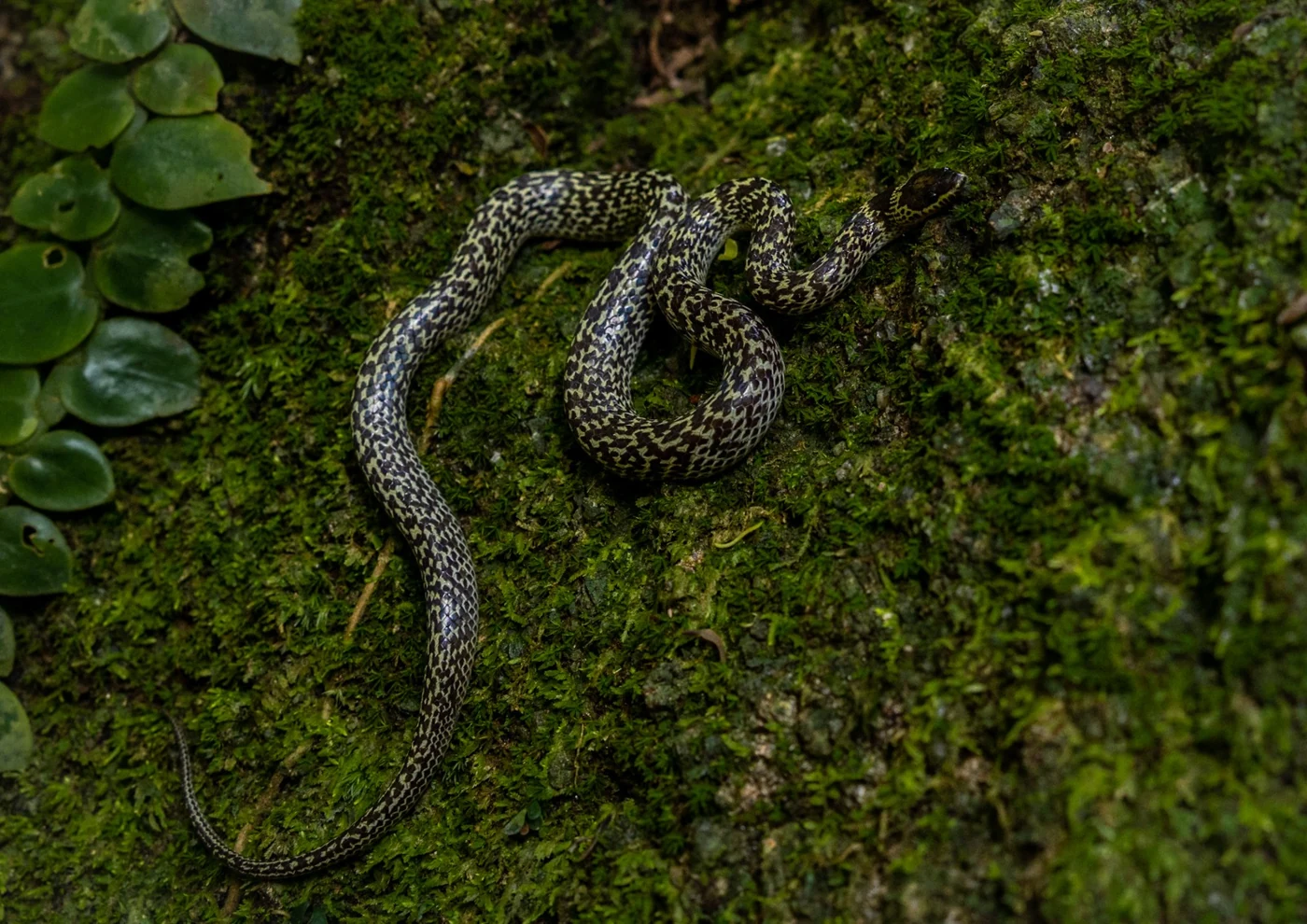
TyphlopidaeRamphotyphlopsPhotograph not yet documented

004 · Typhlopidae

Christmas Island Blind Snake

Ramphotyphlops exocoeti

(BOULENGER, 1887)

Non-venomous

Christmas Island endemic; documented historically. The 2024–2034 conservation plan gives 31 July 2009 as the last confirmed wild sighting; current population status is unknown. Maple et al. document the Powell’s Hill capture on 31 July 2009 at 361 m, a 1975 museum specimen from Stewart Hill, and reported captures at Loading Bay 4 (1984) and Field 17…

Read the species account →

Explore all 4 country records →

The research library

Sources & the checklist.

This edition lists 4 species with supported country records from checked taxonomic treatments and cited field studies. This total includes 2 records marked as introduced; it is not a native-species total. It is not a claim of a complete national inventory. Each account retains its source and check date; individual evidence entries retain their own review dates.

Range and taxonomy review

Country links use a single accepted species identity. Revised names and disputed records are kept visible here; uncertain records do not enter the listed collection or regional totals.

Indotyphlops braminus

Introduced occurrence

Introduced on Christmas Island. The Cocos assessment lists presence but does not resolve its origin there; no native status or occurrence on every islet is inferred. The conservation plan treats Christmas Island animals as introduced by the 1940s. The 2014 Cocos assessment lists the taxon as present; its summary does not supply a particular islet for this snake.

Source 1 ↗

Source 2 ↗

Lycodon capucinus

Introduced occurrence

Introduced around 1987; subsequently widespread on Christmas Island. No Cocos occurrence is inferred. Fritts (1993) reports the conservator’s observations from the wharf and Kampong. These are historical named localities, not new field observations.

Source 1 ↗

Source 2 ↗

Laticauda colubrina

Uncertain — excluded from the listed total

Historical southern-atoll report in the 2004 Pulu Keeling plan conflicts with the limited-evidence assessment in 2009. Current occurrence and underlying specimen remain unverified; excluded from supported counts.

Source 1 ↗

Source 2 ↗

How the map and counts work

Search results were checked against distribution text and taxonomic qualifications. A geographic name alone does not establish a political country: New Guinea, the Solomon archipelago and Micronesia span more than one country or territory. Introduced and unresolved records require separate interpretation.

Place counts require explicit named localities, including valid type localities. Counts can overlap where sources name multiple places. Regional maps group historical boundary snapshots for navigation, while island outlines use Natural Earth; neither is a species range or an observation map. Small islands can be below the outline dataset’s resolution, so geographic reference markers and the directory remain available.

Natural Earth generalized land · public domain, with official geographic reference points. Small islands, including North Keeling, are absent from these simplified outlines. Markers are not snake observations. Map provenance →

  1. Australian Government · Christmas Island environment ↗

    Geology, coastal cliffs and plateau setting.

  2. Parks Australia · Christmas Island plants ↗

    Plateau rainforest, marginal rainforest and coastal vegetation; checked 12 October 2026.

  3. Australian Government · Australian territories ↗
  4. Australian Government · Christmas Island environment ↗
  5. Geoscience Australia · Cocos (Keeling) Islands ↗
  6. The Reptile Database

    Individual treatments and locality evidence are linked from each species account.

  7. Meiri (2024): SquamBase 1.0

    Species-level literature measurements and ecological traits. Exact-name matches only; imputed or ambiguous fields are omitted. These summaries are not local observations.

  8. Natural Earth: public-domain geographic data

Continue through the Asia atlas →