Climate pressure on marine habitat
The 2024 Christmas Island assessment identifies sea-level effects on beaches and coral bleaching as conservation pressures. This does not establish present damage at every photographed location.
Indian Ocean Territories · Habitat field guide
Christmas Island’s steep marine margin contrasts with the shallow atoll waters of Cocos (Keeling). Keep land, shore and underwater observations distinct.
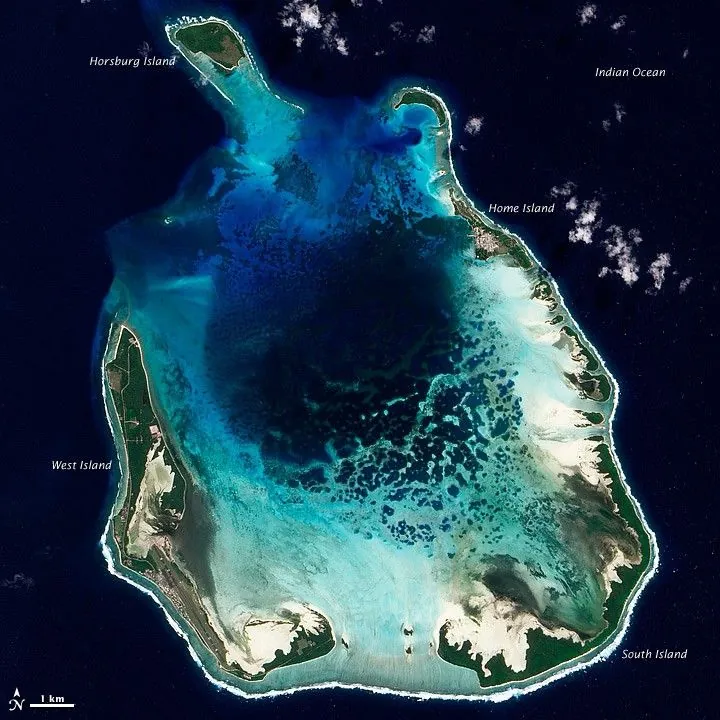
South Keeling atoll in the Cocos (Keeling) Islands, imaged by NASA EO-1 ALI on 31 July 2009. This orbital view provides coastal context; it does not show Christmas Island or establish current coral condition or snake occurrence.
Understanding the environment
Christmas Island’s steep marine margin contrasts with the shallow atoll waters of Cocos (Keeling). Keep land, shore and underwater observations distinct.
Explore the structure · Shore → shallow water → offshore
Select a zone to see what changes.
Land and tide
State whether the animal was on dry land, in the intertidal zone or underwater.
A beach discovery need not indicate a breeding population.
Conceptual reading sequence, not a measured transect or species range.
Field notes · 01
Fringing coral reefs surround Christmas Island. Its coastal marine caves and deeper offshore seafloor create settings that a single “coast” category cannot describe. Parks Australia notes that offshore habitats remain comparatively poorly studied.
Field notes · 02
Parks Australia distinguishes the central lagoon, seagrass and outer reefs with hard and soft corals. These shallow-water environments differ from offshore seamounts and deep-sea plains.
Sources: Parks Australia · Cocos (Keeling) Islands Marine Park
Field notes · 03
North Keeling’s former lagoon entrance is now closed, and plants and nesting seabirds occupy the former opening. Do not treat an old coastline photograph as a current account of tidal exchange.
Pressures on Indian Ocean Territories’s habitats
The 2024 Christmas Island assessment identifies sea-level effects on beaches and coral bleaching as conservation pressures. This does not establish present damage at every photographed location.
Consult current park zoning for the intended activity. Compare dated habitat and species surveys rather than using an attractive reef image as a condition assessment.
The connected collection
These 1 species have supported country occurrence and an explicit habitat association in the shared account. The association may come from elsewhere in their range. This is not a complete local habitat inventory; the places above are landscape examples, not asserted collecting sites.
1 species · showing 1
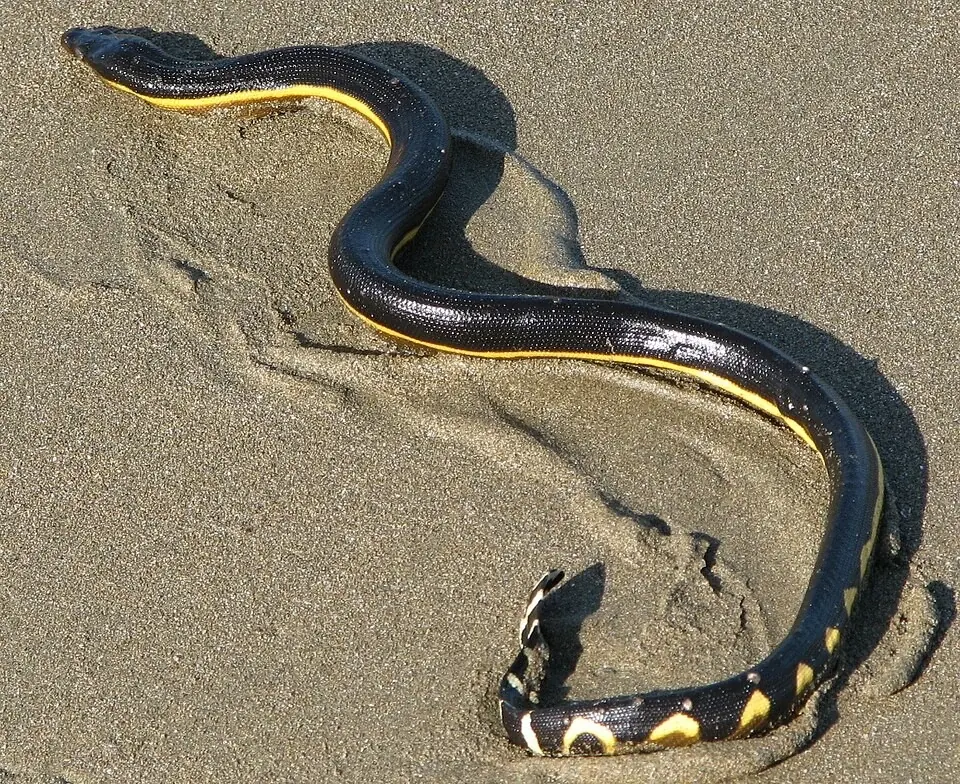
001 · Elapidae
Yellowbelly Sea Snake
Museum-vouchered at Flying Fish Cove in 1999. Historical Cocos reports need reconciliation with the 2009 marine review; Cocos is not mapped as confirmed. Museums Victoria Z 7827 is tissue from D 73493, collected on 20 June 1999 at Flying Fish Cove. The anomalous preparation date 2099 is not used as the collection date.
Read the species account →Aloaiza · CC BY 3.0 · https://creativecommons.org/licenses/by/3.0
Read further
Guide reviewed 12 October 2026. Source dates and geographic scope matter; landscape photographs do not establish species occurrence.
Fringing reef, marine caves and deeper offshore setting; not a snake inventory.
Lagoon, seagrass, outer reefs and offshore habitats; checked 12 October 2026.
North Keeling low relief, calcareous soils and closed lagoon entrance.
Dated island assessment of invasive species, fragmentation and climate pressures.
Continue through Indian Ocean Territories