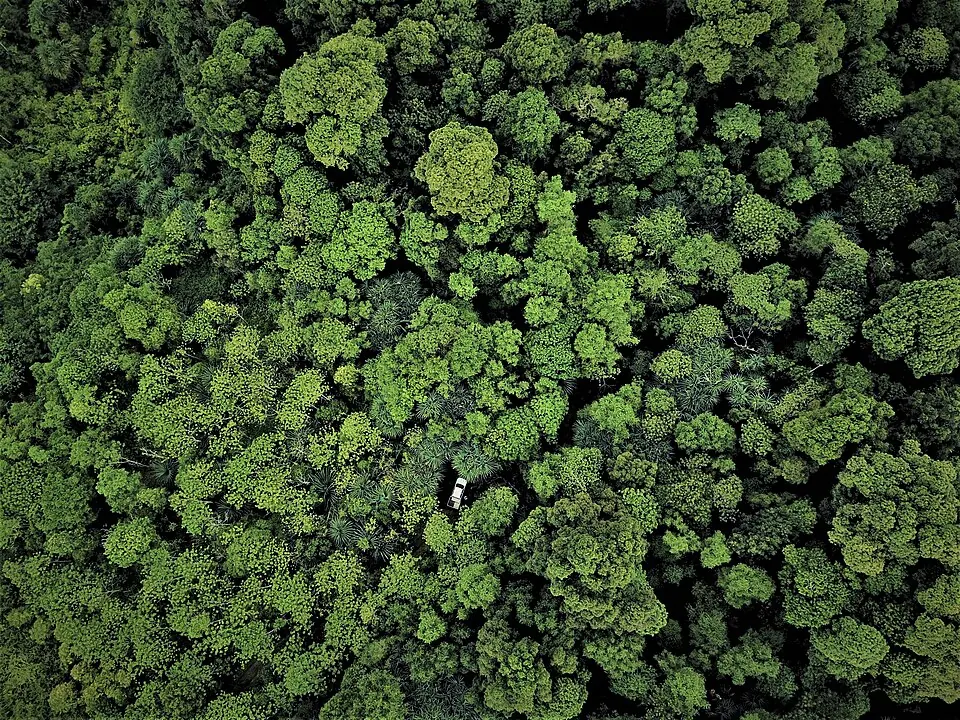
Dense rainforest canopy on Christmas Island, Australia, photographed from a drone by Christina Lipka during conservation research in April 2018.

Indian Ocean Territories · Habitat field guide

Forests on limestone and coral islands

Compare Christmas Island’s plateau and terraces with North Keeling’s atoll forest. Shared green cover does not imply a shared snake fauna.

Dense rainforest canopy on Christmas Island, Australia, photographed from a drone by Christina Lipka during conservation research in April 2018.

Photograph: Christina Lipka · Image source · CC BY 4.0. Cropped to fill the hero; darkened for text legibility.

Understanding the environment

A sense of the habitat.

Compare Christmas Island’s plateau and terraces with North Keeling’s atoll forest. Shared green cover does not imply a shared snake fauna.

Christmas Island
Plateau and terrace rainforest
North Keeling
Pisonia forest and coastal scrub
Evidence scale
Island, date and recorded microhabitat

Explore the structure · Canopy → lower vegetation → ground cover

Read the habitat at its own scale

Select a zone to see what changes.

Crown cover

Canopy

Describe closed crowns and openings separately.

A distant landscape image cannot establish the composition of the trees.

Conceptual reading sequence, not a measured transect or species range.

Field notes · 01

Christmas Island’s forest gradient

Parks Australia describes tall evergreen rainforest on deep plateau and terrace soils, with a canopy around 40 metres. Shallower soils carry lower semi-deciduous forest. Land-crab feeding helps explain the relatively open understorey.

Sources: Parks Australia · Christmas Island plants

Field notes · 02

North Keeling’s distinctive forest

Pisonia forest dominates North Keeling, alongside coconut trees. Coastal areas also carry octopus bush, tea shrub and ironwood. These descriptions apply to North Keeling and should not be copied indiscriminately to the southern atoll.

Sources: Parks Australia · Pulu Keeling plants

Pressures on Indian Ocean Territories’s habitats

What is at risk?

Invasive species and fragmented habitat

The 2024 Christmas Island priority-place assessment identifies invasive animals and weeds, habitat fragmentation and former mine areas needing rehabilitation. This is an island assessment, not a measured trend for every snake.

Sources: DCCEEW · Christmas Island priority place (2024)

What helps this habitat

Keep habitat restoration and control of introduced species linked to monitored local evidence. A vegetated site alone does not demonstrate a surviving population.

The connected collection

Snakes with habitat evidence.

These 3 species have supported country occurrence and an explicit habitat association in the shared account. The association may come from elsewhere in their range. This is not a complete local habitat inventory; the places above are landscape examples, not asserted collecting sites.

3 species · showing 3

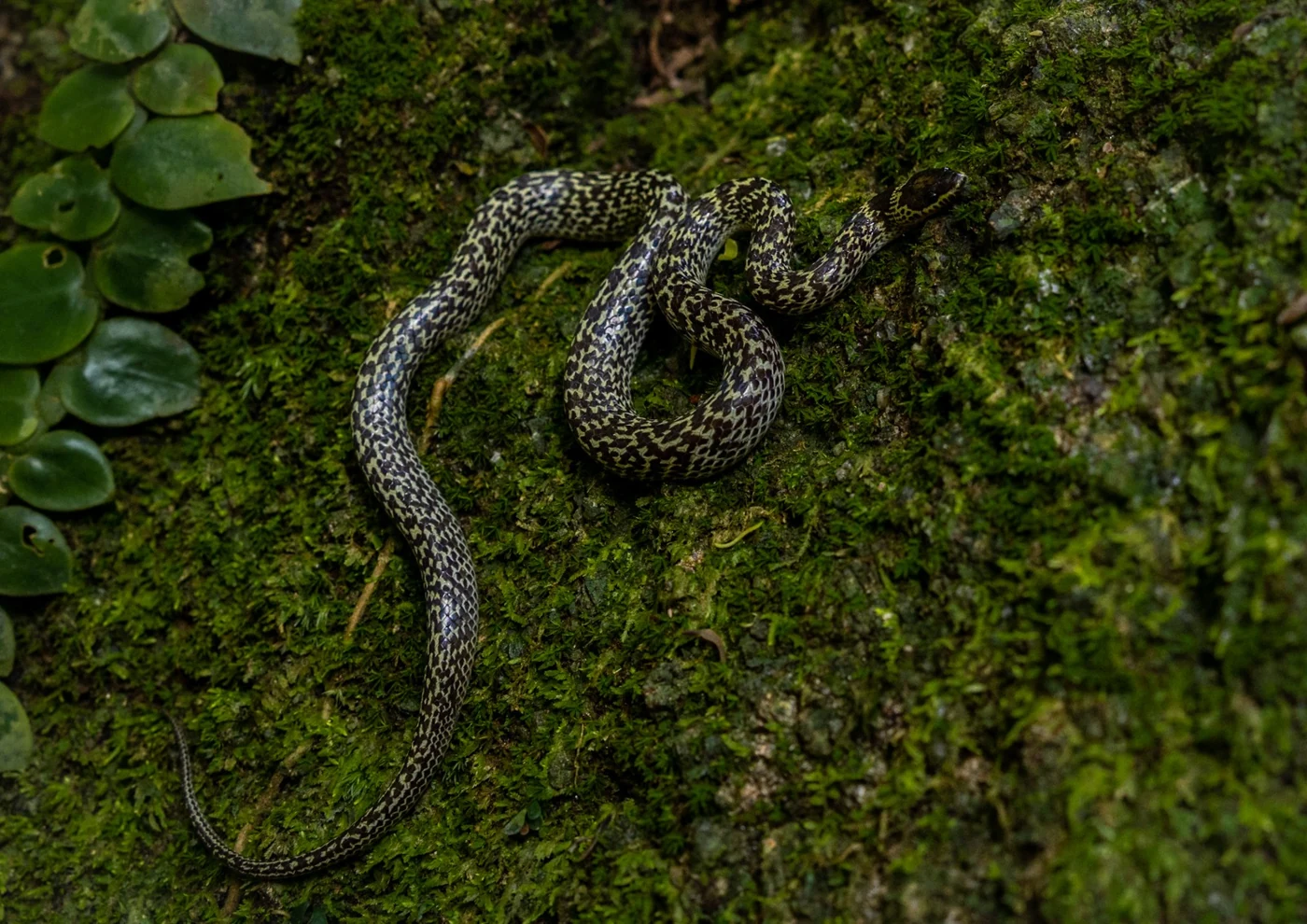
Indotyphlops braminus — photographed on Ko Pha-ngan, Thailand.

001 · Typhlopidae

Flowerpot Snake

Indotyphlops braminus

(DAUDIN, 1803)

Non-venomous

Introduced on Christmas Island. The Cocos assessment lists presence but does not resolve its origin there; no native status or occurrence on every islet is inferred. The conservation plan treats Christmas Island animals as introduced by the 1940s. The 2014 Cocos assessment lists the taxon as present; its summary does not supply a particular islet for…

Read the species account →

Cook-Price, Makchai & Suwanwaree (2026); photographs credited collectively to the author, James Covert and Vikas Kumar · CC BY 4.0 · https://creativecommons.org/licenses/by/4.0/

Lycodon capucinus — photographed on Ko Pha-ngan, Thailand.

002 · Colubridae

Common Wolf Snake

Lycodon capucinus

BOIE, 1827

Non-venomous

Introduced around 1987; subsequently widespread on Christmas Island. No Cocos occurrence is inferred. Fritts (1993) reports the conservator’s observations from the wharf and Kampong. These are historical named localities, not new field observations.

Read the species account →

Cook-Price, Makchai & Suwanwaree (2026); photographs credited collectively to the author, James Covert and Vikas Kumar · CC BY 4.0 · https://creativecommons.org/licenses/by/4.0/

TyphlopidaeRamphotyphlopsPhotograph not yet documented

003 · Typhlopidae

Christmas Island Blind Snake

Ramphotyphlops exocoeti

(BOULENGER, 1887)

Non-venomous

Christmas Island endemic; documented historically. The 2024–2034 conservation plan gives 31 July 2009 as the last confirmed wild sighting; current population status is unknown. Maple et al. document the Powell’s Hill capture on 31 July 2009 at 361 m, a 1975 museum specimen from Stewart Hill, and reported captures at Loading Bay 4 (1984) and Field 17…

Read the species account →

All 4 species in the country collection →

Read further

Evidence & sources.

Guide reviewed 12 October 2026. Source dates and geographic scope matter; landscape photographs do not establish species occurrence.

  1. Parks Australia · Christmas Island plants

    Plateau rainforest, marginal rainforest and coastal vegetation; checked 12 October 2026.

  2. Parks Australia · Pulu Keeling plants

    North Keeling forest and coastal vegetation; not a habitat description for all southern islands.

  3. DCCEEW · Christmas Island priority place (2024)

    Dated island assessment of invasive species, fragmentation and climate pressures.

Continue through Indian Ocean Territories

Explore another habitat.

01

Cliff coasts, lagoons and reef edges

Christmas Island’s steep marine margin contrasts with the shallow atoll waters of Cocos (Keeling). Keep land, shore and underwater observations distinct.