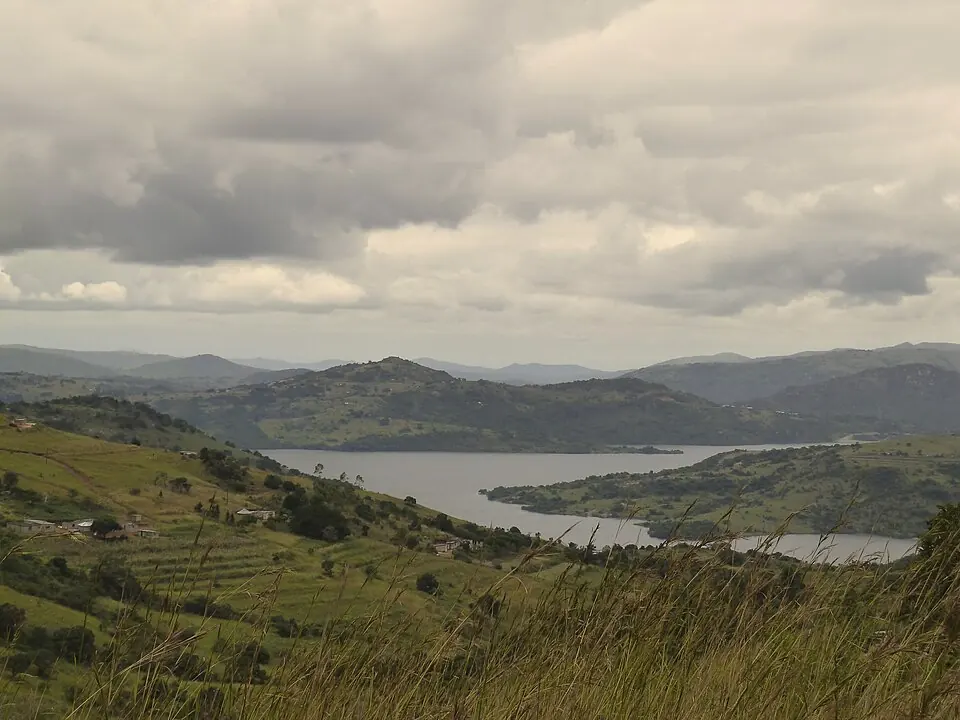
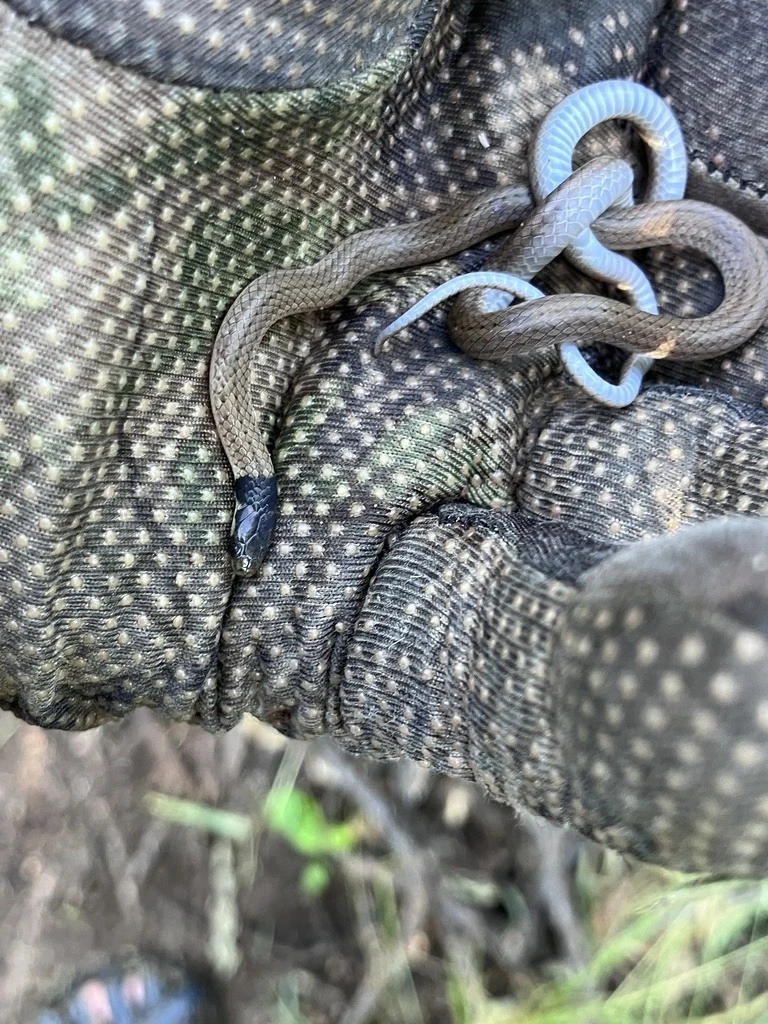
The Komati River reservoir at Maguga Dam, Eswatini, with grassy and wooded slopes around the water.

eSwatini · Place guide

Hhohho

Explore Hhohho through the named places in its sourced species records.

13species with extracted evidence
6families
4region guides

The Komati River reservoir at Maguga Dam, Eswatini, with grassy and wooded slopes around the water.

Photograph: René C. Nielsen · Image source · CC BY-SA 2.0. Cropped to fill the hero; darkened for text legibility.

Geography & biotopes

Read the landscape.

Explore Hhohho through the named places in its sourced species records.

This navigation guide uses the credited boundary snapshot for Hhohho. Its boundaries identify an atlas group, not a single vegetation type. OpenStreetMap, Wambacher; geoBoundaries gbOpen ADM1, 2017 snapshot; Open Data Commons Open Database License 1.0.

Ecological connections

The country habitat guides explain the environments documented in the landscape sources. Only species records assigned to this particular mapped area appear in the regional collection; a shared habitat elsewhere does not establish local occurrence.

Explore the setting

Open an individual species account to retain its original locality, observation or collection date, and source. Historical administrative names are preserved as aliases for this map snapshot.

This guide indexes these source names: Hhohho. A country-only record is not automatically assigned to this place. Map markers identify navigation destinations, not collection sites.

Map boundaries, snapshot and group membership →

Convention on Biological Diversity · eSwatini national profile →

Ramsar · Eswatini wetland descriptions →

Geography is part of the record

Find your way through eSwatini.

Select a named region to open its evidence page. The complete directory below keeps every guide accessible, including places where locality evidence has not yet been extracted.

36 of 60 listed species have at least one indexed region record. 24 remain country-only. Even a nonzero count is not a complete regional inventory.

Habitats & living landscapes

Explore the living
landscapes.

Explore 2 guides to the environments, places and conservation pressures that shape this country. Each guide connects to the regional map and shared species accounts.

Landscape photographs & credits

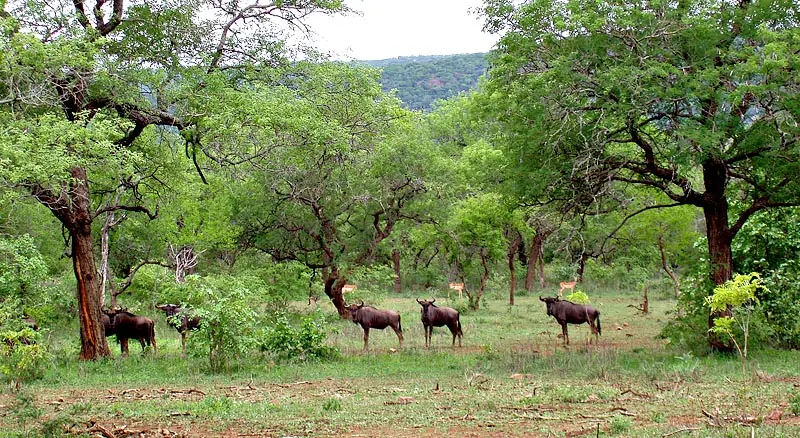
Acacia woodland in Mlawula Nature Reserve, Eswatini, with wildebeest and impala between the trees. This is open woodland rather than closed-canopy forest. — K. Braun. Original photograph · Public domain. Cropped for the cards; photographs do not establish snake occurrence.

The Komati River reservoir at Maguga Dam, Eswatini, with grassy and wooded slopes around the water. — René C. Nielsen. Original photograph · CC BY-SA 2.0. Cropped for the cards; photographs do not establish snake occurrence.

The species catalogue

Snakes · Hhohho.

Only records naming this place appear below. These are extracted locality records, not complete island or regional inventories.

13 species · showing 13

Aparallactus capensis; Kruger National Park, Musina, LP, ZA; photographed 2024-01-22.

001 · Atractaspididae

Black-headed Centipede Eater, Cape Centipede Eater

Aparallactus capensis

SMITH, 1849

VenomousClinical severity not established

The current taxonomic treatment explicitly lists this country. This is country-scale checklist evidence, not a claim of continuous occupancy or a complete regional inventory. Lubombo: observation GBIF 5008461649 (2025). The original iNaturalist entry was rechecked for research-grade identification, wild status and unrestricted coordinates; its reported…

Read the species account →

no rights reserved · CC0 · https://creativecommons.org/publicdomain/zero/1.0/
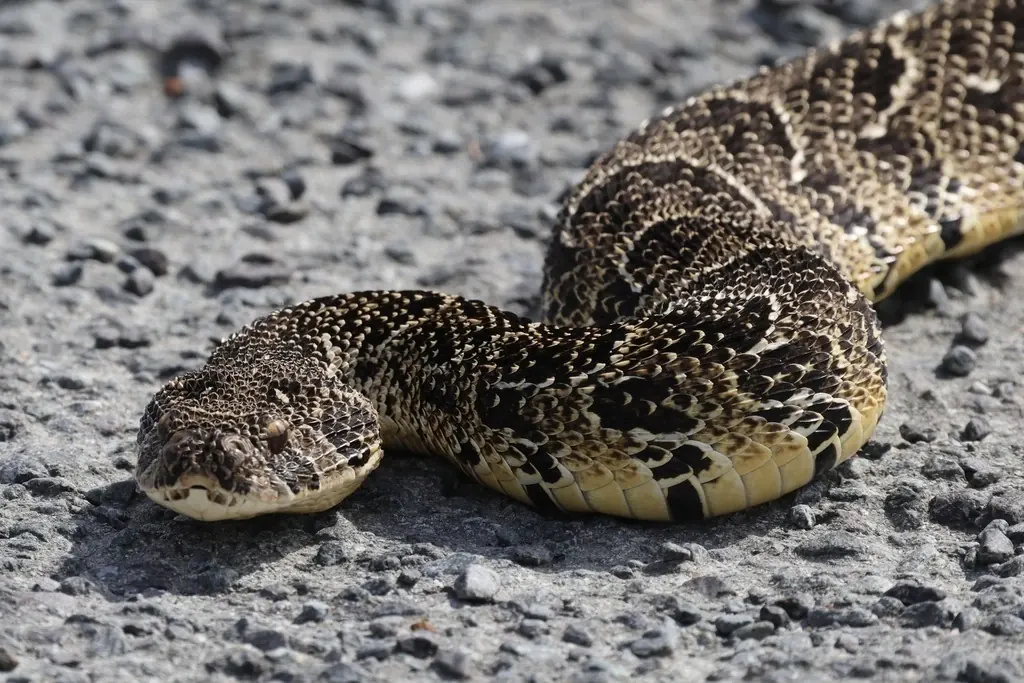
Bitis arietans. Identification follows the linked source community.

002 · Viperidae

Puff Adder

Bitis arietans

(MERREM, 1820)

VenomousClinical severity not established

Explicit country record in the current species treatment. The current taxonomic treatment explicitly lists this country. This is country-scale checklist evidence, not a claim of continuous occupancy or a complete regional inventory. Lubombo: observation GBIF 4952670364 (2024). The original iNaturalist entry was rechecked for research-grade…

Read the species account →

Cricket Raspet · CC BY 4.0 · https://creativecommons.org/licenses/by/4.0/

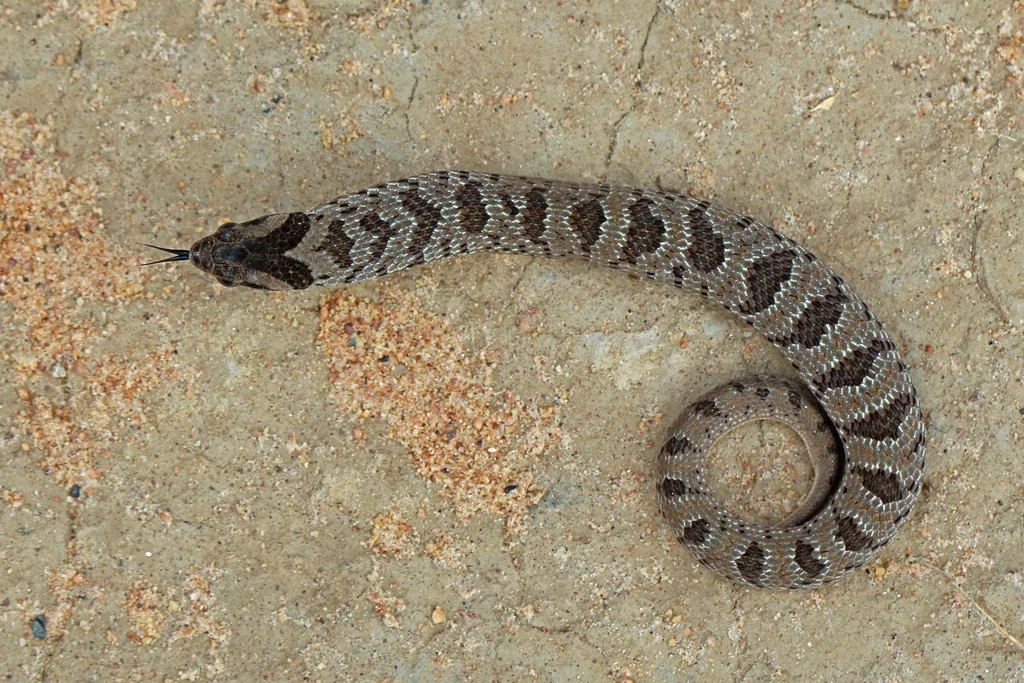
Causus rhombeatus, photographed 2014-11-21. Identification follows the linked research-grade observation.

003 · Viperidae

Common or Rhombic Night Adder

Causus rhombeatus

(LICHTENSTEIN, 1823)

VenomousClinical severity not established

The current taxonomic treatment explicitly lists this country. This is country-scale checklist evidence, not a claim of continuous occupancy or a complete regional inventory. Hhohho: observation GBIF 6188673123 (2026). The original iNaturalist entry was rechecked for research-grade identification, wild status and unrestricted coordinates; its reported…

Read the species account →

Nigel Voaden · CC BY 4.0 · https://creativecommons.org/licenses/by/4.0/

Dispholidus typus; South Cape DC, South Africa; photographed 2013-01-02.

004 · Colubridae

Boomslang

Dispholidus typus

(SMITH, 1828)

VenomousClinical severity not established

The current taxonomic treatment explicitly lists this country. This is country-scale checklist evidence, not a claim of continuous occupancy or a complete regional inventory. Hhohho: observation GBIF 4507622838 (2023). The original iNaturalist entry was rechecked for research-grade identification, wild status and unrestricted coordinates; its reported…

Read the species account →

Karen Eichholz · CC BY 4.0 · https://creativecommons.org/licenses/by/4.0/

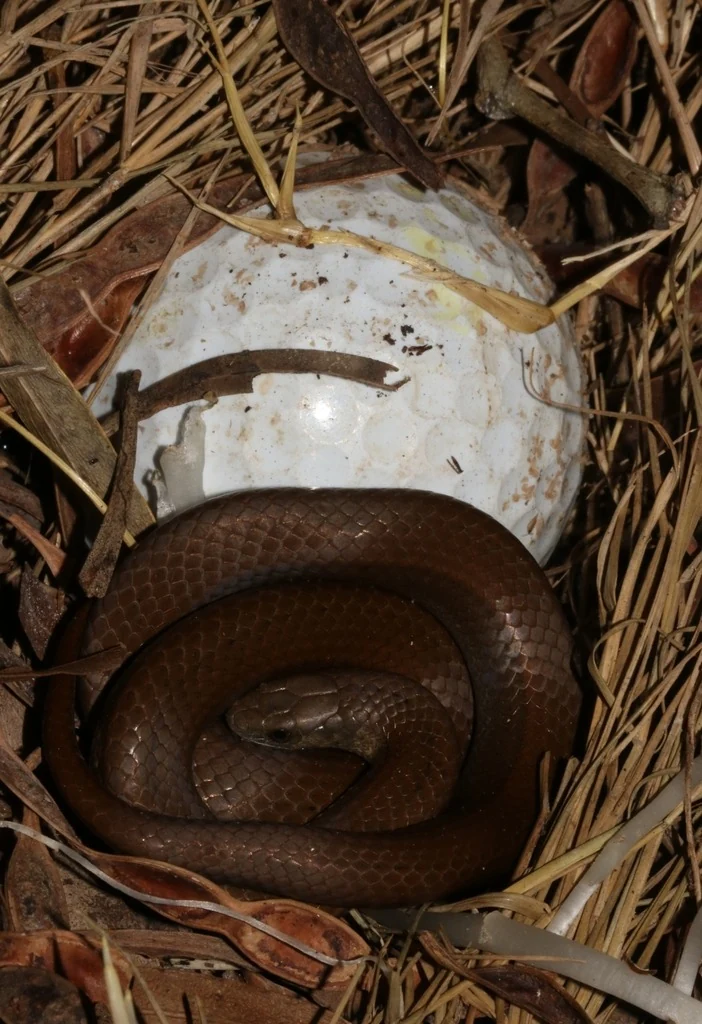
Duberria lutrix; Stonehurst Mountain Estate Entrance, Westlake, Cape Town, 7945, South Africa; photographed 2023-08-15.

005 · Pseudoxyrhophiidae

Common Slug Eater

Duberria lutrix

(LINNAEUS, 1758)

Venom unknownNot yet assessed

The current taxonomic treatment explicitly lists this country. This is country-scale checklist evidence, not a claim of continuous occupancy or a complete regional inventory. Hhohho: observation GBIF 4994561378 (2024). The original iNaturalist entry was rechecked for research-grade identification, wild status and unrestricted coordinates; its reported…

Read the species account →

Ryan van Huyssteen · CC BY 4.0 · https://creativecommons.org/licenses/by/4.0/

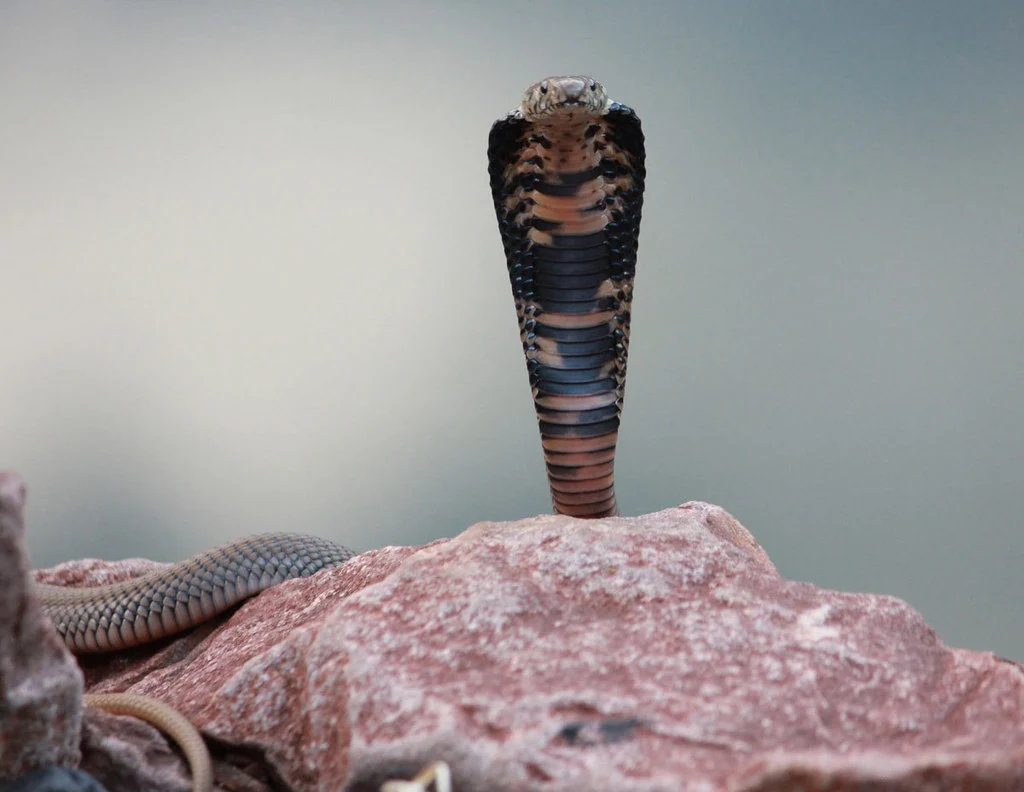
Naja mossambica; Vhembe, ZA-NP, ZA; photographed 2015-04-13.

006 · Elapidae

Mozambique Spitting Cobra

Naja mossambica

PETERS, 1854

VenomousClinical severity not established

The current taxonomic treatment explicitly lists this country. This is country-scale checklist evidence, not a claim of continuous occupancy or a complete regional inventory. Lubombo: observation GBIF 6188461062 (2026). The original iNaturalist entry was rechecked for research-grade identification, wild status and unrestricted coordinates; its reported…

Read the species account →

Ryan van Huyssteen · CC BY 4.0 · https://creativecommons.org/licenses/by/4.0/

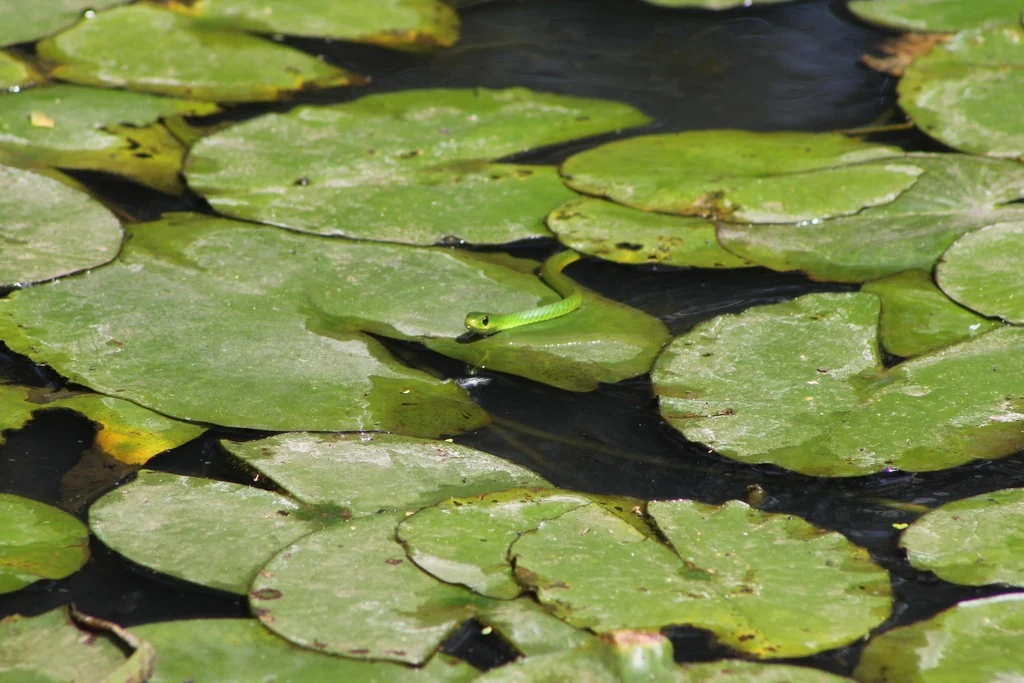
Philothamnus hoplogaster; National Park, Nairobi, Kenya; photographed 2017-07-01.

007 · Colubridae

Southeastern Green snake, Green Water Snake

Philothamnus hoplogaster

(GÜNTHER, 1863)

Venom unknownNot yet assessed

The current taxonomic treatment explicitly lists this country. This is country-scale checklist evidence, not a claim of continuous occupancy or a complete regional inventory. Hhohho: observation GBIF 4855272018 (2024). The original iNaturalist entry was rechecked for research-grade identification, wild status and unrestricted coordinates; its reported…

Read the species account →

Ryan Donnelly · CC BY 4.0 · https://creativecommons.org/licenses/by/4.0/

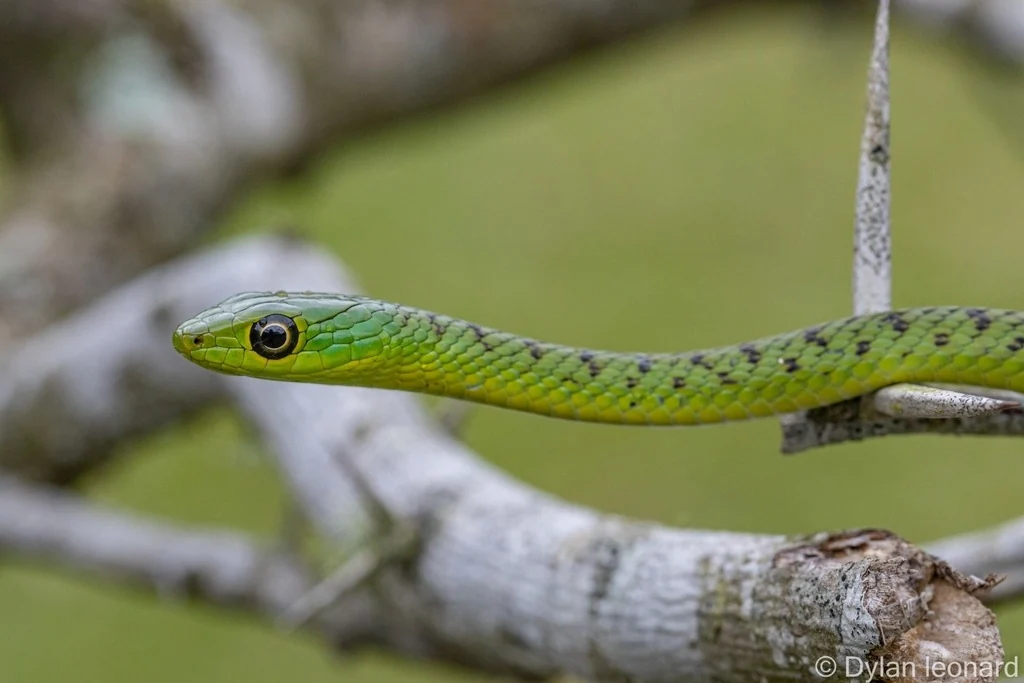
Philothamnus natalensis; Mtubatuba, South Africa; photographed 2024-11-12.

008 · Colubridae

Natal Green Snake

Philothamnus natalensis

(SMITH, 1848)

Venom unknownNot yet assessed

The current taxonomic treatment explicitly lists this country. This is country-scale checklist evidence, not a claim of continuous occupancy or a complete regional inventory. Lubombo: observation GBIF 5292860481 (2025). The original iNaturalist entry was rechecked for research-grade identification, wild status and unrestricted coordinates; its reported…

Read the species account →

Dylan Leonard · CC BY-SA 4.0 · https://creativecommons.org/licenses/by-sa/4.0/

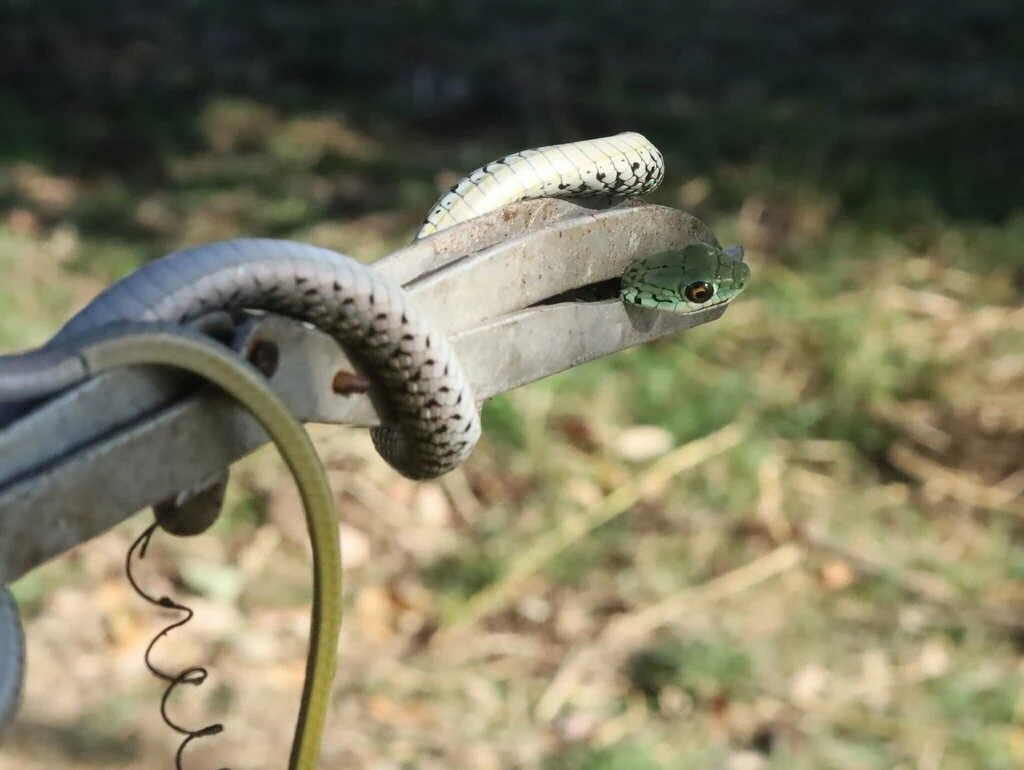
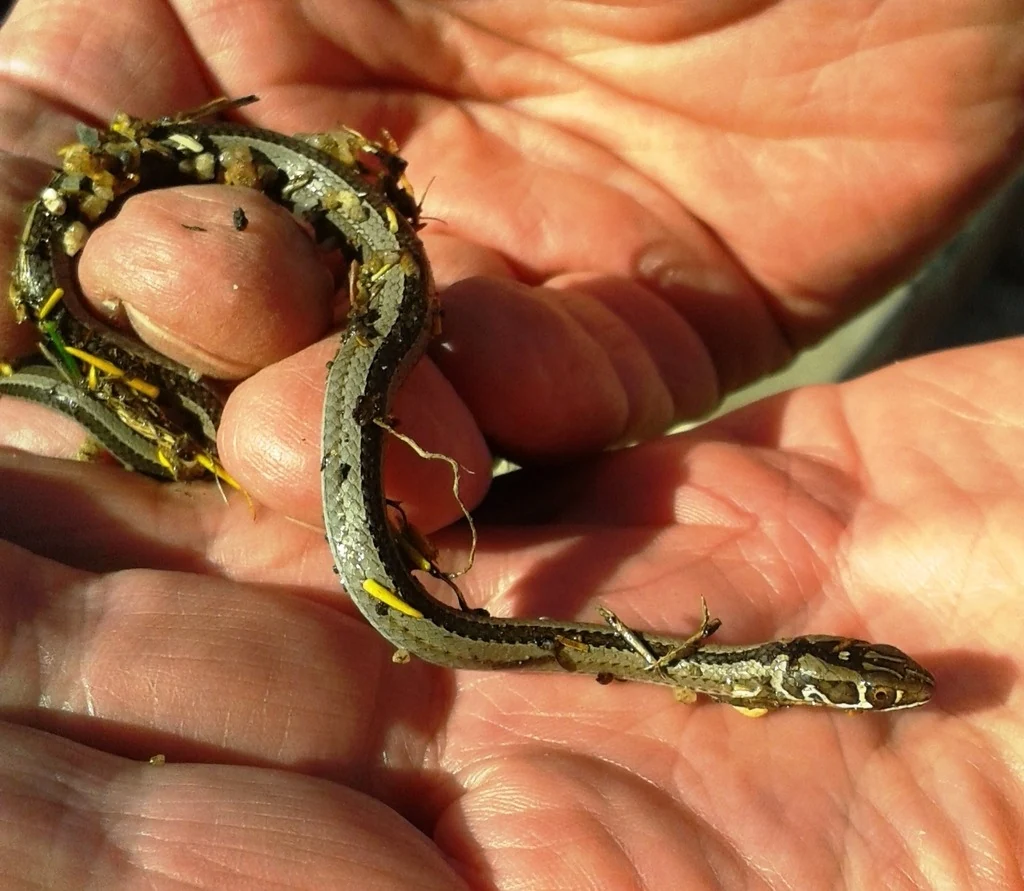
Philothamnus semivariegatus, photographed 2023-07-03. Identification follows the linked research-grade observation. The animal is temporarily held in the source photograph.

009 · Colubridae

Spotted Bush Snake, Spotted Green Snake, Variegated Green Snake

Philothamnus semivariegatus

(SMITH, 1840)

Venom unknownNot yet assessed

The current taxonomic treatment explicitly lists this country. This is country-scale checklist evidence, not a claim of continuous occupancy or a complete regional inventory. Lubombo: observation GBIF 6163054817 (2026). The original iNaturalist entry was rechecked for research-grade identification, wild status and unrestricted coordinates; its reported…

Read the species account →

Paul Hoekman · CC BY 4.0 · https://creativecommons.org/licenses/by/4.0/

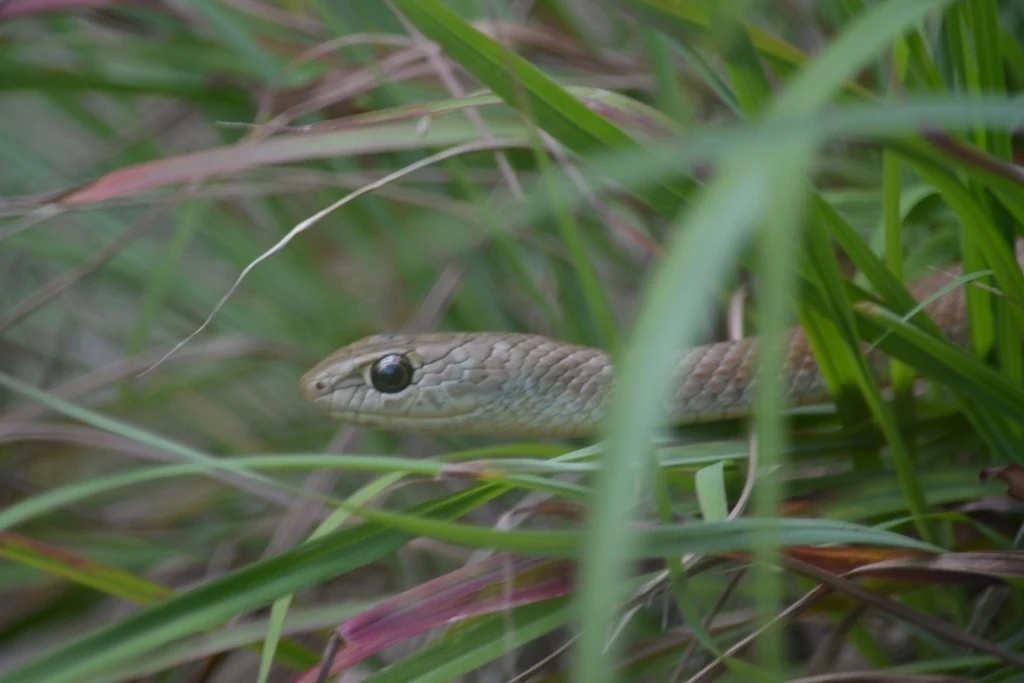
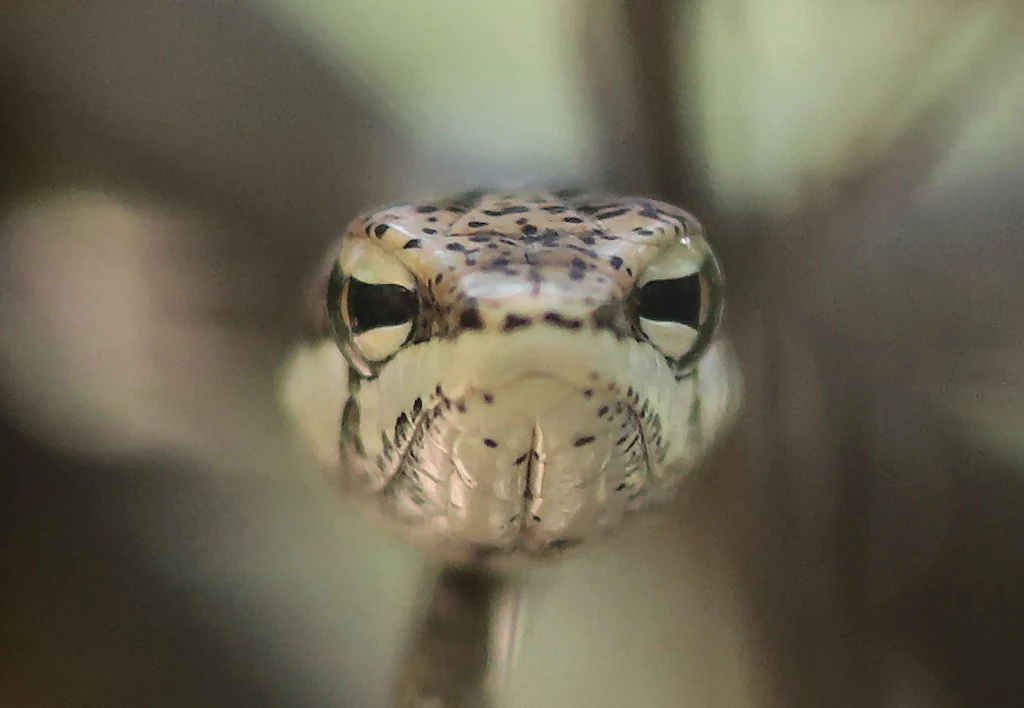
Psammophis brevirostris, photographed 2012-10-17. Identification follows the linked research-grade observation.

010 · Psammophiidae

Short-snouted Grass Snake

Psammophis brevirostris

PETERS, 1881

VenomousClinical severity not established

The current taxonomic treatment explicitly lists this country. This is country-scale checklist evidence, not a claim of continuous occupancy or a complete regional inventory. Lubombo: observation GBIF 6320606951 (2026). The original iNaturalist entry was rechecked for research-grade identification, wild status and unrestricted coordinates; its reported…

Read the species account →

Andrew Hankey · CC BY-SA 4.0 · https://creativecommons.org/licenses/by-sa/4.0/

Psammophis crucifer; Vergelegen Helderberg Rural, Sir Lowry's Pass, 7130, South Africa; photographed 2015-03-01.

011 · Psammophiidae

Cross-marked Grass Snake, Montane Grass Snake

Psammophis crucifer

(DAUDIN, 1803)

VenomousClinical severity not established

The current taxonomic treatment explicitly lists this country. This is country-scale checklist evidence, not a claim of continuous occupancy or a complete regional inventory. Hhohho: observation GBIF 4507652917 (2015). The original iNaturalist entry was rechecked for research-grade identification, wild status and unrestricted coordinates; its reported…

Read the species account →

linkie · CC BY 4.0 · https://creativecommons.org/licenses/by/4.0/

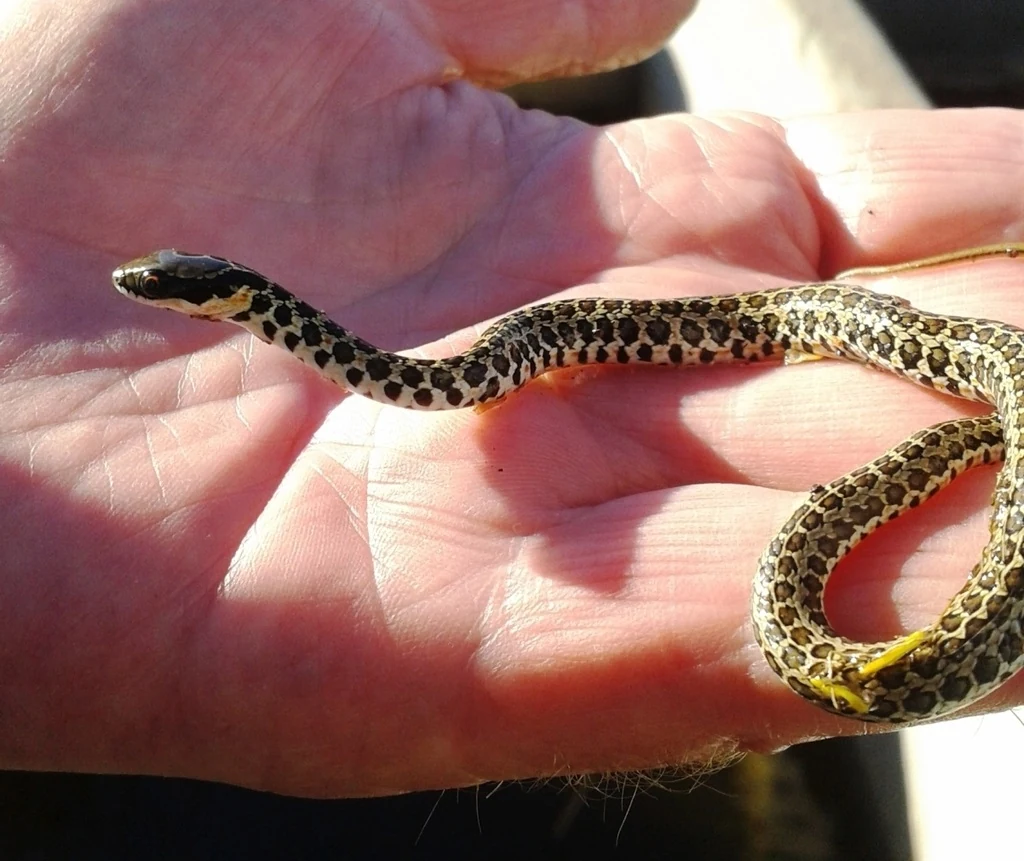
Psammophylax rhombeatus, photographed 2015-03-01. Identification follows the linked research-grade observation. The animal is temporarily held in the source photograph.

012 · Psammophiidae

Spotted Grass Snake, Spotted Skaapsteker, Rhombic Skaapsteker

Psammophylax rhombeatus

(LINNAEUS, 1758)

Venom unknownNot yet assessed

The current taxonomic treatment explicitly lists this country. This is country-scale checklist evidence, not a claim of continuous occupancy or a complete regional inventory. Hhohho: museum voucher PEM PEM R01117 (1968). The museum record's reported coordinate uncertainty footprint lies within the mapped region. Hhohho: museum voucher MVZ MVZ:Herp:69422…

Read the species account →

linkie · CC BY 4.0 · https://creativecommons.org/licenses/by/4.0/

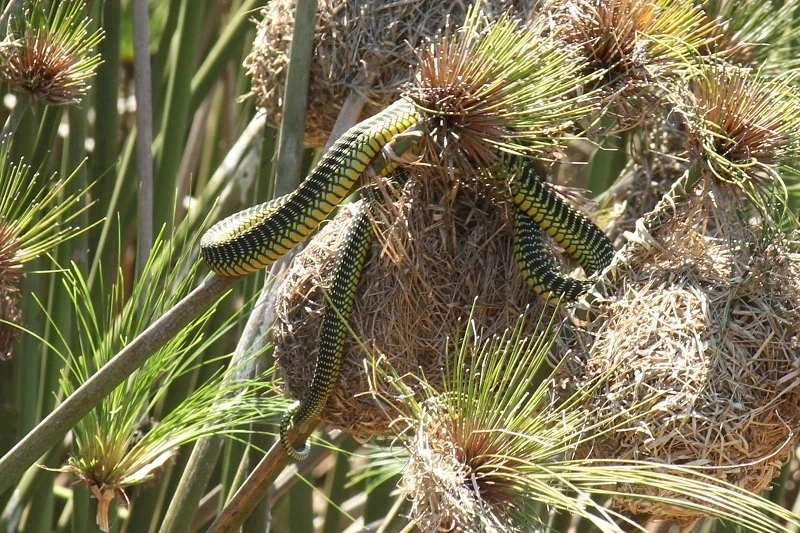
Thelotornis capensis; Mopani, South Africa; photographed 2018-10-28.

013 · Colubridae

Southern Twig Snake, Savanna Vine Snake, Twig Snake, Vine Snake

Thelotornis capensis

SMITH, 1849

VenomousClinical severity not established

The current taxonomic treatment explicitly lists this country. This is country-scale checklist evidence, not a claim of continuous occupancy or a complete regional inventory. Lubombo: observation GBIF 5890353109 (2025). The original iNaturalist entry was rechecked for research-grade identification, wild status and unrestricted coordinates; its reported…

Read the species account →

Wynand Uys · CC BY 4.0 · https://creativecommons.org/licenses/by/4.0/

Explore all 60 country records →

The research library

Sources & the checklist.

This edition lists 60 species with supported country records from checked taxonomic treatments and cited field studies. It is not a claim of a complete national inventory. Each account retains its source and check date; individual evidence entries retain their own review dates.

How the map and counts work

Search results were checked against distribution text and taxonomic qualifications. A geographic name alone does not establish a political country: New Guinea, the Solomon archipelago and Micronesia span more than one country or territory. Introduced and unresolved records require separate interpretation.

Place counts require explicit named localities, including valid type localities. Counts can overlap where sources name multiple places. Regional maps group historical boundary snapshots for navigation, while island outlines use Natural Earth; neither is a species range or an observation map. Small islands can be below the outline dataset’s resolution, so geographic reference markers and the directory remain available.

OpenStreetMap, Wambacher; geoBoundaries gbOpen ADM1, 2017 snapshot; Open Data Commons Open Database License 1.0. Map provenance →

  1. Boundary source and declared group membership ↗

    Historical geography and navigation only.

  2. Convention on Biological Diversity · eSwatini national profile ↗

    National biodiversity profile based on the reporting sources identified by the CBD. Used for landscape context; older statistics are not presented as current monitoring or a snake inventory.

  3. Ramsar · Eswatini wetland descriptions ↗

    Hawane and other named wetland sites, published under the former country name Swaziland.

  4. Map boundaries, snapshot and group membership ↗
  5. Convention on Biological Diversity · eSwatini national profile ↗
  6. Ramsar · Eswatini wetland descriptions ↗
  7. The Reptile Database

    Individual treatments and locality evidence are linked from each species account.

  8. Meiri (2024): SquamBase 1.0

    Species-level literature measurements and ecological traits. Exact-name matches only; imputed or ambiguous fields are omitted. These summaries are not local observations.

  9. Natural Earth: public-domain geographic data

Continue through the Africa atlas →