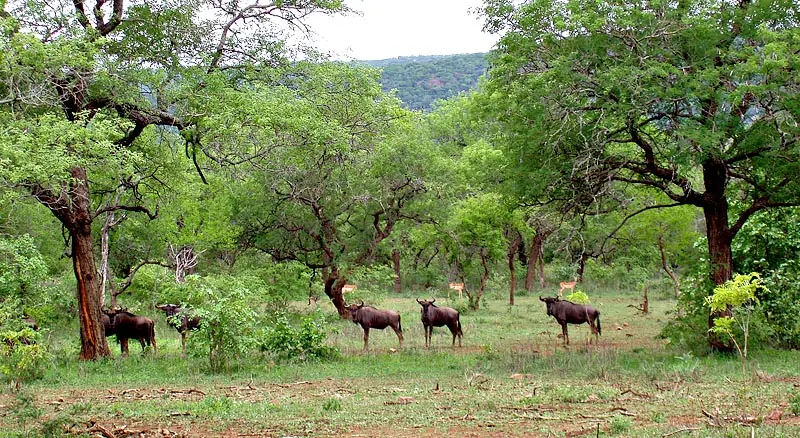
Acacia woodland in Mlawula Nature Reserve, Eswatini, with wildebeest and impala between the trees. This is open woodland rather than closed-canopy forest.

eSwatini · Habitat field guide

Forest & woodland

Natural wooded habitat and industrial timber plantations are distinct land uses. Their tree cover should not be treated as ecologically interchangeable.

Acacia woodland in Mlawula Nature Reserve, Eswatini, with wildebeest and impala between the trees. This is open woodland rather than closed-canopy forest.

Photograph: K. Braun · Image source · Public domain. Cropped to fill the hero; darkened for text legibility.

Understanding the environment

A sense of the habitat.

Natural wooded habitat and industrial timber plantations are distinct land uses. Their tree cover should not be treated as ecologically interchangeable.

Geographic scope
eSwatini; named examples and source scope matter.
Evidence scale
Landscape context is separate from species locality evidence.
Source chronology
Consult the original publication date; checked 12 October 2026.

Explore the structure · Select a layer to compare the details a locality record can preserve.

Read the setting in three layers.

Select a zone to see what changes.

Tree cover

Tree cover

Separate closed forest, open woodland and planted trees.

Compare this detail with the original field or museum record before assigning a habitat association.

These reading prompts explain how to interpret evidence; they do not assert that every feature occurs at every site.

Sources: Convention on Biological Diversity · eSwatini national profile · Ramsar · Eswatini wetland descriptions

Field notes · 01

The documented landscape

Natural wooded habitat and industrial timber plantations are distinct land uses. Their tree cover should not be treated as ecologically interchangeable.

Sources: Convention on Biological Diversity · eSwatini national profile · Ramsar · Eswatini wetland descriptions

Field notes · 02

Connect habitat and locality

Use the species account to check whether a habitat statement applies to this country or elsewhere in the species’ range. A landscape photograph illustrates its own named place; it is not evidence of snake presence.

Pressures on eSwatini’s habitats

What is at risk?

A site-specific assessment of pressures has not yet been extracted for this guide. The landscape sources below provide context; they do not establish a current threat level for each snake species.

What helps this habitat

Retain natural vegetation and water connections where local conservation evidence supports them. Consult the linked national or site account for the pressures and management actions actually reported there.

The connected collection

Snakes with habitat evidence.

These 6 species have supported country occurrence and an explicit habitat association in the shared account. The association may come from elsewhere in their range. This is not a complete local habitat inventory; the places above are landscape examples, not asserted collecting sites.

6 species · showing 6

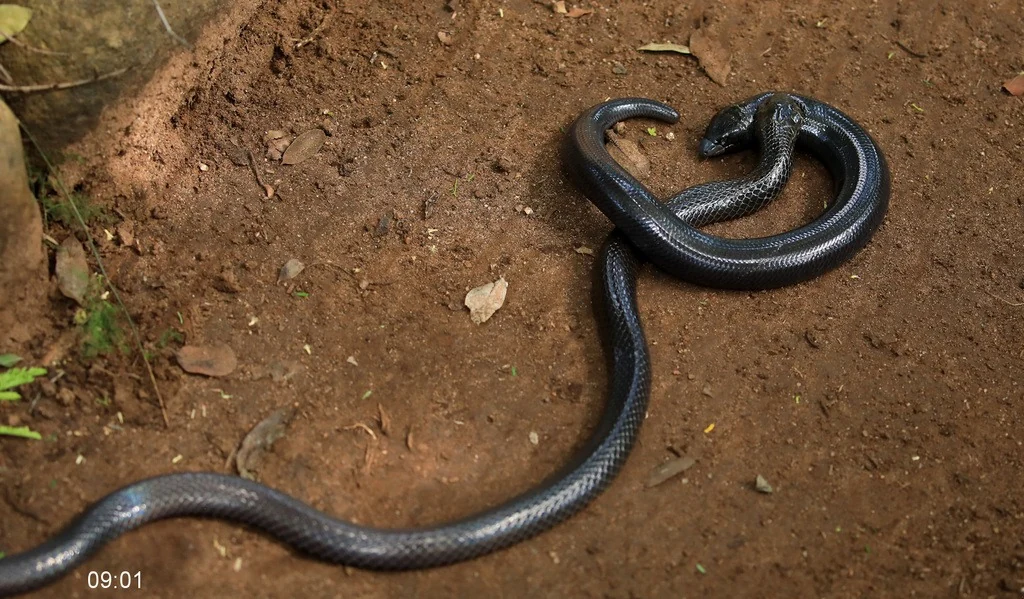
Amblyodipsas concolor; Blyde River near Hoedspruit, RSA; photographed 2024-01-02.

001 · Atractaspididae

Kwazulu-Natal Purple-glossed Snake

Amblyodipsas concolor

(SMITH, 1849)

VenomousClinical severity not established

The current taxonomic treatment explicitly lists this country. This is country-scale checklist evidence, not a claim of continuous occupancy or a complete regional inventory. Manzini: observation GBIF 1273842212 (2007). The original iNaturalist entry was rechecked for research-grade identification, wild status and unrestricted coordinates; its reported…

Read the species account →

Wynand Uys · CC BY 4.0 · https://creativecommons.org/licenses/by/4.0/
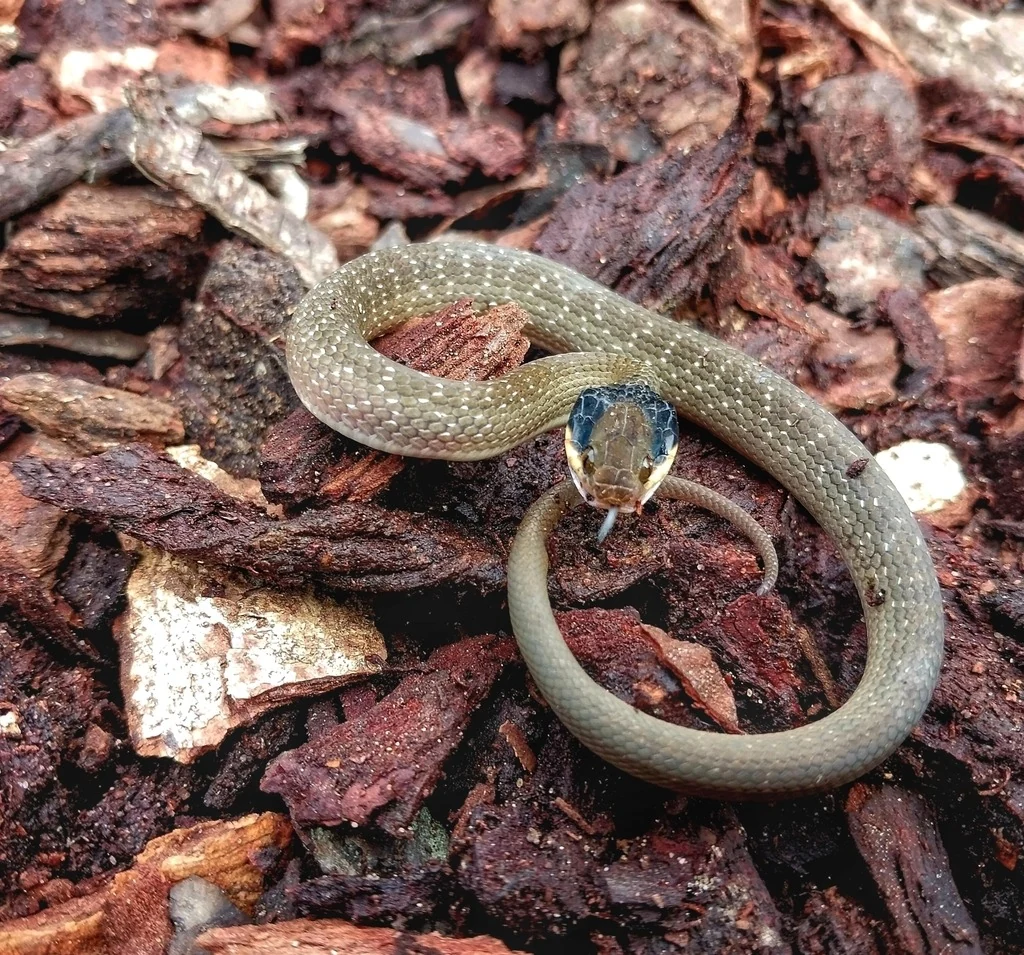
Crotaphopeltis hotamboeia; Campher's Drift, George, 6529, South Africa; photographed 2023-10-13.

002 · Colubridae

White-lipped Herald Snake, Red-lipped Snake

Crotaphopeltis hotamboeia

(LAURENTI, 1768)

Venom unknownNot yet assessed

The current taxonomic treatment explicitly lists this country. This is country-scale checklist evidence, not a claim of continuous occupancy or a complete regional inventory. Lubombo: observation GBIF 6398846574 (2026). The original iNaturalist entry was rechecked for research-grade identification, wild status and unrestricted coordinates; its reported…

Read the species account →

no rights reserved · CC0 · https://creativecommons.org/publicdomain/zero/1.0/

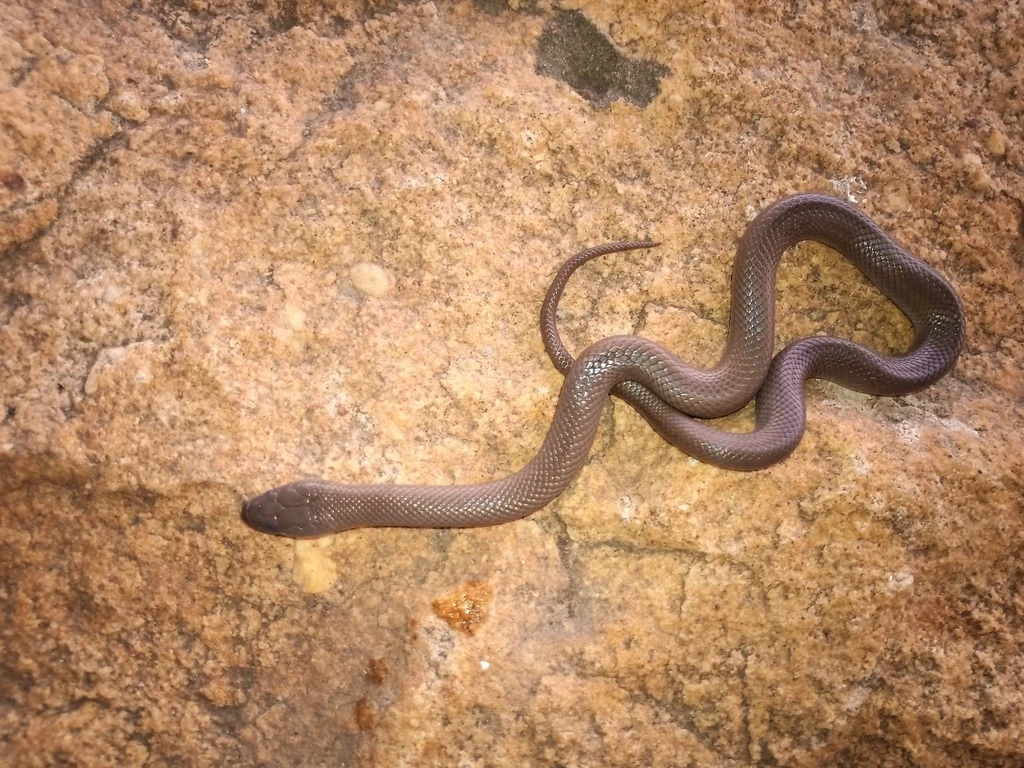
Elaiophis inornatus, photographed 2022-01-18. Identification follows the linked research-grade observation.

003 · Lamprophiidae

Olive Ground Snake, Olive House Snake, Black House Snake

Elaiophis inornatus

(DUMÉRIL, BIBRON & DUMÉRIL, 1854)

Non-venomous

The current taxonomic treatment explicitly lists this country. This is country-scale checklist evidence, not a claim of continuous occupancy or a complete regional inventory.

Read the species account →

Ryan van Huyssteen · CC BY 4.0 · https://creativecommons.org/licenses/by/4.0/
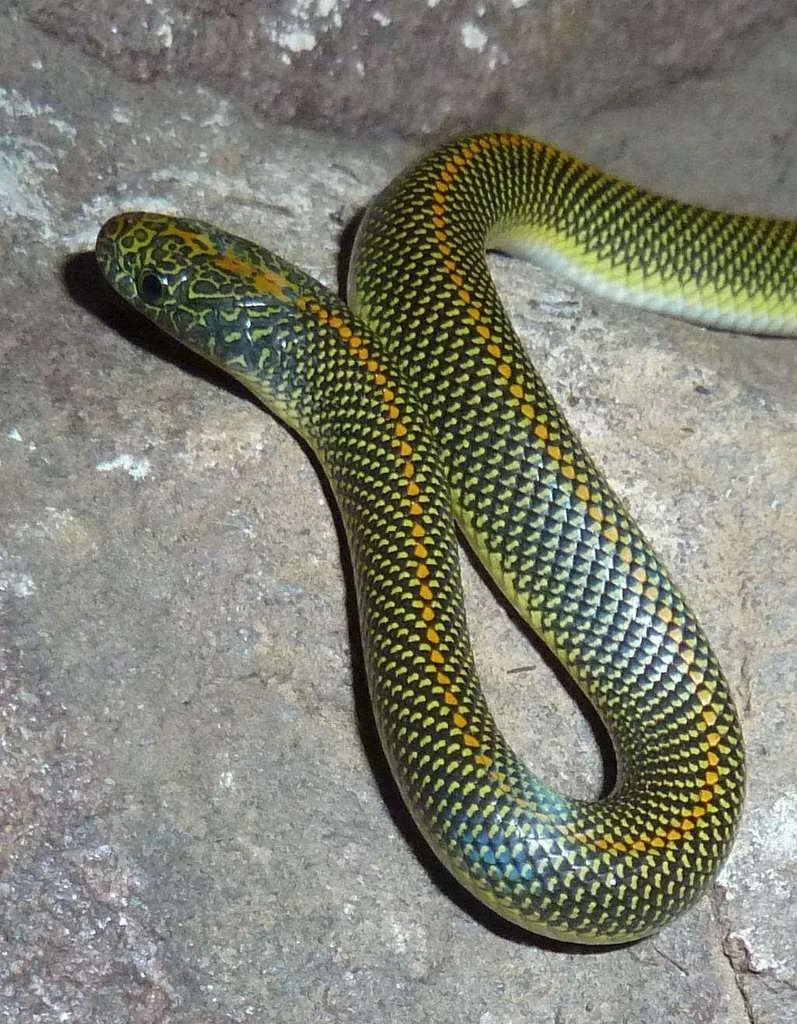
Lamprophis aurora, photographed 2012-02-28. Identification follows the linked research-grade observation.

004 · Lamprophiidae

Aurora House Snake

Lamprophis aurora

(LINNAEUS, 1758)

Non-venomous

The current taxonomic treatment explicitly lists this country. This is country-scale checklist evidence, not a claim of continuous occupancy or a complete regional inventory.

Read the species account →

Andrew Hankey · CC BY-SA 4.0 · https://creativecommons.org/licenses/by-sa/4.0/

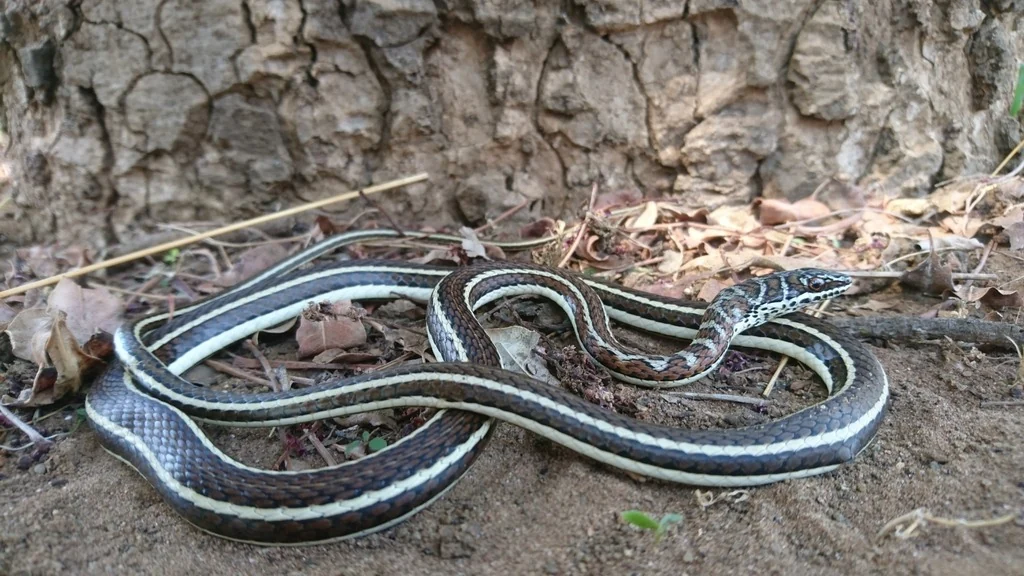
Psammophis crucifer; Vergelegen Helderberg Rural, Sir Lowry's Pass, 7130, South Africa; photographed 2015-03-01.

005 · Psammophiidae

Cross-marked Grass Snake, Montane Grass Snake

Psammophis crucifer

(DAUDIN, 1803)

VenomousClinical severity not established

The current taxonomic treatment explicitly lists this country. This is country-scale checklist evidence, not a claim of continuous occupancy or a complete regional inventory. Hhohho: observation GBIF 4507652917 (2015). The original iNaturalist entry was rechecked for research-grade identification, wild status and unrestricted coordinates; its reported…

Read the species account →

linkie · CC BY 4.0 · https://creativecommons.org/licenses/by/4.0/
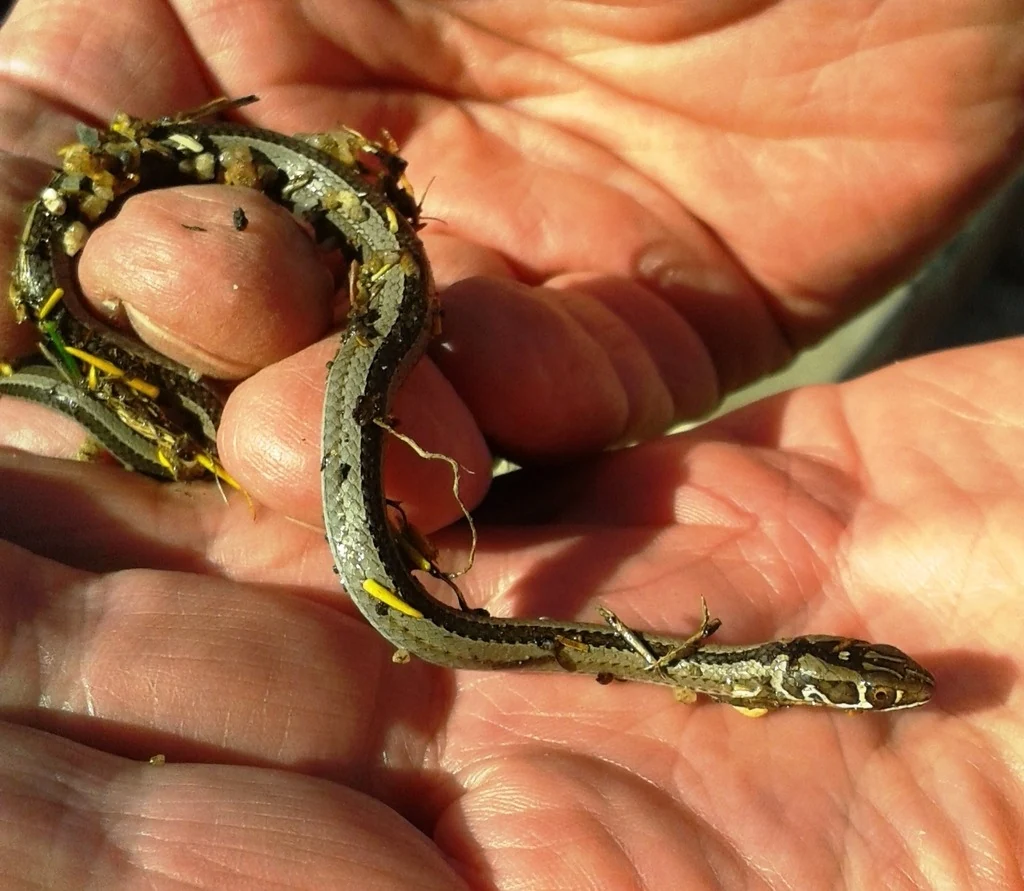
Psammophis subtaeniatus; Mkhuze Game Reserve; photographed 2019-10-20.

006 · Psammophiidae

Western Yellow-bellied Sand Snake, Stripe-bellied Sand Snake

Psammophis subtaeniatus

PETERS, 1882

VenomousClinical severity not established

The current taxonomic treatment explicitly lists this country. This is country-scale checklist evidence, not a claim of continuous occupancy or a complete regional inventory. Lubombo: observation GBIF 4507888913 (2010). The original iNaturalist entry was rechecked for research-grade identification, wild status and unrestricted coordinates; its reported…

Read the species account →

Nick Schaller · CC BY 4.0 · https://creativecommons.org/licenses/by/4.0/
All 60 species in the country collection →

Read further

Evidence & sources.

Guide reviewed 12 October 2026. Source dates and geographic scope matter; landscape photographs do not establish species occurrence.

  1. Convention on Biological Diversity · eSwatini national profile

    National biodiversity profile based on the reporting sources identified by the CBD. Used for landscape context; older statistics are not presented as current monitoring or a snake inventory.

  2. Ramsar · Eswatini wetland descriptions

    Hawane and other named wetland sites, published under the former country name Swaziland.

Continue through eSwatini

Explore another habitat.

01

Rivers, lakes & wetlands

Hawane includes a reservoir and surrounding protected land along the Mbuluzi River. The wider national account identifies drainage and catchment change as wetland pressures.