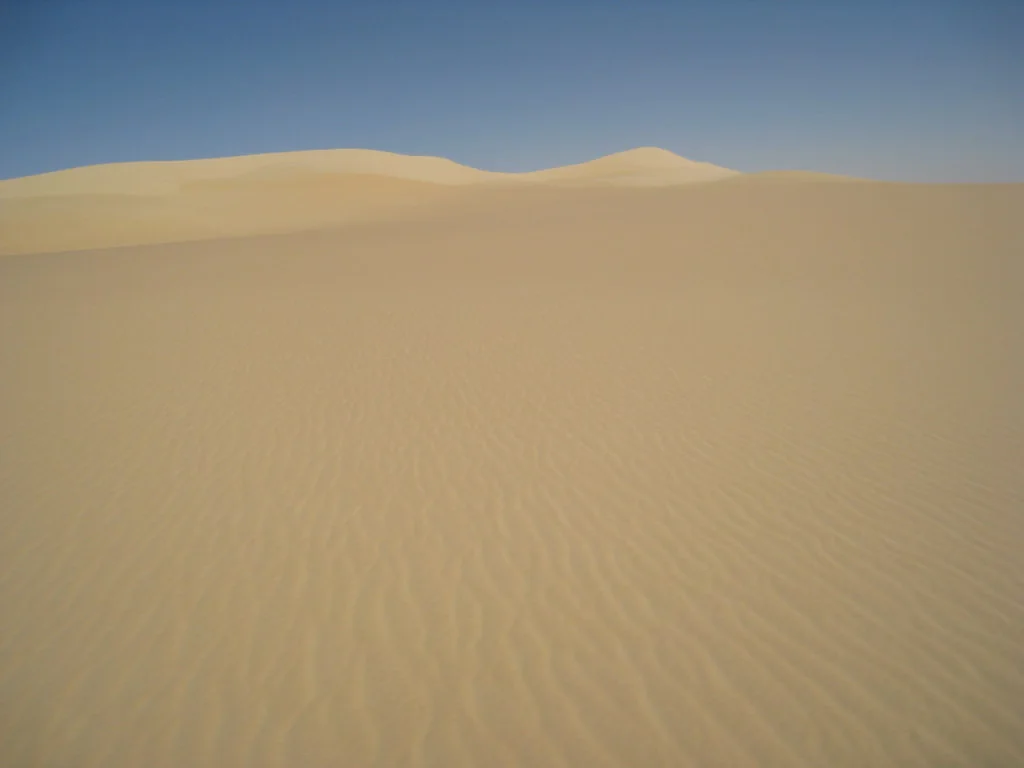
Wind-rippled dunes in the Great Sand Sea near Siwa, Egypt’s Western Desert, photographed in March 2007.

Egypt · Place guide

Western Desert & oases

This guide groups Matrouh Governorate, New Valley Governorate, Faiyum Governorate in the credited boundary snapshot. Use the regional map to locate individual places within western desert & oases.

18species with extracted evidence
6families
5region guides

Wind-rippled dunes in the Great Sand Sea near Siwa, Egypt’s Western Desert, photographed in March 2007.

Photograph: saragoldsmith · Image source · CC BY 2.0. Cropped to fill the hero; darkened for text legibility.

Geography & biotopes

Read the landscape.

This guide groups Matrouh Governorate, New Valley Governorate, Faiyum Governorate in the credited boundary snapshot. Use the regional map to locate individual places within western desert & oases.

The Western Desert is a separate physiographic region; desert substrate and water-dependent oasis habitats should not be merged.

Ecological connections

Describe the observed ground surface and vegetation cover at the named site. Separate cultivated or irrigated patches from surrounding open land, and retain the date; a regional dryland label alone is not a species habitat record.

Explore the setting

Check current information from the relevant local authority before visiting. Keep precise locality and date with any observation; the regional grouping provides orientation, not a current access assessment.

This guide indexes these source names: Matrouh Governorate, New Valley Governorate, Faiyum Governorate, Matrouh, New Valley, Faiyum, Siwa, Fayoum, Fayum, Wadi Hitan. A country-only record is not automatically assigned to this place. Map markers identify navigation destinations, not collection sites.

geoBoundaries · ADM1 boundary provenance →

Egypt - National Biodiversity Strategy →

Geography is part of the record

Find your way through Egypt.

Select a named region to open its evidence page. The complete directory below keeps every guide accessible, including places where locality evidence has not yet been extracted.

34 of 38 listed species have at least one indexed region record. 4 remain country-only. Even a nonzero count is not a complete regional inventory.

Habitats & living landscapes

Explore the living
landscapes.

Explore 4 guides to the environments, places and conservation pressures that shape this country. Each guide connects to the regional map and shared species accounts.

Landscape photographs & credits

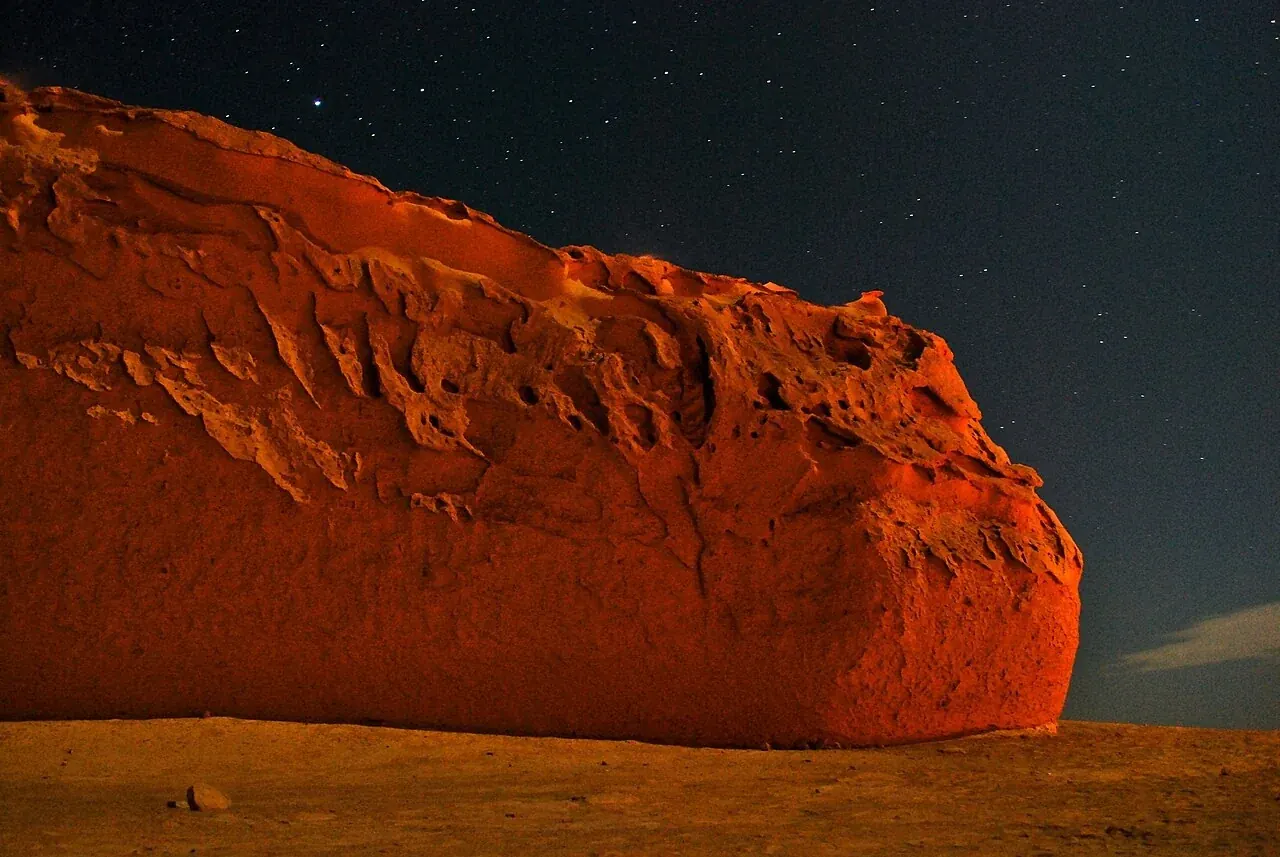
Night photograph of a desert rock formation at Wadi Al-Hitan, Egypt. — Mohammed Moussa. Original photograph · CC BY-SA 4.0. Cropped for the cards; photographs do not establish snake occurrence.

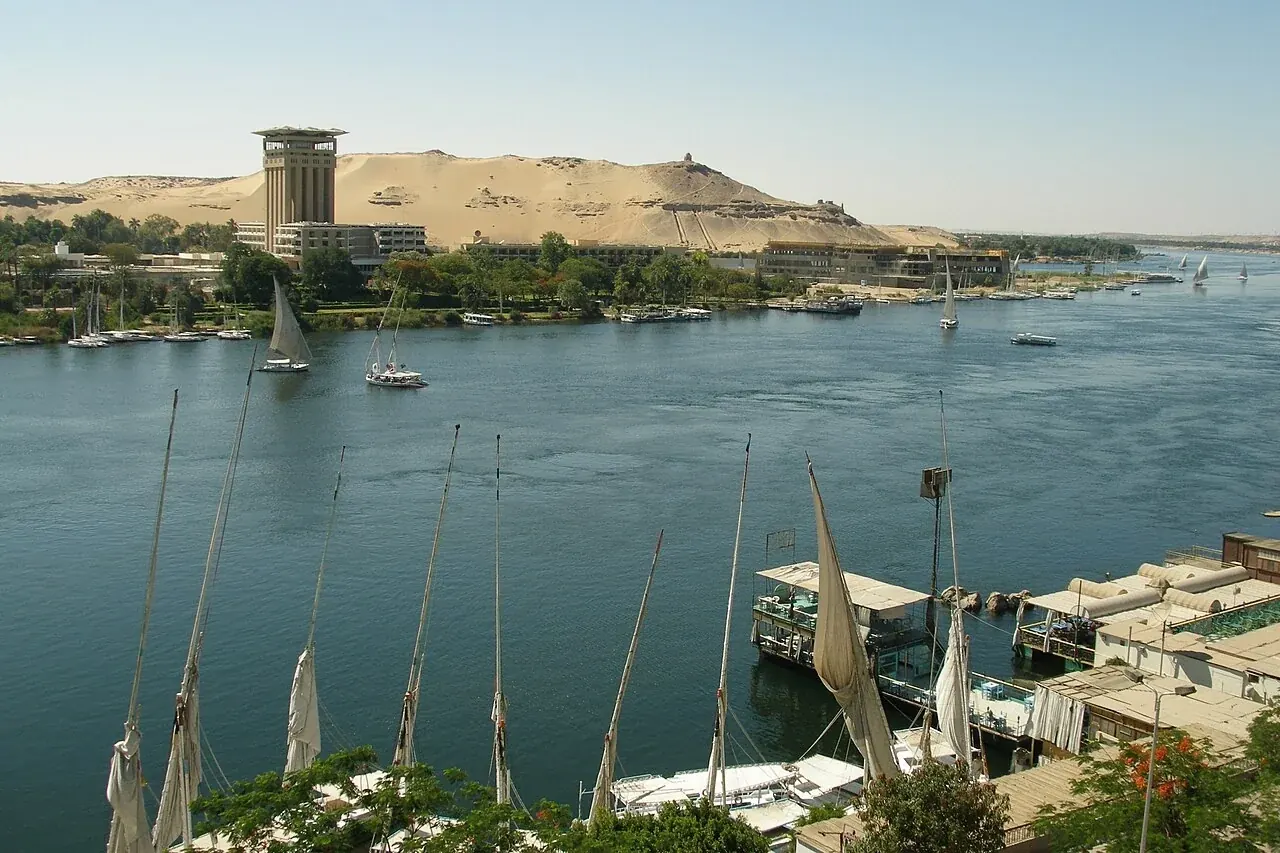
The Nile and developed riverbanks at Aswan, Egypt. — Vyacheslav Argenberg. Original photograph · CC BY 4.0. Cropped for the cards; photographs do not establish snake occurrence.

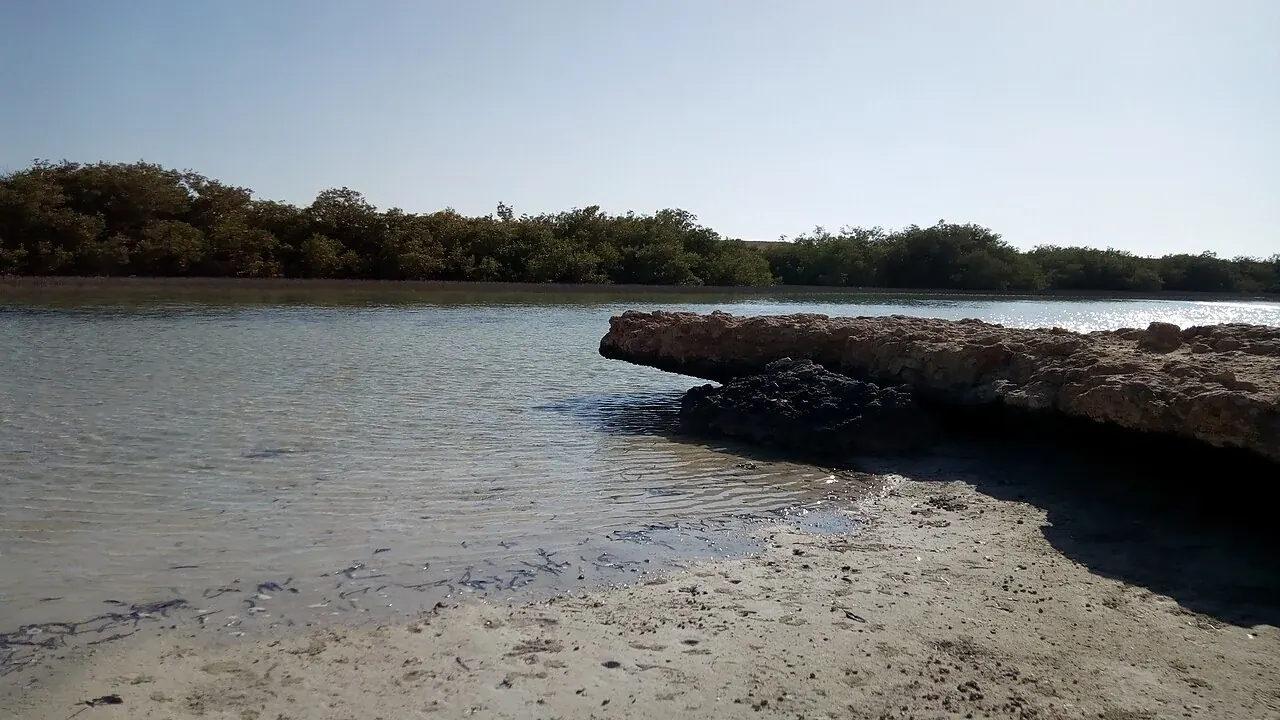
Mangroves and sheltered shoreline at Ras Mohammed, South Sinai, Egypt. — Yusuf Saad Eldin Akl. Original photograph · CC BY-SA 4.0. Cropped for the cards; photographs do not establish snake occurrence.

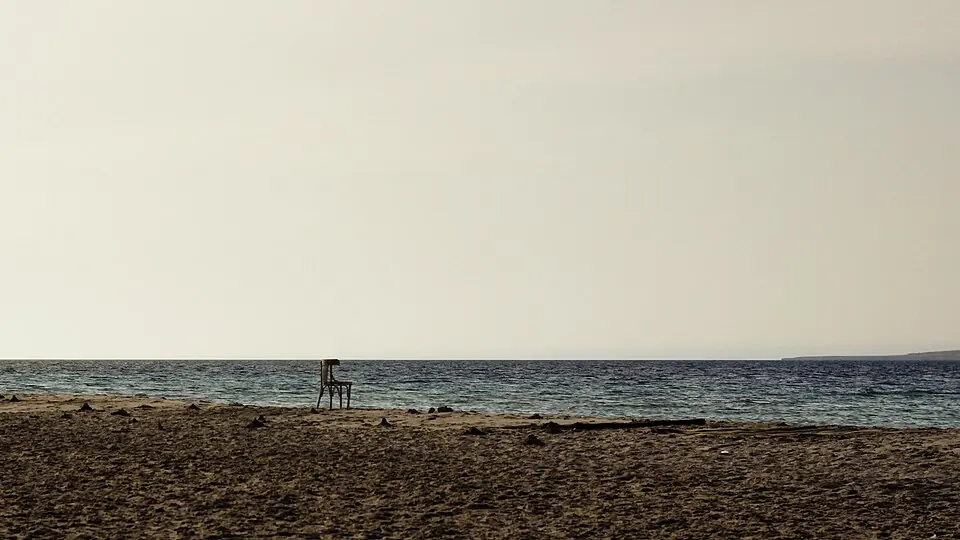
A sandy Red Sea shore in Ras Muhammad National Park, Egypt, photographed in May 2017. A small observation chair remains visible on the beach. — Paul Grach. Original photograph · CC BY 2.0. Cropped for the cards; photographs do not establish snake occurrence.

The species catalogue

Snakes · Western Desert & oases.

Only records naming this place appear below. These are extracted locality records, not complete island or regional inventories.

18 species · showing 18

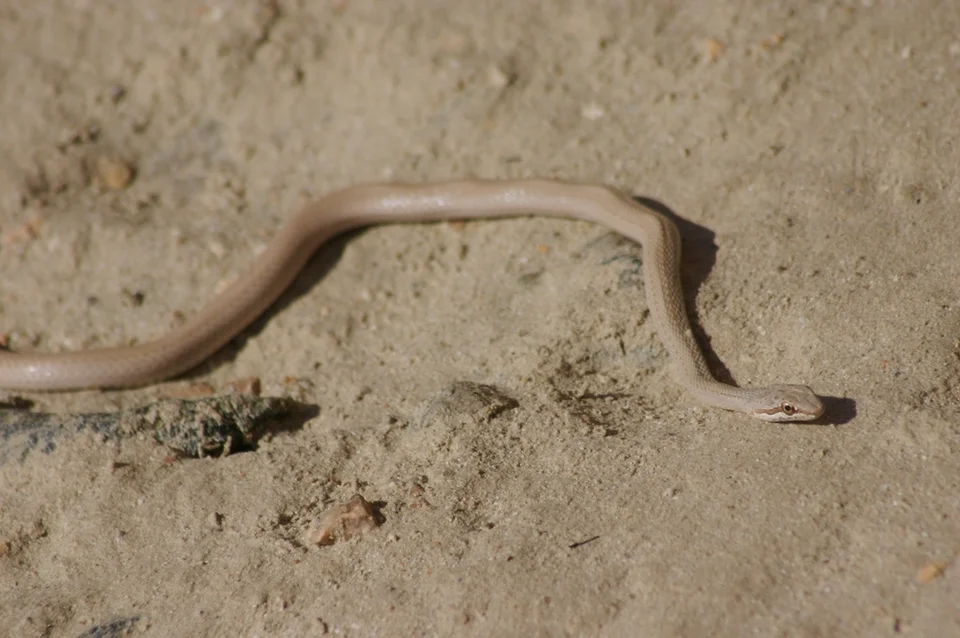
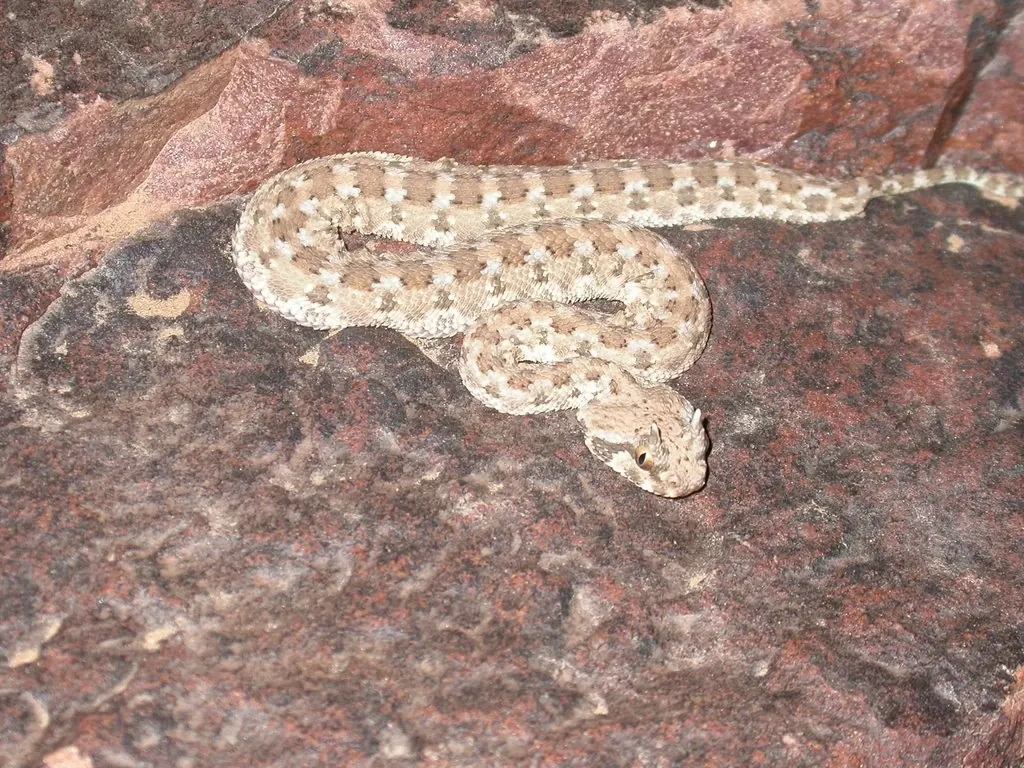
Cerastes cerastes. Identification follows the linked source community.

001 · Viperidae

Desert Horned Viper

Cerastes cerastes

(LINNAEUS, 1758)

VenomousClinical severity not established

Explicit country record in the checked taxonomic treatment. Western Desert & oases: observation GBIF 6188535676 (2026). The original iNaturalist entry was rechecked for research-grade identification, wild status and unrestricted coordinates; its reported uncertainty footprint lies within the mapped region. This is a community-reviewed observation, not a…

Read the species account →

Julien Renoult · CC BY 4.0 · https://creativecommons.org/licenses/by/4.0/
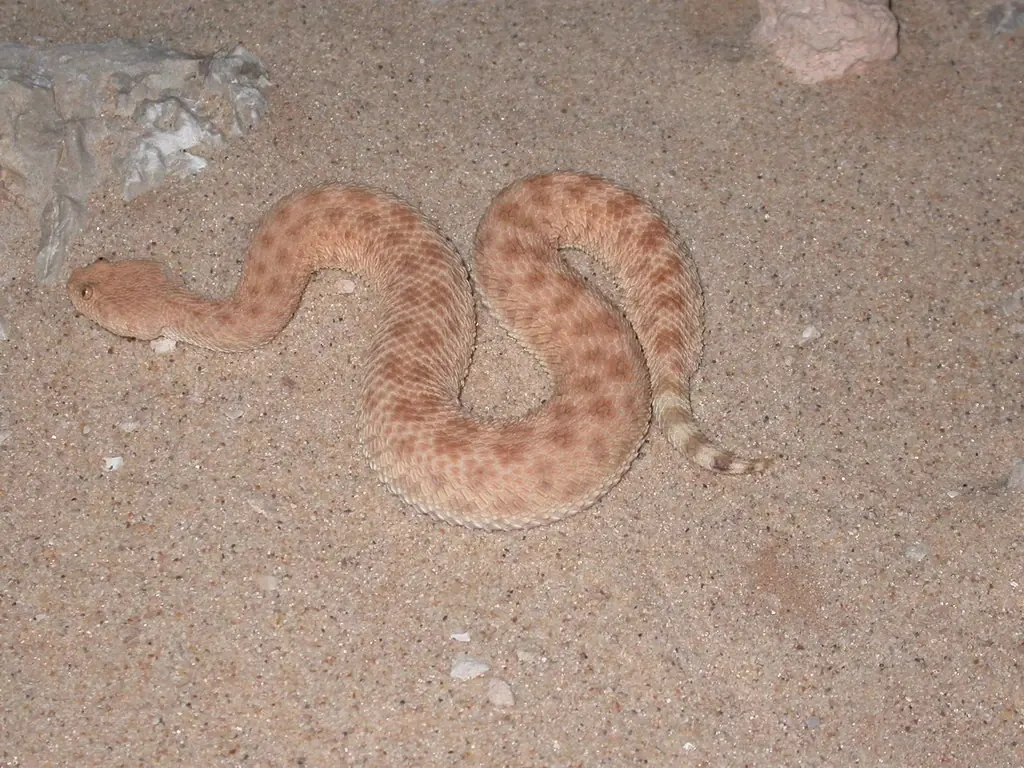
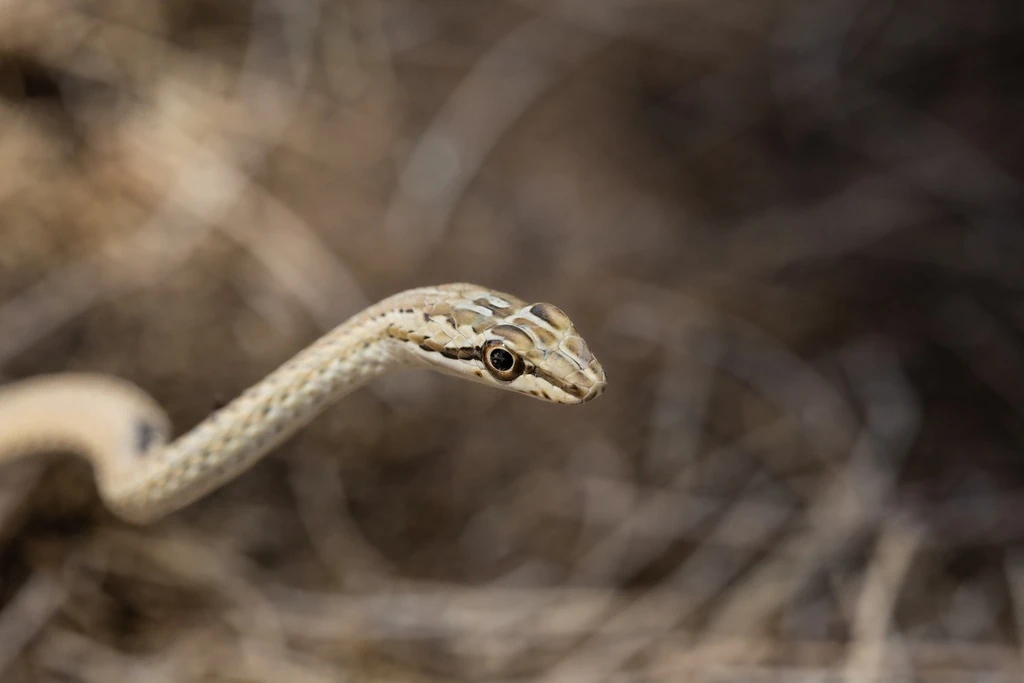
Cerastes vipera. Identification follows the linked source community.

002 · Viperidae

Sahara Sand Viper

Cerastes vipera

(LINNAEUS, 1758)

VenomousClinical severity not established

Explicit country record in the checked taxonomic treatment. Recorded during survey 2 in 2011; no individual wadi is specified. The cited regional study reports: Recorded in the survey.

Read the species account →

Julien Renoult · CC BY 4.0 · https://creativecommons.org/licenses/by/4.0/
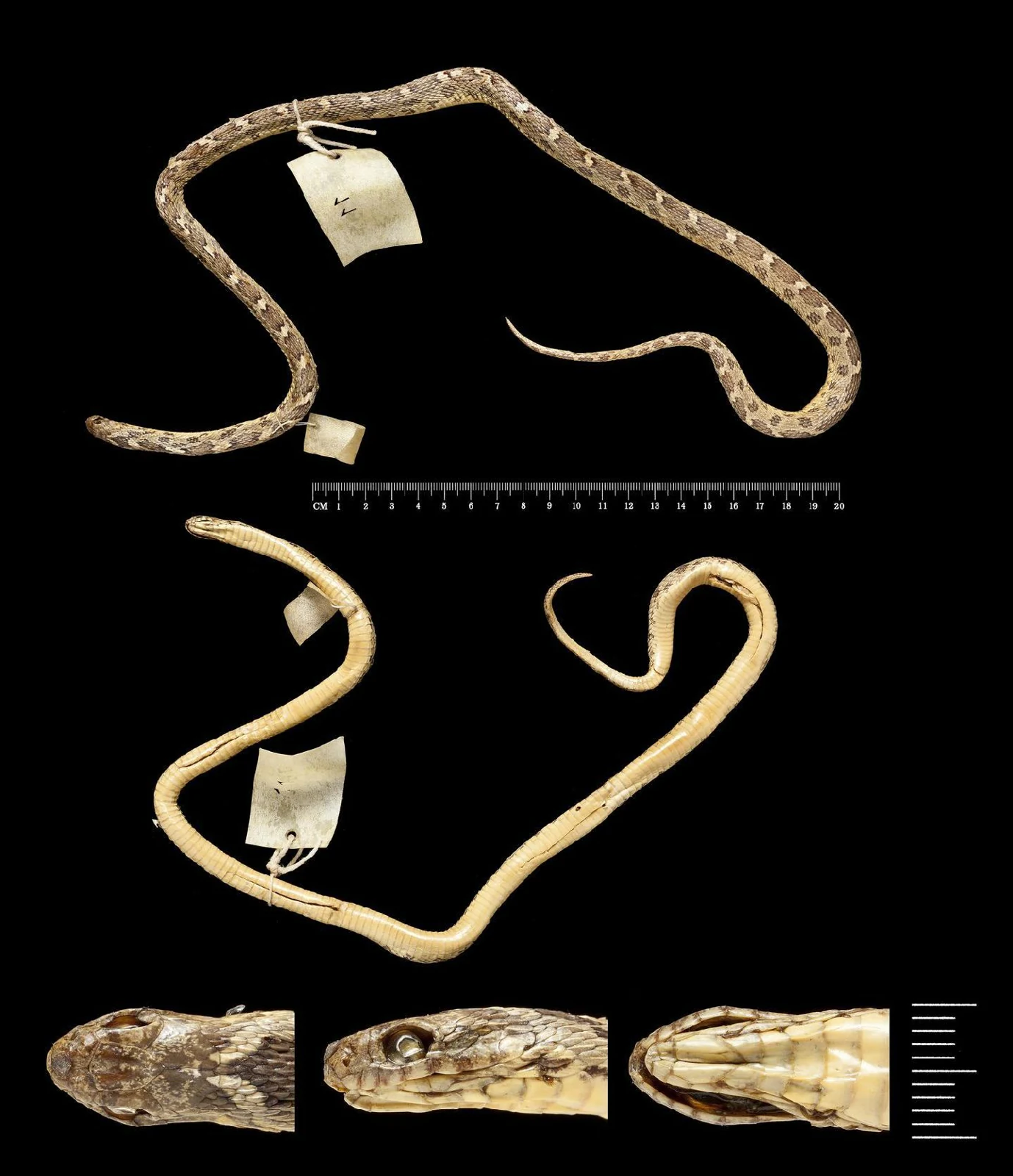
Dasypeltis bazi. Preserved museum specimen, Natural History Museum, London, 1897.10.28.575. Colours may have changed in preservative. This collection image adds no geographic occurrence record.

003 · Colubridae

Egyptian egg-eating snake, Baz’ egg-eating snake

Dasypeltis bazi

SALEH & SARHAN, 2016

Venom unknownNot yet assessed

Explicit country record in the checked taxonomic treatment. The revision supports a restricted Fayoum population; old Cairo records were not reconfirmed.

Read the species account →

NHM Photo Unit / The Trustees of the Natural History Museum, London · CC BY 4.0 · https://creativecommons.org/licenses/by/4.0/
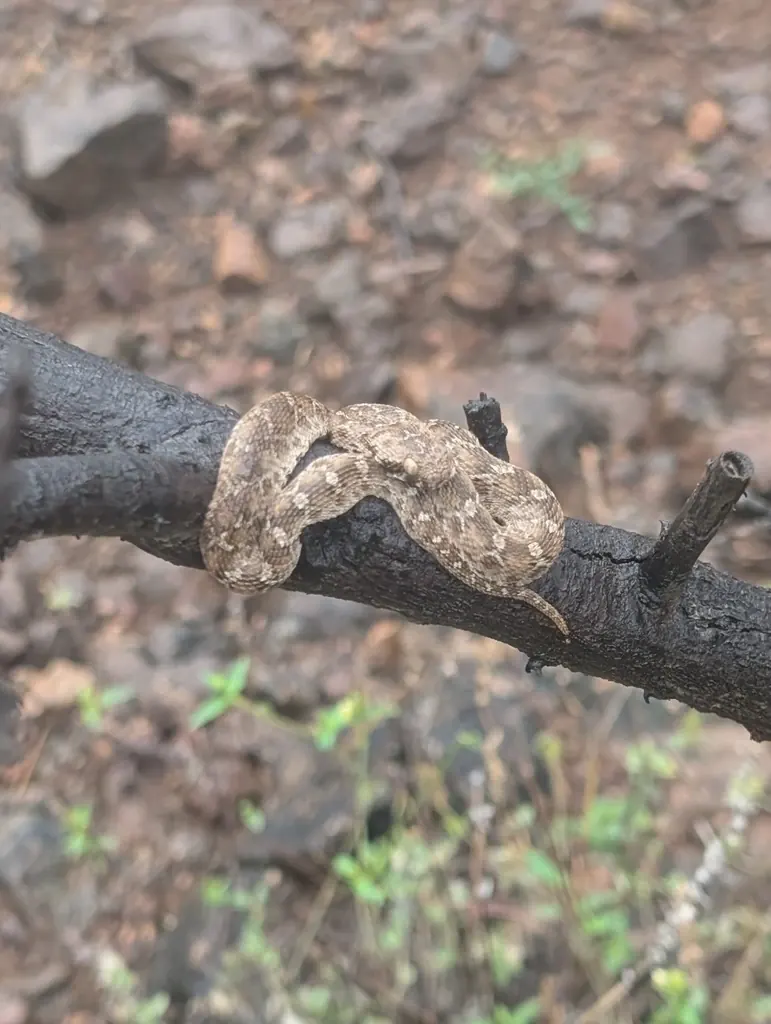
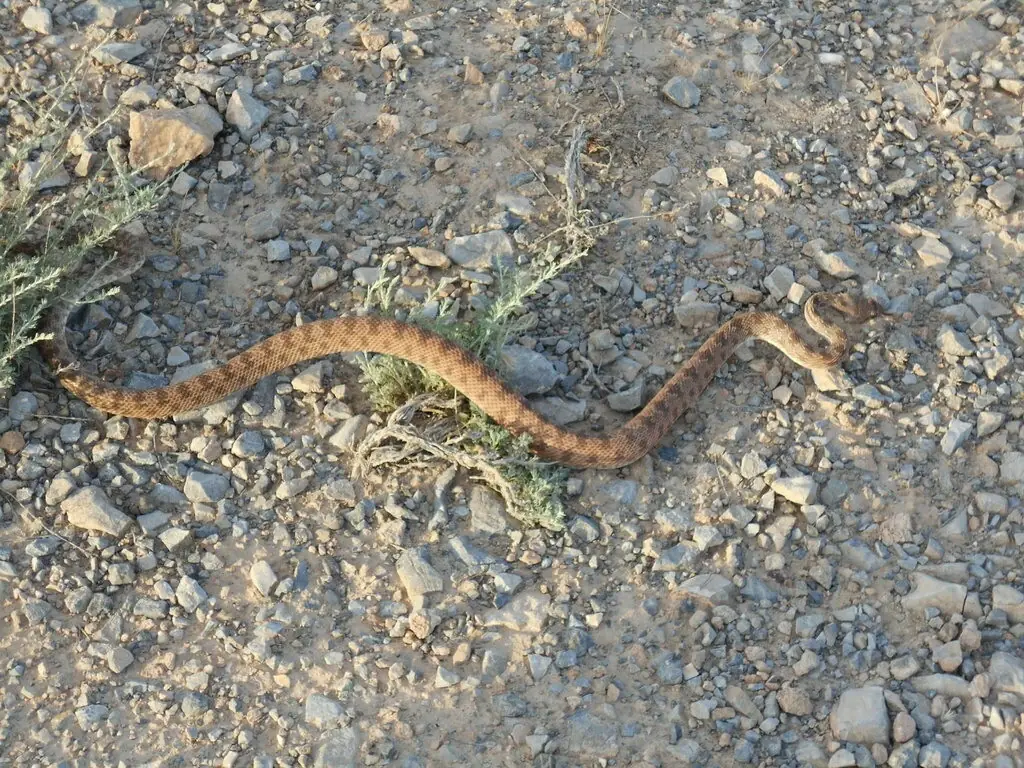
Echis pyramidum. Identification follows the linked source community.

004 · Viperidae

North-East African Carpet Viper, Egyptian Saw-scaled Viper

Echis pyramidum

(GEOFFROY SAINT-HILAIRE, 1827)

VenomousClinical severity not established

Explicit country record in the checked taxonomic treatment. Western Desert & oases: museum voucher YPM YPM HERR 005234 (1963). The museum record's reported coordinate uncertainty footprint lies within the mapped region. Nile valley: museum voucher YPM YPM HERR 004349 (1963). The museum record's reported coordinate uncertainty footprint lies within the…

Read the species account →

Elliot Kulakow · CC BY 4.0 · https://creativecommons.org/licenses/by/4.0/
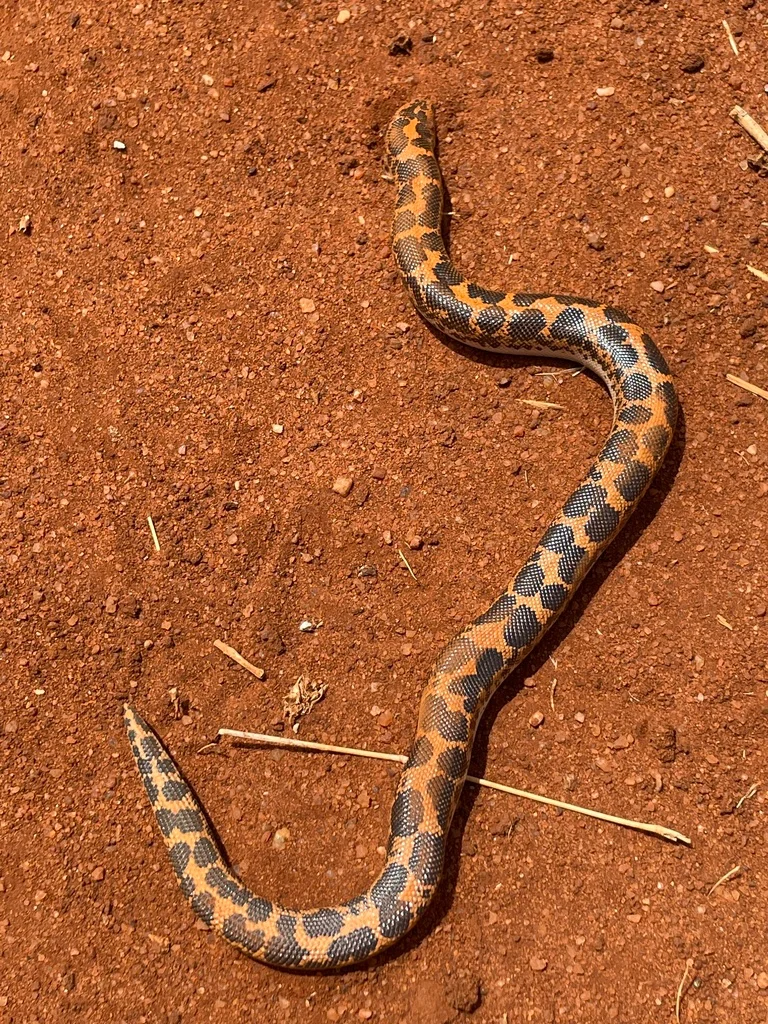
Eryx colubrinus, Kajiado, Kenya; photographed 2021-11-05.

005 · Boidae

Sand Boa

Eryx colubrinus

(LINNAEUS, 1758)

Non-venomous

Explicit country record in the checked taxonomic treatment. Nile valley: museum voucher UMMZ 181528 (1985). The published collecting label names Giza governorate; this is a locality-label assignment, not a reconstructed coordinate. Nile valley: museum voucher ANSP 19437 (1913). The published collecting label names Aswan governorate; this is a…

Read the species account →

Stephanie Dolrenry · CC BY-SA 4.0 · https://creativecommons.org/licenses/by-sa/4.0/

Eryx jaculus. Identification follows the linked source community.

006 · Boidae

Javelin Sand Boa

Eryx jaculus

(LINNAEUS, 1758)

Non-venomous

Explicit country record in the checked taxonomic treatment. Historical reports cited in 2011.

Read the species account →

Mourad Harzallah · CC BY 4.0 · https://creativecommons.org/licenses/by/4.0/
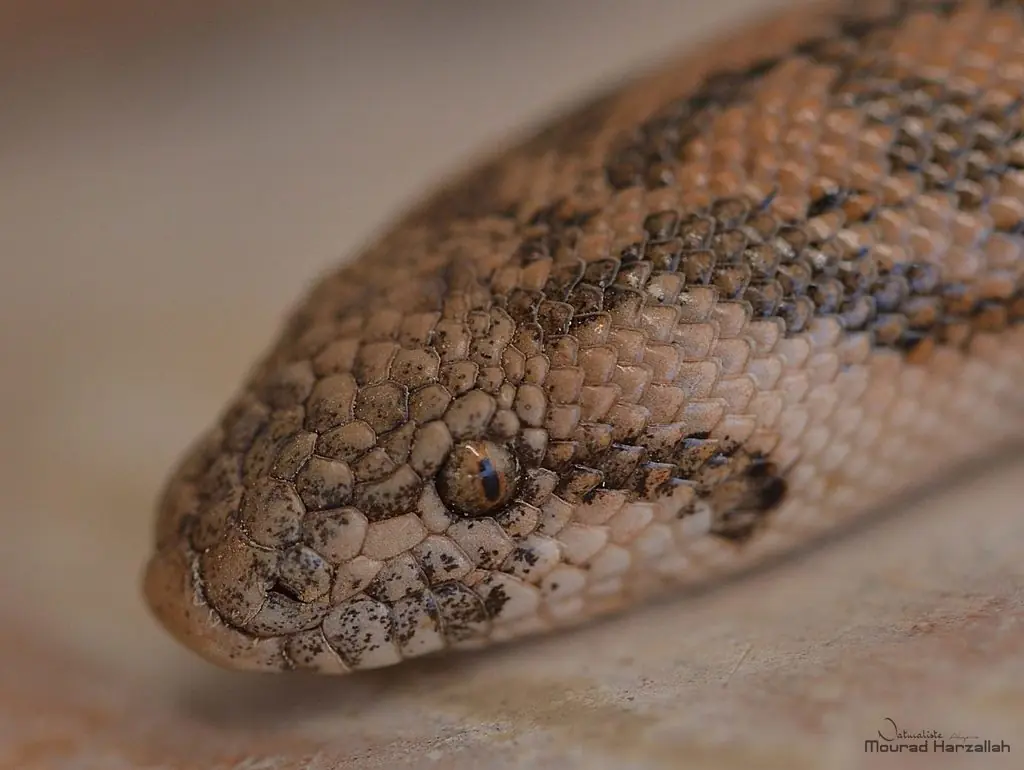
Lytorhynchus diadema, Guelmim Province, Morocco; photographed 2023-06-08.

007 · Colubridae

Crowned Leafnose Snake, Diademed Sand Snake, Awl-headed Snake

Lytorhynchus diadema

(DUMÉRIL, BIBRON & DUMÉRIL, 1854)

Venom unknownNot yet assessed

Genetic sampling confirms this country under the revised identity. The cited regional study reports: Recorded in the survey.

Read the species account →

Justin Philbois · CC0 1.0 · https://creativecommons.org/publicdomain/zero/1.0/

Macroprotodon cucullatus, photographed 2022-10-24. Identification follows the linked research-grade observation.

008 · Colubridae

False Smooth Snake

Macroprotodon cucullatus

(GEOFFROY SAINT-HILAIRE, 1827)

Venom unknownNot yet assessed

Explicit country record in the checked taxonomic treatment. Examined specimens reportedly from Omayed; exact collection sites unverified.

Read the species account →

Paolo Zucca · CC BY 4.0 · https://creativecommons.org/licenses/by/4.0/
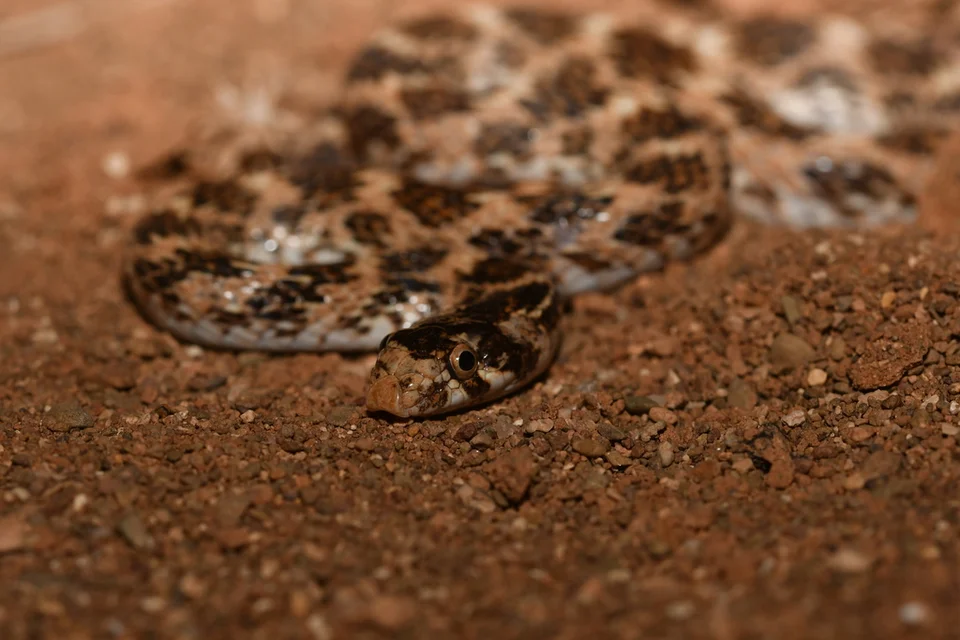
Malpolon insignitus. Identification follows the linked source community.

009 · Psammophiidae

Eastern Montpellier Snake

Malpolon insignitus

(GEOFFROY SAINT-HILAIRE, 1827)

VenomousClinical severity not established

Explicit country record in the checked taxonomic treatment. Examined material reported as M. monspessulanus insignita.

Read the species account →

Ryan van Huyssteen · CC BY 4.0 · https://creativecommons.org/licenses/by/4.0/
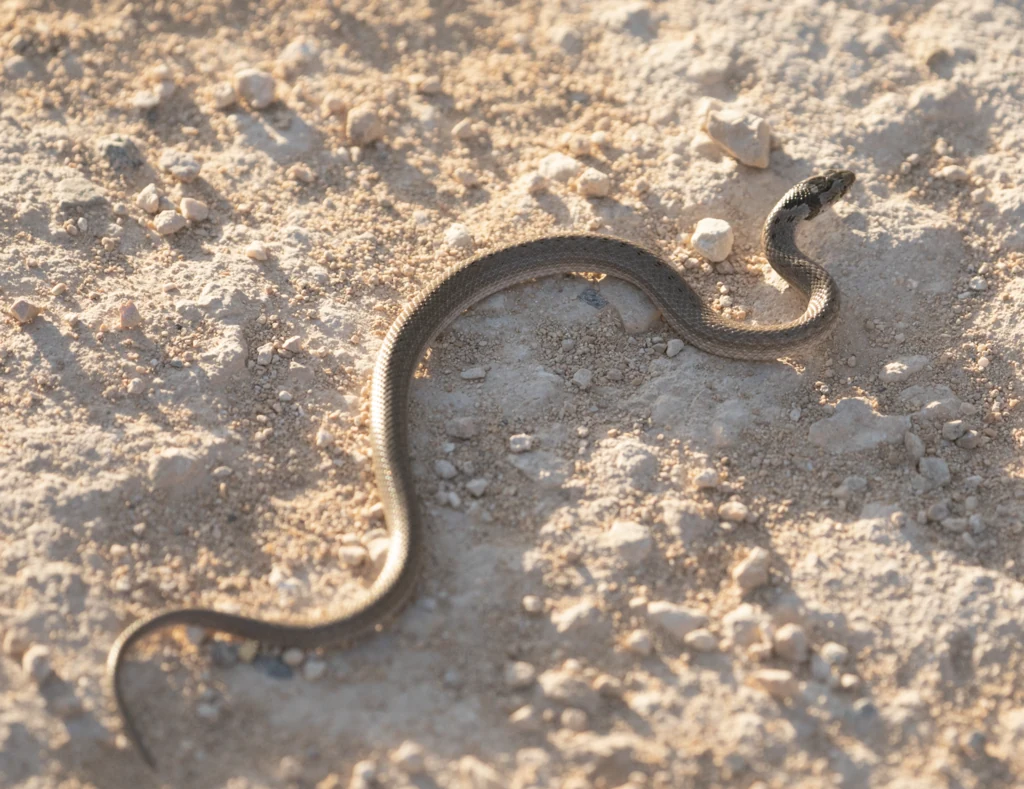
Malpolon moilensis. Identification follows the linked source community.

010 · Psammophiidae

Moila Snake

Malpolon moilensis

(REUSS, 1834)

Venom unknownNot yet assessed

Explicit country record in the checked taxonomic treatment. Author record east of Omayed; occurrence inside the reserve remained unconfirmed.

Read the species account →

Demian Hiß · CC BY 4.0 · https://creativecommons.org/licenses/by/4.0/
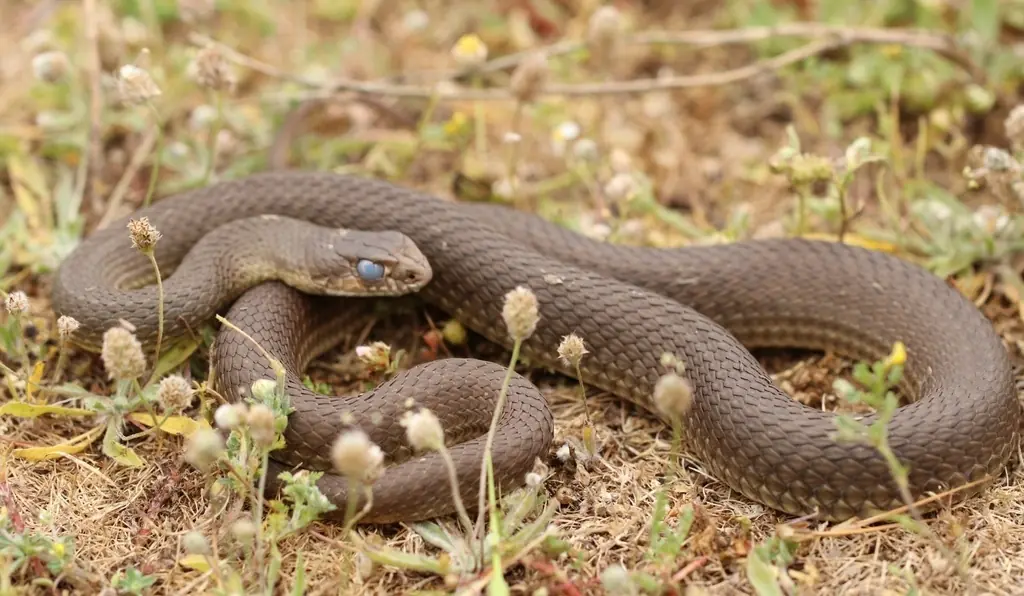
LeptotyphlopidaeMyriopholisPhotograph not yet documented

011 · Leptotyphlopidae

Cairo Blind Snake

Myriopholis cairi

(DUMÉRIL & BIBRON, 1844)

Non-venomous

Explicit country record in the checked taxonomic treatment. Delta & northern lowlands: museum voucher USNM USNM 135422 (1954). The museum record's reported coordinate uncertainty footprint lies within the mapped region. Delta & northern lowlands: museum voucher USNM USNM 135418 (1954). The museum record's reported coordinate uncertainty footprint lies…

Read the species account →
Naja haje. Identification follows the linked source community.

012 · Elapidae

Egyptian Cobra

Naja haje

(LINNAEUS, 1758)

VenomousClinical severity not established

Explicit country record in the checked taxonomic treatment. Nile valley: museum voucher YPM YPM HERR 005272 (1963). The museum record's reported coordinate uncertainty footprint lies within the mapped region. Western Desert & oases: museum voucher SMNS 4142 (1852). The museum record's reported coordinate uncertainty footprint lies within the mapped…

Read the species account →

Mourad Harzallah · CC BY 4.0 · https://creativecommons.org/licenses/by/4.0/
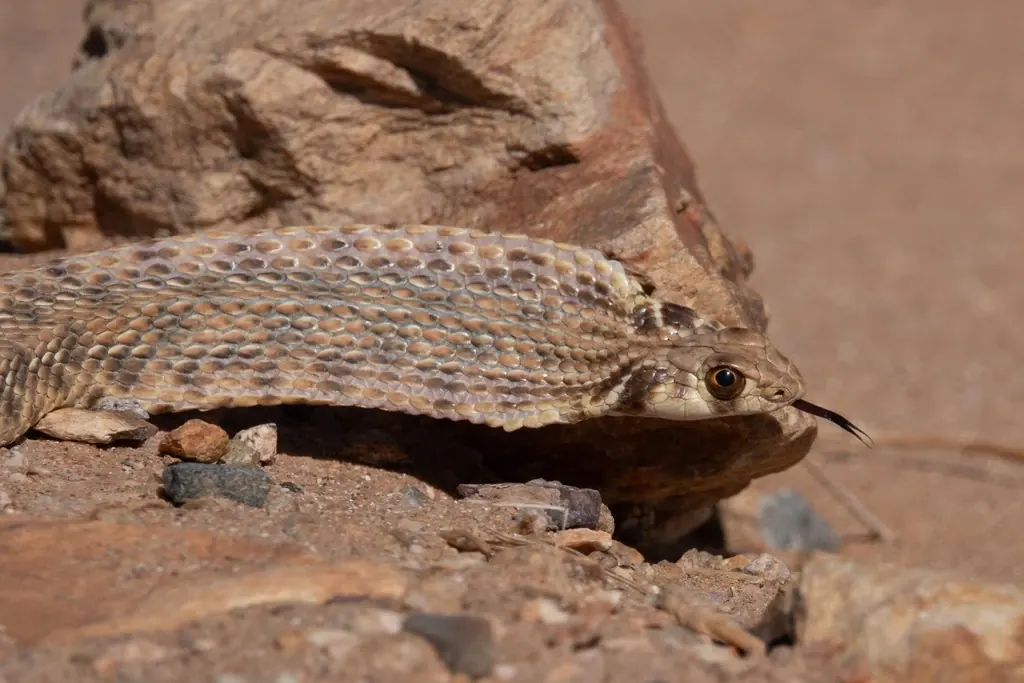
Unspotted dice snake photographed in Dagestan, Russia, in September 2026. Identification follows the linked source community.

013 · Colubridae

Dice Snake

Natrix tessellata

(LAURENTI, 1768)

Venom unknownNot yet assessed

Explicit country record in the checked taxonomic treatment. Western Desert & oases: museum voucher UMMZ 181534 (1985). The museum record's reported coordinate uncertainty footprint lies within the mapped region. Western Desert & oases: observation GBIF 5892570400 (2024). The original iNaturalist entry was rechecked for research-grade identification, wild…

Read the species account →

KsenoSnake · CC0 1.0 · https://creativecommons.org/publicdomain/zero/1.0/

Psammophis aegyptius, Ras Mohammed, Sinai, Egypt; photographed 2008-10-31.

015 · Psammophiidae

Species account

Psammophis aegyptius

MARX, 1958

VenomousClinical severity not established

Explicit country record in the checked taxonomic treatment. Red Sea coast & Eastern Desert: observation GBIF 6159565786 (2026). The original iNaturalist entry was rechecked for research-grade identification, wild status and unrestricted coordinates; its reported uncertainty footprint lies within the mapped region. This is a community-reviewed…

Read the species account →

Micha Baum · CC BY-SA 4.0 · https://creativecommons.org/licenses/by-sa/4.0/

Psammophis schokari. Identification follows the linked source community.

016 · Psammophiidae

Schokari Sand Racer, Forskal Sand Snake

Psammophis schokari

(FORSKÅL, 1775)

VenomousClinical severity not established

Explicit country record in the checked taxonomic treatment. Recorded in the first 2011 survey. The cited regional study reports: Observed in the survey.

Read the species account →

Mahomed Desai · CC BY 4.0 · https://creativecommons.org/licenses/by/4.0/
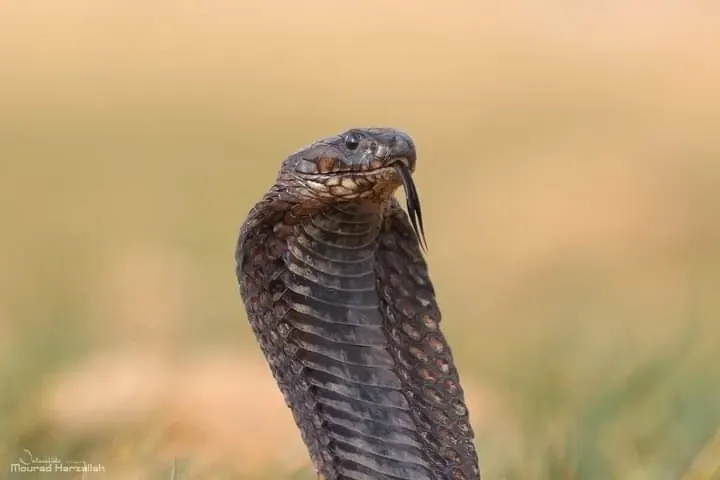
PsammophiidaePsammophisPhotograph not yet documented

017 · Psammophiidae

Egyptian Hissing Sand Snake, Striped Sand Snake, Hissing Sand Snake

Psammophis sibilans

(LINNAEUS, 1758)

VenomousClinical severity not established

Explicit country record in the checked taxonomic treatment. Western Desert & oases: observation GBIF 6320382604 (2026). The original iNaturalist entry was rechecked for research-grade identification, wild status and unrestricted coordinates; its reported uncertainty footprint lies within the mapped region. This is a community-reviewed observation, not a…

Read the species account →
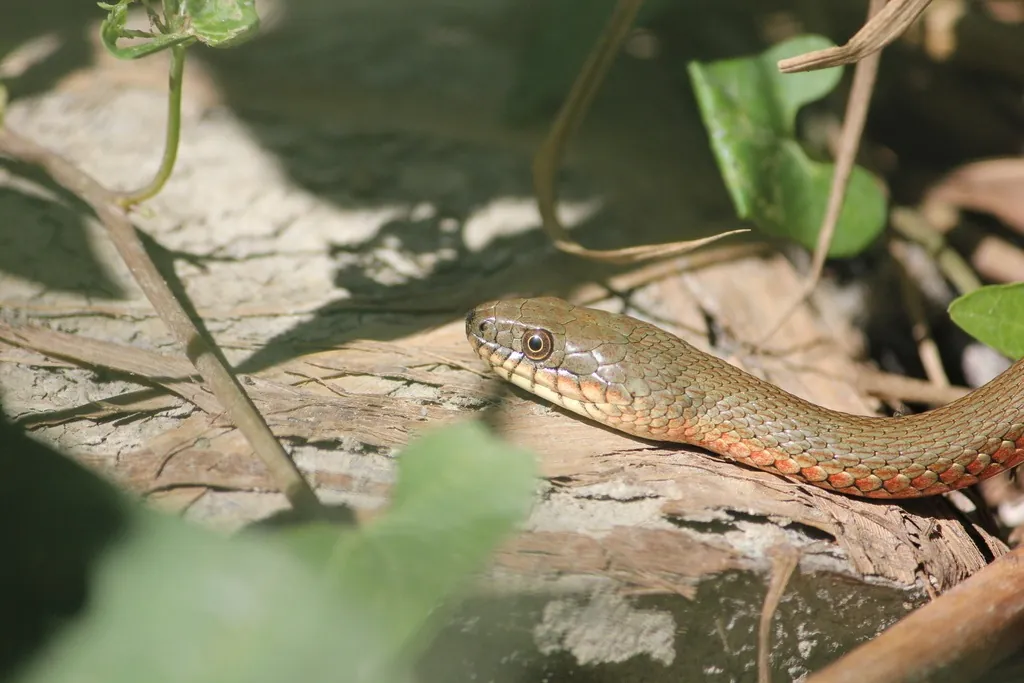
Spalerosophis diadema. Identification follows the linked source community.

018 · Colubridae

Diadem Snake, Royal Snake

Spalerosophis diadema

(SCHLEGEL, 1837)

Venom unknownNot yet assessed

Explicit country record in the checked taxonomic treatment. The cited regional study reports: Observed in the survey.

Read the species account →

Askar Akhmedov · CC BY 4.0 · https://creativecommons.org/licenses/by/4.0/
Explore all 38 country records →

The research library

Sources & the checklist.

This edition lists 38 species with supported country records from checked taxonomic treatments and cited field studies. It is not a claim of a complete national inventory. Each account retains its source and check date; individual evidence entries retain their own review dates.

Independent checklist comparison · 2026-10-11

38 confirmed, introduced or explicitly qualified occasional country records. The inventory uses current individual species treatments and records explicit doubts separately. A complete independent modern national checklist was not verified in this pass; the chapter is a documented working inventory, not a completeness certification.

The Reptile Database: individually checked species treatments ↗

Review still open

Eirenis coronelloides

The checked treatment or independent checklist questions this country assignment or uses an older species concept. A voucher under the current identity remains unresolved.

Platyceps rhodorachis

Old western rhodorachis labels require reconciliation with saharicus; not accepted as a second confirmed identity.

Telescopus dhara

Superseded broad identity.

Range and taxonomy review

Country links use a single accepted species identity. Revised names and disputed records are kept visible here; uncertain records do not enter the listed collection or regional totals.

Eirenis coronelloides

Uncertain — excluded from the listed total

The checked treatment or independent checklist questions this country assignment or uses an older species concept. A voucher under the current identity remains unresolved.

Source 1 ↗

Platyceps rhodorachis

Uncertain — excluded from the listed total

Old western rhodorachis labels require reconciliation with saharicus; not accepted as a second confirmed identity.

Source 1 ↗

How the map and counts work

Search results were checked against distribution text and taxonomic qualifications. A geographic name alone does not establish a political country: New Guinea, the Solomon archipelago and Micronesia span more than one country or territory. Introduced and unresolved records require separate interpretation.

Place counts require explicit named localities, including valid type localities. Counts can overlap where sources name multiple places. Regional maps group historical boundary snapshots for navigation, while island outlines use Natural Earth; neither is a species range or an observation map. Small islands can be below the outline dataset’s resolution, so geographic reference markers and the directory remain available.

© OpenStreetMap contributors, via OpenStreetMap, Wambacher and geoBoundaries · gbOpen ADM1 · 2017 snapshot · Open Data Commons Open Database License 1.0. Generalised navigation boundaries, not snake ranges or territorial assertions. Map provenance →

  1. Egypt - National Biodiversity Strategy ↗

    Historical national ecological and geographic baseline; no current habitat-cover, access or species-occurrence inference. Original report retained in the source link.

  2. geoBoundaries - source units and atlas grouping ↗

    © OpenStreetMap contributors, via OpenStreetMap, Wambacher and geoBoundaries · gbOpen ADM1 · 2017 snapshot · Open Data Commons Open Database License 1.0. Generalised navigation boundaries, not snake ranges or territorial assertions.

  3. geoBoundaries · ADM1 boundary provenance ↗
  4. Egypt - National Biodiversity Strategy ↗
  5. The Reptile Database

    Individual treatments and locality evidence are linked from each species account.

  6. Meiri (2024): SquamBase 1.0

    Species-level literature measurements and ecological traits. Exact-name matches only; imputed or ambiguous fields are omitted. These summaries are not local observations.

  7. Natural Earth: public-domain geographic data

Continue through the Africa atlas →