Pressures in the source record
Development and pollution are documented pressures on natural habitats. These are background concerns, not an assessment of the photographed point today.
Sources: CBD · Egypt national profile
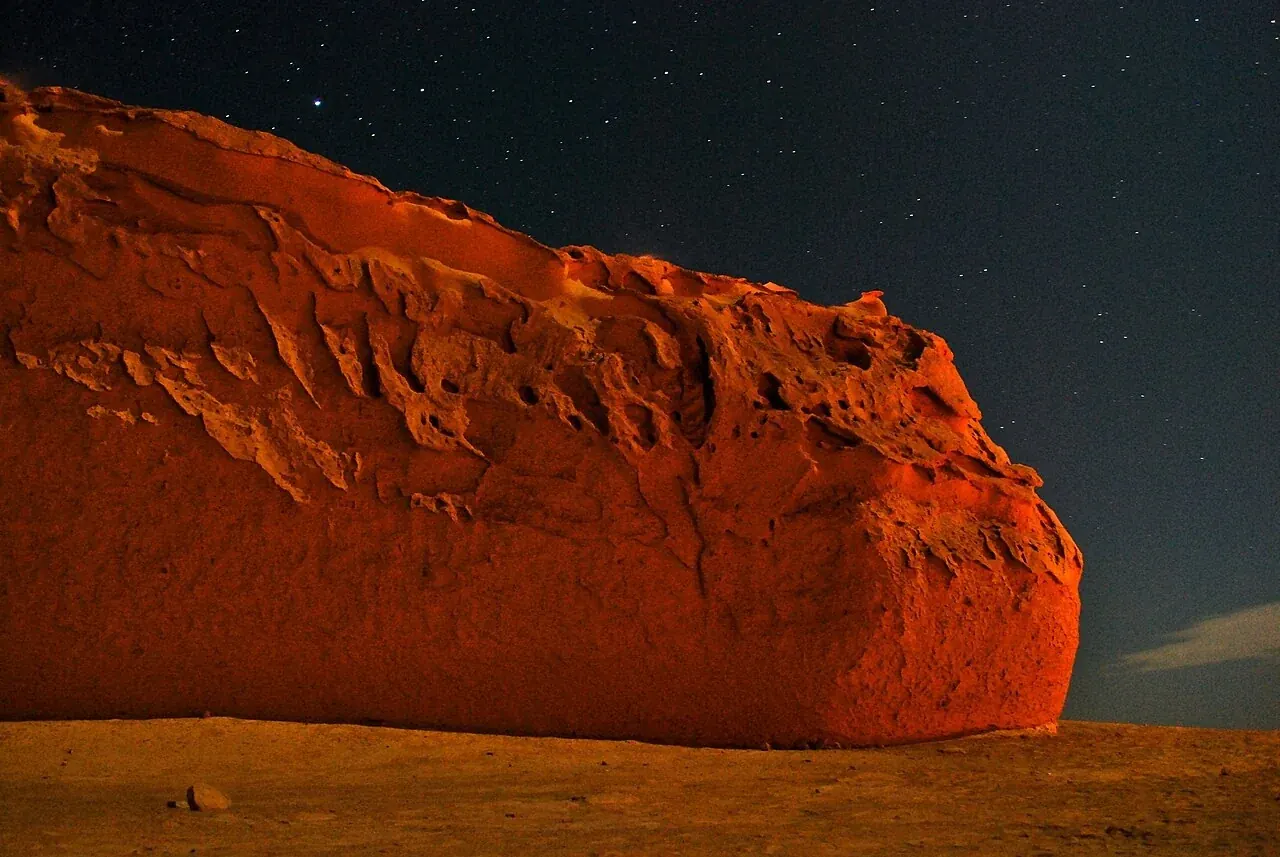
Egypt · Habitat field guide
Explore the documented landscape around Wadi Al-Hitan. The named example anchors this guide; the country map and separately sourced species accounts answer different questions.
Night photograph of a desert rock formation at Wadi Al-Hitan, Egypt.
Understanding the environment
Explore the documented landscape around Wadi Al-Hitan. The named example anchors this guide; the country map and separately sourced species accounts answer different questions.
Explore the structure · Open ground → sheltered edge → watercourse
Select a zone to see what changes.
Sand, stone or clay
Use the photograph to describe visible substrate. Avoid treating every bare surface as a sand desert.
Compare this unit with the documented local setting and keep the observation date, exact place and source distinct.
These panels are a conceptual reading sequence, not a mapped transect or a recommendation to enter the site.
Sources: UNESCO · Wadi Hitan
Field notes · 01
Wadi Al-Hitan lies in Egypt's Western Desert. Its exposed fossil-bearing rocks record a former marine environment; the habitat being illustrated today is desert, and fossil evidence must not be presented as a modern animal record.
Sources: UNESCO · Wadi Hitan
Field notes · 02
Distinguish mobile sand, gravel, exposed rock, clay and saline ground. Sparse vegetation can be highly localized, so a single greener patch should not be generalized across the surrounding dryland. Describe watercourses separately even when they are dry in the image.
Pressures on Egypt’s habitats
Development and pollution are documented pressures on natural habitats. These are background concerns, not an assessment of the photographed point today.
Sources: CBD · Egypt national profile
When revisiting an image or locality, compare the same season, water stage and viewing area before interpreting a change. Keep source dates visible.
Use the country and region maps to orient the landscape, then read each species profile for its independently reviewed habitat and range evidence. Similar scenery does not establish a shared species list.
The connected collection
These 19 species have supported country occurrence and an explicit habitat association in the shared account. The association may come from elsewhere in their range. This is not a complete local habitat inventory; the places above are landscape examples, not asserted collecting sites.
19 species · showing 19
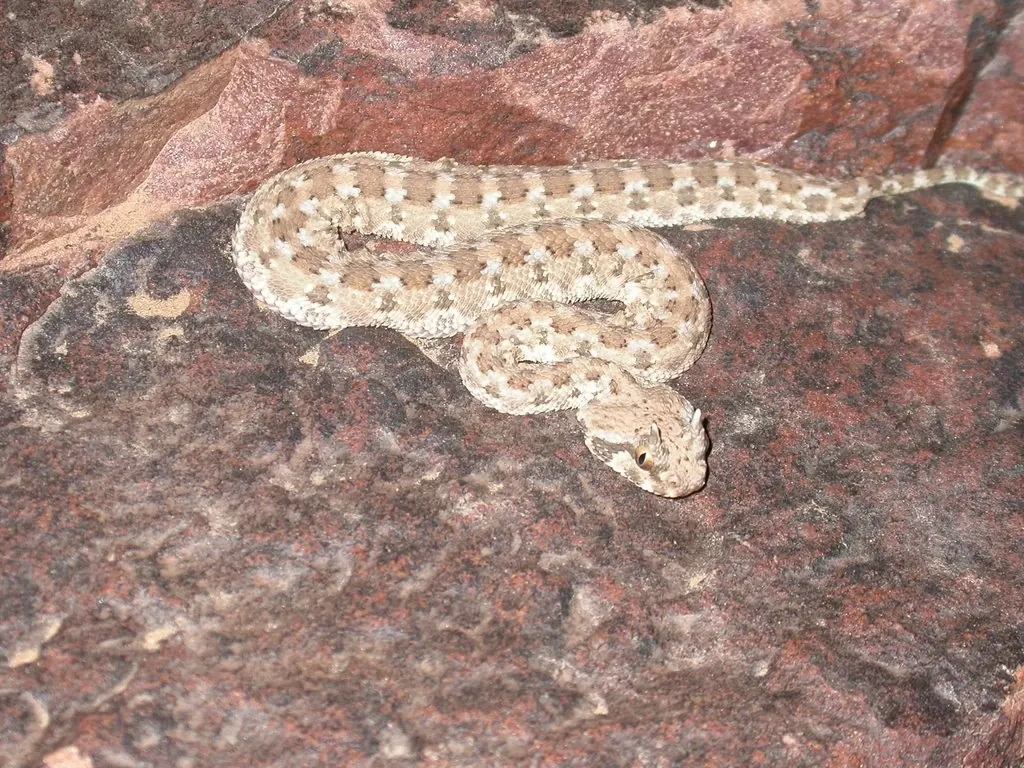
001 · Viperidae
Desert Horned Viper
Explicit country record in the checked taxonomic treatment. Western Desert & oases: observation GBIF 6188535676 (2026). The original iNaturalist entry was rechecked for research-grade identification, wild status and unrestricted coordinates; its reported uncertainty footprint lies within the mapped region. This is a community-reviewed observation, not a…
Read the species account →Julien Renoult · CC BY 4.0 · https://creativecommons.org/licenses/by/4.0/
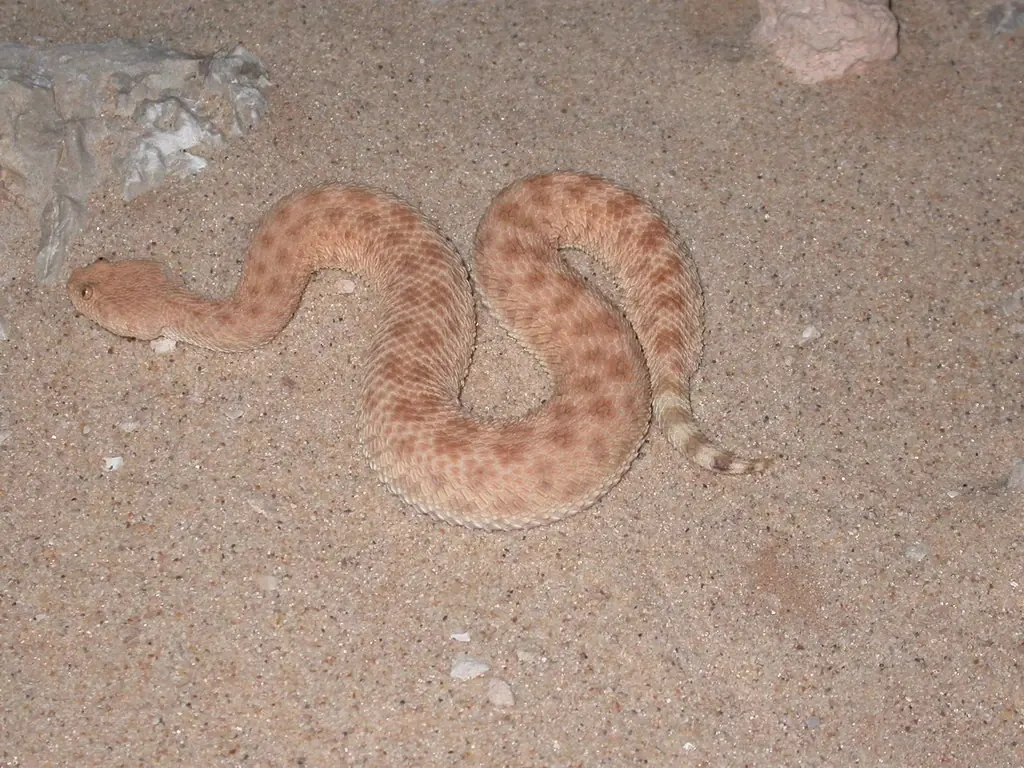
002 · Viperidae
Sahara Sand Viper
Explicit country record in the checked taxonomic treatment. Recorded during survey 2 in 2011; no individual wadi is specified. The cited regional study reports: Recorded in the survey.
Read the species account →Julien Renoult · CC BY 4.0 · https://creativecommons.org/licenses/by/4.0/
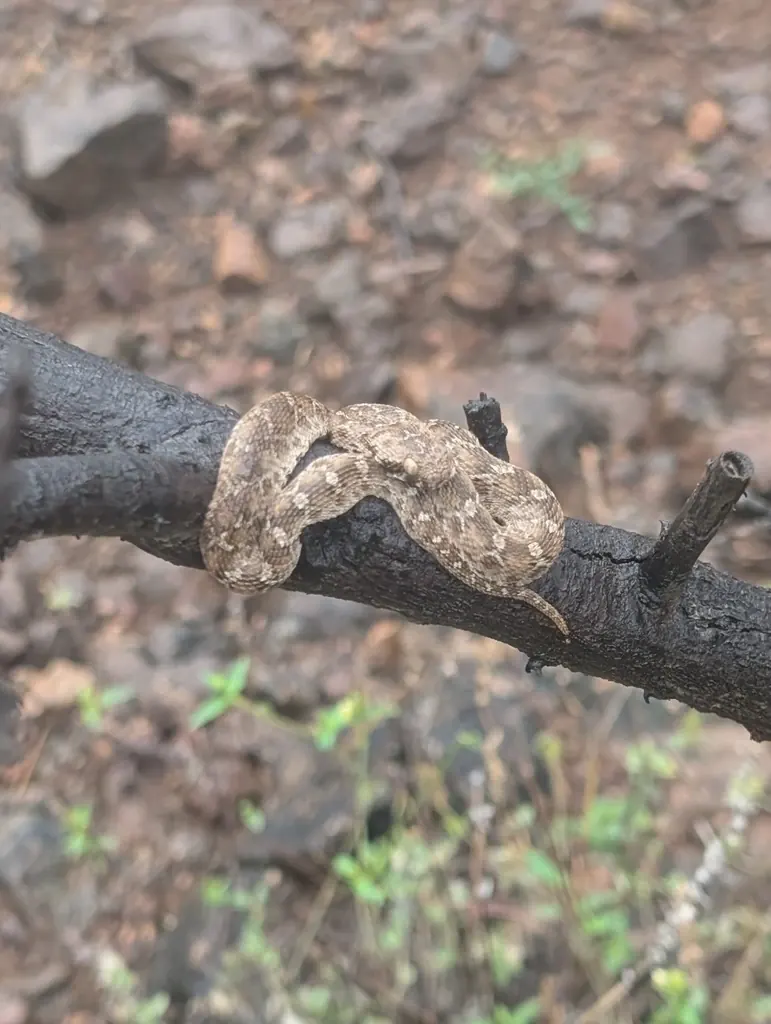
003 · Viperidae
North-East African Carpet Viper, Egyptian Saw-scaled Viper
Explicit country record in the checked taxonomic treatment. Western Desert & oases: museum voucher YPM YPM HERR 005234 (1963). The museum record's reported coordinate uncertainty footprint lies within the mapped region. Nile valley: museum voucher YPM YPM HERR 004349 (1963). The museum record's reported coordinate uncertainty footprint lies within the…
Read the species account →Elliot Kulakow · CC BY 4.0 · https://creativecommons.org/licenses/by/4.0/
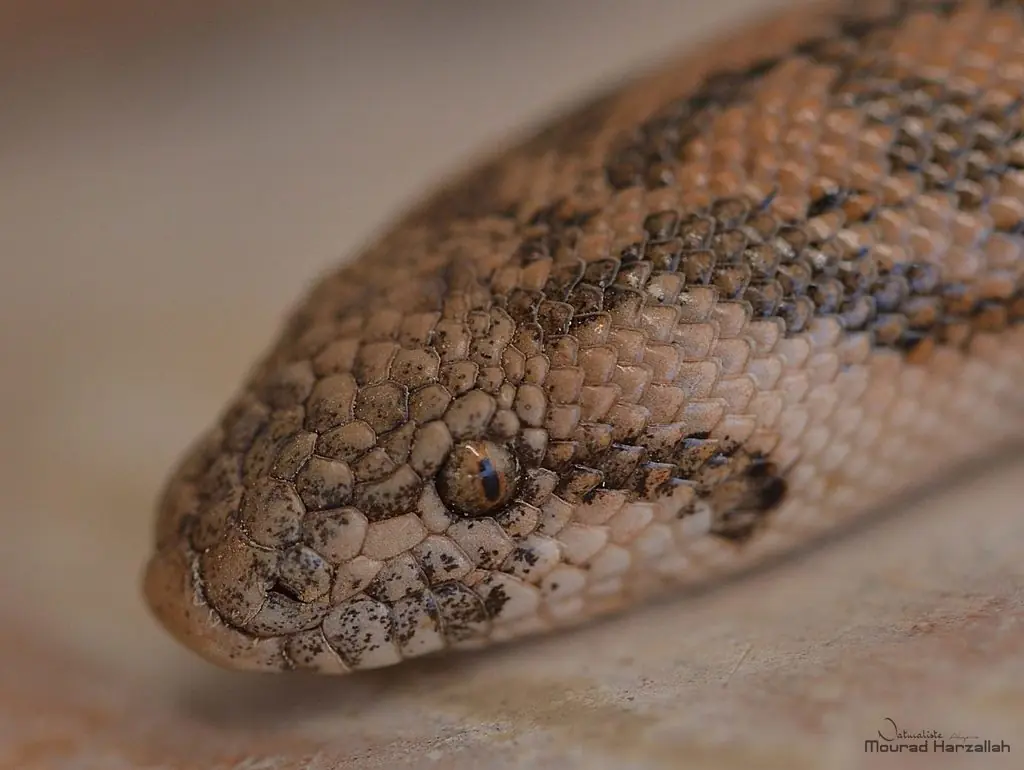
004 · Boidae
Javelin Sand Boa
Explicit country record in the checked taxonomic treatment. Historical reports cited in 2011.
Read the species account →Mourad Harzallah · CC BY 4.0 · https://creativecommons.org/licenses/by/4.0/
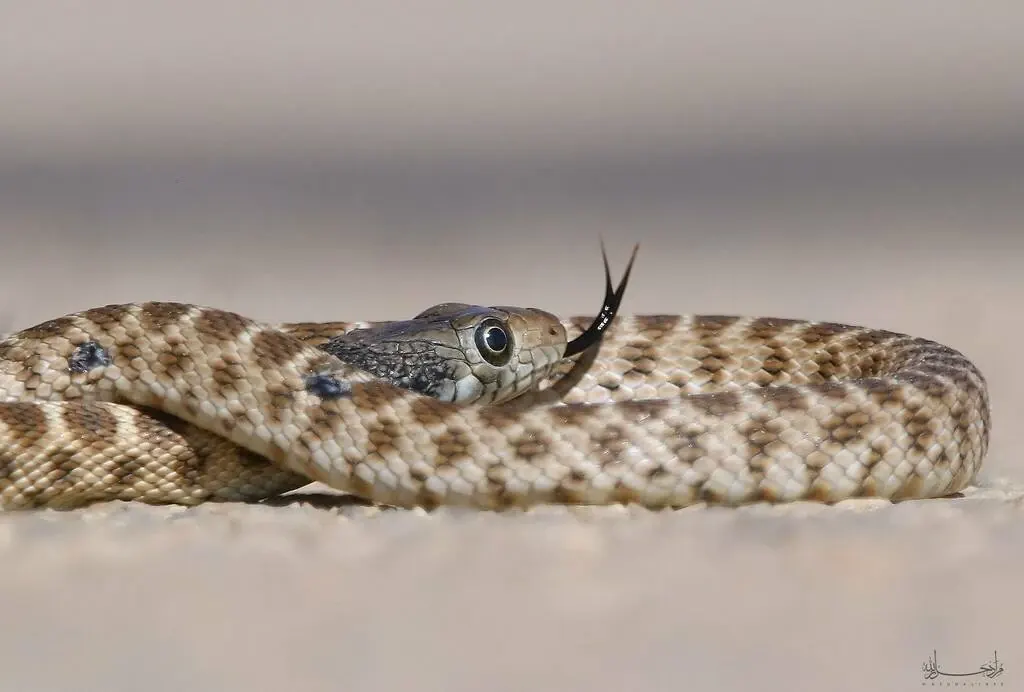
005 · Colubridae
Algerian Whip Snake
Explicit country record in the checked taxonomic treatment.
Read the species account →Mourad Harzallah · CC BY 4.0 · https://creativecommons.org/licenses/by/4.0/
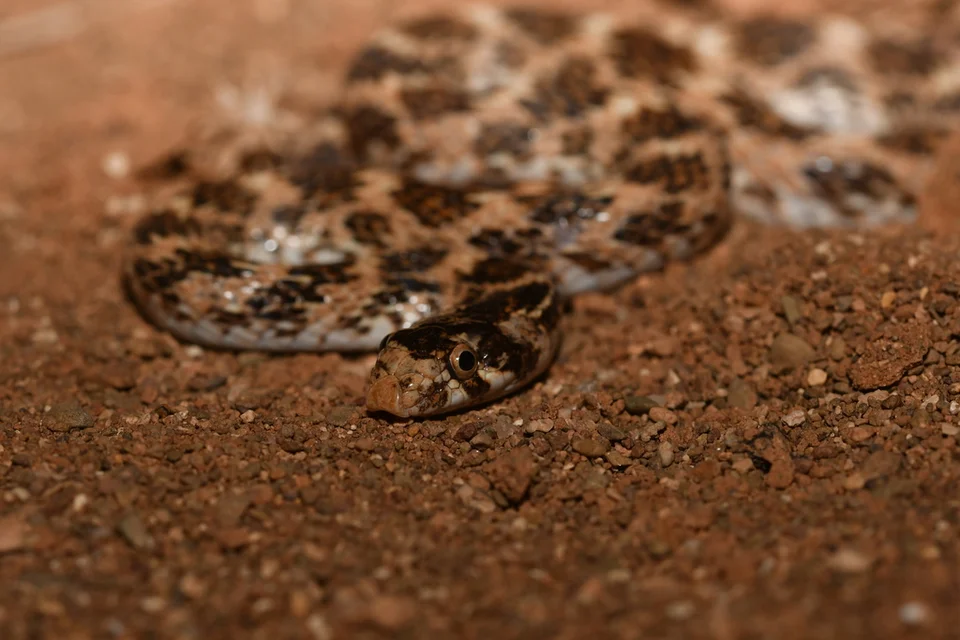
006 · Colubridae
Crowned Leafnose Snake, Diademed Sand Snake, Awl-headed Snake
Genetic sampling confirms this country under the revised identity. The cited regional study reports: Recorded in the survey.
Read the species account →Justin Philbois · CC0 1.0 · https://creativecommons.org/publicdomain/zero/1.0/
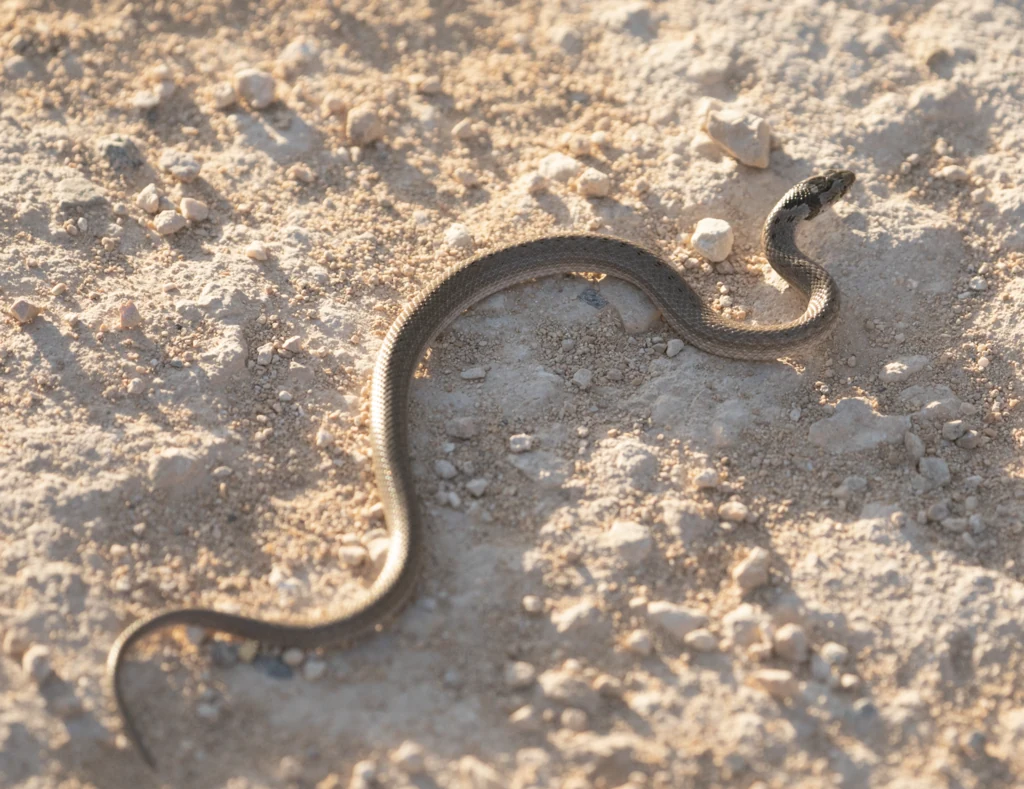
007 · Colubridae
False Smooth Snake
Explicit country record in the checked taxonomic treatment. Examined specimens reportedly from Omayed; exact collection sites unverified.
Read the species account →Paolo Zucca · CC BY 4.0 · https://creativecommons.org/licenses/by/4.0/
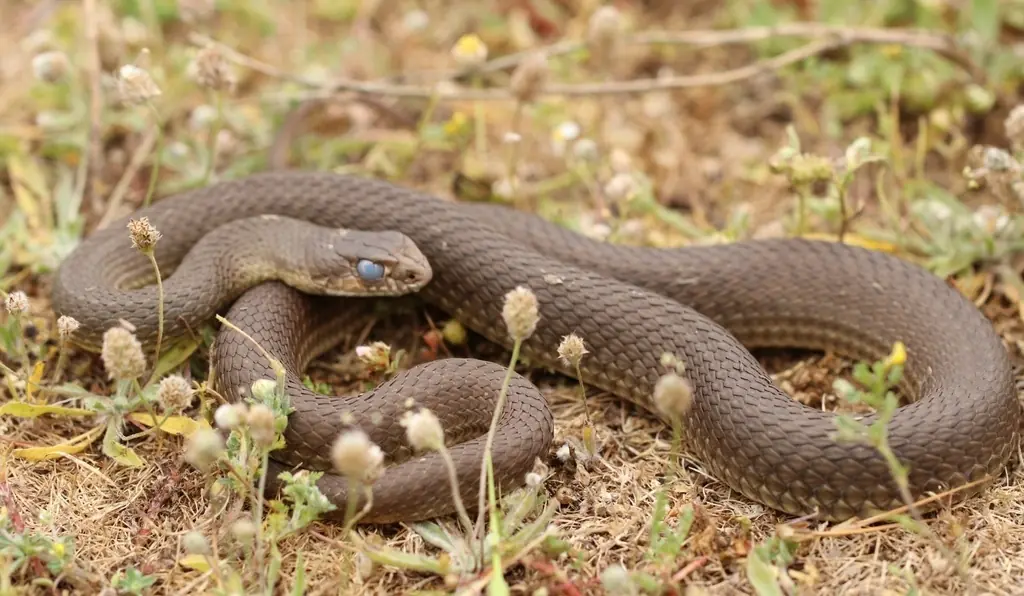
008 · Psammophiidae
Eastern Montpellier Snake
Explicit country record in the checked taxonomic treatment. Examined material reported as M. monspessulanus insignita.
Read the species account →Ryan van Huyssteen · CC BY 4.0 · https://creativecommons.org/licenses/by/4.0/
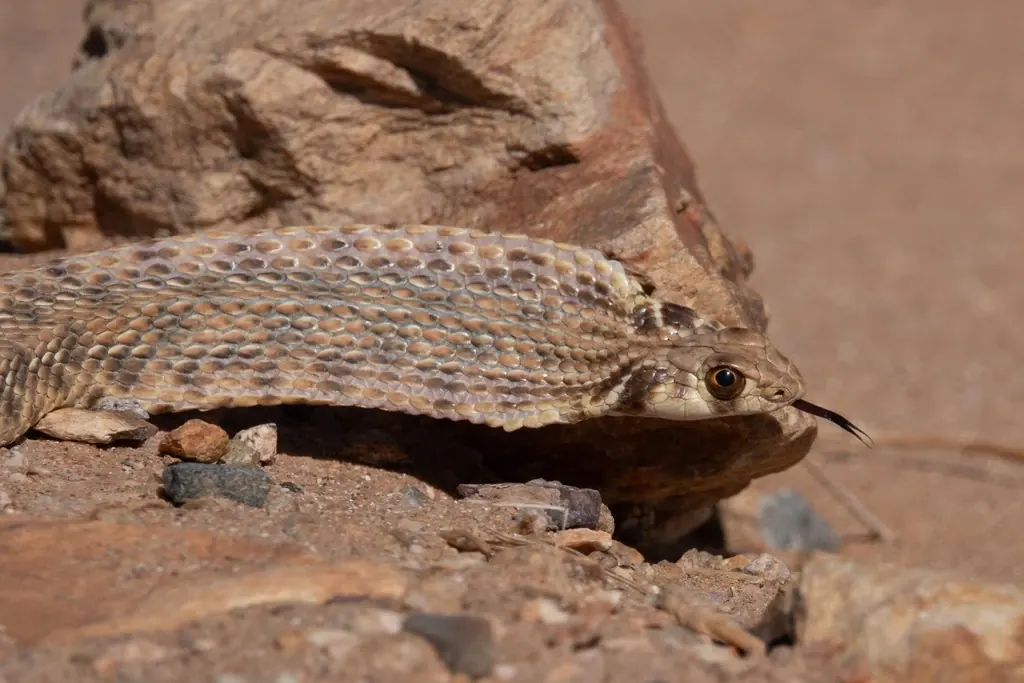
009 · Psammophiidae
Moila Snake
Explicit country record in the checked taxonomic treatment. Author record east of Omayed; occurrence inside the reserve remained unconfirmed.
Read the species account →Demian Hiß · CC BY 4.0 · https://creativecommons.org/licenses/by/4.0/
010 · Leptotyphlopidae
Cairo Blind Snake
Explicit country record in the checked taxonomic treatment. Delta & northern lowlands: museum voucher USNM USNM 135422 (1954). The museum record's reported coordinate uncertainty footprint lies within the mapped region. Delta & northern lowlands: museum voucher USNM USNM 135418 (1954). The museum record's reported coordinate uncertainty footprint lies…
Read the species account →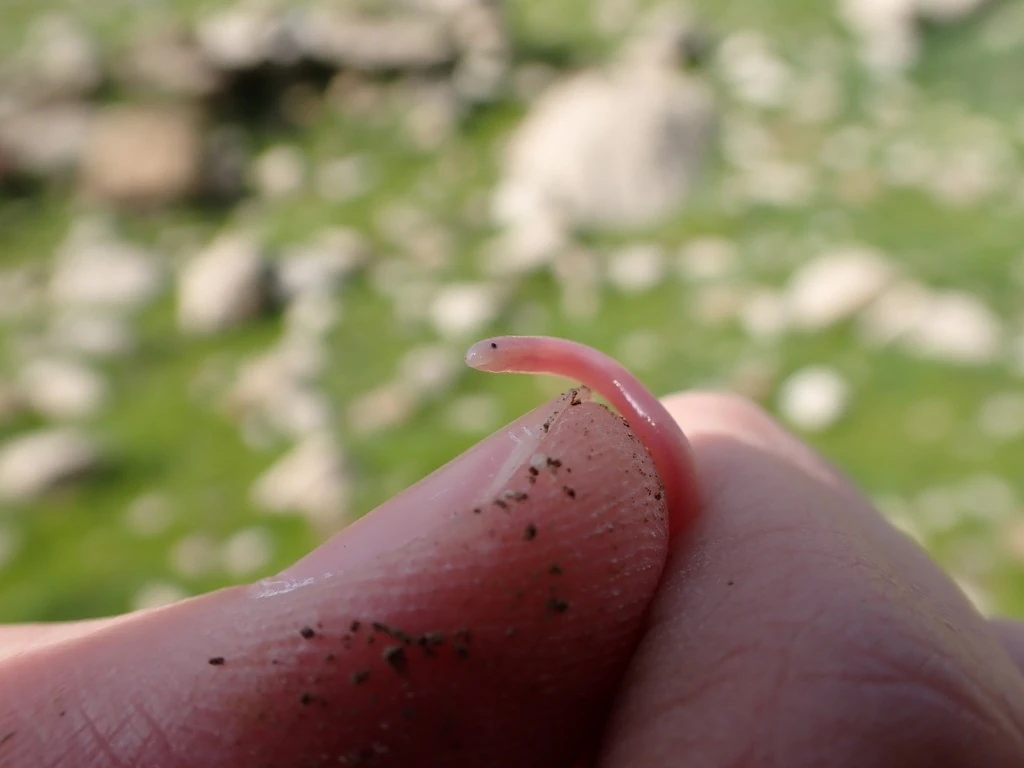
011 · Leptotyphlopidae
Longnosed Worm Snake, Hook-snouted worm snake
Explicit country record in the checked taxonomic treatment. Delta & northern lowlands: museum voucher YPM YPM HERR 006857 (1963). The published collecting label names Cairo Governorate; this is a locality-label assignment, not a reconstructed coordinate. Delta & northern lowlands: museum voucher YPM YPM HERR 006853 (1963). The published collecting label…
Read the species account →Kian · CC BY 4.0 · https://creativecommons.org/licenses/by/4.0/
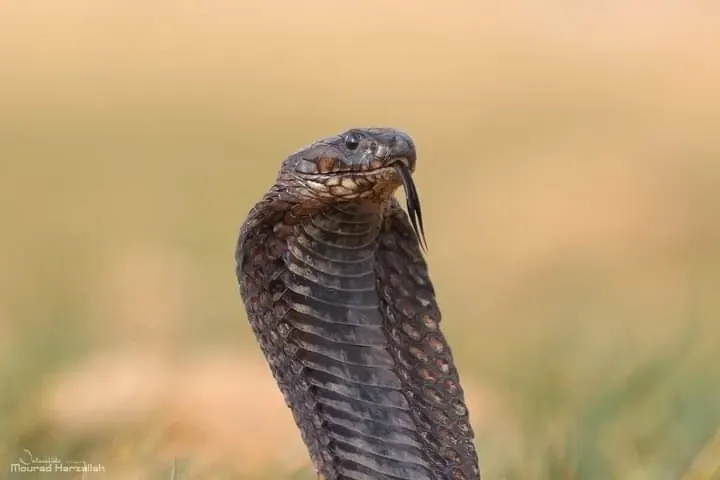
012 · Elapidae
Egyptian Cobra
Explicit country record in the checked taxonomic treatment. Nile valley: museum voucher YPM YPM HERR 005272 (1963). The museum record's reported coordinate uncertainty footprint lies within the mapped region. Western Desert & oases: museum voucher SMNS 4142 (1852). The museum record's reported coordinate uncertainty footprint lies within the mapped…
Read the species account →Mourad Harzallah · CC BY 4.0 · https://creativecommons.org/licenses/by/4.0/
013 · Colubridae
Rogers' Racer
Explicit country record in the checked taxonomic treatment. Nocturnal observation reported.
Read the species account →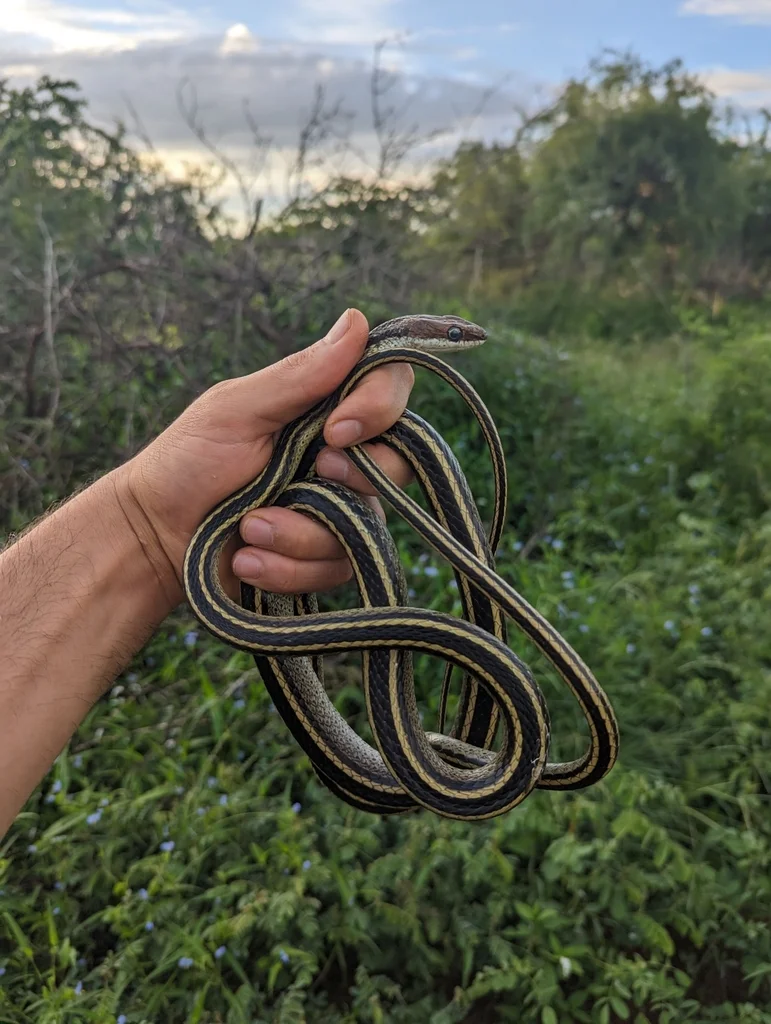
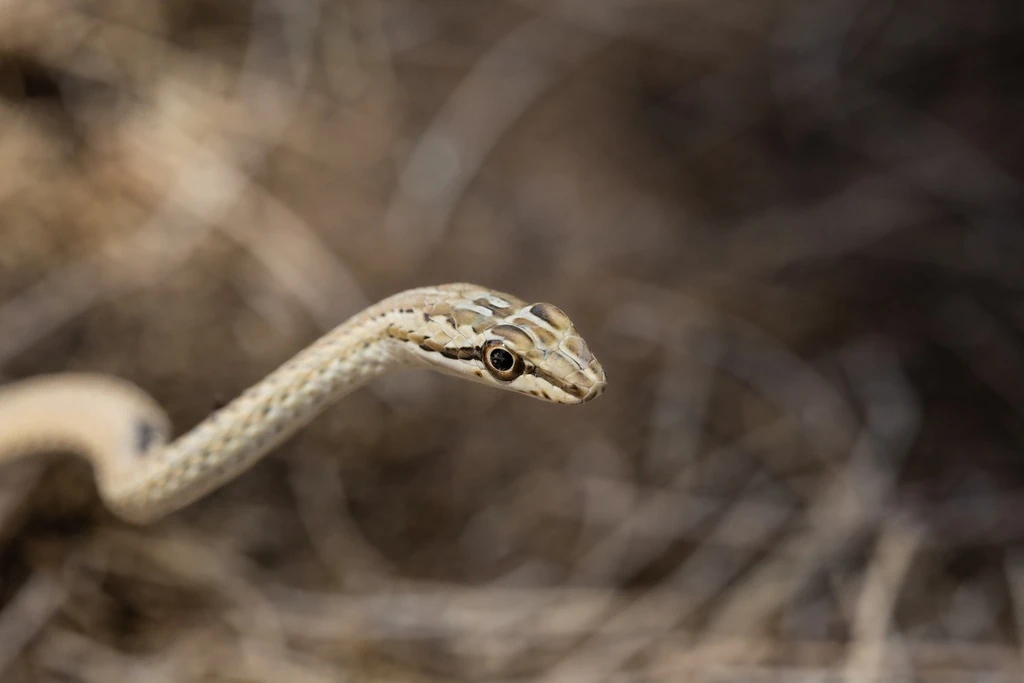
014 · Psammophiidae
Speckled Sand Racer, Sand snake
Explicit country record in the checked taxonomic treatment. Baha El Din and Ghazali (2005) report a 2000 observation and diagnostic photographs from 2004 in Wadi Aidieb, Gebel Elba. The broad Red Sea guide records the source locality without asserting current abundance or a political boundary claim. These are dated locality records, not evidence of…
Read the species account →Theo Busschau · CC BY 4.0 · https://creativecommons.org/licenses/by/4.0/
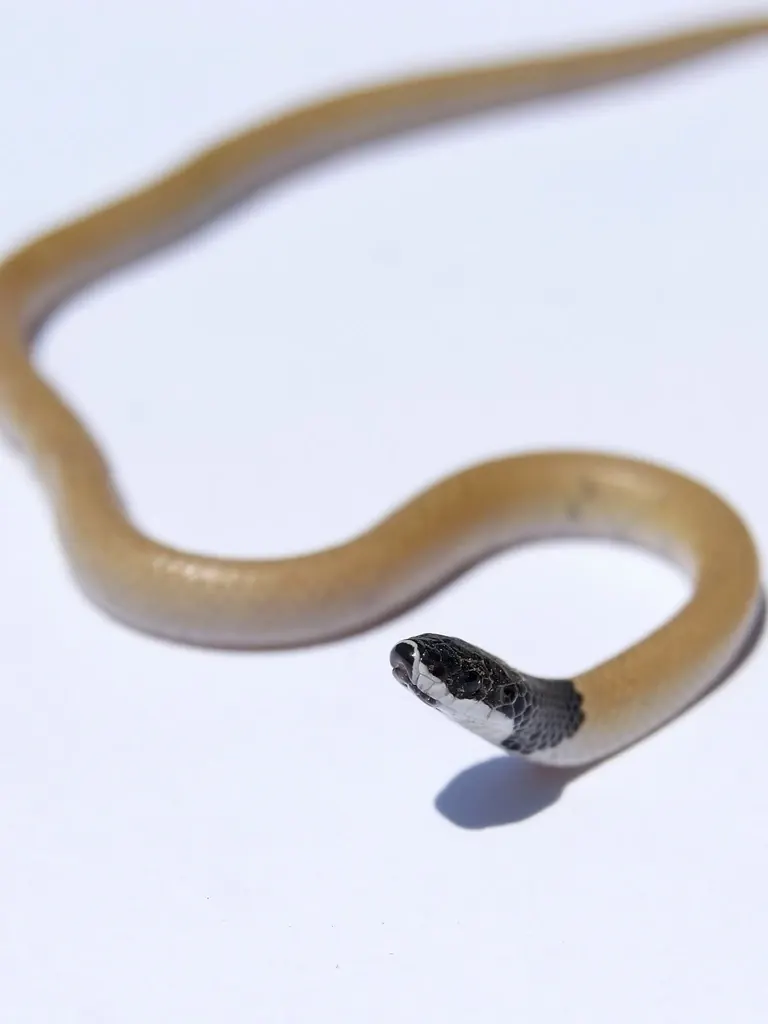
015 · Psammophiidae
Schokari Sand Racer, Forskal Sand Snake
Explicit country record in the checked taxonomic treatment. Recorded in the first 2011 survey. The cited regional study reports: Observed in the survey.
Read the species account →Mahomed Desai · CC BY 4.0 · https://creativecommons.org/licenses/by/4.0/
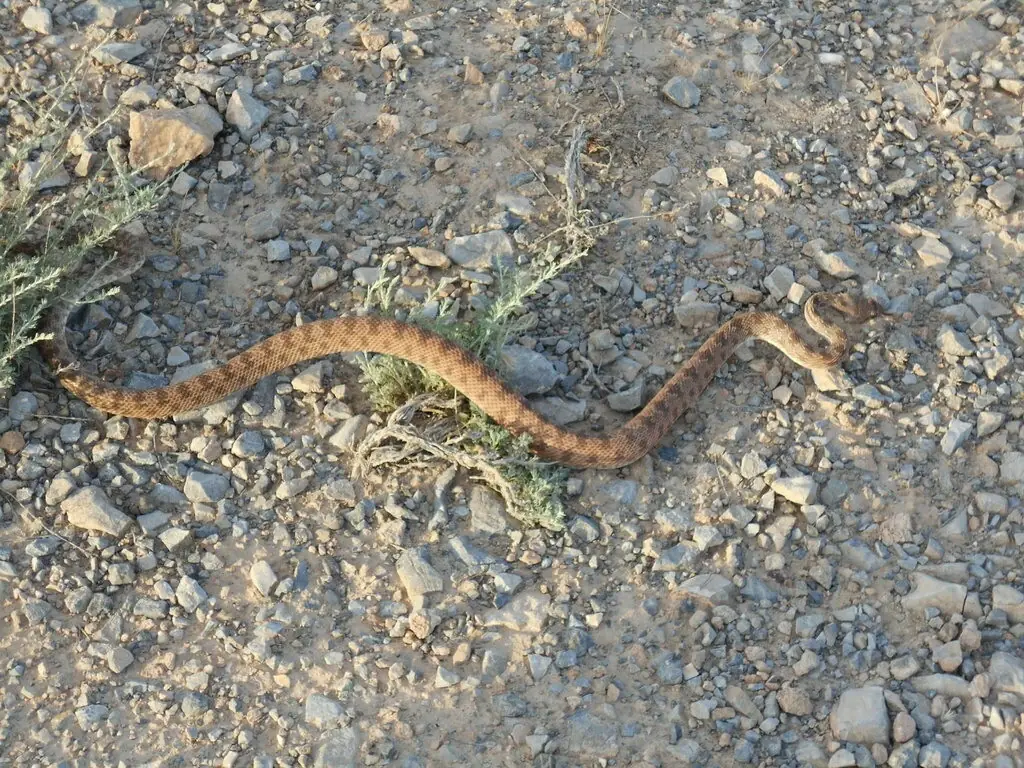
016 · Colubridae
Palestine Kukri Snake
Explicit country record in the checked taxonomic treatment. Sinai Peninsula: museum voucher HUJ 0000008856 (1979). The published collecting label names Saint Catherine, Sinai; this is a locality-label assignment, not a reconstructed coordinate. These are dated locality records, not evidence of occurrence throughout every part of a region or a complete…
Read the species account →Dr. Nasser Halaweh · CC BY 4.0 · https://creativecommons.org/licenses/by/4.0/
017 · Colubridae
Diadem Snake, Royal Snake
Explicit country record in the checked taxonomic treatment. The cited regional study reports: Observed in the survey.
Read the species account →Askar Akhmedov · CC BY 4.0 · https://creativecommons.org/licenses/by/4.0/
018 · Colubridae
Species account
Confirmed by the revision. The 2025 revision of the Telescopus dhara–obtusus complex explicitly treats Telescopus urii in Sinai, Egypt. This is a peninsula-level assignment from the taxonomic treatment, not a new georeferenced voucher or a claim of occurrence across all Sinai. These are dated locality records, not evidence of occurrence throughout every…
Read the species account →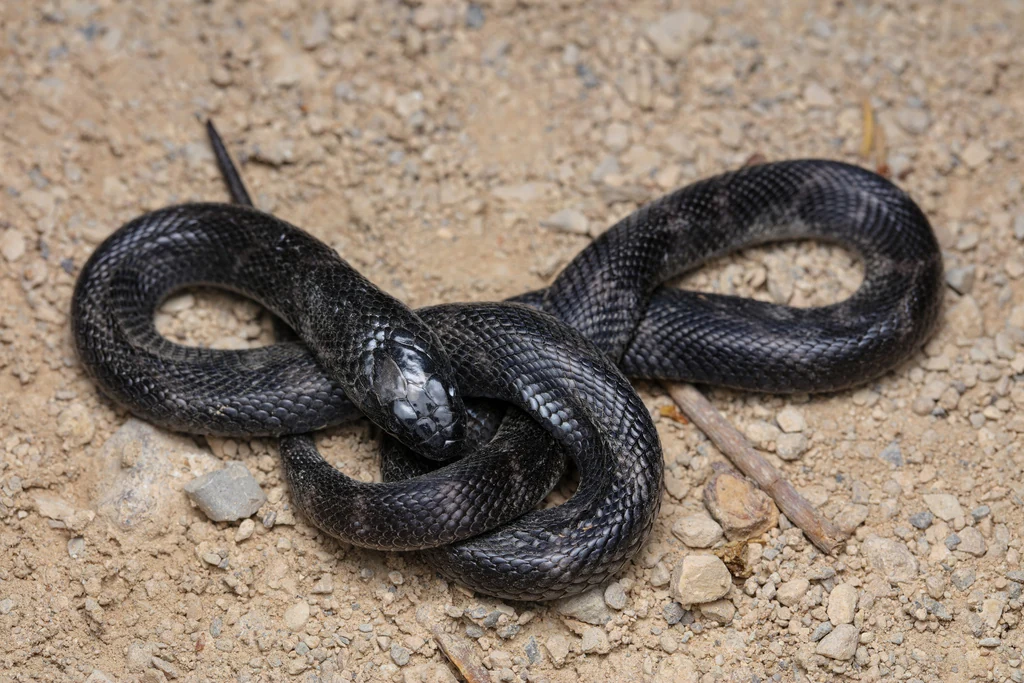
019 · Elapidae
Desert Cobra
Explicit country record in the checked taxonomic treatment. Sinai Peninsula: museum voucher ZFMK ZFMK-HERP-064638 (1990). The published collecting label names Sinai (published label: west of Sahab); this is a locality-label assignment, not a reconstructed coordinate. These are dated locality records, not evidence of occurrence throughout every part of a…
Read the species account →Kian · CC BY 4.0 · https://creativecommons.org/licenses/by/4.0/
Read further
Guide reviewed 11 October 2026. Source dates and geographic scope matter; landscape photographs do not establish species occurrence.
Named landscape, vegetation or hydrological setting only; no snake occurrence inferred. Historical site accounts are not current condition or access assessments.
Historical national overview; broad pressures and landscape context, not a current local condition survey, current statistics or wildlife locality evidence.
Continue through Egypt
Explore the documented landscape around Nile Valley. The named example anchors this guide; the country map and separately sourced species accounts answer different questions.
02Explore the documented landscape around Ras Mohammed channel. The named example anchors this guide; the country map and separately sourced species accounts answer different questions.
03Explore the documented landscape around Ras Mohammed. The named example anchors this guide; the country map and separately sourced species accounts answer different questions.