Aerial view of Lake Paranoá, Brasília, Distrito Federal.

Brazil · Place guide

Distrito Federal

Explore Distrito Federal through the places named in Brazil's sourced species records.

8species with extracted evidence
2families
27region guides

Aerial view of Lake Paranoá, Brasília, Distrito Federal.

Photograph: Veriana Ribeiro · Image source · CC BY-SA 2.0. Cropped to fill the hero; darkened for text legibility.

Geography & biotopes

Read the landscape.

Explore Distrito Federal through the places named in Brazil's sourced species records.

This administrative outline follows the credited boundary snapshot for Distrito Federal. It provides geographic context, not a species range or a single vegetation type.

Ecological connections

Compare the source locality with the country habitat guides. Species documented only at national level remain in the national collection until a regional assignment is supported.

Explore the setting

Open a species account to inspect its original place names and sources. These counts reflect extracted regional evidence, not complete local inventories.

This guide indexes these source names: Distrito Federal. A country-only record is not automatically assigned to this place. Map markers identify navigation destinations, not collection sites.

Map provenance and subdivisions →

Convention on Biological Diversity · Brazil national profile →

Geography is part of the record

Find your way through Brazil.

Select a named region to open its evidence page. The complete directory below keeps every guide accessible, including places where locality evidence has not yet been extracted.

315 of 444 listed species have at least one indexed region record. 129 remain country-only. Even a nonzero count is not a complete regional inventory.

Habitats & living landscapes

Explore the living
landscapes.

Explore 3 guides to the environments, places and conservation pressures that shape this country. Each guide connects to the regional map and shared species accounts.

Landscape photographs & credits

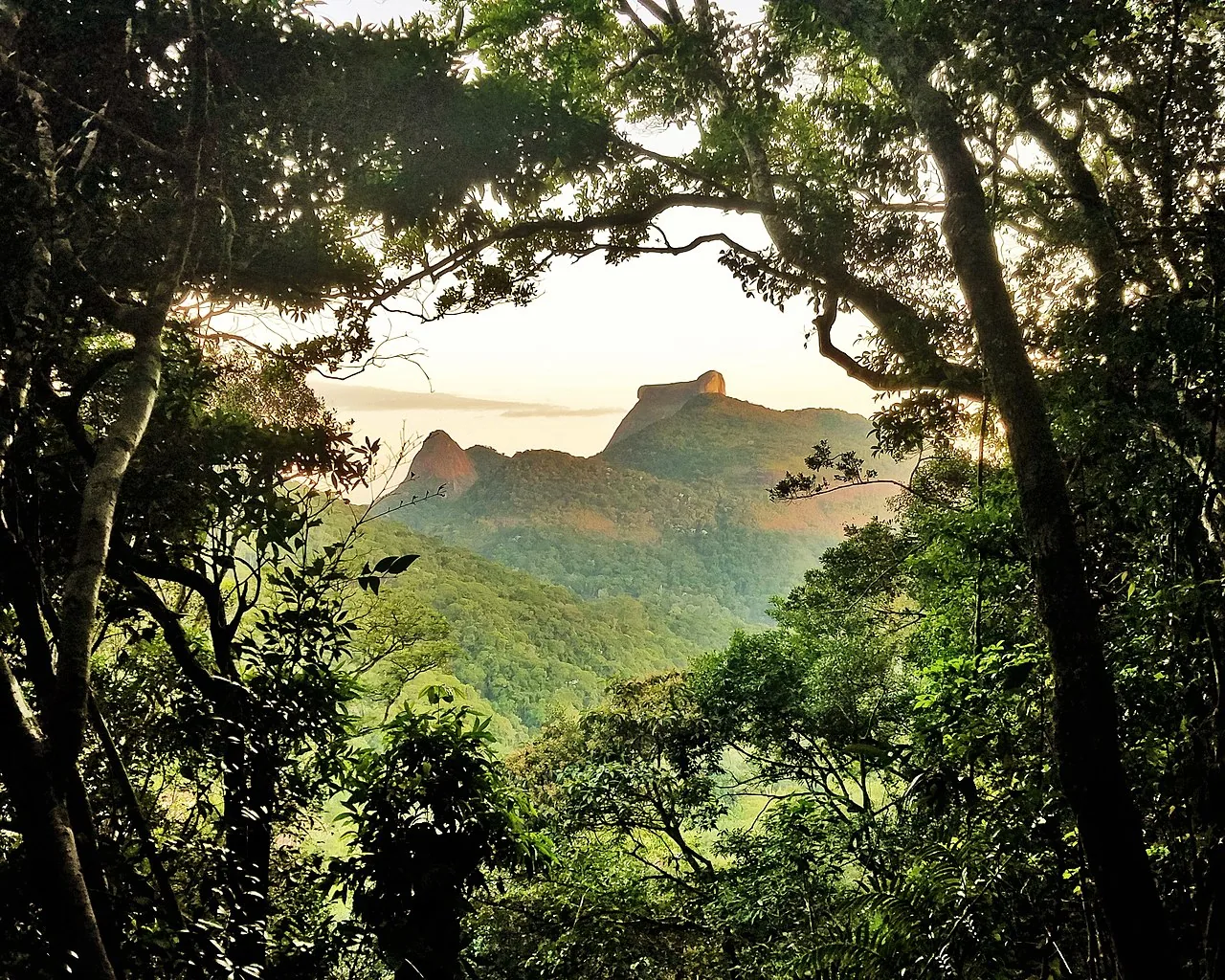
Pedra da Gávea seen through the forest from the Student Trail in Tijuca National Park, Rio de Janeiro, Brazil. — Clarice Braúna Mendes. Original photograph · CC BY-SA 4.0. Cropped for the cards; photographs do not establish snake occurrence.

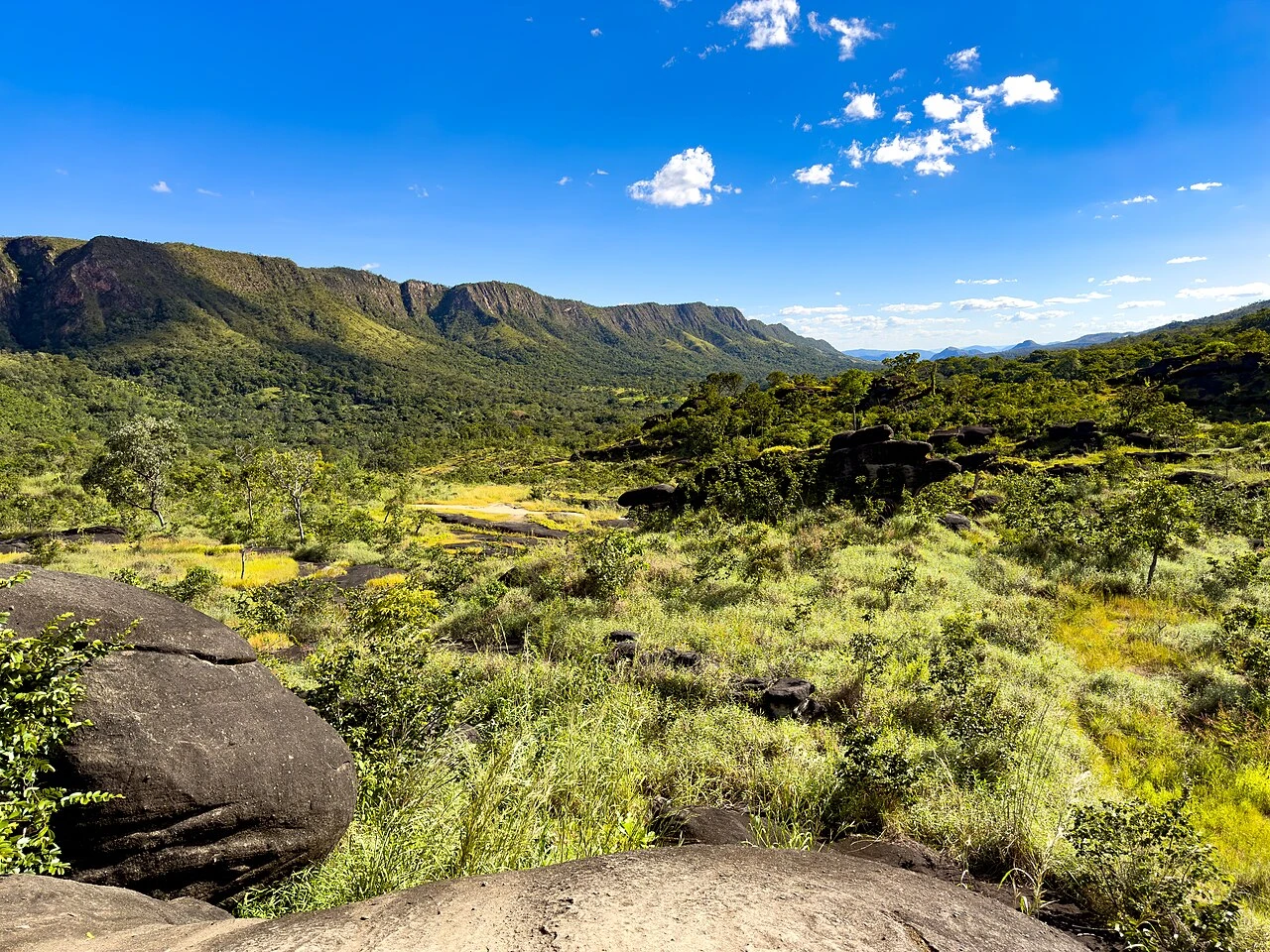
Cerrado vegetation and rocky mountain slopes in Chapada dos Veadeiros National Park, Brazil. — RebeloZero. Original photograph · CC BY-SA 4.0. Cropped for the cards; photographs do not establish snake occurrence.

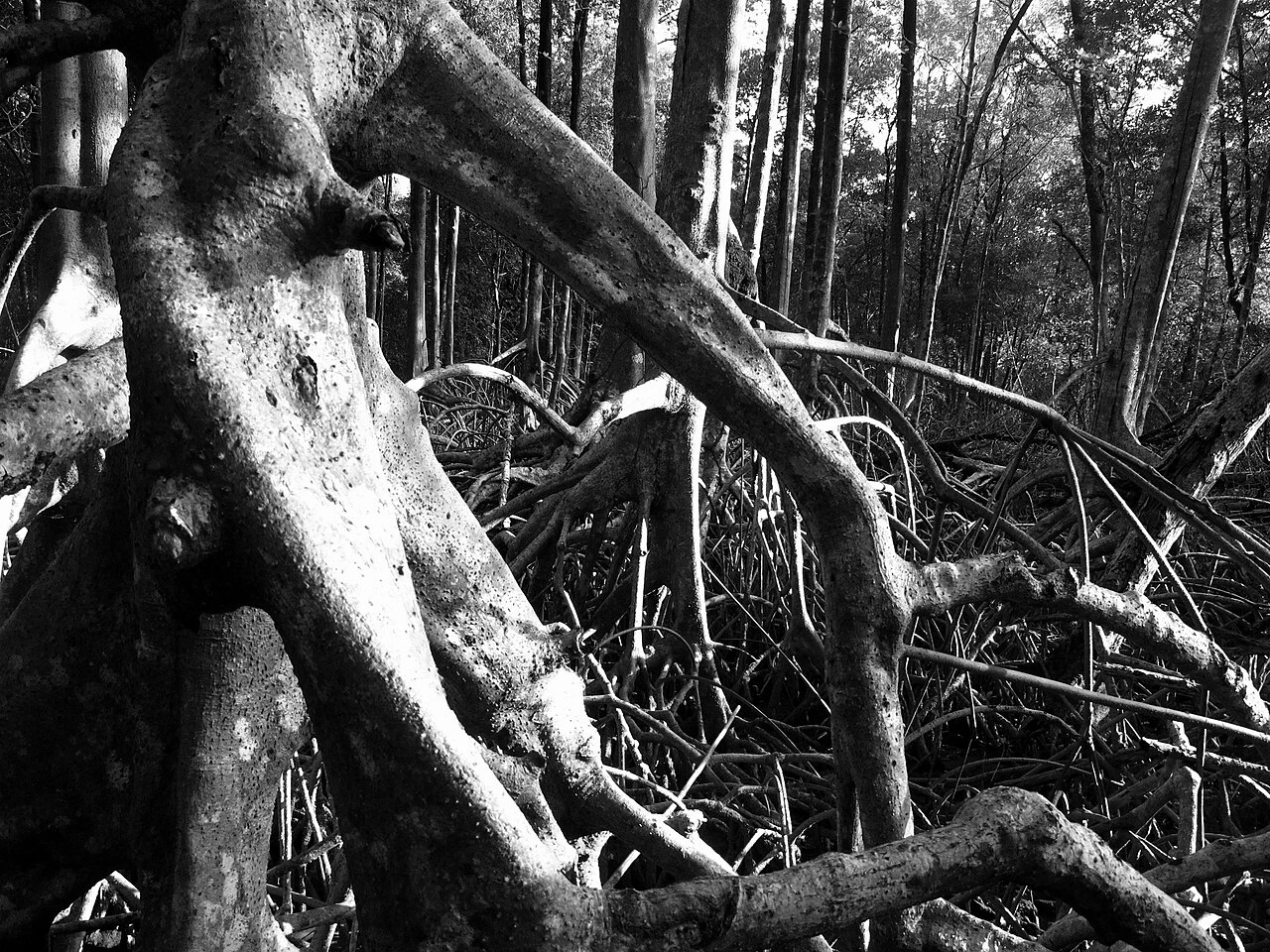
A black-and-white photograph of mangrove roots and trunks in Brazil. — Adrian Be. Original photograph · CC BY 2.0. Cropped for the cards; photographs do not establish snake occurrence.

The species catalogue

Snakes · Distrito Federal.

Only records naming this place appear below. These are extracted locality records, not complete island or regional inventories.

8 species · showing 8

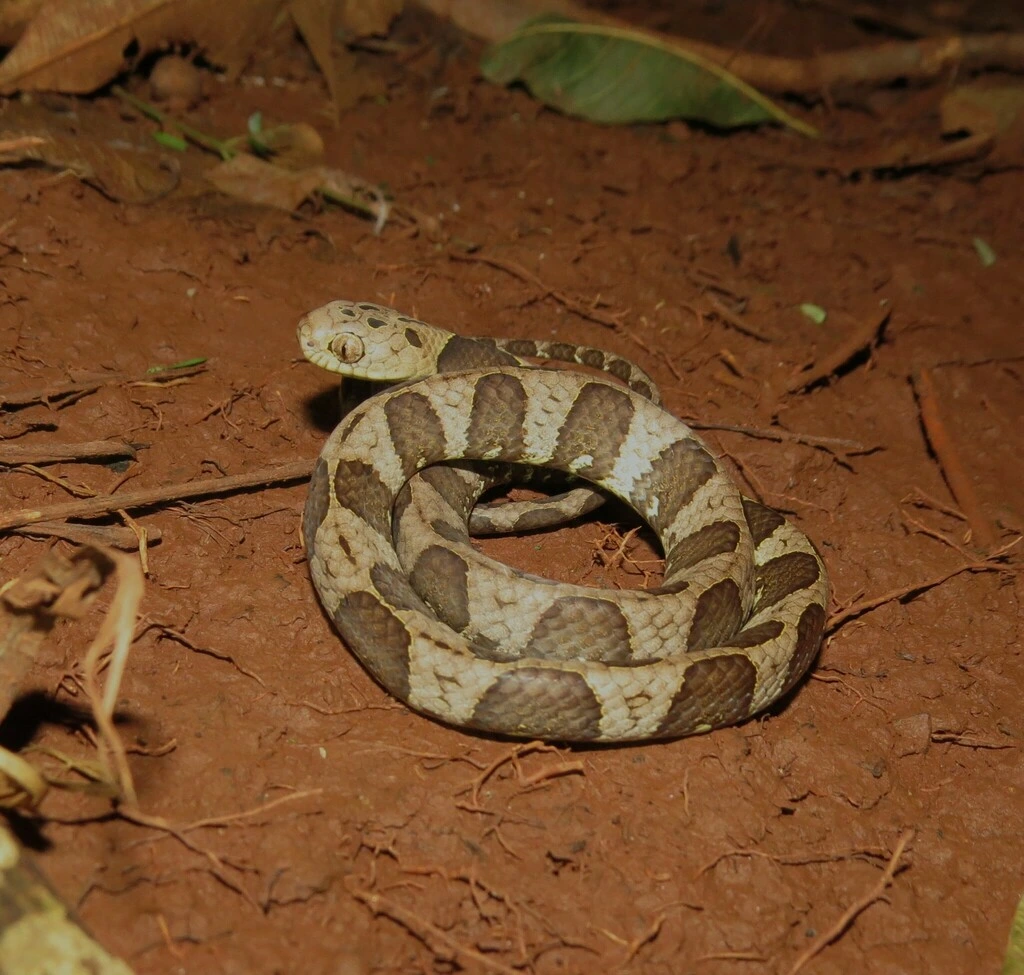
Dipsas bucephala. Coiled individual on soil during a herpetofaunal survey. Original observation dated 2023-12-26. No additional geographic occurrence is inferred.

001 · Colubridae

Neotropical Snail-eater

Dipsas bucephala

(SHAW, 1802)

Venom unknownNot yet assessed

The checked taxonomic distribution account explicitly lists Brazil. Country-level evidence does not establish continuous occupancy or a complete national inventory. The treatment names these subdivisions in its Brazil distribution clause: Mato Grosso, Goias, Distrito Federal. They are assigned to the declared atlas navigation groups; this is not a field…

Read the species account →

Lucas Mantelo Cruz · CC BY 4.0 · https://creativecommons.org/licenses/by/4.0/
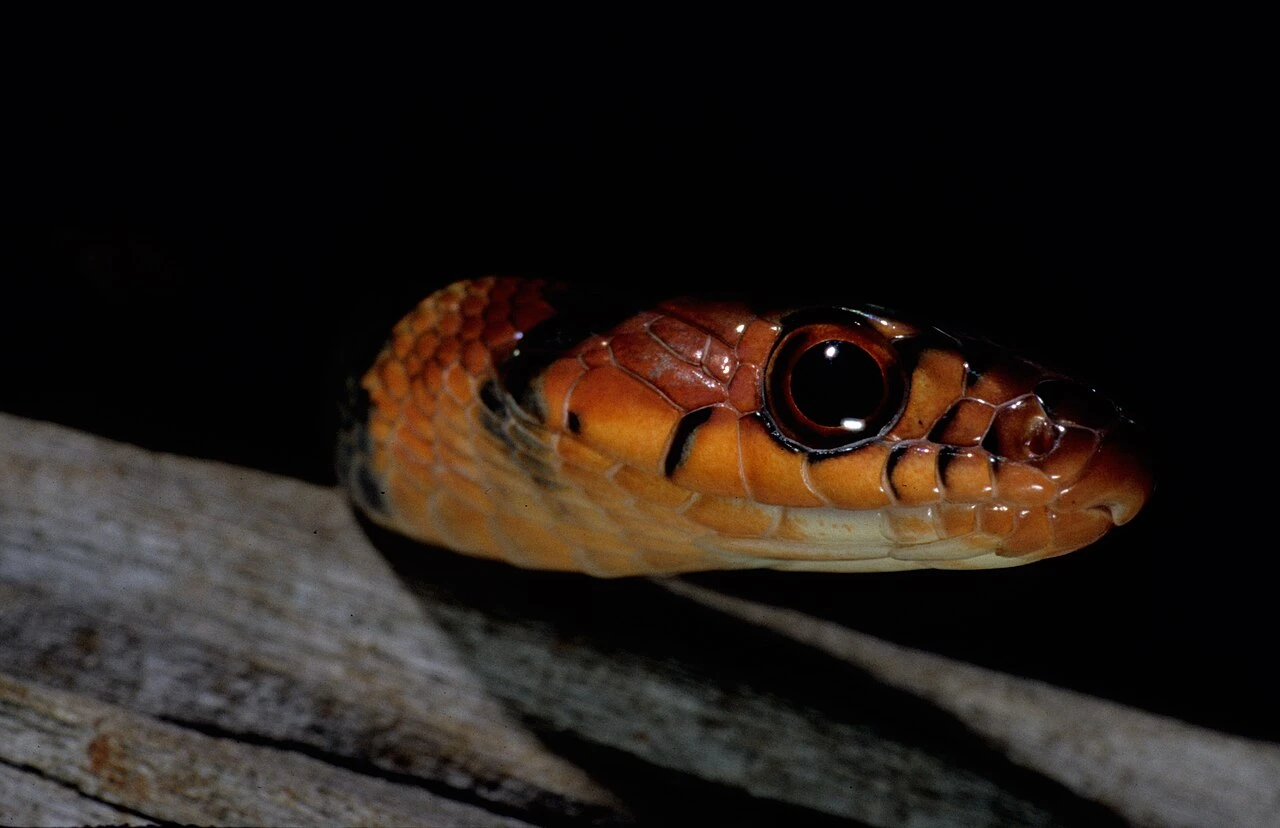
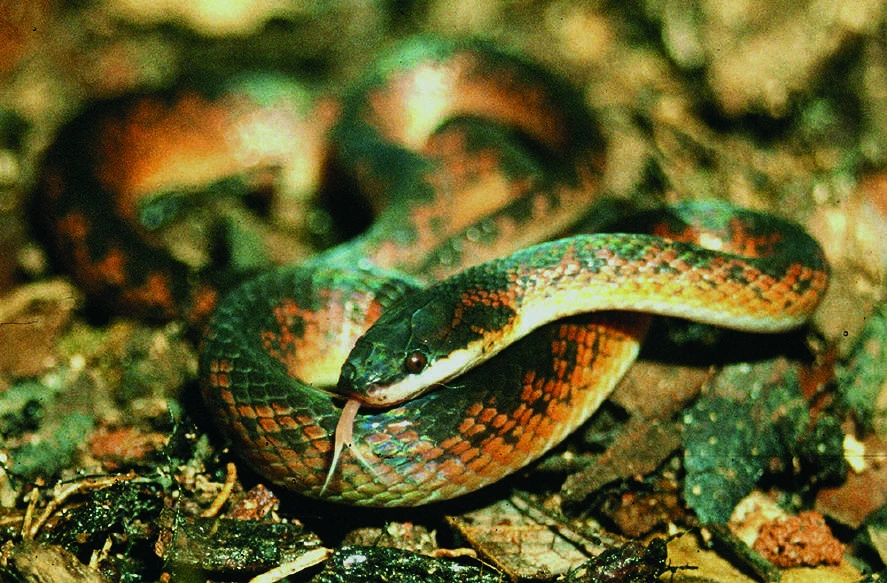
Drymoluber brazili. Close view of the orange head and dark eye. Portrait only; no wild locality or habitat record is inferred.

002 · Colubridae

Brazilian Woodland Racer

Drymoluber brazili

(GOMES, 1918)

Venom unknownNot yet assessed

The checked taxonomic distribution account explicitly lists Brazil. Country-level evidence does not establish continuous occupancy or a complete national inventory. The treatment names these subdivisions in its Brazil distribution clause: Ceara, Piaui, Rondonia, Bahia, Goias, Distrito Federal, Minas Gerais, Espirito Santo. They are assigned to the…

Read the species account →

DuSantos · CC BY 2.0 · https://creativecommons.org/licenses/by/2.0

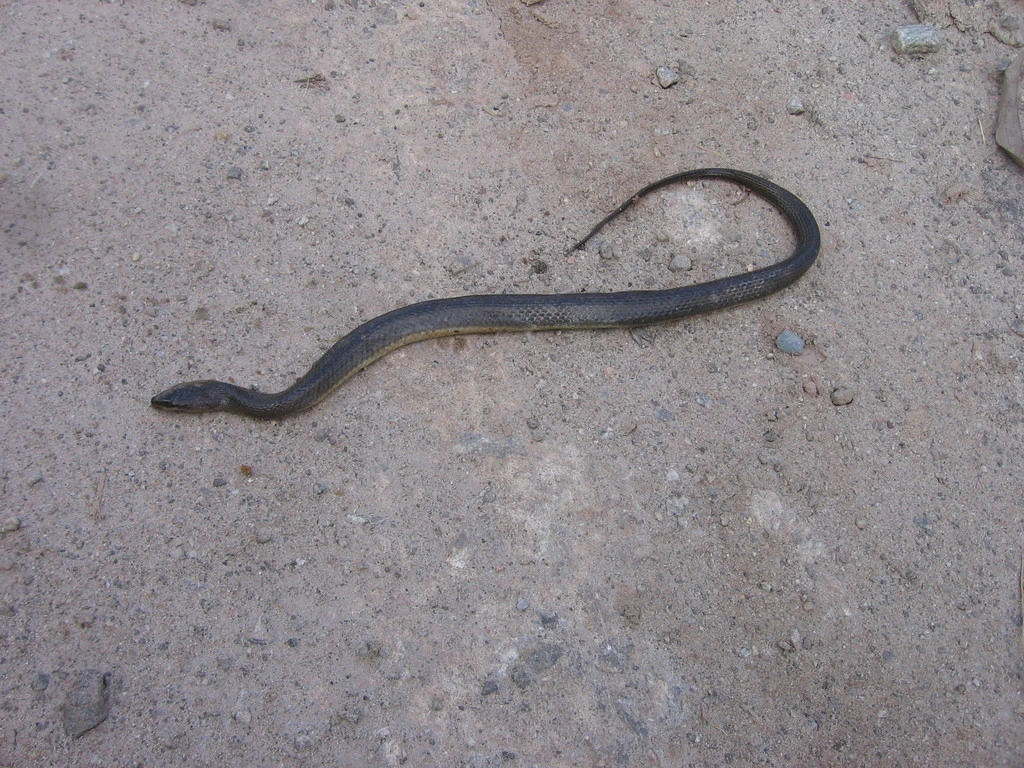
Helicops modestus. Whole animal on sandy ground. Original observation dated 2013-01-04. No additional geographic occurrence is inferred.

003 · Colubridae

Olive Keelback

Helicops modestus

GÜNTHER, 1861

VenomousClinical severity not established

The checked taxonomic distribution account explicitly lists Brazil. Country-level evidence does not establish continuous occupancy or a complete national inventory. The treatment names these subdivisions in its Brazil distribution clause: Para, Bahia, Goias, Distrito Federal, Minas Gerais. They are assigned to the declared atlas navigation groups; this…

Read the species account →

Celso Henrique Varela Rios · CC BY 4.0 · https://creativecommons.org/licenses/by/4.0/
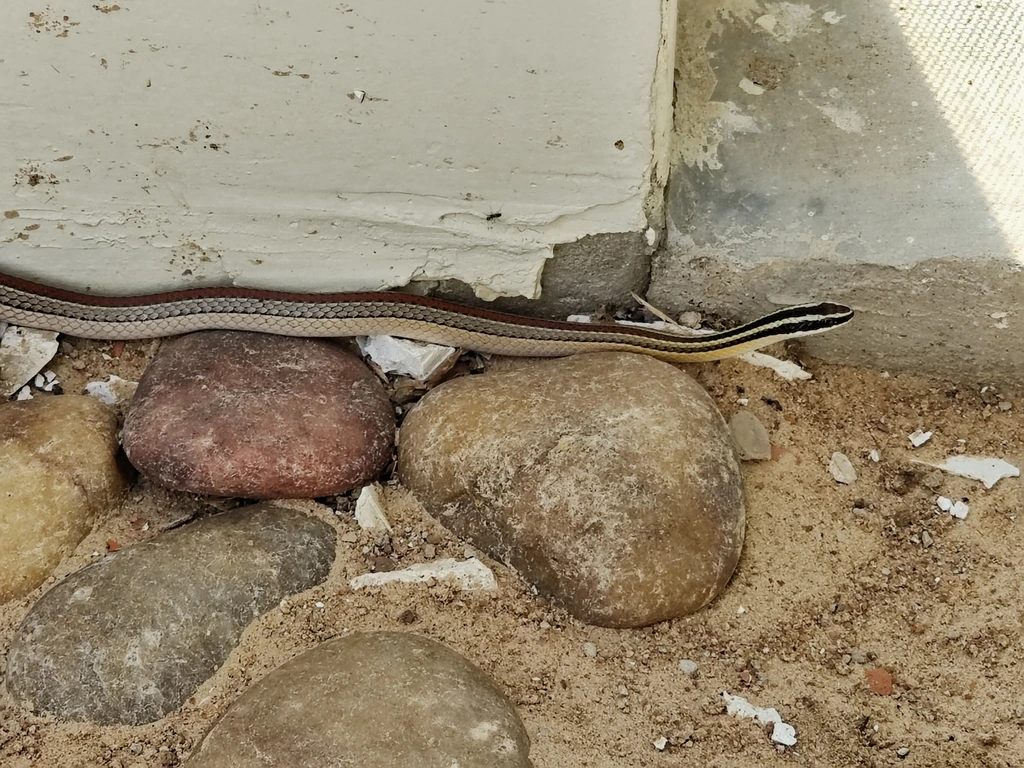
Lygophis paucidens. Striped head and forebody beside a wall and stones. Original observation dated 2024-10-03. Portrait only; no new locality record is inferred.

004 · Colubridae

Hoge's Ground Snake

Lygophis paucidens

HOGE, 1953

Venom unknownNot yet assessed

The checked taxonomic distribution account explicitly lists Brazil. Country-level evidence does not establish continuous occupancy or a complete national inventory. The treatment names these subdivisions in its Brazil distribution clause: Piaui, Pernambuco, Mato Grosso, Goias, Distrito Federal. They are assigned to the declared atlas navigation groups;…

Read the species account →

Renato Bandeira · CC BY 4.0 · https://creativecommons.org/licenses/by/4.0/
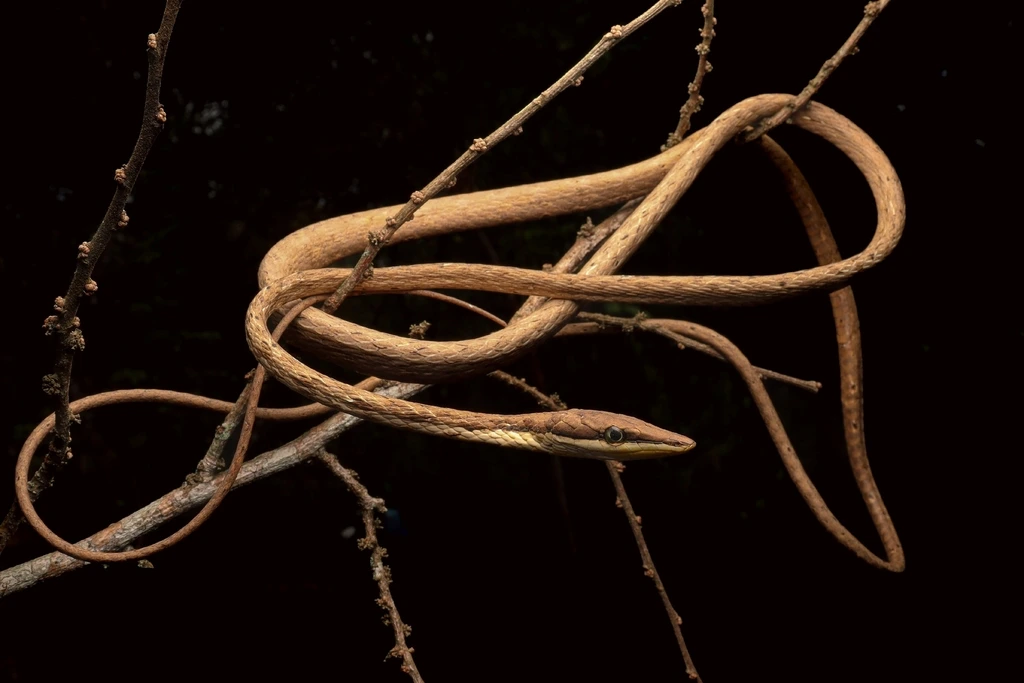
Oxybelis aeneus. Slender brown body looped around branches against a dark background. Original observation dated 2025-12-06. Portrait only; no new locality record is inferred.

005 · Colubridae

Brown vinesnake, Mexican Vine Snake

Oxybelis aeneus

(WAGLER, 1824)

Venom unknownNot yet assessed

The checked taxonomic distribution account explicitly lists Brazil. Country-level evidence does not establish continuous occupancy or a complete national inventory. The treatment names these subdivisions in its Brazil distribution clause: Roraima, Para, Ceara, Rio Grande do Norte, Paraiba, Piaui, Pernambuco, Rondonia, Sergipe, Bahia, Mato Grosso,…

Read the species account →

Inacio Oliveira · CC BY 4.0 · https://creativecommons.org/licenses/by/4.0/
ColubridaeRhachidelusPhotograph not yet documented

006 · Colubridae

Brazilian Bird Snake

Rhachidelus brazili

BOULENGER, 1908

Venom unknownNot yet assessed

The checked taxonomic distribution account explicitly lists Brazil. Country-level evidence does not establish continuous occupancy or a complete national inventory. The treatment names these subdivisions in its Brazil distribution clause: Tocantins, Mato Grosso, Goias, Distrito Federal, Minas Gerais, Mato Grosso do Sul, Sao Paulo, Parana, Rio Grande do…

Read the species account →
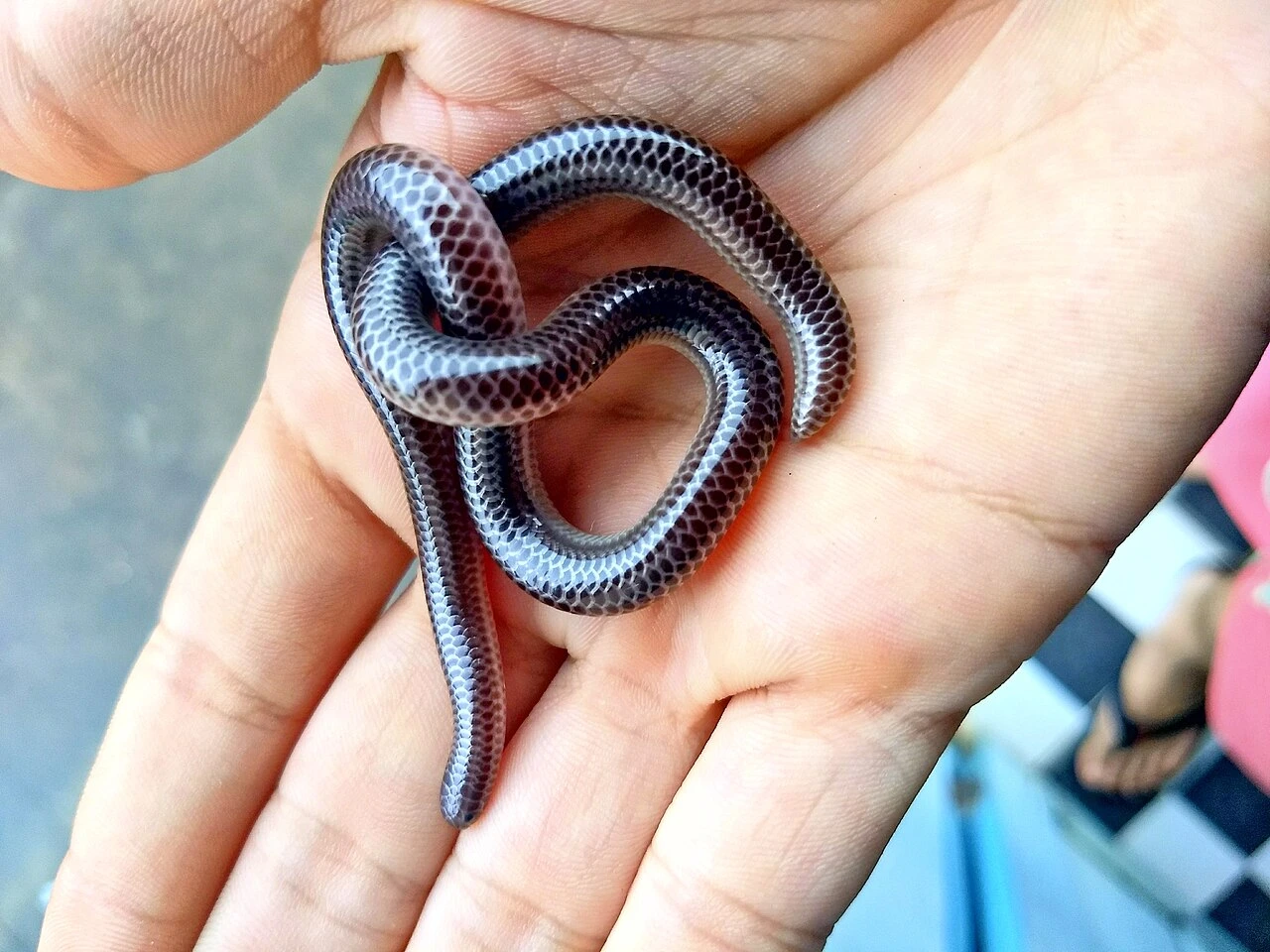
Trilepida koppesi. Small individual coiled on an open palm. Portrait only; no wild locality or habitat record is inferred.

007 · Leptotyphlopidae

Amaral's Blind Snake

Trilepida koppesi

(AMARAL, 1955)

Non-venomous

The checked taxonomic distribution account explicitly lists Brazil. Country-level evidence does not establish continuous occupancy or a complete national inventory. The treatment names these subdivisions in its Brazil distribution clause: Bahia, Mato Grosso, Goias, Distrito Federal, Minas Gerais. They are assigned to the declared atlas navigation groups;…

Read the species account →

Gionorossi · CC BY-SA 4.0 · https://creativecommons.org/licenses/by-sa/4.0

Xenopholis undulatus, original Figure 89 in Estado de conservación y Lista Roja de los reptiles del Paraguay (2020), p. 112. Portrait only; no new occurrence or habitat inferred.

008 · Colubridae

Jensen's Ground Snake

Xenopholis undulatus

(JENSEN, 1900)

Venom unknownNot yet assessed

The checked taxonomic distribution account explicitly lists Brazil. Country-level evidence does not establish continuous occupancy or a complete national inventory. The treatment names these subdivisions in its Brazil distribution clause: Para, Alagoas, Mato Grosso, Goias, Distrito Federal. They are assigned to the declared atlas navigation groups; this…

Read the species account →

Marcelo Ribeiro Duarte; Martínez et al. (2020) · CC BY 4.0 · https://creativecommons.org/licenses/by/4.0/
Explore all 444 country records →

The research library

Sources & the checklist.

This edition lists 444 species with supported country records from checked taxonomic treatments and cited field studies. This total includes 1 record marked as introduced; it is not a native-species total. It is not a claim of a complete national inventory. Each account retains its source and check date; individual evidence entries retain their own review dates.

Range and taxonomy review

Country links use a single accepted species identity. Revised names and disputed records are kept visible here; uncertain records do not enter the listed collection or regional totals.

Pantherophis guttatus

Introduced occurrence

The checked taxonomic distribution account explicitly lists Brazil. Country-level evidence does not establish continuous occupancy or a complete national inventory. The source population is treated as introduced. The treatment names these subdivisions in its Brazil distribution clause: Bahia. They are assigned to the declared atlas navigation groups; this is not a field observation, a whole-region range polygon or a complete local inventory.

Source 1 ↗

How the map and counts work

Search results were checked against distribution text and taxonomic qualifications. A geographic name alone does not establish a political country: New Guinea, the Solomon archipelago and Micronesia span more than one country or territory. Introduced and unresolved records require separate interpretation.

Place counts require explicit named localities, including valid type localities. Counts can overlap where sources name multiple places. Regional maps group historical boundary snapshots for navigation, while island outlines use Natural Earth; neither is a species range or an observation map. Small islands can be below the outline dataset’s resolution, so geographic reference markers and the directory remain available.

geoBoundaries gbOpen ADM1; 2006 snapshot; Creative Commons Attribution 2.5 Generic. Map provenance →

Exclusions & qualifications (5)

Epictia tenella

Search candidate only: the leading current distribution account does not independently resolve this country. Retained for manual taxonomic/locality review; not evidence of absence.

Read source 1 ↗

Atractus emmeli

Search candidate only: the leading current distribution account does not independently resolve this country. Retained for manual taxonomic/locality review; not evidence of absence.

Read source 1 ↗

Amnesteophis melanauchen

Qualified or negative distribution wording requires review. This report remains outside positive country and regional counts.

Read source 1 ↗

Micrurus ornatissimus

The treatment includes an explicit negative or conflicting country qualification. Resolve the cited revision before counting this report.

Read source 1 ↗

Micrurus pacaraimae

Qualified or negative distribution wording requires review. This report remains outside positive country and regional counts.

Read source 1 ↗
  1. Administrative boundary provenance ↗

    Credited boundary snapshots are navigation references, not species ranges or an assertion of current administrative arrangements. Map labels use source subdivision codes or unique shortened names; the complete names remain in the directory. A missing regional record is not evidence of absence.

  2. Convention on Biological Diversity · Brazil national profile ↗

    Historical Secretariat draft, pending Party approval. Landscape context only; historical statistics are not presented as current measurements. Reviewed 17 October 2026.

  3. Map provenance and subdivisions ↗
  4. Convention on Biological Diversity · Brazil national profile ↗
  5. The Reptile Database

    Individual treatments and locality evidence are linked from each species account.

  6. Meiri (2024): SquamBase 1.0

    Species-level literature measurements and ecological traits. Exact-name matches only; imputed or ambiguous fields are omitted. These summaries are not local observations.

  7. Natural Earth: public-domain geographic data

Continue through the South America atlas →