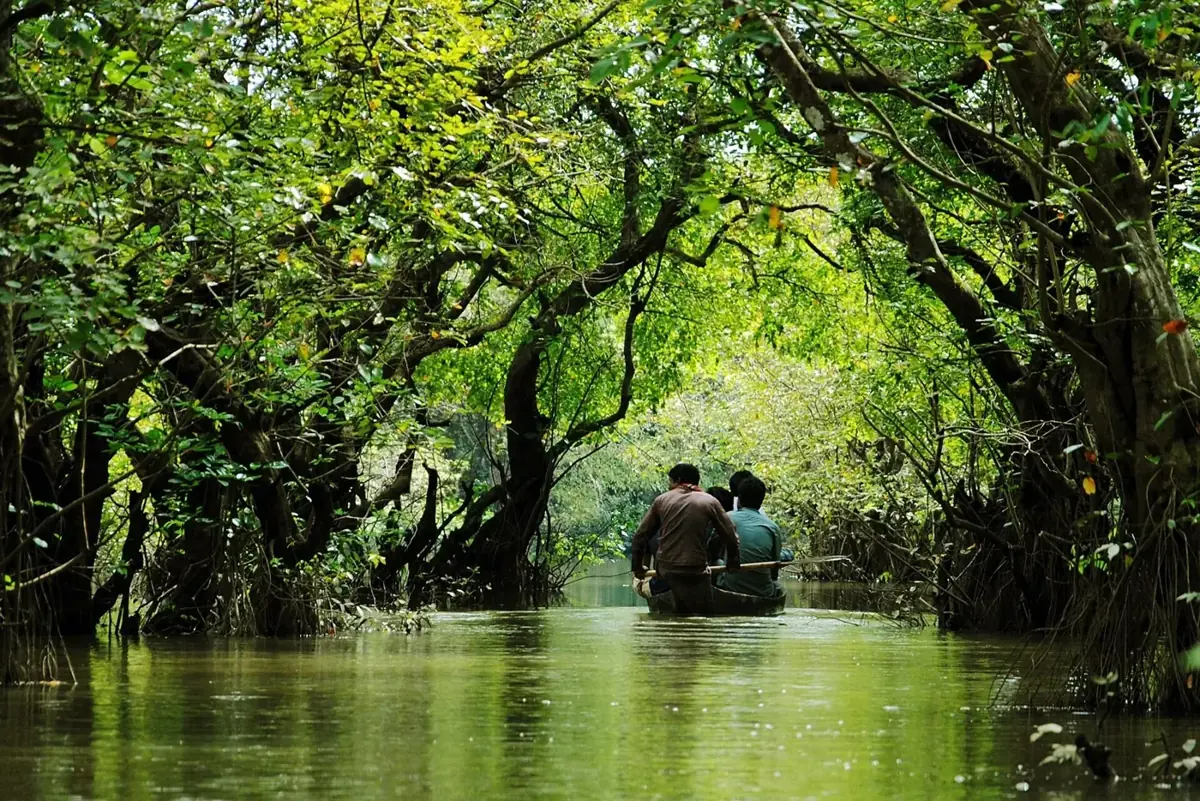
Ratargul freshwater swamp forest in Sylhet, Bangladesh.

Bangladesh · Habitat field guide

Rivers, lakes & wetlands

Haors show how habitats change with the water season.

Ratargul freshwater swamp forest in Sylhet, Bangladesh.

Photograph: Sumon Mallick · Image source · CC BY-SA 4.0. Cropped to fill the hero; darkened for text legibility.

Understanding the environment

A sense of the habitat.

Haors show how habitats change with the water season.

Read closely
Vegetation, water and substrate
Local example
Tanguar Haor
Evidence scale
Named sites, not country-wide occurrence

Explore the structure · Select a zone to compare its structure and details worth recording.

Read the habitat

Select a zone to see what changes.

Name the system

Water body

Distinguish river, lake, pool and managed reservoir.

Observation prompts do not establish that a particular snake occurs in this zone.

Conceptual zones, not a measured transect or a map of snake occurrences.

Sources: Ramsar · Tanguar Haor Information Sheet

Field notes · 01

Landscape context

Tanguar Haor lies in the Surma floodplain beneath the Meghalaya Hills. The designation-era account distinguishes its broad seasonal inundation from deeper water areas; preserve that difference in observations.

Sources: Ramsar · Tanguar Haor Information Sheet

Field notes · 02

From habitat to an observation

Keep the locality, date and habitat description together. A landscape source explains the setting; only a verified species record establishes occurrence. The collection below may be smaller than the variety of environments described here.

Pressures on Bangladesh’s habitats

What is at risk?

A site-specific assessment of pressures has not yet been extracted for this guide. The landscape sources below provide context; they do not establish a current threat level for each snake species.

What helps this habitat

Retain the local habitat mosaic and its connections. Interpret pressures using the cited site evidence and current local management guidance.

The connected collection

Snakes with habitat evidence.

These 14 species have supported country occurrence and an explicit habitat association in the shared account. The association may come from elsewhere in their range. This is not a complete local habitat inventory; the places above are landscape examples, not asserted collecting sites.

14 species · showing 14

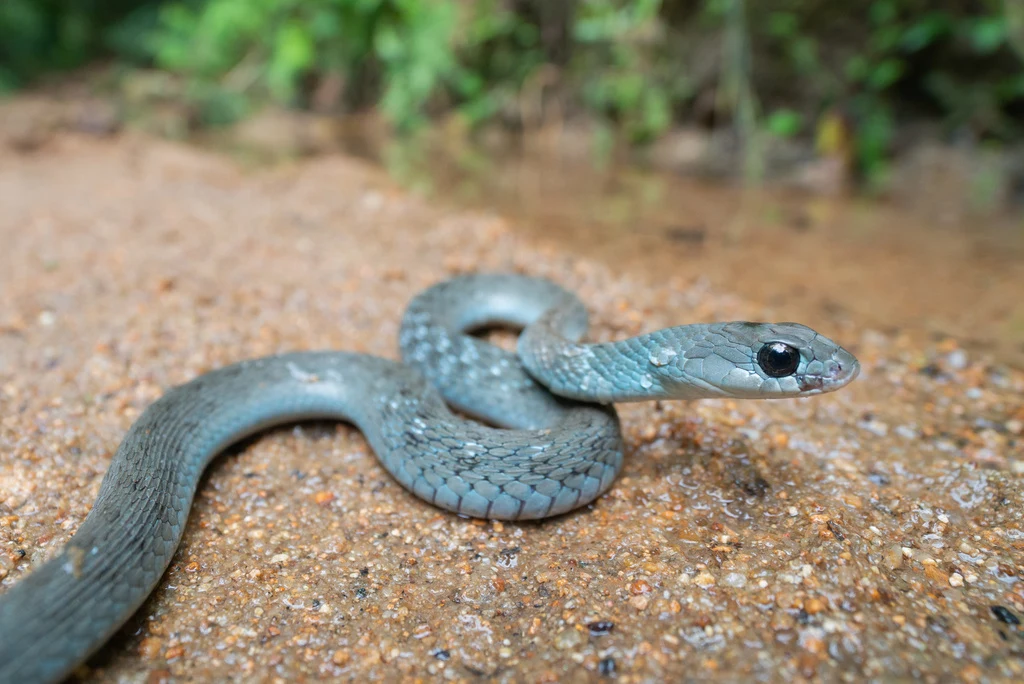
ColubridaeBoigaPhotograph not yet documented

001 · Colubridae

Arrowback Tree Snake

Boiga gocool

(GRAY, 1834)

VenomousClinical severity not established

Confirmed occurrence in the 2025 Bangladesh review, Table 1. The paper explicitly relates its regional labels to the named administrative divisions. Regional evidence: Chattogram; Sylhet; Mymensingh. Named records do not imply continuous occurrence throughout a region. A named locality in the cited account; no continuous regional range is inferred.

Read the species account →
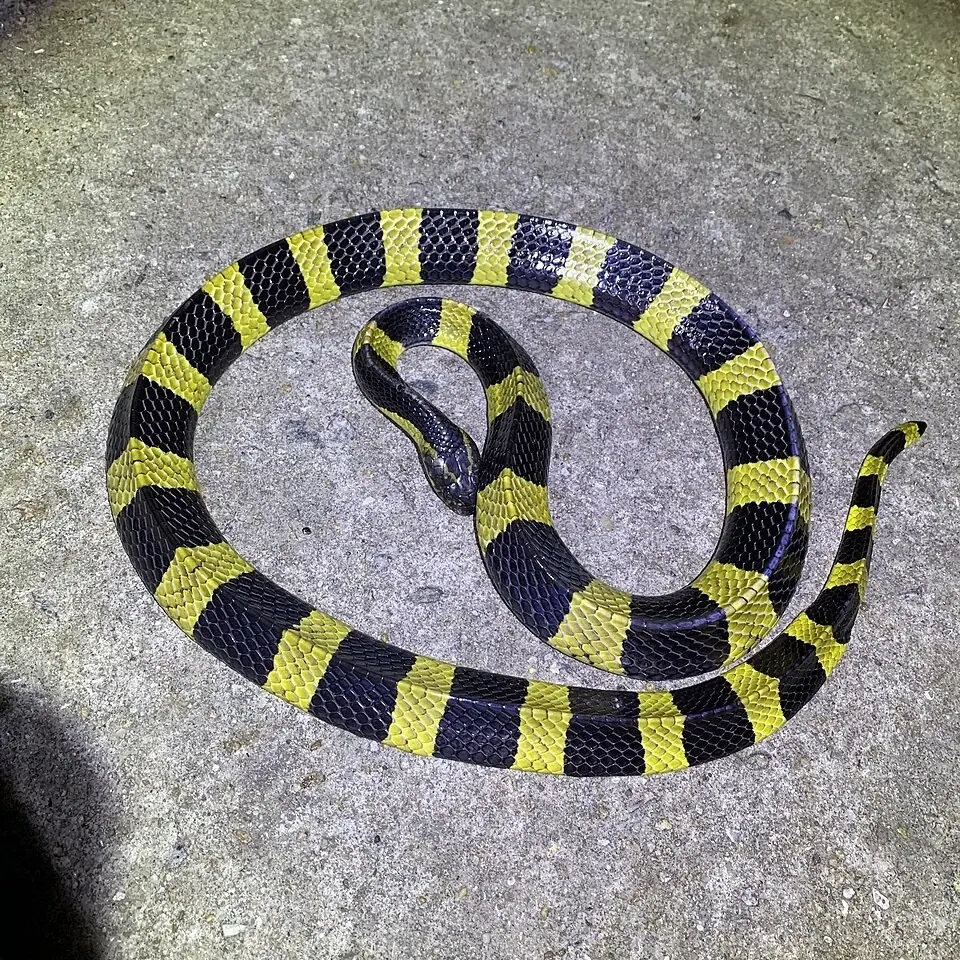
Bungarus fasciatus — real specimen photograph; identification follows the linked source.

002 · Elapidae

Banded Krait

Bungarus fasciatus

(SCHNEIDER, 1801)

VenomousPotentially life-threatening

Confirmed occurrence in the 2025 Bangladesh review, Table 1. The paper explicitly relates its regional labels to the named administrative divisions. Regional evidence: Chattogram; Sylhet; Dhaka; Mymensingh; Barishal; Rangpur; Rajshahi; Khulna. Named records do not imply continuous occurrence throughout a region.

Read the species account →

灯管儿 · CC BY 4.0 · https://creativecommons.org/licenses/by/4.0

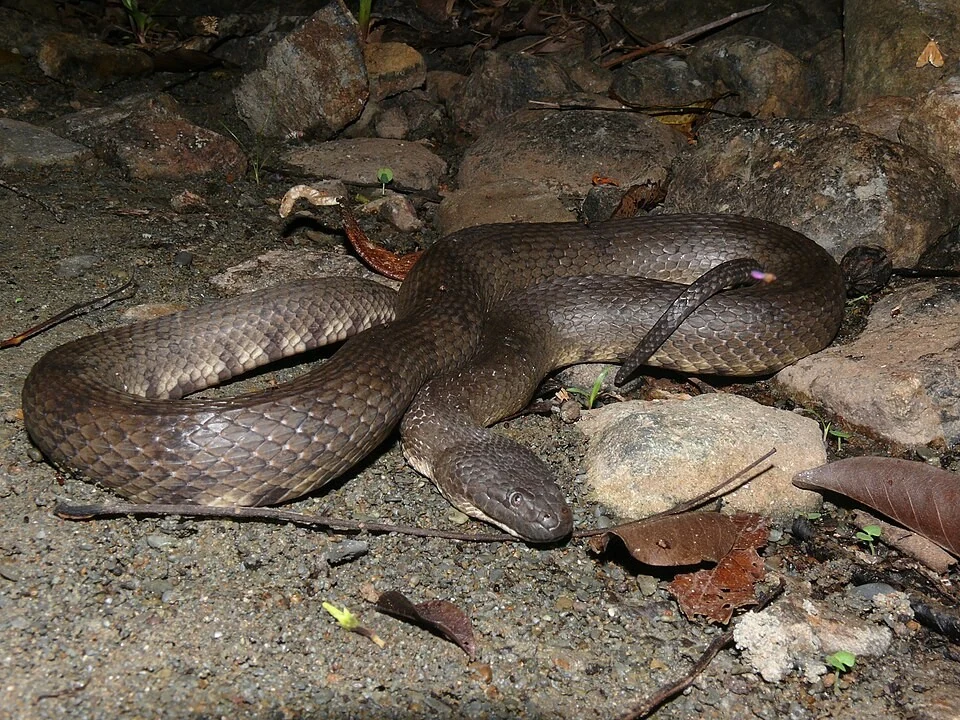
Cerberus rynchops — real specimen photograph; identification follows the linked source.

003 · Homalopsidae

South Asian Bockadam, New Guinea bockadam, Dog-faced Water Snake

Cerberus rynchops

(SCHNEIDER, 1799)

VenomousClinical severity not established

Confirmed occurrence in the 2025 Bangladesh review, Table 1. The paper explicitly relates its regional labels to the named administrative divisions. Regional evidence: Chattogram; Barishal; Khulna. Named records do not imply continuous occurrence throughout a region.

Read the species account →

Swati Sidhu · CC BY-SA 4.0 · https://creativecommons.org/licenses/by-sa/4.0

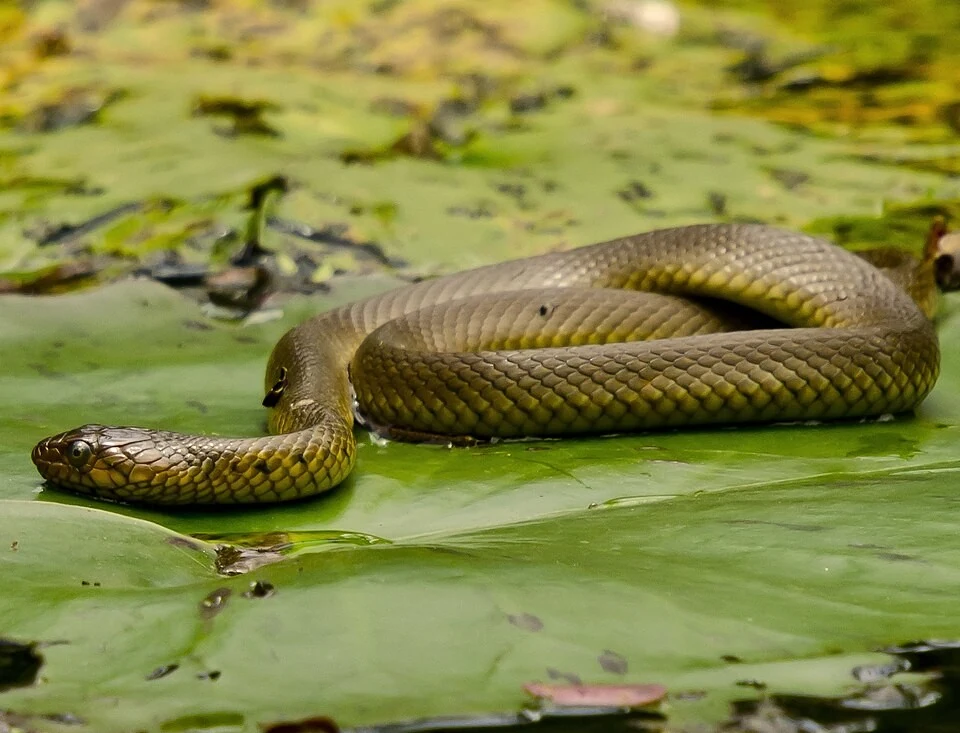
Enhydris enhydris — real specimen photograph; identification follows the linked source.

004 · Homalopsidae

Rainbow Mud Snake

Enhydris enhydris

(SCHNEIDER, 1799)

VenomousClinical severity not established

Confirmed occurrence in the 2025 Bangladesh review, Table 1. The paper explicitly relates its regional labels to the named administrative divisions. Regional evidence: Chattogram; Sylhet; Dhaka; Mymensingh; Barishal; Rangpur; Rajshahi; Khulna. Named records do not imply continuous occurrence throughout a region.

Read the species account →

Srikaanth Sekar · CC BY 2.0 · https://creativecommons.org/licenses/by/2.0

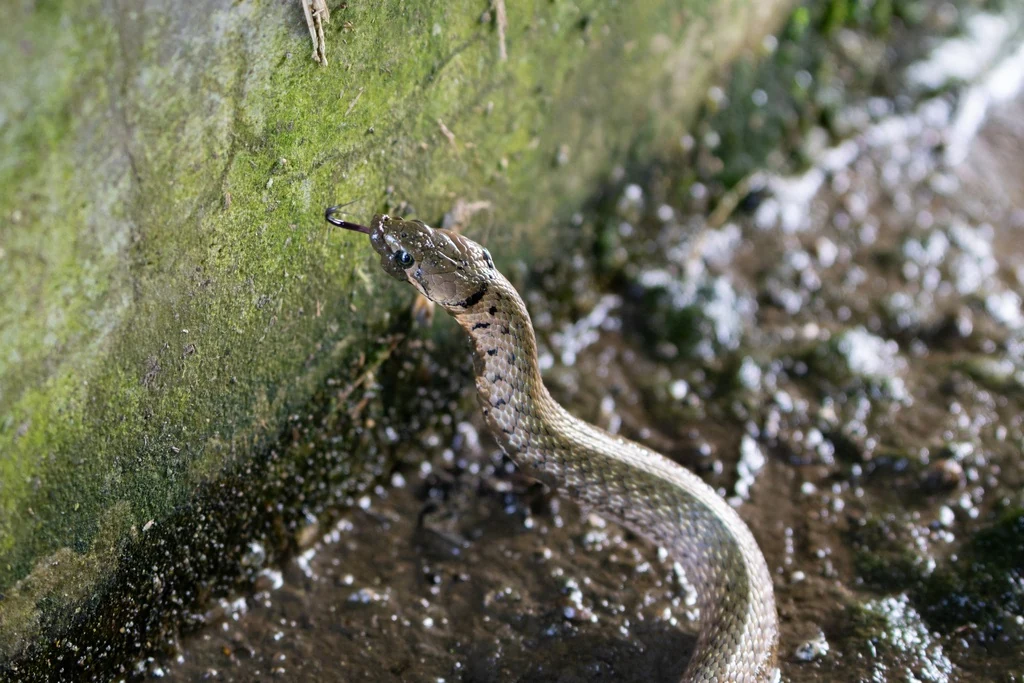
Fowlea flavipunctata — China, 2026-09-16.

005 · Colubridae

Yellow-Spotted Keelback

Fowlea flavipunctata

(HALLOWELL, 1860)

Venom unknownNot yet assessed

Confirmed occurrence in the 2025 Bangladesh review, Table 1. The paper explicitly relates its regional labels to the named administrative divisions. Regional evidence: Chattogram; Mymensingh. Named records do not imply continuous occurrence throughout a region.

Read the species account →

observe-syz · CC0 1.0 · https://creativecommons.org/publicdomain/zero/1.0/

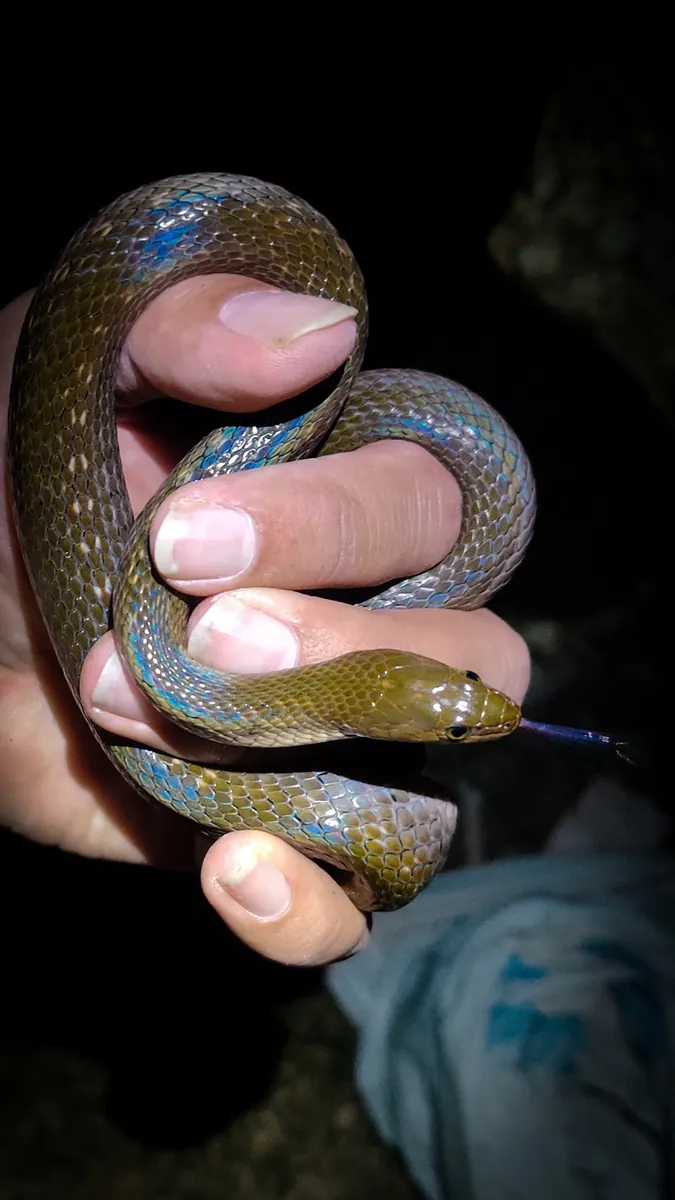
Living animal held by the observer, photographed at Kambipura, Karnataka, India, on 19 January 2021.

006 · Colubridae

Asiatic Water Snakes, Checkered Keelback

Fowlea piscator

(SCHNEIDER, 1799)

Venom unknownNot yet assessed

Confirmed occurrence in the 2025 Bangladesh review, Table 1. The paper explicitly relates its regional labels to the named administrative divisions. Regional evidence: Chattogram; Sylhet; Dhaka; Mymensingh; Barishal; Rangpur; Rajshahi; Khulna. Named records do not imply continuous occurrence throughout a region.

Read the species account →

Chayant Gonsalves / iNaturalist · CC BY 4.0 · https://creativecommons.org/licenses/by/4.0/

Gerarda prevostiana — India, 2023-10-14.

007 · Homalopsidae

Gerard's Water Snake

Gerarda prevostiana

(EYDOUX & GERVAIS, 1837)

VenomousClinical severity not established

Confirmed occurrence in the 2025 Bangladesh review, Table 1. The paper explicitly relates its regional labels to the named administrative divisions. Regional evidence: Chattogram; Barishal; Khulna. Named records do not imply continuous occurrence throughout a region.

Read the species account →

Ramesh Shenai · CC BY 4.0 · https://creativecommons.org/licenses/by/4.0/

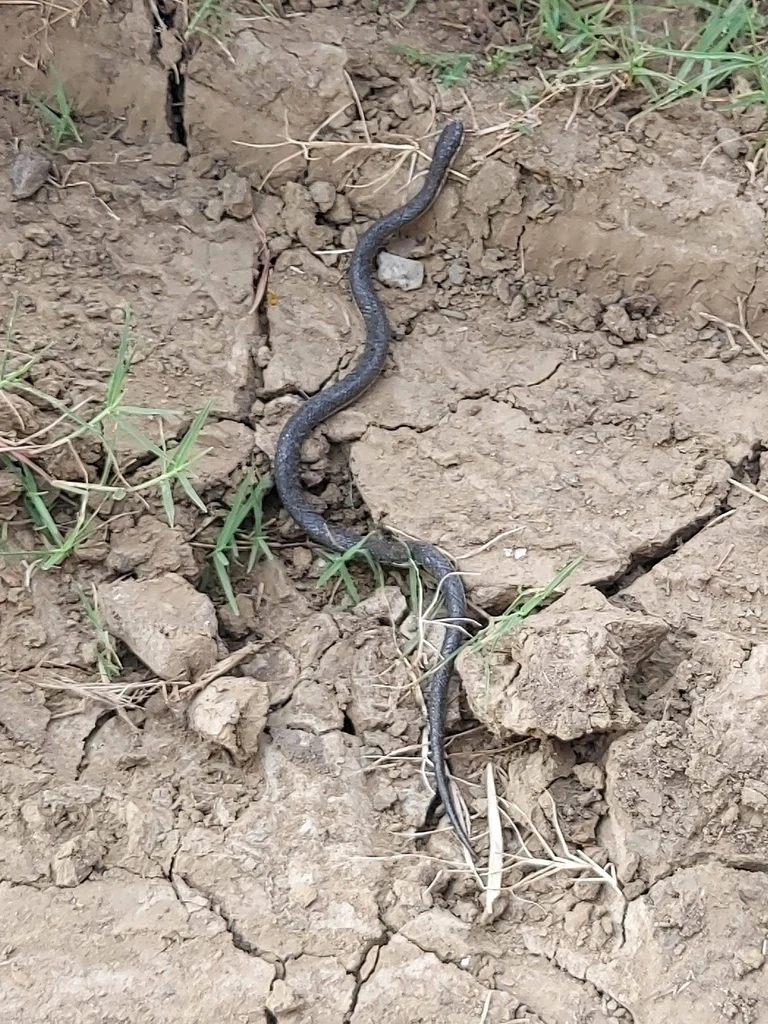
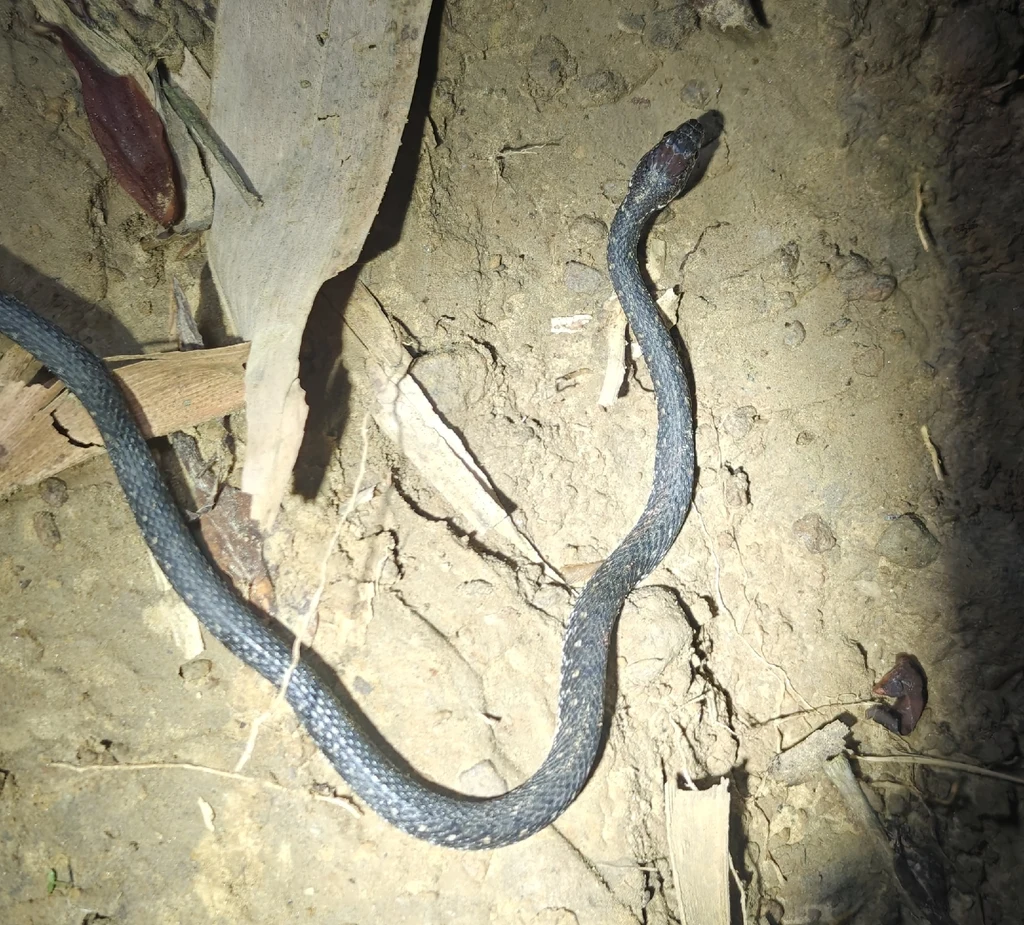
Herpetoreas xenura. Whole individual photographed on soil at night. Original observation dated 2026-05-30. Photograph identification follows the cited observation; it adds no geographic occurrence record.

008 · Colubridae

Wall's Keelback

Herpetoreas xenura

(WALL, 1907)

Venom unknownNot yet assessed

Confirmed occurrence in the 2025 Bangladesh review, Table 1. The paper explicitly relates its regional labels to the named administrative divisions. Regional evidence: Chattogram; Sylhet. Named records do not imply continuous occurrence throughout a region.

Read the species account →

Ashwin Viswanathan · CC BY 4.0 · https://creativecommons.org/licenses/by/4.0/

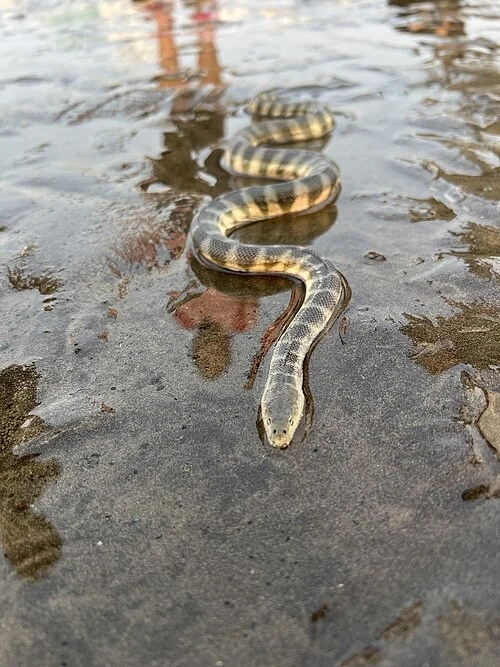
Hydrophis schistosus — real specimen photograph; identification follows the linked source.

009 · Elapidae

Common or beaked seasnake

Hydrophis schistosus

DAUDIN, 1803

VenomousClinical severity not established

Confirmed occurrence in the 2025 Bangladesh review, Table 1. The paper explicitly relates its regional labels to the named administrative divisions. Regional evidence: Chattogram; Khulna. Named records do not imply continuous occurrence throughout a region.

Read the species account →

Shaunak Modi · CC BY 4.0 · https://creativecommons.org/licenses/by/4.0

Indotyphlops braminus — photographed on Ko Pha-ngan, Thailand.

010 · Typhlopidae

Flowerpot Snake

Indotyphlops braminus

(DAUDIN, 1803)

Non-venomous

Confirmed occurrence in the 2025 Bangladesh review, Table 1. The paper explicitly relates its regional labels to the named administrative divisions. Regional evidence: Chattogram; Sylhet; Dhaka; Mymensingh; Barishal; Rangpur; Rajshahi; Khulna. Named records do not imply continuous occurrence throughout a region.

Read the species account →

Cook-Price, Makchai & Suwanwaree (2026); photographs credited collectively to the author, James Covert and Vikas Kumar · CC BY 4.0 · https://creativecommons.org/licenses/by/4.0/

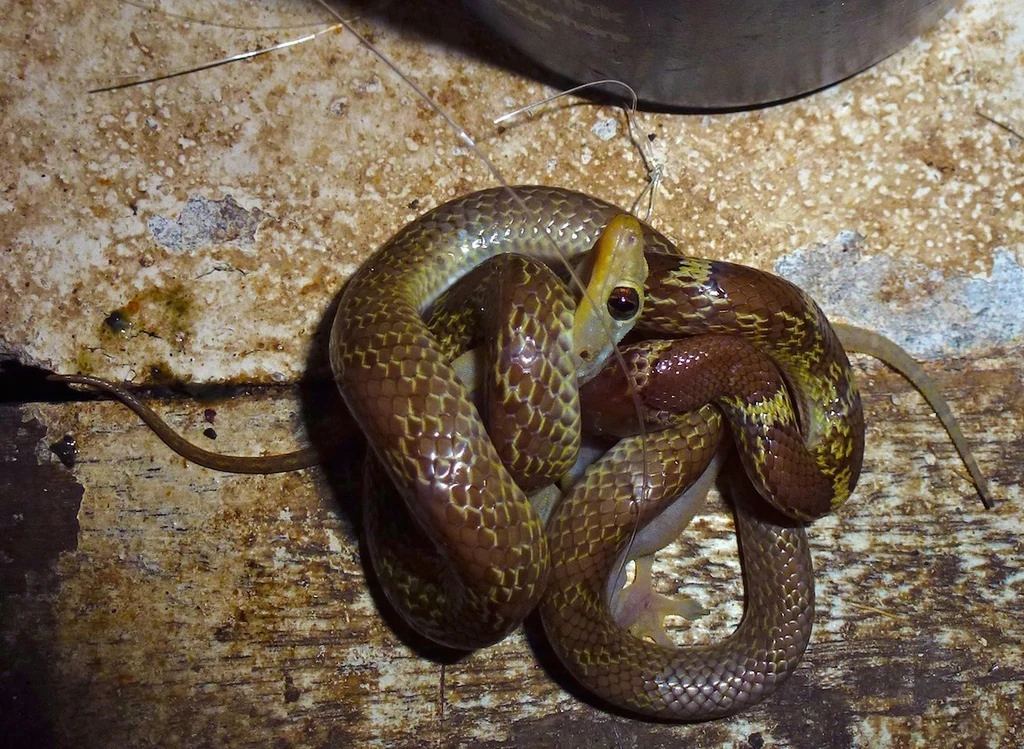
Lycodon aulicus, photographed 2012-05-12. Identification follows the linked research-grade observation.

011 · Colubridae

Indian Wolf Snake, Common Wolf Snake

Lycodon aulicus

(LINNAEUS, 1758)

Non-venomous

Confirmed occurrence in the 2025 Bangladesh review, Table 1. The paper explicitly relates its regional labels to the named administrative divisions. Regional evidence: Chattogram; Sylhet; Dhaka; Mymensingh; Barishal; Rangpur; Rajshahi; Khulna. Named records do not imply continuous occurrence throughout a region. A named locality in the cited account; no…

Read the species account →

Eliane Küpfer · CC BY-SA 4.0 · https://creativecommons.org/licenses/by-sa/4.0/

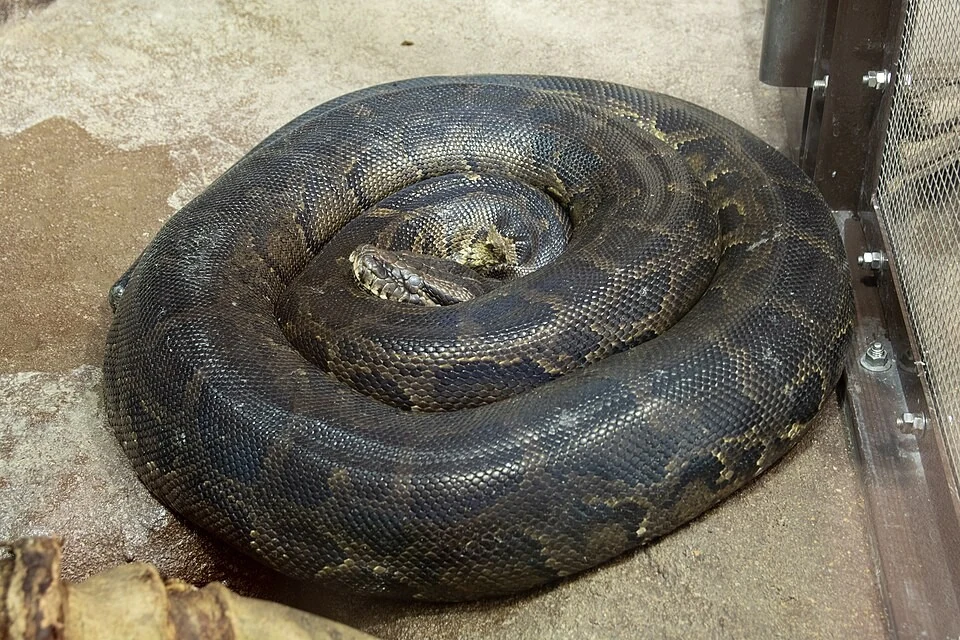
Python bivittatus — real specimen photograph; identification follows the linked source.

012 · Pythonidae

Burmese Python

Python bivittatus

KUHL, 1820

Non-venomous

Confirmed occurrence in the 2025 Bangladesh review, Table 1. The paper explicitly relates its regional labels to the named administrative divisions. Regional evidence: Chattogram; Sylhet; Dhaka; Mymensingh; Barishal; Khulna. Named records do not imply continuous occurrence throughout a region.

Read the species account →

Σ64 · CC BY 4.0 · https://creativecommons.org/licenses/by/4.0

Rhabdophis helleri. An anerythristic individual, as explicitly described by the photographer; this colour variant is not the typical appearance. Original observation dated 2021-06-05. Photograph identification follows the cited observation; it adds no geographic occurrence record.

013 · Colubridae

Heller’s Red-necked Keelback

Rhabdophis helleri

(SCHMIDT, 1925)

VenomousClinical severity not established

Confirmed occurrence in the 2025 Bangladesh review, Table 1. The paper explicitly relates its regional labels to the named administrative divisions. Regional evidence: Chattogram; Sylhet; Mymensingh; Dhaka. Named records do not imply continuous occurrence throughout a region.

Read the species account →

Lawrence Hylton · CC BY 4.0 · https://creativecommons.org/licenses/by/4.0/

All 88 species in the country collection →

Read further

Evidence & sources.

Guide reviewed 11 October 2026. Source dates and geographic scope matter; landscape photographs do not establish species occurrence.

  1. Ramsar · Tanguar Haor Information Sheet

    2000 floodplain wetland baseline at the Meghalaya foothills; not a current population assessment.

Continue through Bangladesh

Explore another habitat.

01

Forests & woodland

Sal woodland and eastern hill forest are distinct parts of Bangladesh’s tree cover.

02

Mangroves & tidal forest

Tidal waterways enter a mosaic of forest and exposed sediment.

03

Coastal & marine landscapes

The southern coast includes deposited land and estuarine margins.