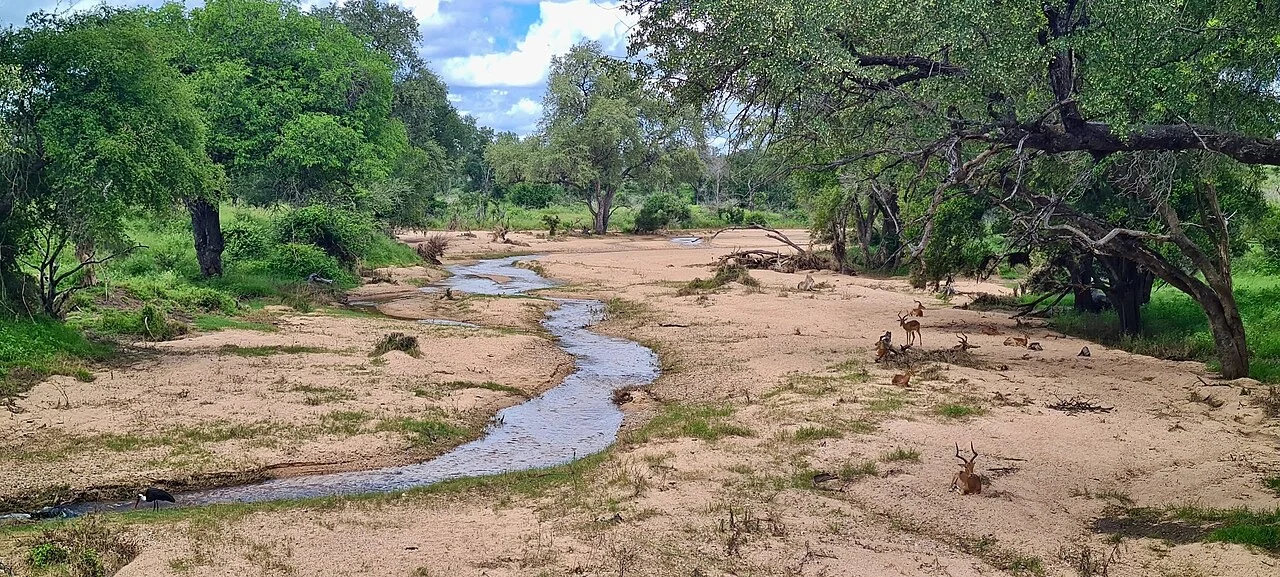
A narrow watercourse within a broad sandy riverbed, with riparian trees and resting impalas in Kruger National Park, South Africa. The photograph records the visible water stage, not a year-round flow regime.

South Africa · Habitat field guide

Rivers, lakes & wetlands

Rivers, wetlands and estuaries have distinct ecological settings. Freshwater and estuarine records should retain their original habitat description.

A narrow watercourse within a broad sandy riverbed, with riparian trees and resting impalas in Kruger National Park, South Africa. The photograph records the visible water stage, not a year-round flow regime.

Photograph: Bernard DUPONT · Image source · CC BY-SA 2.0. Cropped to fill the hero; darkened for text legibility.

Understanding the environment

A sense of the habitat.

Rivers, wetlands and estuaries have distinct ecological settings. Freshwater and estuarine records should retain their original habitat description.

Geographic scope
South Africa; named examples and source scope matter.
Evidence scale
Landscape context is separate from species locality evidence.
Source chronology
Consult the original publication date; checked 12 October 2026.

Explore the structure · Select a layer to compare the details a locality record can preserve.

Read the setting in three layers.

Select a zone to see what changes.

Waterbody

Waterbody

Retain the name and distinguish rivers, lakes, marshes and reservoirs.

Compare this detail with the original field or museum record before assigning a habitat association.

These reading prompts explain how to interpret evidence; they do not assert that every feature occurs at every site.

Sources: Convention on Biological Diversity · South Africa national profile

Field notes · 01

The documented landscape

Rivers, wetlands and estuaries have distinct ecological settings. Freshwater and estuarine records should retain their original habitat description.

Sources: Convention on Biological Diversity · South Africa national profile

Field notes · 02

Connect habitat and locality

Use the species account to check whether a habitat statement applies to this country or elsewhere in the species’ range. A landscape photograph illustrates its own named place; it is not evidence of snake presence.

Pressures on South Africa’s habitats

What is at risk?

A site-specific assessment of pressures has not yet been extracted for this guide. The landscape sources below provide context; they do not establish a current threat level for each snake species.

What helps this habitat

Retain natural vegetation and water connections where local conservation evidence supports them. Consult the linked national or site account for the pressures and management actions actually reported there.

The connected collection

Snakes with habitat evidence.

These 11 species have supported country occurrence and an explicit habitat association in the shared account. The association may come from elsewhere in their range. This is not a complete local habitat inventory; the places above are landscape examples, not asserted collecting sites.

11 species · showing 11

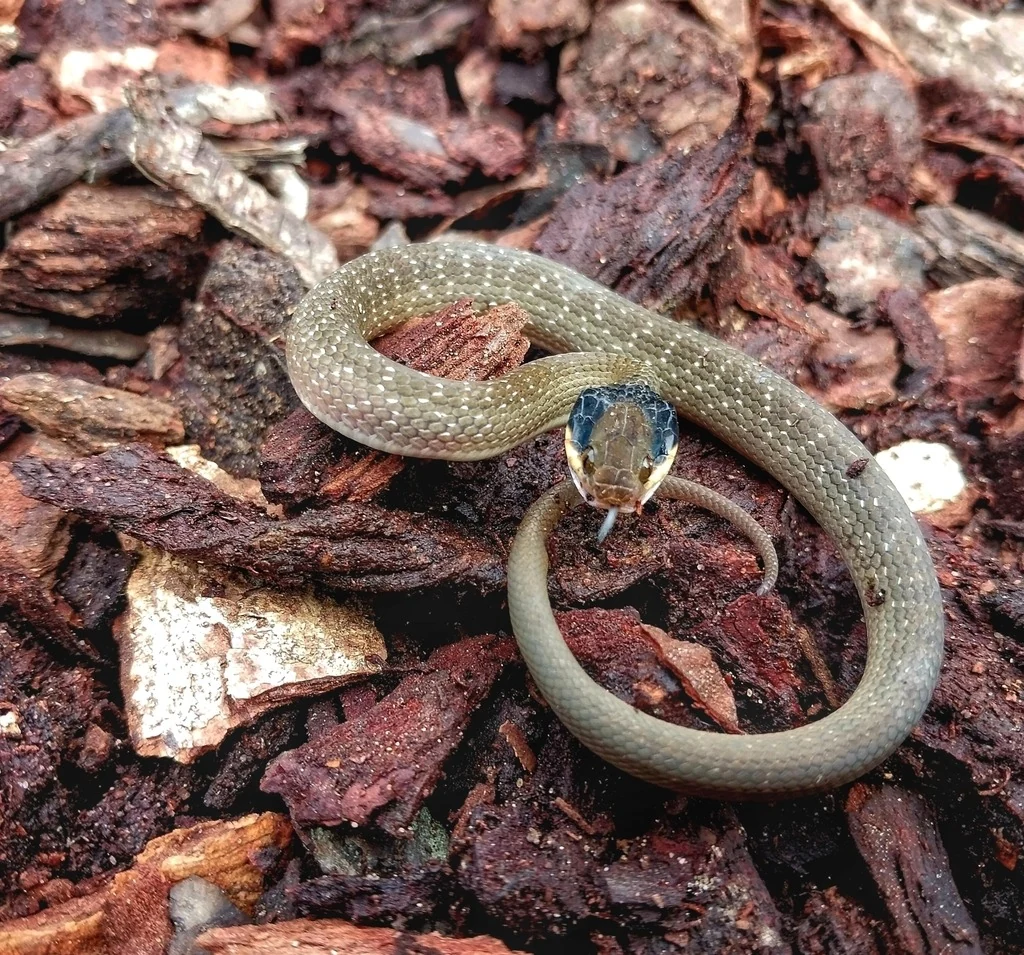
Crotaphopeltis hotamboeia; Campher's Drift, George, 6529, South Africa; photographed 2023-10-13.

001 · Colubridae

White-lipped Herald Snake, Red-lipped Snake

Crotaphopeltis hotamboeia

(LAURENTI, 1768)

Venom unknownNot yet assessed

The current taxonomic treatment explicitly lists this country. This is country-scale checklist evidence, not a claim of continuous occupancy or a complete regional inventory. KwaZulu-Natal: observation 404229035, 2026-09-27. KwaZulu-Natal: observation 359126673, 2026-05-07. Free State: observation 386552469, 2026-07-14. Free State: observation 344888269,…

Read the species account →

no rights reserved · CC0 · https://creativecommons.org/publicdomain/zero/1.0/
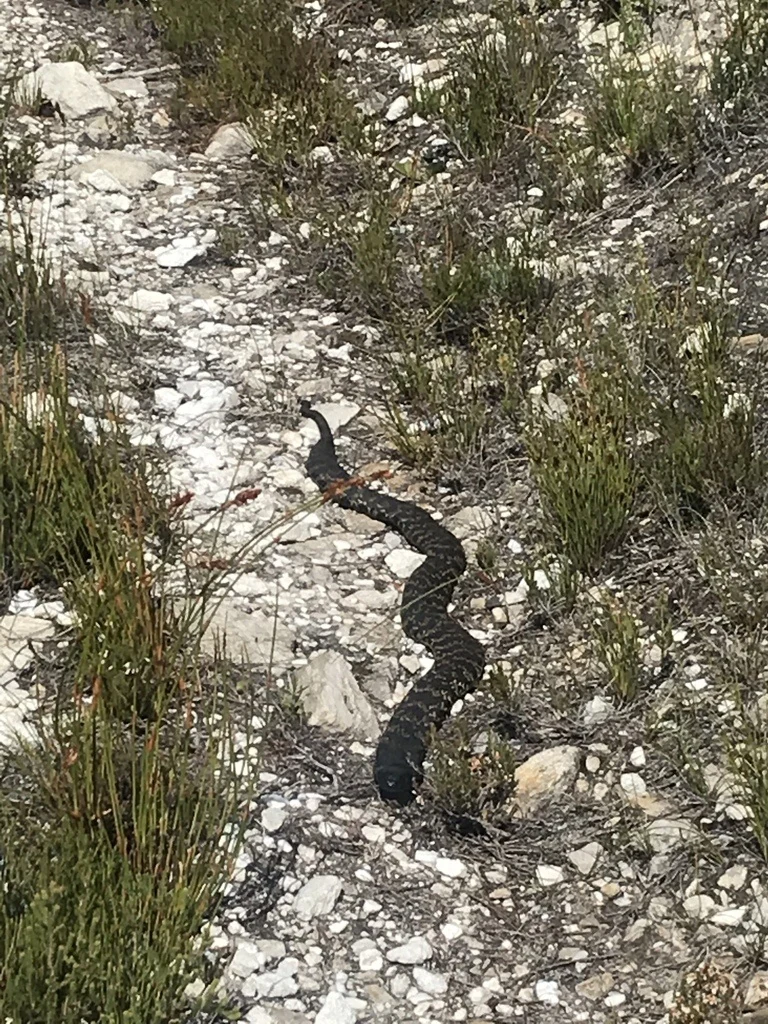
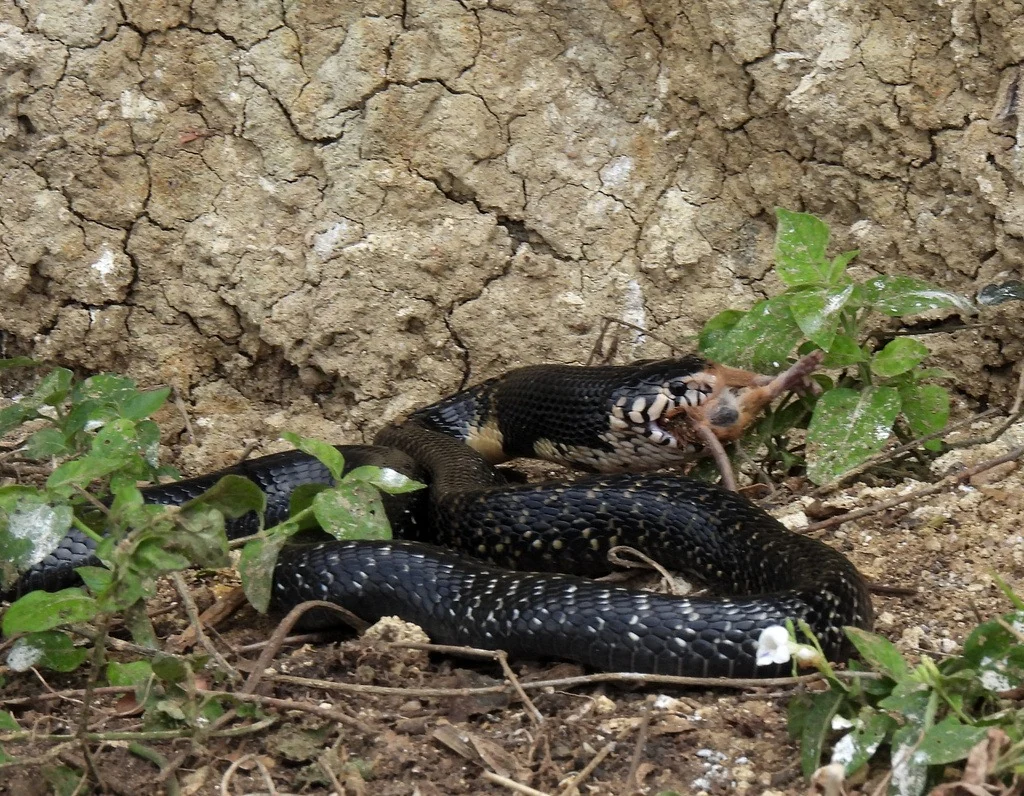
Hemachatus haemachatus, photographed 2019-09-05. Identification follows the linked research-grade observation.

002 · Elapidae

Rinkhals, Ring-necked Spitting Cobra, Ringhals

Hemachatus haemachatus

(BONNATERRE, 1790)

VenomousClinical severity not established

The current taxonomic treatment explicitly lists this country. This is country-scale checklist evidence, not a claim of continuous occupancy or a complete regional inventory. Free State: observation 368298869, 2026-06-04. Free State: observation 368299135, 2026-06-04. KwaZulu-Natal: observation 339701166, 2026-02-20. KwaZulu-Natal: observation 334706023,…

Read the species account →

Sam McCarren · CC BY 4.0 · https://creativecommons.org/licenses/by/4.0/

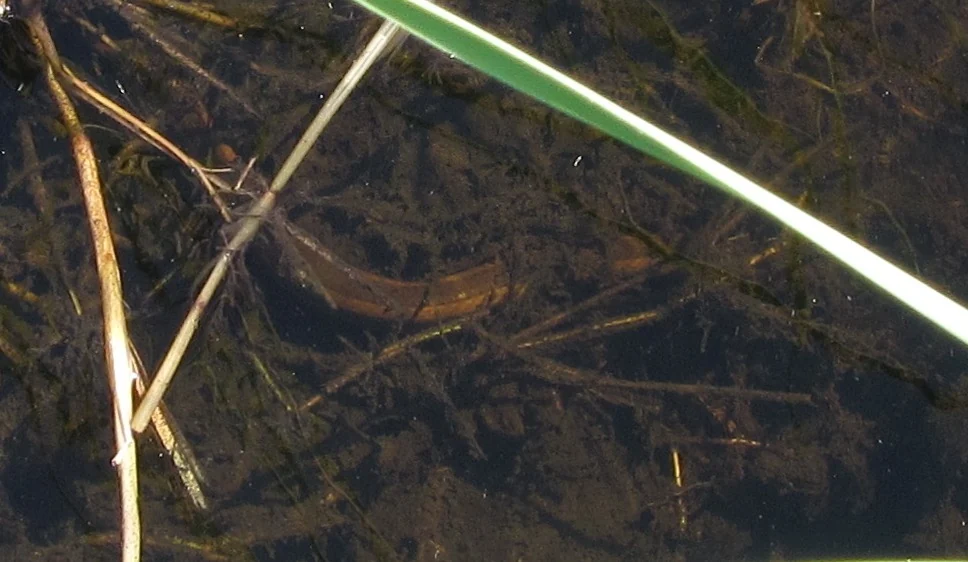
Indotyphlops braminus — photographed on Ko Pha-ngan, Thailand.

003 · Typhlopidae

Flowerpot Snake

Indotyphlops braminus

(DAUDIN, 1803)

Non-venomous

Cosmopolitan transported species: countries denotes supported occurrence, not a claim of native status. IntroducedCountries captures explicit source introductions; native/introduced status of the remaining localities is unresolved. Broad New Guinea and Micronesia are not converted to countries. The current taxonomic treatment explicitly lists this…

Read the species account →

Cook-Price, Makchai & Suwanwaree (2026); photographs credited collectively to the author, James Covert and Vikas Kumar · CC BY 4.0 · https://creativecommons.org/licenses/by/4.0/

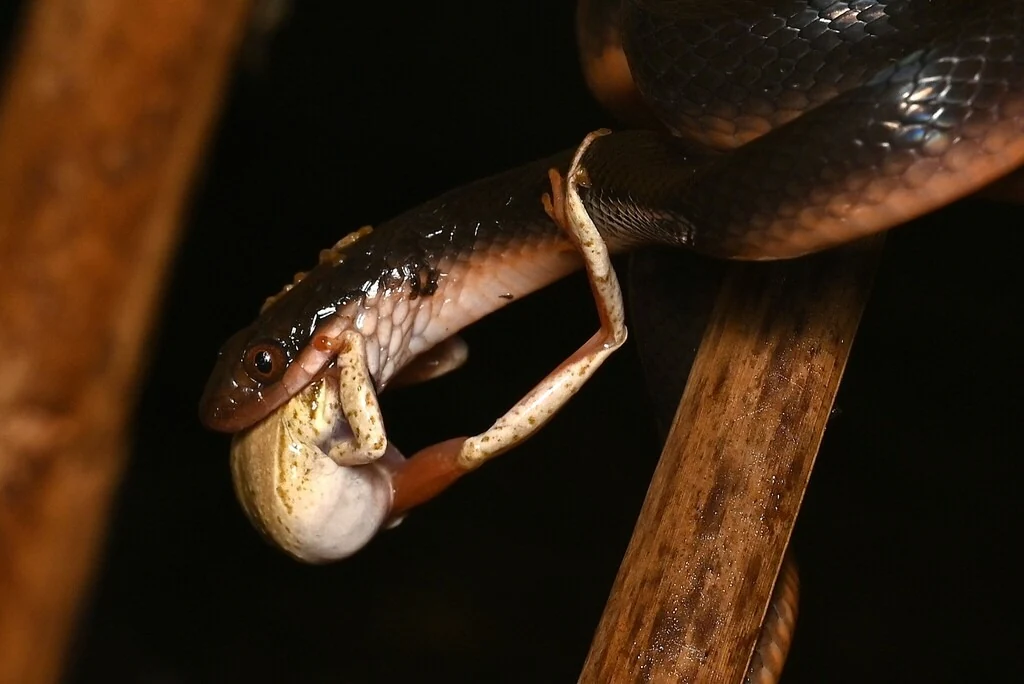
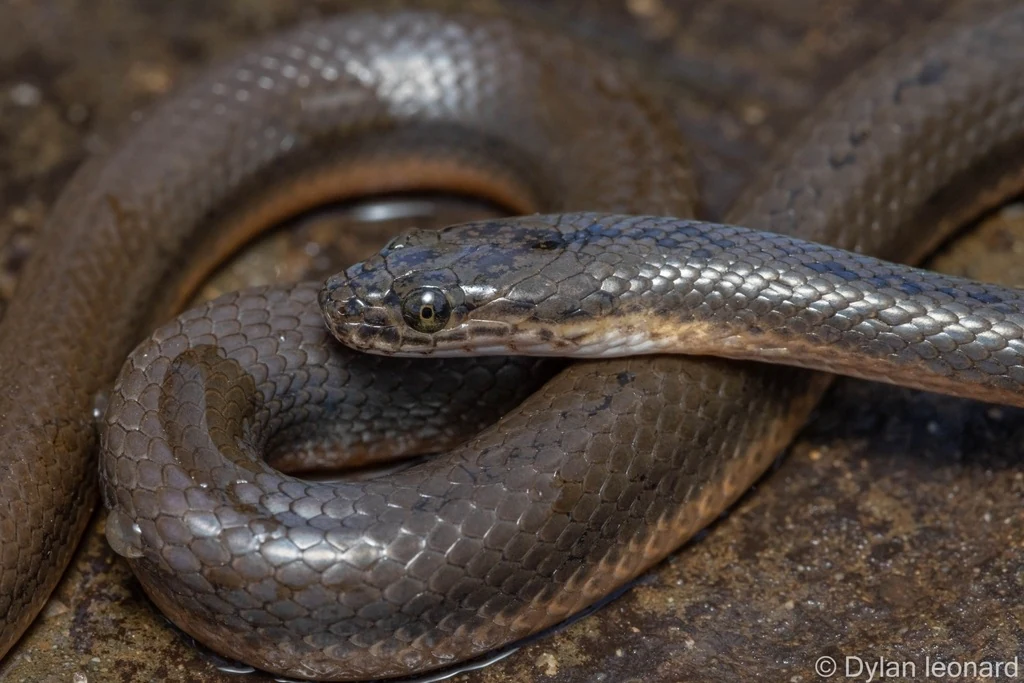
Lycodonomorphus laevissimus, photographed 2024-08-05. Identification follows the linked research-grade observation.

004 · Lamprophiidae

Dusky-bellied Water Snake

Lycodonomorphus laevissimus

(GÜNTHER, 1862)

Non-venomous

The current taxonomic treatment explicitly lists this country. This is country-scale checklist evidence, not a claim of continuous occupancy or a complete regional inventory.

Read the species account →

Dylan Leonard · CC BY-SA 4.0 · https://creativecommons.org/licenses/by-sa/4.0/

Lycodonomorphus rufulus; 292G+5R Keurboomstrand, South Africa; photographed 2025-11-30.

005 · Lamprophiidae

Common Water Snake, Common Brown Water Snake, Olive-brown Water-Snake, South African Rufous Snake

Lycodonomorphus rufulus

(LICHTENSTEIN, 1823)

Non-venomous

The current taxonomic treatment explicitly lists this country. This is country-scale checklist evidence, not a claim of continuous occupancy or a complete regional inventory. KwaZulu-Natal: observation 336451558, 2026-01-28. KwaZulu-Natal: observation 332855960, 2025-12-31. Free State: observation 330154985, 2025-12-09. Mpumalanga: observation 400460652,…

Read the species account →

no rights reserved · CC0 · https://creativecommons.org/publicdomain/zero/1.0/

Naja subfulva; Katunguru Queen Elizabeth National Park, Katunguru, Uganda; photographed 2023-03-05.

006 · Elapidae

Brown forest cobra

Naja subfulva

LAURENT, 1955

VenomousClinical severity not established

The current taxonomic treatment explicitly lists this country. This is country-scale checklist evidence, not a claim of continuous occupancy or a complete regional inventory.

Read the species account →

Sidnei Dantas · CC BY-SA 4.0 · https://creativecommons.org/licenses/by-sa/4.0/

Natriciteres olivacea; Ngamiland North, Botswana; photographed 2018-12-15.

007 · Colubridae

Olive Marsh Snake

Natriciteres olivacea

(PETERS, 1854)

Venom unknownNot yet assessed

The current taxonomic treatment explicitly lists this country. This is country-scale checklist evidence, not a claim of continuous occupancy or a complete regional inventory.

Read the species account →

Robert Taylor · CC BY 4.0 · https://creativecommons.org/licenses/by/4.0/

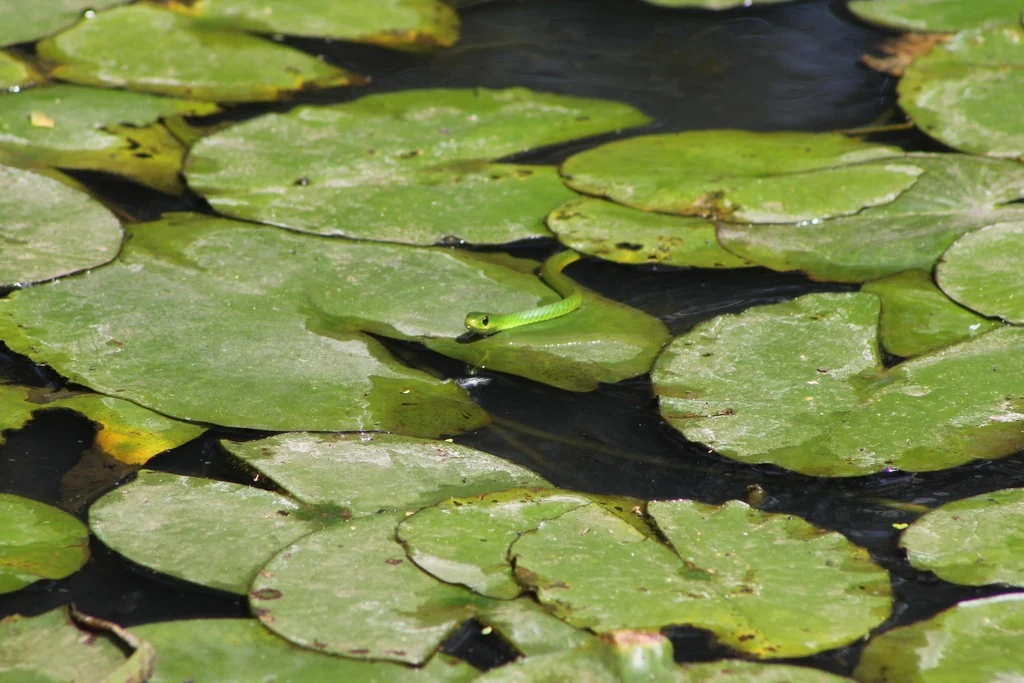
Philothamnus hoplogaster; National Park, Nairobi, Kenya; photographed 2017-07-01.

008 · Colubridae

Southeastern Green snake, Green Water Snake

Philothamnus hoplogaster

(GÜNTHER, 1863)

Venom unknownNot yet assessed

The current taxonomic treatment explicitly lists this country. This is country-scale checklist evidence, not a claim of continuous occupancy or a complete regional inventory. KwaZulu-Natal: observation 339700076, 2026-02-22. Original records have agreeing research-grade identifications, wild status and open coordinates. Points and sampled reported…

Read the species account →

Ryan Donnelly · CC BY 4.0 · https://creativecommons.org/licenses/by/4.0/

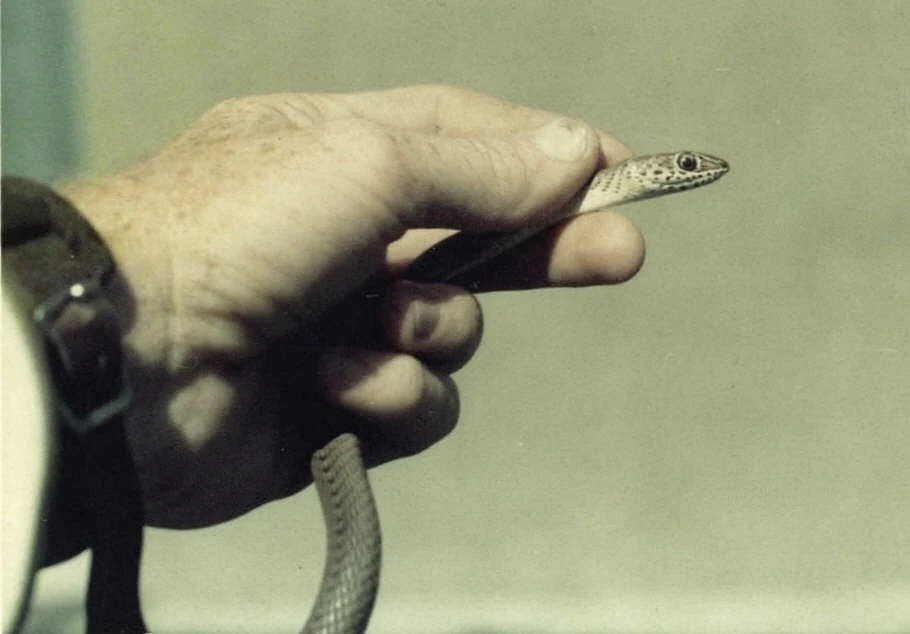
Psammophis mossambicus; Chizarira National Park; photographed 1980-11-30.

009 · Psammophiidae

Olive Whip Snake, Olive Grass Snake,

Psammophis mossambicus

PETERS, 1882

VenomousClinical severity not established

The current taxonomic treatment explicitly lists this country. This is country-scale checklist evidence, not a claim of continuous occupancy or a complete regional inventory. Mpumalanga: observation 405053126, 2026-10-01. Limpopo: observation 402533480, 2026-09-22. Original records have agreeing research-grade identifications, wild status and open…

Read the species account →

i_c_riddell · CC BY 4.0 · https://creativecommons.org/licenses/by/4.0/

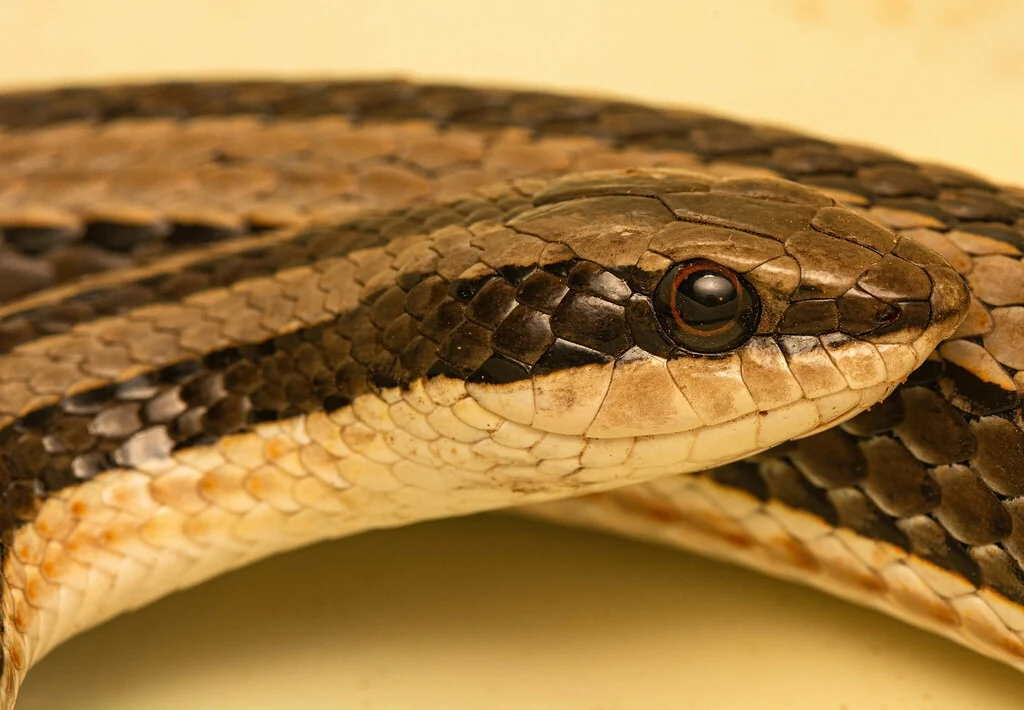
Psammophylax tritaeniatus; Spitskop Small Holdings, Bloemfontein, 9301, South Africa; photographed 2023-02-26.

010 · Psammophiidae

Three-lined Grass Snake, Striped Skaapsteker

Psammophylax tritaeniatus

(GÜNTHER, 1868)

Venom unknownNot yet assessed

The current taxonomic treatment explicitly lists this country. This is country-scale checklist evidence, not a claim of continuous occupancy or a complete regional inventory. Free State: observation 405179573, 2026-09-29. Free State: observation 333773679, 2026-01-06. North West: observation 391999818, 2026-08-16. Limpopo: observation 387452950,…

Read the species account →

Rudolph Steenkamp · CC BY-SA 4.0 · https://creativecommons.org/licenses/by-sa/4.0/

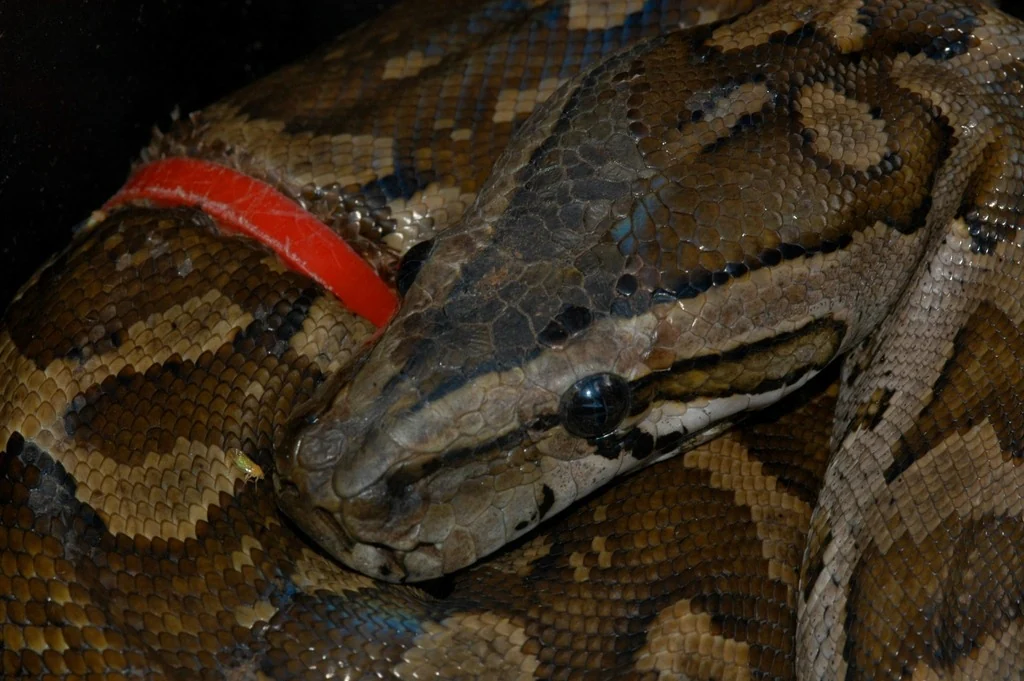
Python natalensis; Rooibos Street, Phalaborwa; photographed 2010-12-10.

011 · Pythonidae

Southern African Python, Lesser African Python

Python natalensis

SMITH, 1840

Non-venomous

The current taxonomic treatment explicitly lists this country. This is country-scale checklist evidence, not a claim of continuous occupancy or a complete regional inventory. North West: observation 366441991, 2026-05-14. North West: observation 356024045, 2026-04-19. Limpopo: observation 405736532, 2026-10-04. Limpopo: observation 405195366, 2026-10-02.…

Read the species account →

no rights reserved · CC0 · https://creativecommons.org/publicdomain/zero/1.0/
All 115 species in the country collection →

Read further

Evidence & sources.

Guide reviewed 12 October 2026. Source dates and geographic scope matter; landscape photographs do not establish species occurrence.

  1. Convention on Biological Diversity · South Africa national profile

    Historical draft prepared by the CBD Secretariat; awaiting Party approval. Used for landscape context; older statistics are not presented as current monitoring or a snake inventory.

Continue through South Africa

Explore another habitat.

01

Forest & woodland

South Africa’s national account distinguishes multiple terrestrial biomes and vegetation structures. Provincial boundaries do not delimit these environments.

02

Coasts & marine environments

The national account distinguishes cool-temperate, warm-temperate and subtropical marine zones. A coastal province is not a single marine habitat.