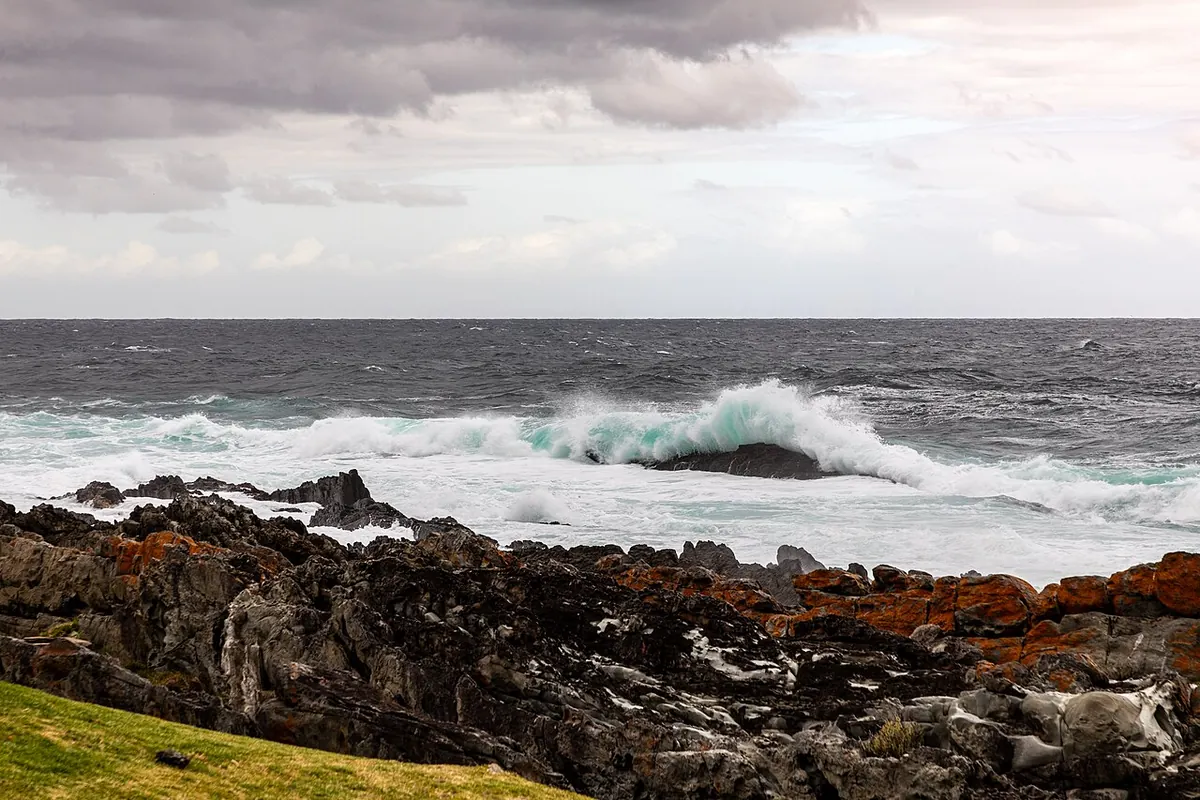
Breaking waves and a rocky shore in Tsitsikamma National Park, Eastern Cape, South Africa.

South Africa · Habitat field guide

Coasts & marine environments

The national account distinguishes cool-temperate, warm-temperate and subtropical marine zones. A coastal province is not a single marine habitat.

Breaking waves and a rocky shore in Tsitsikamma National Park, Eastern Cape, South Africa.

Photograph: Dietmar Rabich / Wikimedia Commons / “Tsitsikamma National Park (ZA), Küste -- 2024 -- 1971” · Image source · CC BY-SA 4.0. Cropped to fill the hero; darkened for text legibility.

Understanding the environment

A sense of the habitat.

The national account distinguishes cool-temperate, warm-temperate and subtropical marine zones. A coastal province is not a single marine habitat.

Geographic scope
South Africa; named examples and source scope matter.
Evidence scale
Landscape context is separate from species locality evidence.
Source chronology
Consult the original publication date; checked 12 October 2026.

Explore the structure · Select a layer to compare the details a locality record can preserve.

Read the setting in three layers.

Select a zone to see what changes.

Shore

Shore

Distinguish terrestrial shore records from observations in the water.

Compare this detail with the original field or museum record before assigning a habitat association.

These reading prompts explain how to interpret evidence; they do not assert that every feature occurs at every site.

Sources: Convention on Biological Diversity · South Africa national profile

Field notes · 01

The documented landscape

The national account distinguishes cool-temperate, warm-temperate and subtropical marine zones. A coastal province is not a single marine habitat.

Sources: Convention on Biological Diversity · South Africa national profile

Field notes · 02

Connect habitat and locality

Use the species account to check whether a habitat statement applies to this country or elsewhere in the species’ range. A landscape photograph illustrates its own named place; it is not evidence of snake presence.

Pressures on South Africa’s habitats

What is at risk?

A site-specific assessment of pressures has not yet been extracted for this guide. The landscape sources below provide context; they do not establish a current threat level for each snake species.

What helps this habitat

Retain natural vegetation and water connections where local conservation evidence supports them. Consult the linked national or site account for the pressures and management actions actually reported there.

The connected collection

Snakes with habitat evidence.

These 6 species have supported country occurrence and an explicit habitat association in the shared account. The association may come from elsewhere in their range. This is not a complete local habitat inventory; the places above are landscape examples, not asserted collecting sites.

6 species · showing 6

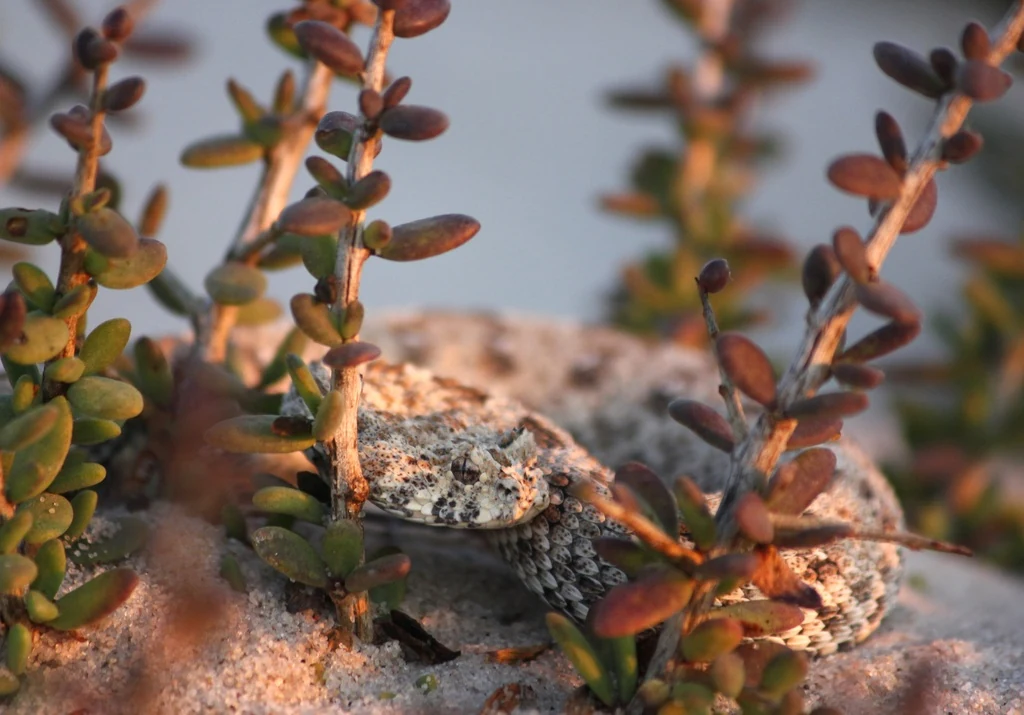
Bitis schneideri, photographed 2020-10-21. Identification follows the linked research-grade observation.

001 · Viperidae

Namaqua Dwarf Adder, Namaqua Puff Adder

Bitis schneideri

(BOETTGER, 1886)

VenomousClinical severity not established

The current taxonomic treatment explicitly lists this country. This is country-scale checklist evidence, not a claim of continuous occupancy or a complete regional inventory.

Read the species account →

Ryan van Huyssteen · CC BY 4.0 · https://creativecommons.org/licenses/by/4.0/
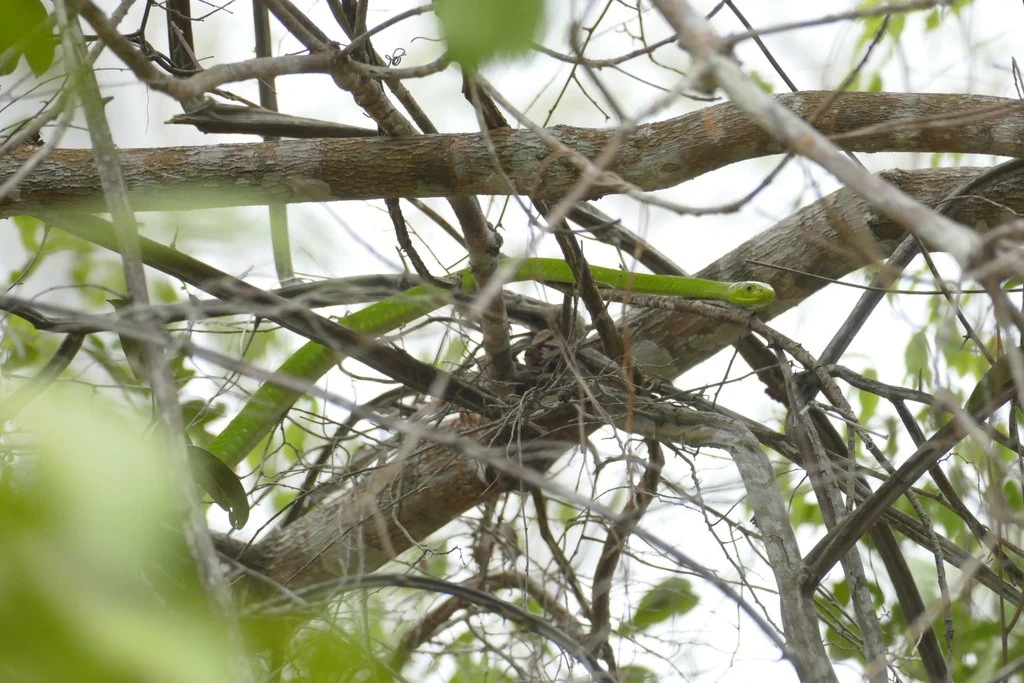
Dendroaspis angusticeps, photographed 2022-02-12. Identification follows the linked research-grade observation.

002 · Elapidae

Green Mamba

Dendroaspis angusticeps

(SMITH, 1849)

VenomousClinical severity not established

The current taxonomic treatment explicitly lists this country. This is country-scale checklist evidence, not a claim of continuous occupancy or a complete regional inventory.

Read the species account →

Ewout Knoester · CC BY-SA 4.0 · https://creativecommons.org/licenses/by-sa/4.0/

Hydrophis platurus — real specimen photograph; identification follows the linked source.

003 · Elapidae

Yellowbelly Sea Snake

Hydrophis platurus

(LINNAEUS, 1766)

VenomousClinical severity not established

United States and New Zealand records include vagrants, not established introduced populations. Korea remains geographically unresolved. Kosrae supports Federated States of Micronesia. The current taxonomic treatment explicitly lists this country. This is country-scale checklist evidence, not a claim of continuous occupancy or a complete regional inventory.

Read the species account →

Aloaiza · CC BY 3.0 · https://creativecommons.org/licenses/by/3.0

Natriciteres olivacea; Ngamiland North, Botswana; photographed 2018-12-15.

004 · Colubridae

Olive Marsh Snake

Natriciteres olivacea

(PETERS, 1854)

Venom unknownNot yet assessed

The current taxonomic treatment explicitly lists this country. This is country-scale checklist evidence, not a claim of continuous occupancy or a complete regional inventory.

Read the species account →

Robert Taylor · CC BY 4.0 · https://creativecommons.org/licenses/by/4.0/
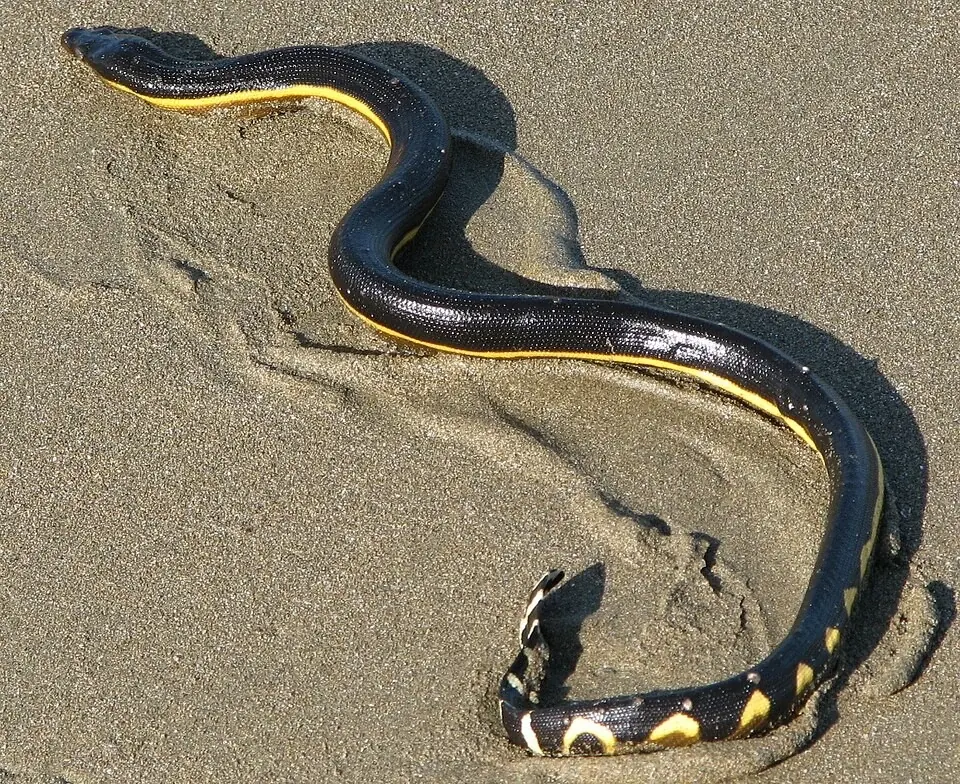
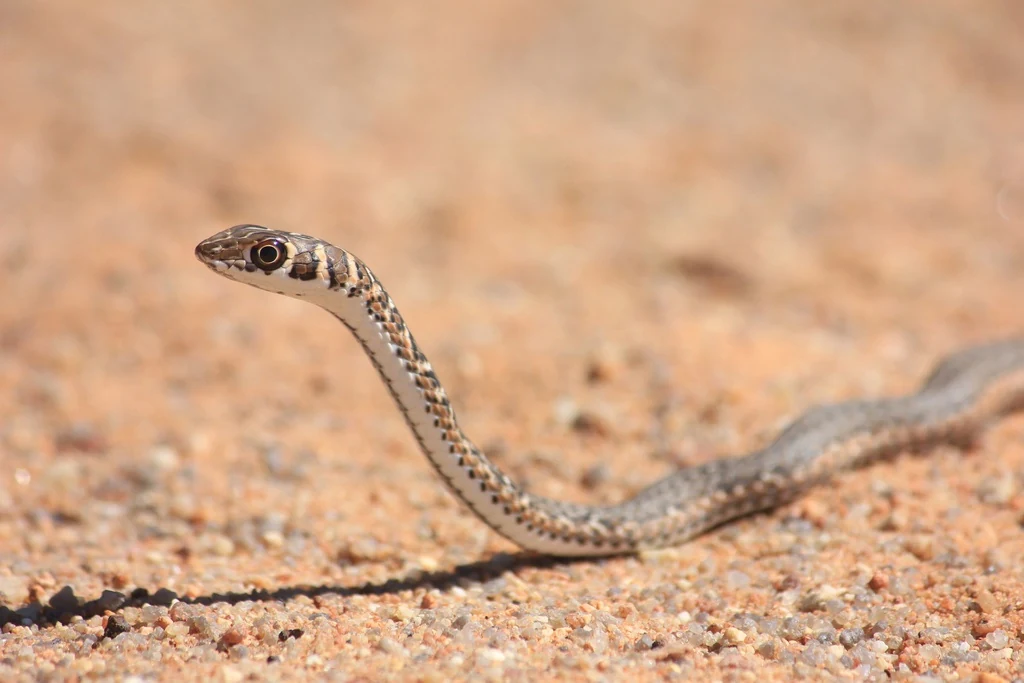
Psammophis crucifer; Vergelegen Helderberg Rural, Sir Lowry's Pass, 7130, South Africa; photographed 2015-03-01.

005 · Psammophiidae

Cross-marked Grass Snake, Montane Grass Snake

Psammophis crucifer

(DAUDIN, 1803)

VenomousClinical severity not established

The current taxonomic treatment explicitly lists this country. This is country-scale checklist evidence, not a claim of continuous occupancy or a complete regional inventory. KwaZulu-Natal: observation 396101352, 2026-08-31. KwaZulu-Natal: observation 332967738, 2026-01-01. Western Cape: observation 393409456, 2026-08-22. Western Cape: observation…

Read the species account →

linkie · CC BY 4.0 · https://creativecommons.org/licenses/by/4.0/
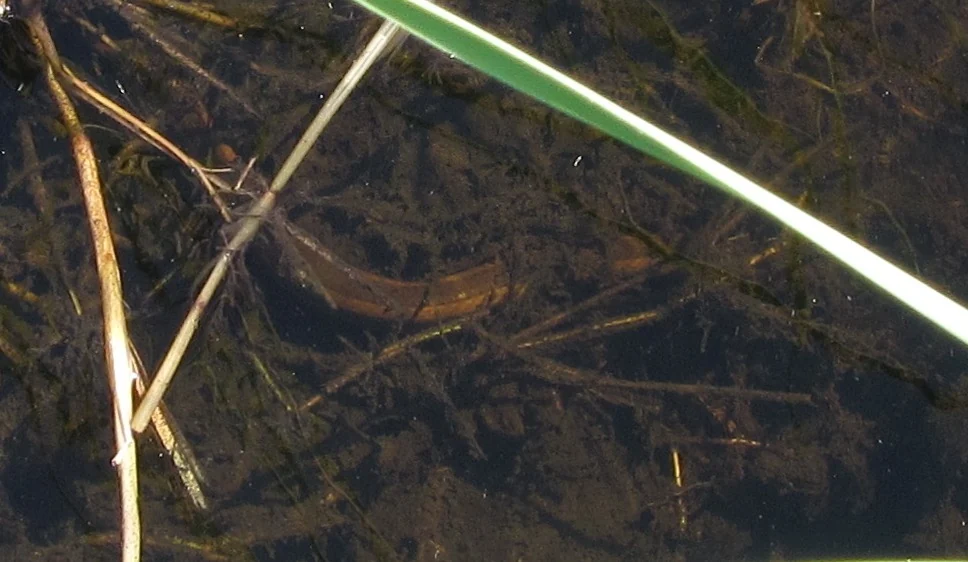
Psammophis leightoni, photographed 2023-10-29. Identification follows the linked research-grade observation.

006 · Psammophiidae

Cape Sand Snake

Psammophis leightoni

BOULENGER, 1902

VenomousClinical severity not established

The current taxonomic treatment explicitly lists this country. This is country-scale checklist evidence, not a claim of continuous occupancy or a complete regional inventory. Northern Cape: observation 400973187, 2026-09-15. Northern Cape: observation 370597802, 2026-05-09. North West: observation 352367480, 2026-03-29. Western Cape: observation…

Read the species account →

Ryan van Huyssteen · CC BY 4.0 · https://creativecommons.org/licenses/by/4.0/
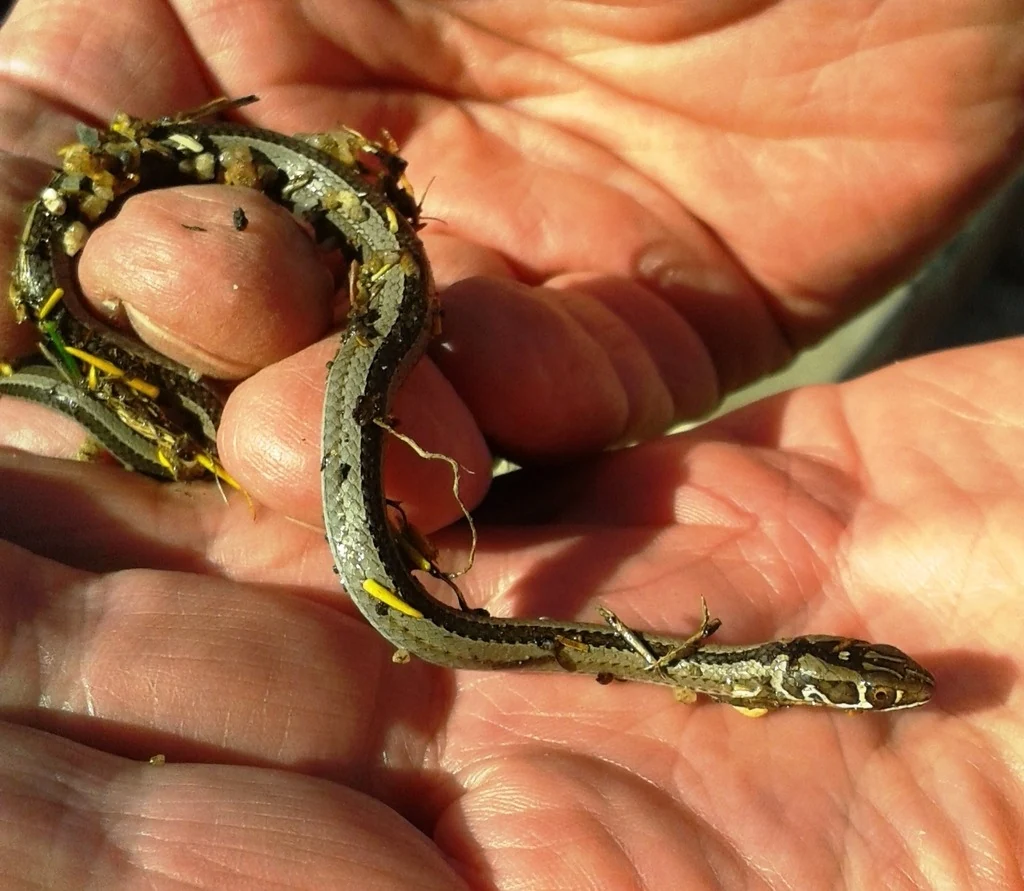
All 115 species in the country collection →

Read further

Evidence & sources.

Guide reviewed 12 October 2026. Source dates and geographic scope matter; landscape photographs do not establish species occurrence.

  1. Convention on Biological Diversity · South Africa national profile

    Historical draft prepared by the CBD Secretariat; awaiting Party approval. Used for landscape context; older statistics are not presented as current monitoring or a snake inventory.

Continue through South Africa

Explore another habitat.

01

Forest & woodland

South Africa’s national account distinguishes multiple terrestrial biomes and vegetation structures. Provincial boundaries do not delimit these environments.

02

Rivers, lakes & wetlands

Rivers, wetlands and estuaries have distinct ecological settings. Freshwater and estuarine records should retain their original habitat description.