


Clelia clelia
Uncertain — excluded from the listed total
The treatment includes an explicit negative or conflicting country qualification. Resolve the cited revision before counting this report.
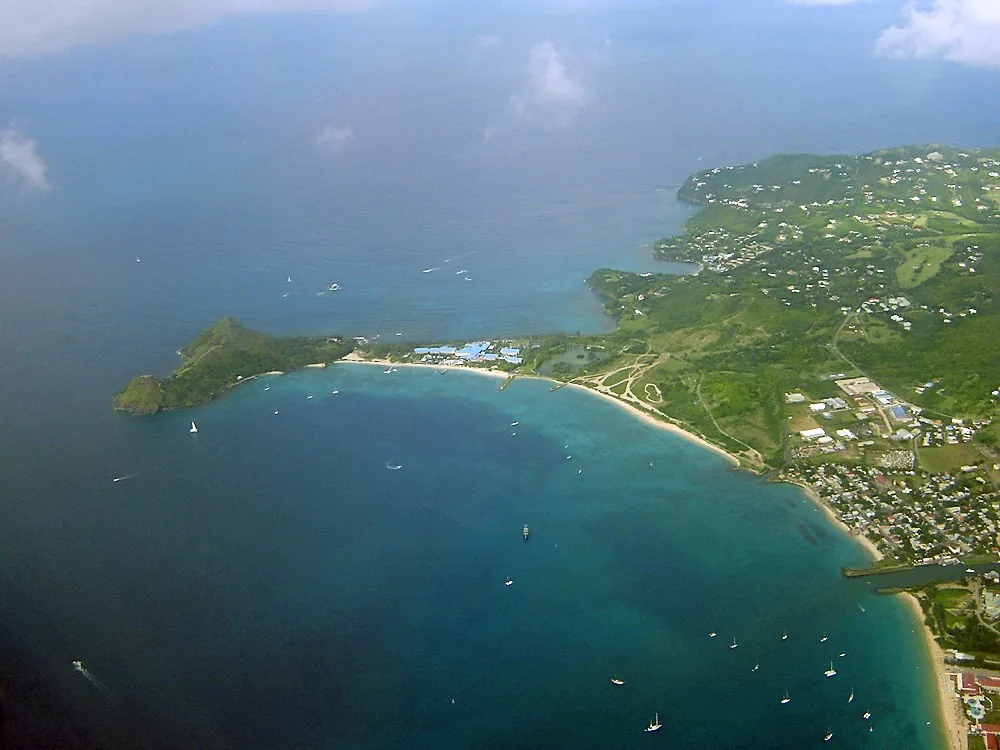
Saint Lucia · Place guide
Explore Gros Islet through the places named in Saint Lucia's sourced species records.
Pigeon Island and the northern coast of Gros Islet, Saint Lucia.
Geography & biotopes
Explore Gros Islet through the places named in Saint Lucia's sourced species records.
This administrative outline follows the credited boundary snapshot for Gros Islet. It provides geographic context, not a species range or a single vegetation type.
Compare the source locality with the country habitat guides. Species documented only at national level remain in the national collection until a regional assignment is supported.
Open a species account to inspect its original place names and sources. These counts reflect extracted regional evidence, not complete local inventories.
This guide indexes these source names: Gros Islet. A country-only record is not automatically assigned to this place. Map markers identify navigation destinations, not collection sites.
Map provenance and subdivisions →
Convention on Biological Diversity · Saint Lucia national profile →
Habitats & living landscapes
Explore 4 guides to the environments, places and conservation pressures that shape this country. Each guide connects to the regional map and shared species accounts.
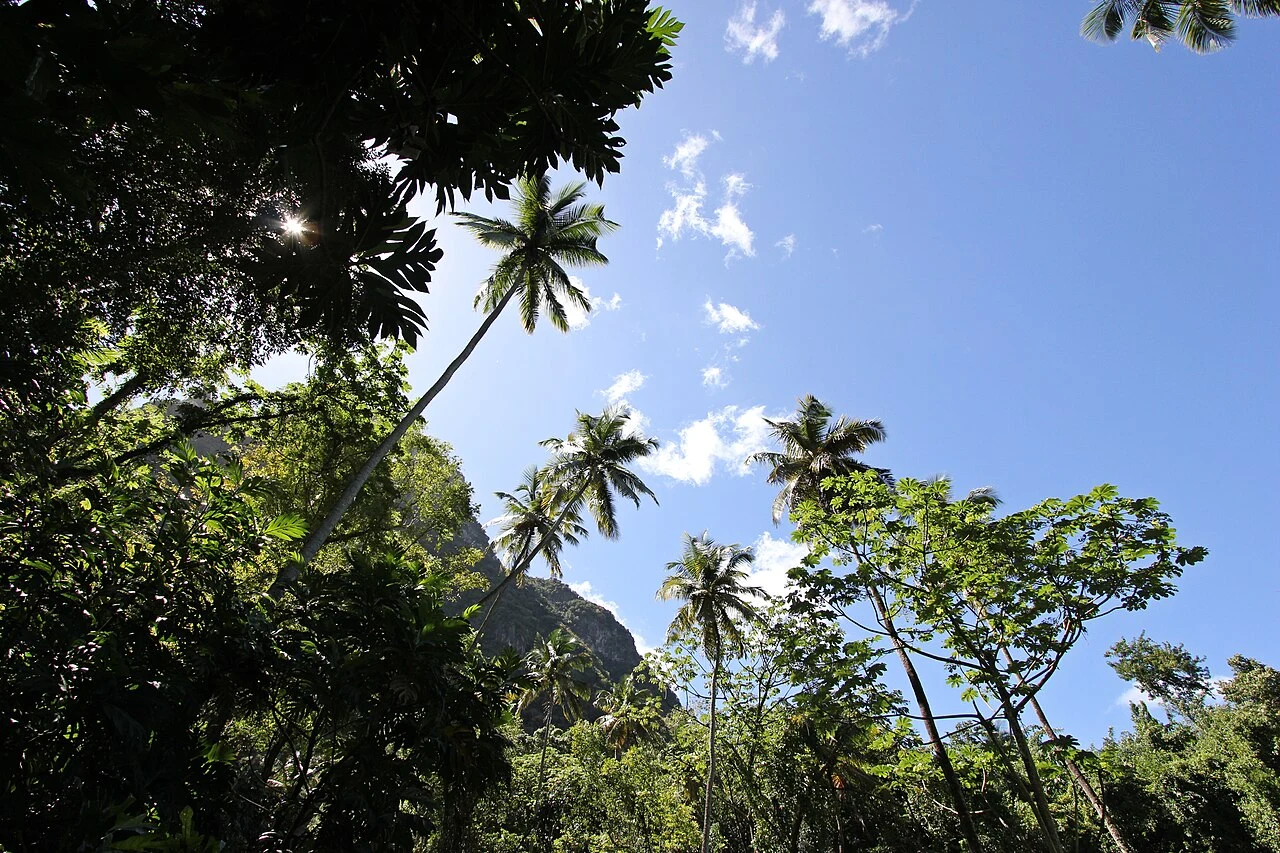
Habitat · 01
The national profile distinguishes rainforest and montane forest from areas transformed for plantation agriculture. Plantation cover should not be silently relabelled as natural woodland.
Explore the habitat ↗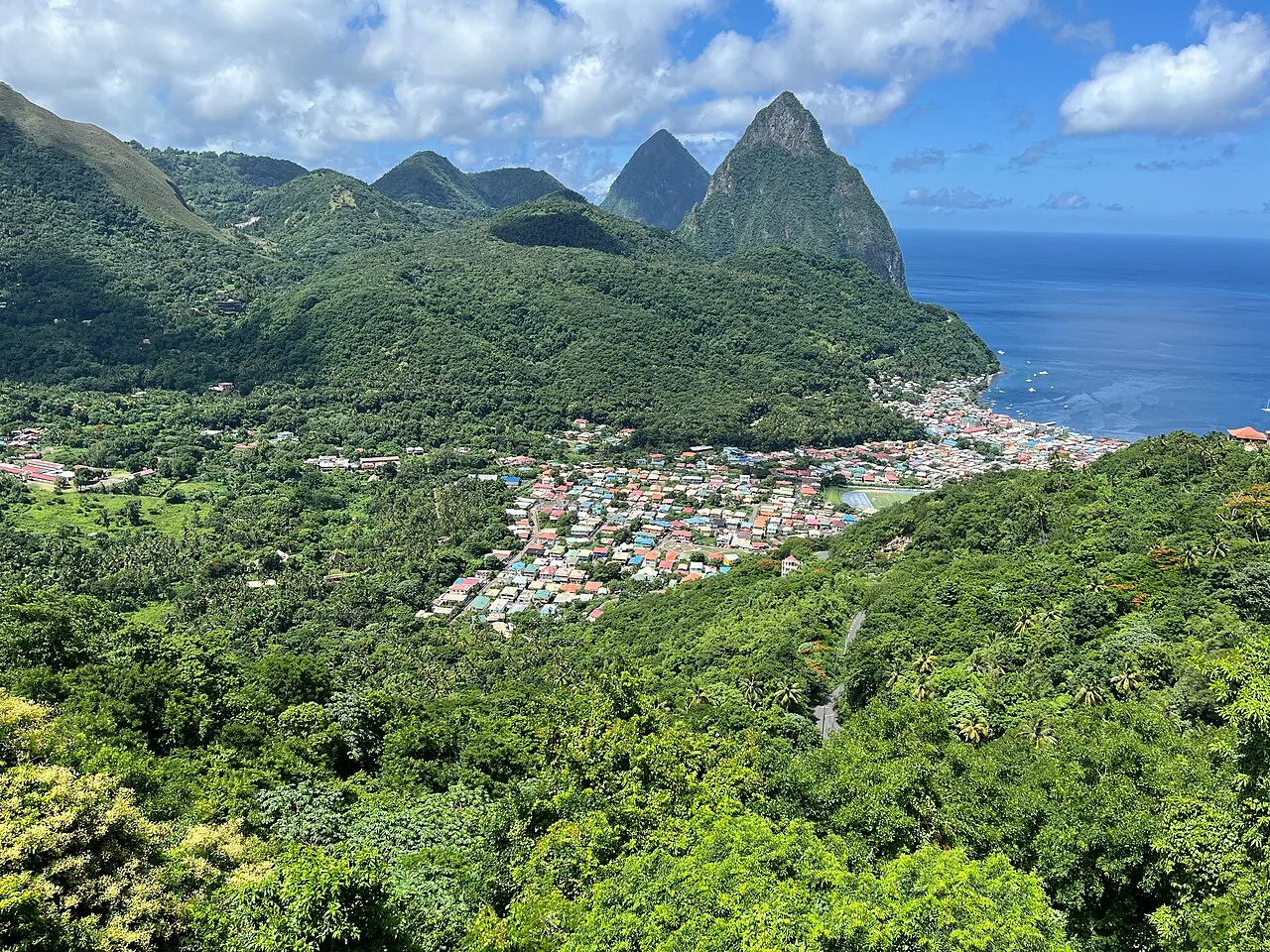
Habitat · 02
Montane forest is explicitly distinguished in Saint Lucia’s profile. A species recorded on the island still needs elevation and locality evidence before it can be assigned to this environment.
Explore the habitat ↗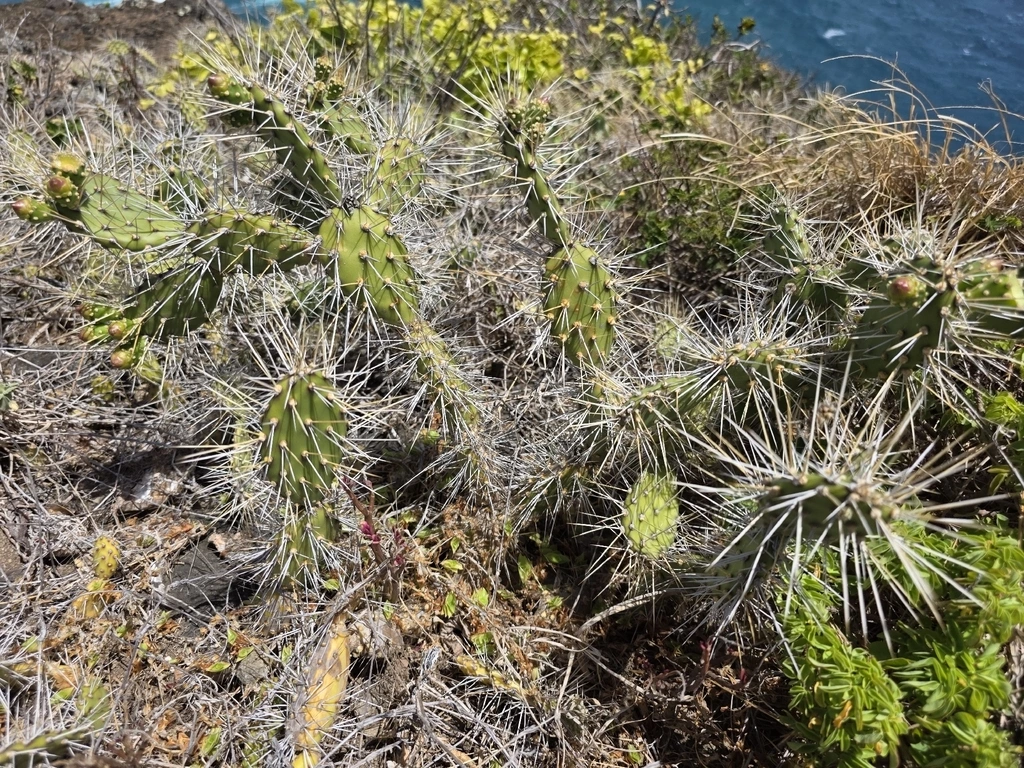
Habitat · 03
Dry cactus scrub is listed separately from rainforest in the island’s landscape mosaic. This vegetation contrast does not divide all districts into uniform dry and wet zones.
Explore the habitat ↗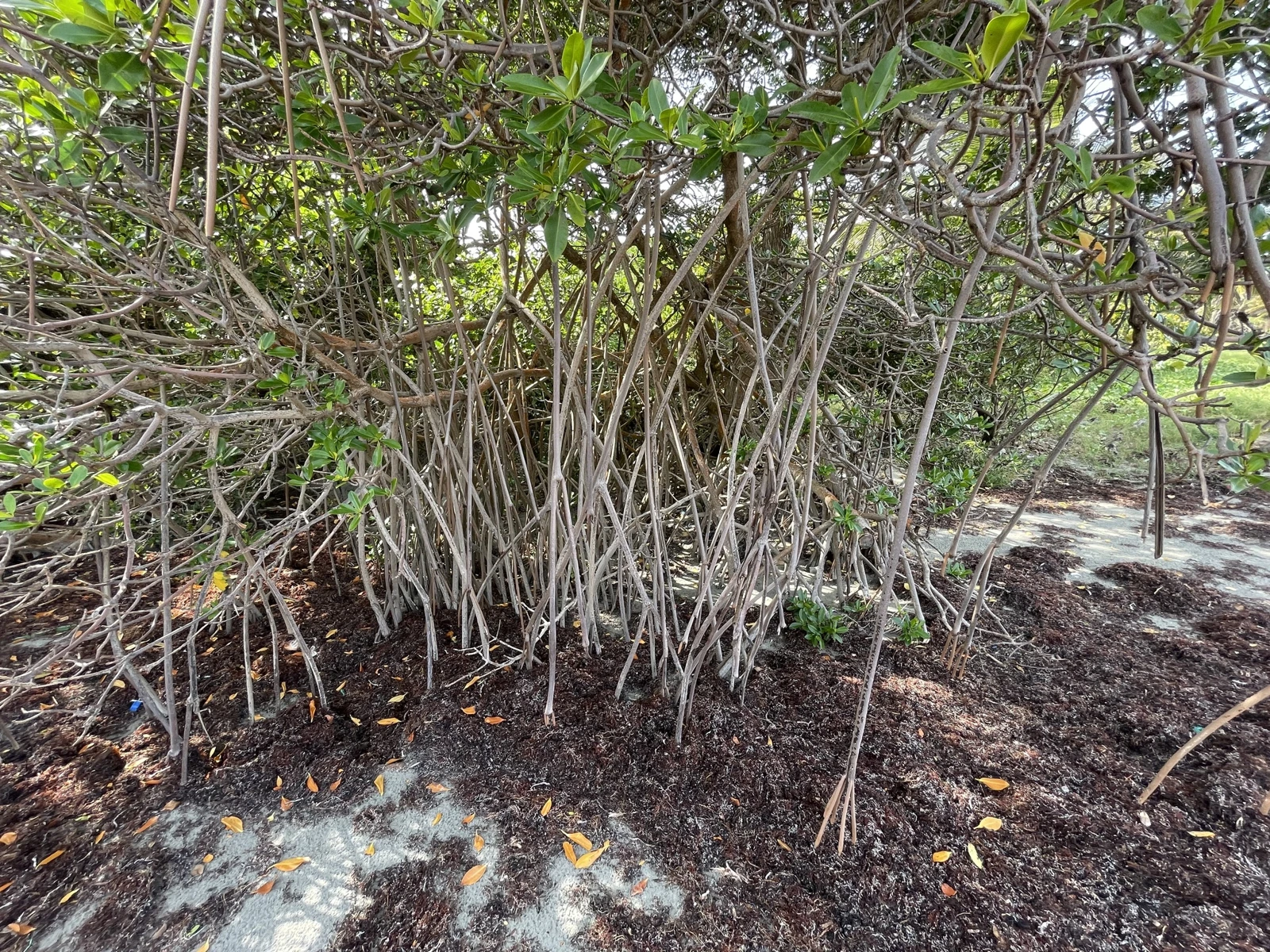
Habitat · 04
Mangroves are identified as a distinct coastal ecosystem. Historical loss estimates in the profile are not presented here as current measurements.
Explore the habitat ↗Rainforest vegetation and tall palms on Saint Lucia. — Paul Harrison. Original photograph · CC BY-SA 4.0. Cropped for the cards; photographs do not establish snake occurrence.
Soufriere and the Pitons in southwestern Saint Lucia. — DavidMPyle. Original photograph · CC BY 4.0. Cropped for the cards; photographs do not establish snake occurrence.
Coastal cactus scrub beside the Vieux Fort lighthouse on Saint Lucia, photographed in March 2026. No plant species identification is asserted. Habitat context only; no snake occurrence is inferred. — Abby Darrah. Original photograph · CC BY 4.0. Cropped for the cards; photographs do not establish snake occurrence.
Mangrove roots and canopy at Cas-en-Bas, Saint Lucia, photographed in November 2023. Landscape context only; no snake occurrence is inferred. — rinnyvanvan. Original photograph · CC BY 4.0. Cropped for the cards; photographs do not establish snake occurrence.
The species catalogue
Only records naming this place appear below. These are extracted locality records, not complete island or regional inventories.
No supported locality records have been extracted for this selection. This is a research gap, not evidence that snakes are absent.
0 species · showing 0
Try another name or clear the filters. Absence from a regional list does not establish absence in nature.
The research library
This edition lists 6 species with supported country records from checked taxonomic treatments and cited field studies. It is not a claim of a complete national inventory. Each account retains its source and check date; individual evidence entries retain their own review dates.
Country links use a single accepted species identity. Revised names and disputed records are kept visible here; uncertain records do not enter the listed collection or regional totals.
Uncertain — excluded from the listed total
The treatment includes an explicit negative or conflicting country qualification. Resolve the cited revision before counting this report.
Search results were checked against distribution text and taxonomic qualifications. A geographic name alone does not establish a political country: New Guinea, the Solomon archipelago and Micronesia span more than one country or territory. Introduced and unresolved records require separate interpretation.
Place counts require explicit named localities, including valid type localities. Counts can overlap where sources name multiple places. Regional maps group historical boundary snapshots for navigation, while island outlines use Natural Earth; neither is a species range or an observation map. Small islands can be below the outline dataset’s resolution, so geographic reference markers and the directory remain available.
geoBoundaries gbOpen ADM1; 2015 snapshot; CC0 1.0 Universal (CC0 1.0) Public Domain Dedication. Map provenance →
The treatment includes an explicit negative or conflicting country qualification. Resolve the cited revision before counting this report.
Read source 1 ↗Search candidate only: the leading current distribution account does not independently resolve this country. Retained for manual taxonomic/locality review; not evidence of absence.
Read source 1 ↗Credited boundary snapshots are navigation references, not species ranges or an assertion of current administrative arrangements. Map labels use source subdivision codes or unique shortened names; the complete names remain in the directory. A missing regional record is not evidence of absence.
National biodiversity reporting synthesis. Landscape context only; historical statistics are not presented as current measurements. Reviewed 17 October 2026.
Individual treatments and locality evidence are linked from each species account.
Species-level literature measurements and ecological traits. Exact-name matches only; imputed or ambiguous fields are omitted. These summaries are not local observations.