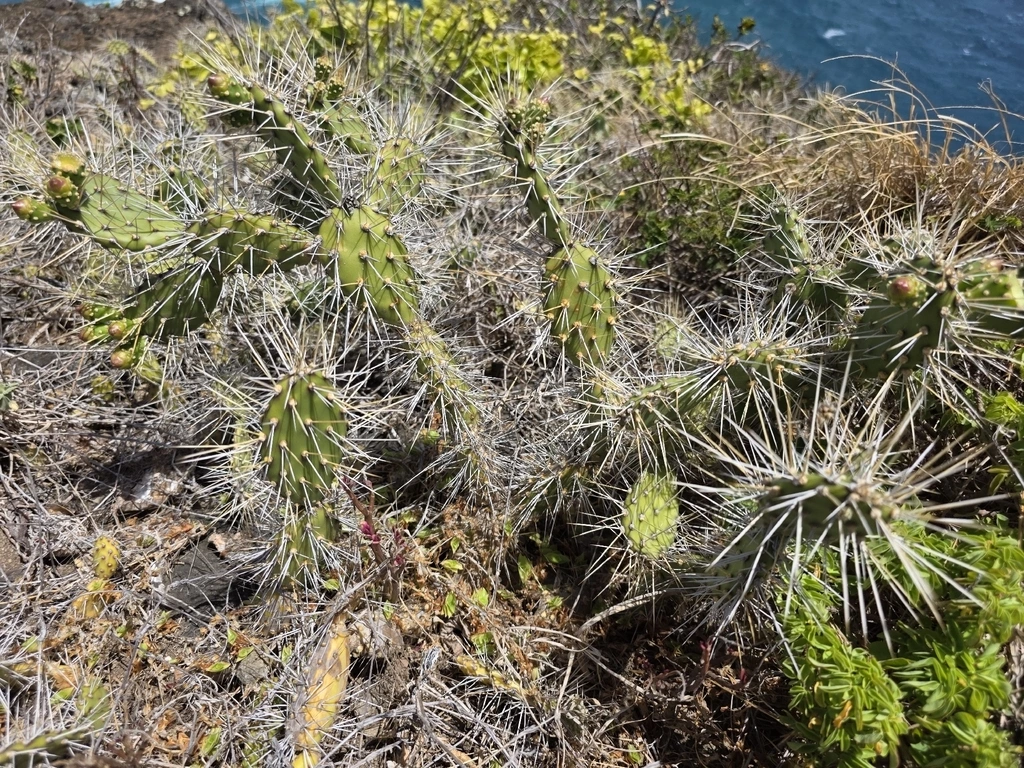
Coastal cactus scrub beside the Vieux Fort lighthouse on Saint Lucia, photographed in March 2026. No plant species identification is asserted. Habitat context only; no snake occurrence is inferred.

Saint Lucia · Habitat field guide

Scrubland & dry country

Dry cactus scrub is listed separately from rainforest in the island’s landscape mosaic. This vegetation contrast does not divide all districts into uniform dry and wet zones.

Coastal cactus scrub beside the Vieux Fort lighthouse on Saint Lucia, photographed in March 2026. No plant species identification is asserted. Habitat context only; no snake occurrence is inferred.

Photograph: Abby Darrah · Image source · CC BY 4.0. Cropped to fill the hero; darkened for text legibility.

Understanding the environment

A sense of the habitat.

Dry cactus scrub is listed separately from rainforest in the island’s landscape mosaic. This vegetation contrast does not divide all districts into uniform dry and wet zones.

Geographic scope
Saint Lucia; retain the named source locality.
Evidence scale
Landscape descriptions are separate from species records.
Source date
Retain the original publication date; reviewed 17 October 2026.

Explore the structure · Select a layer to compare details retained in a field record.

Read the locality in three layers.

Select a zone to see what changes.

Substrate

Substrate

Separate sand, rock and soil.

Check the original species record before assigning habitat use.

These reading prompts are conceptual, not a transect or an occurrence map.

Sources: Convention on Biological Diversity · Saint Lucia national profile

Field notes · 01

The documented setting

Dry cactus scrub is listed separately from rainforest in the island’s landscape mosaic. This vegetation contrast does not divide all districts into uniform dry and wet zones.

Sources: Convention on Biological Diversity · Saint Lucia national profile

Field notes · 02

Connect the setting to a species

The country landscape and a species habitat association answer different questions. Follow the species account for direct habitat evidence. An empty collection indicates missing extracted evidence, not biological absence.

Pressures on Saint Lucia’s habitats

What is at risk?

A site-specific assessment of pressures has not yet been extracted for this guide. The landscape sources below provide context; they do not establish a current threat level for each snake species.

What helps this habitat

Read conservation pressures with their source date and locality; a landscape-level pressure is not a measured decline for every snake.

The connected collection

Snakes with habitat evidence.

These 1 species have supported country occurrence and an explicit habitat association in the shared account. The association may come from elsewhere in their range. This is not a complete local habitat inventory; the places above are landscape examples, not asserted collecting sites.

1 species · showing 1

All 6 species in the country collection →

Read further

Evidence & sources.

Guide reviewed 17 October 2026. Source dates and geographic scope matter; landscape photographs do not establish species occurrence.

  1. Convention on Biological Diversity · Saint Lucia national profile

    National biodiversity reporting synthesis. Landscape context only; historical statistics are not presented as current measurements. Reviewed 17 October 2026.

Continue through Saint Lucia

Explore another habitat.

01

Forest & woodland

The national profile distinguishes rainforest and montane forest from areas transformed for plantation agriculture. Plantation cover should not be silently relabelled as natural woodland.

02

Highland environments

Montane forest is explicitly distinguished in Saint Lucia’s profile. A species recorded on the island still needs elevation and locality evidence before it can be assigned to this environment.

03

Mangroves & estuaries

Mangroves are identified as a distinct coastal ecosystem. Historical loss estimates in the profile are not presented here as current measurements.