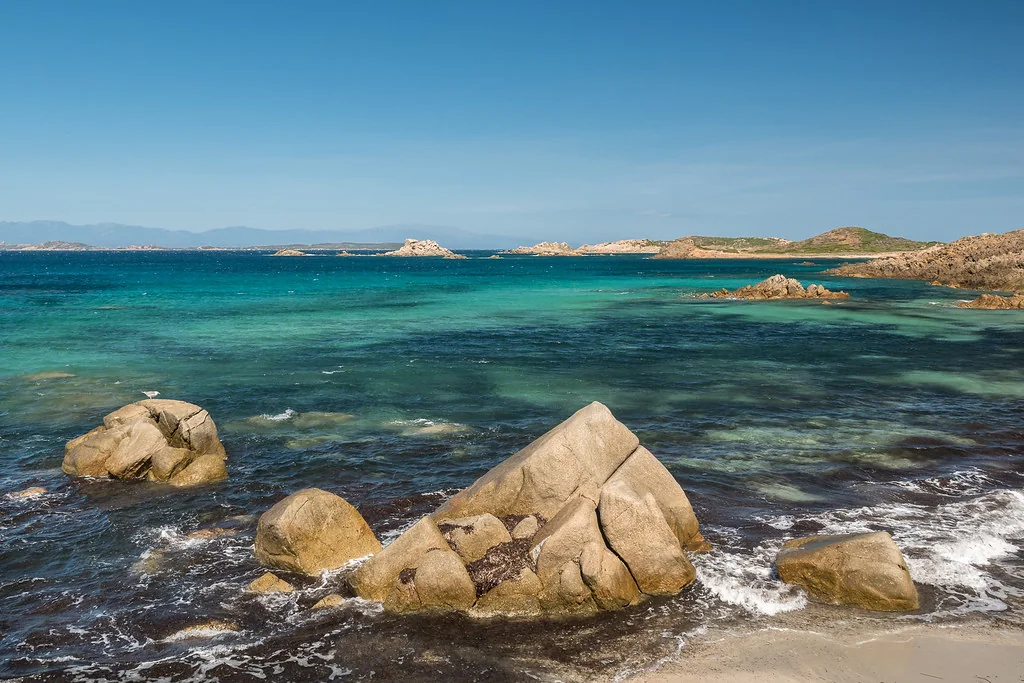
Rocky coast and clear water at Bassa Trinità, La Maddalena, Sardinia.

Italy · Place guide

Sicily & Sardinia

This guide covers Sicily & Sardinia using the credited source outlines. Its named source units are Isole.

3species with extracted evidence
3families
5region guides

Rocky coast and clear water at Bassa Trinità, La Maddalena, Sardinia.

Photograph: A_Peach · Image source · CC BY 2.0. Cropped to fill the hero; darkened for text legibility.

Geography & biotopes

Read the landscape.

This guide covers Sicily & Sardinia using the credited source outlines. Its named source units are Isole.

National geographic context: Alpine mountains, northern plains and Mediterranean peninsula and islands create sharply different geographic and ecological settings. This describes the broader setting; the habitat at an individual locality still needs its own evidence.

Ecological connections

Record the place name, date, elevation where available, and the actual vegetation or substrate at the observation point. Keep a species identification separate from the surrounding landscape description; a suitable-looking habitat is not a presence record.

Explore the setting

Use the responsible local authority’s current access information. Respect restricted sites and avoid disturbing animals or revealing sensitive breeding localities. Historical map boundaries do not establish present access conditions.

This guide indexes these source names: Isole. A country-only record is not automatically assigned to this place. Map markers identify navigation destinations, not collection sites.

Boundary provenance and regional grouping →

Convention on Biological Diversity - Italy profile →
Geography is part of the record

Find your way through Italy.

Select a named region to open its evidence page. The complete directory below keeps every guide accessible, including places where locality evidence has not yet been extracted.

5 of 21 listed species have at least one indexed region record. 16 remain country-only. Even a nonzero count is not a complete regional inventory.

Habitats & living landscapes

Explore the living
landscapes.

Explore 2 guides to the environments, places and conservation pressures that shape this country. Each guide connects to the regional map and shared species accounts.

Landscape photographs & credits

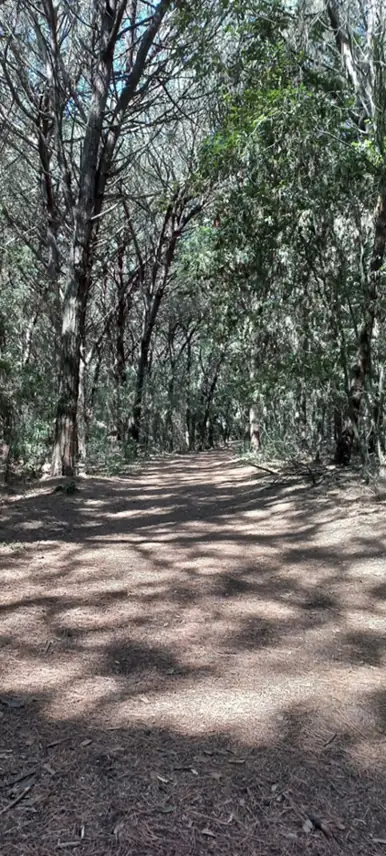
A woodland path in the Circeo landscape, Italy. — MasPro57. Original photograph · CC BY-SA 4.0. Cropped for the cards; photographs do not establish snake occurrence.

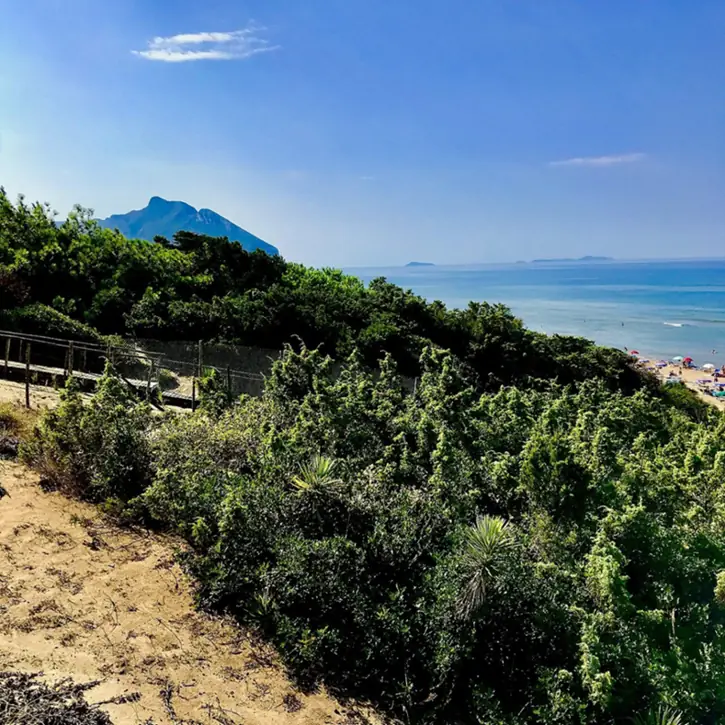
Vegetated dunes at Sabaudia in Circeo National Park, Italy, August 2018, with the Mediterranean beyond. — Zazzapino. Original photograph · CC BY-SA 4.0. Cropped for the cards; photographs do not establish snake occurrence.

The species catalogue

Snakes · Sicily & Sardinia.

Only records naming this place appear below. These are extracted locality records, not complete island or regional inventories.

3 species · showing 3

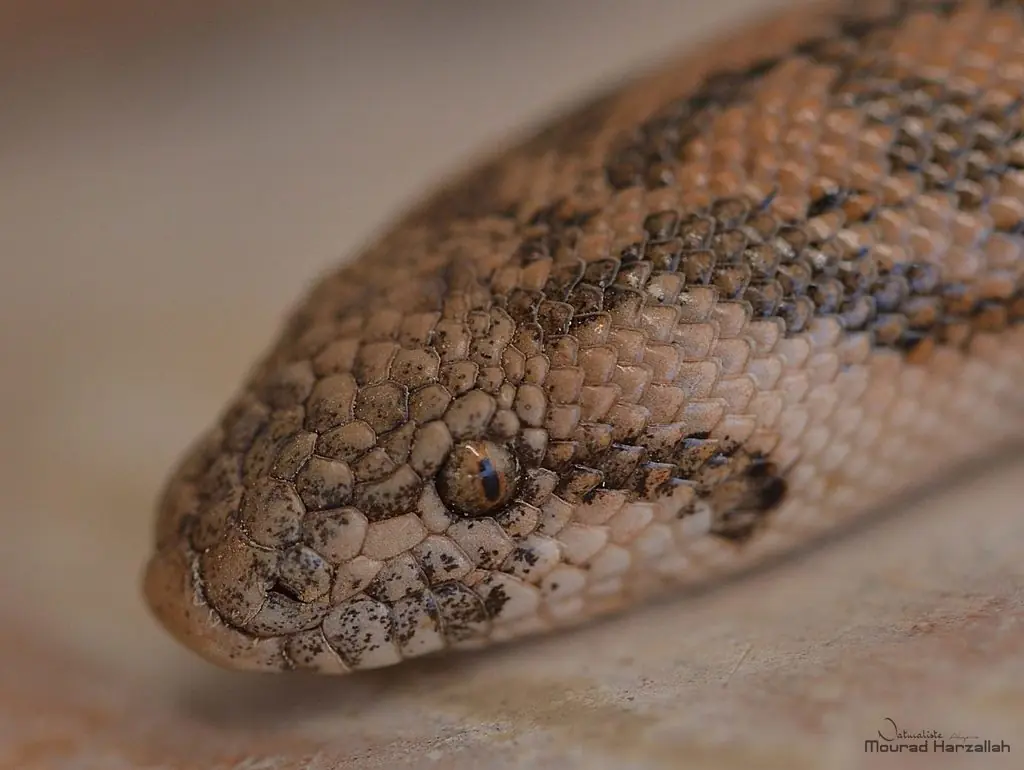
Eryx jaculus. Identification follows the linked source community.

001 · Boidae

Javelin Sand Boa

Eryx jaculus

(LINNAEUS, 1758)

Non-venomous

Country explicitly listed in the checked taxonomic treatment. The 2019 study examined snakes sampled from August 2014 to September 2018 between Palma di Montechiaro and Butera in southern Sicily. It discusses uncertain biogeographic origins and calls for genetic work; this account makes no new native-status or subspecies assignment.

Read the species account →

Mourad Harzallah · CC BY 4.0 · https://creativecommons.org/licenses/by/4.0/

Indotyphlops braminus — photographed on Ko Pha-ngan, Thailand.

002 · Typhlopidae

Flowerpot Snake

Indotyphlops braminus

(DAUDIN, 1803)

Non-venomous

Introduced populations; Portuguese evidence here is Madeira and Spanish evidence the Canary Islands, not mainland occurrence. The study confirms Paceco records with examined material and documents Pantelleria using a 2023 video and a 2024 specimen. Valderice imagery has identification limitations and is not mapped as a confirmed locality here.…

Read the species account →

Cook-Price, Makchai & Suwanwaree (2026); photographs credited collectively to the author, James Covert and Vikas Kumar · CC BY 4.0 · https://creativecommons.org/licenses/by/4.0/

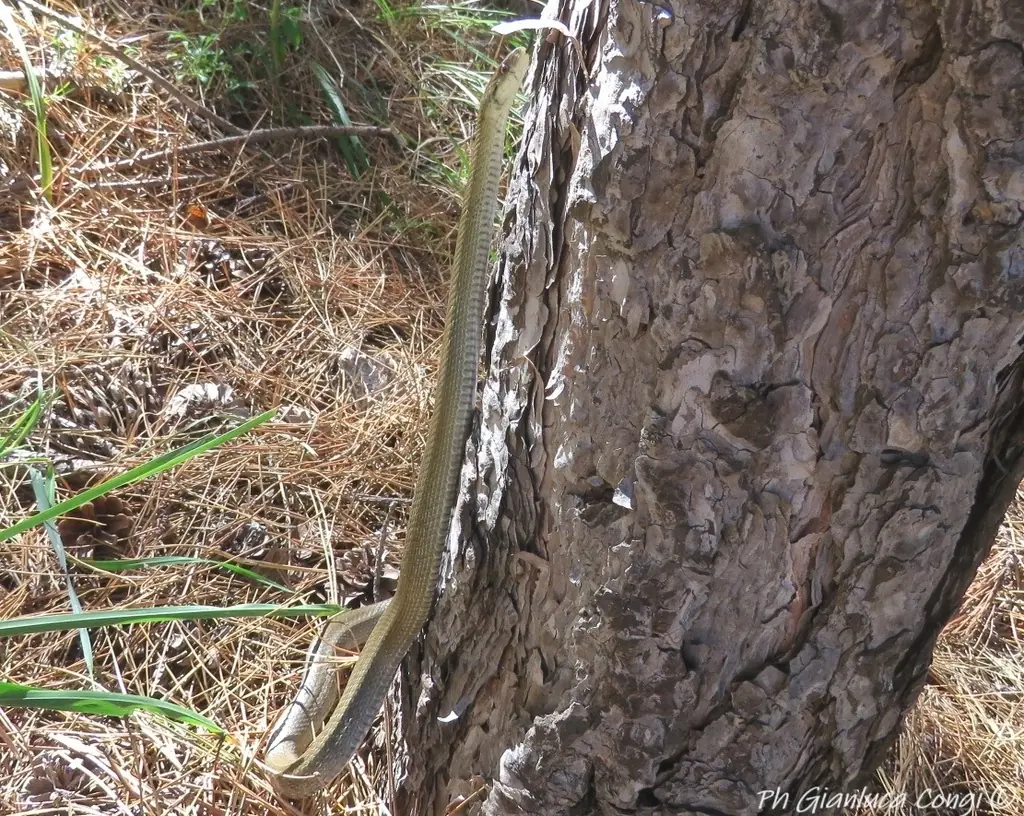
Zamenis lineatus. Identification follows the linked source community.

003 · Colubridae

Striped Aesculapian rat snake

Zamenis lineatus

(CAMERANO, 1891)

Venom unknownNot yet assessed

Country explicitly listed in the checked taxonomic treatment. Sicily is included in the national assessment. The assessment cites published records from the inland Monti Lepini. Sicily is included in the national assessment. The assessment cites published records from the inland Monti Lepini.

Read the species account →

Gianluca Congi🪶🦆🌲 · CC BY-SA 4.0 · https://creativecommons.org/licenses/by-sa/4.0/

Explore all 21 country records →

The research library

Sources & the checklist.

This edition lists 21 species with supported country records from checked taxonomic treatments and cited field studies. This total includes 1 record marked as introduced; it is not a native-species total. It is not a claim of a complete national inventory. Each account retains its source and check date; individual evidence entries retain their own review dates.

Independent checklist comparison · 2026-10-11

21 documented current or explicitly qualified country records. This is a source-backed working inventory; recent national completeness and locality coverage remain under review.

Individually reviewed taxonomic treatments and cited primary records ↗

Review still open

Hierophis gemonensis

Historical northeastern Italian reports are not accepted by the cited 2021 national checklist; current occurrence remains under review.

Macroprotodon cucullatus

The old broad distribution is explicitly unreconciled; Iberian/Balearic populations belong to other identities and Lampedusa remains taxonomically unresolved.

Range and taxonomy review

Country links use a single accepted species identity. Revised names and disputed records are kept visible here; uncertain records do not enter the listed collection or regional totals.

Indotyphlops braminus

Introduced occurrence

Introduced populations; Portuguese evidence here is Madeira and Spanish evidence the Canary Islands, not mainland occurrence. The study confirms Paceco records with examined material and documents Pantelleria using a 2023 video and a 2024 specimen. Valderice imagery has identification limitations and is not mapped as a confirmed locality here. Unsuccessful Palermo surveys are not occurrence records.

Source 1 ↗

Source 2 ↗

Hierophis gemonensis

Uncertain — excluded from the listed total

Historical northeastern Italian reports are not accepted by the cited 2021 national checklist; current occurrence remains under review.

Source 1 ↗

Macroprotodon cucullatus

Uncertain — excluded from the listed total

The old broad distribution is explicitly unreconciled; Iberian/Balearic populations belong to other identities and Lampedusa remains taxonomically unresolved.

Source 1 ↗

Source 2 ↗

How the map and counts work

Search results were checked against distribution text and taxonomic qualifications. A geographic name alone does not establish a political country: New Guinea, the Solomon archipelago and Micronesia span more than one country or territory. Introduced and unresolved records require separate interpretation.

Place counts require explicit named localities, including valid type localities. Counts can overlap where sources name multiple places. Regional maps group historical boundary snapshots for navigation, while island outlines use Natural Earth; neither is a species range or an observation map. Small islands can be below the outline dataset’s resolution, so geographic reference markers and the directory remain available.

ISTAT, National Institute of Statistics; geoBoundaries gbOpen ADM1; 2023; Creative Commons Attribution 3.0 License. Generalised navigation outlines, not species ranges. Map provenance →

  1. Convention on Biological Diversity - Italy profile ↗

    Historical national biodiversity context; no current percentage, condition, species count or access inference.

  2. Boundary snapshot and atlas region membership ↗

    ISTAT, National Institute of Statistics; geoBoundaries gbOpen ADM1; 2023; Creative Commons Attribution 3.0 License. Generalised navigation outlines, not species ranges.

  3. Boundary provenance and regional grouping ↗
  4. Convention on Biological Diversity - Italy profile ↗
  5. The Reptile Database

    Individual treatments and locality evidence are linked from each species account.

  6. Meiri (2024): SquamBase 1.0

    Species-level literature measurements and ecological traits. Exact-name matches only; imputed or ambiguous fields are omitted. These summaries are not local observations.

  7. Natural Earth: public-domain geographic data

Continue through the Europe atlas →