Pressures in the source record
Overgrazing, erosion and water pollution are documented national pressures. These are background concerns, not an assessment of the photographed point today.
Sources: CBD · Iran national profile (draft)
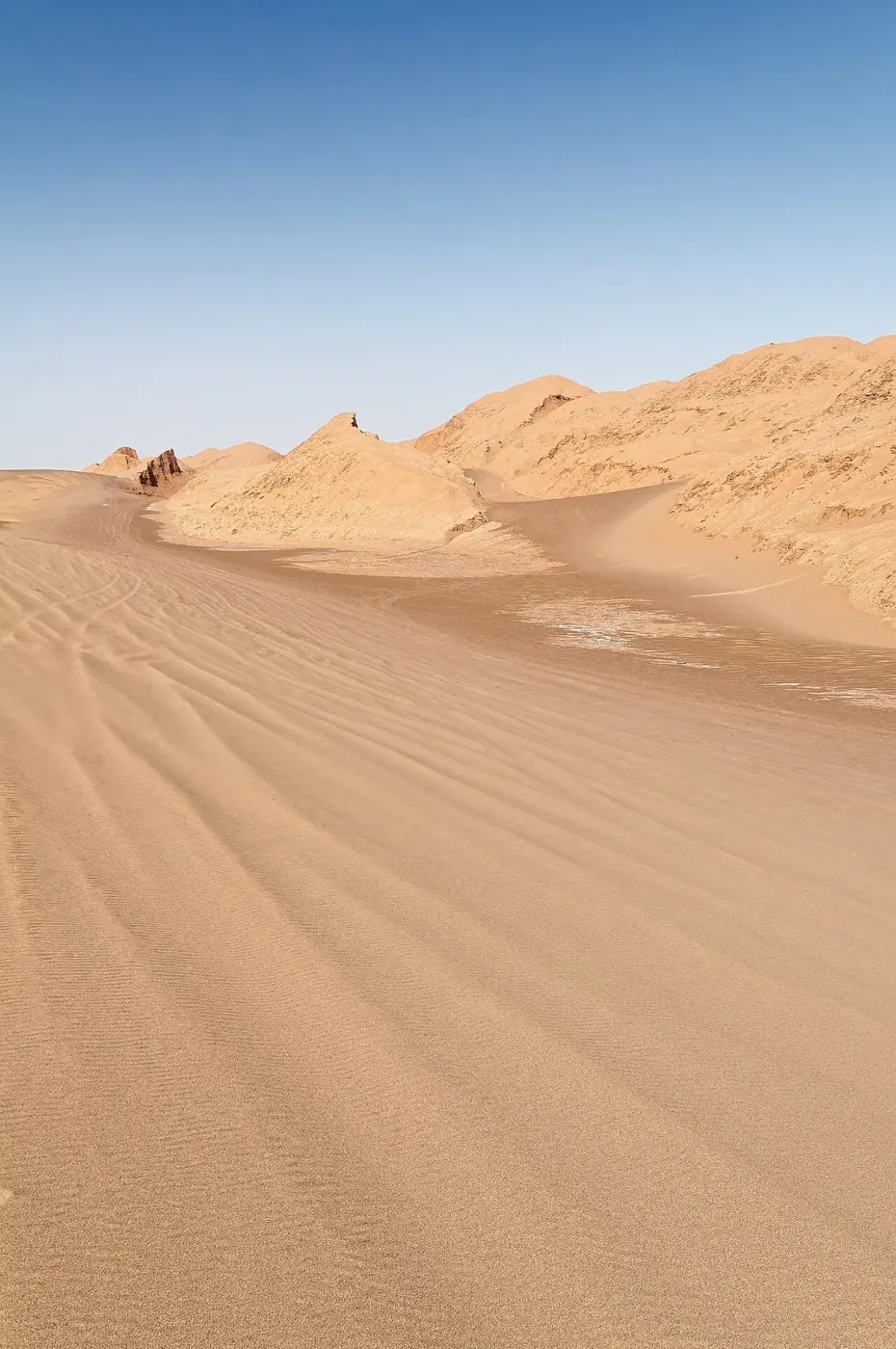
Iran · Habitat field guide
Explore the documented landscape around Lut Desert. The named example anchors this guide; the country map and separately sourced species accounts answer different questions.
Dunes and bare terrain in the Lut Desert, Kerman, Iran.
Understanding the environment
Explore the documented landscape around Lut Desert. The named example anchors this guide; the country map and separately sourced species accounts answer different questions.
Explore the structure · Open ground → sheltered edge → watercourse
Select a zone to see what changes.
Sand, stone or clay
Use the photograph to describe visible substrate. Avoid treating every bare surface as a sand desert.
Compare this unit with the documented local setting and keep the observation date, exact place and source distinct.
These panels are a conceptual reading sequence, not a mapped transect or a recommendation to enter the site.
Sources: UNESCO · Lut
Field notes · 01
The Lut Desert contains stony ground, dunes and wind-sculpted ridges. UNESCO describes strong seasonal winds as a major land-shaping process; bare rock and loose sand should therefore be distinguished rather than merged into a single desert surface.
Sources: UNESCO · Lut
Field notes · 02
Distinguish mobile sand, gravel, exposed rock, clay and saline ground. Sparse vegetation can be highly localized, so a single greener patch should not be generalized across the surrounding dryland. Describe watercourses separately even when they are dry in the image.
Pressures on Iran’s habitats
Overgrazing, erosion and water pollution are documented national pressures. These are background concerns, not an assessment of the photographed point today.
Sources: CBD · Iran national profile (draft)
When revisiting an image or locality, compare the same season, water stage and viewing area before interpreting a change. Keep source dates visible.
Use the country and region maps to orient the landscape, then read each species profile for its independently reviewed habitat and range evidence. Similar scenery does not establish a shared species list.
The connected collection
These 14 species have supported country occurrence and an explicit habitat association in the shared account. The association may come from elsewhere in their range. This is not a complete local habitat inventory; the places above are landscape examples, not asserted collecting sites.
14 species · showing 14
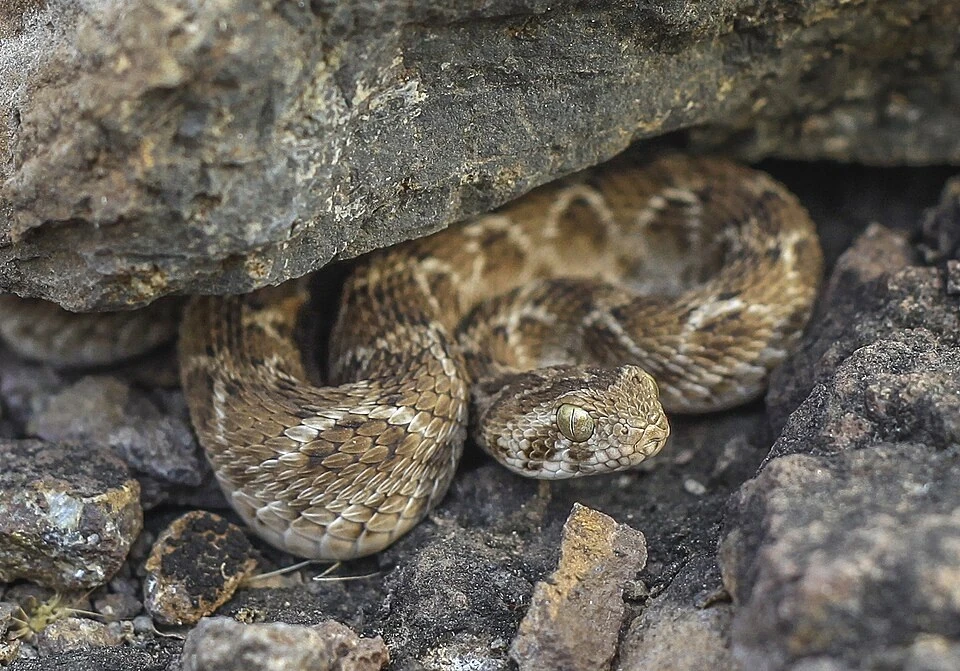
001 · Viperidae
Saw-scaled Viper, Phoorsa
Explicit country record in the checked taxonomic treatment.
Read the species account →Sagar khunte · CC BY-SA 4.0 · https://creativecommons.org/licenses/by-sa/4.0
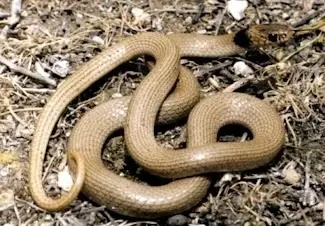
002 · Colubridae
Collared Dwarf Racer
Explicit country record in the checked taxonomic treatment.
Read the species account →Tigran Tadevosyan · CC BY 4.0 · https://creativecommons.org/licenses/by/4.0/
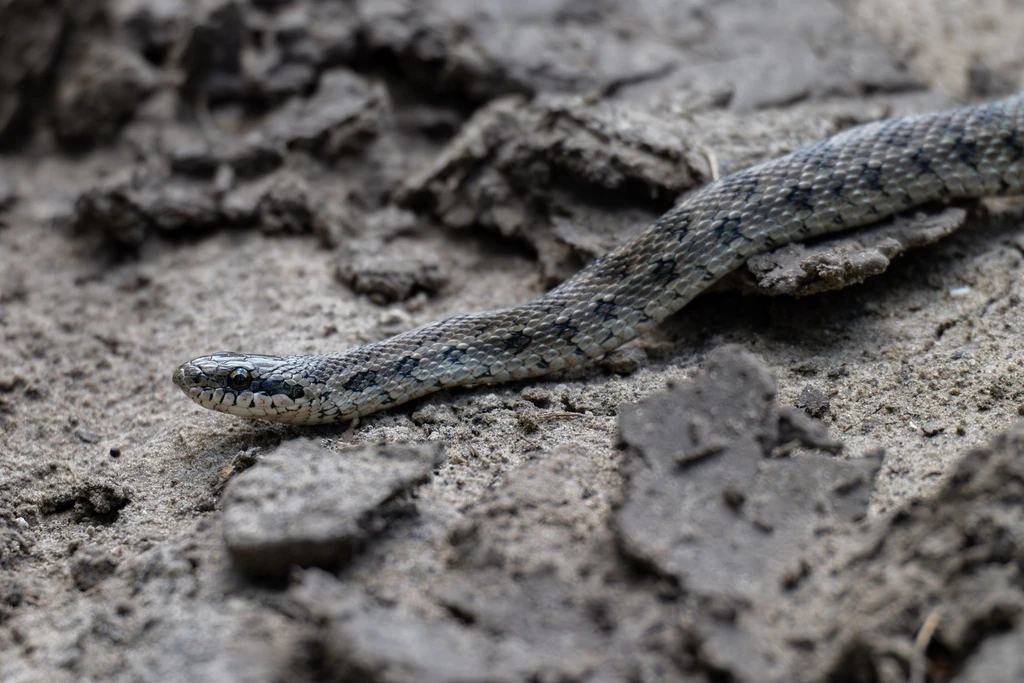
003 · Colubridae
Steppes Ratsnakes
Explicit country record in the checked taxonomic treatment.
Read the species account →Stanislav Murashkin · CC BY 4.0 · https://creativecommons.org/licenses/by/4.0/
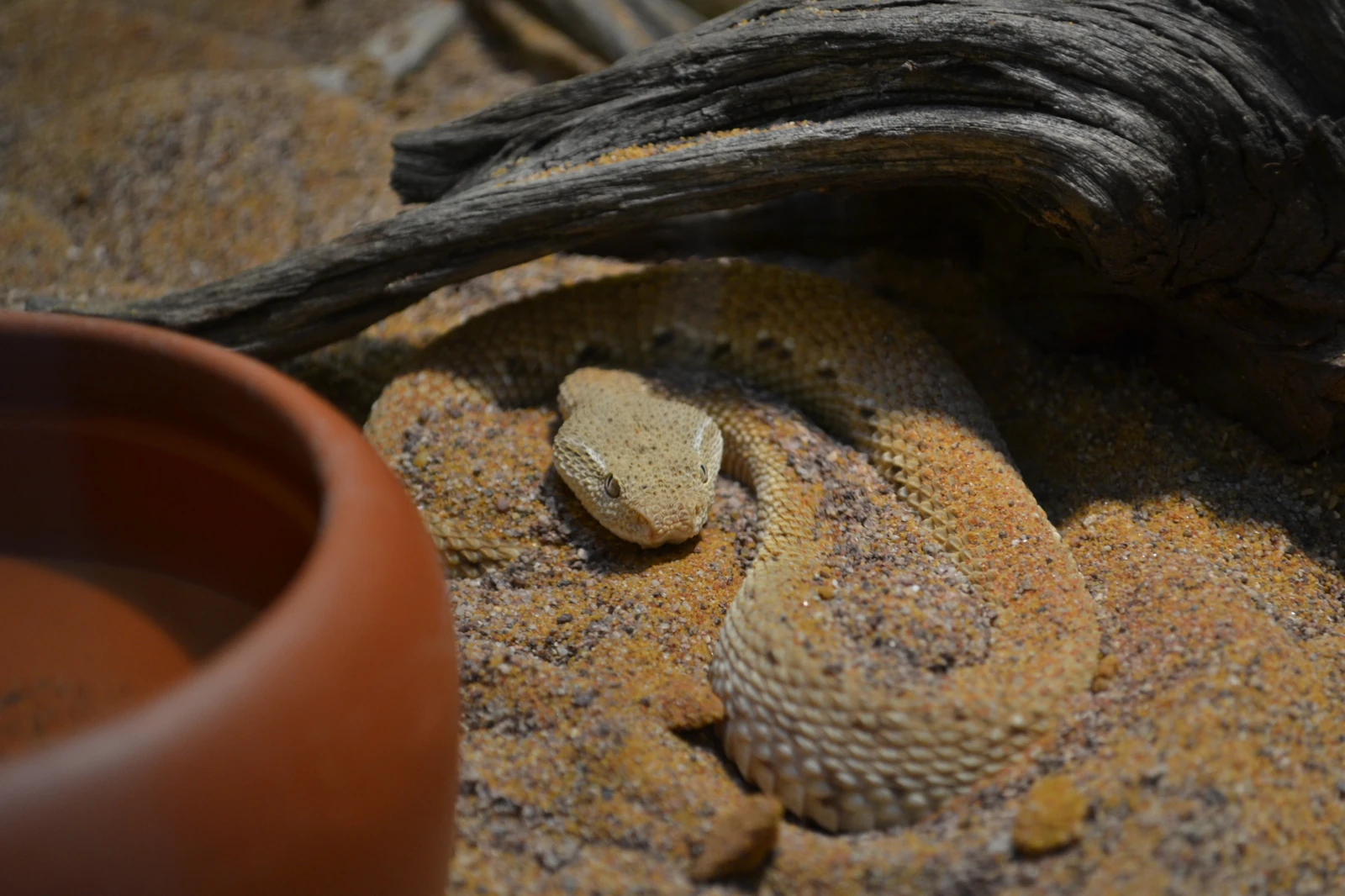
004 · Viperidae
McMahons Desert Viper, Asian sand viper
Explicit country record in the checked taxonomic treatment.
Read the species account →Luca Napelo · CC BY 4.0 · https://creativecommons.org/licenses/by/4.0/
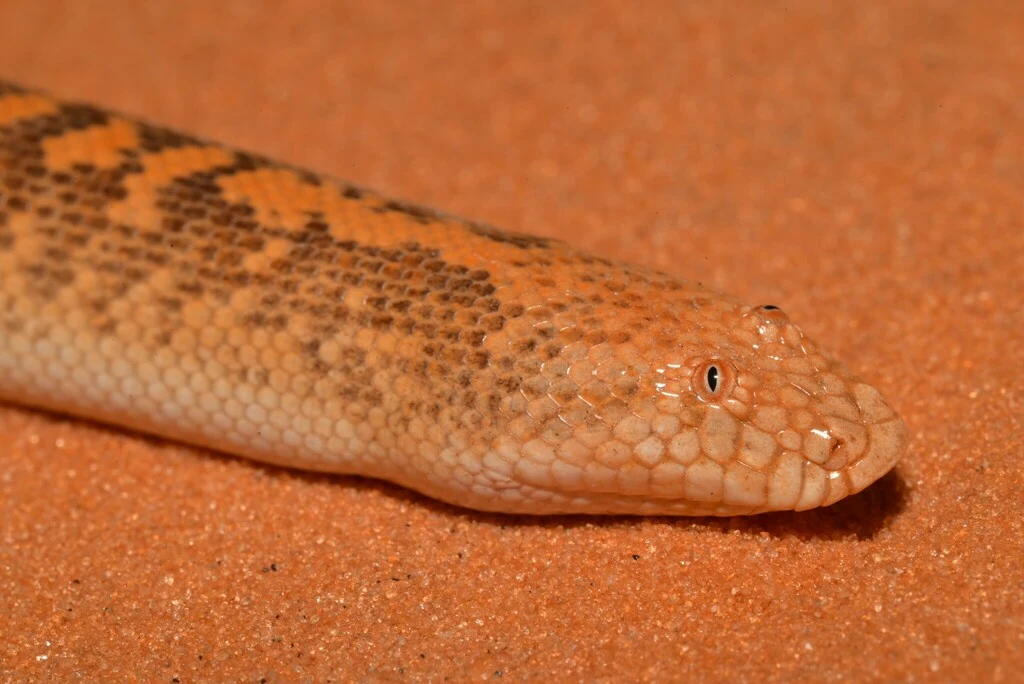
005 · Boidae
Arabian Sand Boa
Explicit country record in the checked taxonomic treatment.
Read the species account →Marius Burger · CC0 1.0 · https://creativecommons.org/publicdomain/zero/1.0/
006 · Colubridae
Maynard's Longnose Sand Snake
Included in the 2024 Iranian species review.
Read the species account →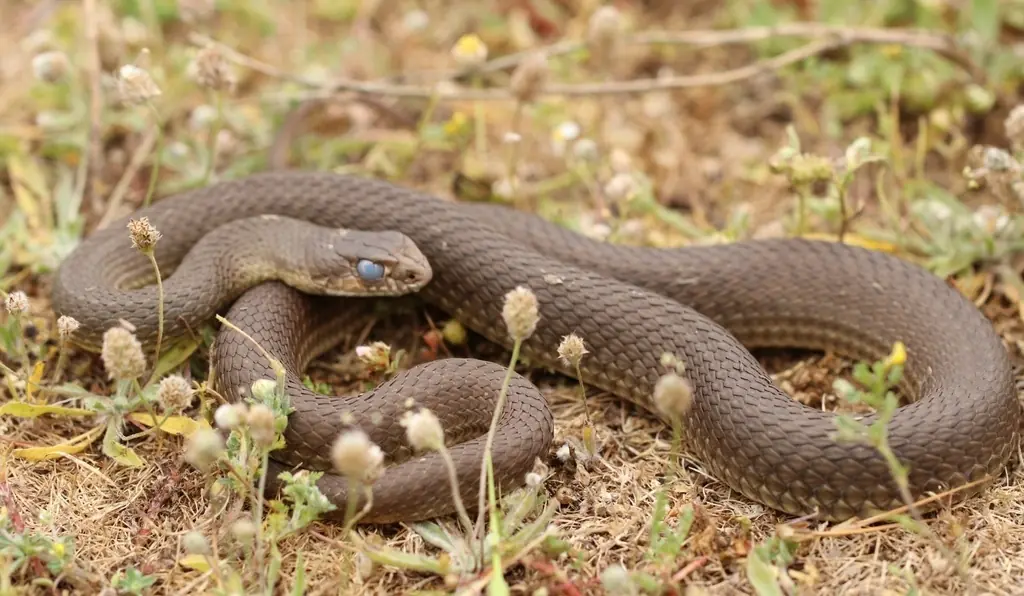
007 · Psammophiidae
Eastern Montpellier Snake
Explicit country record in the checked taxonomic treatment.
Read the species account →Ryan van Huyssteen · CC BY 4.0 · https://creativecommons.org/licenses/by/4.0/
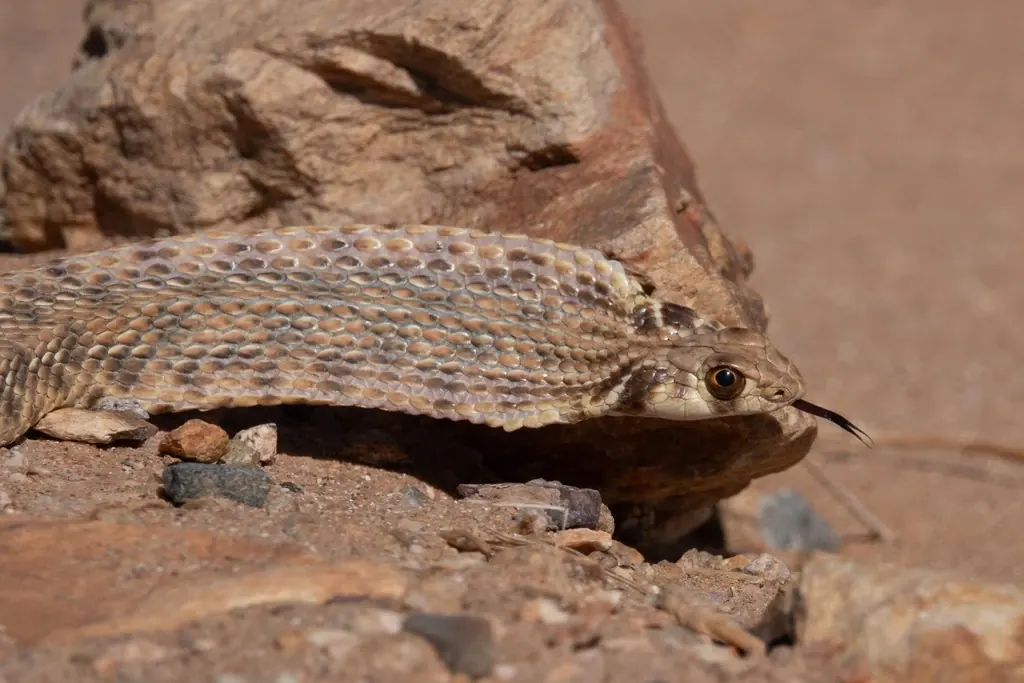
008 · Psammophiidae
Moila Snake
Explicit country record in the checked taxonomic treatment.
Read the species account →Demian Hiß · CC BY 4.0 · https://creativecommons.org/licenses/by/4.0/
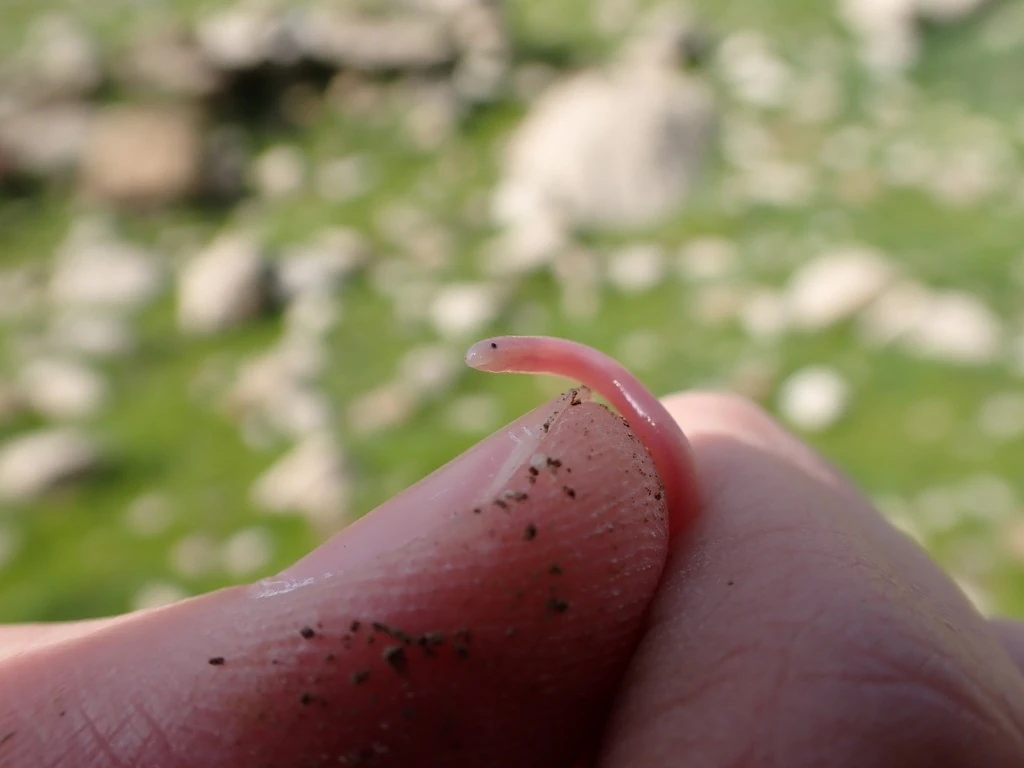
009 · Leptotyphlopidae
Longnosed Worm Snake, Hook-snouted worm snake
Explicit country record in the checked taxonomic treatment.
Read the species account →Kian · CC BY 4.0 · https://creativecommons.org/licenses/by/4.0/
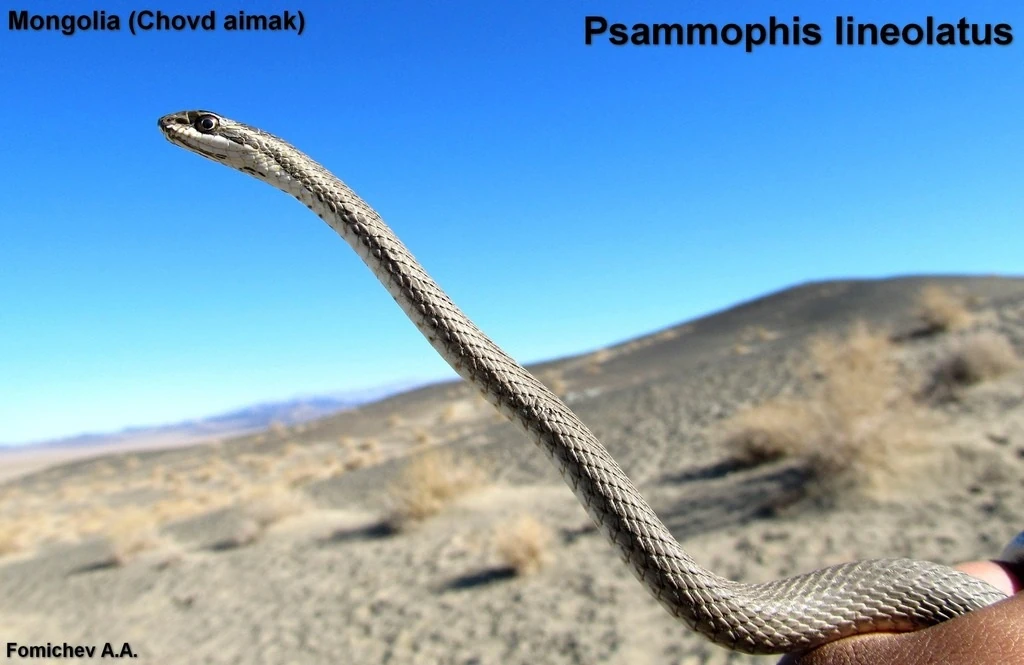
010 · Psammophiidae
Steppe Ribbon Racer
Explicit country record in the checked taxonomic treatment.
Read the species account →Alexander A. Fomichev · CC BY 4.0 · https://creativecommons.org/licenses/by/4.0/
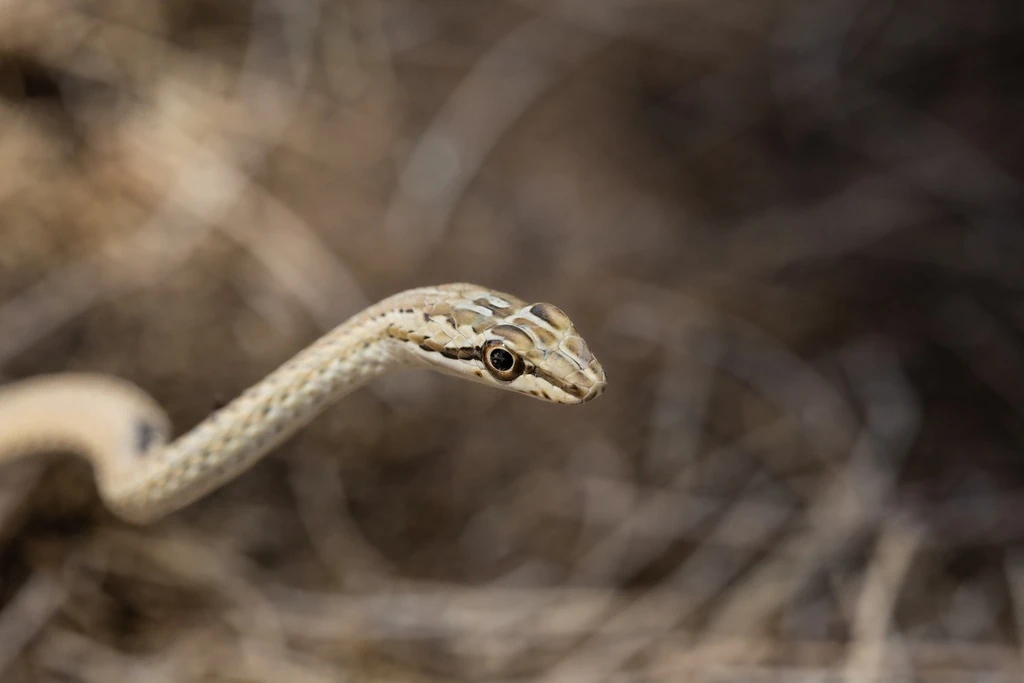
011 · Psammophiidae
Schokari Sand Racer, Forskal Sand Snake
Explicit country record in the checked taxonomic treatment.
Read the species account →Mahomed Desai · CC BY 4.0 · https://creativecommons.org/licenses/by/4.0/
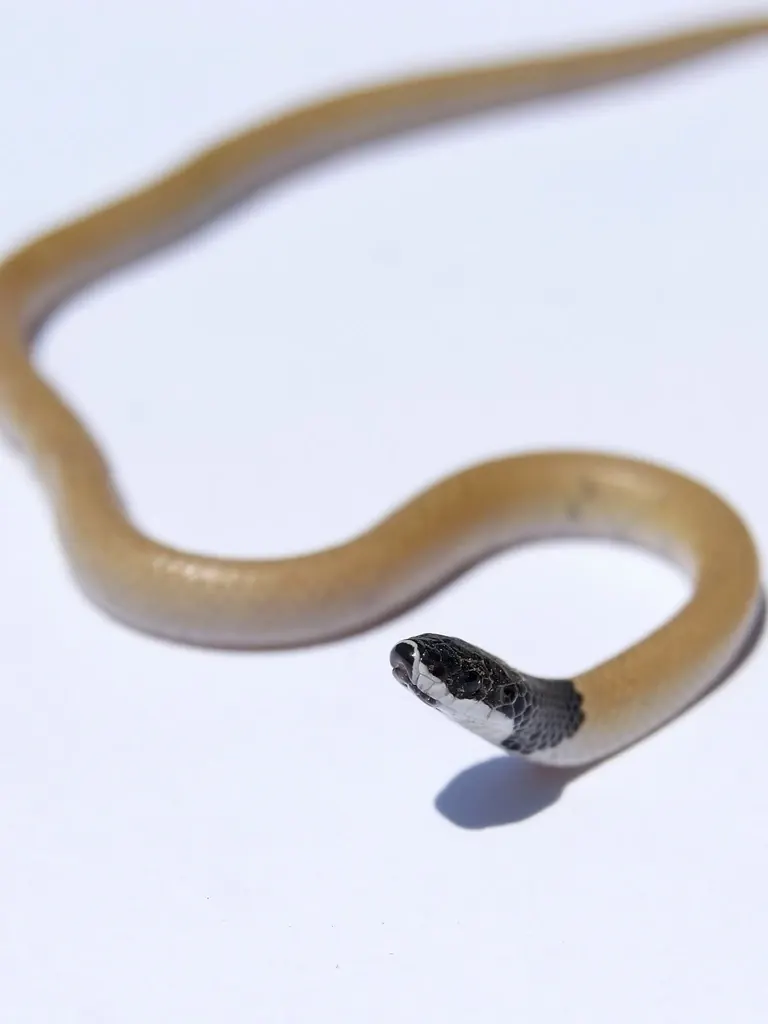
012 · Colubridae
Palestine Kukri Snake
Explicit country record in the checked taxonomic treatment.
Read the species account →Dr. Nasser Halaweh · CC BY 4.0 · https://creativecommons.org/licenses/by/4.0/
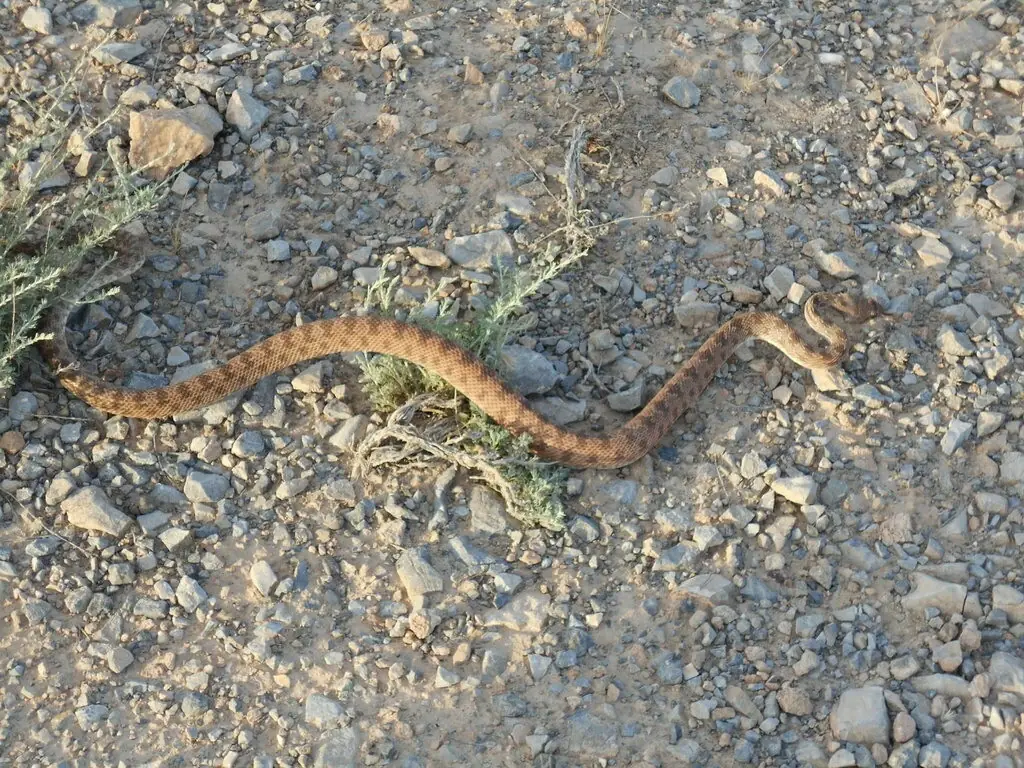
013 · Colubridae
Diadem Snake, Royal Snake
Explicit country record in the checked taxonomic treatment.
Read the species account →Askar Akhmedov · CC BY 4.0 · https://creativecommons.org/licenses/by/4.0/
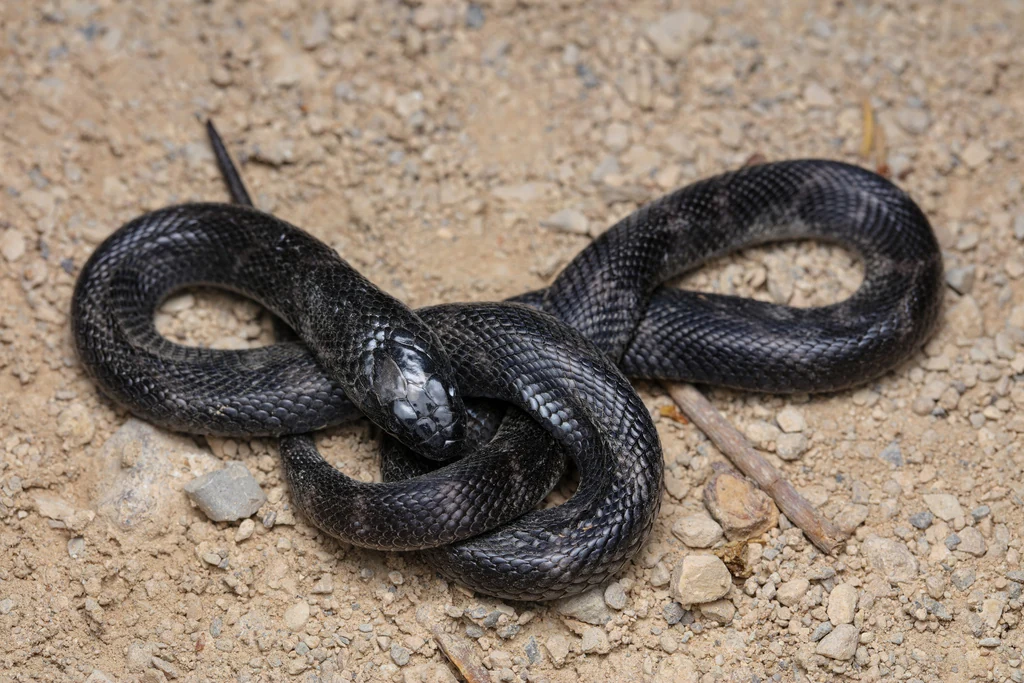
014 · Elapidae
Desert Cobra
Reconciled country record following the morgani synonymy.
Read the species account →Kian · CC BY 4.0 · https://creativecommons.org/licenses/by/4.0/
Read further
Guide reviewed 11 October 2026. Source dates and geographic scope matter; landscape photographs do not establish species occurrence.
Named landscape, vegetation or hydrological setting only; no snake occurrence inferred. Historical site accounts are not current condition or access assessments.
Historical national overview marked draft by the Secretariat; broad pressures and landscape context, not a current local condition survey, current statistics or wildlife locality evidence.
Continue through Iran
Explore the documented landscape around Caspian Hyrcanian forests. The named example anchors this guide; the country map and separately sourced species accounts answer different questions.
02Explore the documented landscape around Golestan and eastern Alborz. The named example anchors this guide; the country map and separately sourced species accounts answer different questions.
03Explore the documented landscape around Anzali Wetland. The named example anchors this guide; the country map and separately sourced species accounts answer different questions.