Riverbed extraction
Sand and stone removal from rivers was documented as a pressure in the 2011 report.
Timor-Leste · Habitat field guide
Freshwater habitat includes river catchments and the eastern lake landscape. Coastal lagoons require separate attention because some are saline.
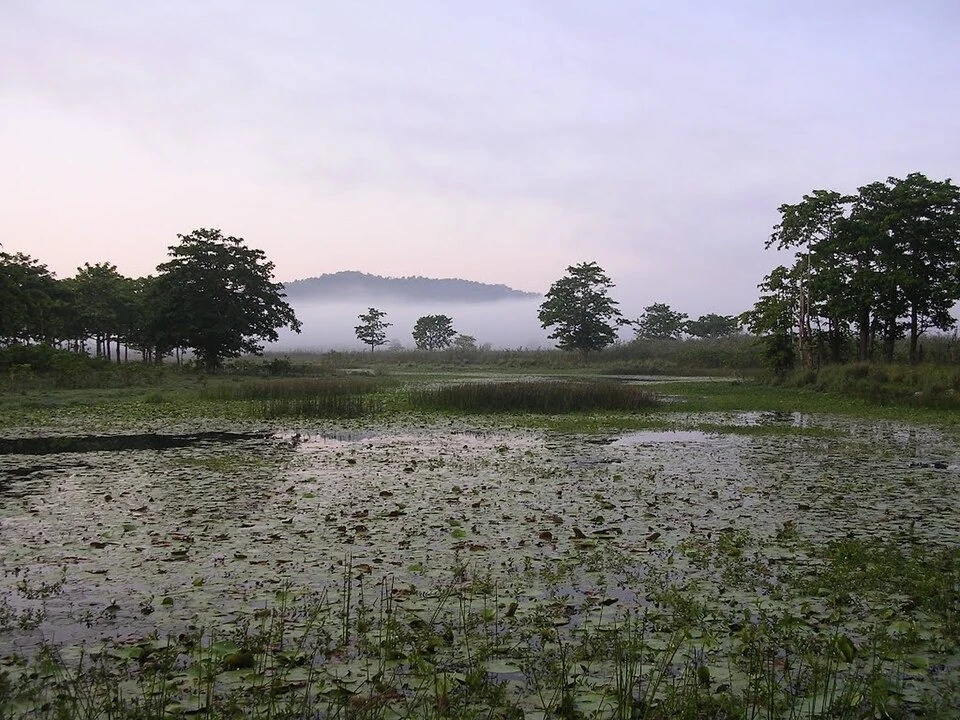
Flooded lagoons associated with Lake Iralalaro near Malahara, Lautem, Timor-Leste.
Understanding the environment
Freshwater habitat includes river catchments and the eastern lake landscape. Coastal lagoons require separate attention because some are saline.
Explore the structure · Explore three connected parts of this landscape.
Select a zone to see what changes.
Follow water downhill
Look beyond the bank to the vegetation and land draining toward it.
Record whether flow follows rain, managed releases or a permanent stream.
A conceptual reading guide, not a measured transect, access route or snake occurrence map.
Sources: Timor-Leste · Fourth CBD national report (2011) · Timor-Leste Tourism · Nino Konis Santana
Field notes · 01
The historical national report describes Ira Lalaro and its floodplain vegetation. The lake belongs to the wider eastern conservation landscape; record the actual wetland margin rather than using the entire park as the observation site.
Sources: Timor-Leste · Fourth CBD national report (2011) · Timor-Leste Tourism · Nino Konis Santana
Field notes · 02
The same report identifies the Loes as a major river system. Compare channels, riparian cover and surrounding land use. Maubara’s official guide describes a salt lake, illustrating why a coastal waterbody should not receive a freshwater tag from its name alone.
Sources: Timor-Leste · Fourth CBD national report (2011) · Timor-Leste Tourism · Maubara and Liquica
Pressures on Timor-Leste’s habitats
Sand and stone removal from rivers was documented as a pressure in the 2011 report.
That assessment also connected erosion and sediment with upstream land disturbance.
Assess the catchment as well as the water’s edge, and distinguish natural seasonal change from new disturbance.
The connected collection
These 3 species have supported country occurrence and an explicit habitat association in the shared account. The association may come from elsewhere in their range. This is not a complete local habitat inventory; the places above are landscape examples, not asserted collecting sites.
3 species · showing 3
001 · Acrochordidae
Little filesnake
Listed in the checked distribution source. O’Shea et al. (2015) give these named Timor-Leste localities in the species treatment. Voucher-backed survey records are distinguished there from earlier literature; locality names retain the administrative geography used in the publication. These sites do not delimit the entire range.
Read the species account →Mario Lutz · Copyright Mario Lutz. Authorised for display in this atlas; no third-party reuse licence granted.
002 · Typhlopidae
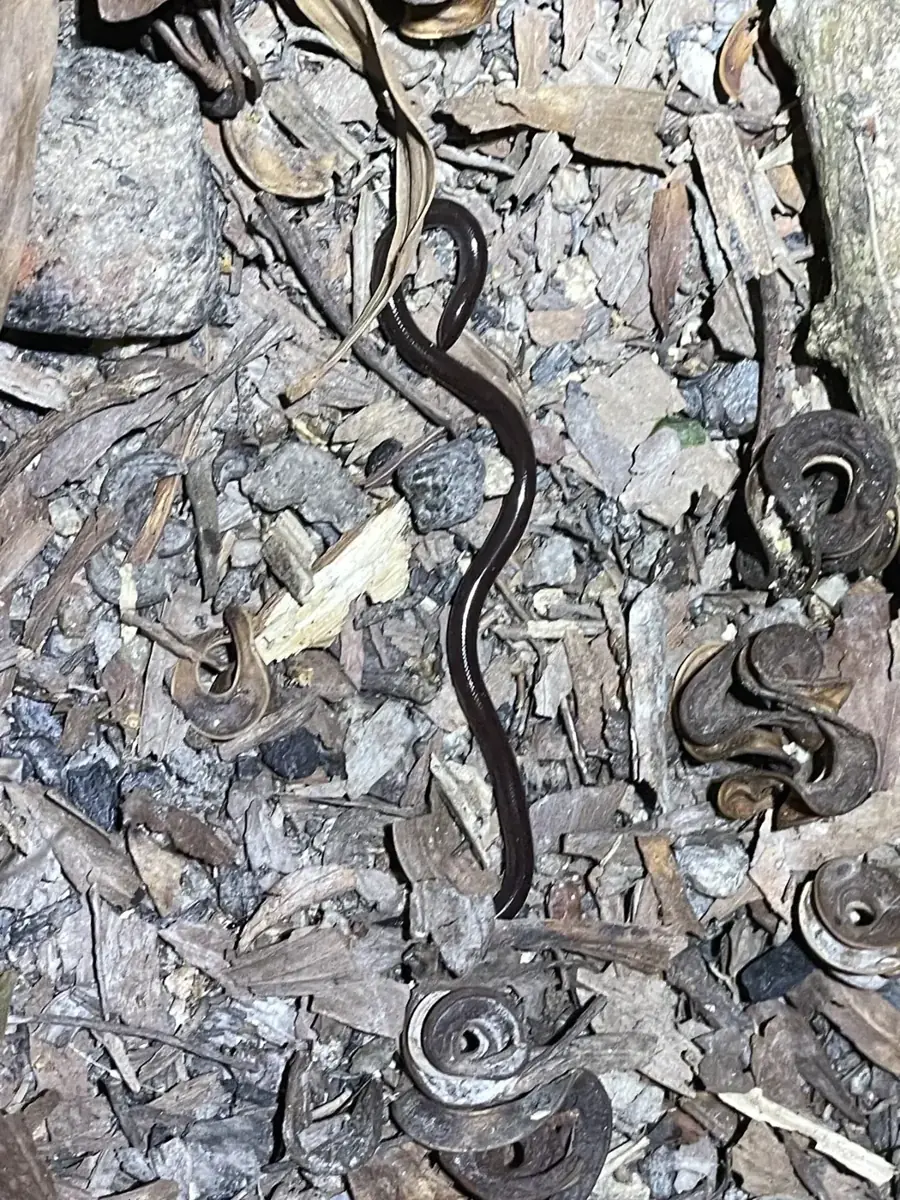
Flowerpot Snake
Cosmopolitan transported species: countries denotes supported occurrence, not a claim of native status. IntroducedCountries captures explicit source introductions; native/introduced status of the remaining localities is unresolved. Broad New Guinea and Micronesia are not converted to countries. O’Shea et al. (2015, p. 116) document USNM 579373–75 from…
Read the species account →Cook-Price, Makchai & Suwanwaree (2026); photographs credited collectively to the author, James Covert and Vikas Kumar · CC BY 4.0 · https://creativecommons.org/licenses/by/4.0/
003 · Pythonidae
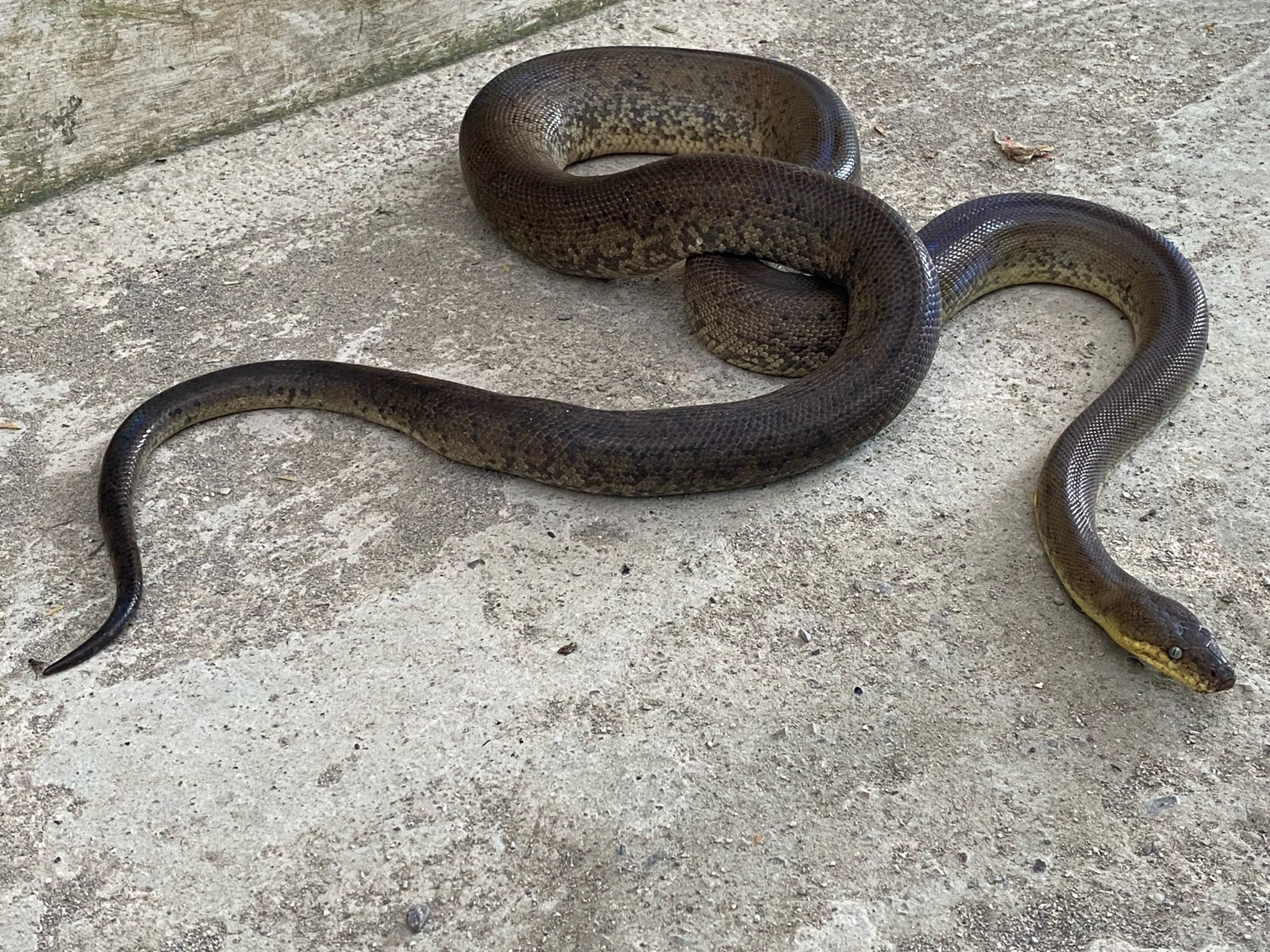
Freckled Python
Listed in the checked distribution source. O’Shea et al. (2015) give these named Timor-Leste localities in the species treatment. Voucher-backed survey records are distinguished there from earlier literature; locality names retain the administrative geography used in the publication. These sites do not delimit the entire range.
Read the species account →smathichong · CC BY 4.0 · https://creativecommons.org/licenses/by/4.0/
Read further
Guide reviewed 11 October 2026. Source dates and geographic scope matter; landscape photographs do not establish species occurrence.
Historical forest, freshwater and pressure baseline. The 2011–2020 strategy is not the current national plan.
Eastern lowland vine/monsoon forest, lake and marine setting. Promotional status and species-total claims are not reused.
Northwestern coast and salt-lake setting; not all lakes are freshwater.
Continue through Timor-Leste
Timor-Leste’s wooded landscapes include monsoon forest, lowland vine forest and altered rural mosaics. Wet- and dry-season appearances can be very different.
02The central highlands combine mountain vegetation, villages, coffee-growing areas and culturally important peaks. Elevation changes both the setting and how a record should be interpreted.
03Timor-Leste’s mangroves occur as local coastal patches. Their protection connects tidal ecology with community fishing and customary resource management.
04Steep island terrain meets beaches, cliffs and reef habitat. Coastal records need precise place and habitat information, particularly across the channels around Atauro.