Clearing and extraction
The 2011 national report documented forest conversion and logging; those dated observations are not a current national rate.
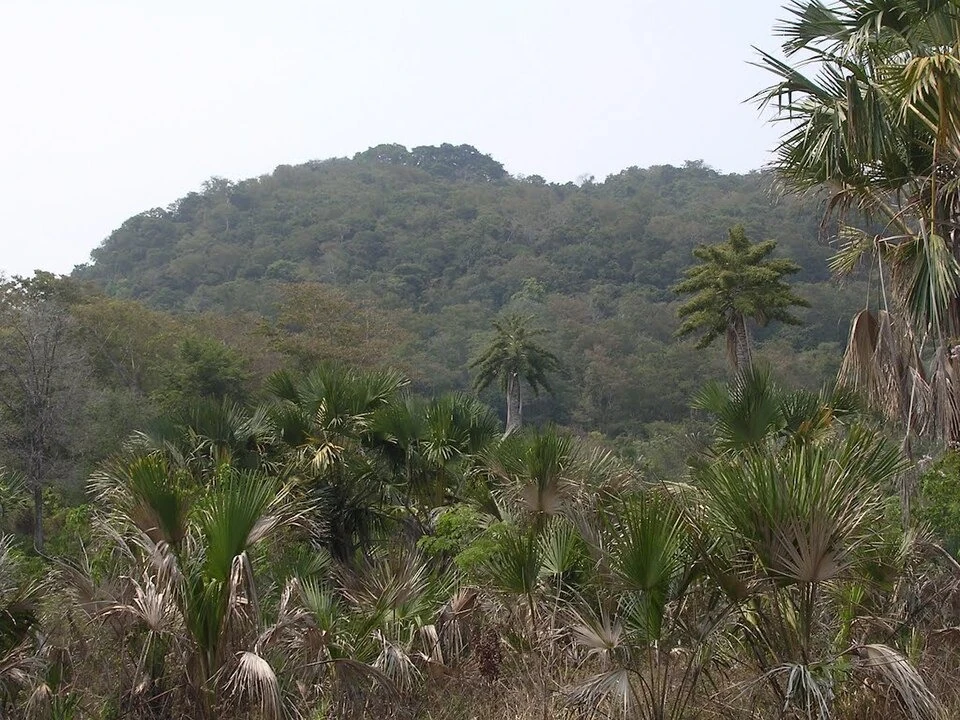
Timor-Leste · Habitat field guide
Timor-Leste’s wooded landscapes include monsoon forest, lowland vine forest and altered rural mosaics. Wet- and dry-season appearances can be very different.
Tropical dry forest and Corypha palm savanna near Tirilolo, Lautem, Timor-Leste.
Understanding the environment
Timor-Leste’s wooded landscapes include monsoon forest, lowland vine forest and altered rural mosaics. Wet- and dry-season appearances can be very different.
Explore the structure · Explore three connected parts of this landscape.
Select a zone to see what changes.
Look upward
Compare joined crowns with sunlit openings.
Record the actual vegetation rather than treating every green area as intact forest.
A conceptual reading guide, not a measured transect, access route or snake occurrence map.
Sources: Timor-Leste Tourism · Nino Konis Santana · Timor-Leste Tourism · Oecusse-Ambeno
Field notes · 01
The official Nino Konis Santana account describes lowland vine forest and monsoon forest. Observe canopy, undergrowth and nearby openings separately. A park-wide record does not mean a snake uses every forest formation or every coastal part of the park.
Field notes · 02
Oecusse’s official destination account includes wooded terrain around Kutet. Across these landscapes, distinguish natural woodland from planted trees and cultivated areas when making a record. The 2026–2030 biodiversity strategy provides the current policy framework; older reports remain historical evidence.
Sources: Timor-Leste Tourism · Oecusse-Ambeno · United Nations · Timor-Leste NBSAP 2026–2030
Pressures on Timor-Leste’s habitats
The 2011 national report documented forest conversion and logging; those dated observations are not a current national rate.
Fire and livestock grazing were also identified in that historical assessment.
Retain native forest patches and recovery areas alongside community land use, with monitoring that distinguishes a policy commitment from an achieved ecological result.
The connected collection
These 8 species have supported country occurrence and an explicit habitat association in the shared account. The association may come from elsewhere in their range. This is not a complete local habitat inventory; the places above are landscape examples, not asserted collecting sites.
8 species · showing 8
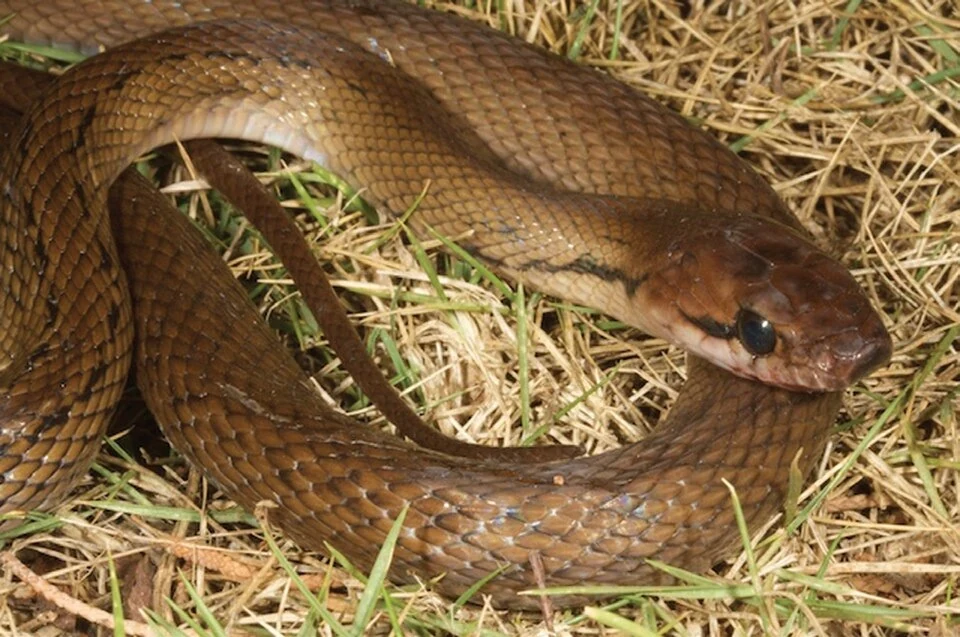
001 · Colubridae
Lesser Sunda Rat Snake
Listed in the checked distribution source. O’Shea et al. (2015) give these named Timor-Leste localities in the species treatment. Voucher-backed survey records are distinguished there from earlier literature; locality names retain the administrative geography used in the publication. These sites do not delimit the entire range.
Read the species account →Mark O’Shea · CC BY 3.0 · https://creativecommons.org/licenses/by/3.0
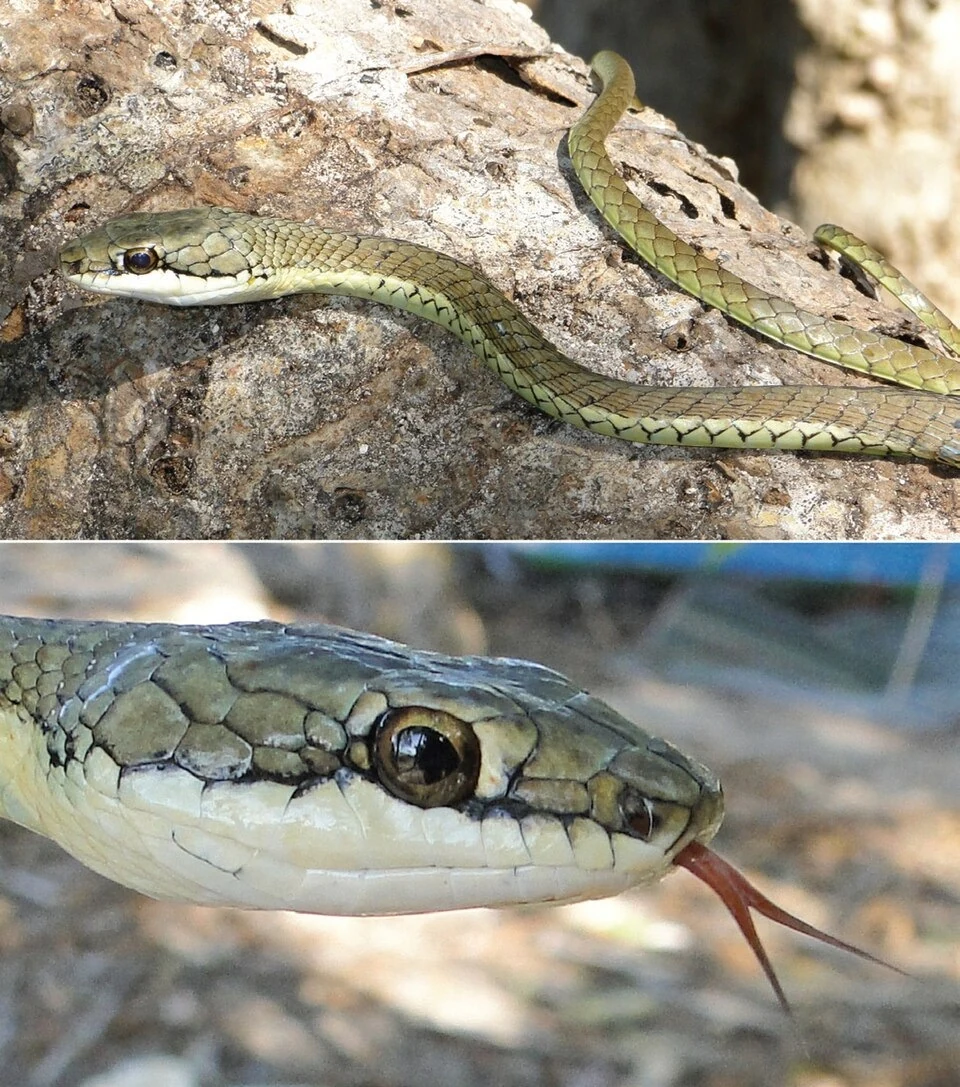
002 · Colubridae
Species account
Listed in the checked distribution source. O’Shea et al. (2015) give these named Timor-Leste localities in the species treatment. Voucher-backed survey records are distinguished there from earlier literature; locality names retain the administrative geography used in the publication. These sites do not delimit the entire range. Unconfirmed Nancuro and…
Read the species account →Hinrich Kaiser · CC BY 3.0 · https://creativecommons.org/licenses/by/3.0
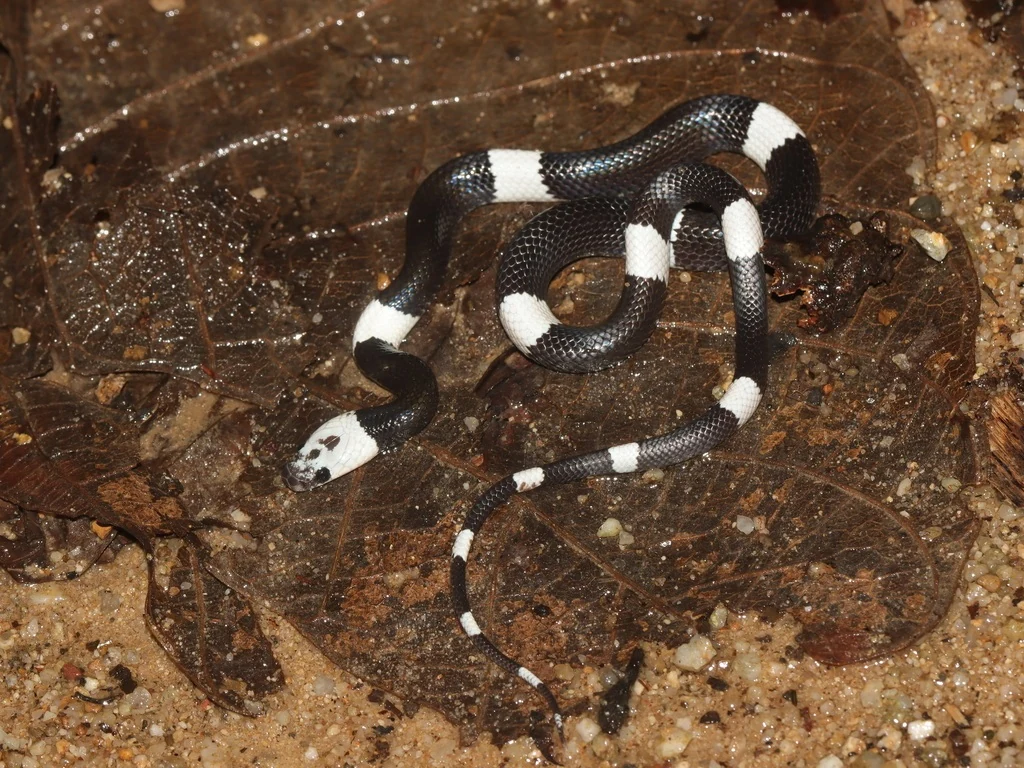
003 · Colubridae
Malayan Banded Wolf Snake
Listed in the checked distribution source. O’Shea et al. (2015) give these named Timor-Leste localities in the species treatment. Voucher-backed survey records are distinguished there from earlier literature; locality names retain the administrative geography used in the publication. These sites do not delimit the entire range.
Read the species account →Ian Dugdale · CC BY 4.0 · https://creativecommons.org/licenses/by/4.0/

004 · Typhlopidae
Flowerpot Snake
Cosmopolitan transported species: countries denotes supported occurrence, not a claim of native status. IntroducedCountries captures explicit source introductions; native/introduced status of the remaining localities is unresolved. Broad New Guinea and Micronesia are not converted to countries. O’Shea et al. (2015, p. 116) document USNM 579373–75 from…
Read the species account →Cook-Price, Makchai & Suwanwaree (2026); photographs credited collectively to the author, James Covert and Vikas Kumar · CC BY 4.0 · https://creativecommons.org/licenses/by/4.0/
005 · Colubridae
Nancuro ground snake
The 2021 type series documents Nancuro and Betano. The 2026 genomic revision recombines the same species as Lielaphis nancuro; records under Stegonotus nancuro belong to this one canonical taxon.
Read the species account →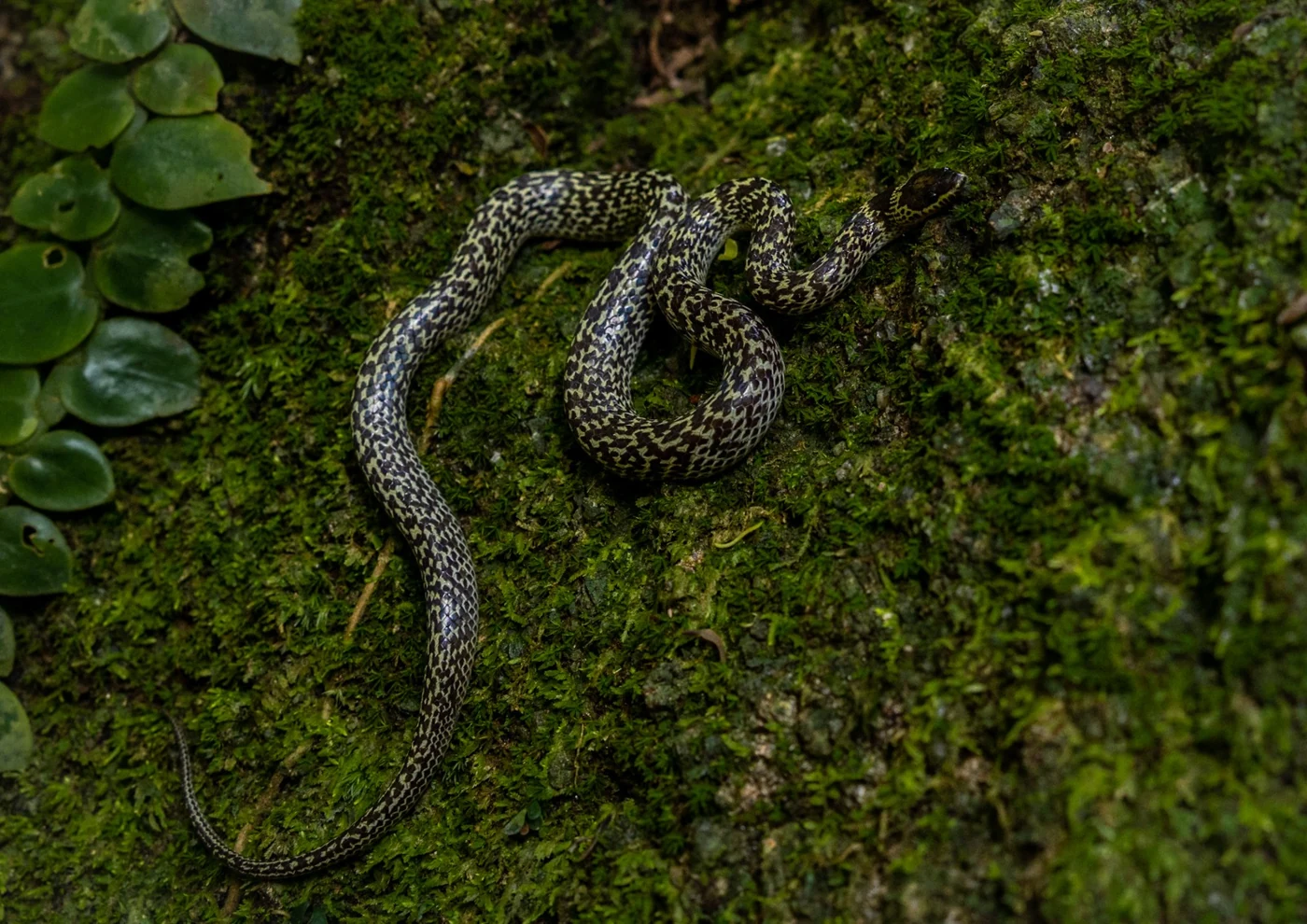
006 · Colubridae
Common Wolf Snake
Christmas Island, Australia is an introduced population. A 2021 museum-specimen study identifies the Mauritius and Reunion snakes as L. aulicus; those are excluded here. Identity of the Maldives population remains unresolved. Broad New Guinea and Micronesia are not country assignments. O’Shea et al. (2015) give these named Timor-Leste localities in the…
Read the species account →Cook-Price, Makchai & Suwanwaree (2026); photographs credited collectively to the author, James Covert and Vikas Kumar · CC BY 4.0 · https://creativecommons.org/licenses/by/4.0/
007 · Pythonidae
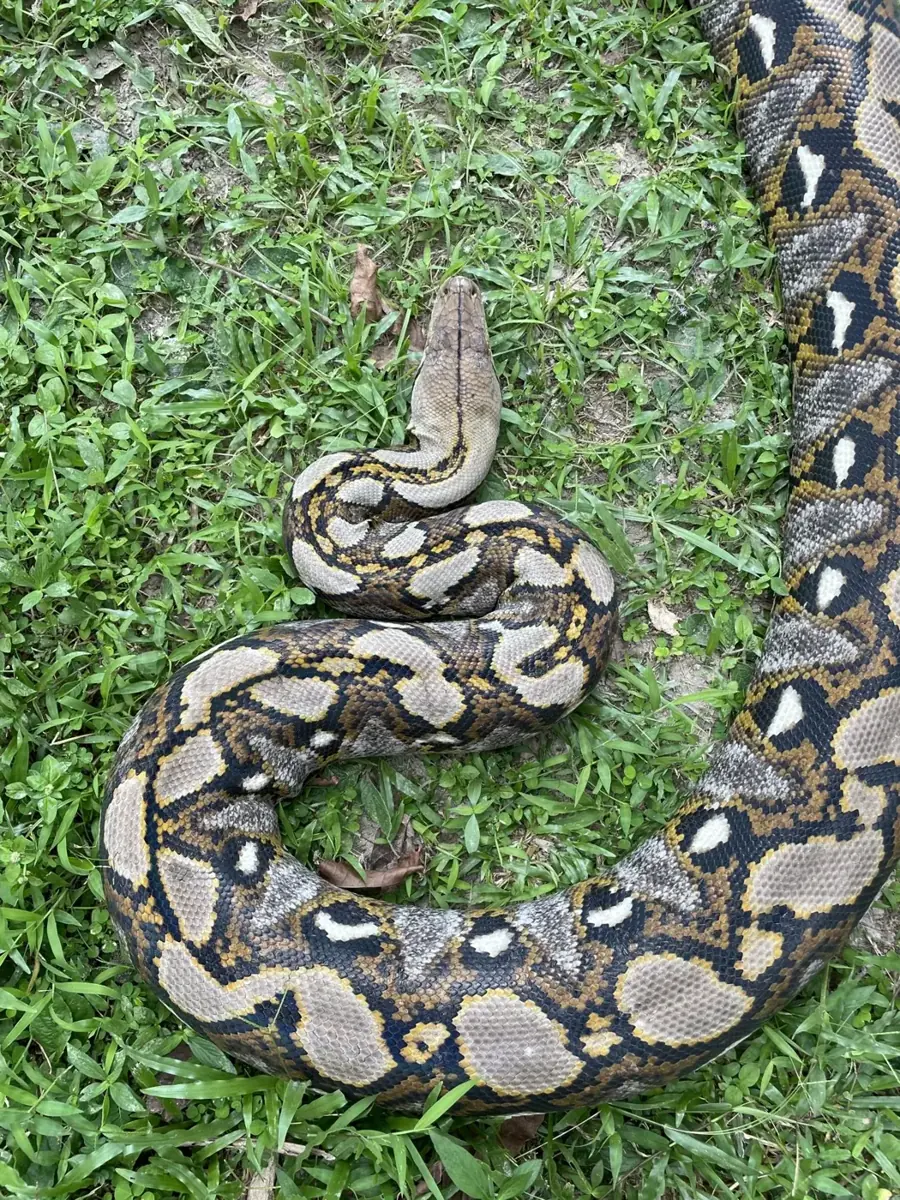
Reticulated Python
Listed in the checked distribution source.
Read the species account →Cook-Price, Makchai & Suwanwaree (2026); photographs credited collectively to the author, James Covert and Vikas Kumar · CC BY 4.0 · https://creativecommons.org/licenses/by/4.0/
008 · Viperidae
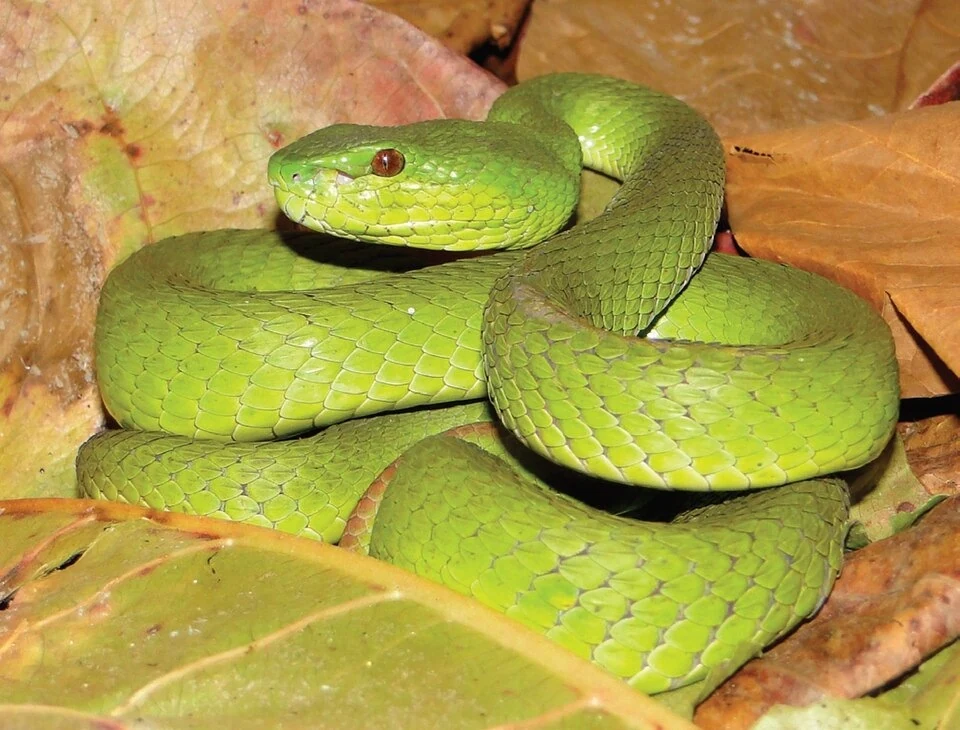
White-lipped island pitviper
Listed in the checked distribution source. O’Shea et al. (2015) give these named Timor-Leste localities in the species treatment. Voucher-backed survey records are distinguished there from earlier literature; locality names retain the administrative geography used in the publication. These sites do not delimit the entire range.
Read the species account →Hinrich Kaiser · CC BY 3.0 · https://creativecommons.org/licenses/by/3.0
Read further
Guide reviewed 11 October 2026. Source dates and geographic scope matter; landscape photographs do not establish species occurrence.
Eastern lowland vine/monsoon forest, lake and marine setting. Promotional status and species-total claims are not reused.
Tono floodplain, mountain and coastal orientation in the enclave.
Current strategy endorsement; a policy direction, not proof that restoration targets have been achieved.
Historical forest, freshwater and pressure baseline. The 2011–2020 strategy is not the current national plan.
Continue through Timor-Leste
The central highlands combine mountain vegetation, villages, coffee-growing areas and culturally important peaks. Elevation changes both the setting and how a record should be interpreted.
02Freshwater habitat includes river catchments and the eastern lake landscape. Coastal lagoons require separate attention because some are saline.
03Timor-Leste’s mangroves occur as local coastal patches. Their protection connects tidal ecology with community fishing and customary resource management.
04Steep island terrain meets beaches, cliffs and reef habitat. Coastal records need precise place and habitat information, particularly across the channels around Atauro.