Sedimentation and harvesting
UNDP identifies sedimentation and overuse among mangrove pressures in its 2019 account.
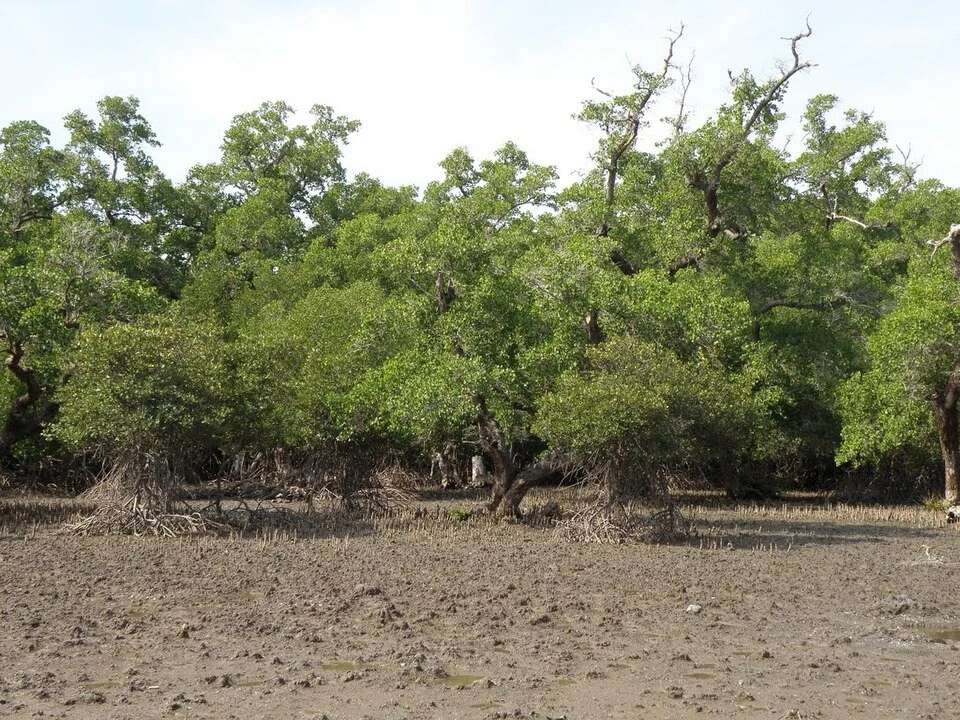
Timor-Leste · Habitat field guide
Timor-Leste’s mangroves occur as local coastal patches. Their protection connects tidal ecology with community fishing and customary resource management.
Mangroves beside salt and fish ponds at Tibar, Timor-Leste.
Understanding the environment
Timor-Leste’s mangroves occur as local coastal patches. Their protection connects tidal ecology with community fishing and customary resource management.
Explore the structure · Explore three connected parts of this landscape.
Select a zone to see what changes.
Start above frequent flooding
Compare adjoining woodland or settled land with the tidal forest.
Freshwater swamp and mangrove may meet but are not interchangeable.
A conceptual reading guide, not a measured transect, access route or snake occurrence map.
Sources: UNDP · Community mangrove restoration (2019) · UNDP · Coastal Resilience annual report (2017)
Field notes · 01
UNDP’s 2019 Ulmera account describes community planting, monitoring and the use of tara bandu agreements to regulate resource use. Record these as documented project actions, not proof that every planted stand has reached mature condition.
Field notes · 02
The 2017 Coastal Resilience report names planting work at Metinaro and Ulmera. A sound habitat account asks what vegetation and tidal connections remain today, and follows survival over time. This guide keeps the project dates visible rather than presenting their targets as completed recovery.
Pressures on Timor-Leste’s habitats
UNDP identifies sedimentation and overuse among mangrove pressures in its 2019 account.
The same account discusses sea-level rise and nearby port-related habitat clearance; these remain dated, site-specific evidence.
Pair locally agreed protection with appropriate tidal conditions and repeated monitoring of restored sites.
The connected collection
These 4 species have supported country occurrence and an explicit habitat association in the shared account. The association may come from elsewhere in their range. This is not a complete local habitat inventory; the places above are landscape examples, not asserted collecting sites.
4 species · showing 4
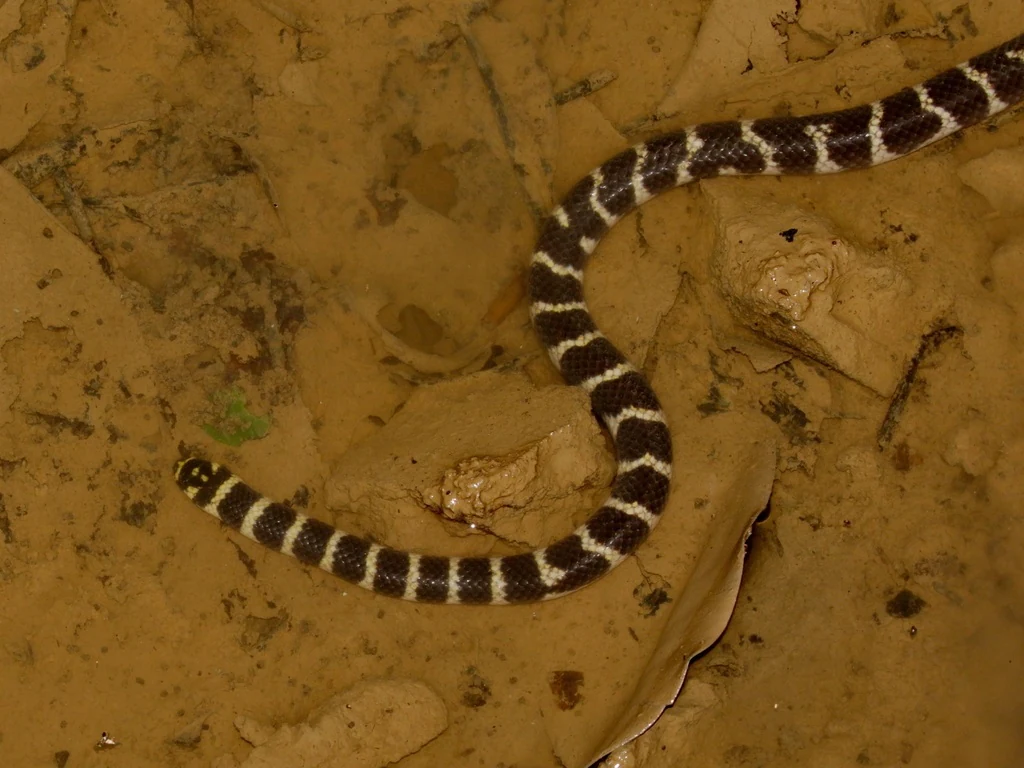
001 · Acrochordidae
Little filesnake
Listed in the checked distribution source. O’Shea et al. (2015) give these named Timor-Leste localities in the species treatment. Voucher-backed survey records are distinguished there from earlier literature; locality names retain the administrative geography used in the publication. These sites do not delimit the entire range.
Read the species account →Mario Lutz · Copyright Mario Lutz. Authorised for display in this atlas; no third-party reuse licence granted.
002 · Homalopsidae
Cantor's Water Snake
Listed in the checked distribution source.
Read the species account →Ian Dugdale · CC BY 4.0 · https://creativecommons.org/licenses/by/4.0/
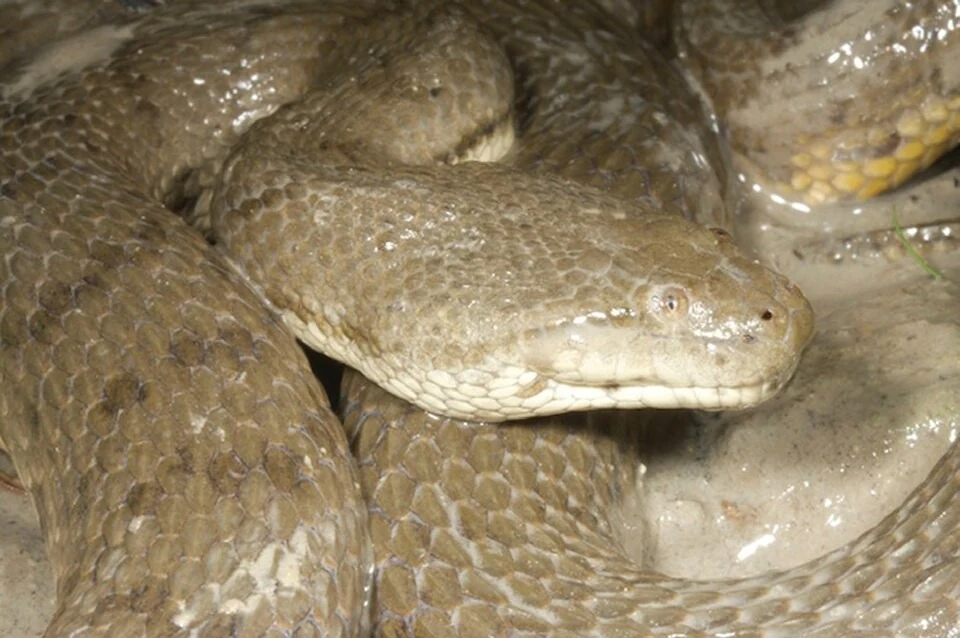
003 · Homalopsidae
Southeast Asian Bockadam
O’Shea et al. (2015) give these named Timor-Leste localities in the species treatment. Voucher-backed survey records are distinguished there from earlier literature; locality names retain the administrative geography used in the publication. These sites do not delimit the entire range. The treatment applies C. schneiderii after the 2012 revision; its…
Read the species account →Mark O’Shea · CC BY 3.0 · https://creativecommons.org/licenses/by/3.0
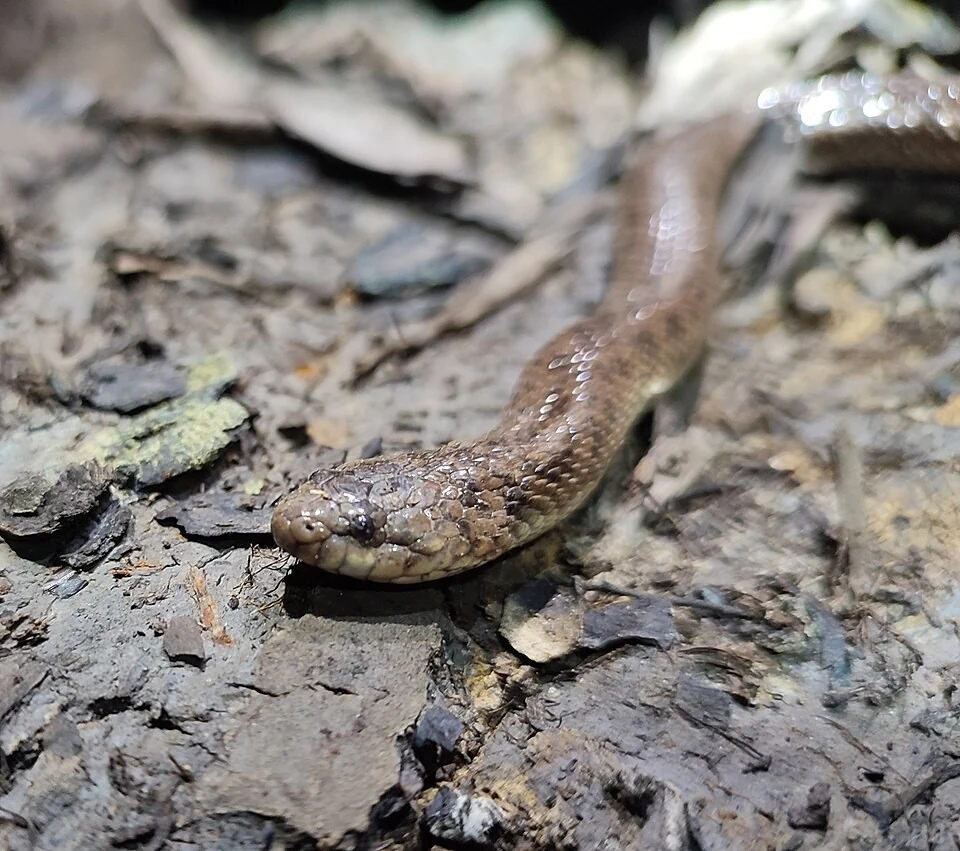
004 · Homalopsidae
Crab-eating (Water) Snake
Listed in the checked distribution source. O’Shea et al. (2015) give these named Timor-Leste localities in the species treatment. Voucher-backed survey records are distinguished there from earlier literature; locality names retain the administrative geography used in the publication. These sites do not delimit the entire range.
Read the species account →Samuel GUIRAUDOU · CC BY 4.0 · https://creativecommons.org/licenses/by/4.0
Read further
Guide reviewed 11 October 2026. Source dates and geographic scope matter; landscape photographs do not establish species occurrence.
Ulmera restoration, tara bandu, sedimentation and harvesting/sea-level pressures; dated project evidence.
Programme planting sites at Metinaro and Ulmera. Planting is not proof of later survival.
Continue through Timor-Leste
Timor-Leste’s wooded landscapes include monsoon forest, lowland vine forest and altered rural mosaics. Wet- and dry-season appearances can be very different.
02The central highlands combine mountain vegetation, villages, coffee-growing areas and culturally important peaks. Elevation changes both the setting and how a record should be interpreted.
03Freshwater habitat includes river catchments and the eastern lake landscape. Coastal lagoons require separate attention because some are saline.
04Steep island terrain meets beaches, cliffs and reef habitat. Coastal records need precise place and habitat information, particularly across the channels around Atauro.