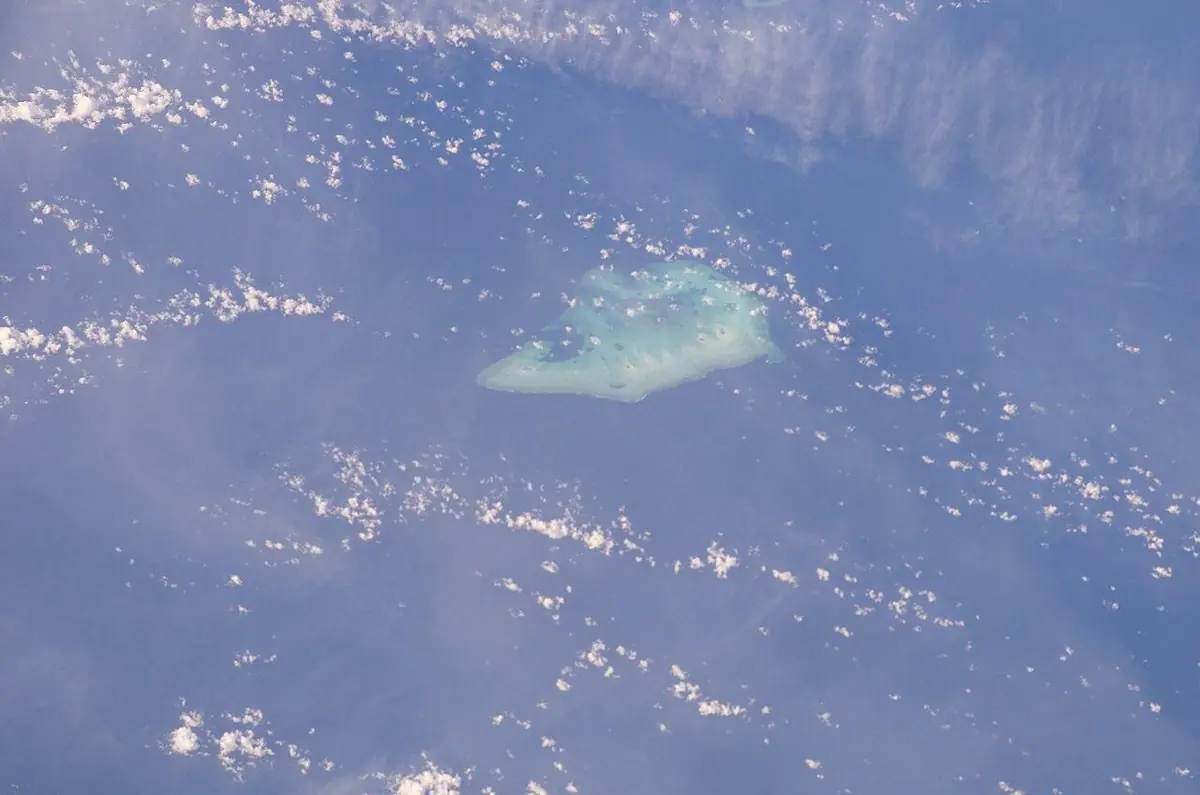
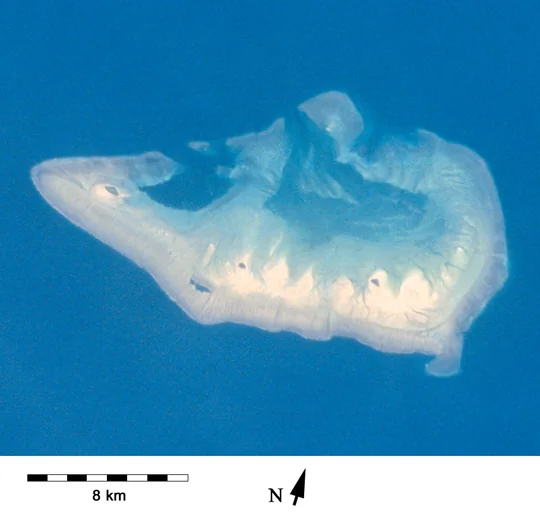
Astronaut photograph: Ashmore Reef during Space Shuttle Discovery mission STS-60 in February 1994 (STS060-75-25). The original north arrow and scale are retained.

Ashmore and Cartier Islands · Place guide

Ashmore Reef

Ashmore Reef is a reef-and-island region within the Australian external territory.

14species with extracted evidence
1families
2island guides

Astronaut photograph: Ashmore Reef during Space Shuttle Discovery mission STS-60 in February 1994 (STS060-75-25). The original north arrow and scale are retained.

Astronaut photograph: NASA / STS-60 crew · Image source · Public domain. Cropped to fill the hero; darkened for text legibility.

Geography & biotopes

Read the landscape.

Ashmore Reef is a reef-and-island region within the Australian external territory.

Lagoons, sand flats, reef flats and seagrass surround small islands. These shallow environments differ from the deeper waters included within the marine park.

Ecological connections

A historical species list should be read alongside dated surveys. The reef’s former sea-snake abundance cannot be assumed to describe present conditions.

Explore the setting

Most of the park is a sanctuary requiring approval to enter. Check current zoning and anchoring notices; do not rely on old mooring information.

This guide indexes these source names: Ashmore Reef, Ashmore, West Island, Ashmore, Middle Island, Ashmore, East Island, Ashmore. A country-only record is not automatically assigned to this place. Map markers identify navigation destinations, not collection sites.

Geoscience Australia — Ashmore and Cartier Islands →
Geography is part of the record

Find your way through Ashmore and Cartier Islands.

Select a named island to open its evidence page. The complete directory below keeps every guide accessible, including places where locality evidence has not yet been extracted.

14 of 14 listed species have at least one indexed island record. 0 remain country-only. Even a nonzero count is not a complete regional inventory.

Habitats & living landscapes

Explore the living
landscapes.

Explore 1 guides to the environments, places and conservation pressures that shape this country. Each guide connects to the regional map and shared species accounts.

Landscape photographs & credits

Ashmore Reef photographed from the International Space Station on 26 March 2003 (ISS006-E-040884). A historical orbital view; Cartier Island and present habitat condition are not shown. — NASA / ISS Expedition 6 crew. Original photograph · Public domain · NASA. Cropped for the cards; photographs do not establish snake occurrence.

The species catalogue

Snakes · Ashmore Reef.

Only records naming this place appear below. These are extracted locality records, not complete island or regional inventories.

14 species · showing 14

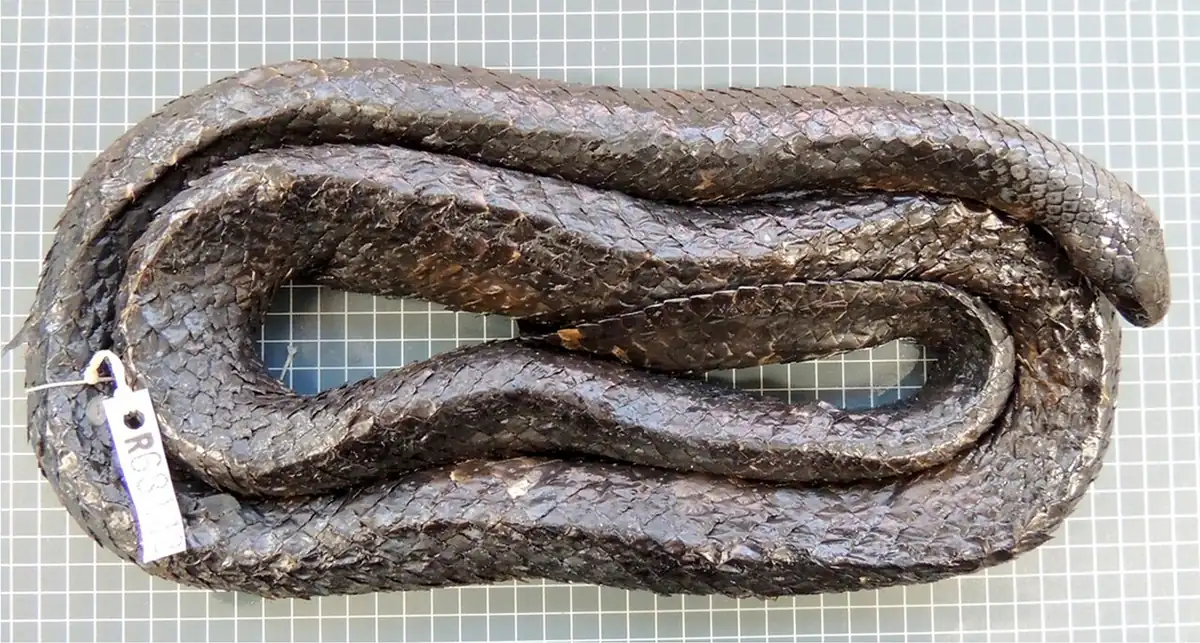
Preserved specimen SAMA R68142, Ashmore Reef, collected in 1996; Sanders et al. (2015), Figure 2.

001 · Elapidae

Short-nosed Sea Snake

Aipysurus apraefrontalis

SMITH, 1926

VenomousClinical severity not established

Reported rediscovery at Ashmore Reef in April 2021; breeding status unresolved. April 2021 video observation at 67 m.

Read the species account →

Kate L. Sanders, Tina Schroeder, Michael L. Guinea, and Arne R. Rasmussen · CC BY 4.0 · https://creativecommons.org/licenses/by/4.0/

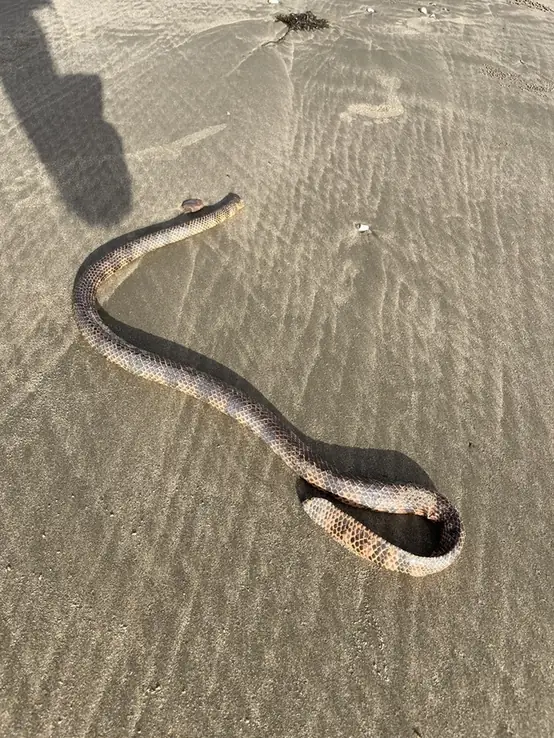
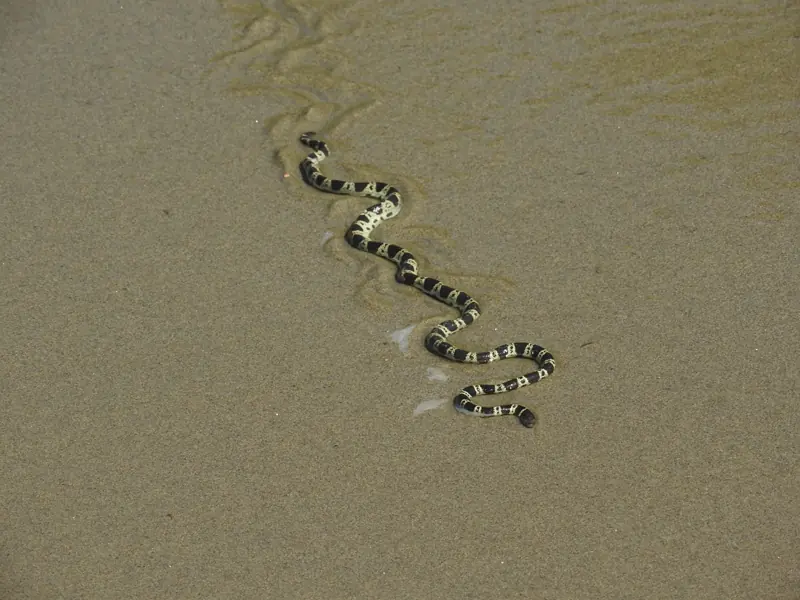
Animal on wet sand, photographed 28 December 2025; original locality label: Great Barrier Reef, Yeppoon, AU.

002 · Elapidae

Reef shallows seasnake

Aipysurus duboisii

BAVAY, 1869

VenomousClinical severity not established

Ashmore Reef: April 2021 video record. Ashmore Reef: April 2021 video detection. Cartier Island: 2013 reef survey.

Read the species account →

rcrofts / iNaturalist · CC BY 4.0 · https://creativecommons.org/licenses/by/4.0/

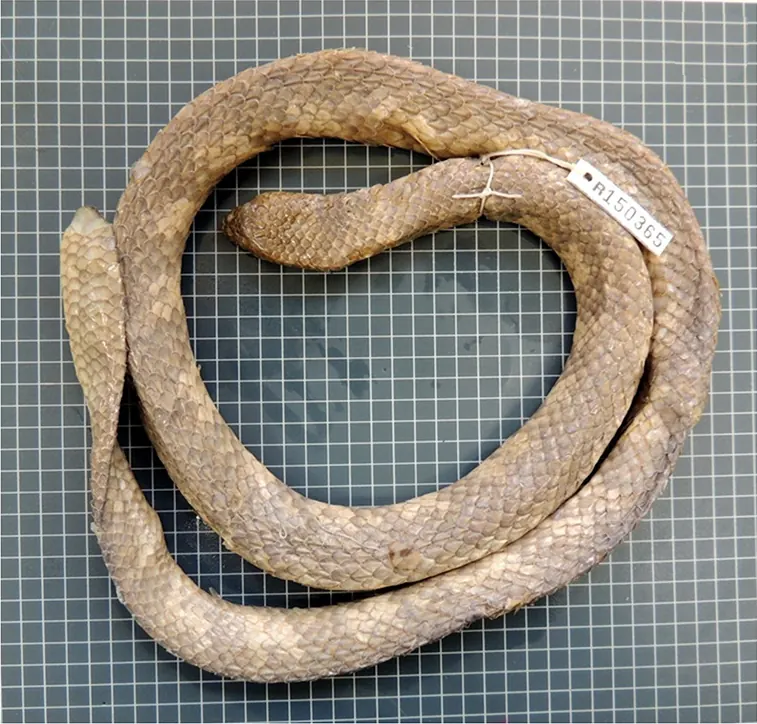
Preserved specimen WAM R150365, Barrow Island, collected in 2010; Sanders et al. (2015), Figure 2.

003 · Elapidae

Leaf-scaled Sea Snake

Aipysurus foliosquama

SMITH, 1926

VenomousClinical severity not established

Historical Ashmore records, 1994–1998; not a current population estimate. Historical records; recent persistence unverified.

Read the species account →

Kate L. Sanders, Tina Schroeder, Michael L. Guinea, and Arne R. Rasmussen · CC BY 4.0 · https://creativecommons.org/licenses/by/4.0/

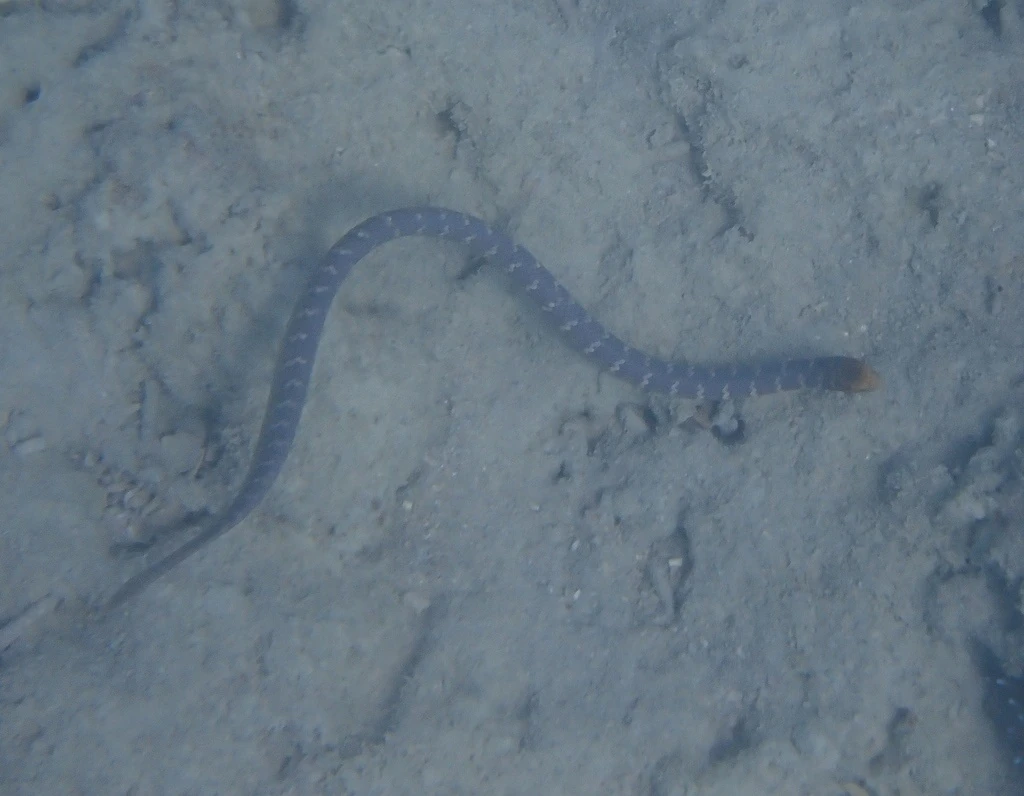
Aipysurus laevis in the linked source observation. Identification follows the source community.

005 · Elapidae

Olive-brown seasnake

Aipysurus laevis

LACÉPÈDE, 1804

VenomousClinical severity not established

CSIRO reported one olive sea snake during its 2019 Ashmore survey. 2019 survey detection; abundance remained very low. Cartier Island: 2013 reef survey.

Read the species account →

Debra Baker · CC BY 4.0 · https://creativecommons.org/licenses/by/4.0/

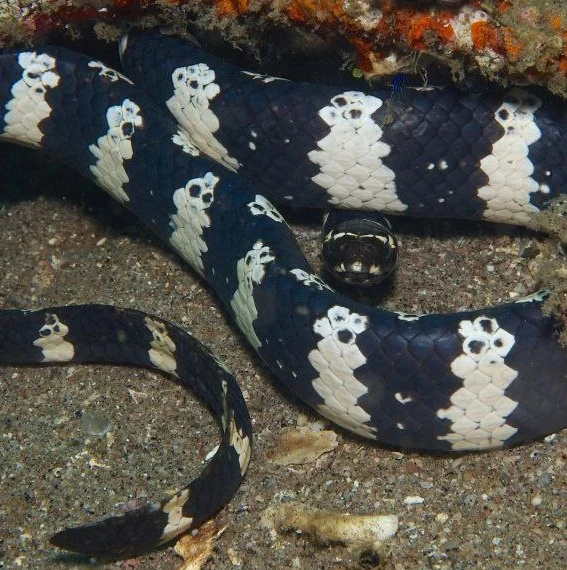
Emydocephalus annulatus — real specimen photograph; identification follows the linked source.

006 · Elapidae

Turtle-headed seasnake

Emydocephalus annulatus

KREFFT, 1869

VenomousClinical severity not established

Historical Ashmore records, 1994–1998; not a current population estimate. 1994–1998 records; current persistence unverified. Cartier Island: 2013 reef survey.

Read the species account →

IG: divecycle · CC BY-SA 4.0 · https://creativecommons.org/licenses/by-sa/4.0

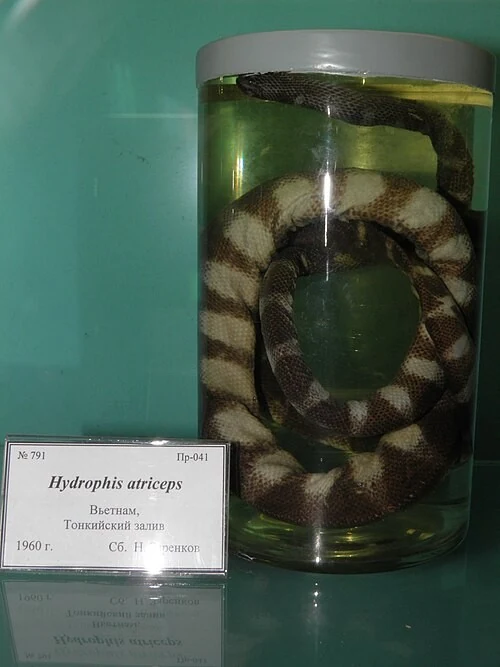
Preserved museum specimen; colour and posture do not represent a live animal.

007 · Elapidae

Black-headed seasnake

Hydrophis atriceps

GÜNTHER, 1864

VenomousClinical severity not established

Historical Ashmore checklist; residency unconfirmed. Historical checklist; no recent detection verified. The 2014 revision recommends provisional atriceps naming for Australian fasciatus-complex snakes. Historical Ashmore identity remains subject to taxonomic review.

Read the species account →

A. C. Tatarinov · CC0 · https://creativecommons.org/publicdomain/zero/1.0/deed.en

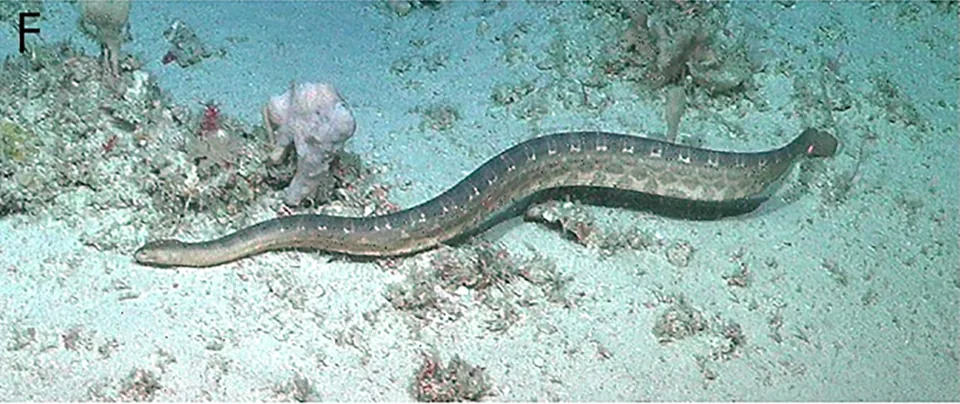
Hydrophis coggeri

008 · Elapidae

Slender-necked Seasnake

Hydrophis coggeri

(KHARIN, 1984)

VenomousClinical severity not established

Ashmore Reef: April 2021 video record. Ashmore Reef: April 2021 video detection.

Read the species account →

Speed, Wilson, Somaweera, Udyawer, Meekan, Whisson & Miller (2022) · CC BY 4.0 · https://creativecommons.org/licenses/by/4.0/

Hydrophis elegans photographed on a beach.

009 · Elapidae

Elegant or bar-bellied seasnake

Hydrophis elegans

(GRAY, 1842)

VenomousClinical severity not established

Historical Ashmore listing (Table 2). Historical Ashmore checklist, published 2013.

Read the species account →

george_vaughan / iNaturalist · CC0 1.0 · https://creativecommons.org/publicdomain/zero/1.0/

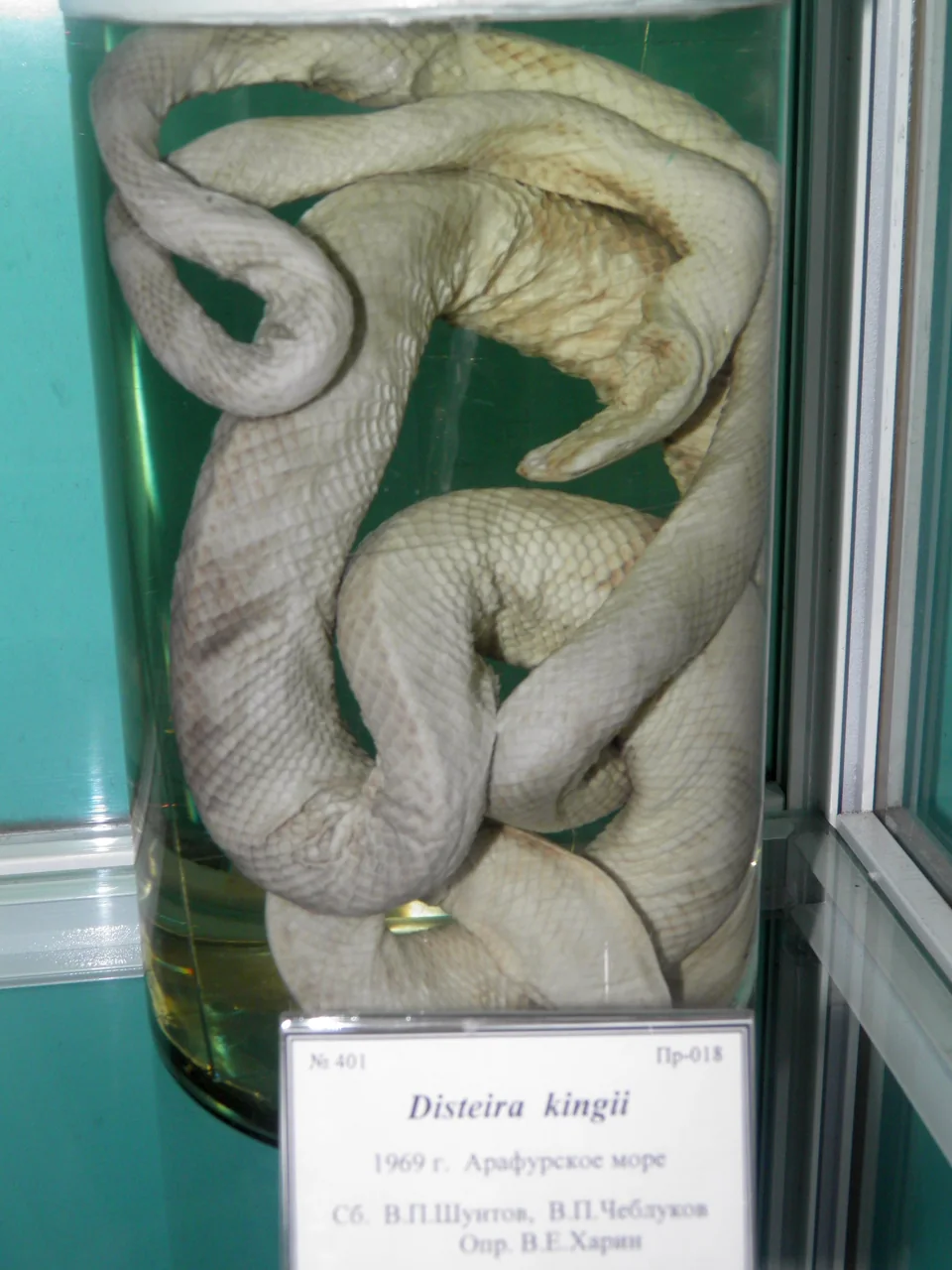
Preserved specimen displayed as Disteira kingii at the Oceanarium of Vladivostok; photographed 8 November 2015. Display label: Arafura Sea, 1969. Museum identification has not been independently reassessed.

010 · Elapidae

Spectacled or King’s seasnake

Hydrophis kingii

BOULENGER, 1896

VenomousClinical severity not established

Historical Ashmore listing (Table 2). Historical listing; the 2021 identification is disputed.

Read the species account →

A. C. Tatarinov · CC0 1.0 · https://creativecommons.org/publicdomain/zero/1.0/

Hydrophis ocellatus

011 · Elapidae

Spotted Sea Snake

Hydrophis ocellatus

GRAY, 1849

VenomousClinical severity not established

Ashmore Reef: April 2021 video record. Ashmore Reef: April 2021 video detection.

Read the species account →

Speed, Wilson, Somaweera, Udyawer, Meekan, Whisson & Miller (2022) · CC BY 4.0 · https://creativecommons.org/licenses/by/4.0/

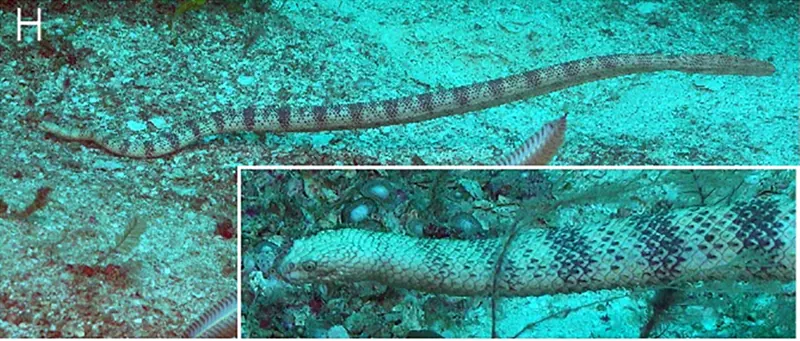
Photograph of Hydrophis peronii

012 · Elapidae

Spiny-headed seasnake

Hydrophis peronii

(DUMÉRIL, 1853)

VenomousClinical severity not established

Ashmore Reef: April 2021 video record. Ashmore Reef: April 2021 video detection.

Read the species account →

Speed, Wilson, Somaweera, Udyawer, Meekan, Whisson & Miller (2022) · CC BY 4.0 · https://creativecommons.org/licenses/by/4.0/

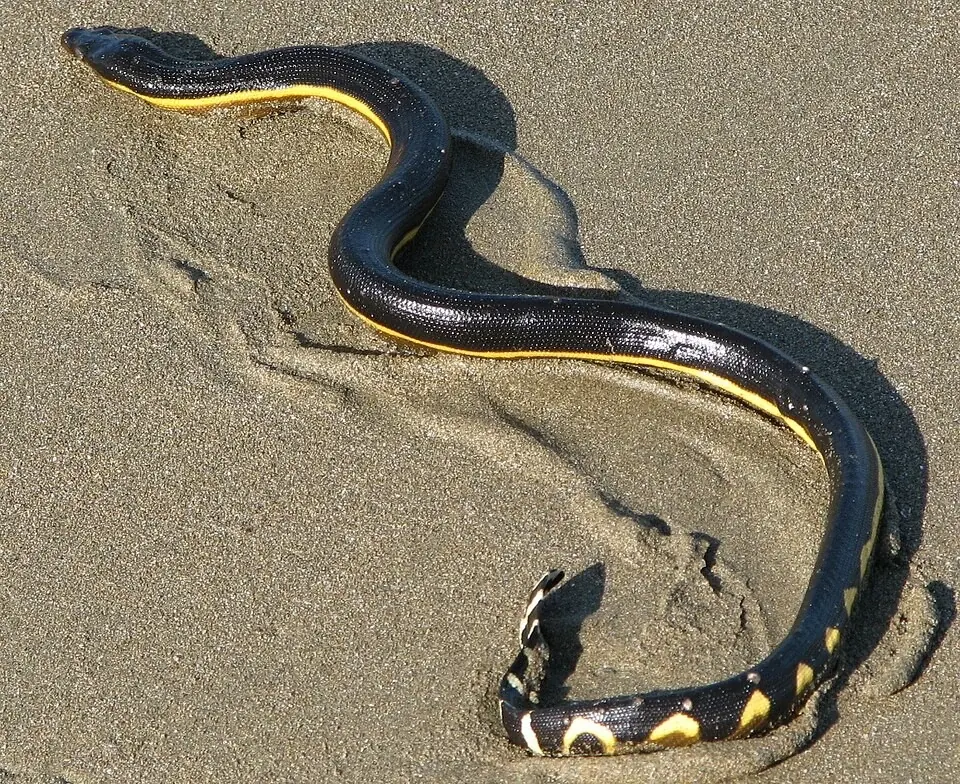
Hydrophis platurus — real specimen photograph; identification follows the linked source.

013 · Elapidae

Yellowbelly Sea Snake

Hydrophis platurus

(LINNAEUS, 1766)

VenomousClinical severity not established

Historical Ashmore listing (Table 2). Historical Ashmore checklist, published 2013.

Read the species account →

Aloaiza · CC BY 3.0 · https://creativecommons.org/licenses/by/3.0

Hydrophis stokesii — real specimen photograph; identification follows the linked source.

014 · Elapidae

Stoke’s seasnake

Hydrophis stokesii

(GRAY, 1846)

VenomousClinical severity not established

Historical Ashmore records, 1994–1998; not a current population estimate. 1994–1998 records; current persistence unverified. Cartier Island: 2013 reef survey.

Read the species account →

Rosario · CC BY 4.0 · https://creativecommons.org/licenses/by/4.0

Explore all 14 country records →

The research library

Sources & the checklist.

This edition lists 14 species with supported country records from checked taxonomic treatments and cited field studies. It is not a claim of a complete national inventory. Each account retains its source and check date; individual evidence entries retain their own review dates.

How the map and counts work

Search results were checked against distribution text and taxonomic qualifications. A geographic name alone does not establish a political country: New Guinea, the Solomon archipelago and Micronesia span more than one country or territory. Introduced and unresolved records require separate interpretation.

Place counts require explicit named localities, including valid type localities. Counts can overlap where sources name multiple places. Regional maps group historical boundary snapshots for navigation, while island outlines use Natural Earth; neither is a species range or an observation map. Small islands can be below the outline dataset’s resolution, so geographic reference markers and the directory remain available.

Geoscience Australia reference coordinates · points only. Reef outlines and marine-park boundaries are not depicted; markers are not species observations. Map provenance →

Exclusions & qualifications (5)

Aipysurus eydouxii / Aipysurus mosaicus

The old eydouxii entry needs a voucher review following the 2012 mosaicus split. Neither name is added from that historical entry alone; this is not evidence of absence.

Read source 1 ↗

Hydrophis ornatus

Australian ornatus records were reassigned to ocellatus by the 2014 review. Independently documented ocellatus is included; the old name is not counted again.

Read source 1 ↗

Hydrophis hardwickii / Hydrophis curtus

The historical Lapemis hardwickii entry is withheld pending specimen-level resolution: current catalogues differ over the curtus/hardwickii treatment. Neither existing shared profile is merged or assigned here from the old name alone.

Read source 1 ↗ · Read source 2 ↗

Hydrophis belcheri

Held for voucher verification. The 2014 review documents one Australian record from the Arafura Sea and substantial reassignment of older belcheri material; that record does not independently verify Ashmore.

Read source 1 ↗

Emydocephalus orarius

The published 2021 video identification was challenged by Guinea (2022), who identifies the Ashmore turtle-headed species as annulatus. Orarius is withheld; independently documented annulatus is retained.

Read source 1 ↗
  1. Parks Australia · Ashmore Reef ↗

    Park setting and current zoning notices, checked 12 October 2026.

  2. Geoscience Australia — Ashmore and Cartier Islands ↗
  3. The Reptile Database

    Individual treatments and locality evidence are linked from each species account.

  4. Meiri (2024): SquamBase 1.0

    Species-level literature measurements and ecological traits. Exact-name matches only; imputed or ambiguous fields are omitted. These summaries are not local observations.

  5. Natural Earth: public-domain geographic data

Continue through the Oceania atlas →