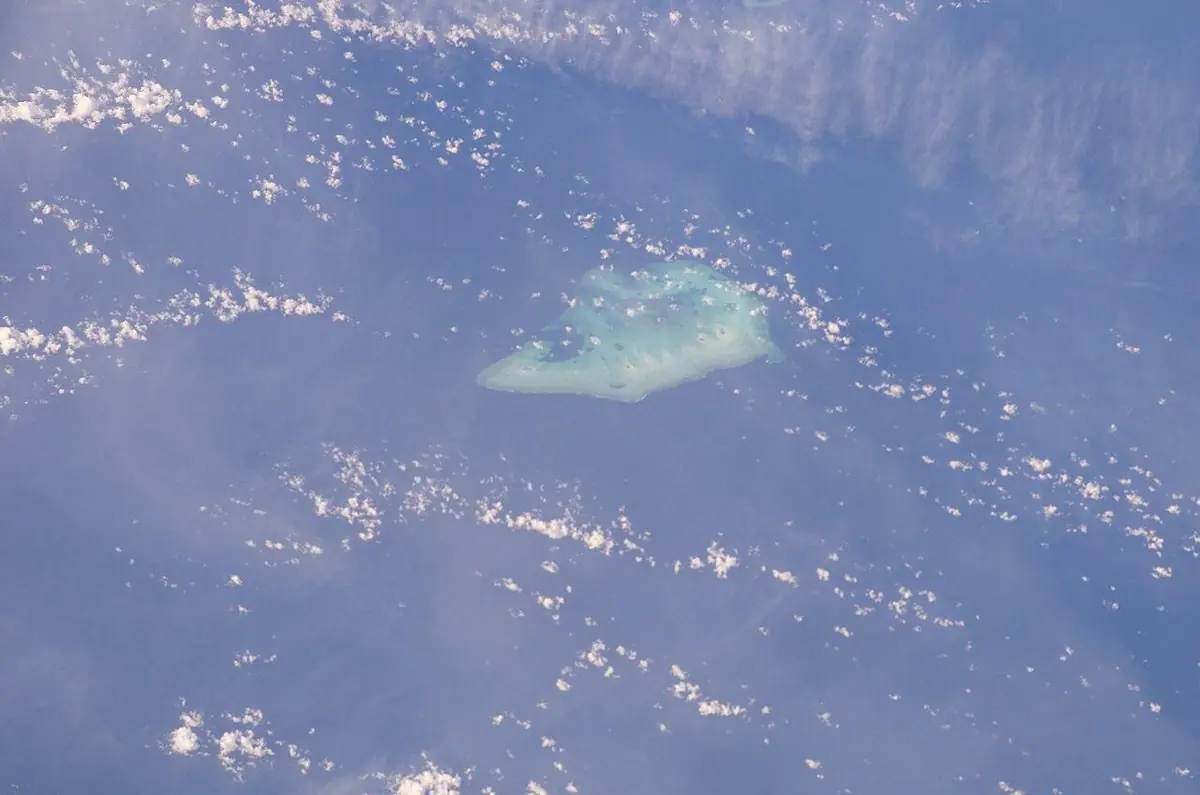
Ashmore Reef photographed from the International Space Station on 26 March 2003 (ISS006-E-040884). A historical orbital view; Cartier Island and present habitat condition are not shown.

Ashmore and Cartier Islands · Habitat field guide

Reef flats, lagoons and dated sea-snake evidence

The reef system is a mosaic. Read named survey areas and observation dates before interpreting a species list or an old photograph.

Ashmore Reef photographed from the International Space Station on 26 March 2003 (ISS006-E-040884). A historical orbital view; Cartier Island and present habitat condition are not shown.

Photograph: NASA / ISS Expedition 6 crew · Image source · Public domain · NASA. Cropped to fill the hero; darkened for text legibility.

Understanding the environment

A sense of the habitat.

The reef system is a mosaic. Read named survey areas and observation dates before interpreting a species list or an old photograph.

Setting
Oceanic reef, lagoon and island margins
Survey baseline
Historical observations remain dated
Regional distinction
Ashmore and Cartier are separate record areas

Explore the structure · Island margin → lagoon → reef edge

Reading a reef mosaic

Select a zone to see what changes.

Land meets sea

Island margin

Keep the dry island, tidal shore and submerged reef separate in field notes.

A photograph from above cannot establish the condition of each underwater community.

Conceptual sequence only; it does not depict a measured transect, legal access corridor or species range.

Field notes · 01

The surveyed habitat

CSIRO’s account of the 2019 programme describes variable coral cover and widespread but sparse seagrass, often showing grazing. These dated findings supply a baseline; they are not a current assessment of every reef patch.

Sources: CSIRO · Ashmore survey findings (2021)

Field notes · 02

Historical richness, subsequent decline

A 2021 synthesis documents a severe fall in sea-snake detections at Ashmore, with some later records after years of scarcity. Historical lists must therefore remain distinct from recent confirmations. The review examines possible drivers without establishing a single cause.

Sources: Somaweera et al. · Ashmore sea-snake decline (2021)

Field notes · 03

Cartier has its own geography

Cartier’s cay, reef pools and submerged pinnacle require their own records. A locality at Ashmore should not be silently extended to Cartier.

Sources: Parks Australia · Cartier Island

Pressures on Ashmore and Cartier Islands’s habitats

What is at risk?

Habitat appearance is not population recovery

CSIRO reported only one olive sea snake during its 2019 survey despite apparently healthy sections of reef. The cause of the decline remained unknown; attractive habitat imagery should not be presented as proof of recovery.
Sources: CSIRO · Ashmore survey findings (2021)

What helps this habitat

Use the official park notices before planning any activity. Country and regional maps are educational geography, not navigational charts or permission to enter.

The connected collection

Snakes with habitat evidence.

These 14 species have supported country occurrence and an explicit habitat association in the shared account. The association may come from elsewhere in their range. This is not a complete local habitat inventory; the places above are landscape examples, not asserted collecting sites.

14 species · showing 14

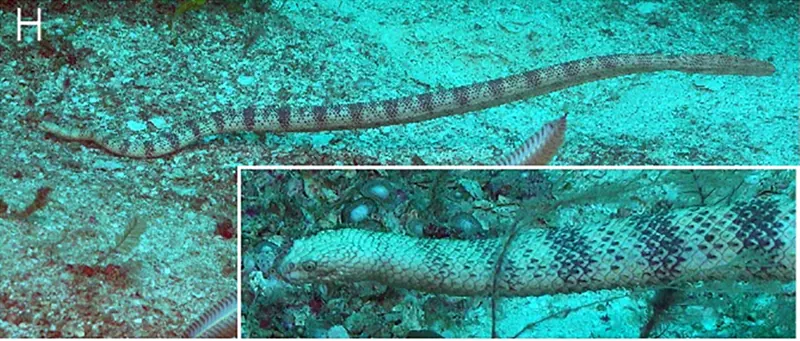
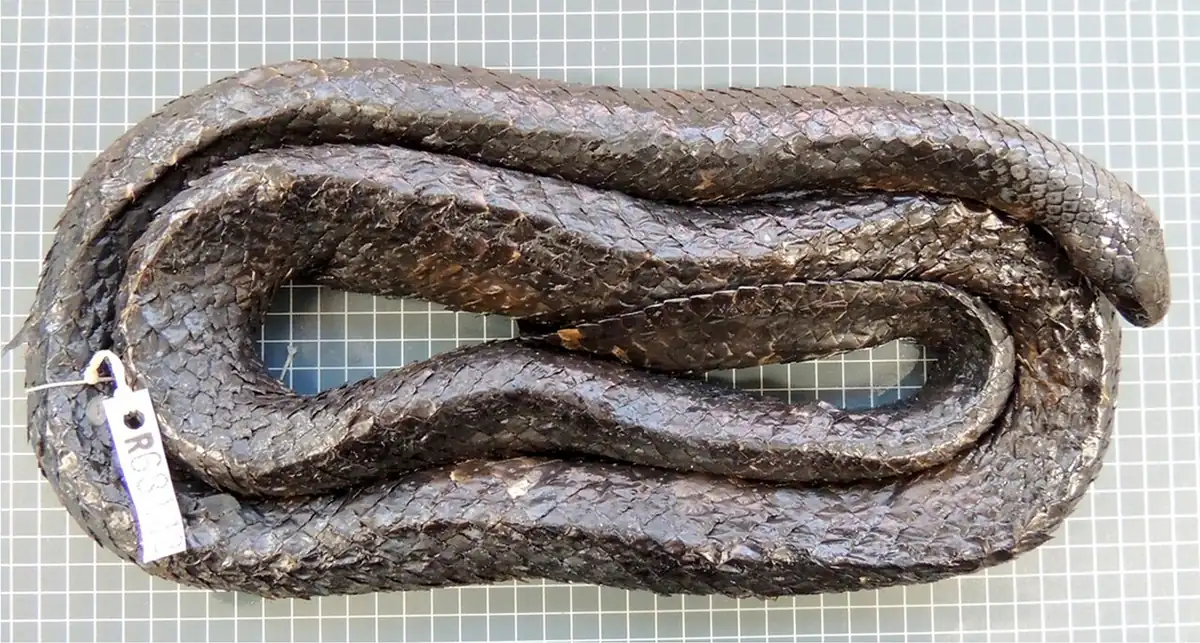
Preserved specimen SAMA R68142, Ashmore Reef, collected in 1996; Sanders et al. (2015), Figure 2.

001 · Elapidae

Short-nosed Sea Snake

Aipysurus apraefrontalis

SMITH, 1926

VenomousClinical severity not established

Reported rediscovery at Ashmore Reef in April 2021; breeding status unresolved. April 2021 video observation at 67 m.

Read the species account →

Kate L. Sanders, Tina Schroeder, Michael L. Guinea, and Arne R. Rasmussen · CC BY 4.0 · https://creativecommons.org/licenses/by/4.0/

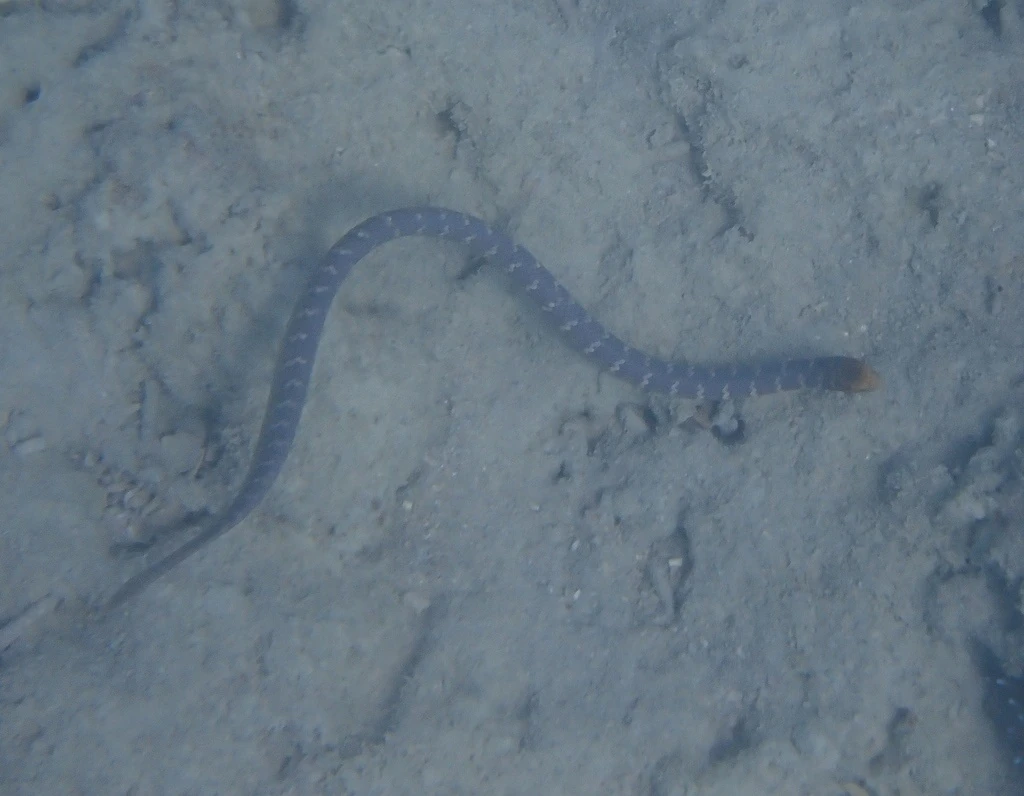
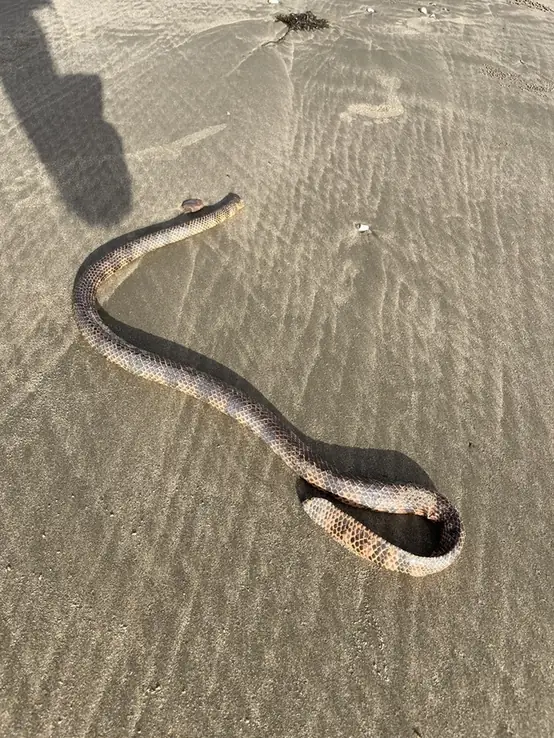
Animal on wet sand, photographed 28 December 2025; original locality label: Great Barrier Reef, Yeppoon, AU.

002 · Elapidae

Reef shallows seasnake

Aipysurus duboisii

BAVAY, 1869

VenomousClinical severity not established

Ashmore Reef: April 2021 video record. Ashmore Reef: April 2021 video detection. Cartier Island: 2013 reef survey.

Read the species account →

rcrofts / iNaturalist · CC BY 4.0 · https://creativecommons.org/licenses/by/4.0/

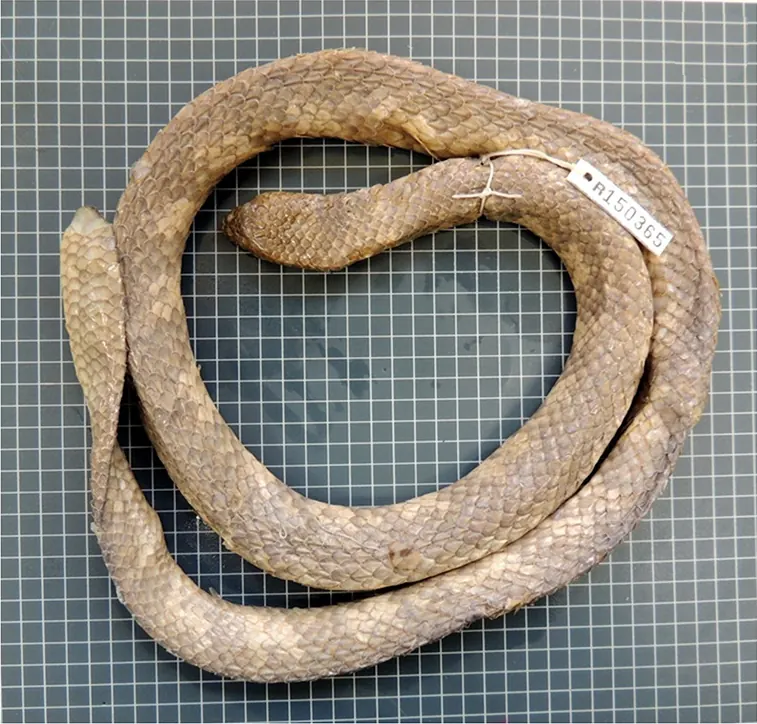
Preserved specimen WAM R150365, Barrow Island, collected in 2010; Sanders et al. (2015), Figure 2.

003 · Elapidae

Leaf-scaled Sea Snake

Aipysurus foliosquama

SMITH, 1926

VenomousClinical severity not established

Historical Ashmore records, 1994–1998; not a current population estimate. Historical records; recent persistence unverified.

Read the species account →

Kate L. Sanders, Tina Schroeder, Michael L. Guinea, and Arne R. Rasmussen · CC BY 4.0 · https://creativecommons.org/licenses/by/4.0/

Aipysurus laevis in the linked source observation. Identification follows the source community.

005 · Elapidae

Olive-brown seasnake

Aipysurus laevis

LACÉPÈDE, 1804

VenomousClinical severity not established

CSIRO reported one olive sea snake during its 2019 Ashmore survey. 2019 survey detection; abundance remained very low. Cartier Island: 2013 reef survey.

Read the species account →

Debra Baker · CC BY 4.0 · https://creativecommons.org/licenses/by/4.0/

Emydocephalus annulatus — real specimen photograph; identification follows the linked source.

006 · Elapidae

Turtle-headed seasnake

Emydocephalus annulatus

KREFFT, 1869

VenomousClinical severity not established

Historical Ashmore records, 1994–1998; not a current population estimate. 1994–1998 records; current persistence unverified. Cartier Island: 2013 reef survey.

Read the species account →

IG: divecycle · CC BY-SA 4.0 · https://creativecommons.org/licenses/by-sa/4.0

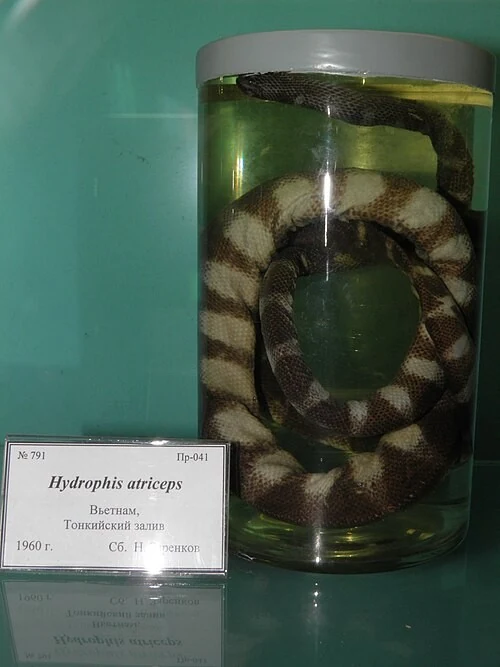
Preserved museum specimen; colour and posture do not represent a live animal.

007 · Elapidae

Black-headed seasnake

Hydrophis atriceps

GÜNTHER, 1864

VenomousClinical severity not established

Historical Ashmore checklist; residency unconfirmed. Historical checklist; no recent detection verified. The 2014 revision recommends provisional atriceps naming for Australian fasciatus-complex snakes. Historical Ashmore identity remains subject to taxonomic review.

Read the species account →

A. C. Tatarinov · CC0 · https://creativecommons.org/publicdomain/zero/1.0/deed.en

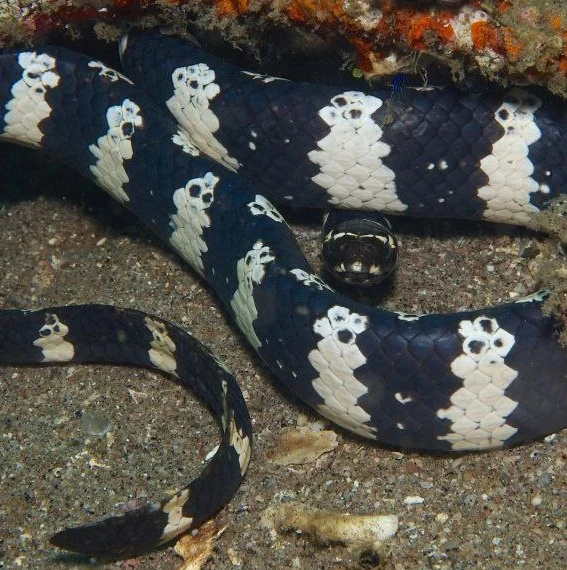
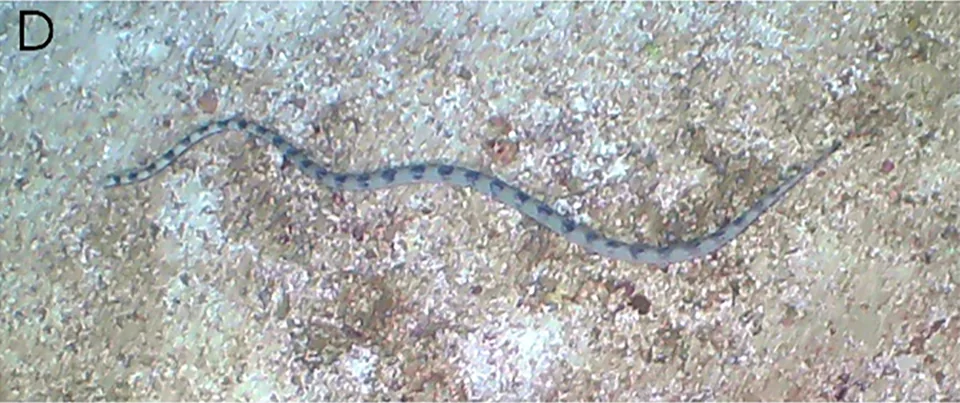
Hydrophis coggeri

008 · Elapidae

Slender-necked Seasnake

Hydrophis coggeri

(KHARIN, 1984)

VenomousClinical severity not established

Ashmore Reef: April 2021 video record. Ashmore Reef: April 2021 video detection.

Read the species account →

Speed, Wilson, Somaweera, Udyawer, Meekan, Whisson & Miller (2022) · CC BY 4.0 · https://creativecommons.org/licenses/by/4.0/

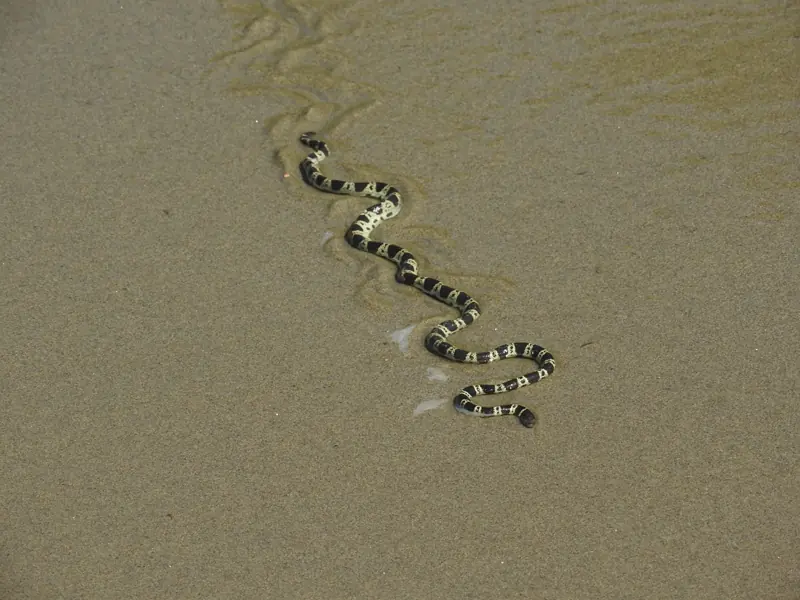
Hydrophis elegans photographed on a beach.

009 · Elapidae

Elegant or bar-bellied seasnake

Hydrophis elegans

(GRAY, 1842)

VenomousClinical severity not established

Historical Ashmore listing (Table 2). Historical Ashmore checklist, published 2013.

Read the species account →

george_vaughan / iNaturalist · CC0 1.0 · https://creativecommons.org/publicdomain/zero/1.0/

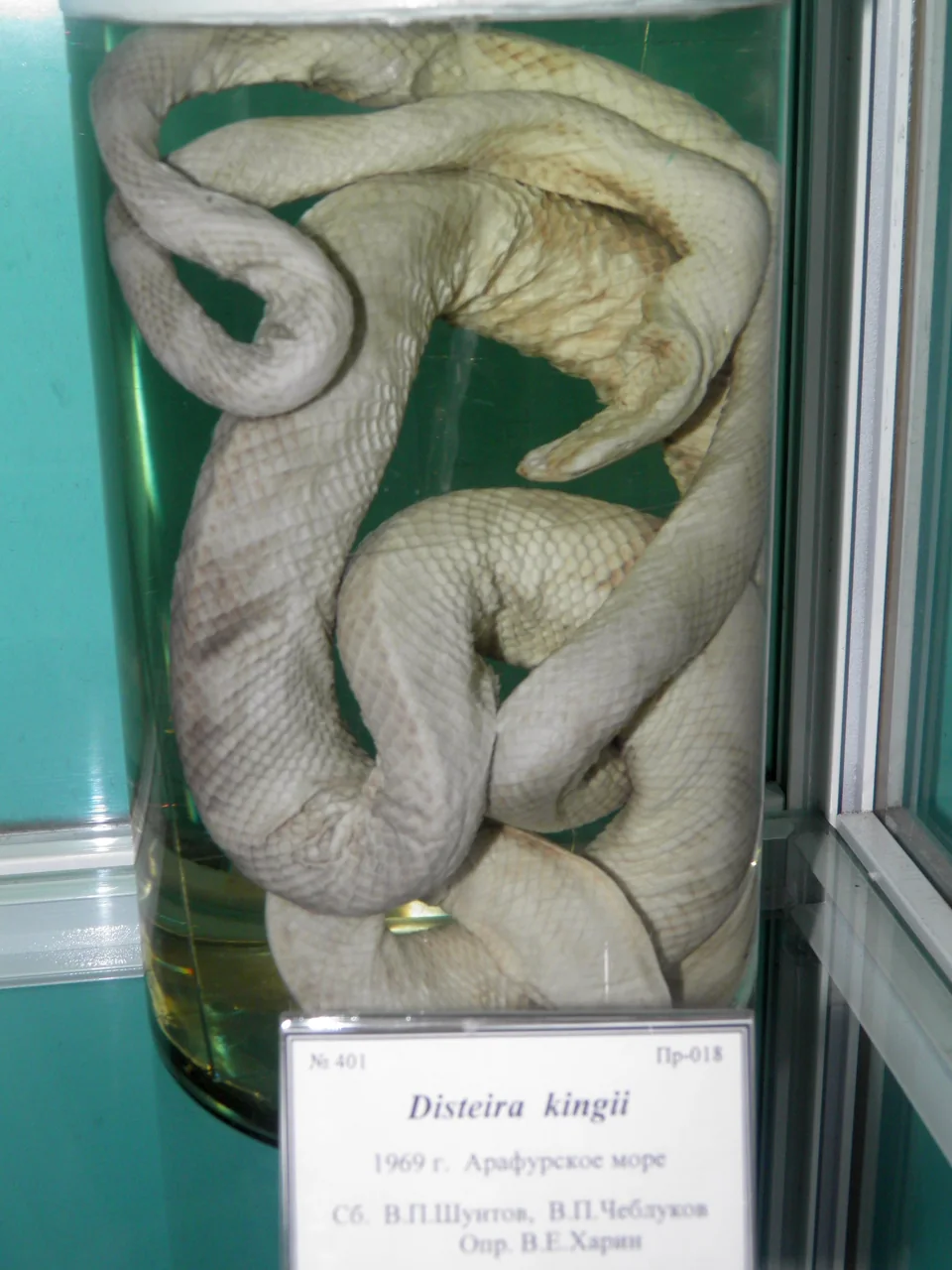
Preserved specimen displayed as Disteira kingii at the Oceanarium of Vladivostok; photographed 8 November 2015. Display label: Arafura Sea, 1969. Museum identification has not been independently reassessed.

010 · Elapidae

Spectacled or King’s seasnake

Hydrophis kingii

BOULENGER, 1896

VenomousClinical severity not established

Historical Ashmore listing (Table 2). Historical listing; the 2021 identification is disputed.

Read the species account →

A. C. Tatarinov · CC0 1.0 · https://creativecommons.org/publicdomain/zero/1.0/

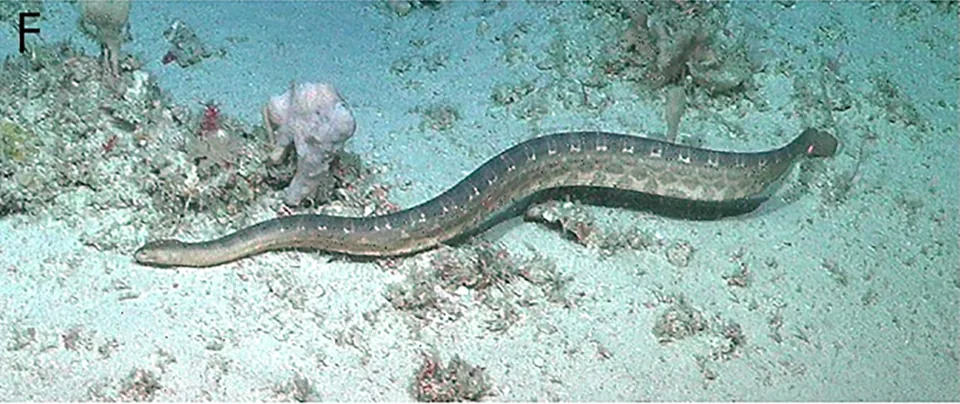
Hydrophis ocellatus

011 · Elapidae

Spotted Sea Snake

Hydrophis ocellatus

GRAY, 1849

VenomousClinical severity not established

Ashmore Reef: April 2021 video record. Ashmore Reef: April 2021 video detection.

Read the species account →

Speed, Wilson, Somaweera, Udyawer, Meekan, Whisson & Miller (2022) · CC BY 4.0 · https://creativecommons.org/licenses/by/4.0/

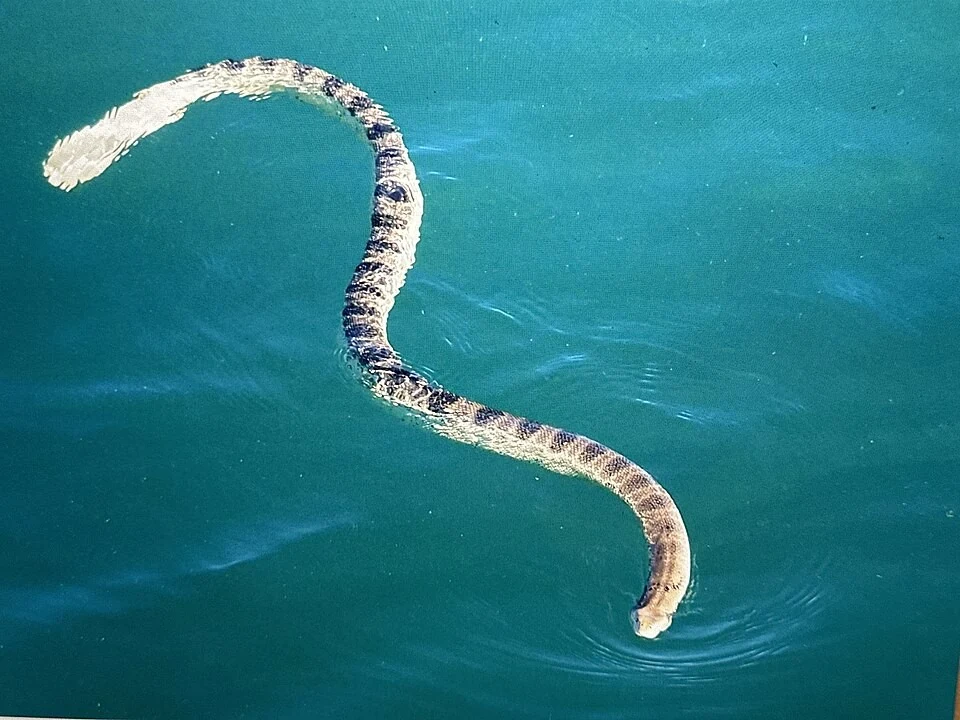
Photograph of Hydrophis peronii

012 · Elapidae

Spiny-headed seasnake

Hydrophis peronii

(DUMÉRIL, 1853)

VenomousClinical severity not established

Ashmore Reef: April 2021 video record. Ashmore Reef: April 2021 video detection.

Read the species account →

Speed, Wilson, Somaweera, Udyawer, Meekan, Whisson & Miller (2022) · CC BY 4.0 · https://creativecommons.org/licenses/by/4.0/

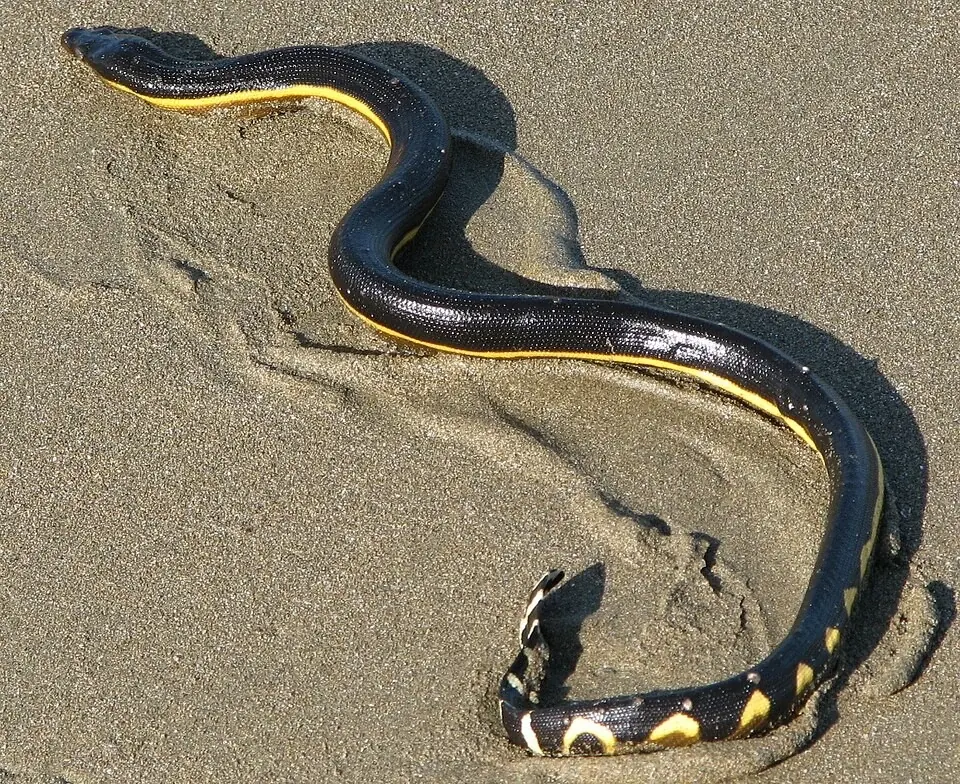
Hydrophis platurus — real specimen photograph; identification follows the linked source.

013 · Elapidae

Yellowbelly Sea Snake

Hydrophis platurus

(LINNAEUS, 1766)

VenomousClinical severity not established

Historical Ashmore listing (Table 2). Historical Ashmore checklist, published 2013.

Read the species account →

Aloaiza · CC BY 3.0 · https://creativecommons.org/licenses/by/3.0

Hydrophis stokesii — real specimen photograph; identification follows the linked source.

014 · Elapidae

Stoke’s seasnake

Hydrophis stokesii

(GRAY, 1846)

VenomousClinical severity not established

Historical Ashmore records, 1994–1998; not a current population estimate. 1994–1998 records; current persistence unverified. Cartier Island: 2013 reef survey.

Read the species account →

Rosario · CC BY 4.0 · https://creativecommons.org/licenses/by/4.0

All 14 species in the country collection →

Read further

Evidence & sources.

Guide reviewed 11 October 2026. Source dates and geographic scope matter; landscape photographs do not establish species occurrence.

  1. Parks Australia · Ashmore Reef

    Park setting and current zoning notices, checked 12 October 2026.

  2. Parks Australia · Cartier Island

    Park setting, sanctuary and ordnance notices, checked 12 October 2026.

  3. CSIRO · Ashmore survey findings (2021)

    Historical findings from the 2019 field programme; not a 2026 condition report.

  4. Somaweera et al. · Ashmore sea-snake decline (2021)

    Survey chronology and evaluation of possible drivers; no single demonstrated cause.

Continue through Ashmore and Cartier Islands

Explore another habitat.