Colubridae · Species account

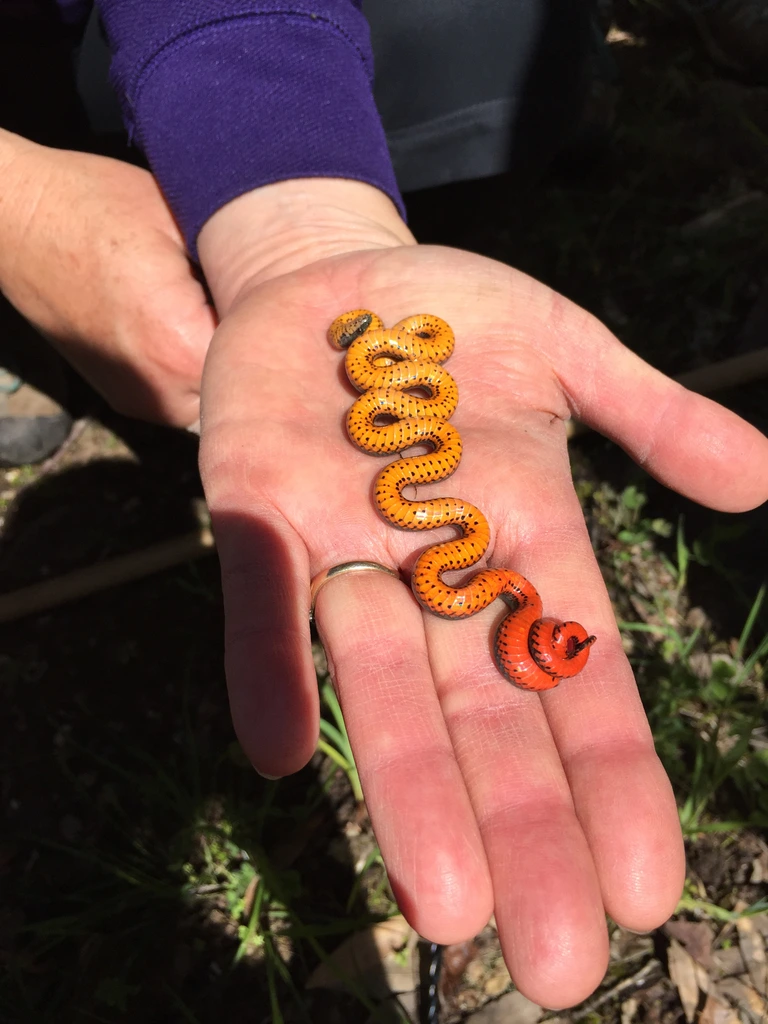
arnyi : Ringneck Snake

Diadophis punctatus(LINNAEUS, 1766)

Venom unknownNot yet assessed

Florida records span open grassy landscapes and wooded habitats; Keys populations also use limestone exposures. These are regional examples within a much wider range. Source scope: Florida Museum account; habitat use does not establish occurrence in every state.

FamilyColubridae
ReproductionLive-bearing
Country chaptersCanada · United States of America · Mexico
Evidence updated2026-10-17
Explore its biology ↓

Venom & human effects

What is documented?

Venom unknownNot yet assessed

Venom status has not yet been established from the reviewed evidence for this account.

Missing evidence is not a non-venomous classification or a statement of low risk.

How to read these badges
Limited documented effects
The cited human cases reported limited effects. Sparse observations cannot exclude a severe reaction.
Medically significant effects
The cited human cases document clinically important injury or illness. This is not an upper limit on severity.
Potentially life-threatening
Species-specific clinical evidence documents life-threatening illness or deaths after bites. The account explains the affected patients and any uncertainty about the cause.
Clinical severity not established
Venom presence is documented, but the reviewed evidence does not establish a clinical tier. When human effects are reported under an unresolved historical species name, the badge and account say so explicitly.
Venom status uncertain
The reviewed sources are inconclusive or conflicting about venom presence. The account explains the uncertainty.
Venom status not assessed
The atlas lacks a reviewed venom-presence classification for this species.

These are editorial summaries of the linked evidence, not toxicity rankings or WHO antivenom-priority categories. Effects vary with the bite and patient. Non-venomous does not mean safe to handle.

The scientific identity

Taxonomy & recognition

From observations & literature

Natural history

Size & measurements

The museum gives an approximate adult total-length range of 21–36 cm.

Regional guide value for adults, not a maximum size or the full species-wide size range. Total length includes the tail.

Study & evidence

Florida Museum of Natural History, Diadophis punctatus, Basic description, first sentence.

Study source 1 ↗

Diet & feeding

Consumes small reptiles, amphibians and invertebrates; the account describes venom-assisted immobilization of larger prey.

Regional museum synthesis centered on Florida. Reported brood ranges and seasons apply to that account, not to every population; explicitly identified records from elsewhere retain their stated origin.

Study & evidence

Florida Museum of Natural History, Diadophis punctatus, Diet and feeding behavior section.

Study source 1 ↗

Activity & behaviour

Usually hunts at night.

Florida museum account; activity and behaviour may vary by season, locality and individual.

Study & evidence

Florida Museum of Natural History, Diadophis punctatus, Diet and feeding behavior section.

Study source 1 ↗

Reproduction

The Florida account reports about 2–7 eggs deposited in moist sheltered places, such as decaying logs.

Regional museum synthesis centered on Florida. Reported brood ranges and seasons apply to that account, not to every population; explicitly identified records from elsewhere retain their stated origin.

Study & evidence

Florida Museum of Natural History, Diadophis punctatus, Reproduction section.

Study source 1 ↗

Habitat & ecology

Habitat & microhabitat · United States of America

Florida records span open grassy landscapes and wooded habitats; Keys populations also use limestone exposures. These are regional examples within a much wider range. Source scope: Florida Museum account; habitat use does not establish occurrence in every state.

[2]

Habitat & microhabitat · United States of America, Canada, Mexico

Ground cover and moisture are recurring features: stones, loose bark and dead wood shelter snakes in open woodland. Damp forests and wetland margins also appear in the account. Source scope: Animal Diversity Web species account; habitat use is not a state or province occurrence record.

[3]

Habitat & microhabitat · Mexico

Jalisco study landscape: riparian vegetation beside crops, strongly disturbed dry forest. These are local field associations, not a complete national habitat inventory. Disturbed woodland remains distinguished from intact forest; riparian records do not imply aquatic behaviour.

[4]

Uses grassland and woodland; Florida Keys records also include limestone habitat and tropical hardwood areas.

Regional museum synthesis centered on Florida. Reported brood ranges and seasons apply to that account, not to every population; explicitly identified records from elsewhere retain their stated origin.

Study & evidence

Florida Museum of Natural History, Diadophis punctatus, Habitat section.

Study source 1 ↗

Further observations & source notes (3)

Documented localities · Canada

The treatment names these subdivisions in its Canada distribution clause: Nova Scotia, New Brunswick, Quebec, Ontario. They are assigned to the declared atlas navigation groups; this is not a field observation, a whole-region range polygon or a complete local inventory.

[5]

Documented localities · United States of America

The treatment names these subdivisions in its United States of America distribution clause: Mississippi, North Carolina, Oklahoma, Virginia, West Virginia, Louisiana, Michigan, Massachusetts, Idaho, Florida, Nebraska, New Mexico, South Dakota, Texas, California, Alabama, Georgia, Pennsylvania, Missouri, Colorado, Utah, Tennessee, New York, Kansas, Illinois, Vermont, Iowa, South Carolina, New Hampshire, Arizona, New Jersey, Maryland, Maine, Rhode Island, Kentucky, Ohio, Wisconsin, Oregon, Arkansas, Indiana, Minnesota, Connecticut. They are assigned to the declared atlas navigation groups; this is not a field observation, a whole-region range polygon or a complete local inventory.

[6]

Documented localities · Mexico

The treatment names these subdivisions in its Mexico distribution clause: Aguascalientes, Chihuahua, Coahuila, Durango, Hidalgo, Jalisco, Mexico, Nuevo Leon, Queretaro, San Luis Potosi, Sinaloa, Sonora, Zacatecas. They are assigned to the declared atlas navigation groups; this is not a field observation, a whole-region range polygon or a complete local inventory. The field checklist records this species in its Jalisco study landscape during 2011–2020. State-level membership is retained; no additional municipality or contemporary population status is inferred.

[7][8]

A reported observation is not necessarily the full ecological range of a species. Where reproduction is inferred in a source dataset, the account identifies that limitation.

One species · Across borders

Global distribution

Explore the recorded countries and islands. Select a highlighted area to see its distribution evidence.

Recorded distribution
Diadophis punctatus — select a recorded country or island

Loading geographic boundaries…

ListedIntroducedUncertain

Click a highlighted country to zoom in and explore its records.

Shading identifies recorded countries or named islands, not continuous habitat coverage. Uncoloured areas do not establish absence.

Natural Earth · 1:50m · public domain; Gibraltar: geoBoundaries. Small islands may lack an outline.

Explore the distribution

Across borders

3 recorded countries & territories

Select a highlighted area to see its status, island records and sources. Each country and island links to the same shared species collection.

Use “Worldwide records” to include distant introduced and uncertain records in the map view.

Canada · regional locality evidence

The checked taxonomic distribution account explicitly lists Canada. Country-level evidence does not establish continuous occupancy or a complete national inventory. The treatment names these subdivisions in its Canada distribution clause: Nova Scotia, New Brunswick, Quebec, Ontario. They are assigned to the declared atlas navigation groups; this is not a field observation, a whole-region range polygon or a complete local inventory.

Nova Scotia → · Nova Scotia

New Brunswick → · New Brunswick

Quebec → · Quebec

Ontario → · Ontario

Locality source 1 ↗
United States of America · regional locality evidence

The checked taxonomic distribution account explicitly lists United States of America. Country-level evidence does not establish continuous occupancy or a complete national inventory. The treatment names these subdivisions in its United States of America distribution clause: Mississippi, North Carolina, Oklahoma, Virginia, West Virginia, Louisiana, Michigan, Massachusetts, Idaho, Florida, Nebraska, New Mexico, South Dakota, Texas, California, Alabama, Georgia, Pennsylvania, Missouri, Colorado, Utah, Tennessee, New York, Kansas, Illinois, Vermont, Iowa, South Carolina, New Hampshire, Arizona, New Jersey, Maryland, Maine, Rhode Island, Kentucky, Ohio, Wisconsin, Oregon, Arkansas, Indiana, Minnesota, Connecticut. They are assigned to the declared atlas navigation groups; this is not a field observation, a whole-region range polygon or a complete local inventory.

Mississippi → · Mississippi

North Carolina → · North Carolina

Oklahoma → · Oklahoma

Virginia → · Virginia

West Virginia → · West Virginia

Louisiana → · Louisiana

Michigan → · Michigan

Massachusetts → · Massachusetts

Idaho → · Idaho

Florida → · Florida

Nebraska → · Nebraska

New Mexico → · New Mexico

South Dakota → · South Dakota

Texas → · Texas

California → · California

Alabama → · Alabama

Georgia → · Georgia

Pennsylvania → · Pennsylvania

Missouri → · Missouri

Colorado → · Colorado

Utah → · Utah

Tennessee → · Tennessee

New York → · New York

Kansas → · Kansas

Illinois → · Illinois

Vermont → · Vermont

Iowa → · Iowa

South Carolina → · South Carolina

New Hampshire → · New Hampshire

Arizona → · Arizona

New Jersey → · New Jersey

Maryland → · Maryland

Maine → · Maine

Rhode Island → · Rhode Island

Kentucky → · Kentucky

Ohio → · Ohio

Wisconsin → · Wisconsin

Oregon → · Oregon

Arkansas → · Arkansas

Indiana → · Indiana

Minnesota → · Minnesota

Connecticut → · Connecticut

Locality source 1 ↗
Mexico · regional locality evidence

The checked taxonomic distribution account explicitly lists Mexico. Country-level evidence does not establish continuous occupancy or a complete national inventory. The treatment names these subdivisions in its Mexico distribution clause: Aguascalientes, Chihuahua, Coahuila, Durango, Hidalgo, Jalisco, Mexico, Nuevo Leon, Queretaro, San Luis Potosi, Sinaloa, Sonora, Zacatecas. They are assigned to the declared atlas navigation groups; this is not a field observation, a whole-region range polygon or a complete local inventory. The field checklist records this species in its Jalisco study landscape during 2011–2020. State-level membership is retained; no additional municipality or contemporary population status is inferred.

Aguascalientes → · Aguascalientes

Chihuahua → · Chihuahua

Coahuila → · Coahuila

Durango → · Durango

Hidalgo → · Hidalgo

Jalisco → · Jalisco

State of Mexico → · Mexico

Nuevo Leon → · Nuevo Leon

Queretaro → · Queretaro

San Luis Potosi → · San Luis Potosi

Sinaloa → · Sinaloa

Sonora → · Sonora

Zacatecas → · Zacatecas

Locality source 1 ↗ Locality source 2 ↗
Geographic scope of the source

Country entries supported by this Americas review: Canada, United States of America, Mexico. These are reviewed atlas entries, not a complete global distribution. [1]

The text retains the source’s geographic qualifications. The map shows countries with atlas occurrence records; it is not a complete global range model. A type locality is a nomenclatural reference, not the only place the species occurs.

Status & its meaning

Conservation

No matching global assessment was verified for this account. This is an unresolved assessment link, not an IUCN “Not Evaluated” classification and not evidence that the species is secure.

Locality coverage in the atlas does not measure abundance, population trends or national legal protection.

Follow the evidence

Sources & further reading

The linked taxonomic treatment provides its original descriptions, revisions and bibliography. Observations from other countries are not relabelled as local field studies.