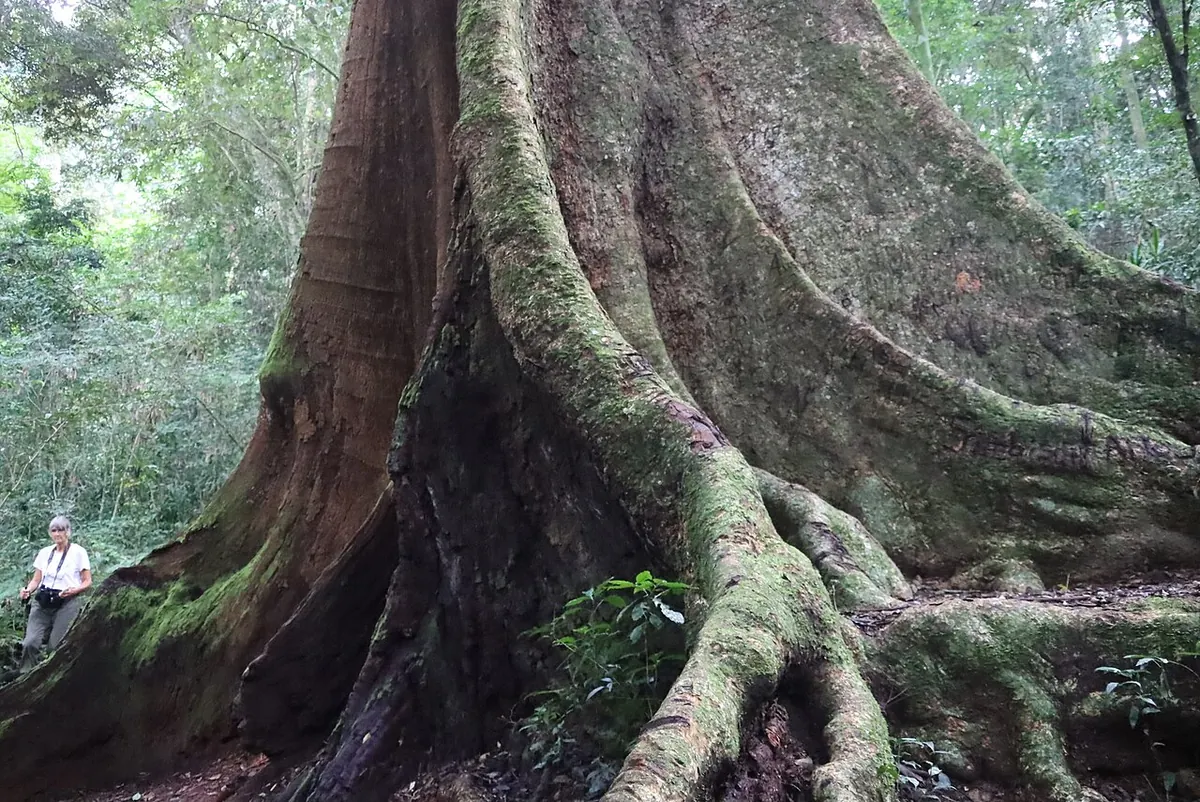
The buttressed base of the Big Tree, a Khaya anthotheca, within Chirinda Forest, Zimbabwe. A visitor provides scale beside the forest tree.

Zimbabwe · Habitat field guide

Forest & woodland

Forests and woodlands form a major part of Zimbabwe’s vegetation. The national account distinguishes state reserves from other land uses.

The buttressed base of the Big Tree, a Khaya anthotheca, within Chirinda Forest, Zimbabwe. A visitor provides scale beside the forest tree.

Photograph: tonyrebelo · Image source · CC BY-SA 4.0. Cropped to fill the hero; darkened for text legibility.

Understanding the environment

A sense of the habitat.

Forests and woodlands form a major part of Zimbabwe’s vegetation. The national account distinguishes state reserves from other land uses.

Geographic scope
Zimbabwe; named examples and source scope matter.
Evidence scale
Landscape context is separate from species locality evidence.
Source chronology
Consult the original publication date; checked 12 October 2026.

Explore the structure · Select a layer to compare the details a locality record can preserve.

Read the setting in three layers.

Select a zone to see what changes.

Tree cover

Tree cover

Separate closed forest, open woodland and planted trees.

Compare this detail with the original field or museum record before assigning a habitat association.

These reading prompts explain how to interpret evidence; they do not assert that every feature occurs at every site.

Sources: Convention on Biological Diversity · Zimbabwe national profile

Field notes · 01

The documented landscape

Forests and woodlands form a major part of Zimbabwe’s vegetation. The national account distinguishes state reserves from other land uses.

Sources: Convention on Biological Diversity · Zimbabwe national profile

Field notes · 02

Connect habitat and locality

Use the species account to check whether a habitat statement applies to this country or elsewhere in the species’ range. A landscape photograph illustrates its own named place; it is not evidence of snake presence.

Pressures on Zimbabwe’s habitats

What is at risk?

A site-specific assessment of pressures has not yet been extracted for this guide. The landscape sources below provide context; they do not establish a current threat level for each snake species.

What helps this habitat

Retain natural vegetation and water connections where local conservation evidence supports them. Consult the linked national or site account for the pressures and management actions actually reported there.

The connected collection

Snakes with habitat evidence.

These 12 species have supported country occurrence and an explicit habitat association in the shared account. The association may come from elsewhere in their range. This is not a complete local habitat inventory; the places above are landscape examples, not asserted collecting sites.

12 species · showing 12

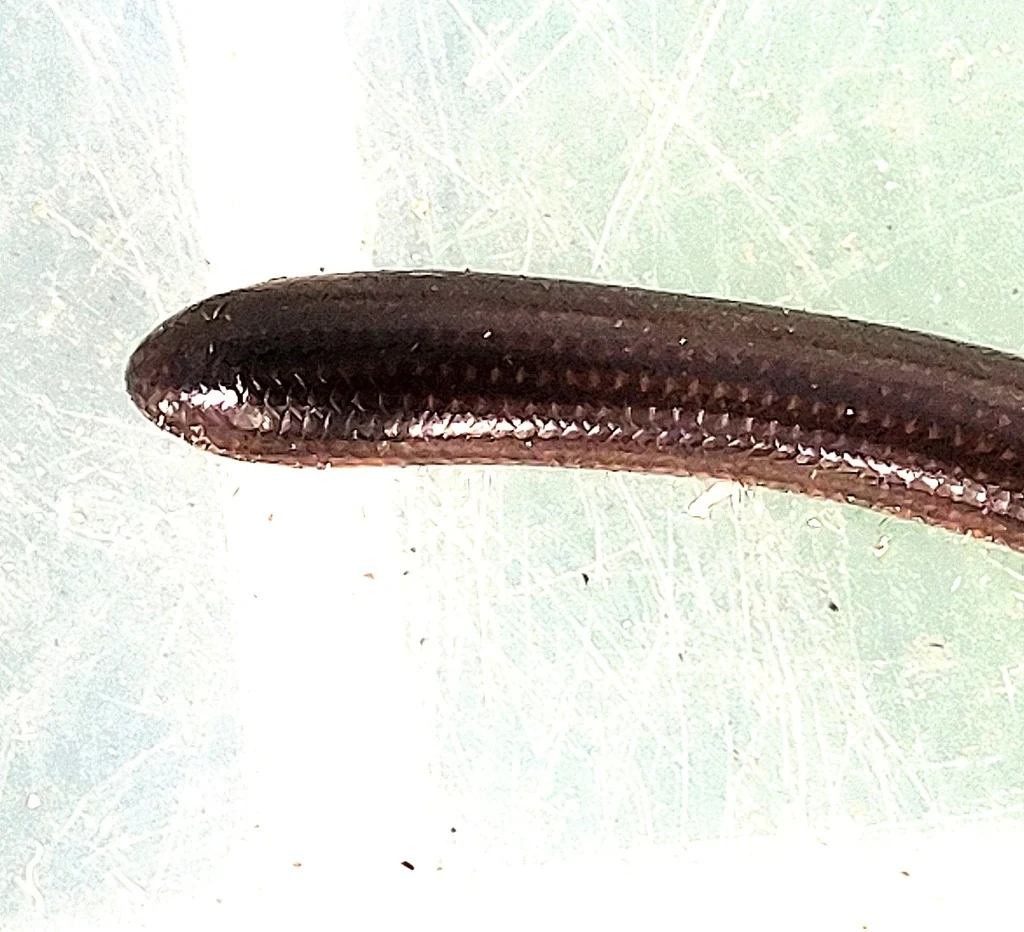
Afrotyphlops obtusus, photographed 2024-11-14. Identification follows the linked research-grade observation.

001 · Typhlopidae

Southern gracile blind-snake, Slender Blind Snake

Afrotyphlops obtusus

(PETERS, 1865)

Non-venomous

The current taxonomic treatment explicitly lists this country. This is country-scale checklist evidence, not a claim of continuous occupancy or a complete regional inventory.

Read the species account →

Eric (iNaturalist contributor) · CC0 1.0 · https://creativecommons.org/publicdomain/zero/1.0/
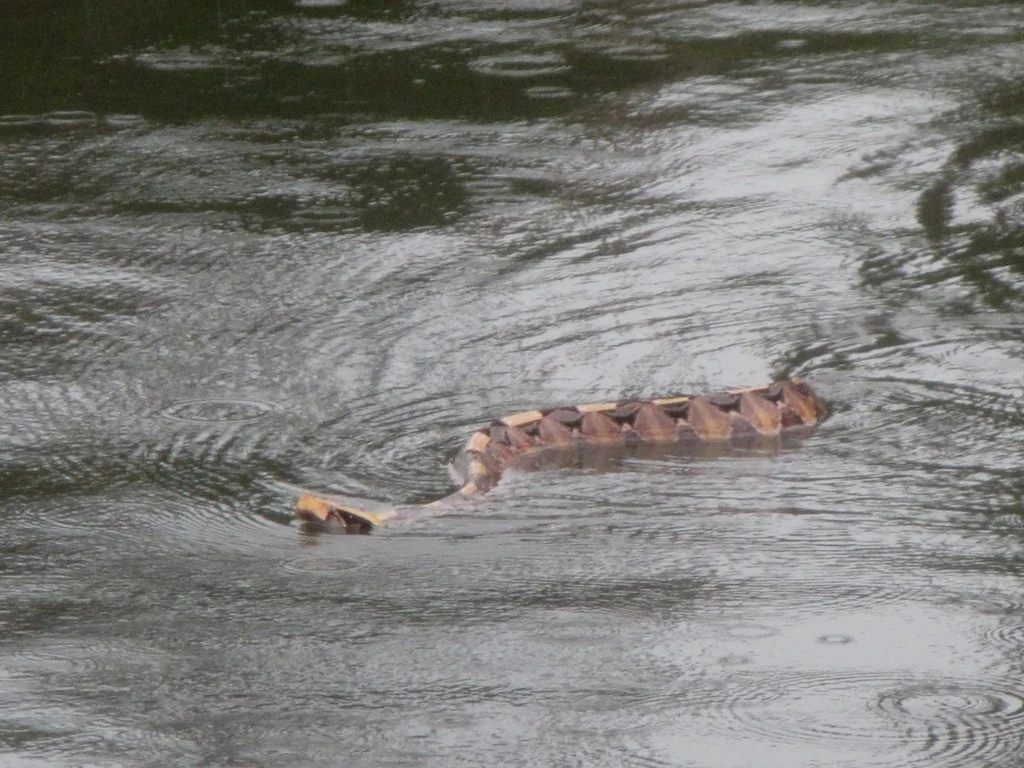
Bitis gabonica; Lake Tissongo, Cameroon; photographed 2016-05-18.

002 · Viperidae

Gaboon Adder, Gaboon Viper

Bitis gabonica

(DUMÉRIL, BIBRON & DUMÉRIL, 1854)

VenomousClinical severity not established

The current taxonomic treatment explicitly lists this country. This is country-scale checklist evidence, not a claim of continuous occupancy or a complete regional inventory.

Read the species account →

Lucy Keith-Diagne · CC BY 4.0 · https://creativecommons.org/licenses/by/4.0/

Crotaphopeltis hotamboeia; Campher's Drift, George, 6529, South Africa; photographed 2023-10-13.

003 · Colubridae

White-lipped Herald Snake, Red-lipped Snake

Crotaphopeltis hotamboeia

(LAURENTI, 1768)

Venom unknownNot yet assessed

The current taxonomic treatment explicitly lists this country. This is country-scale checklist evidence, not a claim of continuous occupancy or a complete regional inventory. Bulawayo: observation 376612733, 2026-06-29. Bulawayo: observation 339740842, 2026-02-22. Harare: observation 269979894, 2022-10-24. Harare: observation 269979760, 2022-10-24.…

Read the species account →

no rights reserved · CC0 · https://creativecommons.org/publicdomain/zero/1.0/
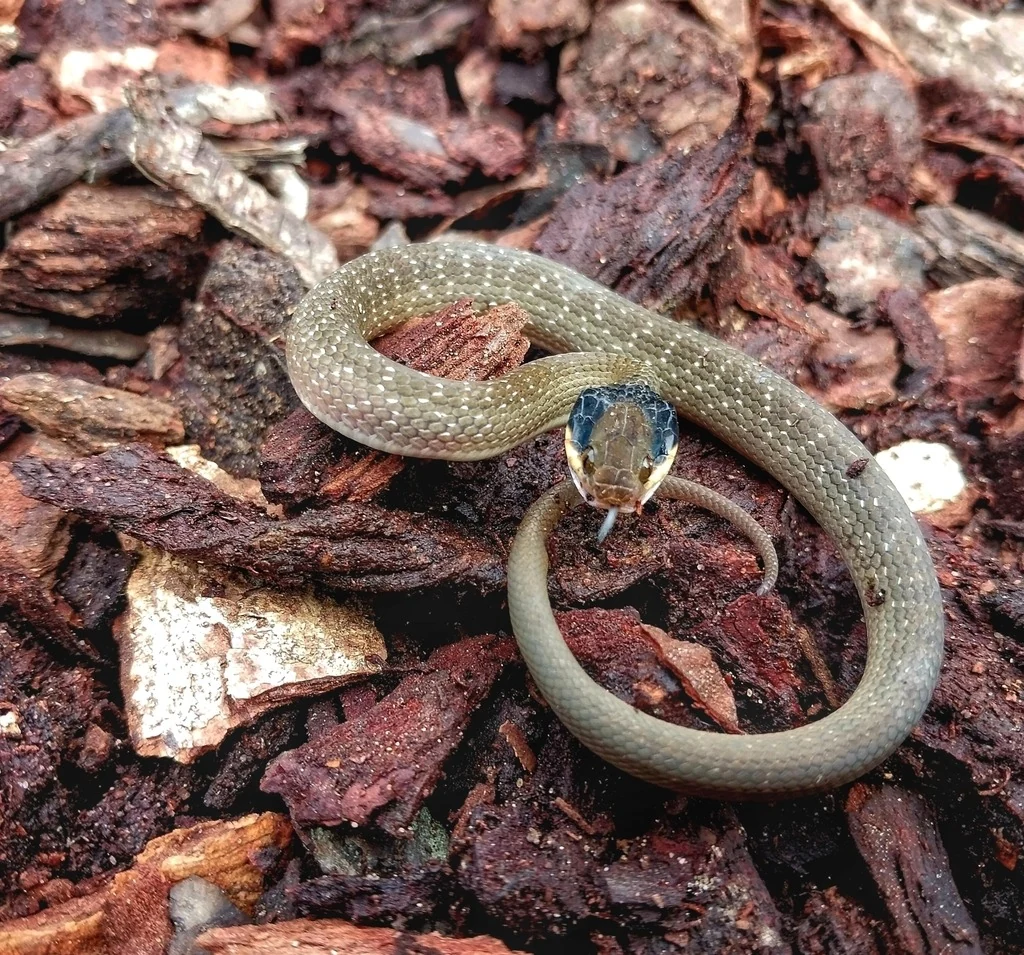
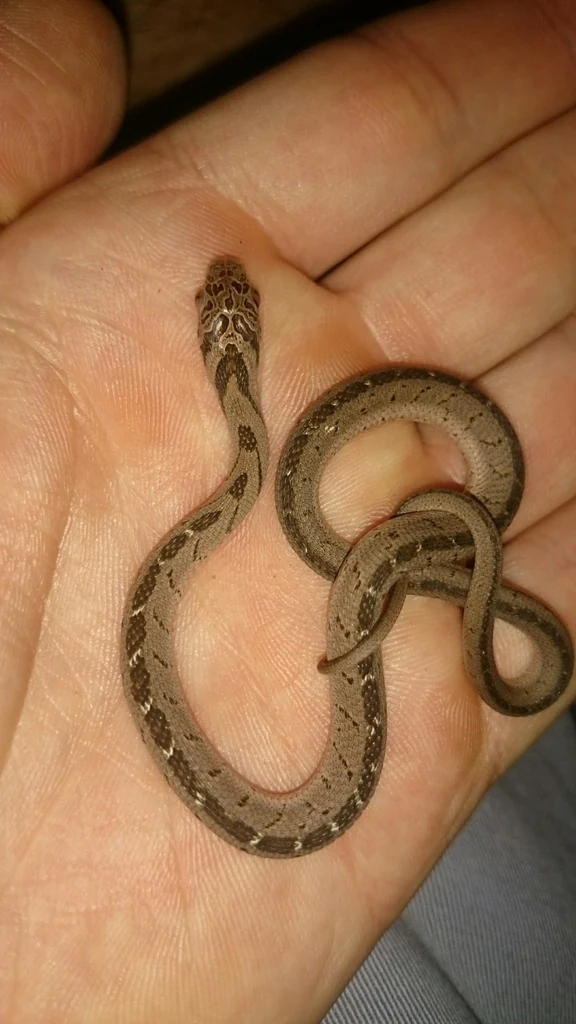
Dasypeltis medici; Eastern Shores, isimangaliso Wetland Park; photographed 2019-03-30.

004 · Colubridae

Eastern Forest Egg-eater, East African Egg Eater

Dasypeltis medici

BIANCONI, 1859

Venom unknownNot yet assessed

The current taxonomic treatment explicitly lists this country. This is country-scale checklist evidence, not a claim of continuous occupancy or a complete regional inventory.

Read the species account →

Nick Schaller · CC BY 4.0 · https://creativecommons.org/licenses/by/4.0/

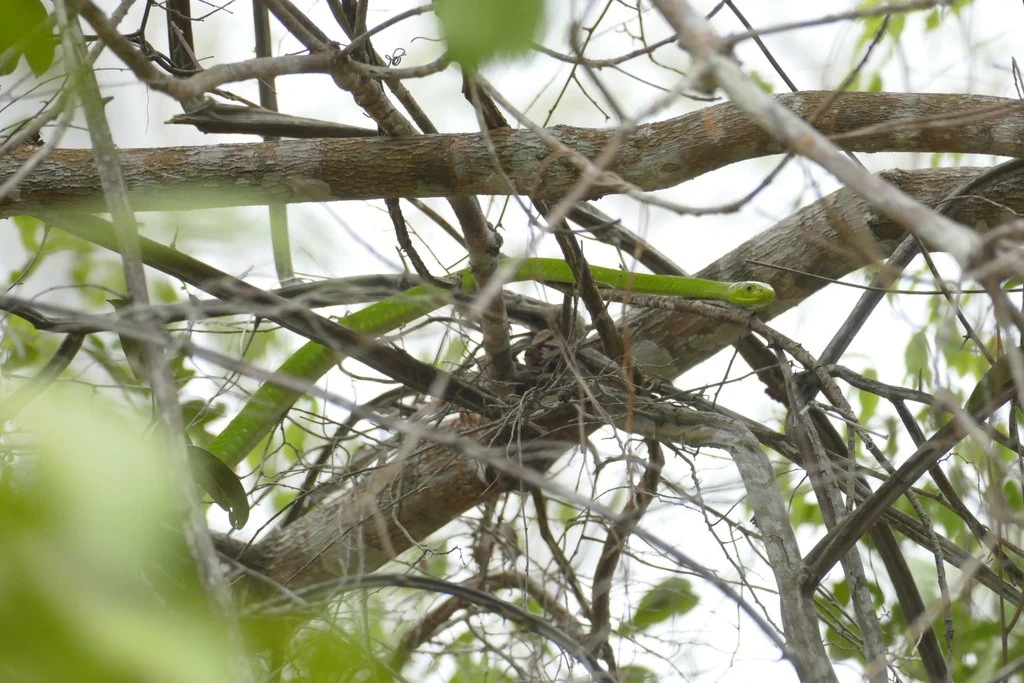
Dendroaspis angusticeps, photographed 2022-02-12. Identification follows the linked research-grade observation.

005 · Elapidae

Green Mamba

Dendroaspis angusticeps

(SMITH, 1849)

VenomousClinical severity not established

The current taxonomic treatment explicitly lists this country. This is country-scale checklist evidence, not a claim of continuous occupancy or a complete regional inventory.

Read the species account →

Ewout Knoester · CC BY-SA 4.0 · https://creativecommons.org/licenses/by-sa/4.0/

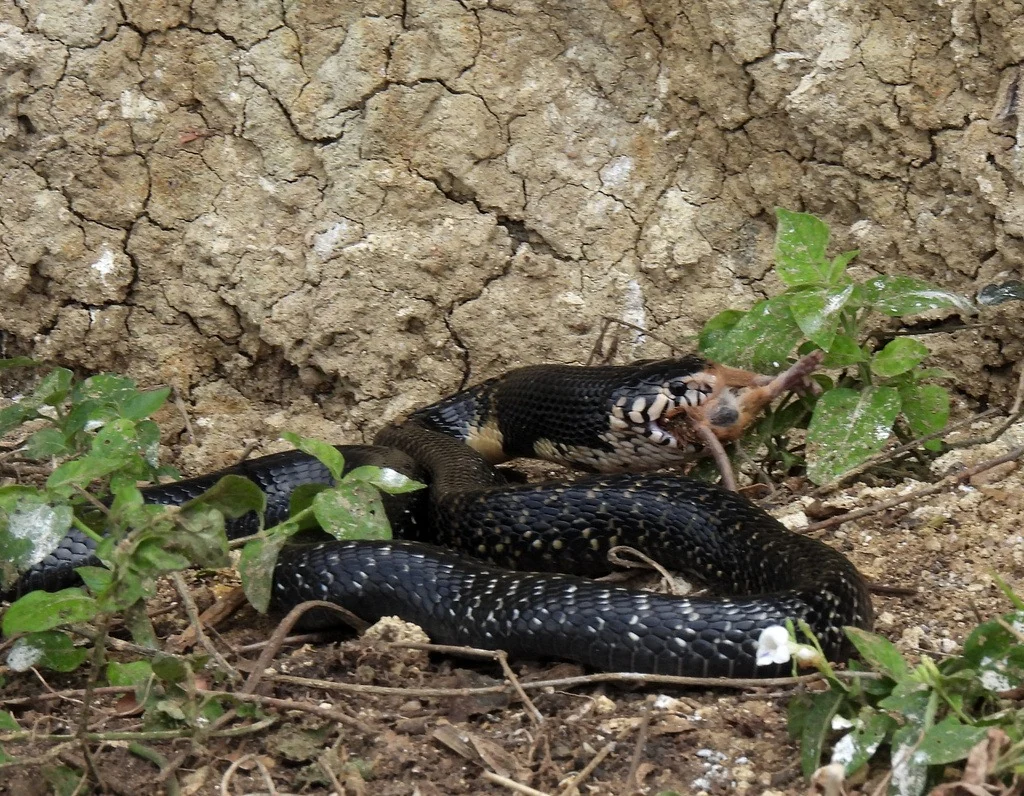
Naja subfulva; Katunguru Queen Elizabeth National Park, Katunguru, Uganda; photographed 2023-03-05.

006 · Elapidae

Brown forest cobra

Naja subfulva

LAURENT, 1955

VenomousClinical severity not established

The current taxonomic treatment explicitly lists this country. This is country-scale checklist evidence, not a claim of continuous occupancy or a complete regional inventory.

Read the species account →

Sidnei Dantas · CC BY-SA 4.0 · https://creativecommons.org/licenses/by-sa/4.0/

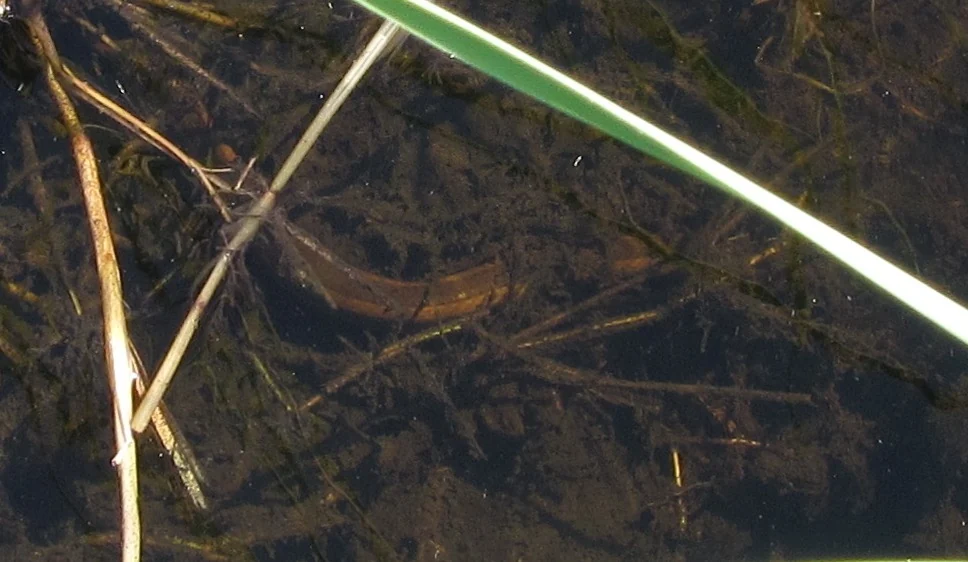
Natriciteres olivacea; Ngamiland North, Botswana; photographed 2018-12-15.

007 · Colubridae

Olive Marsh Snake

Natriciteres olivacea

(PETERS, 1854)

Venom unknownNot yet assessed

The current taxonomic treatment explicitly lists this country. This is country-scale checklist evidence, not a claim of continuous occupancy or a complete regional inventory.

Read the species account →

Robert Taylor · CC BY 4.0 · https://creativecommons.org/licenses/by/4.0/

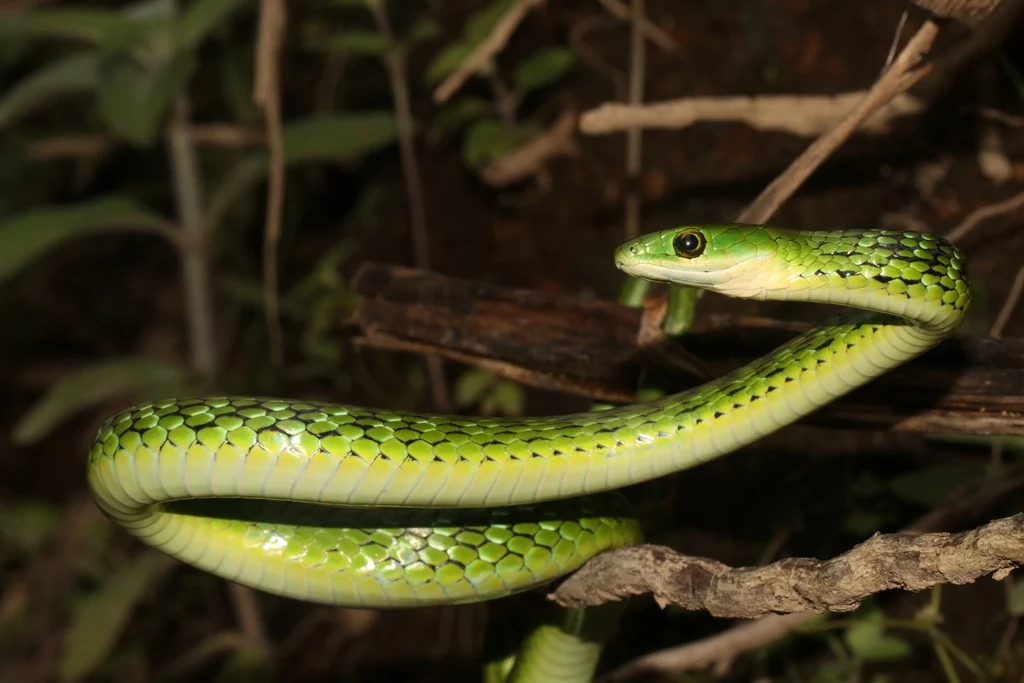
Philothamnus angolensis; Rungwe, Tanzania; photographed 2024-04-28.

008 · Colubridae

Angola Green Snake, Western Green Snake

Philothamnus angolensis

BOCAGE, 1882

Venom unknownNot yet assessed

The current taxonomic treatment explicitly lists this country. This is country-scale checklist evidence, not a claim of continuous occupancy or a complete regional inventory. Harare: observation 193936894, 2023-12-14. Harare: observation 109213060, 2022-03-22. Mashonaland East: observation 270024037, 2023-03-26. Mashonaland West: observation 256926669,…

Read the species account →

Ryan van Huyssteen · CC BY 4.0 · https://creativecommons.org/licenses/by/4.0/

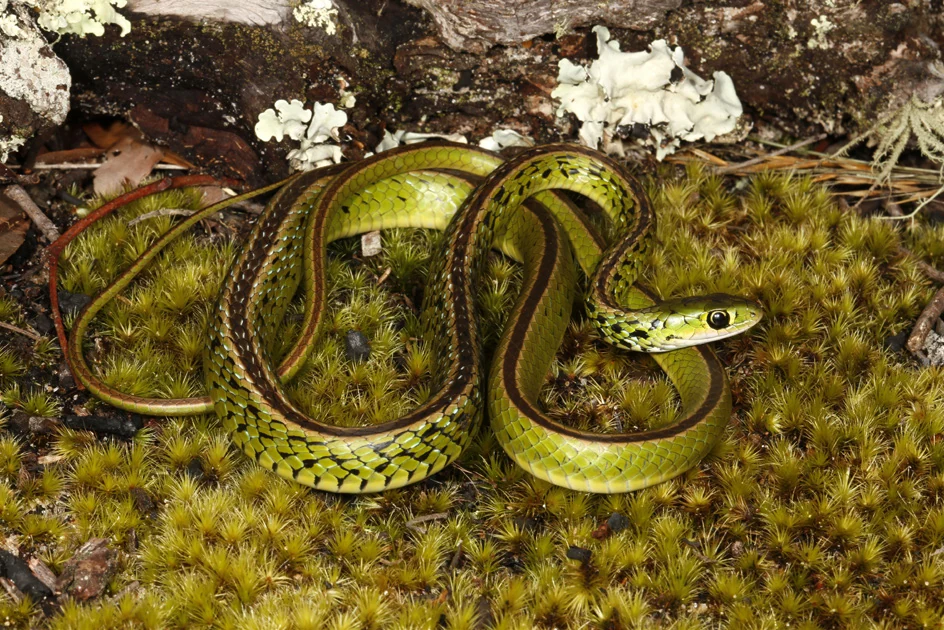
Philothamnus ornatus from Cuito River source, Angola. Fig. 15 in Conradie et al. (2021), Amphibian & Reptile Conservation 15(2):244–278.

009 · Colubridae

Ornate Green Snake

Philothamnus ornatus

BOCAGE, 1872

Venom unknownNot yet assessed

The current taxonomic treatment explicitly lists this country. This is country-scale checklist evidence, not a claim of continuous occupancy or a complete regional inventory.

Read the species account →

Werner Conradie · CC BY 4.0 · https://creativecommons.org/licenses/by/4.0/

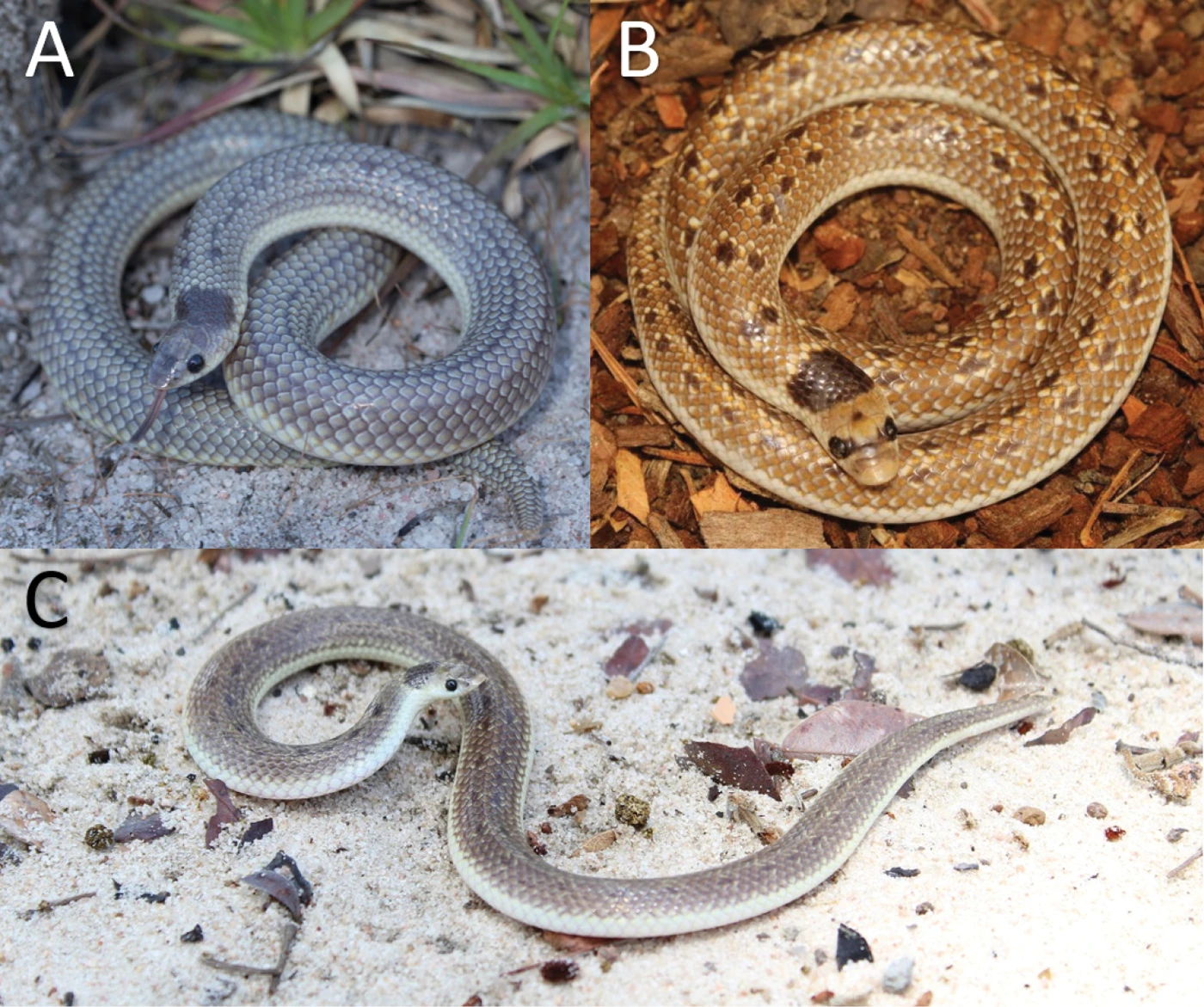
Conradie et al. (2022), Figure 4: documented colour variation in Prosymna angolensis from Tundavala (A), Grootfontein (B) and Bicuar National Park (C). All three panels identify the same revised species.

010 · Prosymnidae

Angolan Shovel-snout snake

Prosymna angolensis

BOULENGER, 1915

Venom unknownNot yet assessed

The current taxonomic treatment explicitly lists this country. This is country-scale checklist evidence, not a claim of continuous occupancy or a complete regional inventory.

Read the species account →

Justin R. Nicolau (A); Francois Theart (B); Ninda L. Baptista (C) · CC BY 4.0 · https://creativecommons.org/licenses/by/4.0/

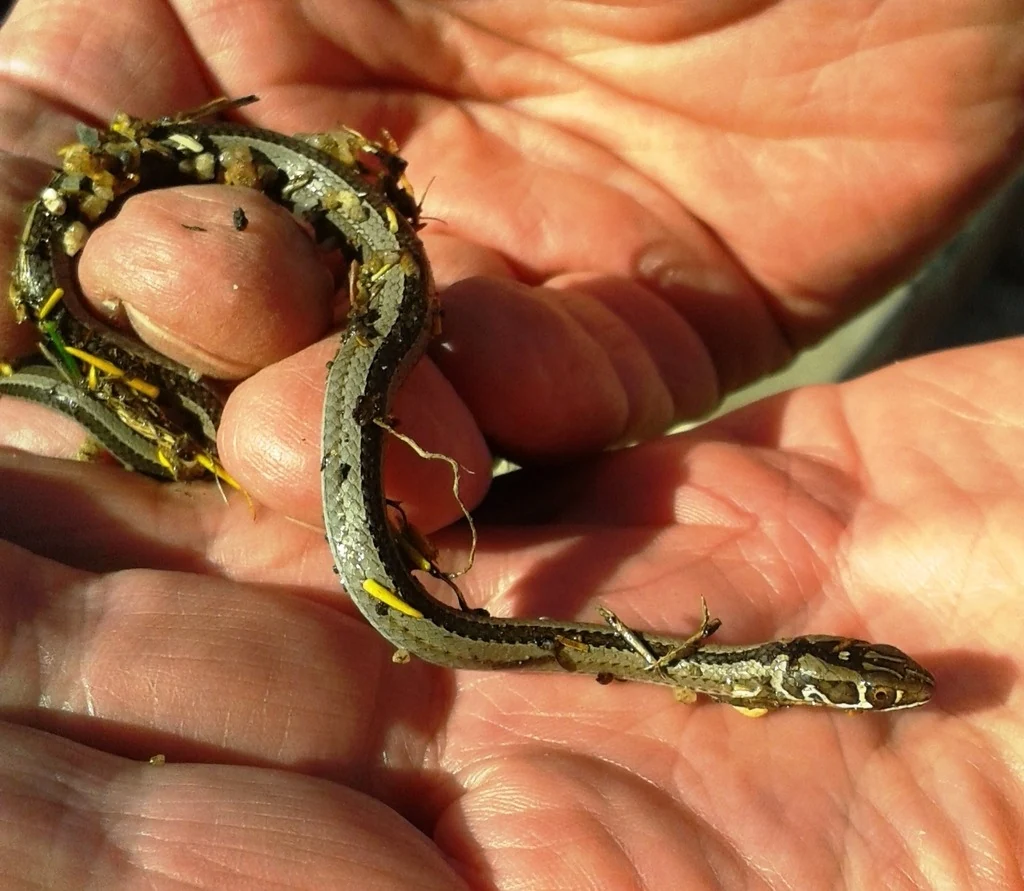
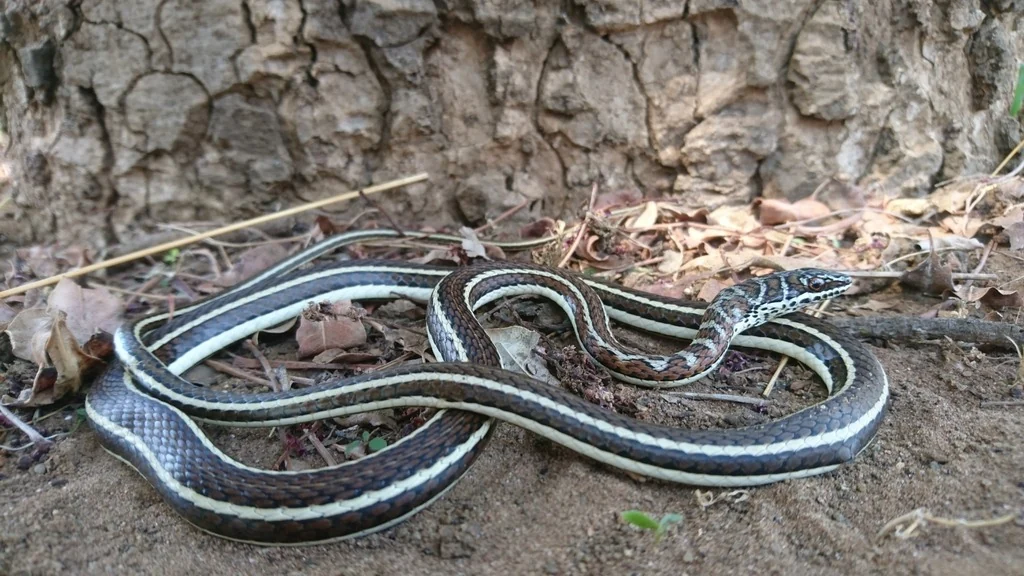
Psammophis crucifer; Vergelegen Helderberg Rural, Sir Lowry's Pass, 7130, South Africa; photographed 2015-03-01.

011 · Psammophiidae

Cross-marked Grass Snake, Montane Grass Snake

Psammophis crucifer

(DAUDIN, 1803)

VenomousClinical severity not established

The current taxonomic treatment explicitly lists this country. This is country-scale checklist evidence, not a claim of continuous occupancy or a complete regional inventory.

Read the species account →

linkie · CC BY 4.0 · https://creativecommons.org/licenses/by/4.0/

Psammophis subtaeniatus; Mkhuze Game Reserve; photographed 2019-10-20.

012 · Psammophiidae

Western Yellow-bellied Sand Snake, Stripe-bellied Sand Snake

Psammophis subtaeniatus

PETERS, 1882

VenomousClinical severity not established

The current taxonomic treatment explicitly lists this country. This is country-scale checklist evidence, not a claim of continuous occupancy or a complete regional inventory. Bulawayo: observation 254931169, 2024-12-12. Bulawayo: observation 200810763, 2024-02-29. Mashonaland West: observation 312157736, 2025-09-07. Mashonaland West: observation…

Read the species account →

Nick Schaller · CC BY 4.0 · https://creativecommons.org/licenses/by/4.0/

All 86 species in the country collection →

Read further

Evidence & sources.

Guide reviewed 12 October 2026. Source dates and geographic scope matter; landscape photographs do not establish species occurrence.

  1. Convention on Biological Diversity · Zimbabwe national profile

    Historical draft prepared by the CBD Secretariat; awaiting Party approval. Used for landscape context; older statistics are not presented as current monitoring or a snake inventory.

Continue through Zimbabwe

Explore another habitat.

01

Rivers, lakes & wetlands

The national account identifies impacts on aquatic environments from mining, fragmentation and other land uses. Local waterbody evidence remains necessary.