


TyphlopidaeAcutotyphlopsPhotograph not yet documented
001 · Typhlopidae
Red Blind Snake
Acutotyphlops infralabialis
Non-venomousSolomon Islands: Guadalcanal; Malaita; New Republic of Georgia.
Read the species account →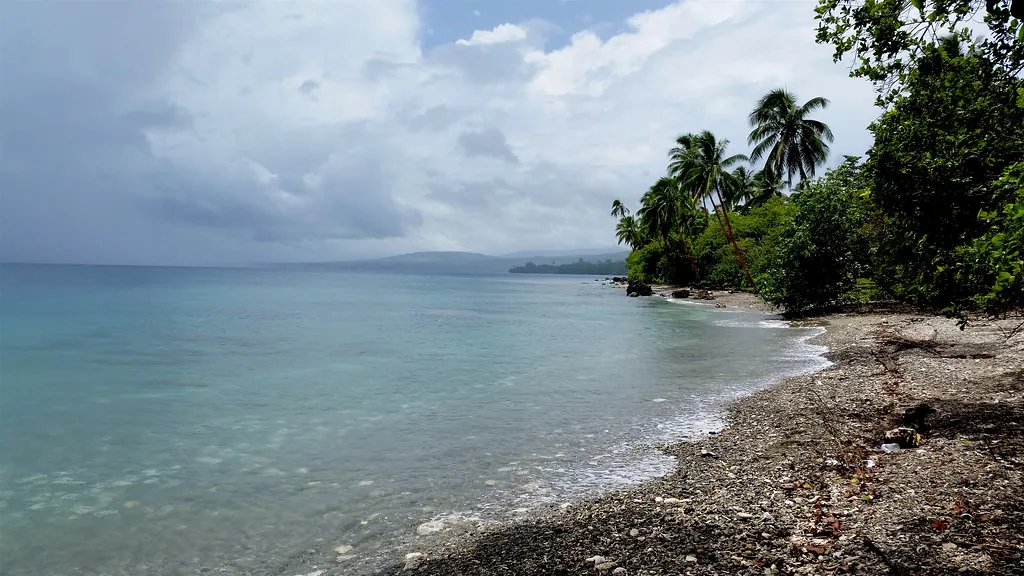
Solomon Islands · Place guide
Explore Guadalcanal in Solomon Islands, following the places explicitly named in checked snake records.
Palm-lined Bonege Beach and coastal water on Guadalcanal, Solomon Islands.
Geography & biotopes
Explore Guadalcanal in Solomon Islands, following the places explicitly named in checked snake records.
Mountainous islands and deeply cut valleys sit beside coastal and marine environments. The political country and the wider Solomon archipelago are not identical: Bougainville belongs to Papua New Guinea.
This guide indexes these source names: Guadalcanal. A country-only record is not automatically assigned to this place. Map markers identify navigation destinations, not collection sites.
Solomon Islands: National Biodiversity Strategy and Action Plan →
Read the environment
Follow the environmental descriptions already indexed in species treatments. Missing habitat groups indicate gaps in the extracted evidence.
Habitat · 01
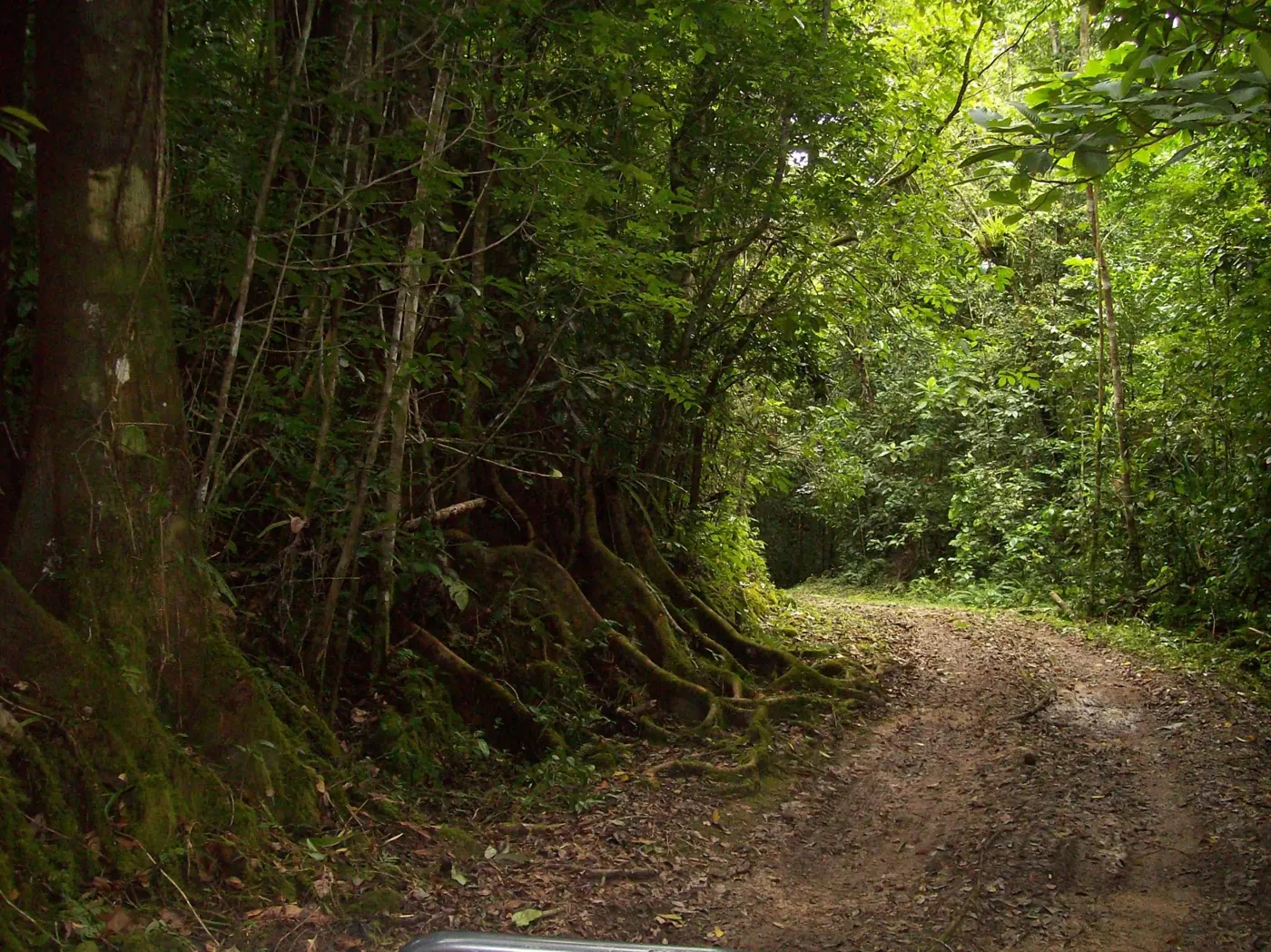
Read the canopy, shaded undergrowth and living forest floor.
Explore the habitat ↗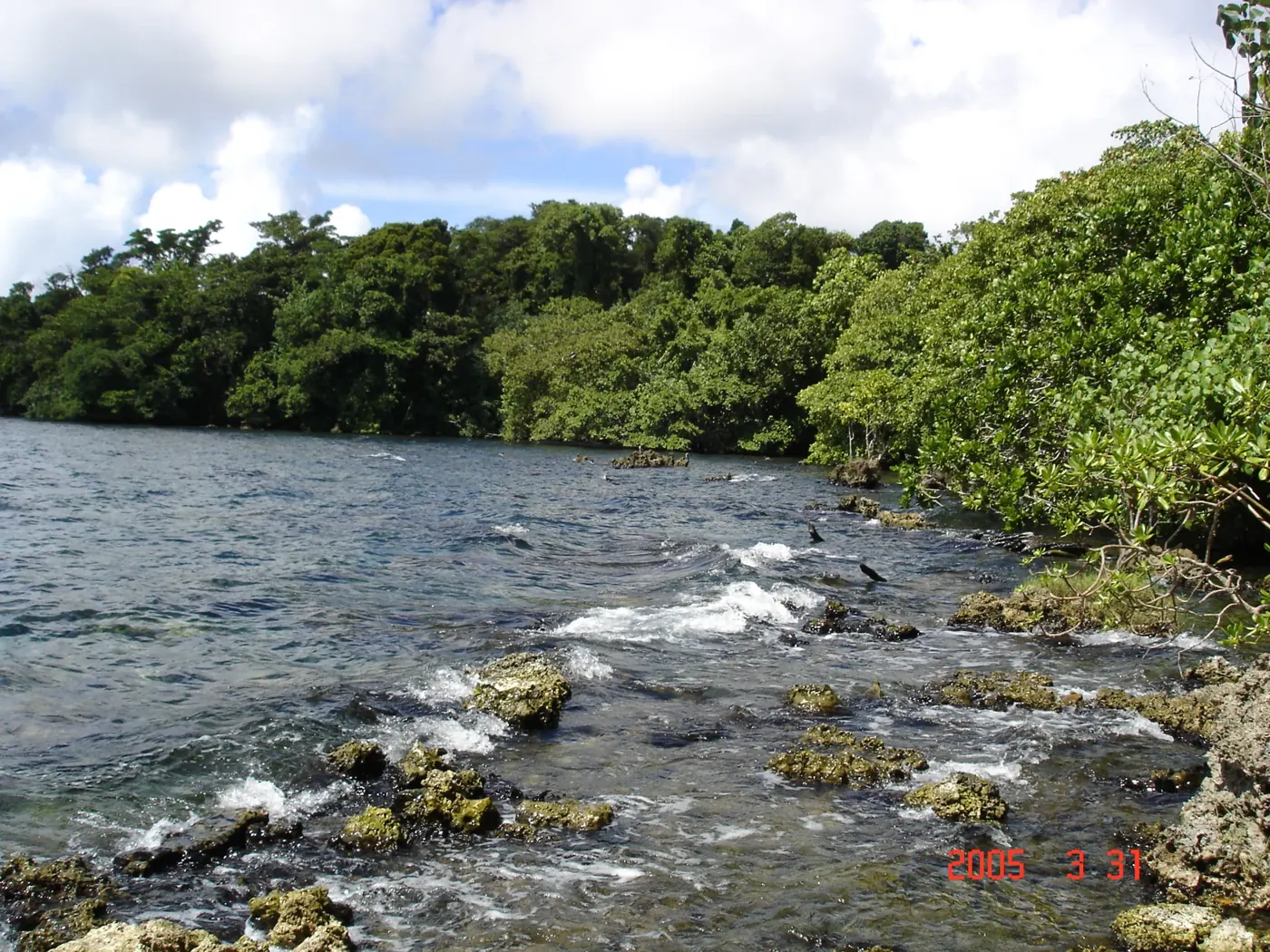
Habitat · 02
Explore the relationship between rock, shade and forest.
Explore the habitat ↗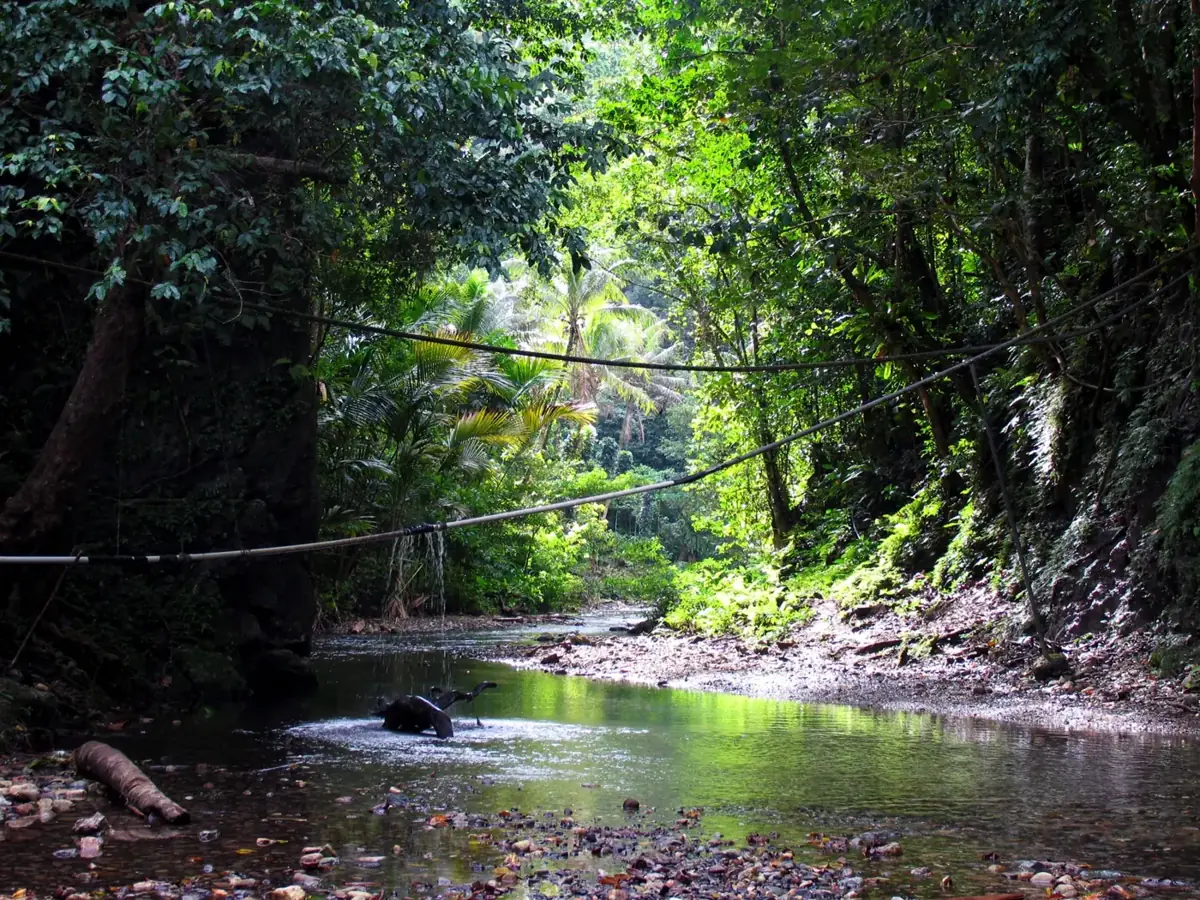
Habitat · 03
Trace the freshwater environments named in species treatments.
Explore the habitat ↗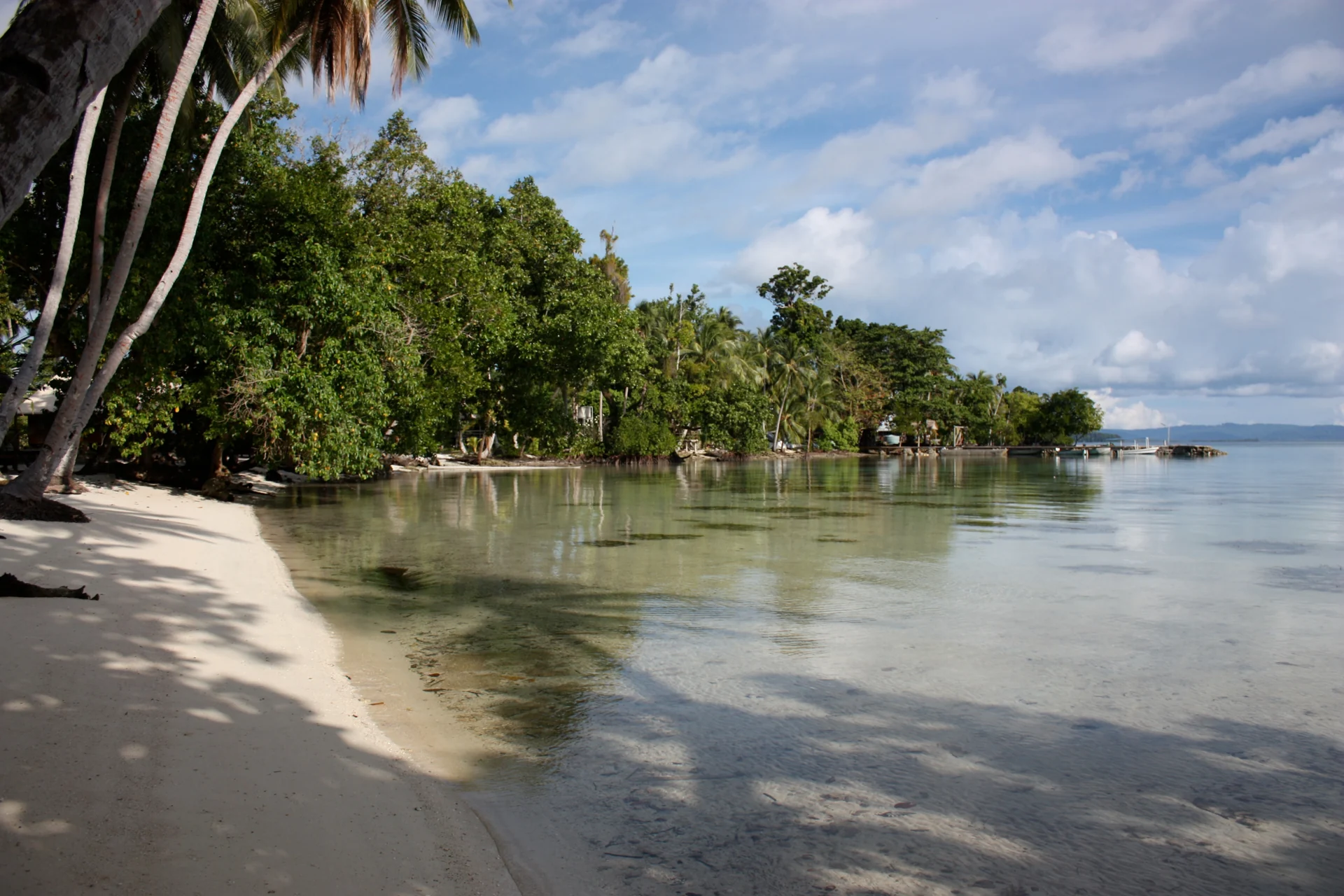
Habitat · 04
Continue from the shoreline into marine occurrence evidence.
Explore the habitat ↗Coastal forest and lagoon waters at Marovo Lagoon, Solomon Islands. — Xplore Dive from Mooloolaba, Australia. Original image · CC BY 2.0. Resized to WebP and cropped for display. Regional images do not establish snake occurrence.
Forest beside the road from Tigoa toward the lake on Rennell Island, Solomon Islands. — Phenss (talk). Original image · Public domain. Resized to WebP and cropped for display. Regional images do not establish snake occurrence.
Rocky, forested shoreline at East Rennell, Solomon Islands, a raised coral atoll with limestone terrain. — S. A. Tabbasum. Original image · CC BY-SA 3.0 igo. Resized to WebP and cropped for display. Regional images do not establish snake occurrence.
A forest-lined river on Malaita, Solomon Islands; a village water pipe crosses the channel. — Irene Scott for AusAID / Department of Foreign Affairs and Trade. Original image · CC BY 2.0. Resized to WebP and cropped for display. Regional images do not establish snake occurrence.
A forest-lined river on Malaita, Solomon Islands; a village water pipe crosses the channel. — Irene Scott for AusAID / Department of Foreign Affairs and Trade. Original image · CC BY 2.0. Resized to WebP and cropped for display. Regional images do not establish snake occurrence.
Rocky, forested shoreline at East Rennell, Solomon Islands, a raised coral atoll with limestone terrain. — S. A. Tabbasum. Original image · CC BY-SA 3.0 igo. Resized to WebP and cropped for display. Regional images do not establish snake occurrence.
A coastal village and wooded shore on Choiseul, Solomon Islands, photographed in June 2003. The photographer did not retain the village name. — Luigi Guarino. Original image · CC BY 2.0. Resized to WebP and cropped for display. Regional images do not establish snake occurrence.
Palm-lined Bonege Beach and coastal water on Guadalcanal, Solomon Islands. — Jeremy Weate. Original image · CC BY 2.0. Resized to WebP and cropped for display. Regional images do not establish snake occurrence.
An eroding shoreline and coconut palms on Nggatokae in the New Georgia Islands, photographed in October 2016. — Alex DeCiccio. Original image · CC BY-SA 4.0. Resized to WebP and cropped for display. Regional images do not establish snake occurrence.
River and beach at Kirakira, Makira, Solomon Islands. — RH D 22. Original image · CC BY-SA 3.0. Resized to WebP and cropped for display. Regional images do not establish snake occurrence.
Rainforest canopy on Santa Isabel Island, Solomon Islands, October 2016. — Grahamcole. Original image · CC BY-SA 4.0. Resized to WebP and cropped for display. Regional images do not establish snake occurrence.
Forested coast of Vanikoro in the Santa Cruz Islands, looking southwest in 2004. — Stephan Schuth;. Original image · CC BY-SA 2.0 de. Resized to WebP and cropped for display. Regional images do not establish snake occurrence.
Unillustrated habitats retain a labelled image reserve. The global satellite composite, where used, is explicitly identified in the hero credit.
The species catalogue
Only records naming this place appear below. These are extracted locality records, not complete island or regional inventories.
5 species · showing 5
001 · Typhlopidae
Red Blind Snake
Solomon Islands: Guadalcanal; Malaita; New Republic of Georgia.
Read the species account →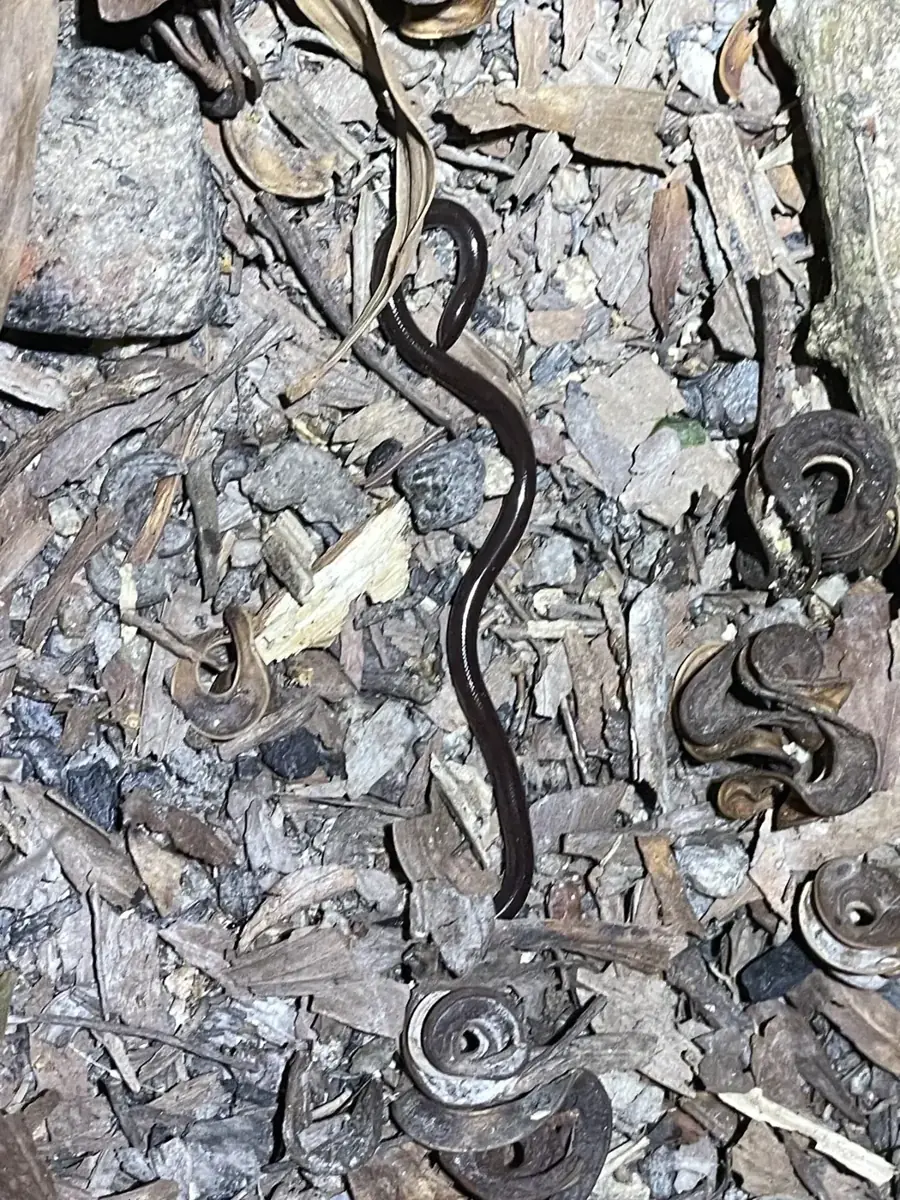
002 · Typhlopidae
Flowerpot Snake
Lavery et al. (2021) recorded three individuals beneath garden litter on Rennell during the October 2018 survey and discuss presumed human introduction. McCoy (1980), p. 57, independently records Guadalcanal.
Read the species account →Cook-Price, Makchai & Suwanwaree (2026); photographs credited collectively to the author, James Covert and Vikas Kumar · CC BY 4.0 · https://creativecommons.org/licenses/by/4.0/
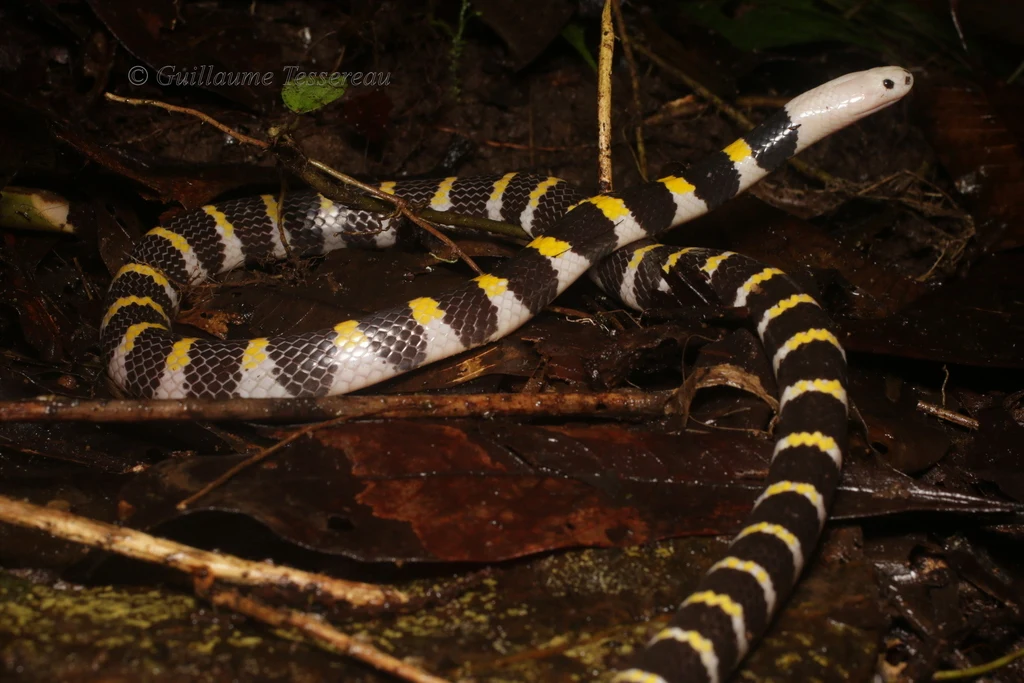
003 · Elapidae
Solomon small-eyed snake
Solomon Islands: Guadalcanal; Malaita; Santa Isabel, Isabel; Gizo.
Read the species account →Guillaume Tessereau · CC BY 4.0 · https://creativecommons.org/licenses/by/4.0/
004 · Typhlopidae
Beck’s Blind Snake
Solomon Islands: Guadalcanal.
Read the species account →005 · Typhlopidae
Species account
Solomon Islands: Guadalcanal; Malaita; Santa Isabel, Isabel; New Republic of Georgia. Tigulu & Pikacha (2023), pp. 8 and 19, report Sobehatunga, New Georgia.
Read the species account →The research library
This edition lists 19 species with supported country records from checked taxonomic treatments and cited field studies. This total includes 1 record marked as introduced; it is not a native-species total. It is not a claim of a complete national inventory. Each account retains its source and check date; individual evidence entries retain their own review dates.
The dated reference lists 19 native names; 17 are represented under the same names in this atlas. Hydrophis belcheri and H. cyanocinctus remain excluded following the checked taxonomic qualifications. Acutotyphlops solomonis is now withheld because the examined localities establish PNG rather than this political country. Indotyphlops braminus is separately marked introduced, with a field record from Rennell. The historical Ramphotyphlops olivaceus record remains unresolved.
RepFocus: Solomon Islands native-snake checklist (dated compilation) ↗
Introduced occurrence
Lavery et al. (2021) recorded three individuals beneath garden litter on Rennell during the October 2018 survey and discuss presumed human introduction. McCoy (1980), p. 57, independently records Guadalcanal.
Lavery et al. (2021): New faunal records from Rennell Island ↗The database retains a historical British Solomon Islands report absent from the comparison checklist. Modern corroboration remains to be checked.
Country links use a single accepted species identity. Revised names and disputed records are kept visible here; uncertain records do not enter the listed collection or regional totals.
Introduced occurrence
Lavery et al. (2021) recorded three individuals beneath garden litter on Rennell during the October 2018 survey and discuss presumed human introduction. McCoy (1980), p. 57, independently records Guadalcanal.
Search results were checked against distribution text and taxonomic qualifications. A geographic name alone does not establish a political country: New Guinea, the Solomon archipelago and Micronesia span more than one country or territory. Introduced and unresolved records require separate interpretation.
Place counts require explicit named localities, including valid type localities. Counts can overlap where sources name multiple places. Regional maps group historical boundary snapshots for navigation, while island outlines use Natural Earth; neither is a species range or an observation map. Small islands can be below the outline dataset’s resolution, so geographic reference markers and the directory remain available.
Natural Earth 1:10m · public domain. Island label positions are geographic references, not observations. Map provenance →
The named locality and museum type material are from Bougainville, Papua New Guinea. The broad Solomon Islands label has not been resolved to a locality in the political country, so this country assignment is withheld.
Read source 1 ↗ · Read source 2 ↗The 2007 revision places the examined records in PNG (Bougainville and Alotau). The broad Solomon label is withheld from this political-country count pending a verified local specimen. This is not a claim of absence.
Read source 1 ↗ · Read source 2 ↗Present in the dated RepFocus checklist, but the checked Reptile Database treatment explicitly rejects the Solomon report following McCoy (2015). Retained as a documented disagreement, not counted as established occurrence.
Read source 1 ↗ · Read source 2 ↗The treatment explicitly rejects Solomon Islands occurrence following McCoy (2015).
Read source 1 ↗The explicit locality is Bougainville, Papua New Guinea. The broad Solomon label is insufficient to assign the political country.
Read source 1 ↗Individual treatments and locality evidence are linked from each species account.
Species-level literature measurements and ecological traits. Exact-name matches only; imputed or ambiguous fields are omitted. These summaries are not local observations.
Named records from New Georgia, pp. 8 and 19. A rapid survey is not a complete island checklist.