Pressures in the source record
Grazing, wood cutting and urban expansion are documented pressures. These are background concerns, not an assessment of the photographed point today.
Sources: CBD · Saudi Arabia national profile
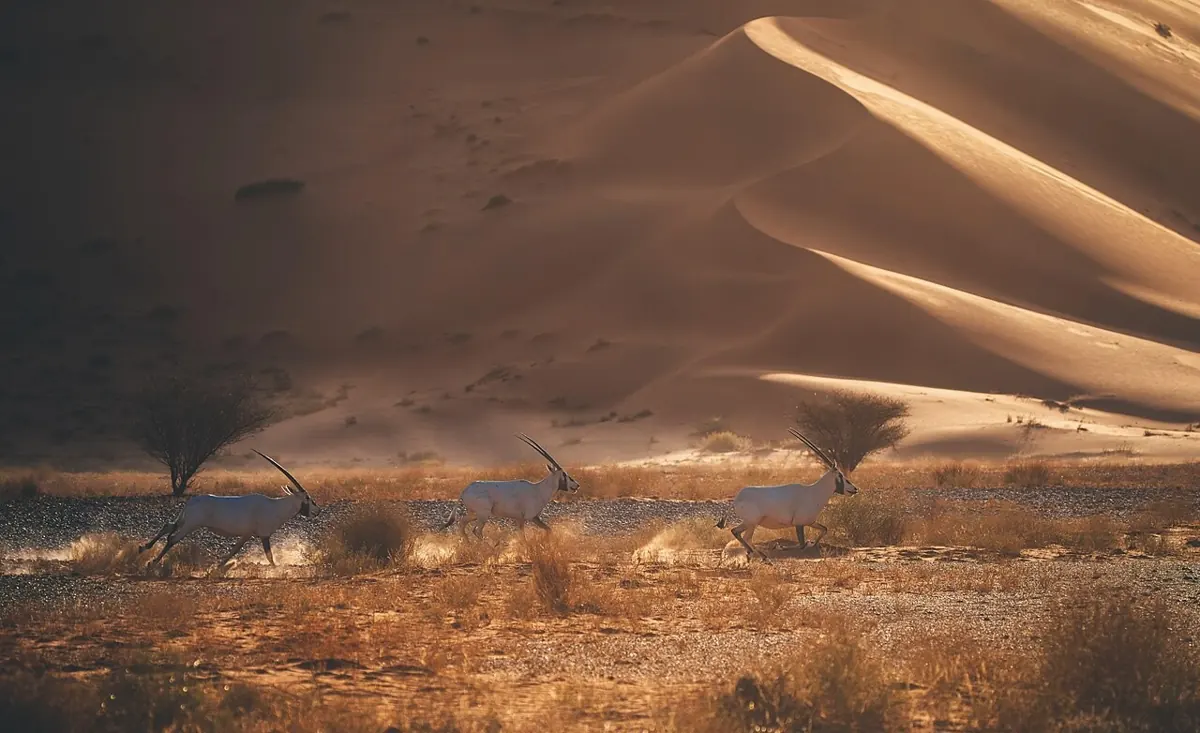
Saudi Arabia · Habitat field guide
Explore the documented landscape around 'Uruq Bani Ma'arid. The named example anchors this guide; the country map and separately sourced species accounts answer different questions.
Dunes, sparse vegetation and Arabian oryx in Uruq Bani Ma'arid Reserve, Saudi Arabia; source photograph published in 2025.
Understanding the environment
Explore the documented landscape around 'Uruq Bani Ma'arid. The named example anchors this guide; the country map and separately sourced species accounts answer different questions.
Explore the structure · Open ground → sheltered edge → watercourse
Select a zone to see what changes.
Sand, stone or clay
Use the photograph to describe visible substrate. Avoid treating every bare surface as a sand desert.
Compare this unit with the documented local setting and keep the observation date, exact place and source distinct.
These panels are a conceptual reading sequence, not a mapped transect or a recommendation to enter the site.
Sources: UNESCO · Uruq Bani Maarid
Field notes · 01
At the western side of the Rub' al Khali, 'Uruq Bani Ma'arid brings dunes against an escarpment and dissected plateau. The resulting edge environments are important features of the protected desert landscape.
Sources: UNESCO · Uruq Bani Maarid
Field notes · 02
Distinguish mobile sand, gravel, exposed rock, clay and saline ground. Sparse vegetation can be highly localized, so a single greener patch should not be generalized across the surrounding dryland. Describe watercourses separately even when they are dry in the image.
Pressures on Saudi Arabia’s habitats
Grazing, wood cutting and urban expansion are documented pressures. These are background concerns, not an assessment of the photographed point today.
Sources: CBD · Saudi Arabia national profile
When revisiting an image or locality, compare the same season, water stage and viewing area before interpreting a change. Keep source dates visible.
Use the country and region maps to orient the landscape, then read each species profile for its independently reviewed habitat and range evidence. Similar scenery does not establish a shared species list.
The connected collection
These 11 species have supported country occurrence and an explicit habitat association in the shared account. The association may come from elsewhere in their range. This is not a complete local habitat inventory; the places above are landscape examples, not asserted collecting sites.
11 species · showing 11
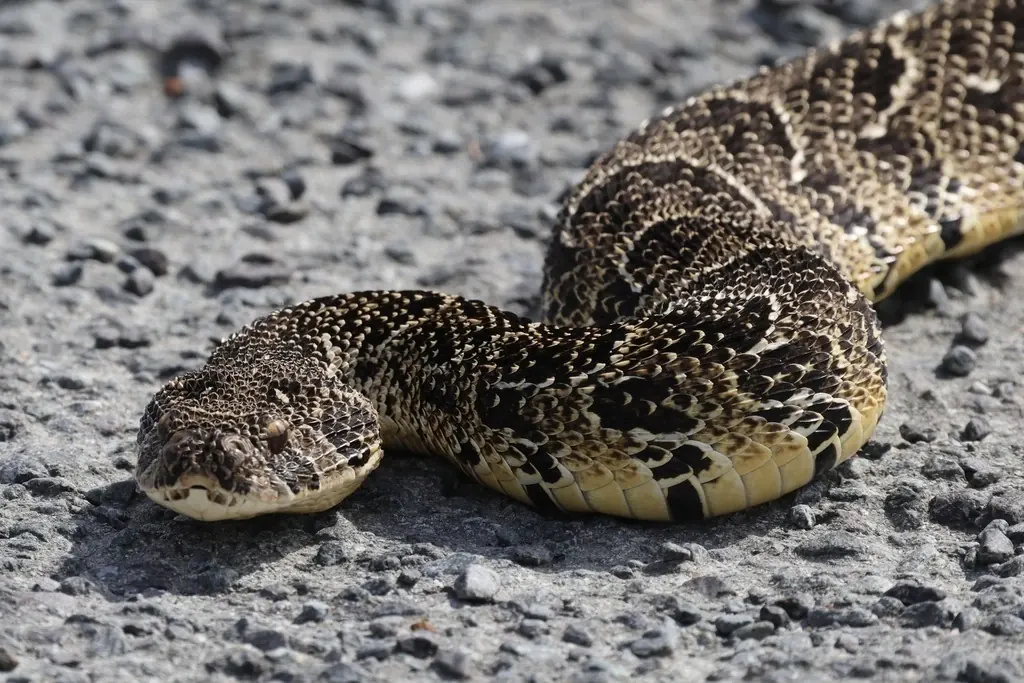
001 · Viperidae
Puff Adder
Explicit country record in the checked taxonomic treatment.
Read the species account →Cricket Raspet · CC BY 4.0 · https://creativecommons.org/licenses/by/4.0/
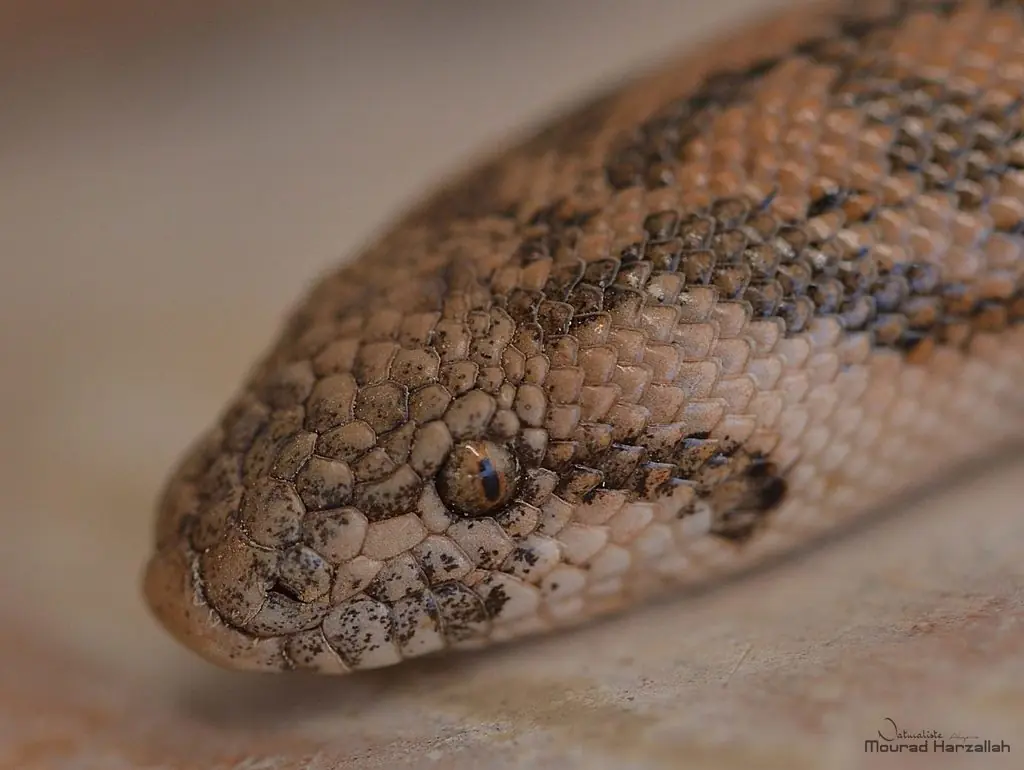
002 · Boidae
Javelin Sand Boa
Explicit country record in the checked taxonomic treatment.
Read the species account →Mourad Harzallah · CC BY 4.0 · https://creativecommons.org/licenses/by/4.0/
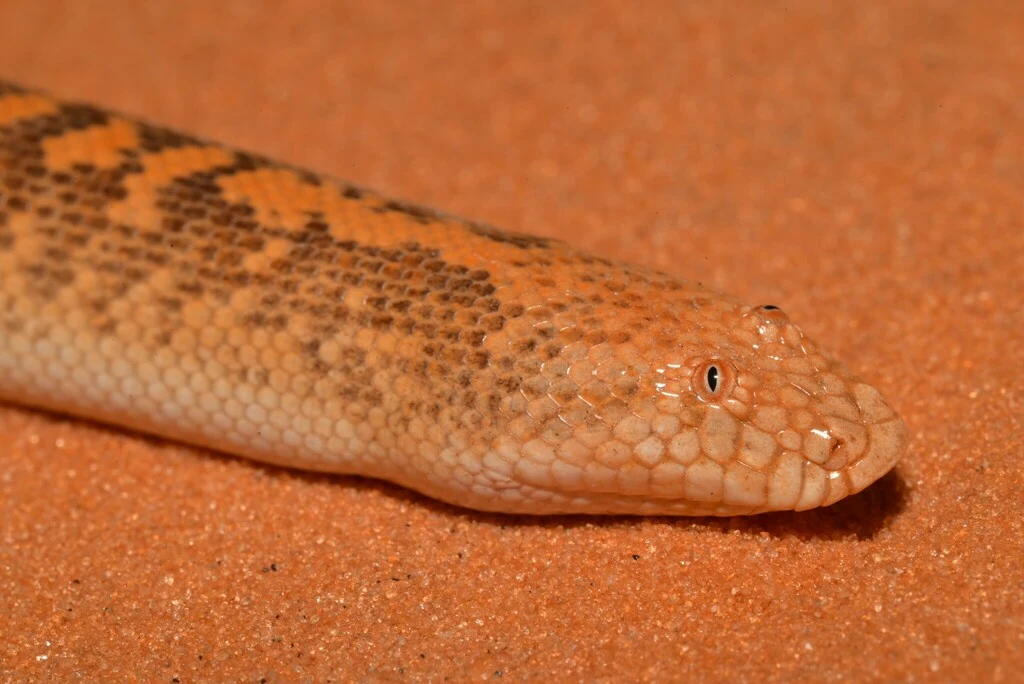
003 · Boidae
Arabian Sand Boa
Explicit country record in the checked taxonomic treatment. Named material in the Hail survey and identification key.
Read the species account →Marius Burger · CC0 1.0 · https://creativecommons.org/publicdomain/zero/1.0/
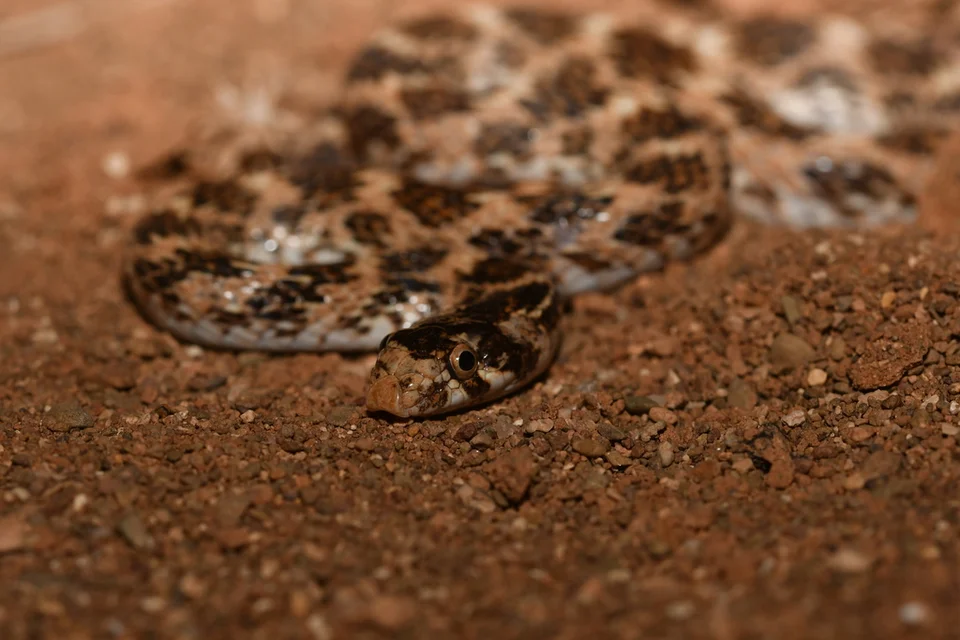
004 · Colubridae
Crowned Leafnose Snake, Diademed Sand Snake, Awl-headed Snake
Genetic sampling confirms this country under the revised identity. Turaif survey, 2014–2015; reported under the publication’s historical nomenclature. Historical localities cited in the Turaif paper; not whole-region occupancy.
Read the species account →Justin Philbois · CC0 1.0 · https://creativecommons.org/publicdomain/zero/1.0/
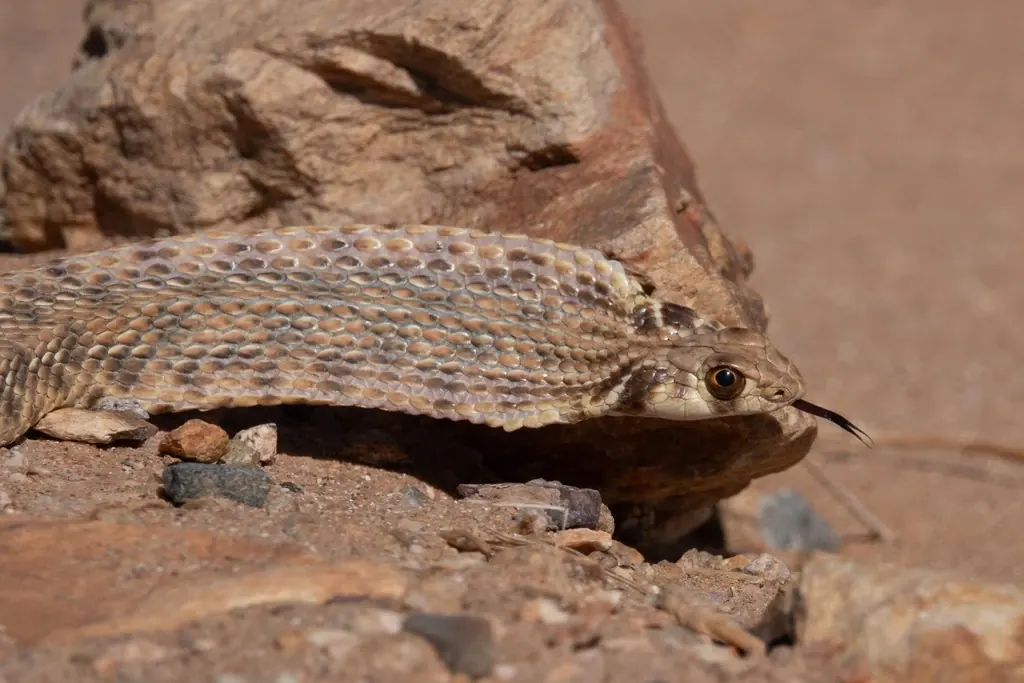
005 · Psammophiidae
Moila Snake
Explicit country record in the checked taxonomic treatment. Turaif survey, 2014–2015; reported under the publication’s historical nomenclature. Historical localities cited in the Turaif paper; not whole-region occupancy.
Read the species account →Demian Hiß · CC BY 4.0 · https://creativecommons.org/licenses/by/4.0/
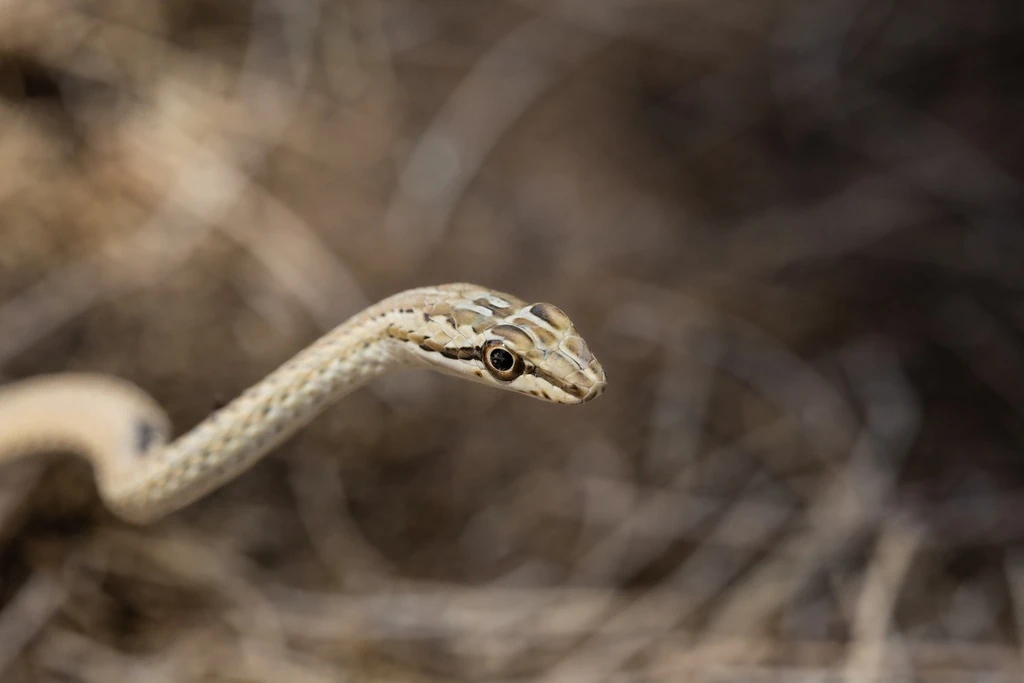
006 · Psammophiidae
Schokari Sand Racer, Forskal Sand Snake
Explicit country record in the checked taxonomic treatment. Turaif survey, 2014–2015; reported under the publication’s historical nomenclature. Historical localities cited in the Turaif paper; not whole-region occupancy. Observed or collected during the October 2021–January 2022 Jazan survey; species accounts, pp. 24–27.
Read the species account →Mahomed Desai · CC BY 4.0 · https://creativecommons.org/licenses/by/4.0/
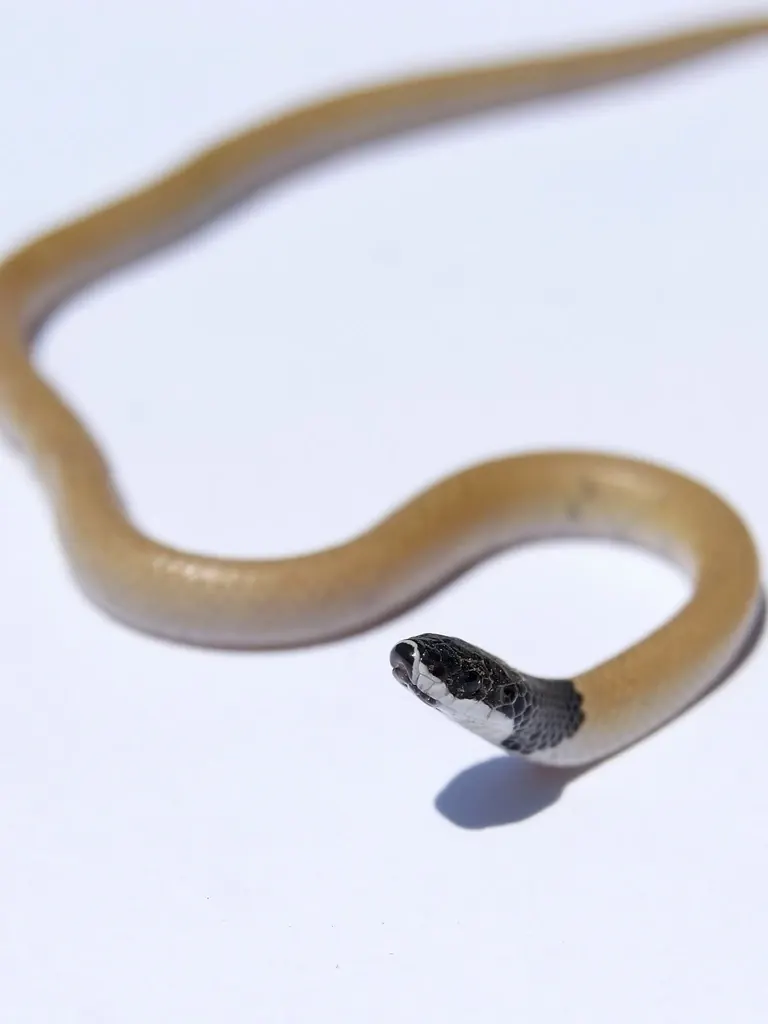
007 · Colubridae
Palestine Kukri Snake
Explicit country record in the checked taxonomic treatment.
Read the species account →Dr. Nasser Halaweh · CC BY 4.0 · https://creativecommons.org/licenses/by/4.0/
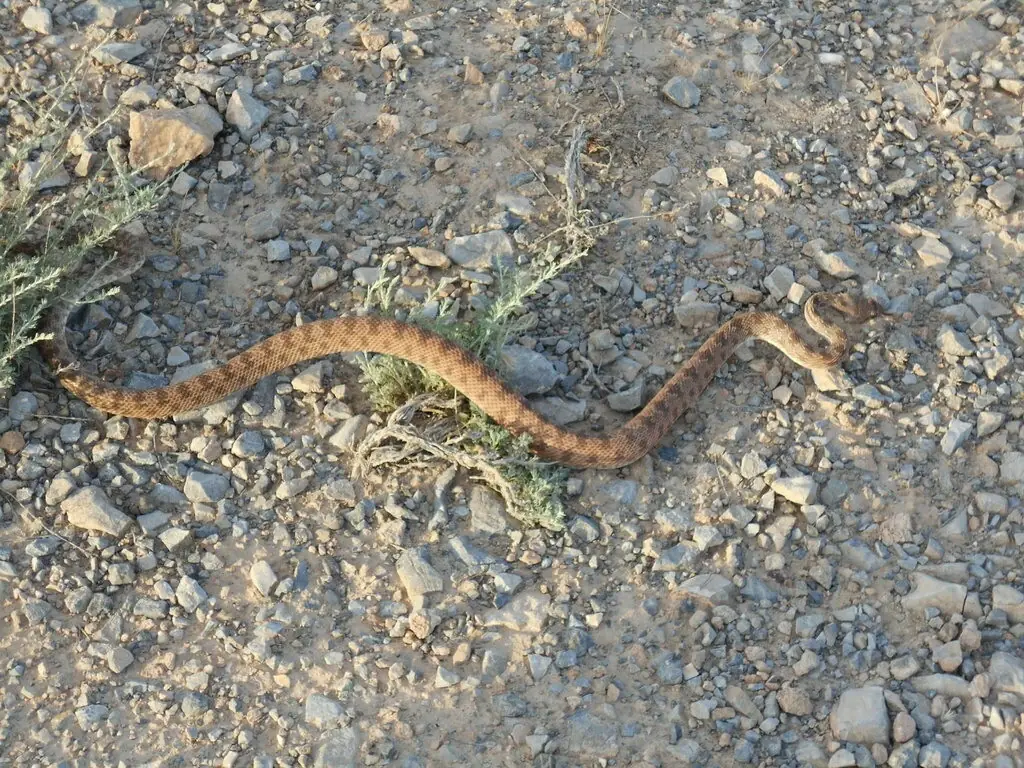
008 · Colubridae
Diadem Snake, Royal Snake
Explicit country record in the checked taxonomic treatment. Turaif survey, 2014–2015; reported under the publication’s historical nomenclature. Observed or collected during the October 2021–January 2022 Jazan survey; species accounts, pp. 24–27.
Read the species account →Askar Akhmedov · CC BY 4.0 · https://creativecommons.org/licenses/by/4.0/
009 · Colubridae
Species account
Confirmed by the revision. Type material of the 2025 revision. Older T. dhara records are not automatically reassigned.
Read the species account →010 · Colubridae
Species account
Confirmed by the revision.
Read the species account →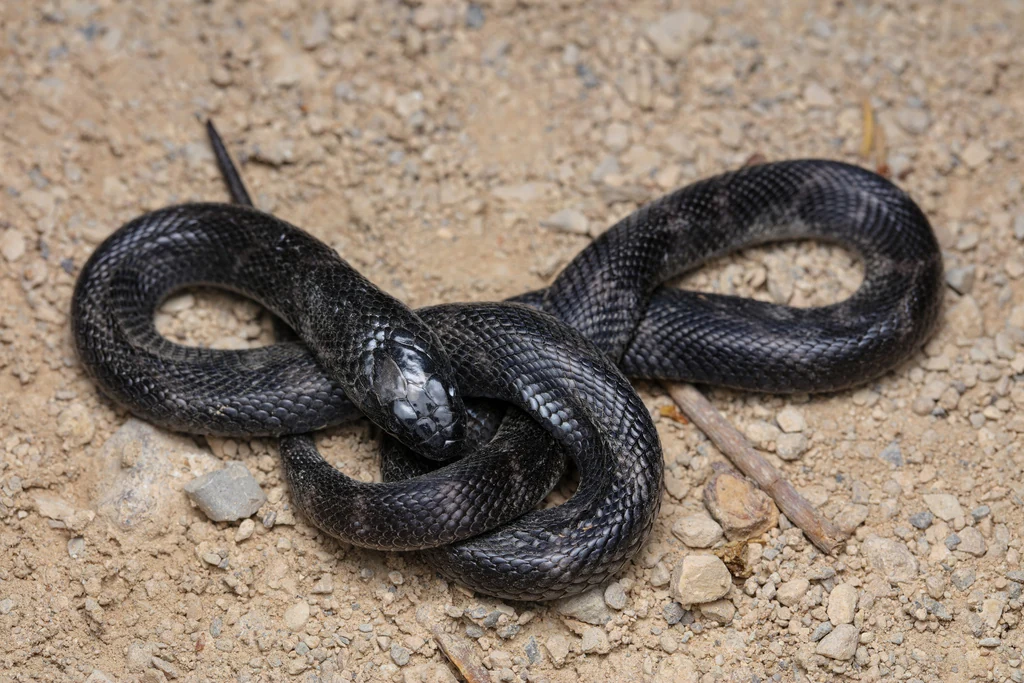
011 · Elapidae
Desert Cobra
Reconciled country record following the morgani synonymy. Turaif survey, 2014–2015; reported under the publication’s historical nomenclature. Named material in the Hail survey and identification key.
Read the species account →Kian · CC BY 4.0 · https://creativecommons.org/licenses/by/4.0/
Read further
Guide reviewed 11 October 2026. Source dates and geographic scope matter; landscape photographs do not establish species occurrence.
Dune, escarpment and plateau landforms; not snake occurrence evidence.
Historical national overview; broad pressures and landscape context, not a current local condition survey, current statistics or wildlife locality evidence.
Continue through Saudi Arabia
Explore the documented landscape around Asir escarpment. The named example anchors this guide; the country map and separately sourced species accounts answer different questions.
02Explore the documented landscape around Farasan Islands. The named example anchors this guide; the country map and separately sourced species accounts answer different questions.
03Explore the documented landscape around Farasan archipelago. The named example anchors this guide; the country map and separately sourced species accounts answer different questions.