Pressures in the source record
Forest fragmentation and soil erosion are documented national pressures. These are background concerns, not an assessment of the photographed point today.
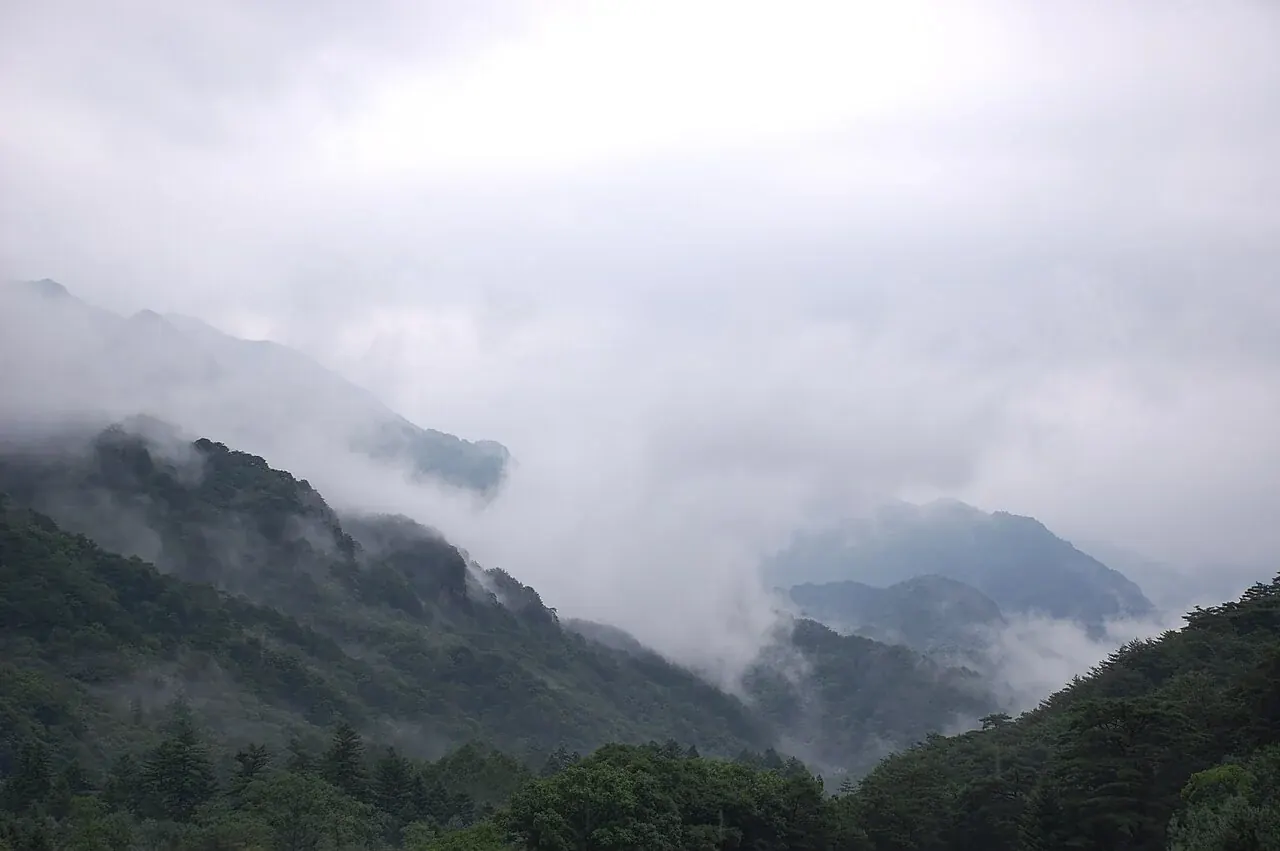
North Korea · Habitat field guide
Explore the documented landscape around Mount Myohyang. The named example anchors this guide; the country map and separately sourced species accounts answer different questions.
Forested slopes at Mount Myohyang, North Korea.
Understanding the environment
Explore the documented landscape around Mount Myohyang. The named example anchors this guide; the country map and separately sourced species accounts answer different questions.
Explore the structure · Canopy → edge → drainage
Select a zone to see what changes.
Shade and cover
Describe the structure that is visible: canopy continuity, understory and ground cover. Do not infer an animal community from tree cover alone.
Compare this unit with the documented local setting and keep the observation date, exact place and source distinct.
These panels are a conceptual reading sequence, not a mapped transect or a recommendation to enter the site.
Sources: UNESCO · Myohyang
Field notes · 01
Mount Myohyang's reserve includes rugged granite-and-gneiss slopes and forested mountain valleys on the Chongchon side. Its continental monsoon setting provides the local context for comparing canopy cover, exposed ridges and drainage lines.
Sources: UNESCO · Myohyang
Field notes · 02
Compare closed canopy, open woodland and planted trees. Record leaf litter, fallen wood and the width of exposed edges separately. A green satellite patch or distant treeline cannot establish forest quality.
Pressures on North Korea’s habitats
Forest fragmentation and soil erosion are documented national pressures. These are background concerns, not an assessment of the photographed point today.
When revisiting an image or locality, compare the same season, water stage and viewing area before interpreting a change. Keep source dates visible.
Use the country and region maps to orient the landscape, then read each species profile for its independently reviewed habitat and range evidence. Similar scenery does not establish a shared species list.
The connected collection
These 2 species have supported country occurrence and an explicit habitat association in the shared account. The association may come from elsewhere in their range. This is not a complete local habitat inventory; the places above are landscape examples, not asserted collecting sites.
2 species · showing 2
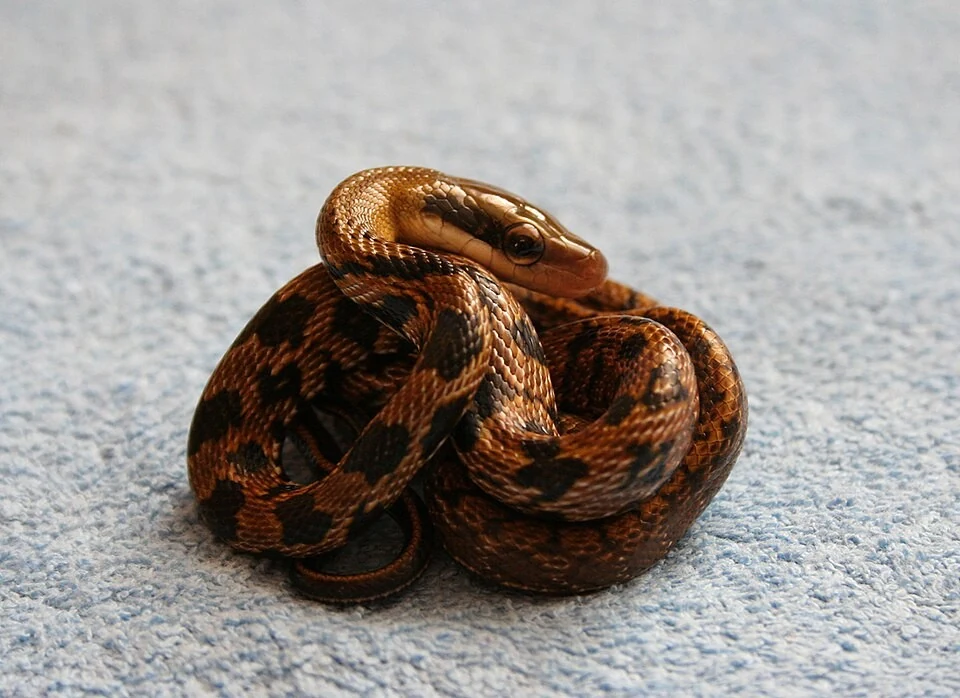
001 · Colubridae
Beauty Snake (friesei: Taiwan Beauty Snake; schmackeri: Sakishima Beauty Snake; callicyanous: Blue Beauty Ratsnake)
Explicitly marked as a North Korean record.
Read the species account →No machine-readable author provided. Hippocampus~commonswiki assumed (based on copyright claims). · CC BY-SA 2.5 · https://creativecommons.org/licenses/by-sa/2.5
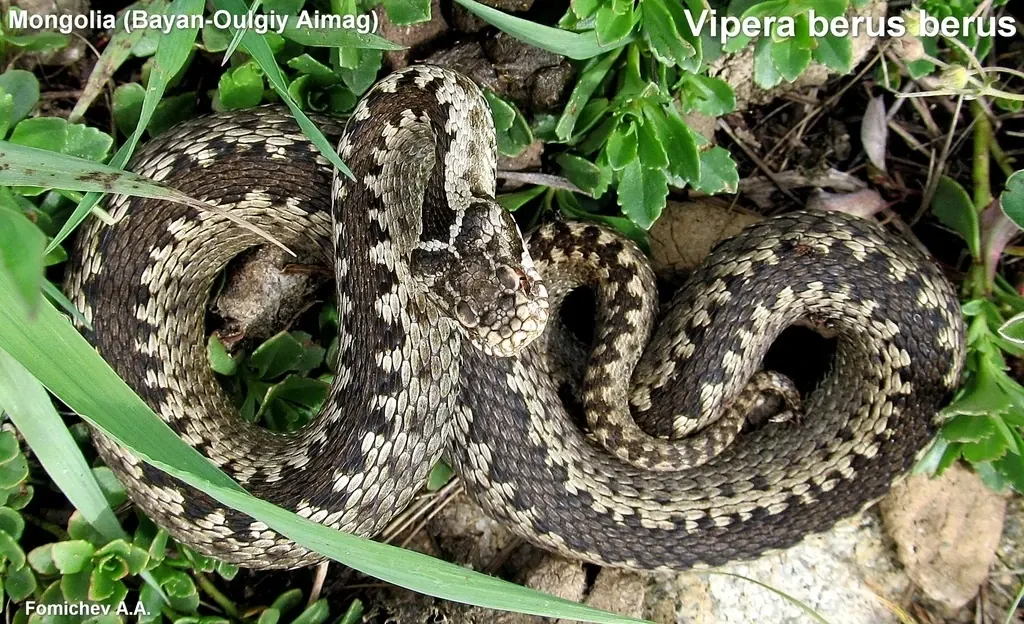
002 · Viperidae
Adder, Northern Viper
Explicitly marked as a North Korean record. Northeastern mountains & coast: museum voucher NRM 31449 (1935). The published collecting label names Ryanggang; this is a locality-label assignment, not a reconstructed coordinate. Northeastern mountains & coast: museum voucher NRM 31447 (1935). The published collecting label names Ryanggang; this is a…
Read the species account →Alexander A. Fomichev · CC BY 4.0 · https://creativecommons.org/licenses/by/4.0/
Read further
Guide reviewed 11 October 2026. Source dates and geographic scope matter; landscape photographs do not establish species occurrence.
Historical national overview marked draft by the Secretariat; broad pressures and landscape context, not a current local condition survey, current statistics or wildlife locality evidence.
Named landscape, vegetation or hydrological setting only; no snake occurrence inferred. Historical site accounts are not current condition or access assessments.
Continue through North Korea
Explore the documented landscape around Mount Paektu. The named example anchors this guide; the country map and separately sourced species accounts answer different questions.
02Explore the documented landscape around Myohyang streams. The named example anchors this guide; the country map and separately sourced species accounts answer different questions.