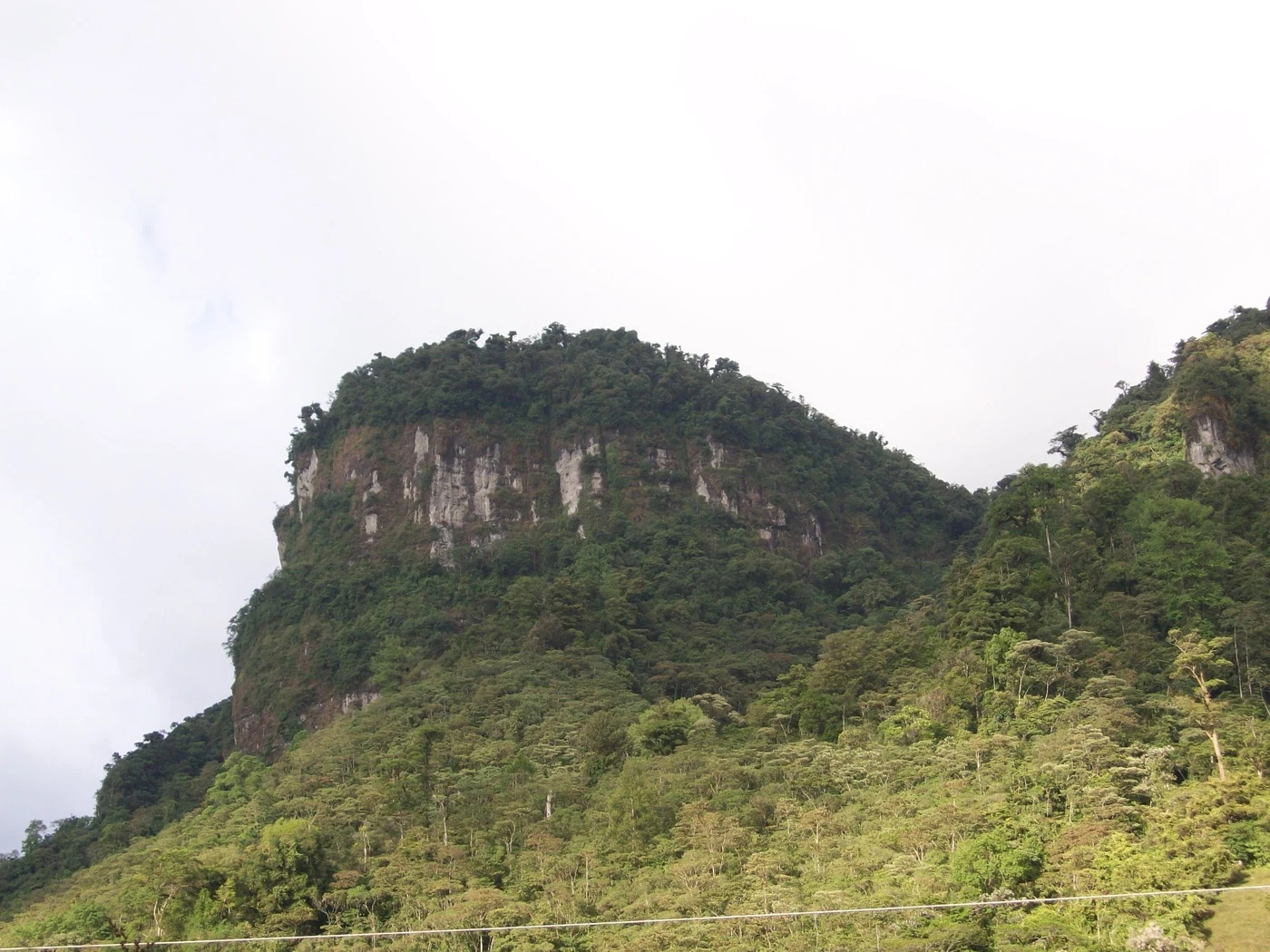
Forested slopes and exposed cliffs of the Penas Blancas massif, Nicaragua.

Nicaragua · Habitat field guide

Highland environments

A chain of volcanoes forms a prominent part of the Pacific landscape. Exposed volcanic slopes, cultivated ground and forested elevations should remain distinct in locality descriptions.

Forested slopes and exposed cliffs of the Penas Blancas massif, Nicaragua.

Photograph: Bandiniart · Image source · CC BY-SA 3.0. Cropped to fill the hero; darkened for text legibility.

Understanding the environment

A sense of the habitat.

A chain of volcanoes forms a prominent part of the Pacific landscape. Exposed volcanic slopes, cultivated ground and forested elevations should remain distinct in locality descriptions.

Geographic scope
Nicaragua; source locality matters.
Evidence scale
Landscape descriptions are separate from species records.
Source date
Retain the cited publication date; reviewed 16 October 2026.

Explore the structure · Select a layer to compare details retained in a field record.

Read the locality in three layers.

Select a zone to see what changes.

Elevation

Elevation

Use a recorded elevation rather than a nearby summit’s height.

Check this detail in the original record before assigning a species to the habitat.

These reading prompts are conceptual, not a transect or an occurrence map.

Sources: Convention on Biological Diversity · Nicaragua national profile

Field notes · 01

The documented setting

A chain of volcanoes forms a prominent part of the Pacific landscape. Exposed volcanic slopes, cultivated ground and forested elevations should remain distinct in locality descriptions.

Sources: Convention on Biological Diversity · Nicaragua national profile

Field notes · 02

Connect the setting to a species

A habitat description and a country record answer different questions. Follow the linked species account for evidence of habitat use; an empty filtered collection indicates missing extracted evidence, not biological absence.

Pressures on Nicaragua’s habitats

What is at risk?

A site-specific assessment of pressures has not yet been extracted for this guide. The landscape sources below provide context; they do not establish a current threat level for each snake species.

What helps this habitat

Consult the source’s own conservation context and dates before interpreting habitat change. A broad landscape pressure does not establish a measured decline for every snake.

The connected collection

Snakes with habitat evidence.

These 2 species have supported country occurrence and an explicit habitat association in the shared account. The association may come from elsewhere in their range. This is not a complete local habitat inventory; the places above are landscape examples, not asserted collecting sites.

2 species · showing 2

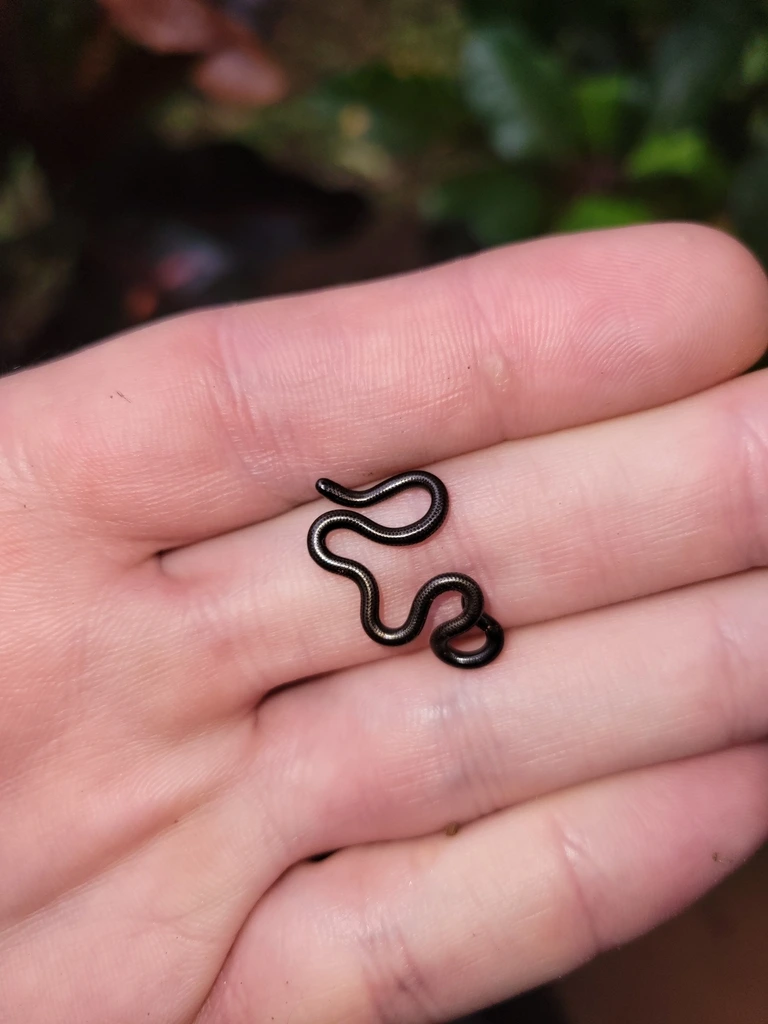
Epictia ater. Small individual photographed on an open hand; this is not a habitat illustration. Original observation dated 2024-10-11. No additional geographic occurrence is inferred.

001 · Leptotyphlopidae

Black Blind Snake

Epictia ater

(TAYLOR, 1940)

Non-venomous

The checked taxonomic distribution account explicitly lists Nicaragua. Country-level evidence does not establish continuous occupancy or a complete national inventory. The treatment names these subdivisions in its Nicaragua distribution clause: Estelí, Esteli, Managua, Chinandega, Carazo, Granada, Rivas. They are assigned to the declared atlas navigation…

Read the species account →

Jake Rehage · CC BY 4.0 · https://creativecommons.org/licenses/by/4.0/
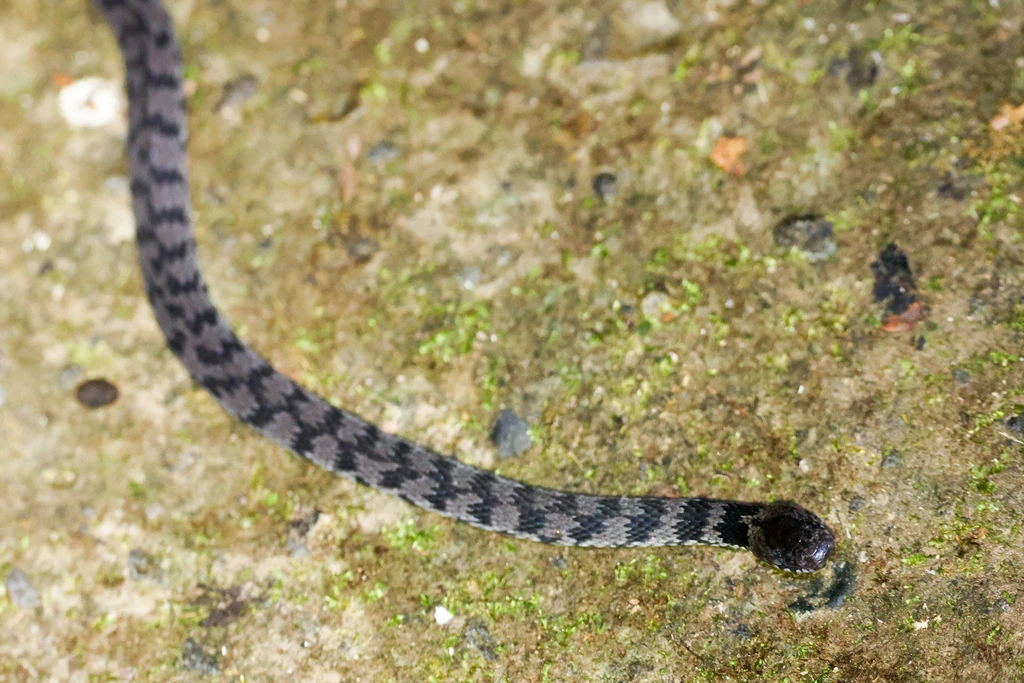
Ninia maculata. Close view of the dark head and patterned forebody on mossy ground. Original observation dated 2022-04-23. Portrait only; no new locality record is inferred.

002 · Colubridae

Pacific Banded Coffee Snake, Spotted Coffee Snake

Ninia maculata

(PETERS, 1861)

Venom unknownNot yet assessed

The checked taxonomic distribution account explicitly lists Nicaragua. Country-level evidence does not establish continuous occupancy or a complete national inventory.

Read the species account →

Tom Field · CC BY 4.0 · https://creativecommons.org/licenses/by/4.0/

All 108 species in the country collection →

Read further

Evidence & sources.

Guide reviewed 16 October 2026. Source dates and geographic scope matter; landscape photographs do not establish species occurrence.

  1. Convention on Biological Diversity · Nicaragua national profile

    National biodiversity reporting synthesis. Landscape context only; dated statistics and projections are not presented as current measurements. Checked 16 October 2026.

Continue through Nicaragua

Explore another habitat.

01

Forest & woodland

The national profile contrasts humid Caribbean forests with the Pacific side’s historically dry forests and agricultural landscapes. Neither description is a blanket distribution map for snakes.

02

Coasts & marine settings

Nicaragua has both Pacific and Caribbean shorelines. Offshore, intertidal and terrestrial coastal records need separate interpretation and cannot be inferred from one another.