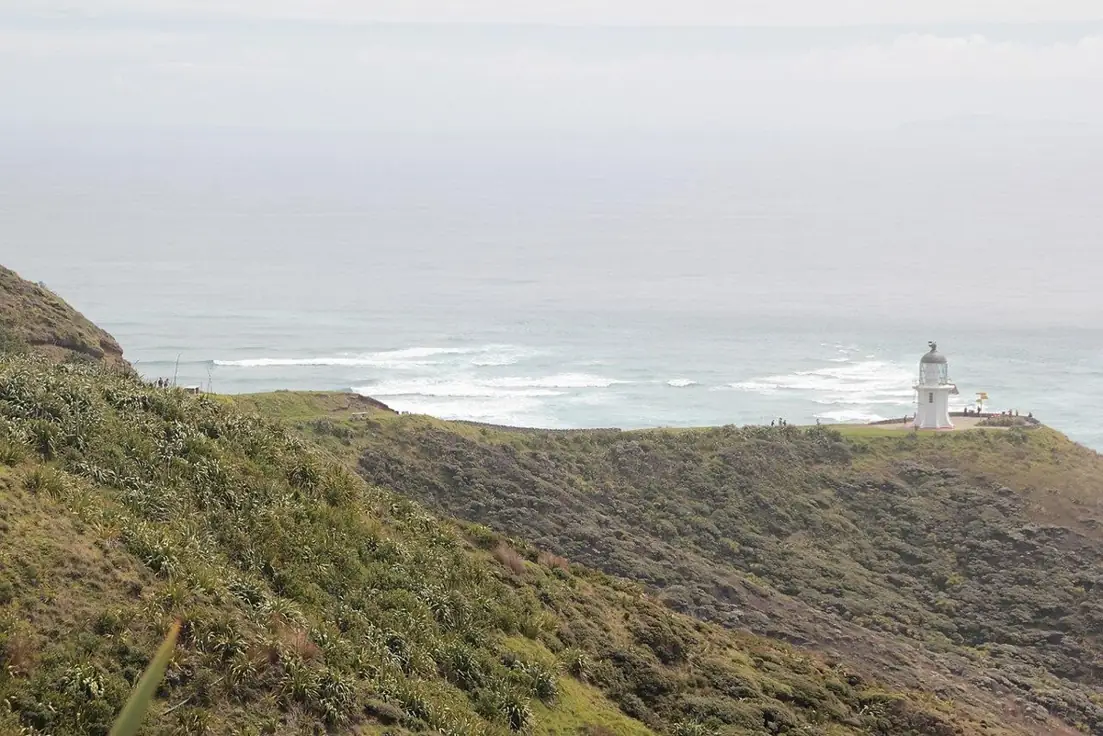
Cape Reinga / Te Rerenga Wairua, North Island, with the lighthouse and coastal slopes; photographed 7 October 2013. Landscape context, not a snake observation.

New Zealand · Place guide

North Island

Te Ika-a-Māui / North Island: read named coasts separately from inland landscapes.

3species with extracted evidence
1families
5island guides

Cape Reinga / Te Rerenga Wairua, North Island, with the lighthouse and coastal slopes; photographed 7 October 2013. Landscape context, not a snake observation.

Photograph: Noel Jones · Image source · CC BY-SA 2.0. Cropped to fill the hero; darkened for text legibility.

Geography & biotopes

Read the landscape.

Te Ika-a-Māui / North Island: read named coasts separately from inland landscapes.

Cape Reinga / Te Rerenga Wairua is a steep rocky headland at the meeting of Tasman and Pacific waters. It provides a visible northern coastal anchor, not a template for every North Island shore.

Ecological connections

A beach record and an offshore observation describe different circumstances. Use the species account’s dated record rather than inferring occupancy from a coastal photograph.

Explore the setting

Consult the responsible local authority for current tracks, weather and access. Respect this culturally significant place and remain on established routes.

This guide indexes these source names: North Island, Te Ika-a-Maui, Te Ika-a-Māui. A country-only record is not automatically assigned to this place. Map markers identify navigation destinations, not collection sites.

DOC — Sea snakes and kraits →

DOC — Chatham Islands habitats →

DOC — Rangitahua/Kermadec Islands →

Geography is part of the record

Find your way through New Zealand.

Select a named island to open its evidence page. The complete directory below keeps every guide accessible, including places where locality evidence has not yet been extracted.

3 of 4 listed species have at least one indexed island record. 1 remain country-only. Even a nonzero count is not a complete regional inventory.

Habitats & living landscapes

Explore the living
landscapes.

Explore 1 guides to the environments, places and conservation pressures that shape this country. Each guide connects to the regional map and shared species accounts.

Landscape photographs & credits

Cape Reinga / Te Rerenga Wairua, North Island, with the lighthouse and coastal slopes; photographed 7 October 2013. Landscape context, not a snake observation. — Noel Jones. Original photograph · CC BY-SA 2.0. Cropped for the cards; photographs do not establish snake occurrence.

The species catalogue

Snakes · North Island.

Only records naming this place appear below. These are extracted locality records, not complete island or regional inventories.

3 species · showing 3

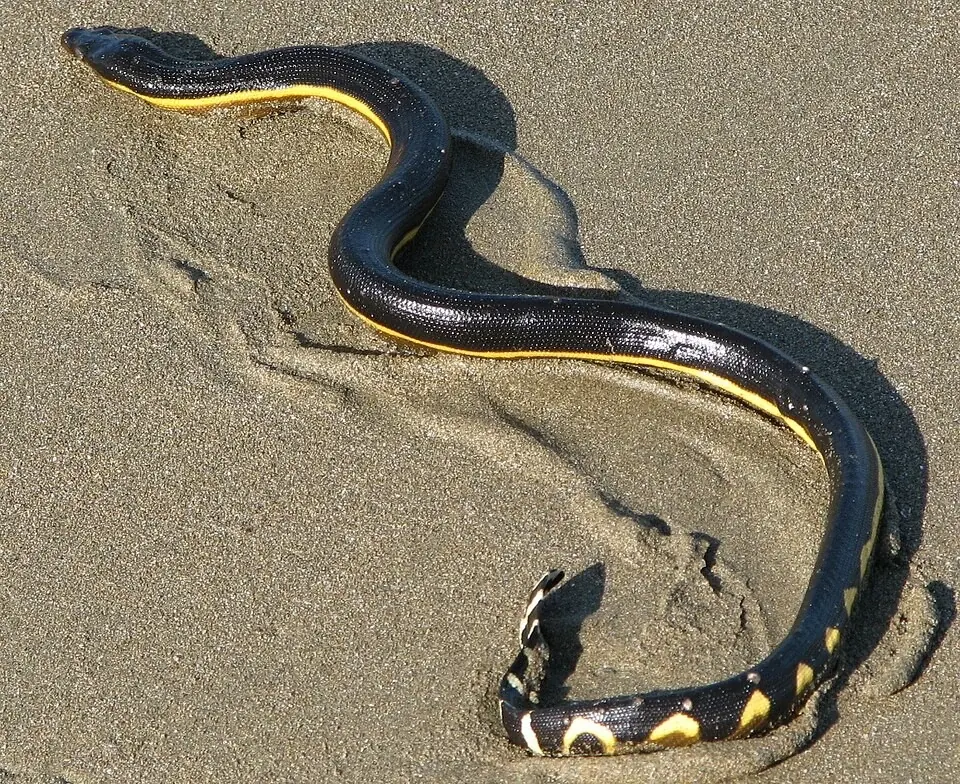
Hydrophis platurus — real specimen photograph; identification follows the linked source.

001 · Elapidae

Yellowbelly Sea Snake

Hydrophis platurus

(LINNAEUS, 1766)

VenomousClinical severity not established

NZTCS lists Not Threatened; this classification does not establish local breeding. NZTCS 2025 assessment, published 2026: Not Threatened. This formal category does not establish local breeding. Occasional marine arrivals; DOC also reports Cook Strait, without assigning its shore.

Read the species account →

Aloaiza · CC BY 3.0 · https://creativecommons.org/licenses/by/3.0
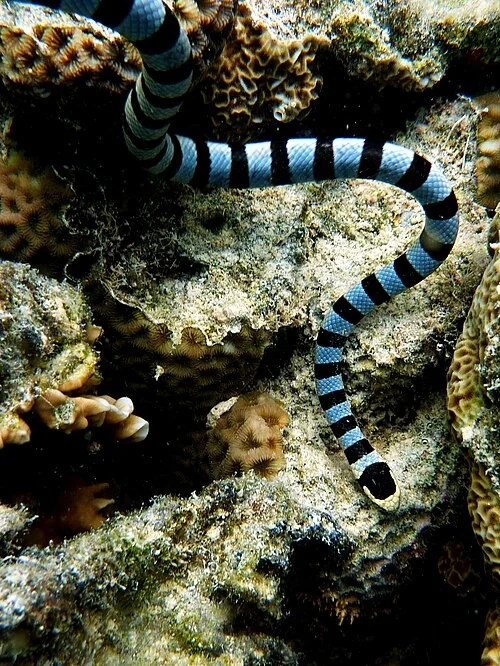
Laticauda colubrina — real specimen photograph; identification follows the linked source.

002 · Elapidae

Yellow-lipped sea krait

Laticauda colubrina

(SCHNEIDER, 1799)

VenomousClinical severity not established

NZTCS 2025 assessment: non-resident native, vagrant; published 2026. NZTCS 2025 assessment, published 2026: non-resident native, vagrant. December 2022 stranded individual rescued by Auckland Zoo; a wild arrival, not a breeding population.

Read the species account →

Kai Squires · CC BY 4.0 · https://creativecommons.org/licenses/by/4.0

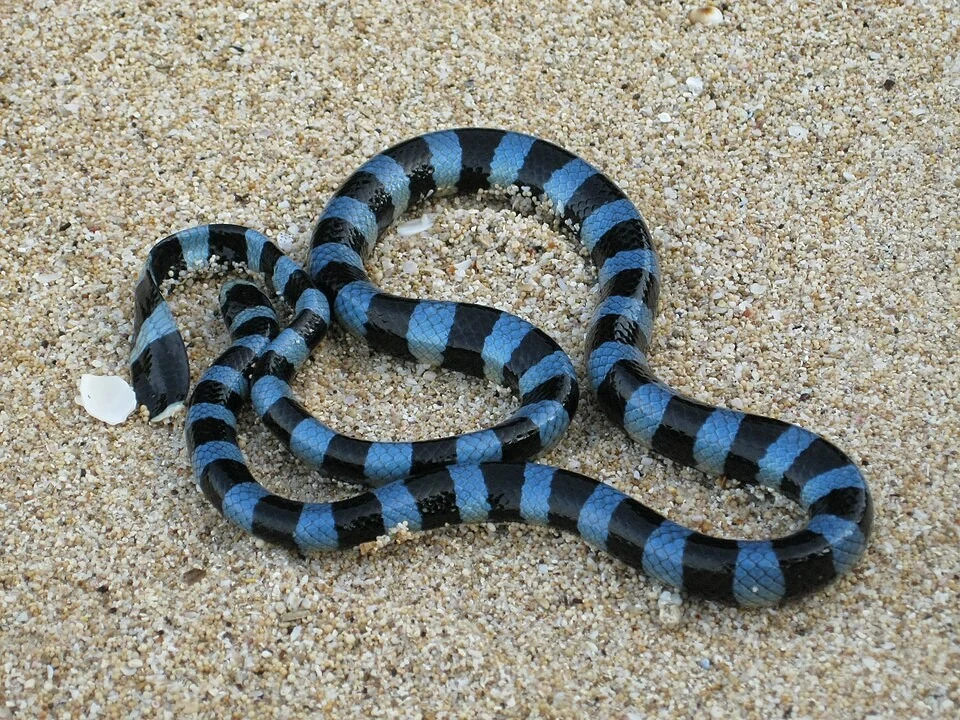
Laticauda laticaudata — real specimen photograph; identification follows the linked source.

003 · Elapidae

Blue-banded Sea Krait

Laticauda laticaudata

(LINNAEUS, 1758)

VenomousClinical severity not established

NZTCS 2025 assessment: non-resident native, vagrant; published 2026. NZTCS 2025 assessment, published 2026: non-resident native, vagrant. Historical DOC atlas record noted in the 2012–2014 assessment cycle; the atlas is no longer maintained.

Read the species account →

Bramadi Arya · CC BY-SA 4.0 · https://creativecommons.org/licenses/by-sa/4.0

Explore all 4 country records →

The research library

Sources & the checklist.

This edition lists 4 species with supported country records from checked taxonomic treatments and cited field studies. It is not a claim of a complete national inventory. Each account retains its source and check date; individual evidence entries retain their own review dates.

How the map and counts work

Search results were checked against distribution text and taxonomic qualifications. A geographic name alone does not establish a political country: New Guinea, the Solomon archipelago and Micronesia span more than one country or territory. Introduced and unresolved records require separate interpretation.

Place counts require explicit named localities, including valid type localities. Counts can overlap where sources name multiple places. Regional maps group historical boundary snapshots for navigation, while island outlines use Natural Earth; neither is a species range or an observation map. Small islands can be below the outline dataset’s resolution, so geographic reference markers and the directory remain available.

Natural Earth generalized land and physical-label points · public domain. Kermadecs are a reference point; small islands may be absent from the outline. Points are not snake records. Map provenance →

  1. DOC · Cape Reinga heritage ↗

    Headland and surrounding seas; landscape context only.

  2. DOC — Sea snakes and kraits ↗
  3. DOC — Chatham Islands habitats ↗
  4. DOC — Rangitahua/Kermadec Islands ↗
  5. The Reptile Database

    Individual treatments and locality evidence are linked from each species account.

  6. Meiri (2024): SquamBase 1.0

    Species-level literature measurements and ecological traits. Exact-name matches only; imputed or ambiguous fields are omitted. These summaries are not local observations.

  7. Natural Earth: public-domain geographic data

Continue through the Oceania atlas →