Observation limits
Record date, location and circumstances before comparing sightings. A rise in reports alone cannot separate observation effort from ecological change.
New Zealand · Habitat field guide
Read the coast from the open sea to the strandline, while keeping a photographed landscape separate from a verified animal record.
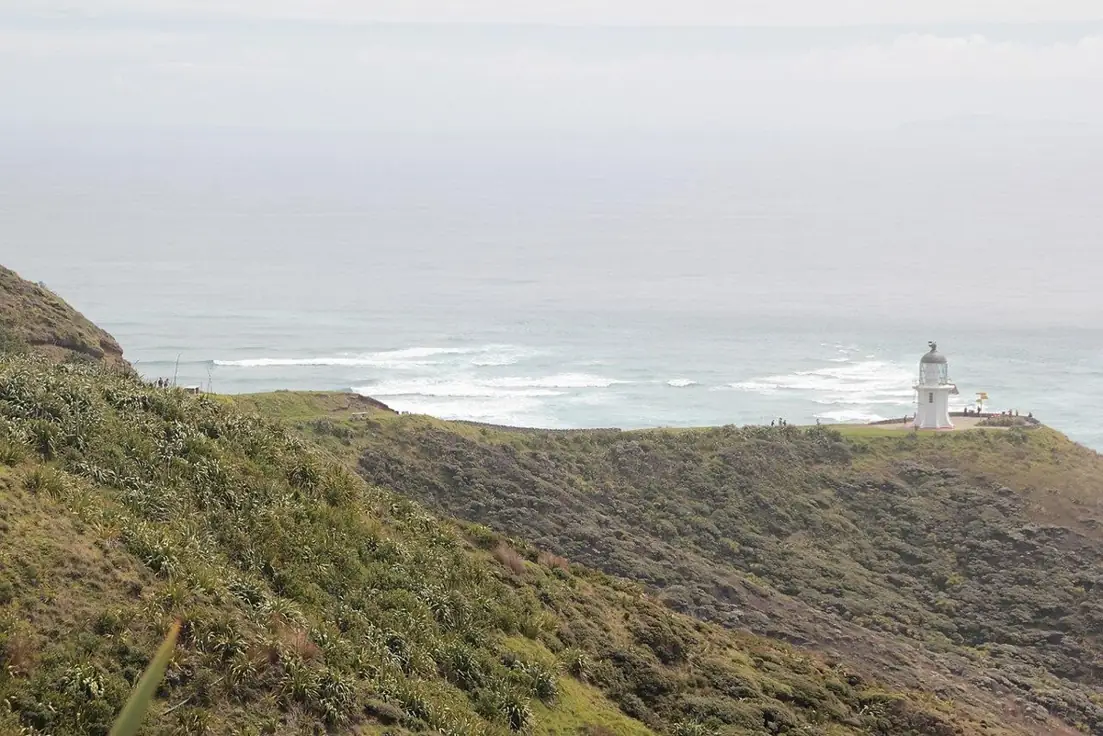
Cape Reinga / Te Rerenga Wairua, North Island, with the lighthouse and coastal slopes; photographed 7 October 2013. Landscape context, not a snake observation.
Understanding the environment
Read the coast from the open sea to the strandline, while keeping a photographed landscape separate from a verified animal record.
Explore the structure · Open sea → coastal water → strandline
Select a zone to see what changes.
Date and conditions
Record whether an observation was made at sea or on shore. The nearest beach name need not describe the animal’s earlier route.
Keep observed facts separate from a proposed drift history.
Conceptual reading sequence, not a movement model or an invitation to search for animals.
Field notes · 01
DOC describes sea snakes and kraits as non-resident arrivals carried by currents or storms. A stranded animal is not evidence of local breeding; sea kraits do not breed on New Zealand beaches.
Sources: DOC · Sea snakes and kraits
Field notes · 02
Cape Reinga’s rocky cape faces the Tasman Sea and Pacific Ocean. Its exposed setting gives a concrete geographic anchor without claiming a snake observation at the lighthouse.
Sources: DOC · Cape Reinga heritage
Field notes · 03
Hikurangi includes rocky reefs and deeper sediments near Kaikōura Canyon. Paterson Inlet’s sheltered marine reserve has sand, mud, kelp and shellfish habitats. These examples illustrate different coastal settings, not interchangeable snake habitats.
Sources: DOC · Hikurangi Marine Reserve · DOC · Ulva marine habitats
Pressures on New Zealand’s habitats
Record date, location and circumstances before comparing sightings. A rise in reports alone cannot separate observation effort from ecological change.
Keep people and dogs away from a sea snake or krait and contact DOC on 0800 DOC HOT; do not handle or move it.
The connected collection
These 4 species have supported country occurrence and an explicit habitat association in the shared account. The association may come from elsewhere in their range. This is not a complete local habitat inventory; the places above are landscape examples, not asserted collecting sites.
4 species · showing 4
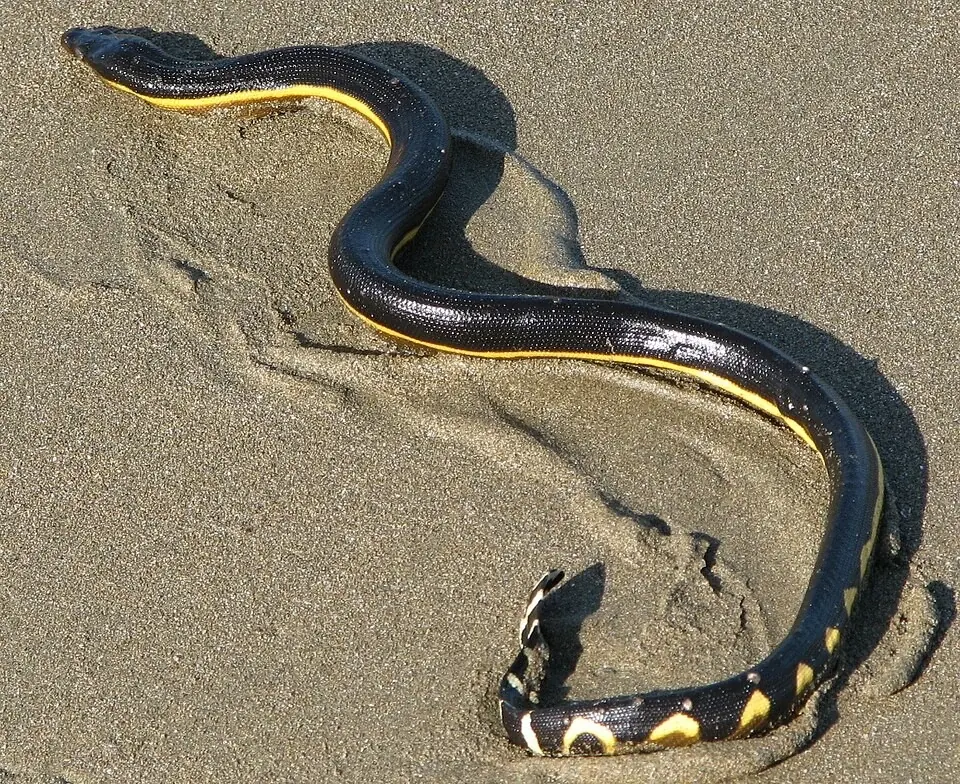
001 · Elapidae
Yellowbelly Sea Snake
NZTCS lists Not Threatened; this classification does not establish local breeding. NZTCS 2025 assessment, published 2026: Not Threatened. This formal category does not establish local breeding. Occasional marine arrivals; DOC also reports Cook Strait, without assigning its shore.
Read the species account →Aloaiza · CC BY 3.0 · https://creativecommons.org/licenses/by/3.0
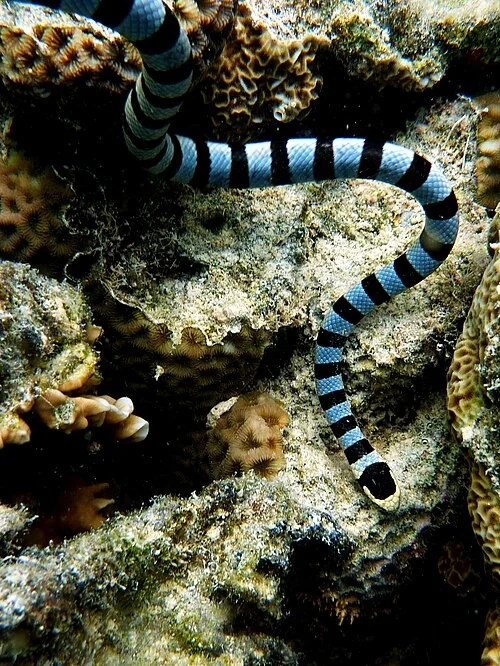
002 · Elapidae
Yellow-lipped sea krait
NZTCS 2025 assessment: non-resident native, vagrant; published 2026. NZTCS 2025 assessment, published 2026: non-resident native, vagrant. December 2022 stranded individual rescued by Auckland Zoo; a wild arrival, not a breeding population.
Read the species account →Kai Squires · CC BY 4.0 · https://creativecommons.org/licenses/by/4.0
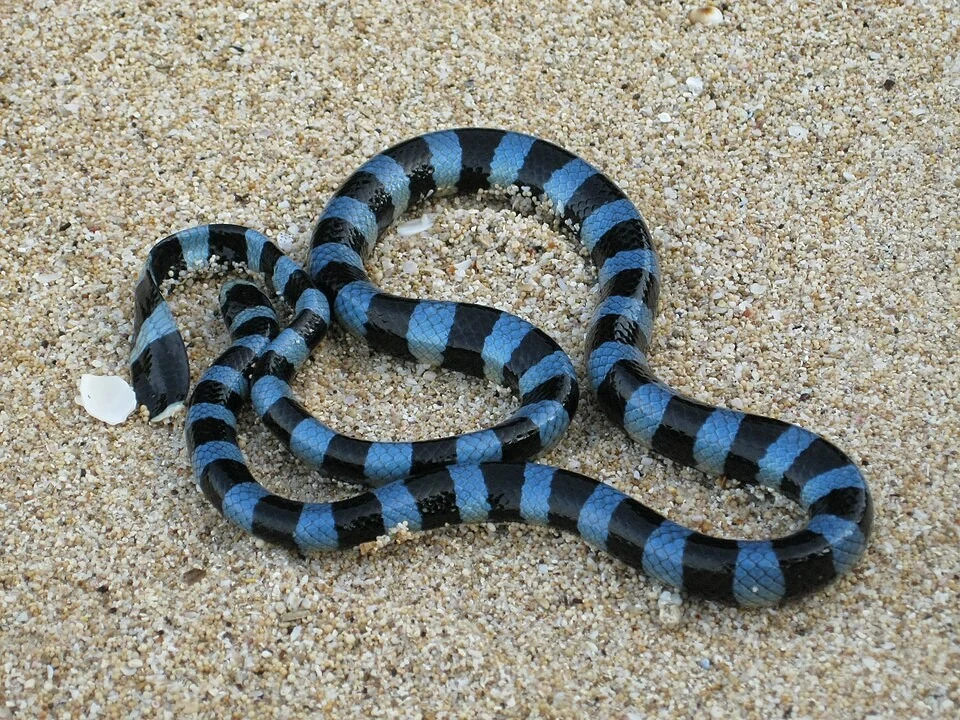
003 · Elapidae
Blue-banded Sea Krait
NZTCS 2025 assessment: non-resident native, vagrant; published 2026. NZTCS 2025 assessment, published 2026: non-resident native, vagrant. Historical DOC atlas record noted in the 2012–2014 assessment cycle; the atlas is no longer maintained.
Read the species account →Bramadi Arya · CC BY-SA 4.0 · https://creativecommons.org/licenses/by-sa/4.0
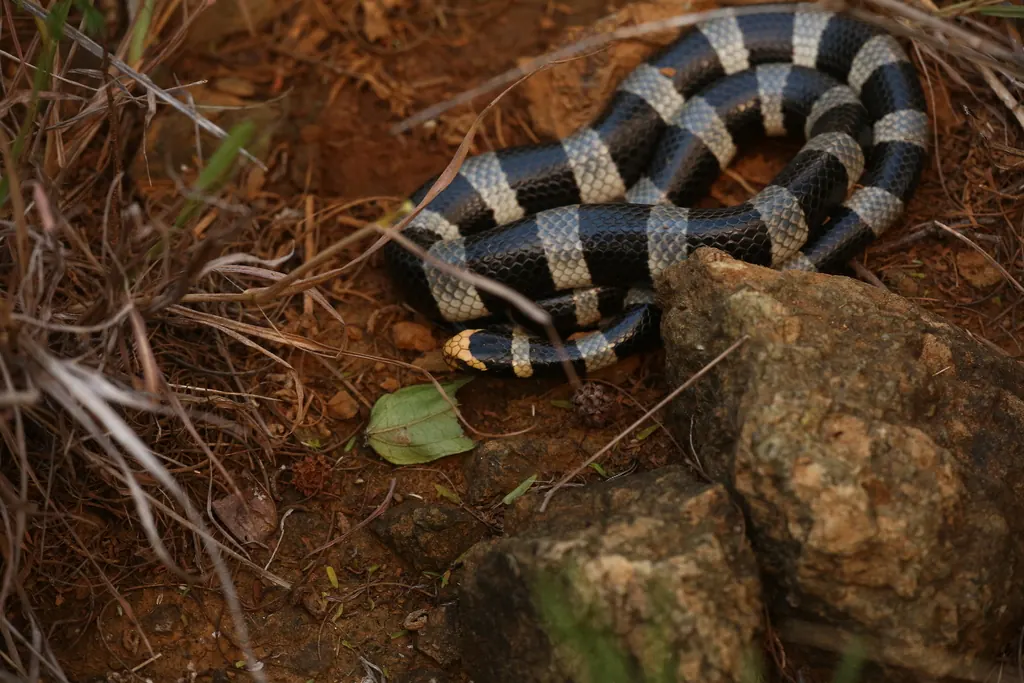
004 · Elapidae
Species account
NZTCS 2025 assessment: non-resident native, vagrant; published 2026. NZTCS 2025 assessment, published 2026: non-resident native, vagrant.
Read the species account →Lennart Hudel / iNaturalist · CC BY 4.0 · https://creativecommons.org/licenses/by/4.0/
Read further
Guide reviewed 11 October 2026. Source dates and geographic scope matter; landscape photographs do not establish species occurrence.
Visitor status and reporting advice; checked 12 October 2026.
Headland and surrounding seas; landscape context only.
Rocky coast, shelf and canyon setting; not snake occurrence evidence.
Habitat report card drawing on a 2014 survey.
Continue through New Zealand