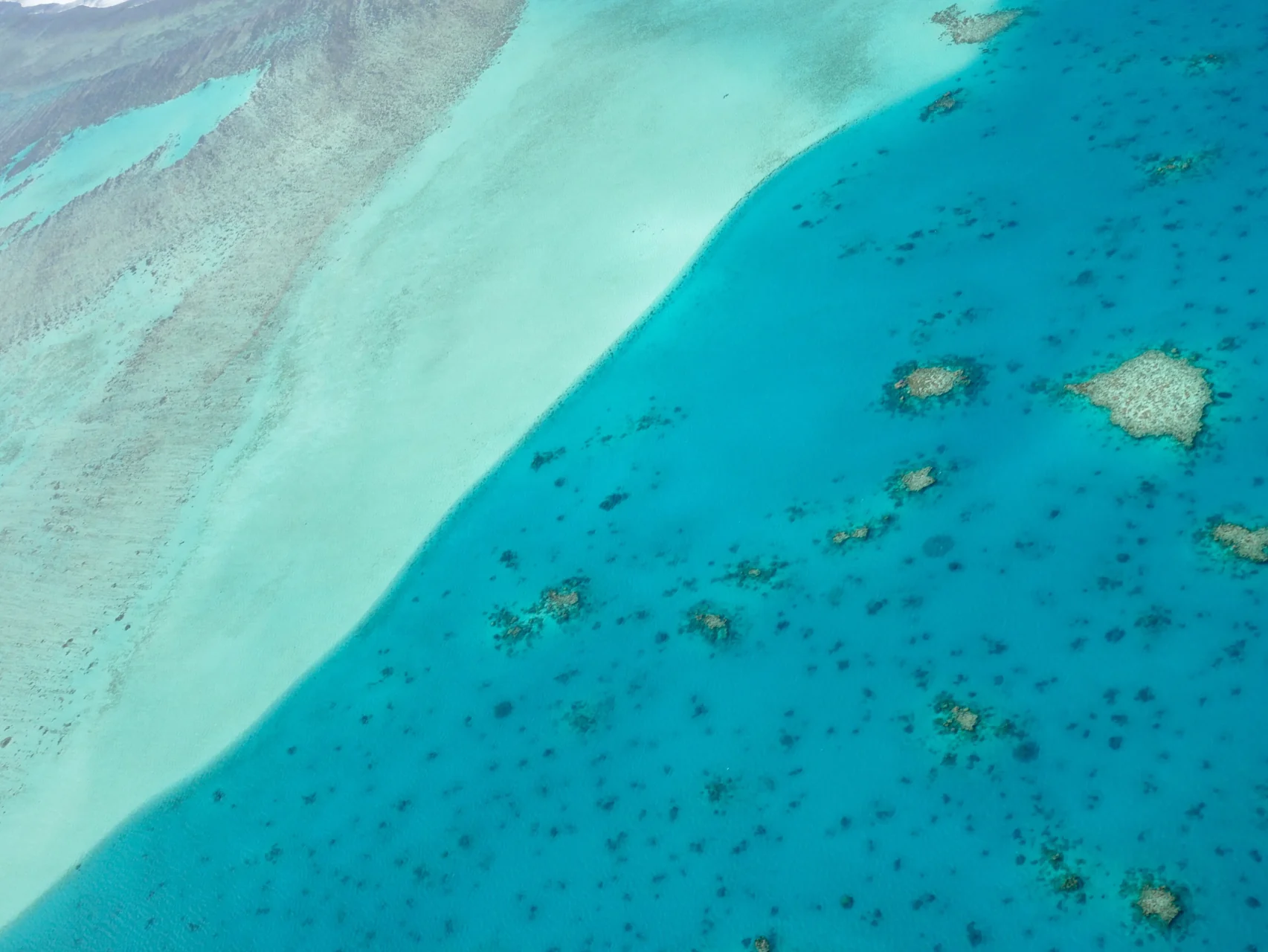
Blue lagoon waters and reefs in New Caledonia.

New Caledonia · Habitat guide

Coasts & marine waters

Continue from the shoreline into marine occurrence evidence.

16species with extracted evidence
1families
4island guides

Blue lagoon waters and reefs in New Caledonia.

Photograph: Frenchytahiti · Image source · CC BY-SA 4.0. Cropped to fill the hero; darkened for text legibility.

Geography & biotopes

Read the landscape.

Continue from the shoreline into marine occurrence evidence.

The listed lagoon areas encompass reefs, seagrass and mangroves. Those connected environments are distinct from Grande Terre’s inland landscapes and from the Loyalty Islands.

The selection requires an explicit habitat statement in a checked species account. It describes the species’ reported ecology across its range; it is not proof of a sighting in every local example of this environment.

UNESCO: Lagoons of New Caledonia →

Geography is part of the record

Find your way through New Caledonia.

Select a named island to open its evidence page. The complete directory below keeps every guide accessible, including places where locality evidence has not yet been extracted.

11 of 19 listed species have at least one indexed island record. 8 remain country-only. Even a nonzero count is not a complete regional inventory.

The species catalogue

Snakes · Coasts & marine waters.

Country occurrence and species-level habitat evidence are combined here; local habitat occupancy is not inferred.

16 species · showing 16

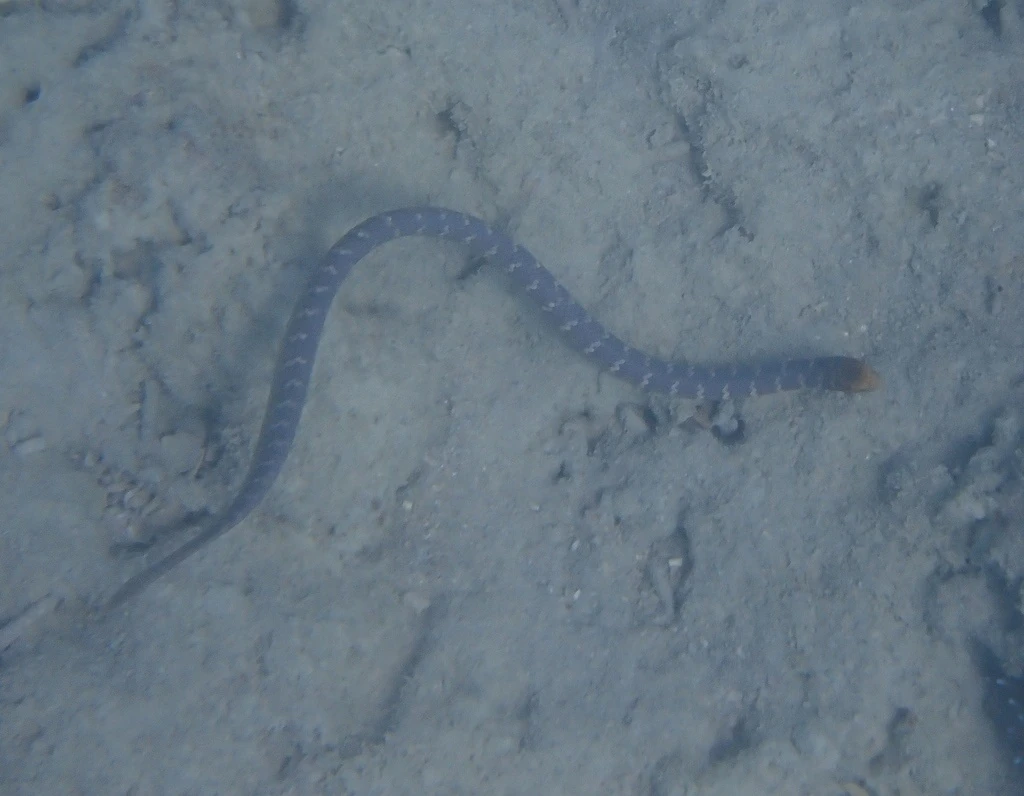
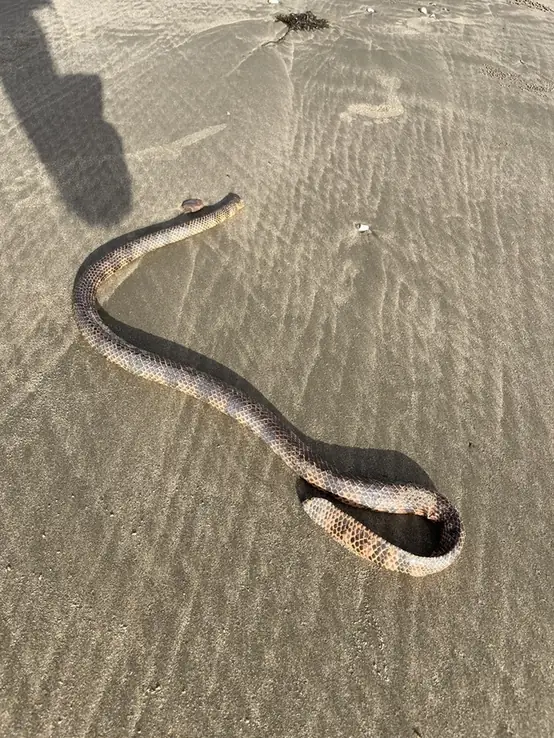
Animal on wet sand, photographed 28 December 2025; original locality label: Great Barrier Reef, Yeppoon, AU.

001 · Elapidae

Reef shallows seasnake

Aipysurus duboisii

BAVAY, 1869

VenomousClinical severity not established

New Caledonia: Loyalty Islands, Lifou, Lifu.

Read the species account →

rcrofts / iNaturalist · CC BY 4.0 · https://creativecommons.org/licenses/by/4.0/

Aipysurus laevis in the linked source observation. Identification follows the source community.

002 · Elapidae

Olive-brown seasnake

Aipysurus laevis

LACÉPÈDE, 1804

VenomousClinical severity not established

New Caledonia: country-level record; no named guide locality extracted.

Read the species account →

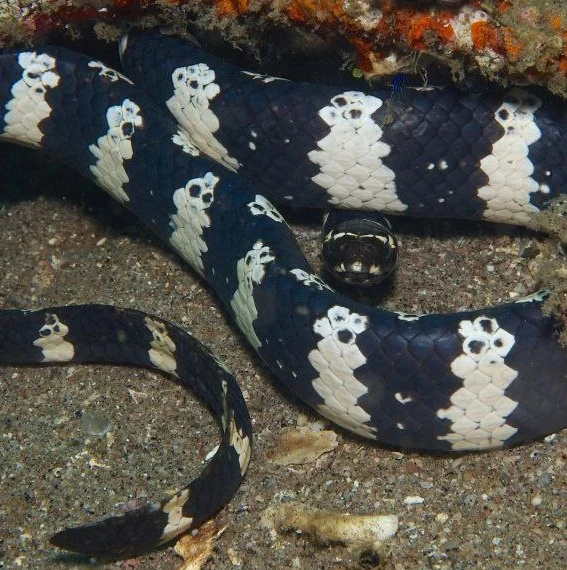
Debra Baker · CC BY 4.0 · https://creativecommons.org/licenses/by/4.0/

Emydocephalus annulatus — real specimen photograph; identification follows the linked source.

003 · Elapidae

Turtle-headed seasnake

Emydocephalus annulatus

KREFFT, 1869

VenomousClinical severity not established

New Caledonia: country-level record; no named guide locality extracted.

Read the species account →

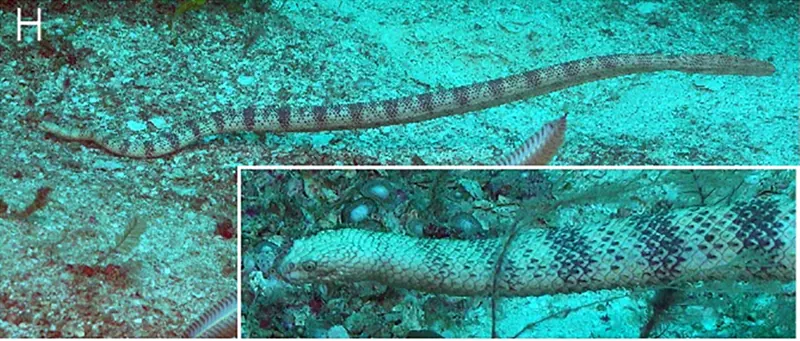
IG: divecycle · CC BY-SA 4.0 · https://creativecommons.org/licenses/by-sa/4.0

Hydrophis coggeri

005 · Elapidae

Slender-necked Seasnake

Hydrophis coggeri

(KHARIN, 1984)

VenomousClinical severity not established

New Caledonia: Loyalty Islands.

Read the species account →

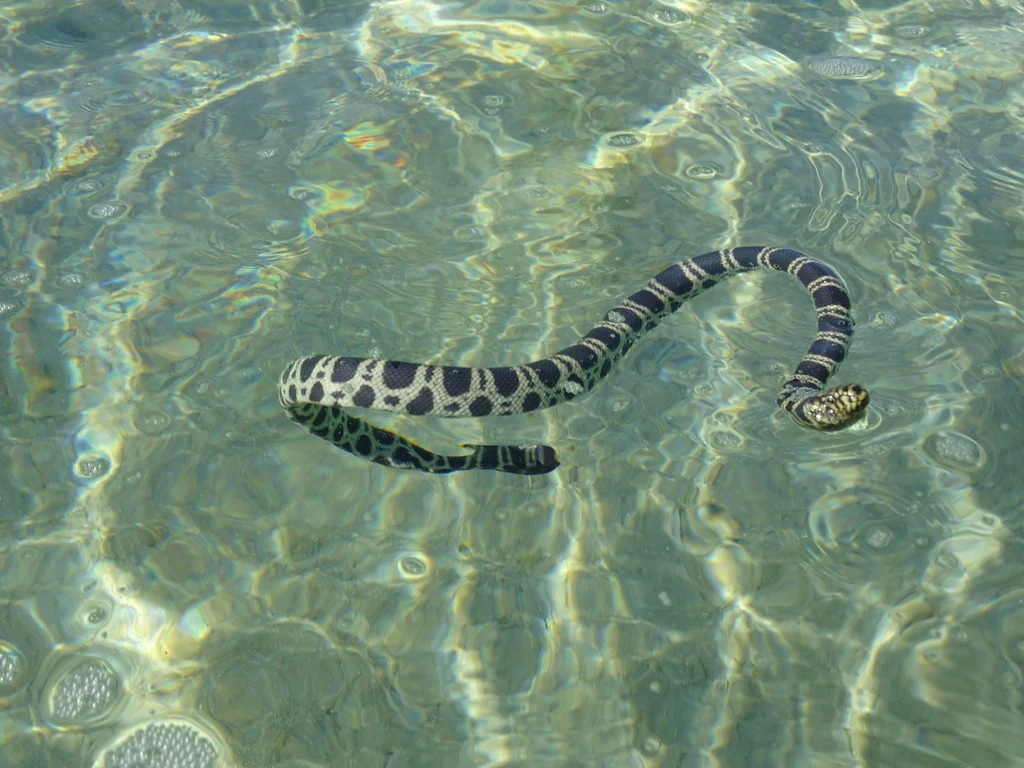
Speed, Wilson, Somaweera, Udyawer, Meekan, Whisson & Miller (2022) · CC BY 4.0 · https://creativecommons.org/licenses/by/4.0/

Hydrophis major. Swimming individual, photographed at the surface. Original observation dated 2018-04-03. Photograph identification follows the cited observation; it adds no geographic occurrence record.

008 · Elapidae

Olive-headed or greater seasnake

Hydrophis major

(SHAW, 1802)

VenomousClinical severity not established

New Caledonia: country-level record; no named guide locality extracted.

Read the species account →

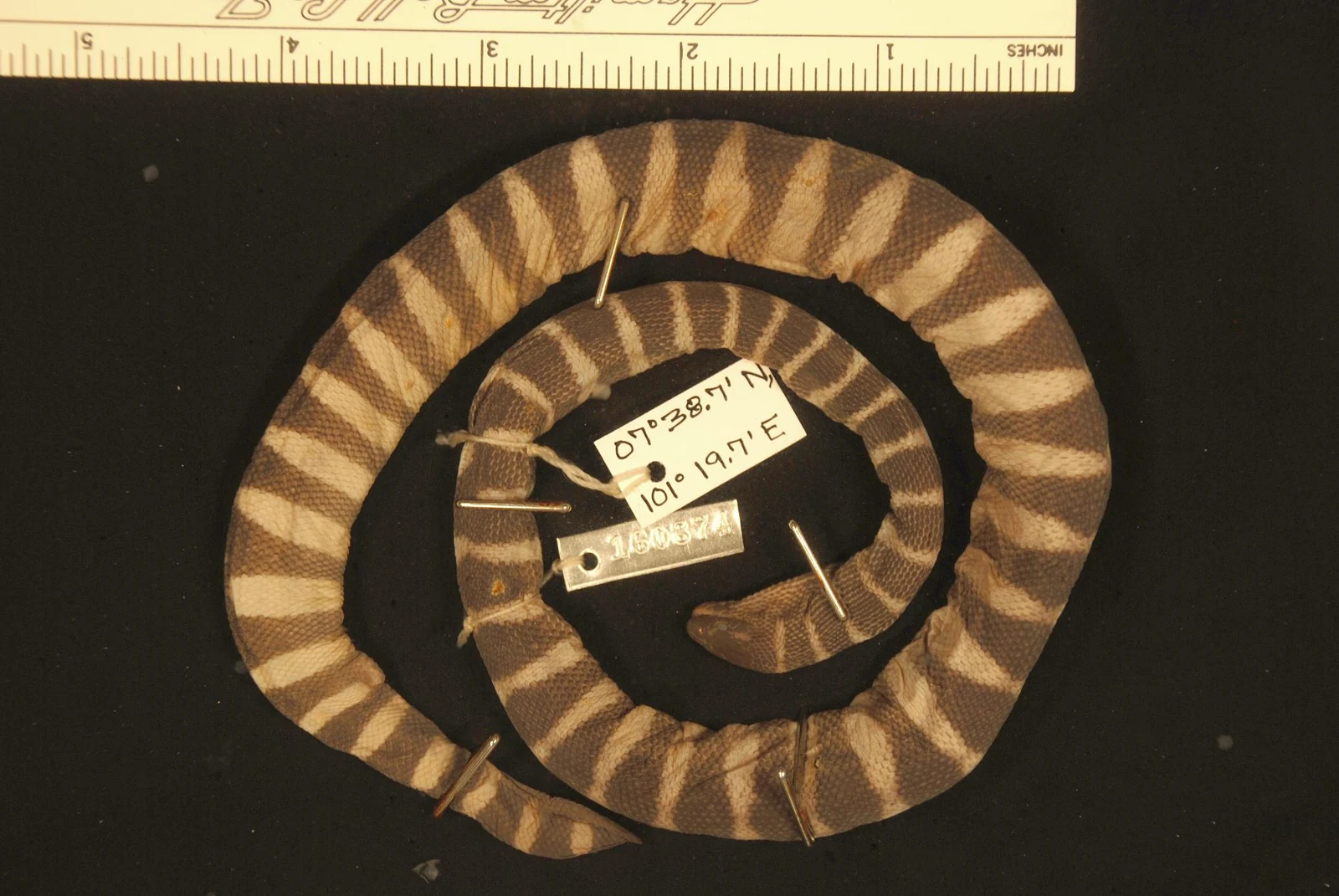
Jiro Iguchi · CC BY 4.0 · https://creativecommons.org/licenses/by/4.0/

Hydrophis ornatus — real specimen photograph; identification follows the linked source.

009 · Elapidae

Ornate Reef seasnake

Hydrophis ornatus

(GRAY, 1842)

VenomousClinical severity not established

New Caledonia: Loyalty Islands.

Read the species account →

harum.koh from Kobe city, Japan · CC BY-SA 2.0 · https://creativecommons.org/licenses/by-sa/2.0

Photograph of Hydrophis peronii

010 · Elapidae

Spiny-headed seasnake

Hydrophis peronii

(DUMÉRIL, 1853)

VenomousClinical severity not established

New Caledonia: country-level record; no named guide locality extracted.

Read the species account →

Speed, Wilson, Somaweera, Udyawer, Meekan, Whisson & Miller (2022) · CC BY 4.0 · https://creativecommons.org/licenses/by/4.0/

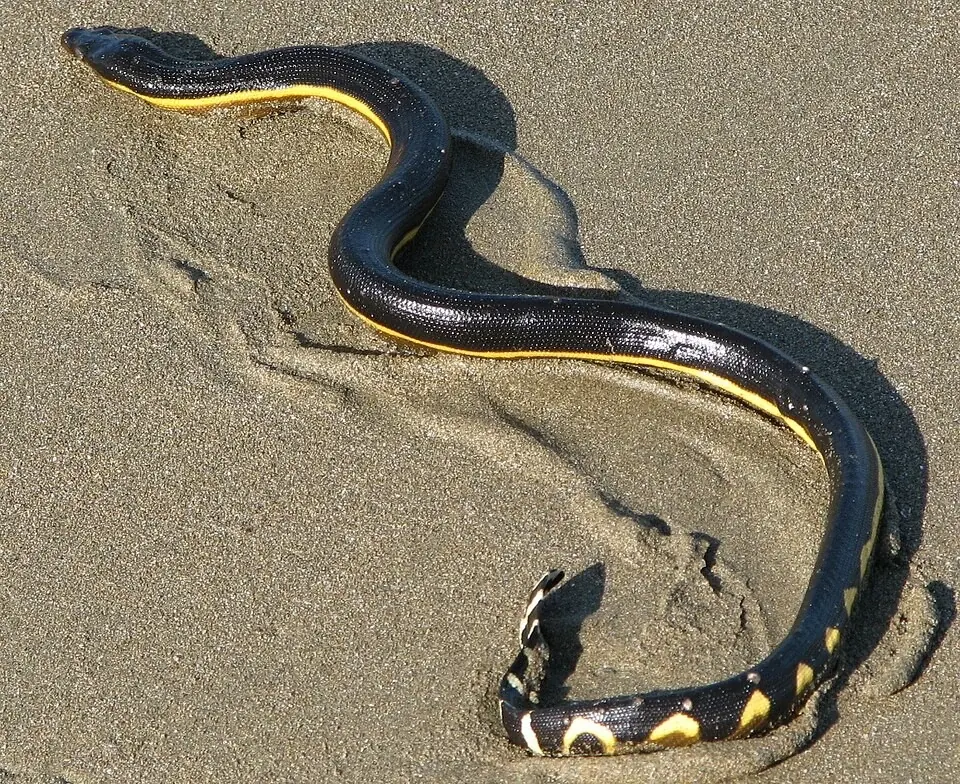
Hydrophis platurus — real specimen photograph; identification follows the linked source.

011 · Elapidae

Yellowbelly Sea Snake

Hydrophis platurus

(LINNAEUS, 1766)

VenomousClinical severity not established

New Caledonia: country-level record; no named guide locality extracted.

Read the species account →

Aloaiza · CC BY 3.0 · https://creativecommons.org/licenses/by/3.0

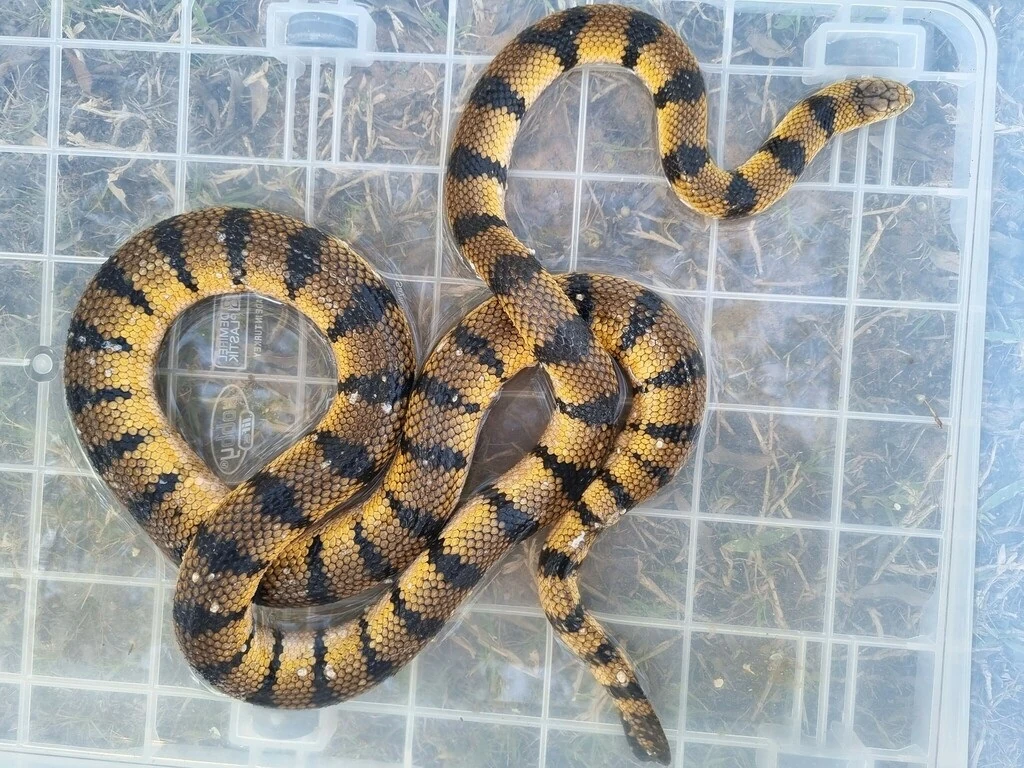
Hydrophis spiralis — United Arab Emirates, 2025-01-06. Photographed in a holding container; this is not a natural-habitat scene.

012 · Elapidae

Yellow Sea Snake

Hydrophis spiralis

(SHAW, 1802)

VenomousClinical severity not established

New Caledonia: Loyalty Islands.

Read the species account →

Marius Burger · CC0 1.0 · https://creativecommons.org/publicdomain/zero/1.0/

Laticauda colubrina — real specimen photograph; identification follows the linked source.

013 · Elapidae

Yellow-lipped sea krait

Laticauda colubrina

(SCHNEIDER, 1799)

VenomousClinical severity not established

New Caledonia: country-level record; no named guide locality extracted.

Read the species account →

Kai Squires · CC BY 4.0 · https://creativecommons.org/licenses/by/4.0

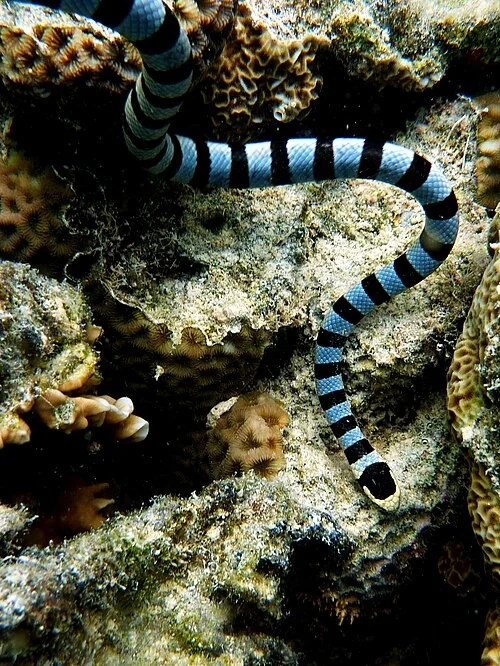
Laticauda laticaudata — real specimen photograph; identification follows the linked source.

015 · Elapidae

Blue-banded Sea Krait

Laticauda laticaudata

(LINNAEUS, 1758)

VenomousClinical severity not established

New Caledonia: country-level record; no named guide locality extracted.

Read the species account →

Bramadi Arya · CC BY-SA 4.0 · https://creativecommons.org/licenses/by-sa/4.0

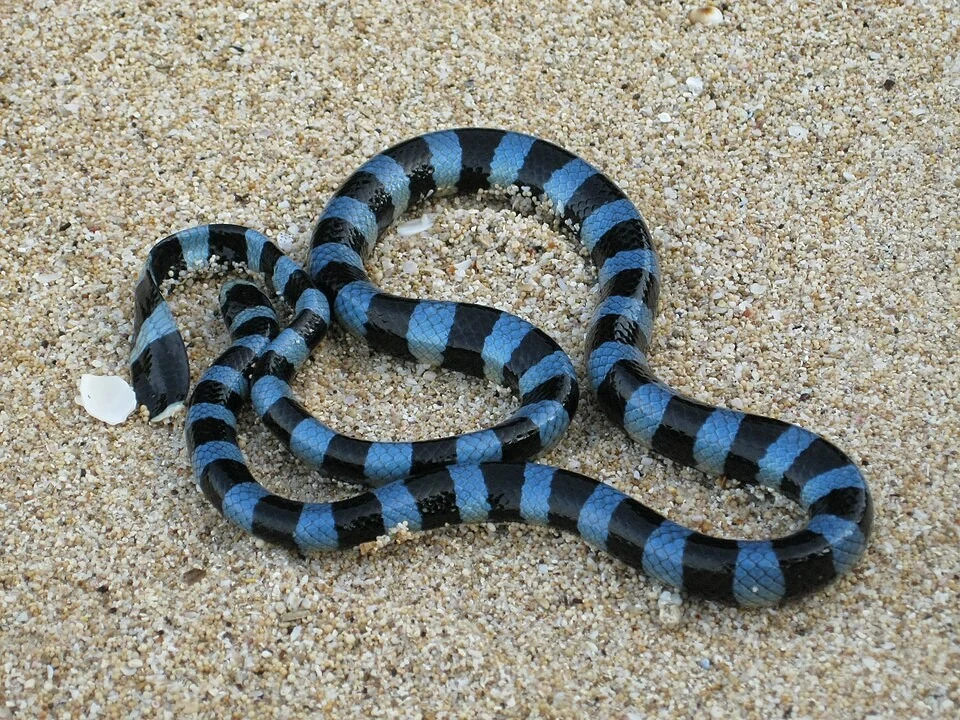
Photographed in New Caledonia on 4 March 2019; original locality label: Nord, NC.

016 · Elapidae

Species account

Laticauda saintgironsi

COGGER & HEATWOLE, 2006

VenomousClinical severity not established

New Caledonia: Noumea; Loyalty Islands.

Read the species account →

Lennart Hudel / iNaturalist · CC BY 4.0 · https://creativecommons.org/licenses/by/4.0/

Explore all 19 country records →

The research library

Sources & the checklist.

This edition lists 19 species with supported country records from checked taxonomic treatments and cited field studies. This total includes 1 record marked as introduced; it is not a native-species total. It is not a claim of a complete national inventory. Each account retains its source and check date; individual evidence entries retain their own review dates.

Reviewed occurrence evidence

Reviewed country and locality records

Range and taxonomy review

Country links use a single accepted species identity. Revised names and disputed records are kept visible here; uncertain records do not enter the listed collection or regional totals.

How the map and counts work

Search results were checked against distribution text and taxonomic qualifications. A geographic name alone does not establish a political country: New Guinea, the Solomon archipelago and Micronesia span more than one country or territory. Introduced and unresolved records require separate interpretation.

Place counts require explicit named localities, including valid type localities. Counts can overlap where sources name multiple places. Regional maps group historical boundary snapshots for navigation, while island outlines use Natural Earth; neither is a species range or an observation map. Small islands can be below the outline dataset’s resolution, so geographic reference markers and the directory remain available.

Natural Earth 1:10m · public domain. Island label positions are geographic references, not observations. Map provenance →
  1. UNESCO: Lagoons of New Caledonia ↗
  2. The Reptile Database

    Individual treatments and locality evidence are linked from each species account.

  3. Meiri (2024): SquamBase 1.0

    Species-level literature measurements and ecological traits. Exact-name matches only; imputed or ambiguous fields are omitted. These summaries are not local observations.

  4. Natural Earth: public-domain geographic data

Continue through the Oceania atlas →