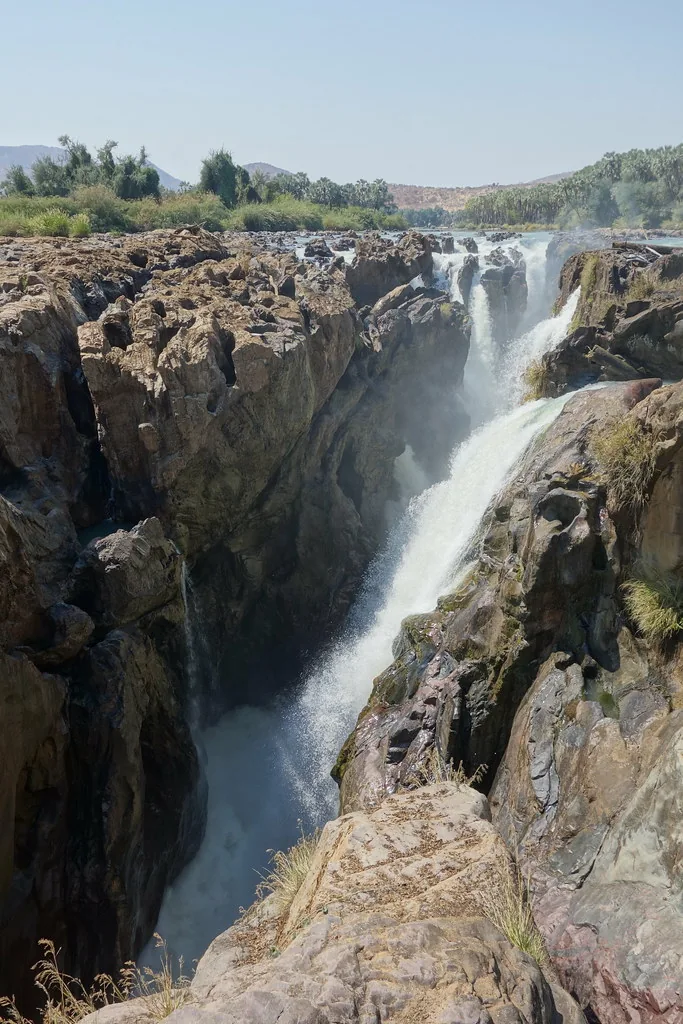
Epupa Falls on the Kunene River, viewed from the Namibian side in Kunene Region. The river forms the boundary with Angola.

Namibia · Place guide

Kunene

Explore Kunene through the named places in its sourced species records.

11species with extracted evidence
7families
13region guides

Epupa Falls on the Kunene River, viewed from the Namibian side in Kunene Region. The river forms the boundary with Angola.

Photograph: Olivier Bruchez · Image source · CC BY-SA 2.0. Cropped to fill the hero; darkened for text legibility.

Geography & biotopes

Read the landscape.

Explore Kunene through the named places in its sourced species records.

This navigation guide uses the credited boundary snapshot for Kunene. Its boundaries identify an atlas group, not a single vegetation type. Natural Earth; geoBoundaries gbOpen ADM1, 2022 snapshot; Public Domain.

Ecological connections

The country habitat guides explain the environments documented in the landscape sources. Only species records assigned to this particular mapped area appear in the regional collection; a shared habitat elsewhere does not establish local occurrence.

Explore the setting

Open an individual species account to retain its original locality, observation or collection date, and source. Historical administrative names are preserved as aliases for this map snapshot.

This guide indexes these source names: Kunene. A country-only record is not automatically assigned to this place. Map markers identify navigation destinations, not collection sites.

Map boundaries, snapshot and group membership →

Convention on Biological Diversity · Namibia national profile →

Geography is part of the record

Find your way through Namibia.

Select a named region to open its evidence page. The complete directory below keeps every guide accessible, including places where locality evidence has not yet been extracted.

28 of 81 listed species have at least one indexed region record. 53 remain country-only. Even a nonzero count is not a complete regional inventory.

Habitats & living landscapes

Explore the living
landscapes.

Explore 3 guides to the environments, places and conservation pressures that shape this country. Each guide connects to the regional map and shared species accounts.

Landscape photographs & credits

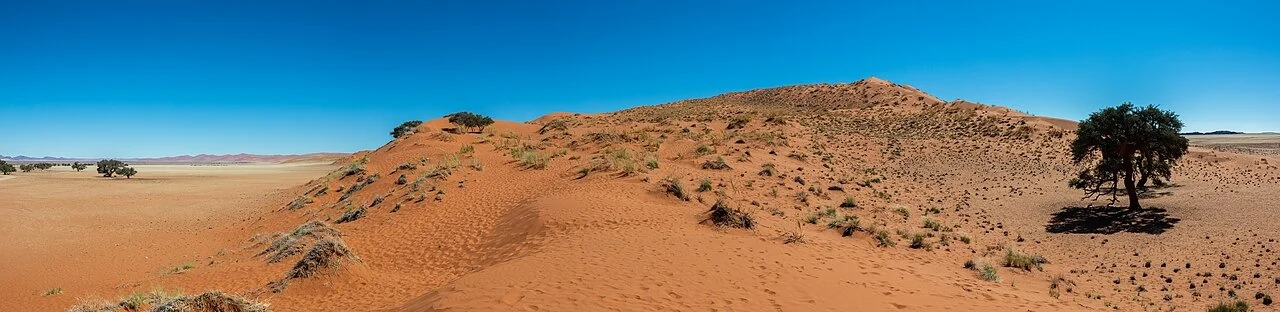
Elim Dune near Sossusvlei, Namibia, photographed in August 2018. — Diego Delso. Original photograph · CC BY-SA 4.0. Cropped for the cards; photographs do not establish snake occurrence.

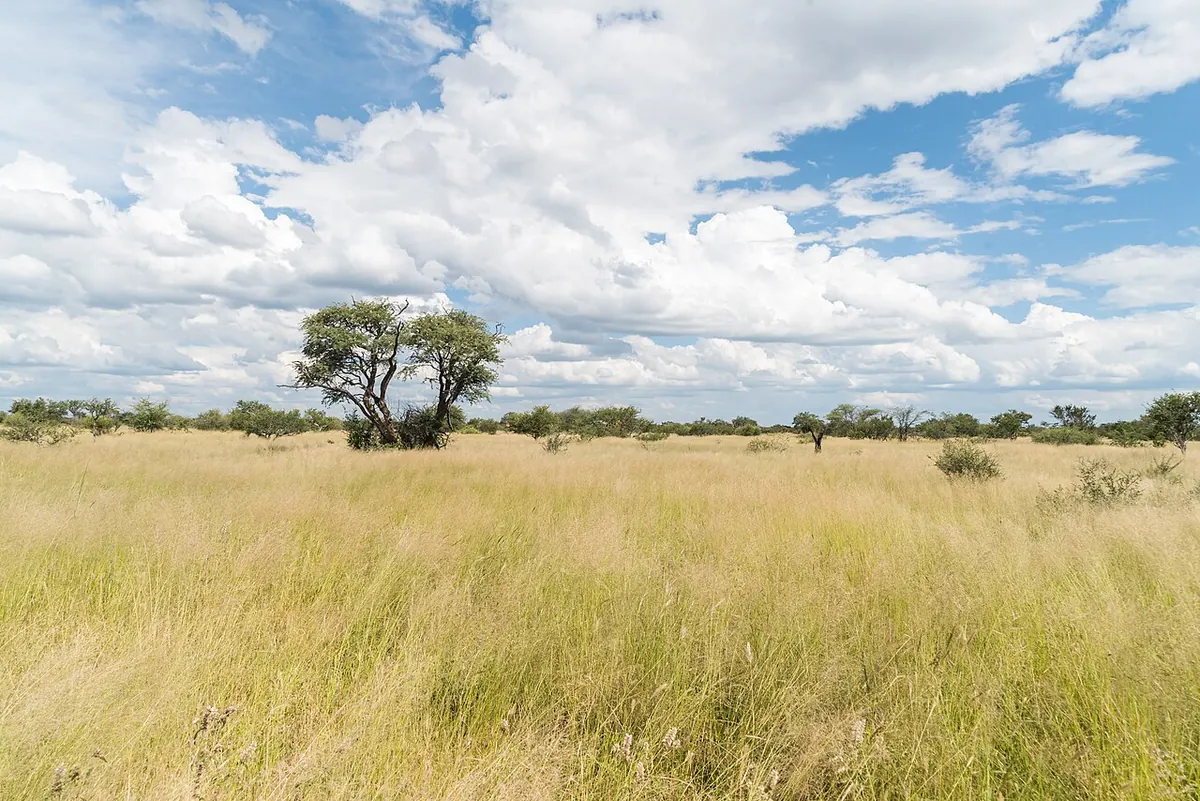
Open grassland with scattered trees and bushes on Namibian rangeland. The source identifies a managed rangeland setting; this is not a claim of untouched wilderness. — Tim Brunauer on behalf of Deutsche Gesellschaft für Internationale Zusammenarbeit (GIZ). Original photograph · CC BY-SA 4.0. Cropped for the cards; photographs do not establish snake occurrence.

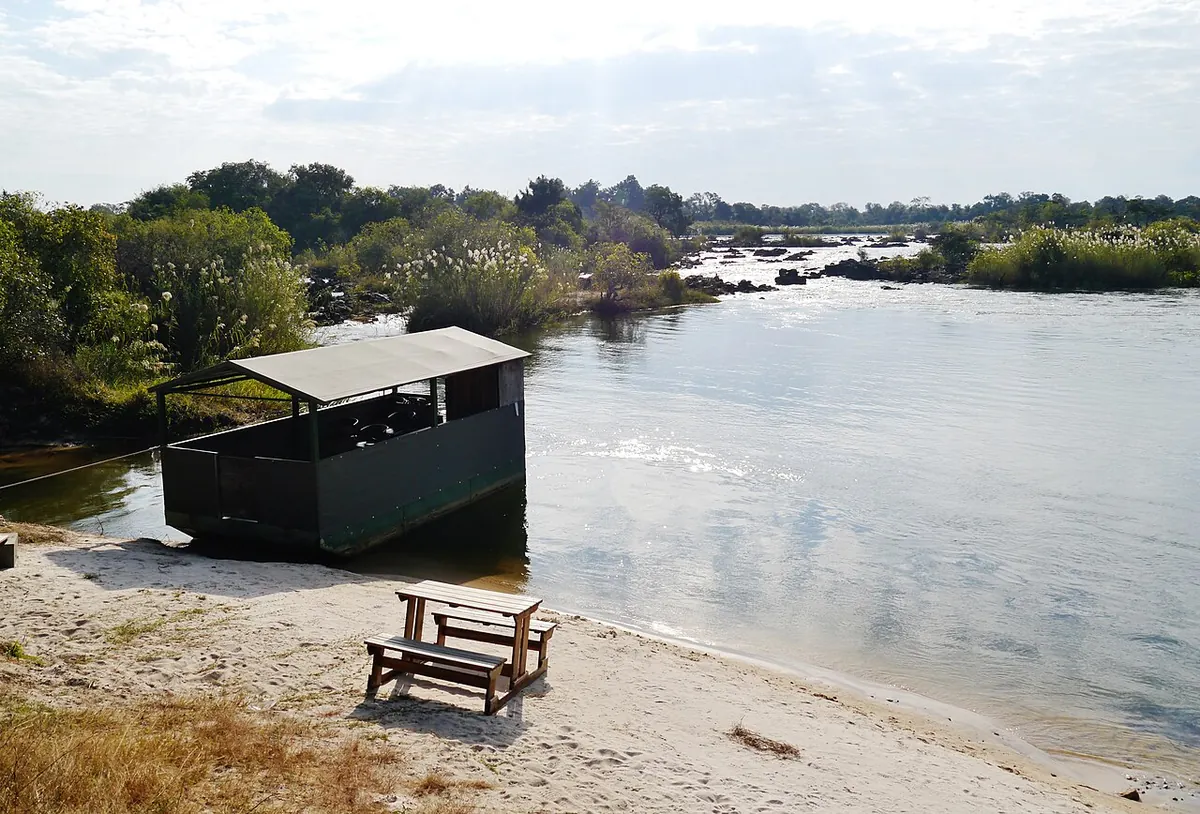
The Okavango River at Popa Falls, Namibia, with vegetated banks and low rapids. A riverside visitor structure and bench are visible in the foreground. — Zairon. Original photograph · CC BY-SA 4.0. Cropped for the cards; photographs do not establish snake occurrence.

The species catalogue

Snakes · Kunene.

Only records naming this place appear below. These are extracted locality records, not complete island or regional inventories.

11 species · showing 11

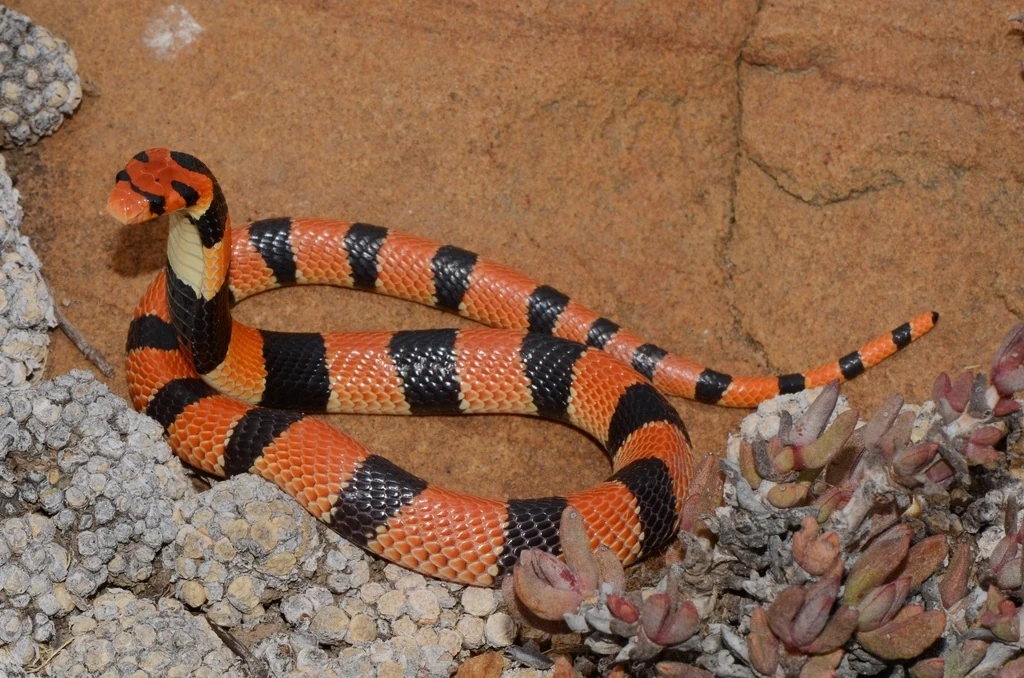
Aspidelaps lubricus, photographed 2018-01-06. Identification follows the linked research-grade observation.

001 · Elapidae

cowlesi: Angolan Coral Snake

Aspidelaps lubricus

(LAURENTI, 1768)

VenomousClinical severity not established

The current taxonomic treatment explicitly lists this country. This is country-scale checklist evidence, not a claim of continuous occupancy or a complete regional inventory. Khomas: observation GBIF 6479868728 (2026). The original iNaturalist entry was rechecked for research-grade identification, wild status and unrestricted coordinates; its reported…

Read the species account →

Marius Burger (iNaturalist contributor) · CC0 1.0 · https://creativecommons.org/publicdomain/zero/1.0/
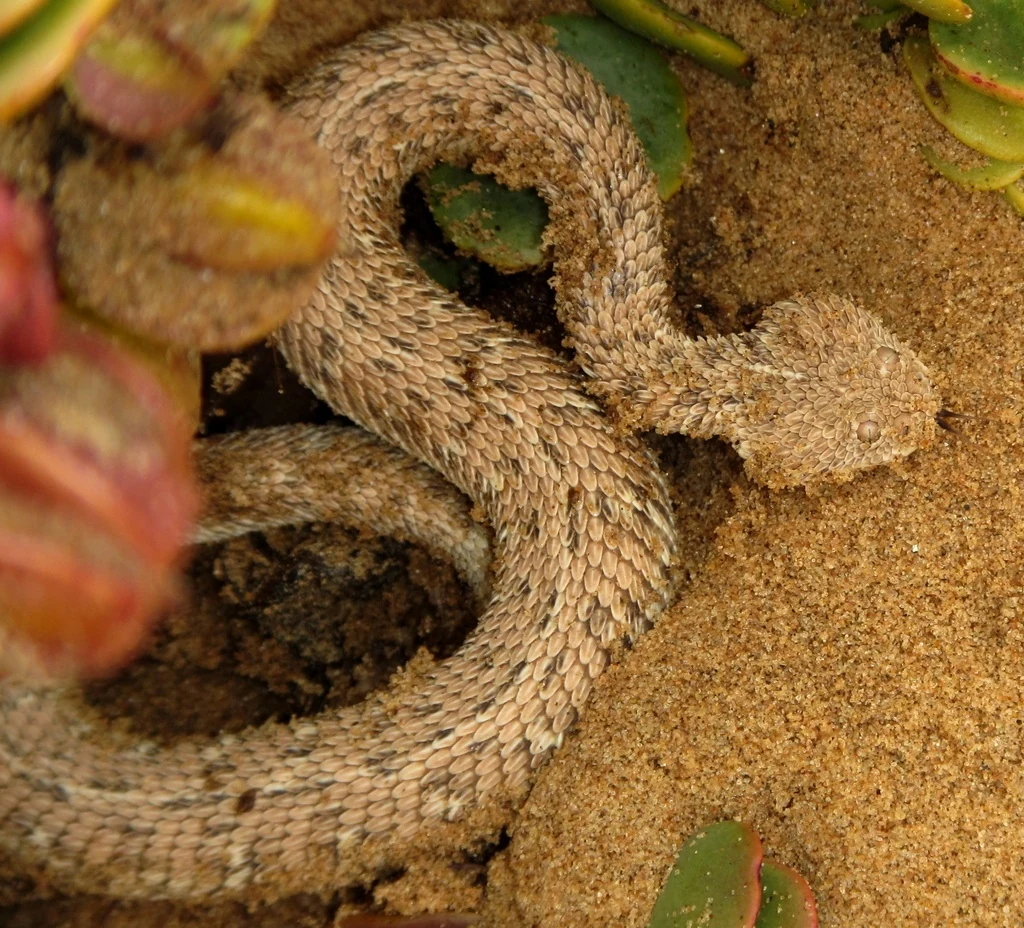
Bitis peringueyi, photographed 2018-08-30. Identification follows the linked research-grade observation.

002 · Viperidae

Peringuey's Adder, Dwarf Puff Adder

Bitis peringueyi

(BOULENGER, 1888)

VenomousClinical severity not established

The Namibian national checklist, p. 122, documents the Namib sand seas from the Kunene River to the Lüderitz area. Its explicit distribution account resolves the conflicting database note. Angolan occurrence remains held for corroboration. The national checklist, p. 122, names the Skeleton Coast population and the Walvis Bay Reserve, Namib-Naukluft and…

Read the species account →

Robert Taylor · CC BY 4.0 · https://creativecommons.org/licenses/by/4.0/

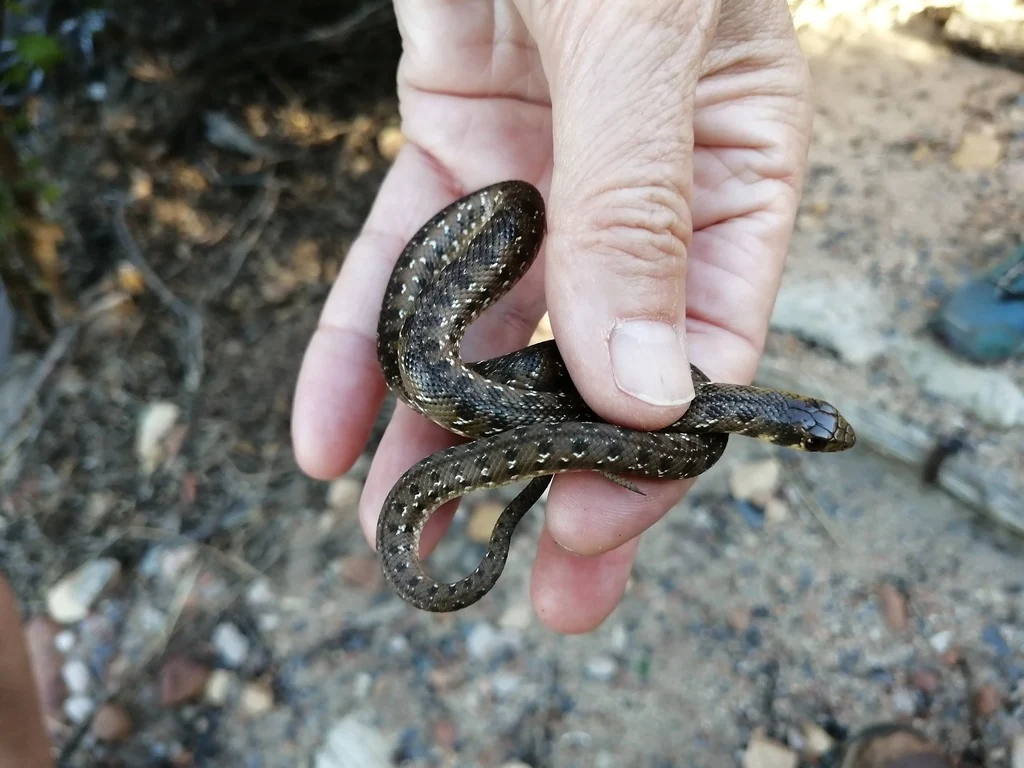
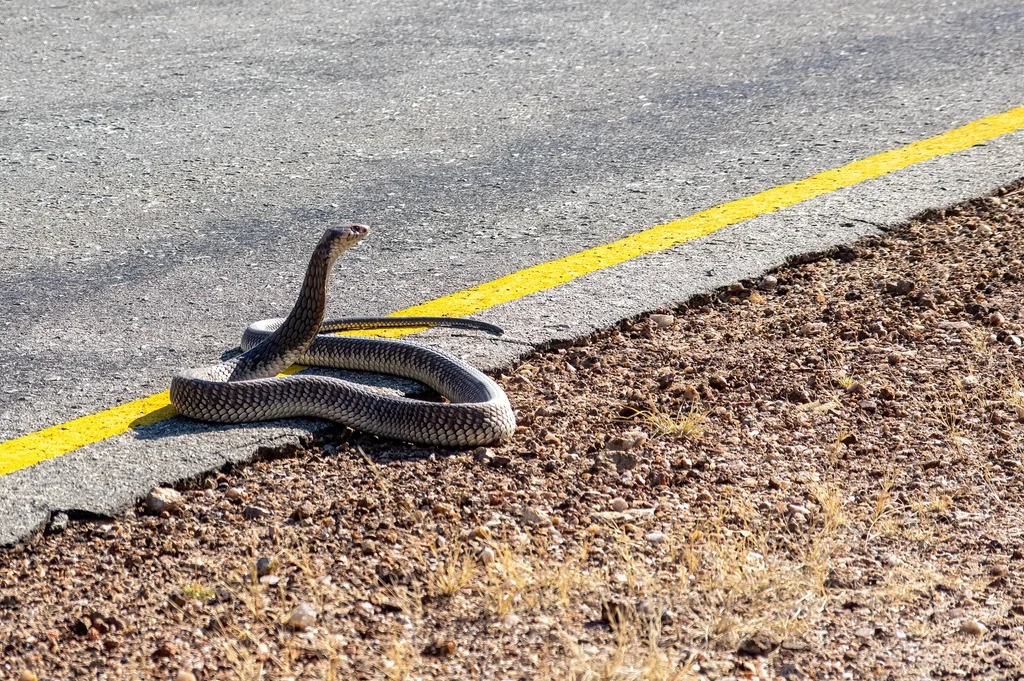
Naja anchietae; Sambesi, Namibia; photographed 2014-07-24.

003 · Elapidae

Anchieta's Cobra

Naja anchietae

BOCAGE, 1879

VenomousClinical severity not established

The current taxonomic treatment explicitly lists this country. This is country-scale checklist evidence, not a claim of continuous occupancy or a complete regional inventory. Khomas: observation GBIF 6159177474 (2026). The original iNaturalist entry was rechecked for research-grade identification, wild status and unrestricted coordinates; its reported…

Read the species account →

Dirk Froebel · CC BY 4.0 · https://creativecommons.org/licenses/by/4.0/

Naja nigricincta, photographed 2022-04-10. Identification follows the linked research-grade observation.

004 · Elapidae

Western Barred Spitting Cobra, zebra snake

Naja nigricincta

BOGERT, 1940

VenomousClinical severity not established

The current taxonomic treatment explicitly lists this country. This is country-scale checklist evidence, not a claim of continuous occupancy or a complete regional inventory. Hardap: observation GBIF 6481316809 (2026). The original iNaturalist entry was rechecked for research-grade identification, wild status and unrestricted coordinates; its reported…

Read the species account →

Karen Eichholz · CC BY 4.0 · https://creativecommons.org/licenses/by/4.0/

Namibiana occidentalis, photographed 2020-10-18. Identification follows the linked research-grade observation.

005 · Leptotyphlopidae

Western Thread Snake, Western Worm Snake, Namaqua wormsnake

Namibiana occidentalis

(FITZSIMONS, 1962)

Non-venomous

The current taxonomic treatment explicitly lists this country. This is country-scale checklist evidence, not a claim of continuous occupancy or a complete regional inventory. Hardap: observation GBIF 6179563259 (2025). The original iNaturalist entry was rechecked for research-grade identification, wild status and unrestricted coordinates; its reported…

Read the species account →

Ryan van Huyssteen · CC BY 4.0 · https://creativecommons.org/licenses/by/4.0/

Psammophis trigrammus, photographed 2020-10-14. Identification follows the linked research-grade observation.

006 · Psammophiidae

Western Sand Snake

Psammophis trigrammus

GÜNTHER, 1865

VenomousClinical severity not established

The current taxonomic treatment explicitly lists this country. This is country-scale checklist evidence, not a claim of continuous occupancy or a complete regional inventory. Erongo: observation GBIF 6147607699 (2026). The original iNaturalist entry was rechecked for research-grade identification, wild status and unrestricted coordinates; its reported…

Read the species account →

Ryan van Huyssteen · CC BY 4.0 · https://creativecommons.org/licenses/by/4.0/

Pseudaspis cana; Lakeside, Cape Town, 7945, South Africa; photographed 2021-02-03.

007 · Pseudaspididae

Mole Snake

Pseudaspis cana

(LINNAEUS, 1758)

Venom unknownNot yet assessed

The current taxonomic treatment explicitly lists this country. This is country-scale checklist evidence, not a claim of continuous occupancy or a complete regional inventory. Oshikoto: museum voucher MCZ R-184870 (2006). The museum record's reported coordinate uncertainty footprint lies within the mapped region. Oshikoto: observation GBIF 6320468706…

Read the species account →

no rights reserved · CC0 · https://creativecommons.org/publicdomain/zero/1.0/
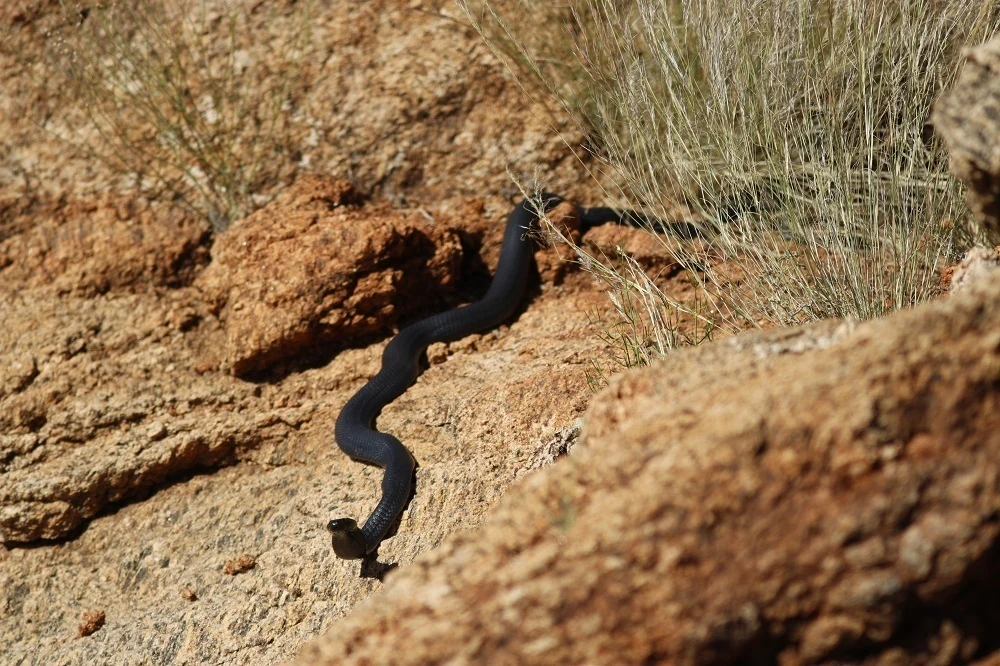
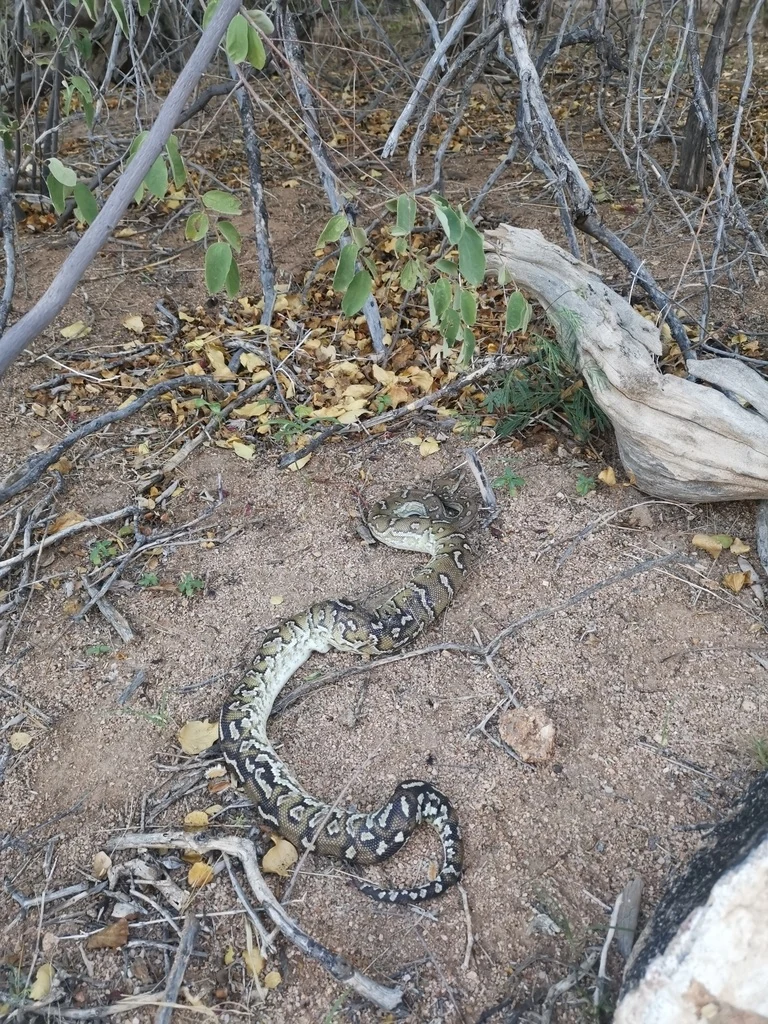
Python anchietae, photographed 2024-04-02. Identification follows the linked research-grade observation.

008 · Pythonidae

Anchieta's Dwarf Python, Angolan Python, Escarpment Python

Python anchietae

BOCAGE, 1887

Non-venomous

The current taxonomic treatment explicitly lists this country. This is country-scale checklist evidence, not a claim of continuous occupancy or a complete regional inventory. Kunene: observation GBIF 5153149258 (2025). The original iNaturalist entry was rechecked for research-grade identification, wild status and unrestricted coordinates; its reported…

Read the species account →

Nathan Van Cooten · CC BY 4.0 · https://creativecommons.org/licenses/by/4.0/

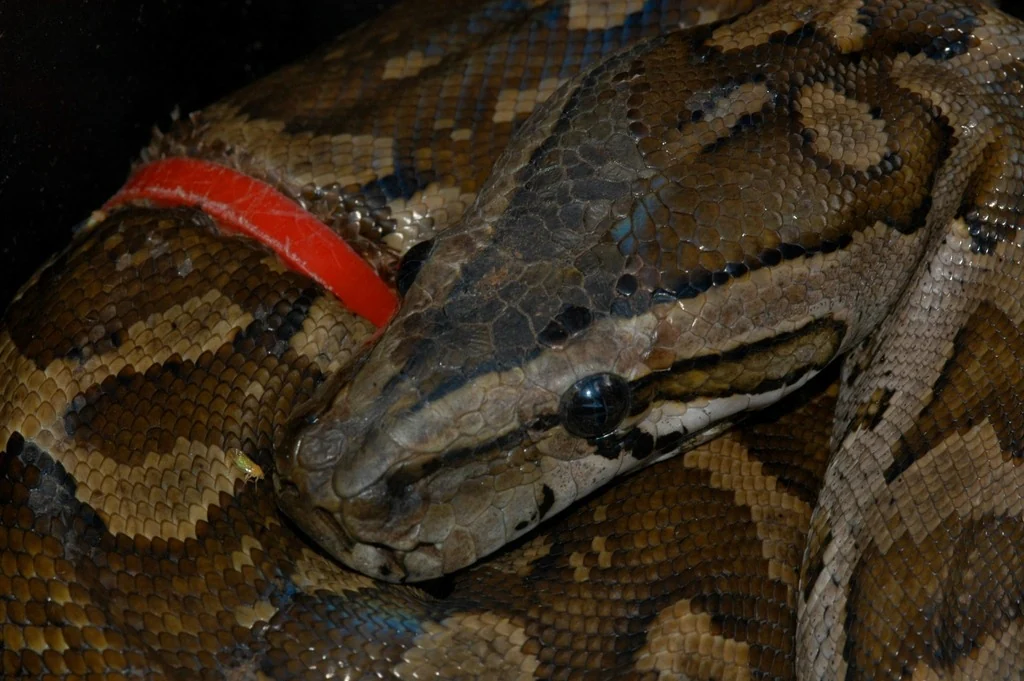
Python natalensis; Rooibos Street, Phalaborwa; photographed 2010-12-10.

009 · Pythonidae

Southern African Python, Lesser African Python

Python natalensis

SMITH, 1840

Non-venomous

The current taxonomic treatment explicitly lists this country. This is country-scale checklist evidence, not a claim of continuous occupancy or a complete regional inventory. Otjozondjupa: observation GBIF 6178462948 (2026). The original iNaturalist entry was rechecked for research-grade identification, wild status and unrestricted coordinates; its…

Read the species account →

no rights reserved · CC0 · https://creativecommons.org/publicdomain/zero/1.0/
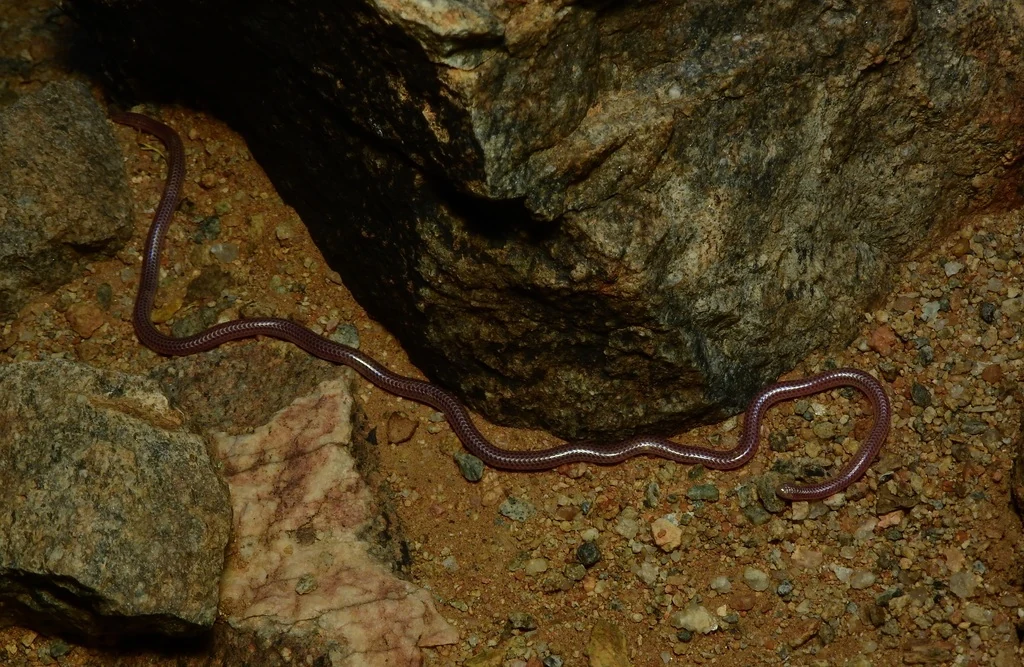
ColubridaeTelescopusPhotograph not yet documented

010 · Colubridae

Damara Tiger Snake

Telescopus finkeldeyi

HAACKE, 2013

Venom unknownNot yet assessed

The current taxonomic treatment explicitly lists this country. This is country-scale checklist evidence, not a claim of continuous occupancy or a complete regional inventory. Kunene: museum voucher MCZ R-186013 (2007). The museum record's reported coordinate uncertainty footprint lies within the mapped region. These are dated locality records, not…

Read the species account →
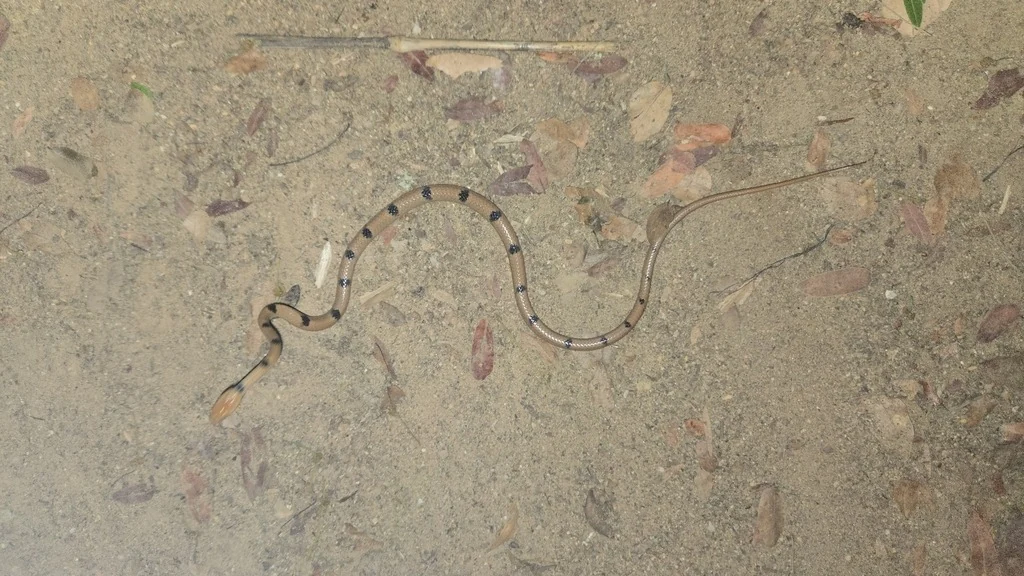
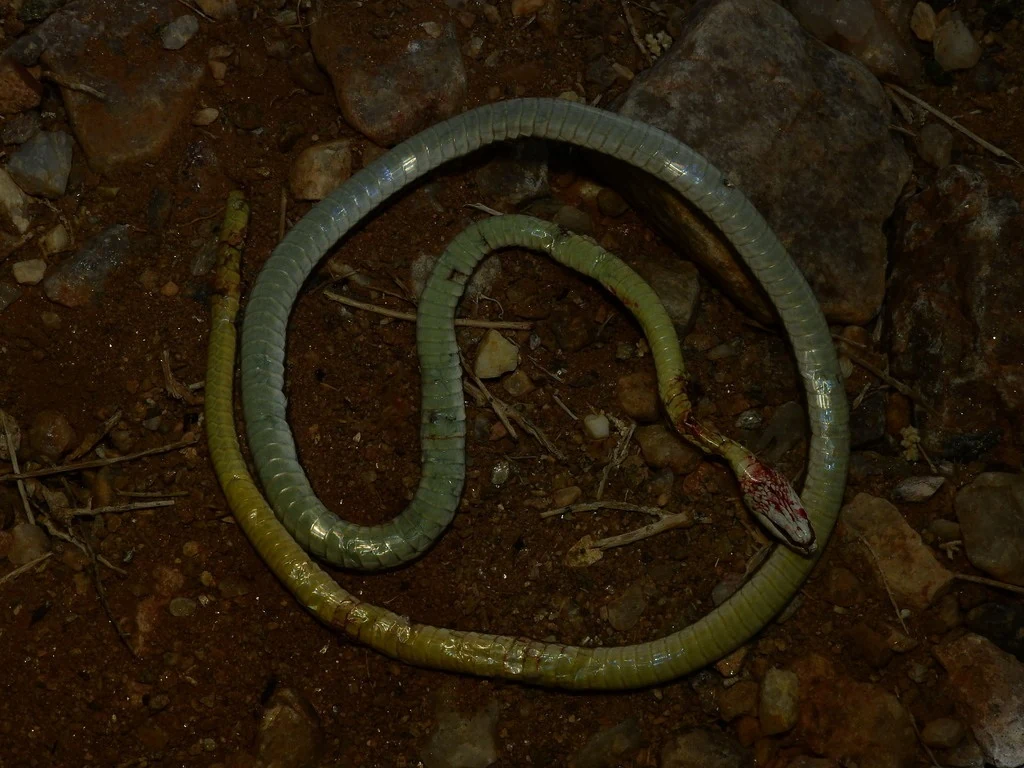
Telescopus semiannulatus; V5M6+9WG Hurungwe Safari Area, Makuti, Zimbabwe; photographed 2025-11-14.

011 · Colubridae

Common Tiger Snake, Tiger Cat Snake, Western Tiger Snake

Telescopus semiannulatus

SMITH, 1849

Venom unknownNot yet assessed

The current taxonomic treatment explicitly lists this country. This is country-scale checklist evidence, not a claim of continuous occupancy or a complete regional inventory. Kunene: observation GBIF 6162839714 (2026). The original iNaturalist entry was rechecked for research-grade identification, wild status and unrestricted coordinates; its reported…

Read the species account →

no rights reserved · CC0 · https://creativecommons.org/publicdomain/zero/1.0/
Explore all 81 country records →

The research library

Sources & the checklist.

This edition lists 81 species with supported country records from checked taxonomic treatments and cited field studies. It is not a claim of a complete national inventory. Each account retains its source and check date; individual evidence entries retain their own review dates.

Range and taxonomy review

Country links use a single accepted species identity. Revised names and disputed records are kept visible here; uncertain records do not enter the listed collection or regional totals.

Rhamphiophis oxyrhynchus

Uncertain — excluded from the listed total

The checked treatment contains a conflicting, superseded or insufficiently corroborated country report. It is retained for review and excluded from positive counts; this is not an assertion of absence.

Source 1 ↗

Rhinotyphlops lalandei

Uncertain — excluded from the listed total

The checked treatment contains a conflicting, superseded or insufficiently corroborated country report. It is retained for review and excluded from positive counts; this is not an assertion of absence.

Source 1 ↗

How the map and counts work

Search results were checked against distribution text and taxonomic qualifications. A geographic name alone does not establish a political country: New Guinea, the Solomon archipelago and Micronesia span more than one country or territory. Introduced and unresolved records require separate interpretation.

Place counts require explicit named localities, including valid type localities. Counts can overlap where sources name multiple places. Regional maps group historical boundary snapshots for navigation, while island outlines use Natural Earth; neither is a species range or an observation map. Small islands can be below the outline dataset’s resolution, so geographic reference markers and the directory remain available.

Natural Earth; geoBoundaries gbOpen ADM1, 2022 snapshot; Public Domain. Map provenance →

Exclusions & qualifications (2)

Rhamphiophis oxyrhynchus

The checked treatment contains a conflicting, superseded or insufficiently corroborated country report. It is retained for review and excluded from positive counts; this is not an assertion of absence.

Read source 1 ↗

Rhinotyphlops lalandei

The checked treatment contains a conflicting, superseded or insufficiently corroborated country report. It is retained for review and excluded from positive counts; this is not an assertion of absence.

Read source 1 ↗
  1. Boundary source and declared group membership ↗

    Historical geography and navigation only.

  2. Convention on Biological Diversity · Namibia national profile ↗

    National biodiversity profile based on the reporting sources identified by the CBD. Used for landscape context; older statistics are not presented as current monitoring or a snake inventory.

  3. Map boundaries, snapshot and group membership ↗
  4. Convention on Biological Diversity · Namibia national profile ↗
  5. The Reptile Database

    Individual treatments and locality evidence are linked from each species account.

  6. Meiri (2024): SquamBase 1.0

    Species-level literature measurements and ecological traits. Exact-name matches only; imputed or ambiguous fields are omitted. These summaries are not local observations.

  7. Natural Earth: public-domain geographic data

Continue through the Africa atlas →