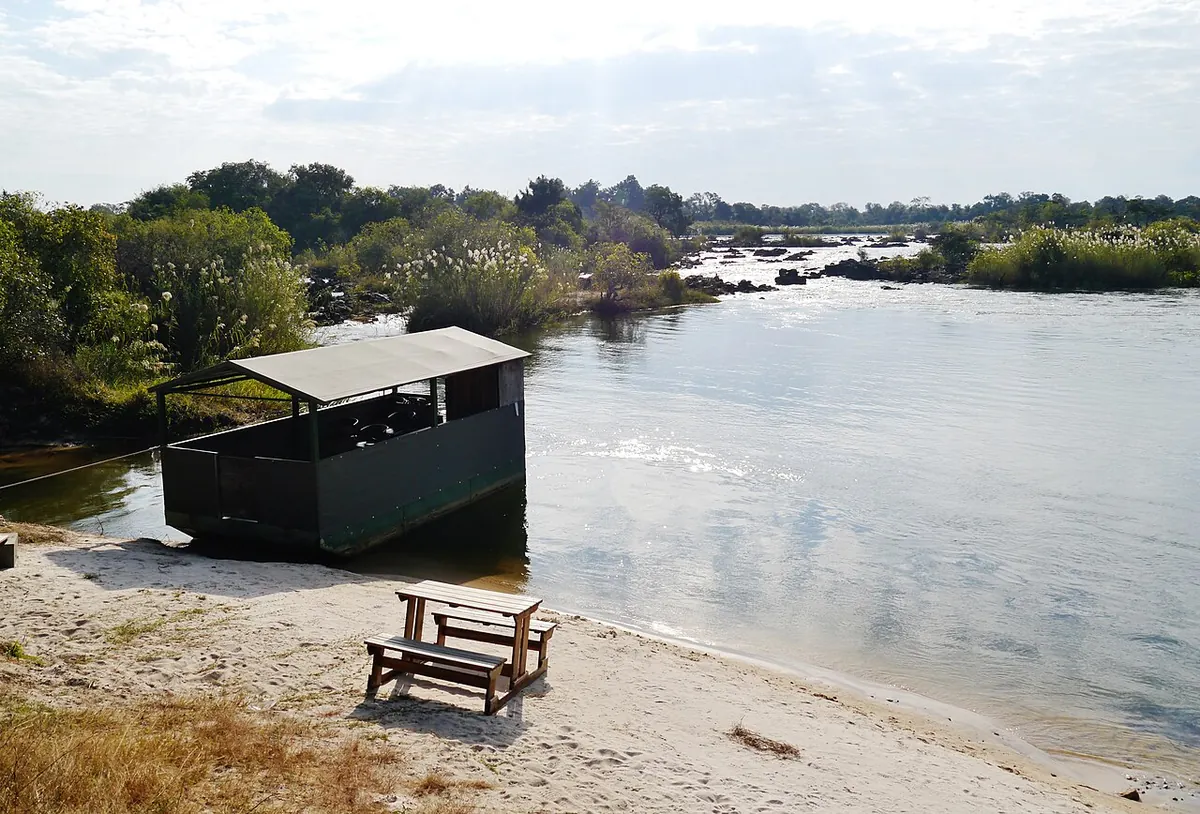
The Okavango River at Popa Falls, Namibia, with vegetated banks and low rapids. A riverside visitor structure and bench are visible in the foreground.

Namibia · Habitat field guide

Rivers, lakes & wetlands

Subtropical wetlands form a distinct part of Namibia’s ecosystem range. A national occurrence record does not identify one of these wetlands.

The Okavango River at Popa Falls, Namibia, with vegetated banks and low rapids. A riverside visitor structure and bench are visible in the foreground.

Photograph: Zairon · Image source · CC BY-SA 4.0. Cropped to fill the hero; darkened for text legibility.

Understanding the environment

A sense of the habitat.

Subtropical wetlands form a distinct part of Namibia’s ecosystem range. A national occurrence record does not identify one of these wetlands.

Geographic scope
Namibia; named examples and source scope matter.
Evidence scale
Landscape context is separate from species locality evidence.
Source chronology
Consult the original publication date; checked 12 October 2026.

Explore the structure · Select a layer to compare the details a locality record can preserve.

Read the setting in three layers.

Select a zone to see what changes.

Waterbody

Waterbody

Retain the name and distinguish rivers, lakes, marshes and reservoirs.

Compare this detail with the original field or museum record before assigning a habitat association.

These reading prompts explain how to interpret evidence; they do not assert that every feature occurs at every site.

Sources: Convention on Biological Diversity · Namibia national profile

Field notes · 01

The documented landscape

Subtropical wetlands form a distinct part of Namibia’s ecosystem range. A national occurrence record does not identify one of these wetlands.

Sources: Convention on Biological Diversity · Namibia national profile

Field notes · 02

Connect habitat and locality

Use the species account to check whether a habitat statement applies to this country or elsewhere in the species’ range. A landscape photograph illustrates its own named place; it is not evidence of snake presence.

Pressures on Namibia’s habitats

What is at risk?

A site-specific assessment of pressures has not yet been extracted for this guide. The landscape sources below provide context; they do not establish a current threat level for each snake species.

What helps this habitat

Retain natural vegetation and water connections where local conservation evidence supports them. Consult the linked national or site account for the pressures and management actions actually reported there.

The connected collection

Snakes with habitat evidence.

These 9 species have supported country occurrence and an explicit habitat association in the shared account. The association may come from elsewhere in their range. This is not a complete local habitat inventory; the places above are landscape examples, not asserted collecting sites.

9 species · showing 9

Crotaphopeltis hotamboeia; Campher's Drift, George, 6529, South Africa; photographed 2023-10-13.

001 · Colubridae

White-lipped Herald Snake, Red-lipped Snake

Crotaphopeltis hotamboeia

(LAURENTI, 1768)

Venom unknownNot yet assessed

The current taxonomic treatment explicitly lists this country. This is country-scale checklist evidence, not a claim of continuous occupancy or a complete regional inventory.

Read the species account →

no rights reserved · CC0 · https://creativecommons.org/publicdomain/zero/1.0/
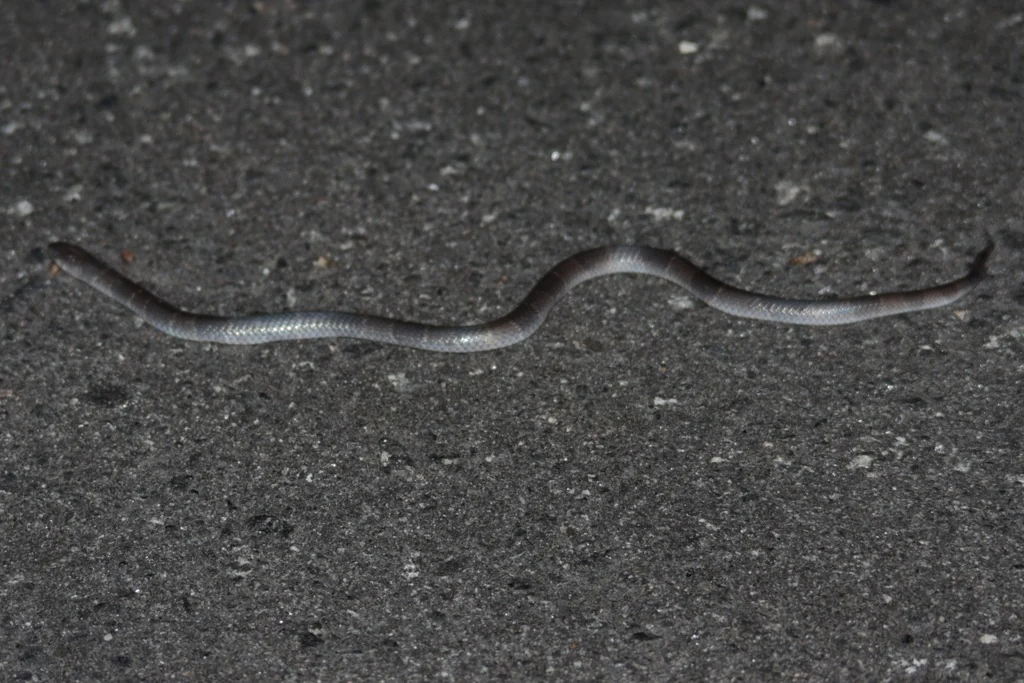
Elapsoidea semiannulata; Yankari, Nigéria; photographed 2008-07-15.

002 · Elapidae

Angolan Garter Snake

Elapsoidea semiannulata

BOCAGE, 1882

VenomousClinical severity not established

The current taxonomic treatment explicitly lists this country. This is country-scale checklist evidence, not a claim of continuous occupancy or a complete regional inventory.

Read the species account →

Fábio Olmos · CC BY 4.0 · https://creativecommons.org/licenses/by/4.0/

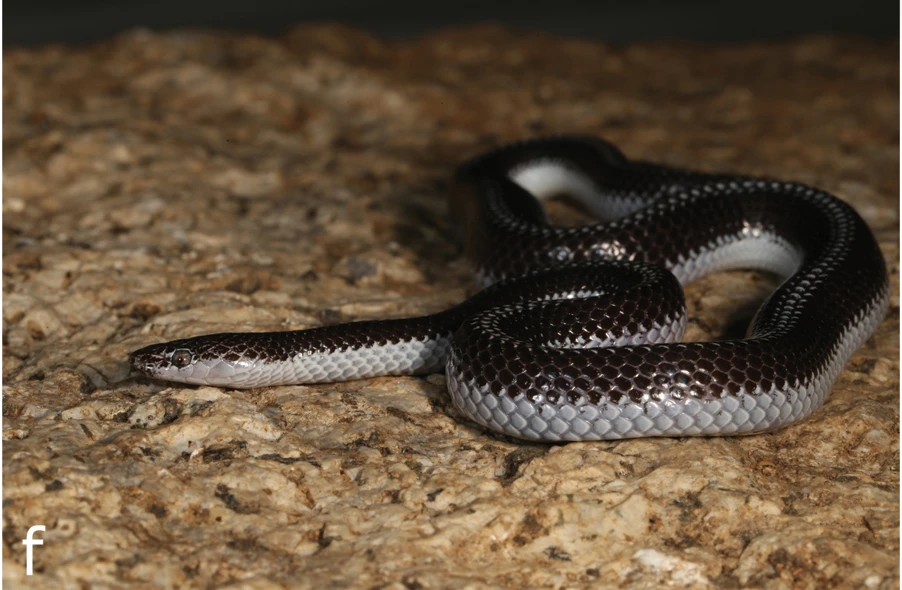
Marques et al. (2024), Figure 10f: published specimen photograph of Lycophidion hellmichi from the Serra da Neve survey, Angola. The panel does not identify an individual voucher.

003 · Lamprophiidae

Hellmich's Wolf Snake

Lycophidion hellmichi

LAURENT, 1964

Non-venomous

The current taxonomic treatment explicitly lists this country. This is country-scale checklist evidence, not a claim of continuous occupancy or a complete regional inventory.

Read the species account →

Luis M. P. Ceríaco · CC BY 4.0 · https://creativecommons.org/licenses/by/4.0/

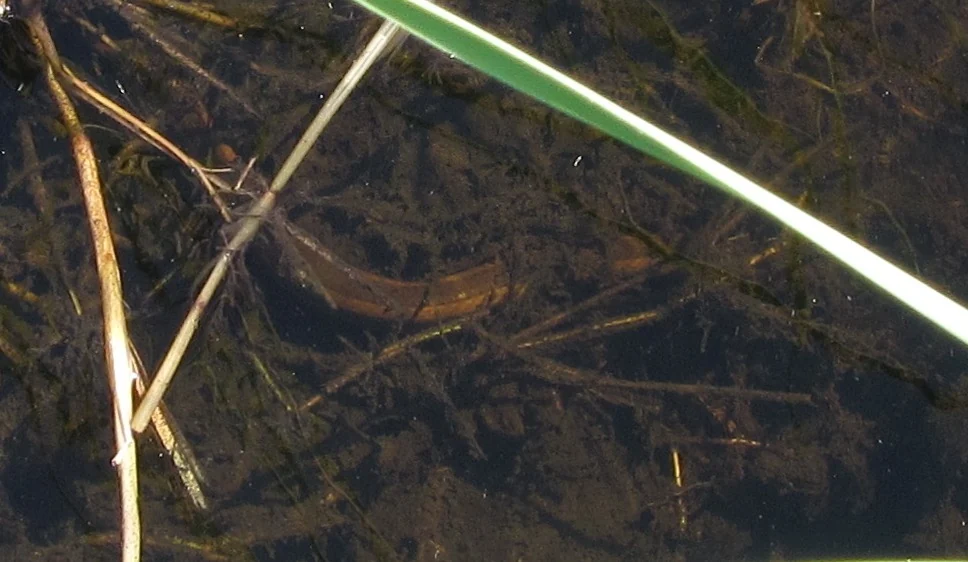
Natriciteres olivacea; Ngamiland North, Botswana; photographed 2018-12-15.

004 · Colubridae

Olive Marsh Snake

Natriciteres olivacea

(PETERS, 1854)

Venom unknownNot yet assessed

The current taxonomic treatment explicitly lists this country. This is country-scale checklist evidence, not a claim of continuous occupancy or a complete regional inventory.

Read the species account →

Robert Taylor · CC BY 4.0 · https://creativecommons.org/licenses/by/4.0/

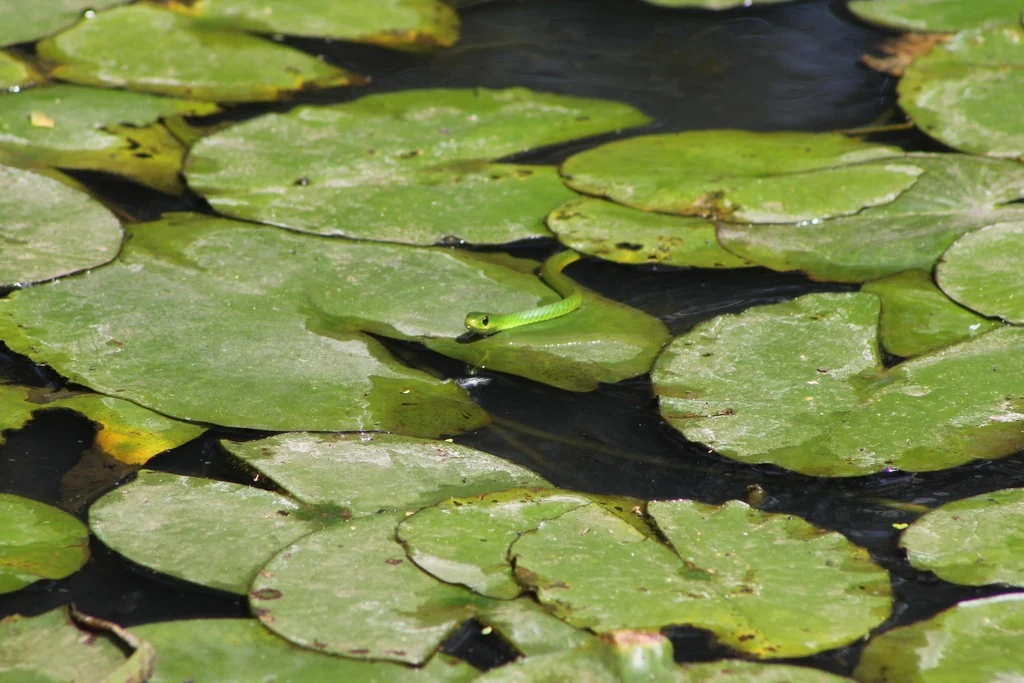
Philothamnus hoplogaster; National Park, Nairobi, Kenya; photographed 2017-07-01.

005 · Colubridae

Southeastern Green snake, Green Water Snake

Philothamnus hoplogaster

(GÜNTHER, 1863)

Venom unknownNot yet assessed

The current taxonomic treatment explicitly lists this country. This is country-scale checklist evidence, not a claim of continuous occupancy or a complete regional inventory.

Read the species account →

Ryan Donnelly · CC BY 4.0 · https://creativecommons.org/licenses/by/4.0/

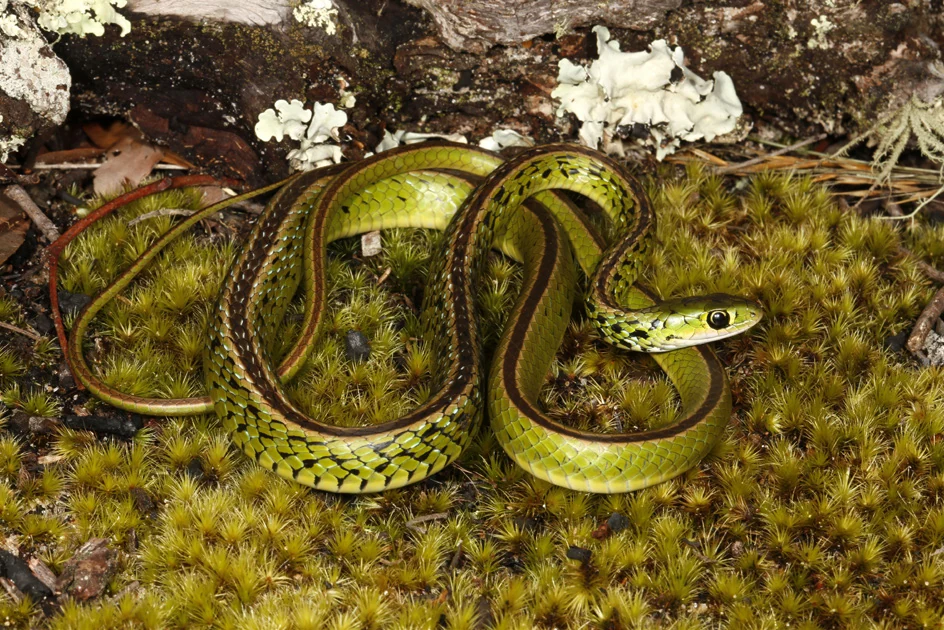
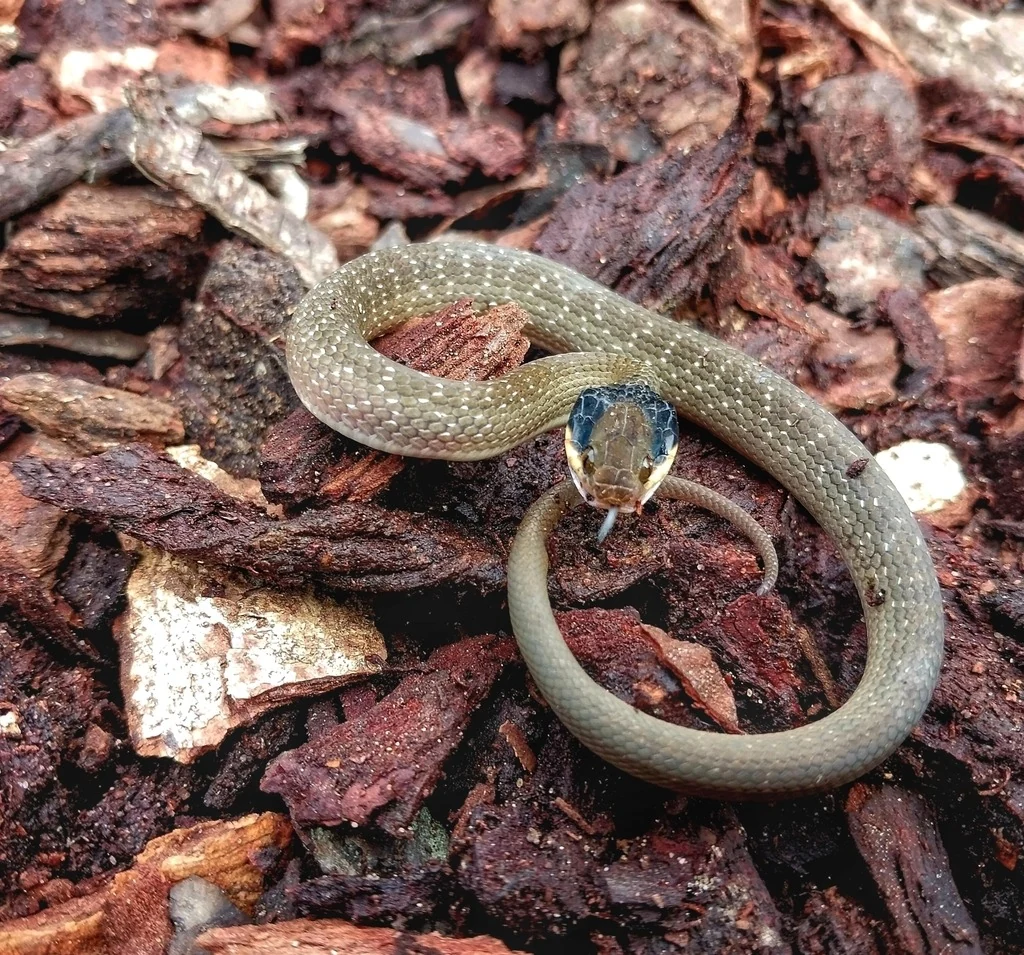
Philothamnus ornatus from Cuito River source, Angola. Fig. 15 in Conradie et al. (2021), Amphibian & Reptile Conservation 15(2):244–278.

006 · Colubridae

Ornate Green Snake

Philothamnus ornatus

BOCAGE, 1872

Venom unknownNot yet assessed

The current taxonomic treatment explicitly lists this country. This is country-scale checklist evidence, not a claim of continuous occupancy or a complete regional inventory.

Read the species account →

Werner Conradie · CC BY 4.0 · https://creativecommons.org/licenses/by/4.0/

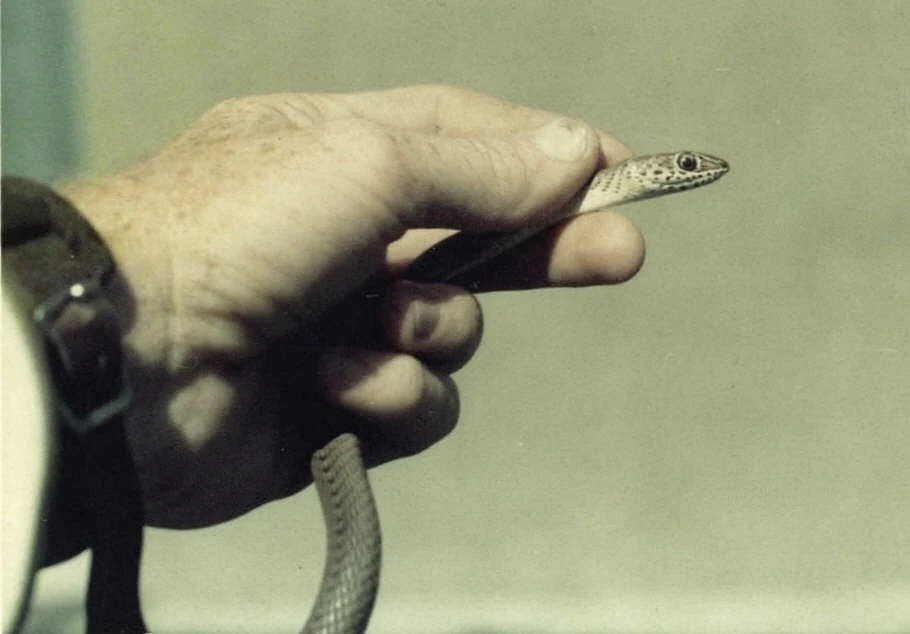
Psammophis mossambicus; Chizarira National Park; photographed 1980-11-30.

007 · Psammophiidae

Olive Whip Snake, Olive Grass Snake,

Psammophis mossambicus

PETERS, 1882

VenomousClinical severity not established

The current taxonomic treatment explicitly lists this country. This is country-scale checklist evidence, not a claim of continuous occupancy or a complete regional inventory.

Read the species account →

i_c_riddell · CC BY 4.0 · https://creativecommons.org/licenses/by/4.0/

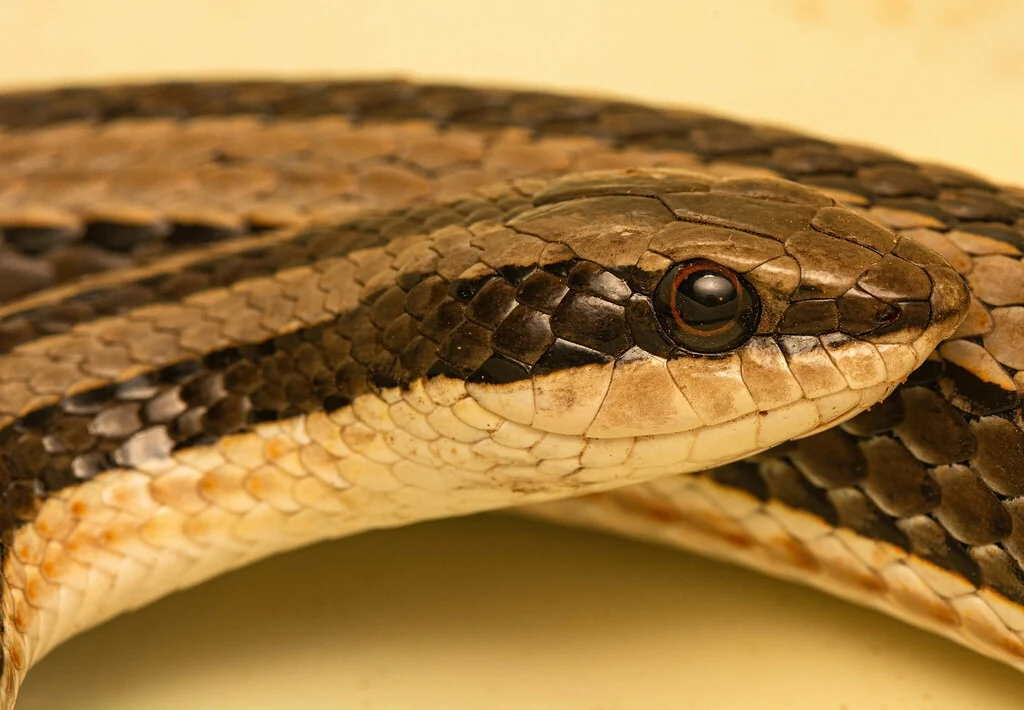
Psammophylax tritaeniatus; Spitskop Small Holdings, Bloemfontein, 9301, South Africa; photographed 2023-02-26.

008 · Psammophiidae

Three-lined Grass Snake, Striped Skaapsteker

Psammophylax tritaeniatus

(GÜNTHER, 1868)

Venom unknownNot yet assessed

The current taxonomic treatment explicitly lists this country. This is country-scale checklist evidence, not a claim of continuous occupancy or a complete regional inventory.

Read the species account →

Rudolph Steenkamp · CC BY-SA 4.0 · https://creativecommons.org/licenses/by-sa/4.0/

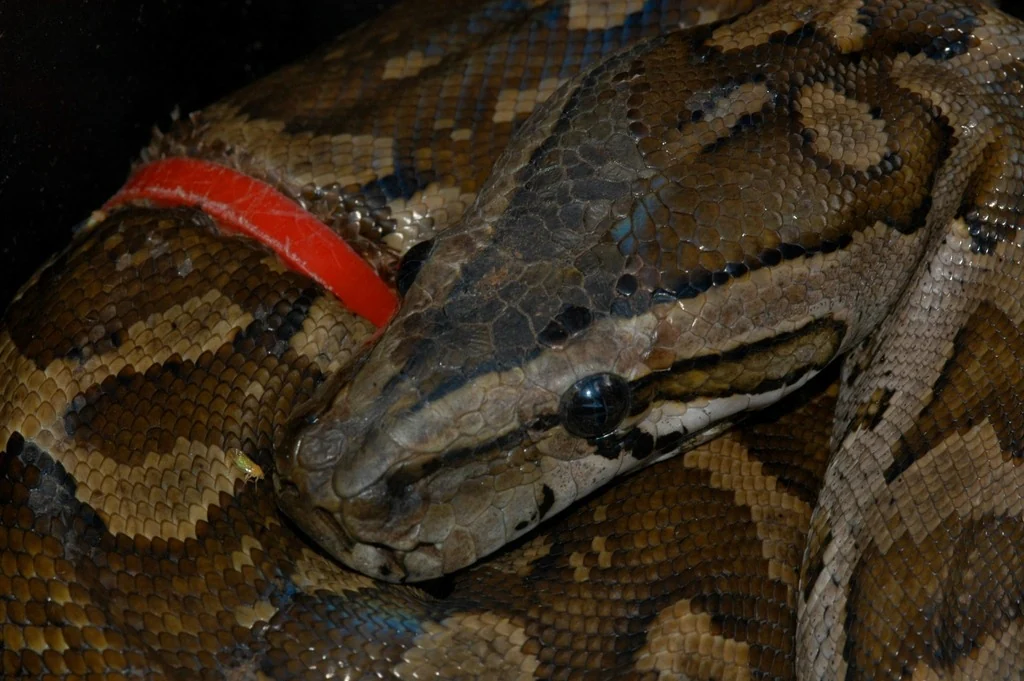
Python natalensis; Rooibos Street, Phalaborwa; photographed 2010-12-10.

009 · Pythonidae

Southern African Python, Lesser African Python

Python natalensis

SMITH, 1840

Non-venomous

The current taxonomic treatment explicitly lists this country. This is country-scale checklist evidence, not a claim of continuous occupancy or a complete regional inventory. Otjozondjupa: observation GBIF 6178462948 (2026). The original iNaturalist entry was rechecked for research-grade identification, wild status and unrestricted coordinates; its…

Read the species account →

no rights reserved · CC0 · https://creativecommons.org/publicdomain/zero/1.0/
All 81 species in the country collection →

Read further

Evidence & sources.

Guide reviewed 12 October 2026. Source dates and geographic scope matter; landscape photographs do not establish species occurrence.

  1. Convention on Biological Diversity · Namibia national profile

    National biodiversity profile based on the reporting sources identified by the CBD. Used for landscape context; older statistics are not presented as current monitoring or a snake inventory.

Continue through Namibia

Explore another habitat.

01

Deserts & dry country

The southern Namib’s plant environments are influenced by fog and winter rainfall. Dry-country locality records need substrate and moisture context.

02

Savanna & grassland

Savanna environments occur toward the wetter end of Namibia’s climatic range. They should not be represented by a generic desert photograph.