Mexico · Habitat field guide
Mangroves & estuaries
Mexico’s coastal mangroves are documented alongside pressures from habitat destruction, pollution and extraction. This habitat guide concerns tidal woodland; it does not establish a marine snake record.
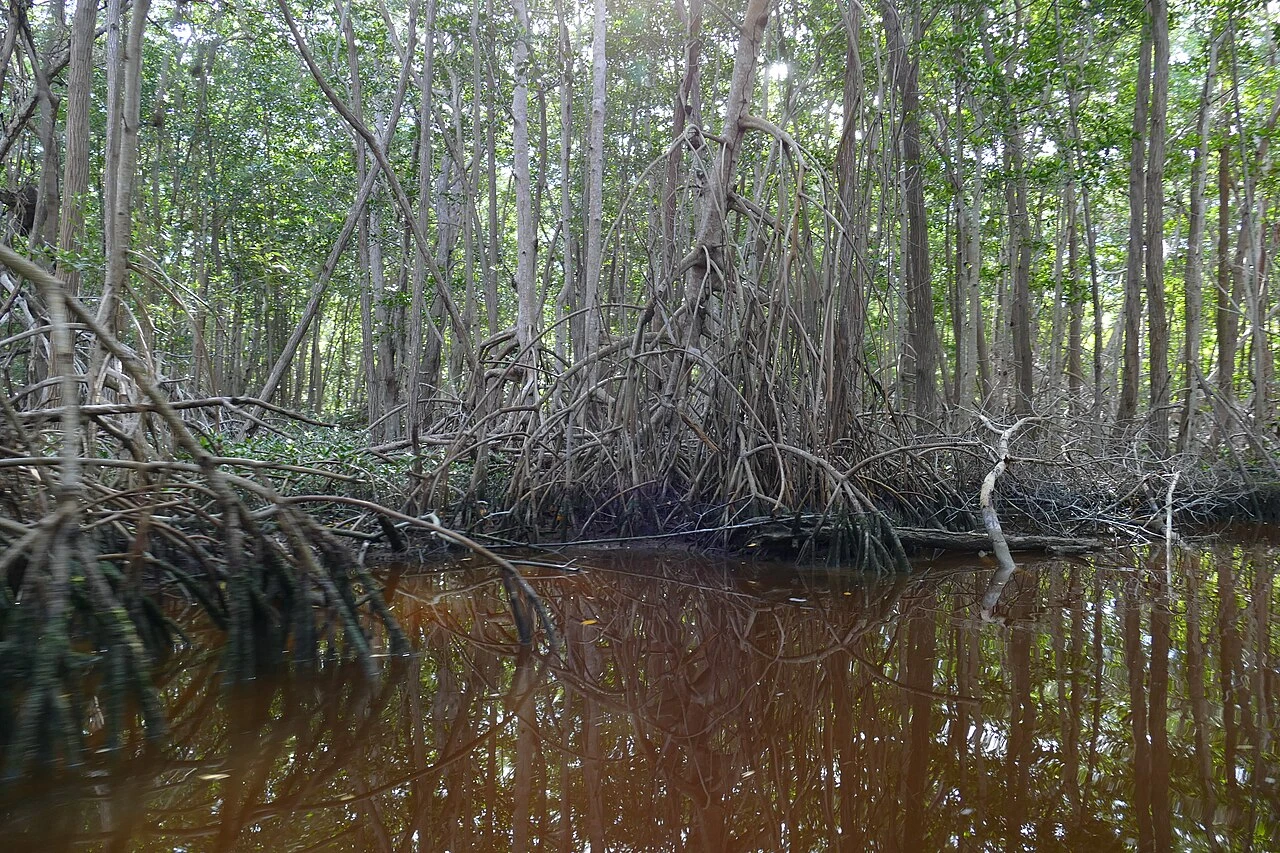
Mangrove woodland and exposed roots beside a tidal waterway in Ria Celestun Biosphere Reserve, Yucatan, Mexico.
Understanding the environment
A sense of the habitat.
Mexico’s coastal mangroves are documented alongside pressures from habitat destruction, pollution and extraction. This habitat guide concerns tidal woodland; it does not establish a marine snake record.
- Geographic scope
- Mexico; source locality matters.
- Evidence scale
- Landscape descriptions are separate from species records.
- Source date
- Retain the cited publication date; reviewed 16 October 2026.
Explore the structure · Select a layer to compare details retained in a field record.
Read the locality in three layers.
Select a zone to see what changes.
Tidal channels
Tidal channels
Retain the estuary or tidal creek named by the source.
Check this detail in the original record before assigning a species to the habitat.
These reading prompts are conceptual, not a transect or an occurrence map.
Sources: Convention on Biological Diversity · Mexico national profile
Field notes · 01
The documented setting
Mexico’s coastal mangroves are documented alongside pressures from habitat destruction, pollution and extraction. This habitat guide concerns tidal woodland; it does not establish a marine snake record.
Sources: Convention on Biological Diversity · Mexico national profile
Field notes · 02
Connect the setting to a species
A habitat description and a country record answer different questions. Follow the linked species account for evidence of habitat use; an empty filtered collection indicates missing extracted evidence, not biological absence.
Pressures on Mexico’s habitats
What is at risk?
A site-specific assessment of pressures has not yet been extracted for this guide. The landscape sources below provide context; they do not establish a current threat level for each snake species.
What helps this habitat
Consult the source’s own conservation context and dates before interpreting habitat change. A broad landscape pressure does not establish a measured decline for every snake.
The connected collection
Snakes with habitat evidence.
These 0 species have supported country occurrence and an explicit habitat association in the shared account. The association may come from elsewhere in their range. This is not a complete local habitat inventory; the places above are landscape examples, not asserted collecting sites.
No species-level association has yet been resolved for this habitat in the collection. That does not mean snakes are absent.
0 species · showing 0
No matching locality records.
Try another name or clear the filters. Absence from a regional list does not establish absence in nature.
Read further
Evidence & sources.
Guide reviewed 16 October 2026. Source dates and geographic scope matter; landscape photographs do not establish species occurrence.
- Convention on Biological Diversity · Mexico national profile
National biodiversity reporting synthesis. Landscape context only; dated statistics and projections are not presented as current measurements. Checked 16 October 2026.
Continue through Mexico
Explore another habitat.
Forest & woodland
The national profile distinguishes tropical and temperate forests and emphasizes that remaining vegetation includes different levels of disturbance. Retain the original forest type when reading a locality record.
02Scrubland & dry country
Scrubland is treated separately from forest in Mexico’s biodiversity reporting. Open dry vegetation should not be equated with bare sand, and neither implies a species occurs throughout an atlas region.