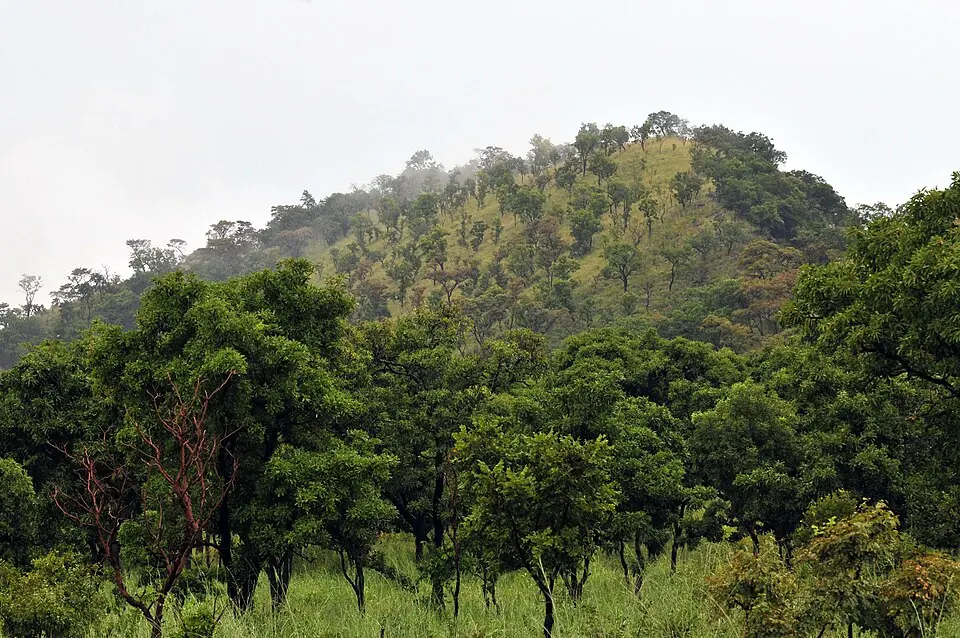
Open woodland, grassy ground and a tree-covered rocky hill in northern Ghana.

Ghana · Habitat field guide

Savanna & grassland

Savanna vegetation and the forest–savanna transition differ from closed high forest. Fire and land use affect the structure of these environments.

Open woodland, grassy ground and a tree-covered rocky hill in northern Ghana.

Photograph: CIAT · Image source · CC BY-SA 2.0. Cropped to fill the hero; darkened for text legibility.

Understanding the environment

A sense of the habitat.

Savanna vegetation and the forest–savanna transition differ from closed high forest. Fire and land use affect the structure of these environments.

Geographic scope
Ghana; named examples and source scope matter.
Evidence scale
Landscape context is separate from species locality evidence.
Source chronology
Consult the original publication date; checked 12 October 2026.

Explore the structure · Select a layer to compare the details a locality record can preserve.

Read the setting in three layers.

Select a zone to see what changes.

Open ground

Open ground

Distinguish grassland from recently cleared or cultivated ground.

Compare this detail with the original field or museum record before assigning a habitat association.

These reading prompts explain how to interpret evidence; they do not assert that every feature occurs at every site.

Sources: Convention on Biological Diversity · Ghana national profile

Field notes · 01

The documented landscape

Savanna vegetation and the forest–savanna transition differ from closed high forest. Fire and land use affect the structure of these environments.

Sources: Convention on Biological Diversity · Ghana national profile

Field notes · 02

Connect habitat and locality

Use the species account to check whether a habitat statement applies to this country or elsewhere in the species’ range. A landscape photograph illustrates its own named place; it is not evidence of snake presence.

Pressures on Ghana’s habitats

What is at risk?

A site-specific assessment of pressures has not yet been extracted for this guide. The landscape sources below provide context; they do not establish a current threat level for each snake species.

What helps this habitat

Retain natural vegetation and water connections where local conservation evidence supports them. Consult the linked national or site account for the pressures and management actions actually reported there.

The connected collection

Snakes with habitat evidence.

These 9 species have supported country occurrence and an explicit habitat association in the shared account. The association may come from elsewhere in their range. This is not a complete local habitat inventory; the places above are landscape examples, not asserted collecting sites.

9 species · showing 9

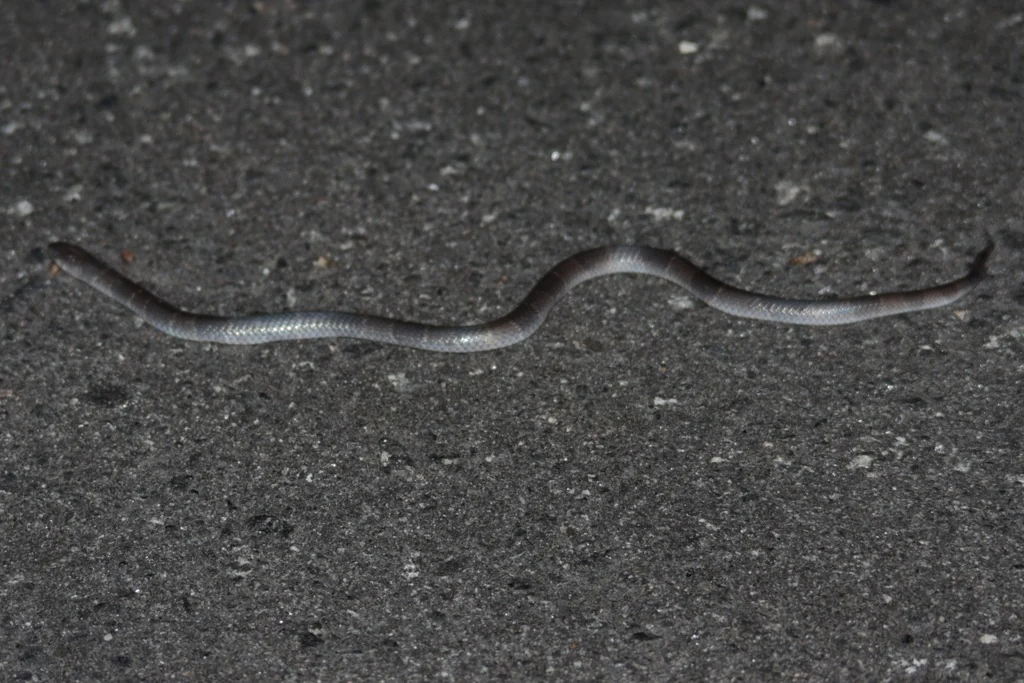
Afrotyphlops liberiensis; 3GV3+74 Dobloke, Liberia; photographed 2021-05-14.

001 · Typhlopidae

Guinea Blind Snake

Afrotyphlops liberiensis

(HALLOWELL, 1848)

Non-venomous

The current taxonomic treatment explicitly lists this country. This is country-scale checklist evidence, not a claim of continuous occupancy or a complete regional inventory. Eastern & coastal regions: museum voucher MCZ R-55319 (1956). The museum record's reported coordinate uncertainty footprint lies within the mapped region. Eastern & coastal regions:…

Read the species account →

no rights reserved · CC0 · https://creativecommons.org/publicdomain/zero/1.0/
Causus maculatus; Lesio-Louna Reserve - Iboubikro, Republic of the Congo; photographed 2006-07-20.

002 · Viperidae

Spotted Night Adder, West-African Night Adder

Causus maculatus

(HALLOWELL, 1842)

VenomousClinical severity not established

The current taxonomic treatment explicitly lists this country. This is country-scale checklist evidence, not a claim of continuous occupancy or a complete regional inventory. Western regions: museum voucher CAS 97567 (1962). The museum record's reported coordinate uncertainty footprint lies within the mapped region. Western regions: observation GBIF…

Read the species account →

Tony King · CC BY 4.0 · https://creativecommons.org/licenses/by/4.0/

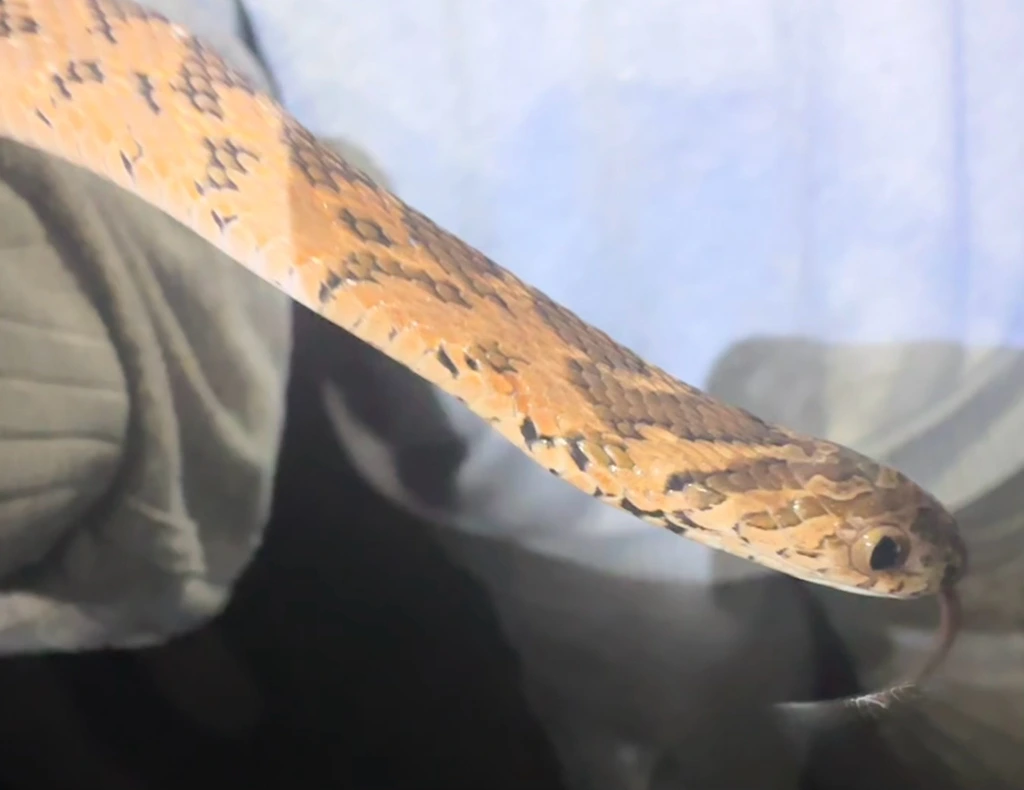
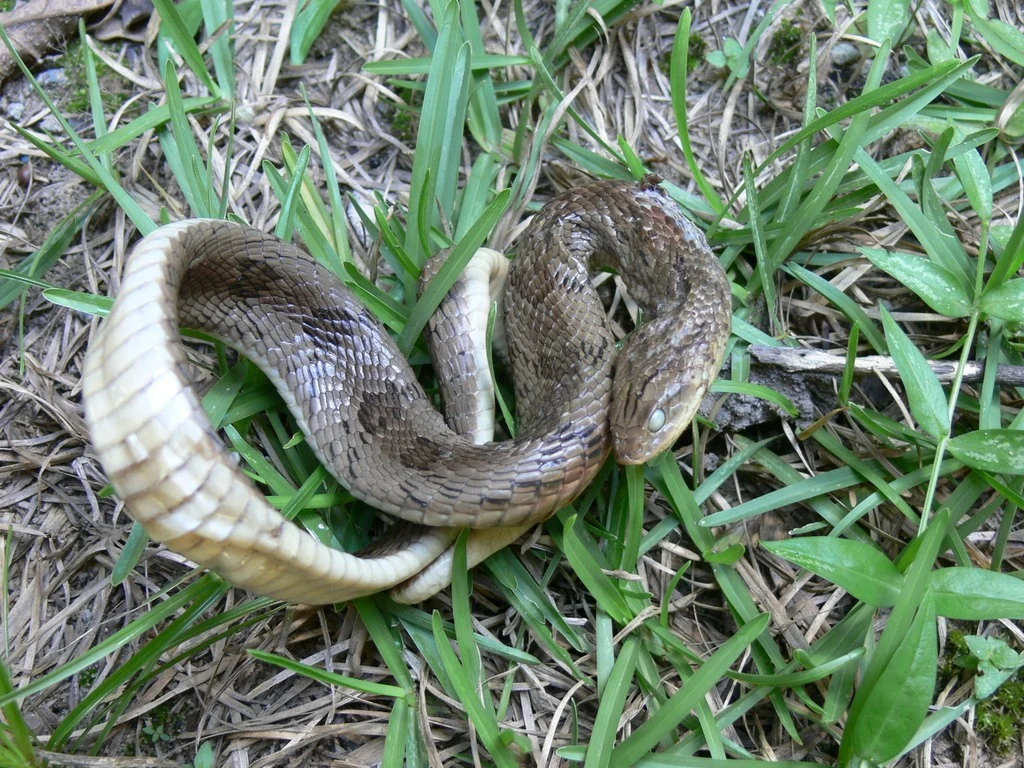
Dasypeltis confusa. Photographed through a transparent container in Angola; this is a handled specimen portrait. Original observation dated 2024-10-30; this portrait does not establish occurrence in other countries.

003 · Colubridae

Diamond-back Egg-eater, Confusing Egg Eater

Dasypeltis confusa

TRAPE & MANÉ, 2006

Venom unknownNot yet assessed

The current taxonomic treatment explicitly lists this country. This is country-scale checklist evidence, not a claim of continuous occupancy or a complete regional inventory. Eastern & coastal regions: museum voucher CAS 103306 (1965). The museum record's reported coordinate uncertainty footprint lies within the mapped region. Eastern & coastal regions:…

Read the species account →

Robert Taylor · CC BY 4.0 · https://creativecommons.org/licenses/by/4.0/

Elapsoidea semiannulata; Yankari, Nigéria; photographed 2008-07-15.

004 · Elapidae

Angolan Garter Snake

Elapsoidea semiannulata

BOCAGE, 1882

VenomousClinical severity not established

The current taxonomic treatment explicitly lists this country. This is country-scale checklist evidence, not a claim of continuous occupancy or a complete regional inventory.

Read the species account →

Fábio Olmos · CC BY 4.0 · https://creativecommons.org/licenses/by/4.0/

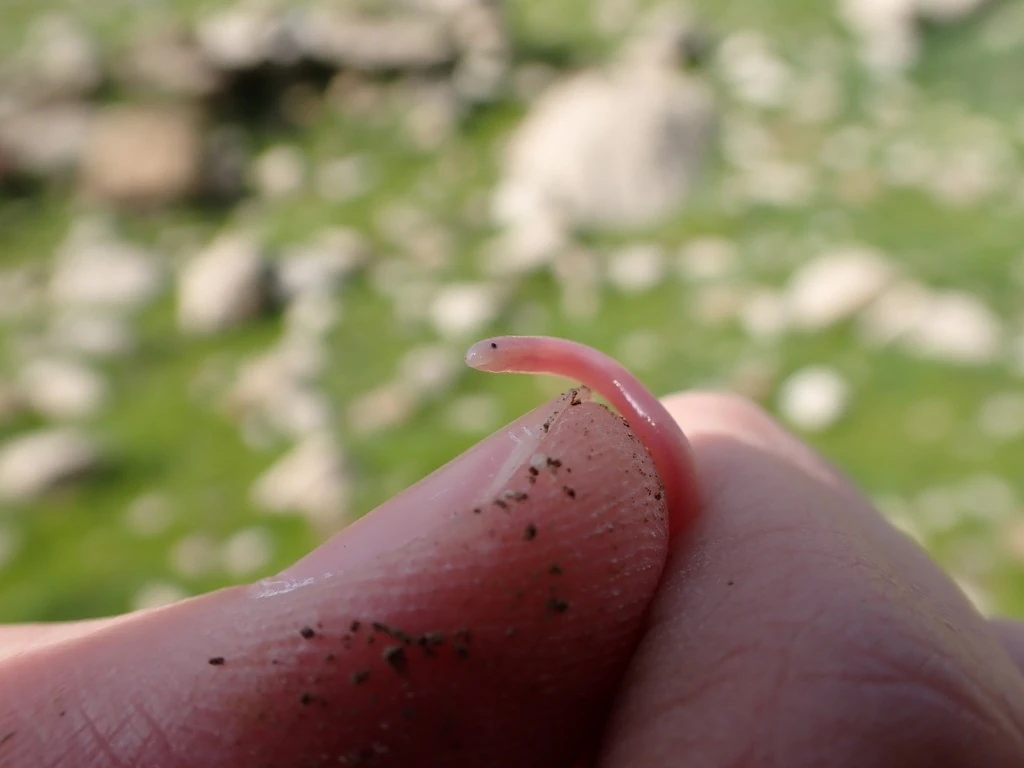
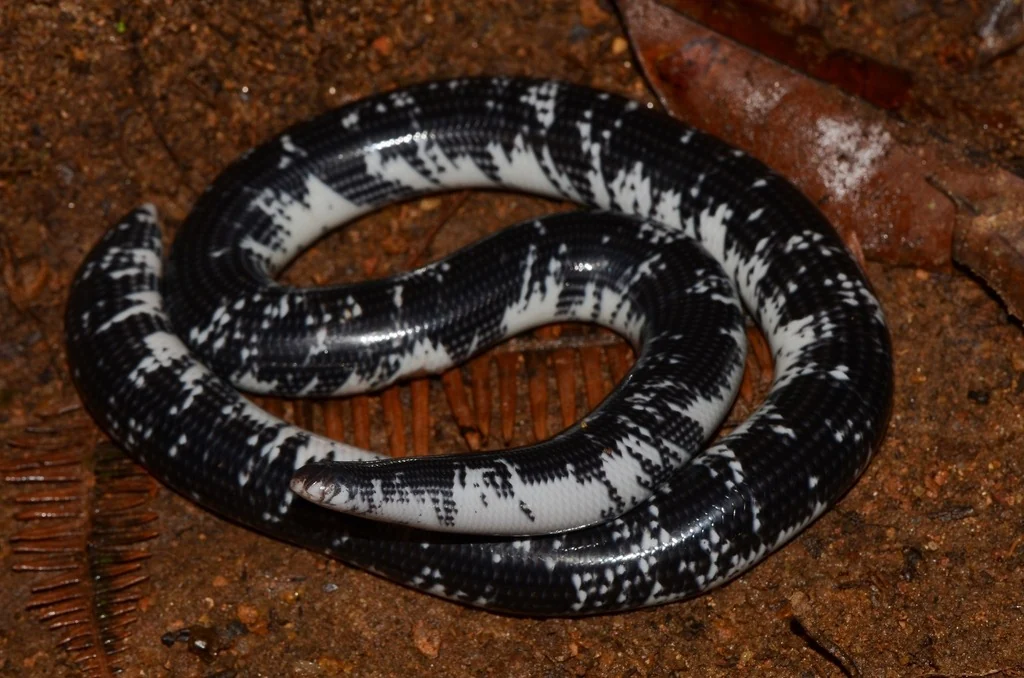
Myriopholis macrorhyncha. Identification follows the linked source community.

005 · Leptotyphlopidae

Longnosed Worm Snake, Hook-snouted worm snake

Myriopholis macrorhyncha

(JAN, 1860)

Non-venomous

The individual treatment explicitly lists Ghana. No within-country region or coordinate is inferred from this country-level record. The current taxonomic treatment explicitly lists this country. This is country-scale checklist evidence, not a claim of continuous occupancy or a complete regional inventory.

Read the species account →

Kian · CC BY 4.0 · https://creativecommons.org/licenses/by/4.0/

Naja nigricollis; Katanga Province, Democratic Republic of Congo; photographed 2014-08-20.

006 · Elapidae

Black-necked Spitting Cobra

Naja nigricollis

REINHARDT, 1843

VenomousClinical severity not established

The current taxonomic treatment explicitly lists this country. This is country-scale checklist evidence, not a claim of continuous occupancy or a complete regional inventory. Northern regions: museum voucher CAS 146310 (1975). The museum record's reported coordinate uncertainty footprint lies within the mapped region. Northern regions: observation GBIF…

Read the species account →

Nigel Voaden · CC BY 4.0 · https://creativecommons.org/licenses/by/4.0/

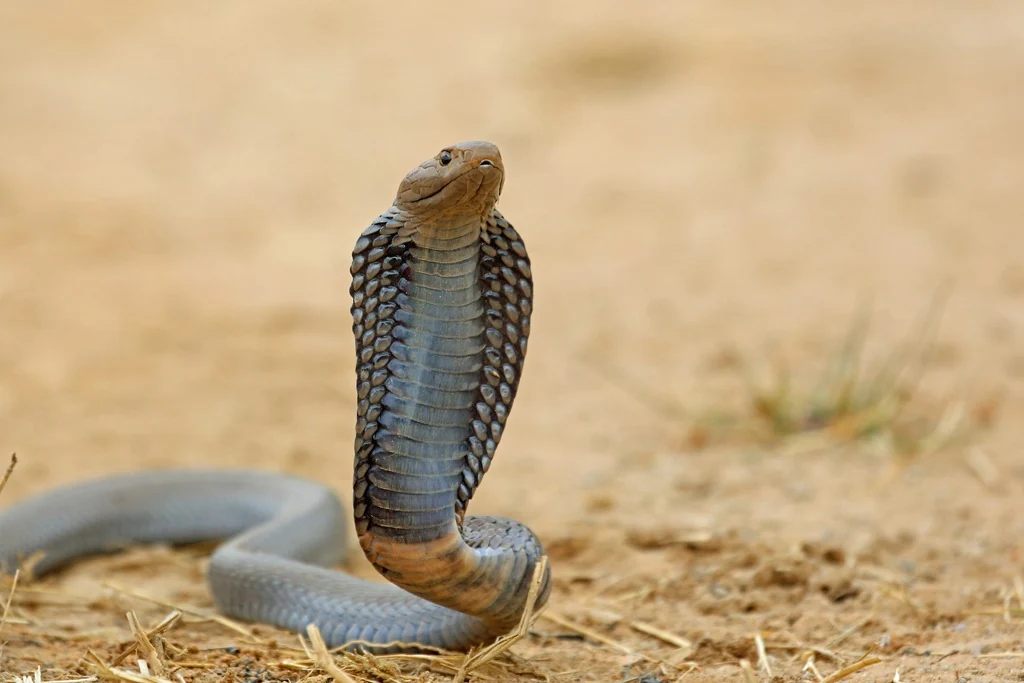
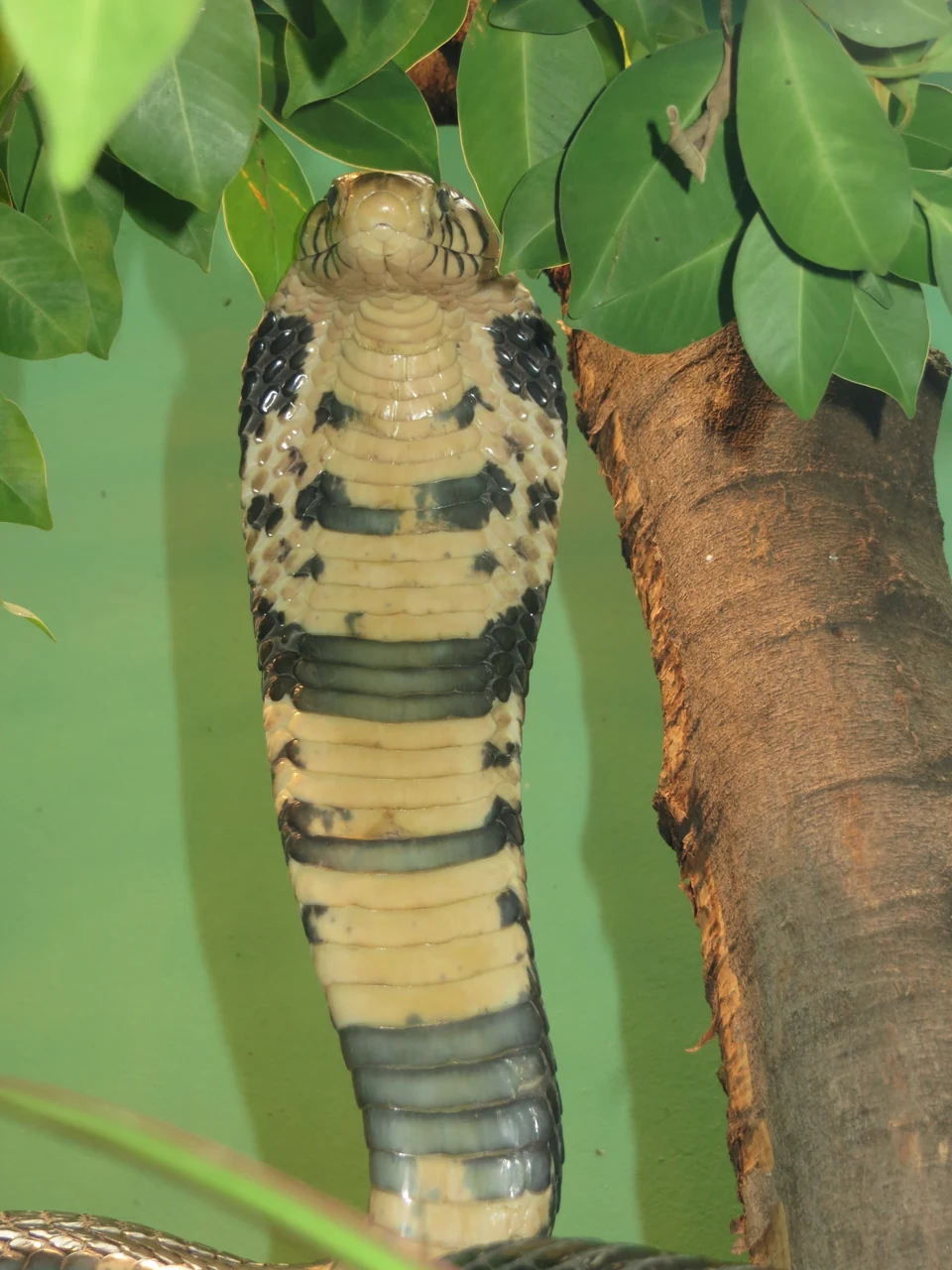
Naja savannula in captivity, with raised hood.

007 · Elapidae

West African banded cobra

Naja savannula

BROADLEY, TRAPE, CHIRIO & WÜSTER, 2018

VenomousClinical severity not established

The current taxonomic treatment explicitly lists this country. This is country-scale checklist evidence, not a claim of continuous occupancy or a complete regional inventory.

Read the species account →

Jzoobob · CC BY-SA 4.0 · https://creativecommons.org/licenses/by-sa/4.0

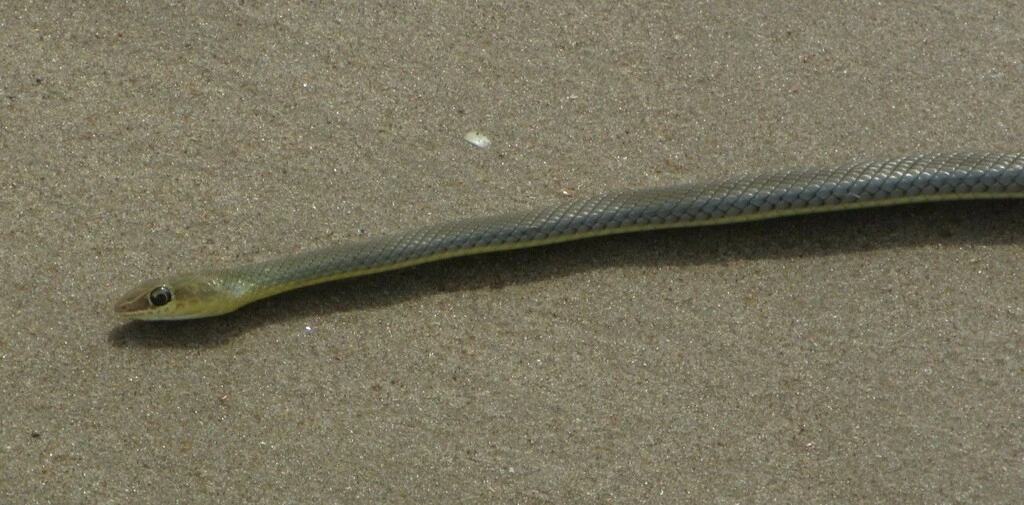
ColubridaePhilothamnusPhotograph not yet documented

008 · Colubridae

Northern Green Bush Snake, Irregular Green Snake

Philothamnus irregularis

(LEACH, 1819)

Venom unknownNot yet assessed

The current taxonomic treatment explicitly lists this country. This is country-scale checklist evidence, not a claim of continuous occupancy or a complete regional inventory. Northern regions: museum voucher CAS 154788 (1981). The museum record's reported coordinate uncertainty footprint lies within the mapped region. Northern regions: museum voucher CAS…

Read the species account →
Psammophis afroccidentalis. Photographed in Senegal. The current identification replaces the observer’s earlier P. sibilans identification. Original observation dated 2023-01-04; this portrait does not establish occurrence in other countries.

009 · Psammophiidae

West-African Whip Snake

Psammophis afroccidentalis

TRAPE, BÖHME & MEDIANNIKOV, 2019

VenomousClinical severity not established

The current taxonomic treatment explicitly lists this country. This is country-scale checklist evidence, not a claim of continuous occupancy or a complete regional inventory.

Read the species account →

Lucy Keith-Diagne · CC BY 4.0 · https://creativecommons.org/licenses/by/4.0/

All 104 species in the country collection →

Read further

Evidence & sources.

Guide reviewed 12 October 2026. Source dates and geographic scope matter; landscape photographs do not establish species occurrence.

  1. Convention on Biological Diversity · Ghana national profile

    National biodiversity profile based on the reporting sources identified by the CBD. Used for landscape context; older statistics are not presented as current monitoring or a snake inventory.

Continue through Ghana

Explore another habitat.

01

Forest & woodland

The national profile places much of Ghana’s high forest in southwestern and central areas, including reserves and smaller sacred groves.

02

Mangroves & tidal woodland

Mangroves form a separate coastal habitat. Their saline and tidal conditions should remain distinct from inland freshwater environments.