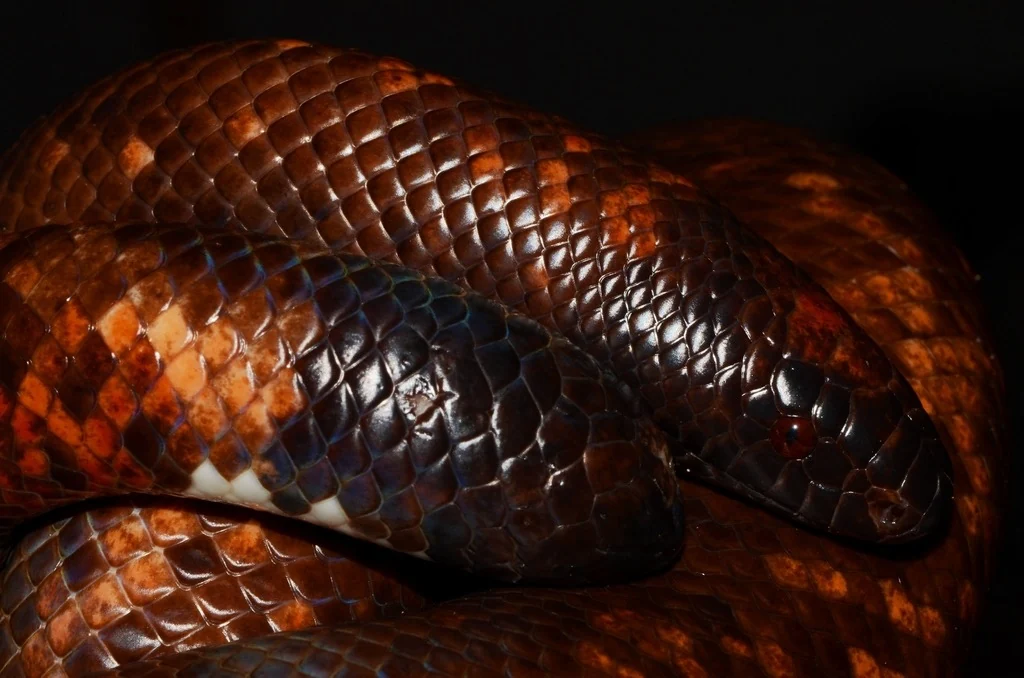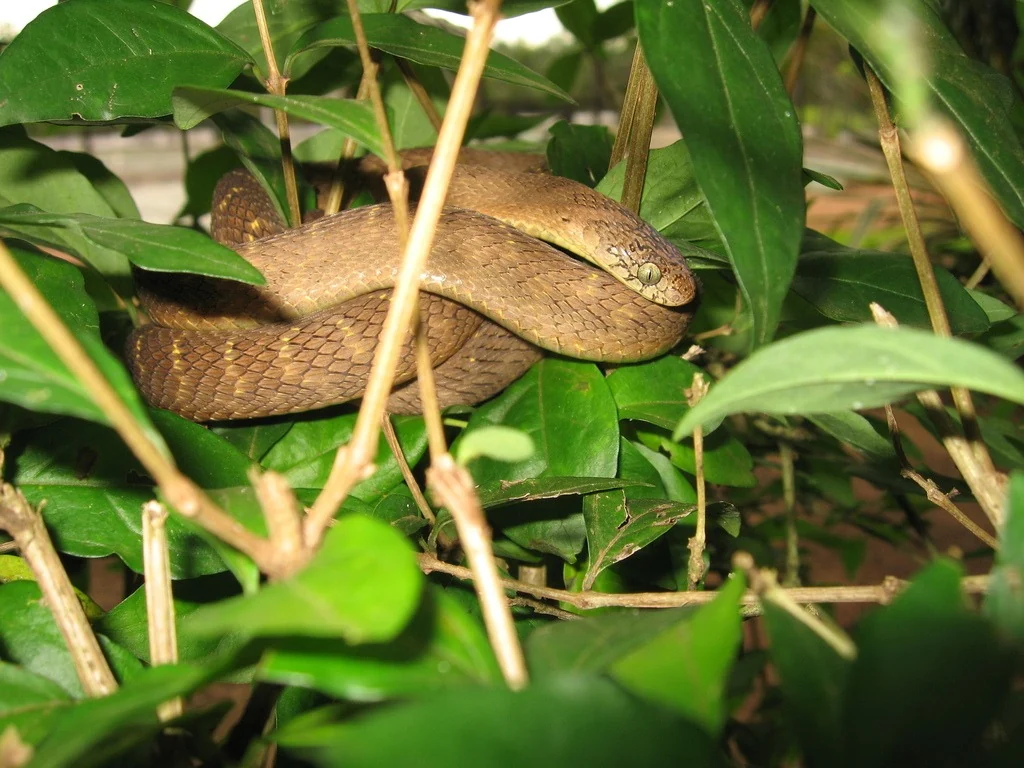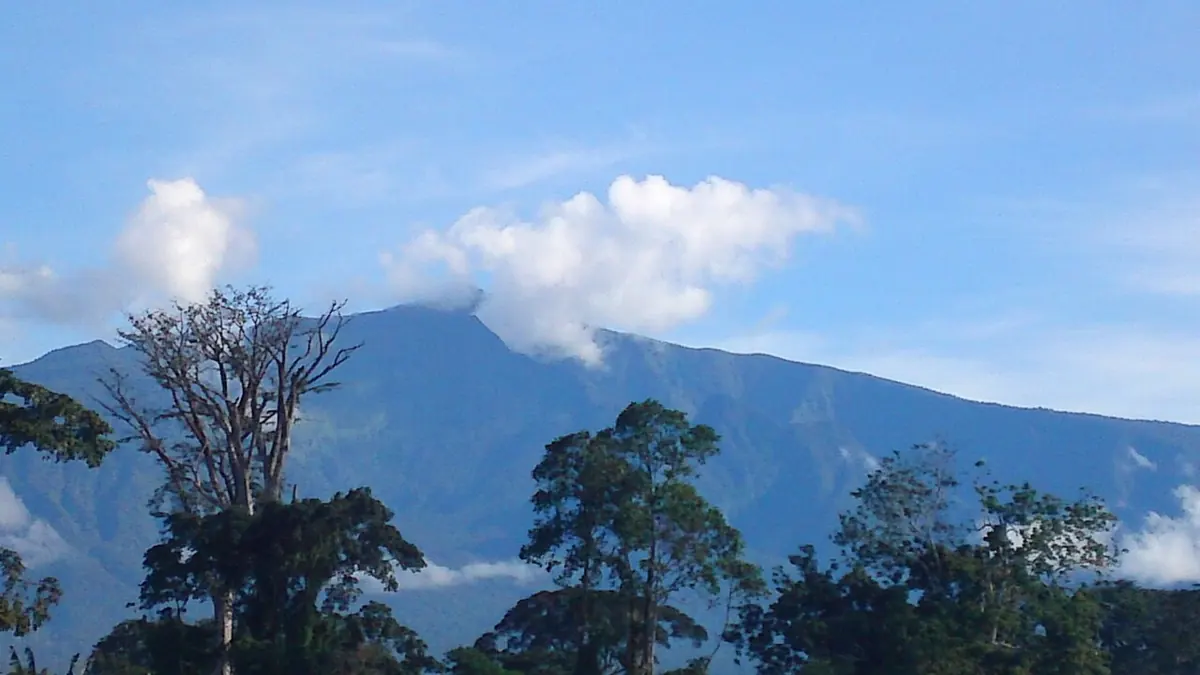
Wooded slopes below cloud-covered Pico Basile on Bioko, Equatorial Guinea.

Equatorial Guinea · Habitat field guide

Forest & woodland

Equatorial Guinea’s national profile distinguishes continental and island settings within a tropical rainforest region. Island membership requires its own locality evidence.

Wooded slopes below cloud-covered Pico Basile on Bioko, Equatorial Guinea.

Photograph: Serge Moons · Image source · CC BY-SA 3.0. Cropped to fill the hero; darkened for text legibility.

Understanding the environment

A sense of the habitat.

Equatorial Guinea’s national profile distinguishes continental and island settings within a tropical rainforest region. Island membership requires its own locality evidence.

Geographic scope
Equatorial Guinea; named examples and source scope matter.
Evidence scale
Landscape context is separate from species locality evidence.
Source chronology
Consult the original publication date; checked 12 October 2026.

Explore the structure · Select a layer to compare the details a locality record can preserve.

Read the setting in three layers.

Select a zone to see what changes.

Tree cover

Tree cover

Separate closed forest, open woodland and planted trees.

Compare this detail with the original field or museum record before assigning a habitat association.

These reading prompts explain how to interpret evidence; they do not assert that every feature occurs at every site.

Sources: Convention on Biological Diversity · Equatorial Guinea national profile

Field notes · 01

The documented landscape

Equatorial Guinea’s national profile distinguishes continental and island settings within a tropical rainforest region. Island membership requires its own locality evidence.

Sources: Convention on Biological Diversity · Equatorial Guinea national profile

Field notes · 02

Connect habitat and locality

Use the species account to check whether a habitat statement applies to this country or elsewhere in the species’ range. A landscape photograph illustrates its own named place; it is not evidence of snake presence.

Pressures on Equatorial Guinea’s habitats

What is at risk?

A site-specific assessment of pressures has not yet been extracted for this guide. The landscape sources below provide context; they do not establish a current threat level for each snake species.

What helps this habitat

Retain natural vegetation and water connections where local conservation evidence supports them. Consult the linked national or site account for the pressures and management actions actually reported there.

The connected collection

Snakes with habitat evidence.

These 30 species have supported country occurrence and an explicit habitat association in the shared account. The association may come from elsewhere in their range. This is not a complete local habitat inventory; the places above are landscape examples, not asserted collecting sites.

30 species · showing 24

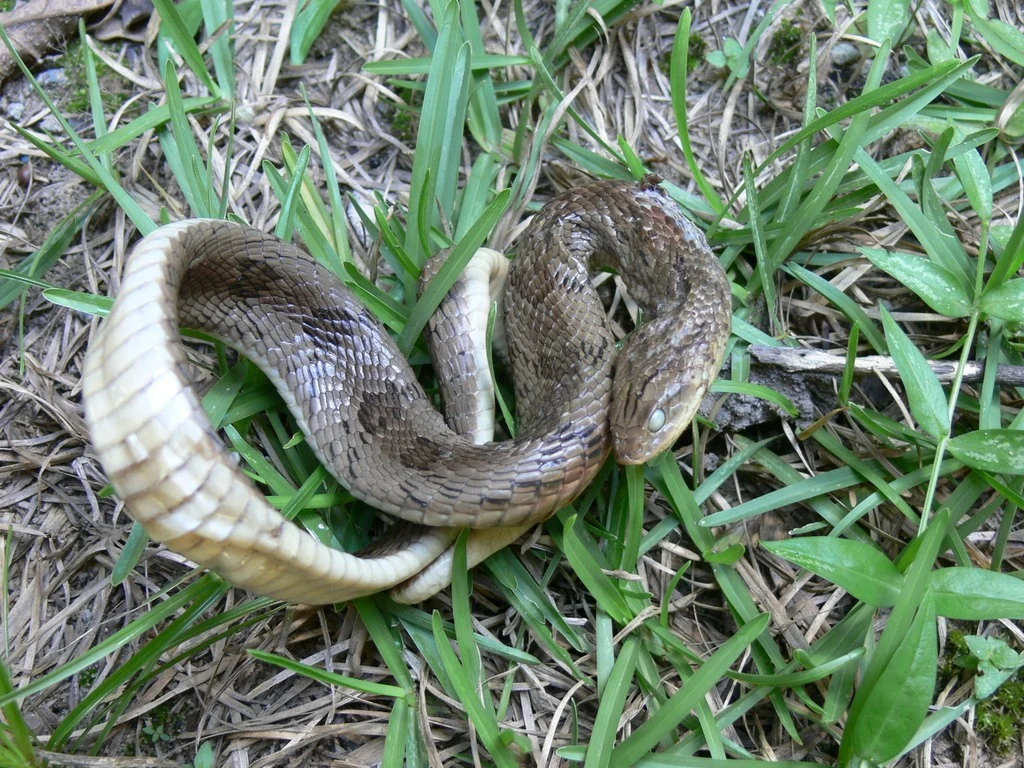
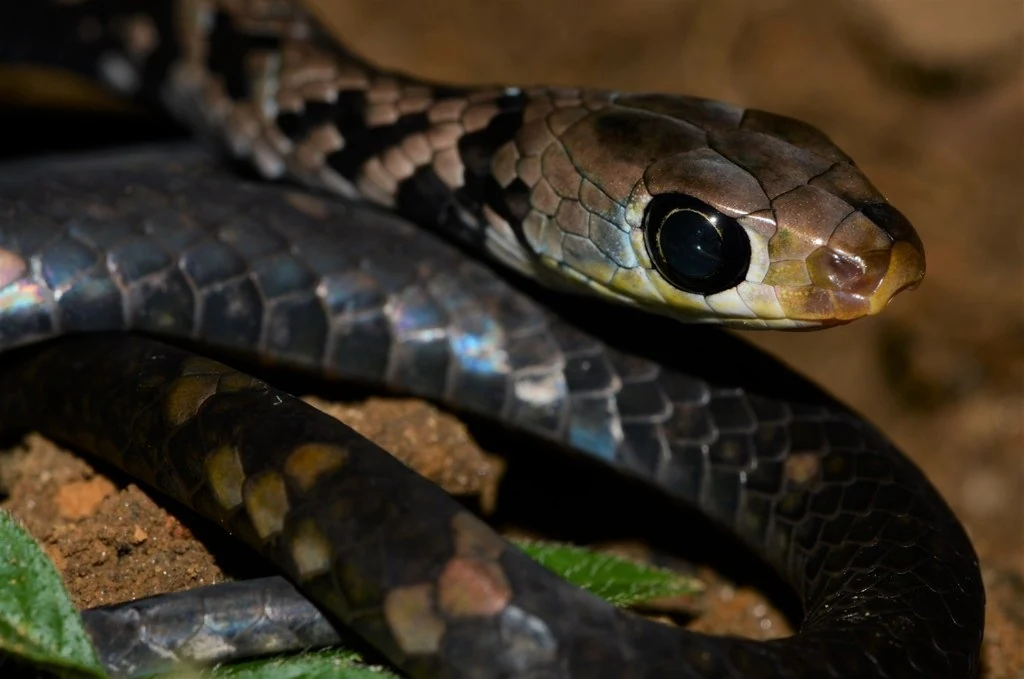
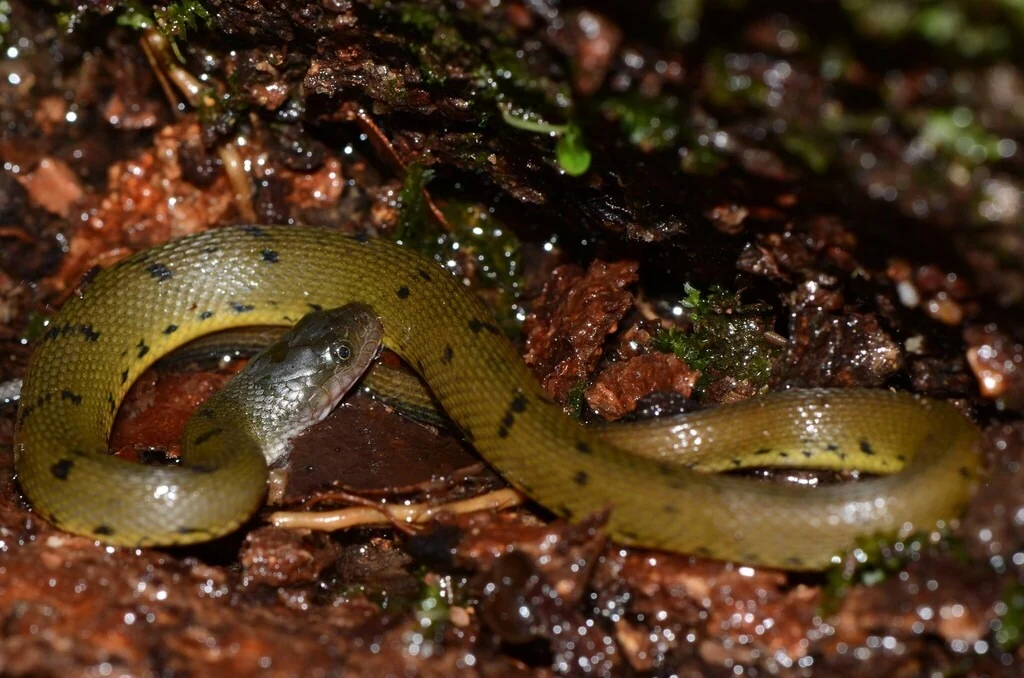
Afronatrix anoscopus; 3FJ6+JP Koakpo, Liberia; photographed 2021-05-13.

001 · Colubridae

African Brown Water Snake

Afronatrix anoscopus

(COPE, 1861)

Venom unknownNot yet assessed

The current taxonomic treatment explicitly lists this country. This is country-scale checklist evidence, not a claim of continuous occupancy or a complete regional inventory.

Read the species account →

no rights reserved · CC0 · https://creativecommons.org/publicdomain/zero/1.0/
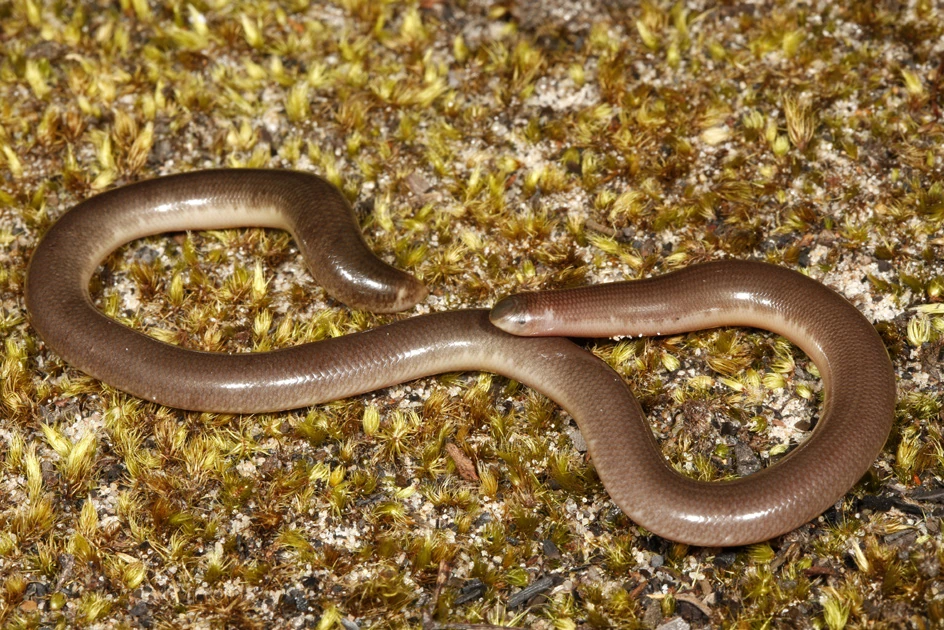
Afrotyphlops angolensis. Photographed alive. Figure 5, PEM R23357, en route to Cuito River source, Angola. Conradie et al. (2021), Amphibian & Reptile Conservation 15(2): 244–278 (e292). No new occurrence record is inferred.

002 · Typhlopidae

Angola blind snake

Afrotyphlops angolensis

(BOCAGE, 1866)

Non-venomous

The current taxonomic treatment explicitly lists this country. This is country-scale checklist evidence, not a claim of continuous occupancy or a complete regional inventory. Río Muni: museum voucher YPM YPM HERR 012648.001 (2002). The museum record's reported coordinate uncertainty footprint lies within the mapped region. Río Muni: museum voucher YPM…

Read the species account →

Werner Conradie · CC BY 4.0 · https://creativecommons.org/licenses/by/4.0/

Aparallactus modestus; Jaedae, Liberia; photographed 2021-11-04.

003 · Atractaspididae

Western Forest Centipede-eater

Aparallactus modestus

(GÜNTHER, 1859)

Venom unknownEvidence inconclusive

The current taxonomic treatment explicitly lists this country. This is country-scale checklist evidence, not a claim of continuous occupancy or a complete regional inventory.

Read the species account →

Ryan van Huyssteen · CC BY 4.0 · https://creativecommons.org/licenses/by/4.0/

Atheris squamigera; Mawendi Hills, Cameroon; photographed 2012-02-20.

004 · Viperidae

Variable Bush Viper, African Bush Viper, Rough-scaled Bush Viper

Atheris squamigera

HALLOWELL, 1854

VenomousClinical severity not established

The current taxonomic treatment explicitly lists this country. This is country-scale checklist evidence, not a claim of continuous occupancy or a complete regional inventory. Bioko: observation GBIF 1453268342 (2007). The original iNaturalist entry was rechecked for research-grade identification, wild status and unrestricted coordinates; its reported…

Read the species account →

Matt Muir · CC BY 4.0 · https://creativecommons.org/licenses/by/4.0/

Bitis gabonica; Lake Tissongo, Cameroon; photographed 2016-05-18.

005 · Viperidae

Gaboon Adder, Gaboon Viper

Bitis gabonica

(DUMÉRIL, BIBRON & DUMÉRIL, 1854)

VenomousClinical severity not established

The current taxonomic treatment explicitly lists this country. This is country-scale checklist evidence, not a claim of continuous occupancy or a complete regional inventory. Río Muni: museum voucher YPM YPM HERR 012646.001 (2002). The museum record's reported coordinate uncertainty footprint lies within the mapped region. Río Muni: museum voucher YPM…

Read the species account →

Lucy Keith-Diagne · CC BY 4.0 · https://creativecommons.org/licenses/by/4.0/

Bitis nasicornis, photographed 2012-10-08. Identification follows the linked research-grade observation.

006 · Viperidae

Rhinoceros Viper

Bitis nasicornis

(SHAW & NODDER, 1792)

VenomousClinical severity not established

The current taxonomic treatment explicitly lists this country. This is country-scale checklist evidence, not a claim of continuous occupancy or a complete regional inventory.

Read the species account →

Marius Burger (iNaturalist contributor) · CC0 1.0 · https://creativecommons.org/publicdomain/zero/1.0/
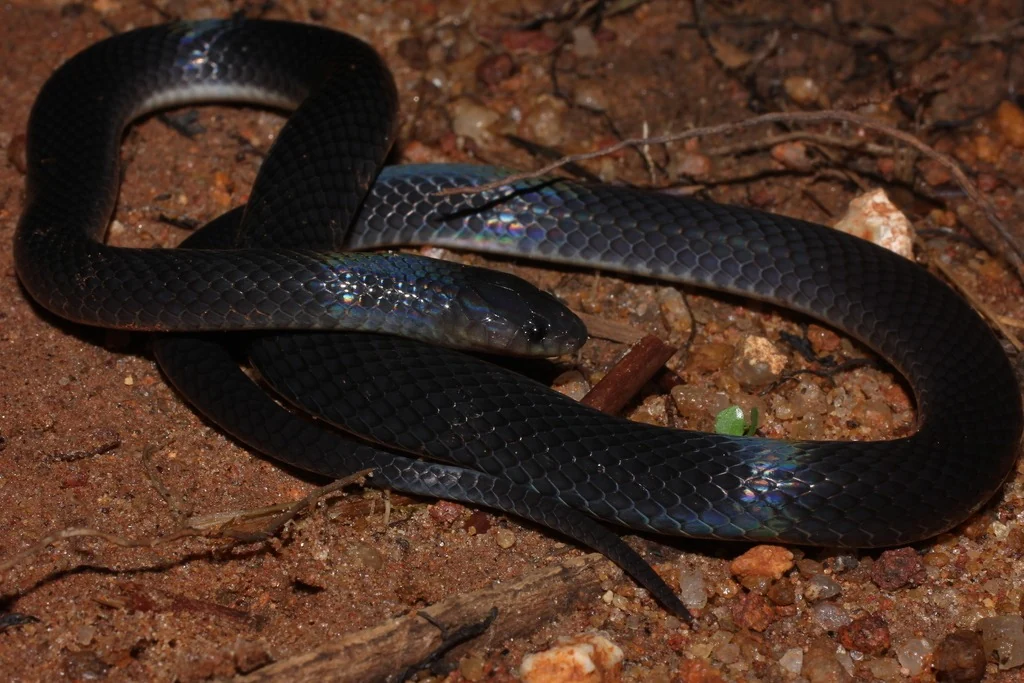
Boaedon olivaceus; Atiwa West, Ghana; photographed 2025-02-26.

007 · Lamprophiidae

Olive House Snake

Boaedon olivaceus

(DUMÉRIL, 1856)

Non-venomous

The current taxonomic treatment explicitly lists this country. This is country-scale checklist evidence, not a claim of continuous occupancy or a complete regional inventory.

Read the species account →

Zac Peterson · CC BY 4.0 · https://creativecommons.org/licenses/by/4.0/

Calabaria reinhardtii; Loandjili, CG-KO, CG; photographed 2014-04-30.

008 · Boidae

Calabar Ground Python, African Burrowing Python

Calabaria reinhardtii

(SCHLEGEL, 1851)

Non-venomous

The current taxonomic treatment explicitly lists this country. This is country-scale checklist evidence, not a claim of continuous occupancy or a complete regional inventory.

Read the species account →

no rights reserved · CC0 · https://creativecommons.org/publicdomain/zero/1.0/
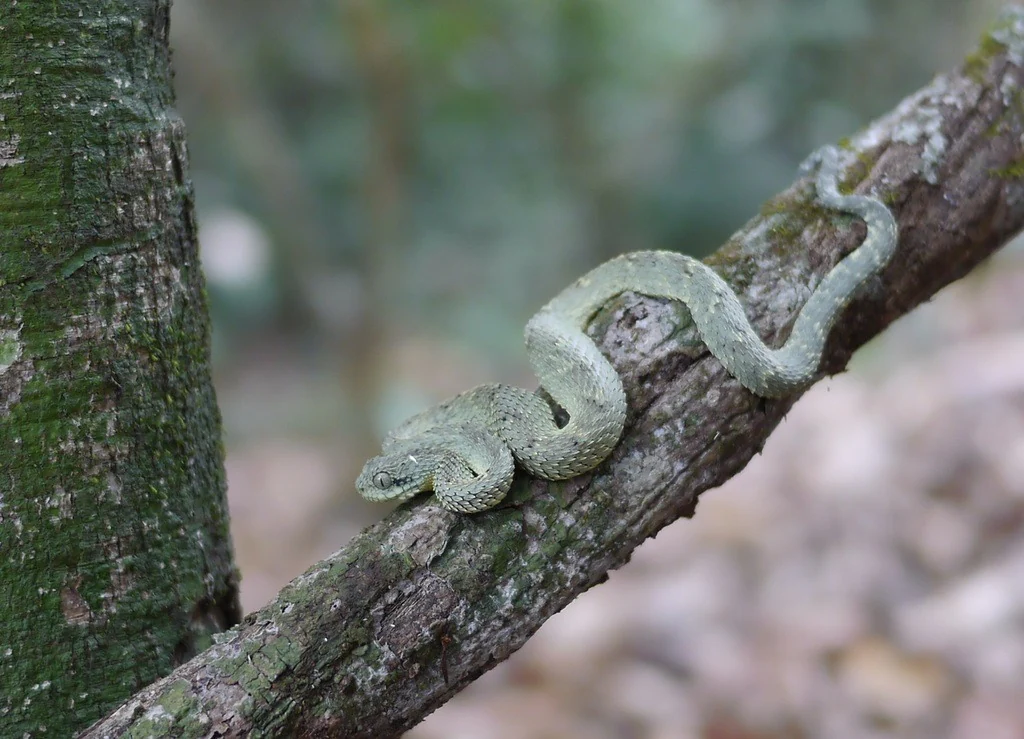
Causus maculatus; Lesio-Louna Reserve - Iboubikro, Republic of the Congo; photographed 2006-07-20.

009 · Viperidae

Spotted Night Adder, West-African Night Adder

Causus maculatus

(HALLOWELL, 1842)

VenomousClinical severity not established

The current taxonomic treatment explicitly lists this country. This is country-scale checklist evidence, not a claim of continuous occupancy or a complete regional inventory.

Read the species account →

Tony King · CC BY 4.0 · https://creativecommons.org/licenses/by/4.0/

Dasypeltis fasciata; Benso Oil Palm Plantation, Western Region, Ghana; photographed 2006-08-30.

010 · Colubridae

Western Forest Eggeater, Central African Egg-eating Snake

Dasypeltis fasciata

SMITH, 1849

Venom unknownNot yet assessed

The current taxonomic treatment explicitly lists this country. This is country-scale checklist evidence, not a claim of continuous occupancy or a complete regional inventory.

Read the species account →

B. Phalan · CC BY 4.0 · https://creativecommons.org/licenses/by/4.0/

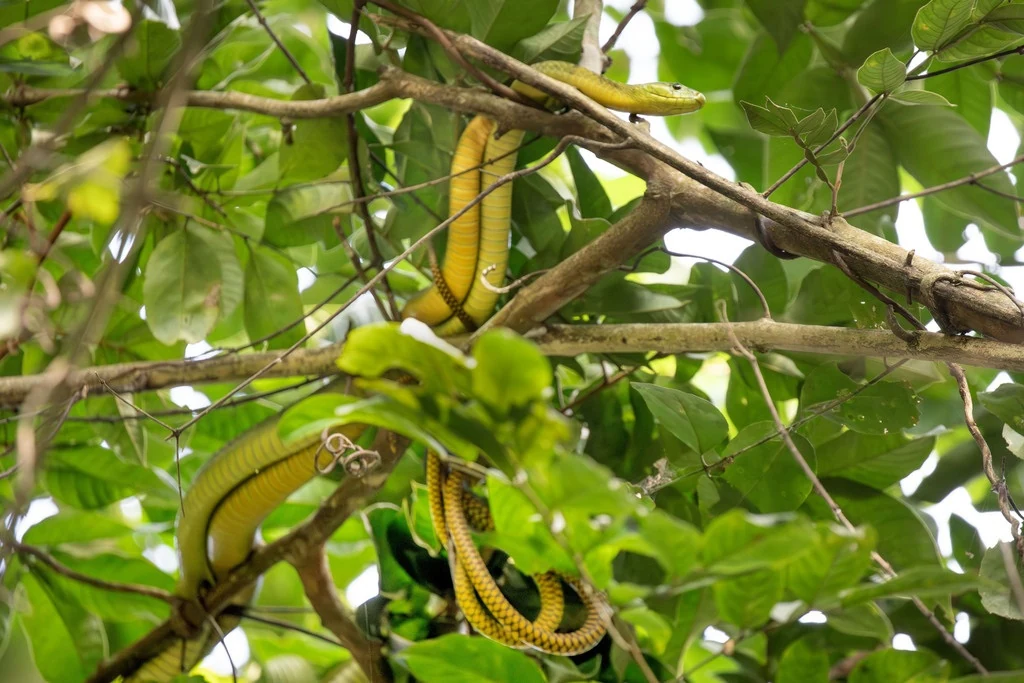
Dendroaspis jamesoni, photographed 2025-06-28. Identification follows the linked research-grade observation.

011 · Elapidae

Jameson’s (Green) Mamba

Dendroaspis jamesoni

(TRAILL, 1843)

VenomousClinical severity not established

The current taxonomic treatment explicitly lists this country. This is country-scale checklist evidence, not a claim of continuous occupancy or a complete regional inventory. Río Muni: museum voucher YPM YPM HERR 012647.001 (2002). The museum record's reported coordinate uncertainty footprint lies within the mapped region. Río Muni: museum voucher YPM…

Read the species account →

Kristof Zyskowski · CC BY 4.0 · https://creativecommons.org/licenses/by/4.0/

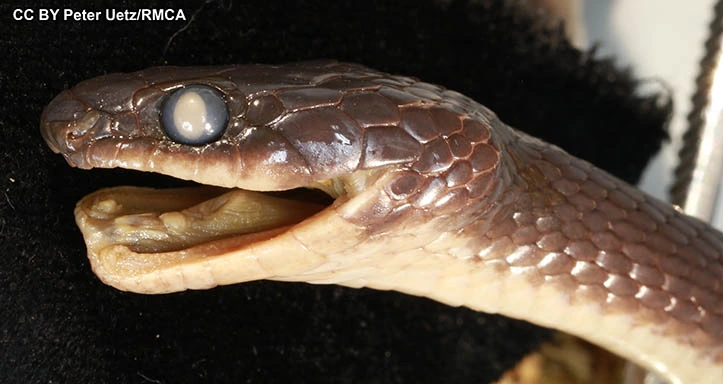
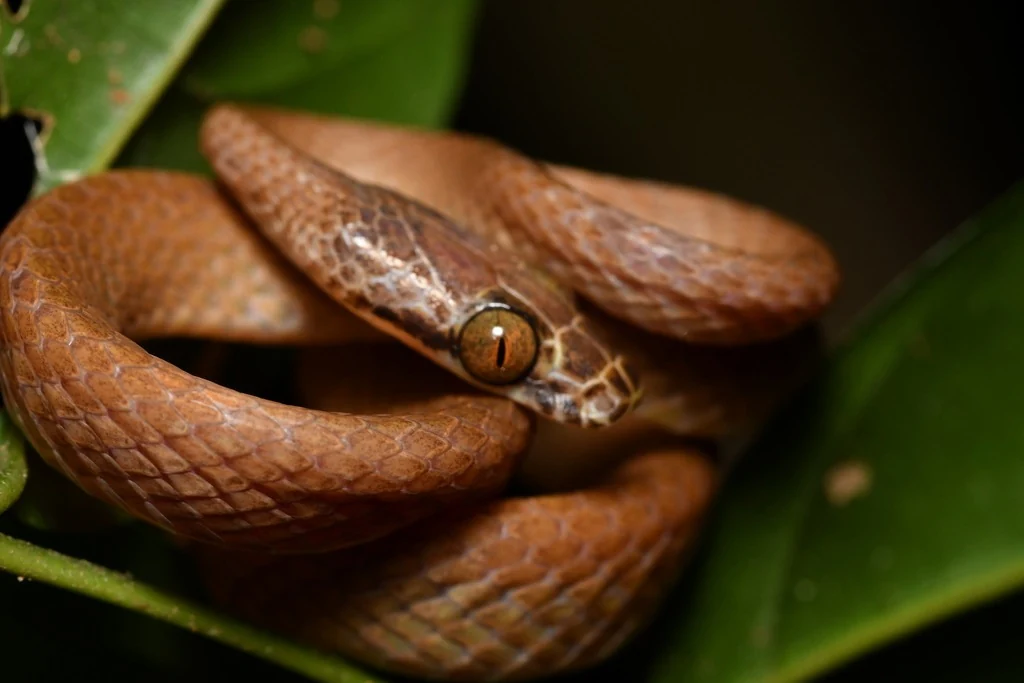
Dipsadoboa unicolor, preserved museum specimen RMCA 9386, head and anterior body, left lateral view. Photograph from the reference-image collection of Uetz et al. (2024).

012 · Colubridae

Günther's Green Tree Snake

Dipsadoboa unicolor

GÜNTHER, 1858

Venom unknownNot yet assessed

The current taxonomic treatment explicitly lists this country. This is country-scale checklist evidence, not a claim of continuous occupancy or a complete regional inventory. Río Muni: museum voucher YPM YPM HERR 012639.001 (2002). The museum record's reported coordinate uncertainty footprint lies within the mapped region. Río Muni: museum voucher YPM…

Read the species account →

Peter Uetz / RMCA · CC BY 4.0 · https://creativecommons.org/licenses/by/4.0/

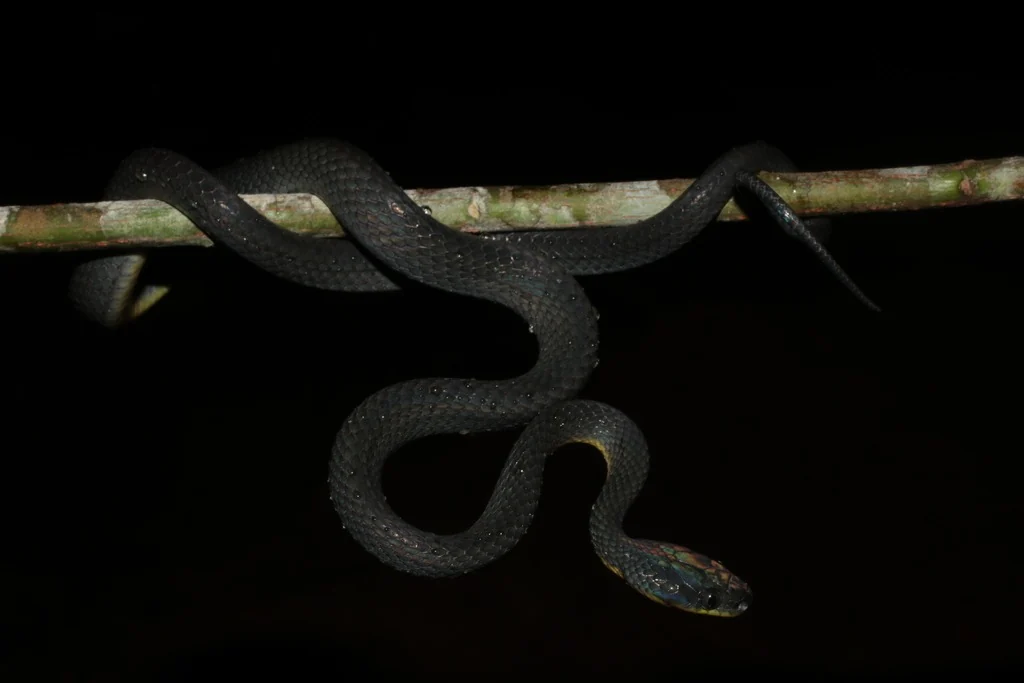
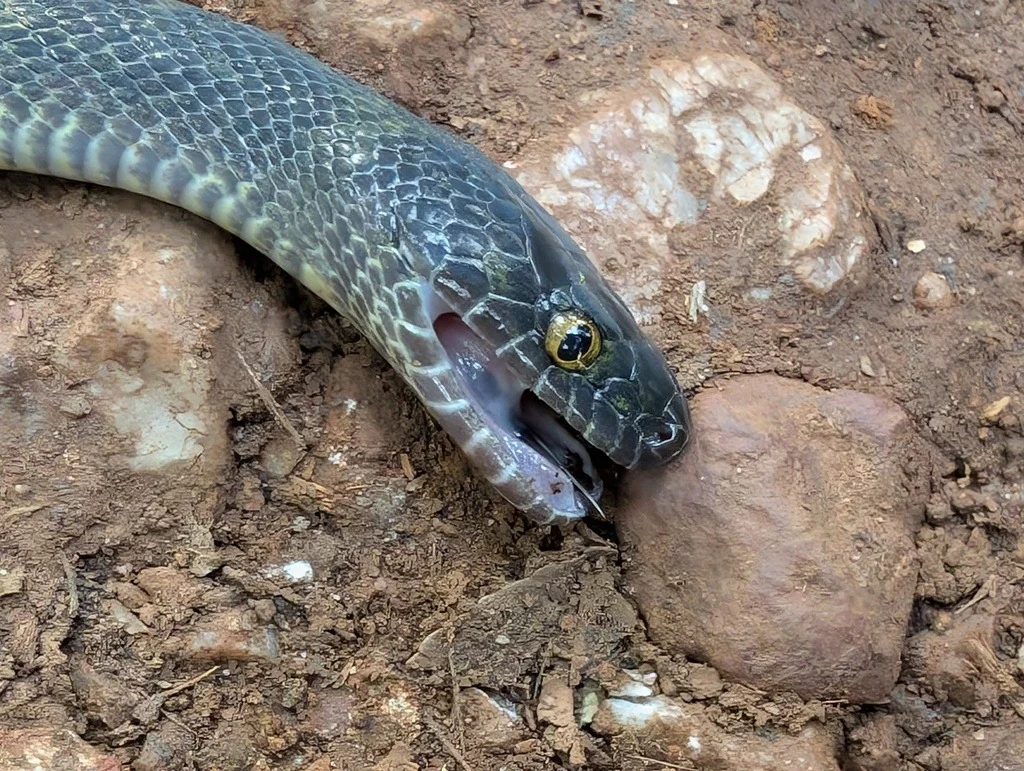
Dipsadoboa weileri; Lekoko, Gabon; photographed 2022-10-08.

013 · Colubridae

Black-tailed tree snake

Dipsadoboa weileri

(LINDHOLM, 1905)

Venom unknownNot yet assessed

The current taxonomic treatment explicitly lists this country. This is country-scale checklist evidence, not a claim of continuous occupancy or a complete regional inventory. Río Muni: museum voucher YPM YPM HERR 014409.001 (2003). The museum record's reported coordinate uncertainty footprint lies within the mapped region. Río Muni: museum voucher YPM…

Read the species account →

Ryan van Huyssteen · CC BY 4.0 · https://creativecommons.org/licenses/by/4.0/

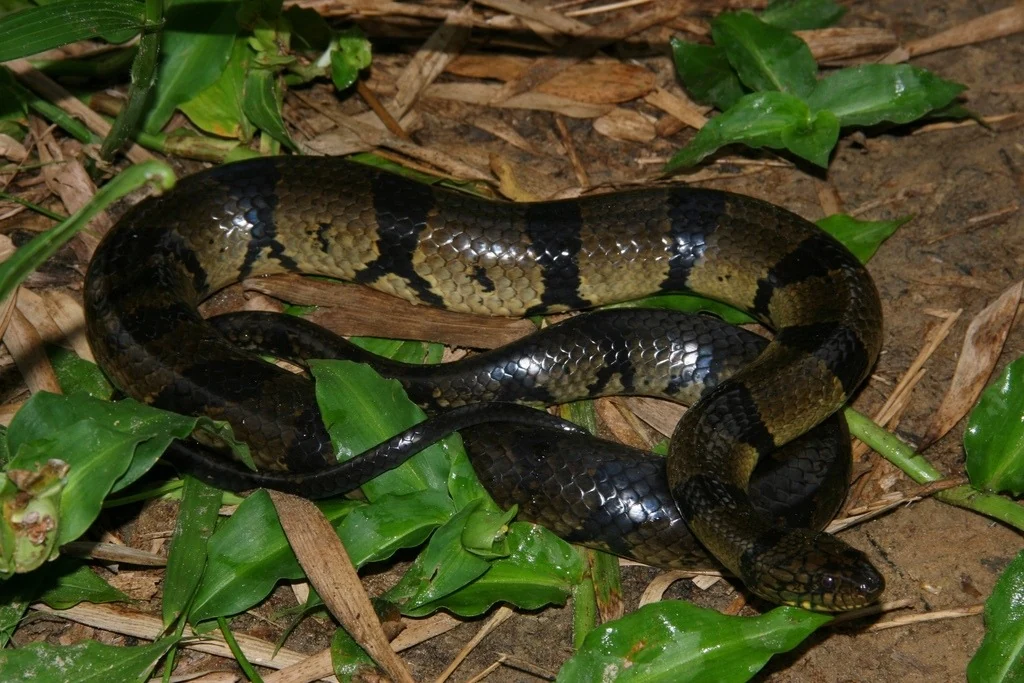
Grayia ornata; Madingo-Kayes, CG-KO, CG; photographed 2012-05-08.

014 · Colubridae

Ornate African Water Snake

Grayia ornata

(BOCAGE, 1866)

Venom unknownNot yet assessed

The current taxonomic treatment explicitly lists this country. This is country-scale checklist evidence, not a claim of continuous occupancy or a complete regional inventory.

Read the species account →

no rights reserved · CC0 · https://creativecommons.org/publicdomain/zero/1.0/
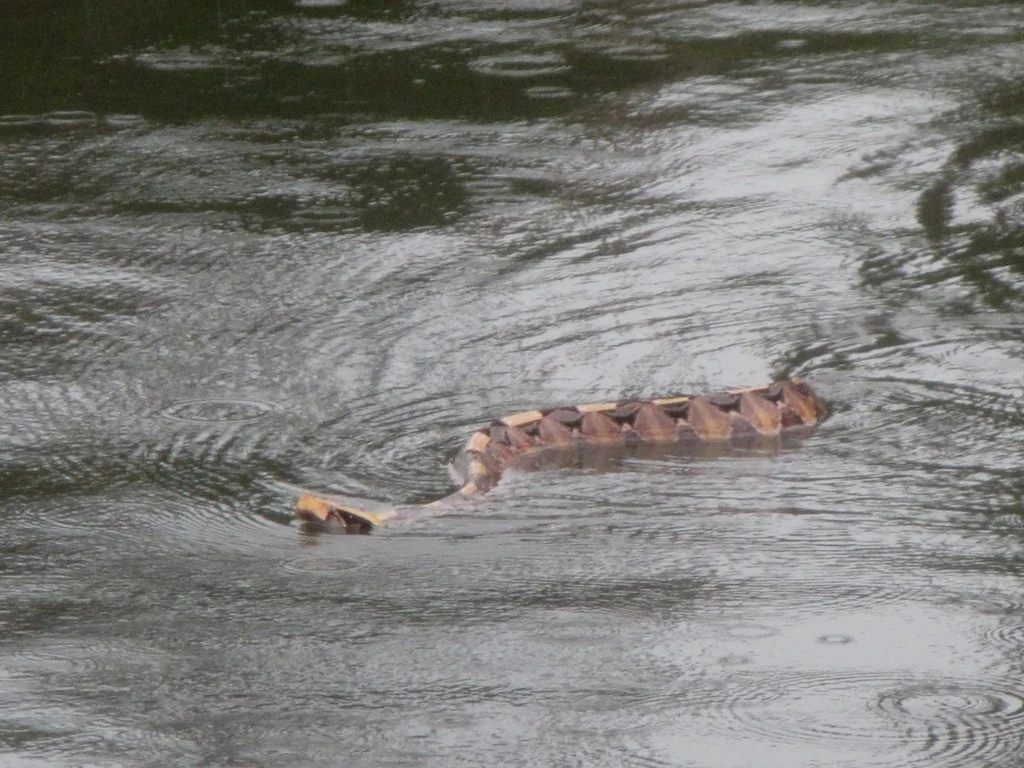
Grayia smithii; Forêt Classée du Kou, Burkina Faso; photographed 2010-02-09.

015 · Colubridae

Smith's African Water Snake

Grayia smithii

(LEACH, 1818)

Venom unknownNot yet assessed

The current taxonomic treatment explicitly lists this country. This is country-scale checklist evidence, not a claim of continuous occupancy or a complete regional inventory.

Read the species account →

martin ingemansson · CC BY 4.0 · https://creativecommons.org/licenses/by/4.0/

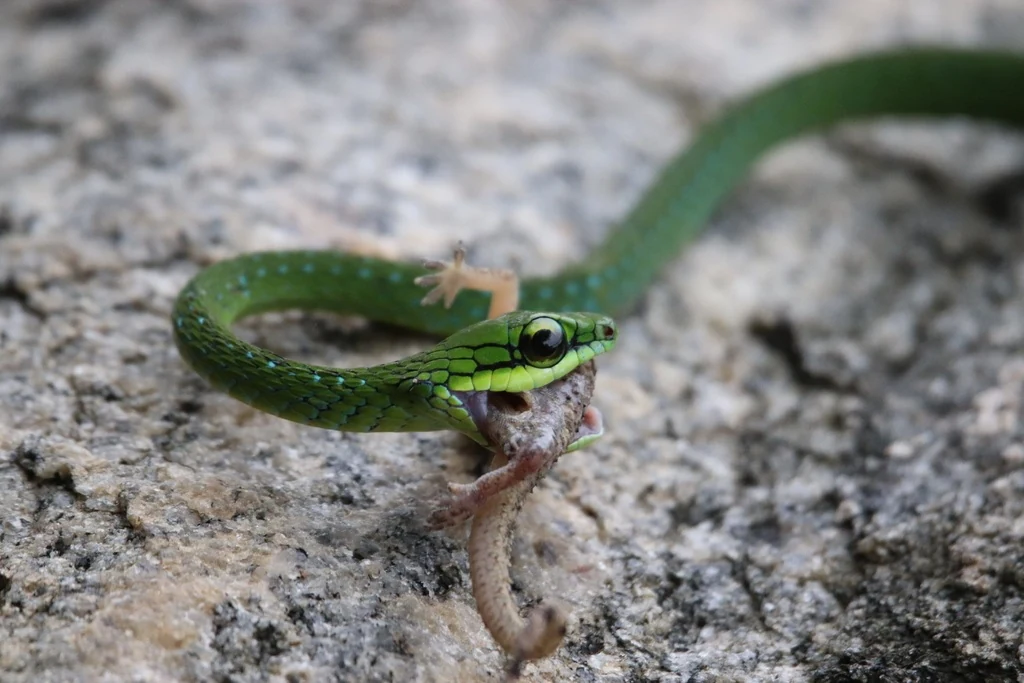
Hapsidophrys smaragdina, photographed 2022-06-25. Identification follows the linked research-grade observation.

016 · Colubridae

Emerald Snake

Hapsidophrys smaragdina

(SCHLEGEL, 1837)

Venom unknownNot yet assessed

The current taxonomic treatment explicitly lists this country. This is country-scale checklist evidence, not a claim of continuous occupancy or a complete regional inventory.

Read the species account →

Roland Godon · CC BY 4.0 · https://creativecommons.org/licenses/by/4.0/

Hormonotus modestus; Cavally, Côte d'Ivoire; photographed 2022-07-29.

017 · Lamprophiidae

Uganda House Snake, Yellow Forest Snake

Hormonotus modestus

(DUMÉRIL, BIBRON & DUMÉRIL, 1854)

Venom unknownNot yet assessed

The current taxonomic treatment explicitly lists this country. This is country-scale checklist evidence, not a claim of continuous occupancy or a complete regional inventory.

Read the species account →

no rights reserved · CC0 · https://creativecommons.org/publicdomain/zero/1.0/
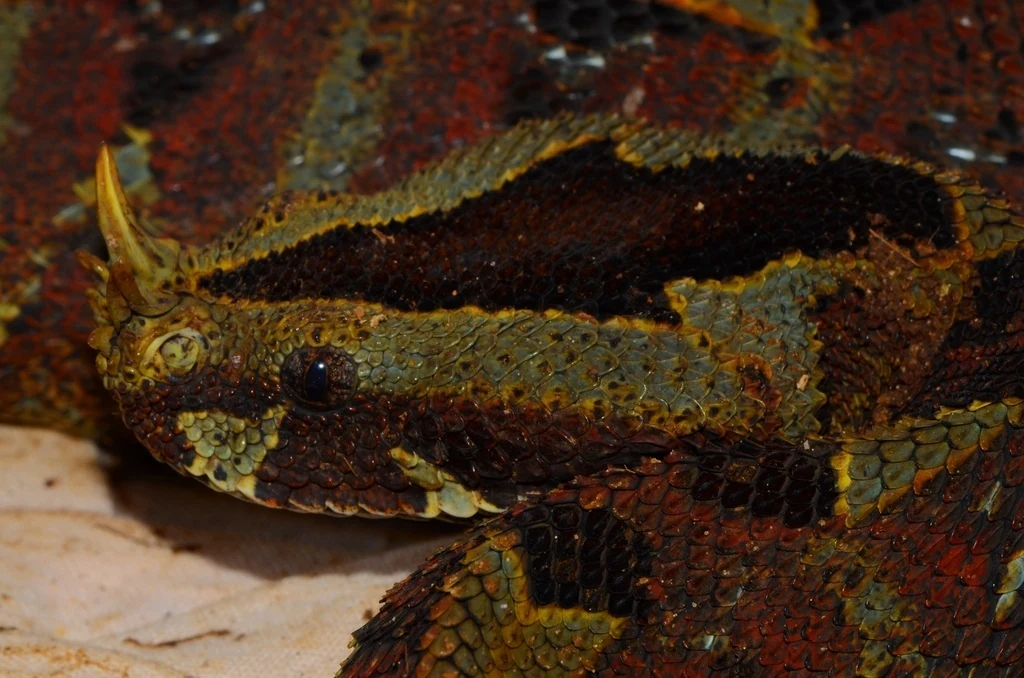
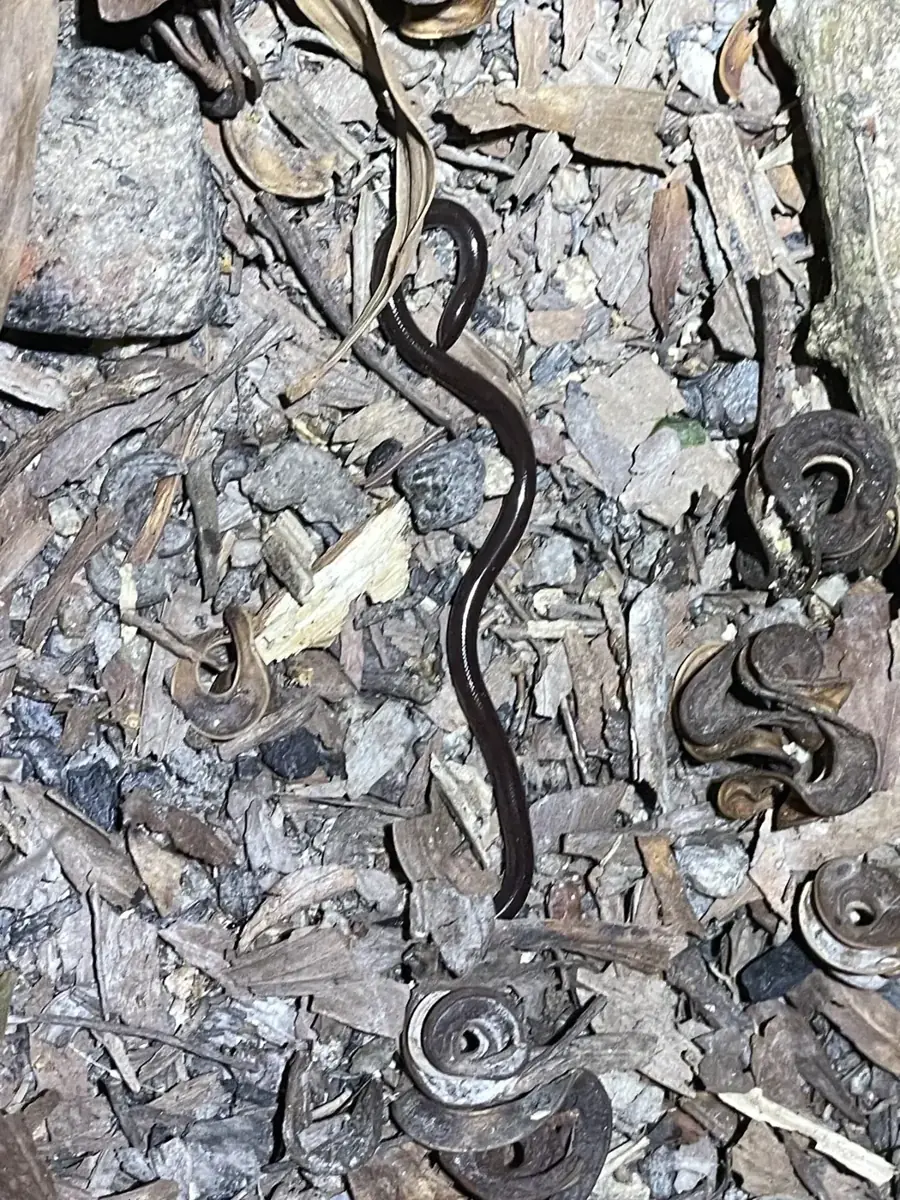
Indotyphlops braminus — photographed on Ko Pha-ngan, Thailand.

018 · Typhlopidae

Flowerpot Snake

Indotyphlops braminus

(DAUDIN, 1803)

Non-venomous

Cosmopolitan transported species: countries denotes supported occurrence, not a claim of native status. IntroducedCountries captures explicit source introductions; native/introduced status of the remaining localities is unresolved. Broad New Guinea and Micronesia are not converted to countries. The current taxonomic treatment explicitly lists this…

Read the species account →

Cook-Price, Makchai & Suwanwaree (2026); photographs credited collectively to the author, James Covert and Vikas Kumar · CC BY 4.0 · https://creativecommons.org/licenses/by/4.0/

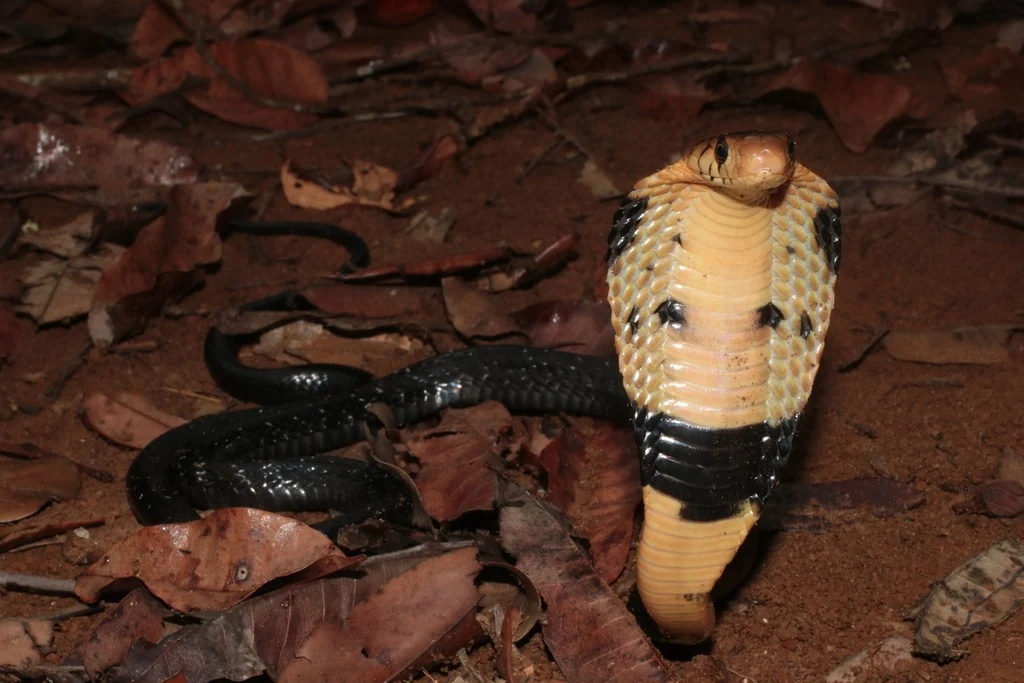
Naja melanoleuca; Lekoko, Gabon; photographed 2022-10-05.

020 · Elapidae

Central African Forest Cobra, Black and White Cobra

Naja melanoleuca

HALLOWELL, 1857

VenomousClinical severity not established

The current taxonomic treatment explicitly lists this country. This is country-scale checklist evidence, not a claim of continuous occupancy or a complete regional inventory. Bioko: observation GBIF 6469739026 (2023). The original iNaturalist entry was rechecked for research-grade identification, wild status and unrestricted coordinates; its reported…

Read the species account →

Ryan van Huyssteen · CC BY 4.0 · https://creativecommons.org/licenses/by/4.0/

Philothamnus carinatus, photographed 2012-10-01. Identification follows the linked research-grade observation.

023 · Colubridae

Thirteen-scaled Green Snake

Philothamnus carinatus

(ANDERSSON, 1901)

Venom unknownNot yet assessed

The current taxonomic treatment explicitly lists this country. This is country-scale checklist evidence, not a claim of continuous occupancy or a complete regional inventory. Bioko: observation GBIF 5897440258 (2018). The original iNaturalist entry was rechecked for research-grade identification, wild status and unrestricted coordinates; its reported…

Read the species account →

Marius Burger (iNaturalist contributor) · CC0 1.0 · https://creativecommons.org/publicdomain/zero/1.0/
All 60 species in the country collection →

Read further

Evidence & sources.

Guide reviewed 12 October 2026. Source dates and geographic scope matter; landscape photographs do not establish species occurrence.

  1. Convention on Biological Diversity · Equatorial Guinea national profile

    Historical draft prepared by the CBD Secretariat; awaiting Party approval. Used for landscape context; older statistics are not presented as current monitoring or a snake inventory.

Continue through Equatorial Guinea

Explore another habitat.

01

Rivers, lakes & wetlands

Continental rivers and island watercourses provide different freshwater settings. A mainland river record does not establish a record on Bioko or Annobón.