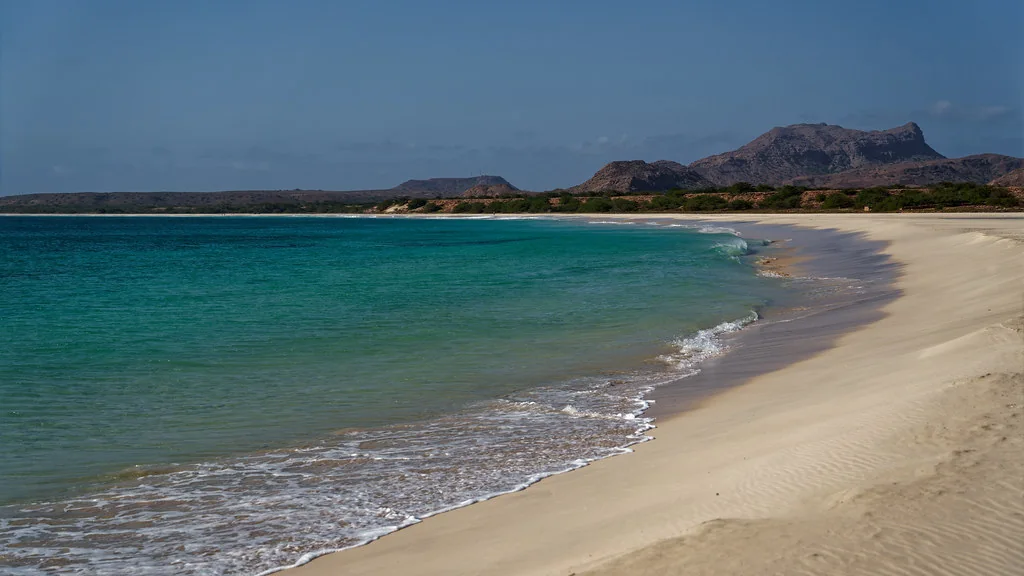
Sandy beach, shallow Atlantic water and arid coastal hills on Boa Vista, Cabo Verde, photographed in January 2023.

Cabo Verde · Place guide

Boa Vista

Explore Boa Vista through the named places in its sourced species records.

—locality records pending
0families
9island guides

Sandy beach, shallow Atlantic water and arid coastal hills on Boa Vista, Cabo Verde, photographed in January 2023.

Photograph: Miguel Discart & Kiri Karma · Image source · CC BY-SA 2.0. Cropped to fill the hero; darkened for text legibility.

Geography & biotopes

Read the landscape.

Explore Boa Vista through the named places in its sourced species records.

This navigation guide uses the credited boundary snapshot for Boa Vista. Its boundaries identify an atlas group, not a single vegetation type. OpenStreetMap, Wambacher; geoBoundaries gbOpen ADM1, 2017 snapshot; Open Data Commons Open Database License 1.0.

Ecological connections

The country habitat guides explain the environments documented in the landscape sources. Only species records assigned to this particular mapped area appear in the regional collection; a shared habitat elsewhere does not establish local occurrence.

Explore the setting

The INIDA April 2021 inventory locates Indotyphlops braminus records on Santiago. Mentions of other islands in that discussion concern Agama lizards and are not snake records for this island. Review checked 16 October 2026. An empty collection means that no accepted regional snake record has been linked here; it does not establish biological absence.

This guide indexes these source names: Boa Vista. A country-only record is not automatically assigned to this place. Map markers identify navigation destinations, not collection sites.

Map boundaries, snapshot and group membership →

Convention on Biological Diversity · Cabo Verde national profile →

Hecht-Kardasz & Nickerson (2011), Geographic distribution: Ramphotyphlops braminus, Herpetological Review 42(3): 395–396 →

Geography is part of the record

Find your way through Cabo Verde.

Select a named island to open its evidence page. The complete directory below keeps every guide accessible, including places where locality evidence has not yet been extracted.

1 of 1 listed species have at least one indexed island record. 0 remain country-only. Even a nonzero count is not a complete regional inventory.

Habitats & living landscapes

Explore the living
landscapes.

Explore 2 guides to the environments, places and conservation pressures that shape this country. Each guide connects to the regional map and shared species accounts.

Landscape photographs & credits

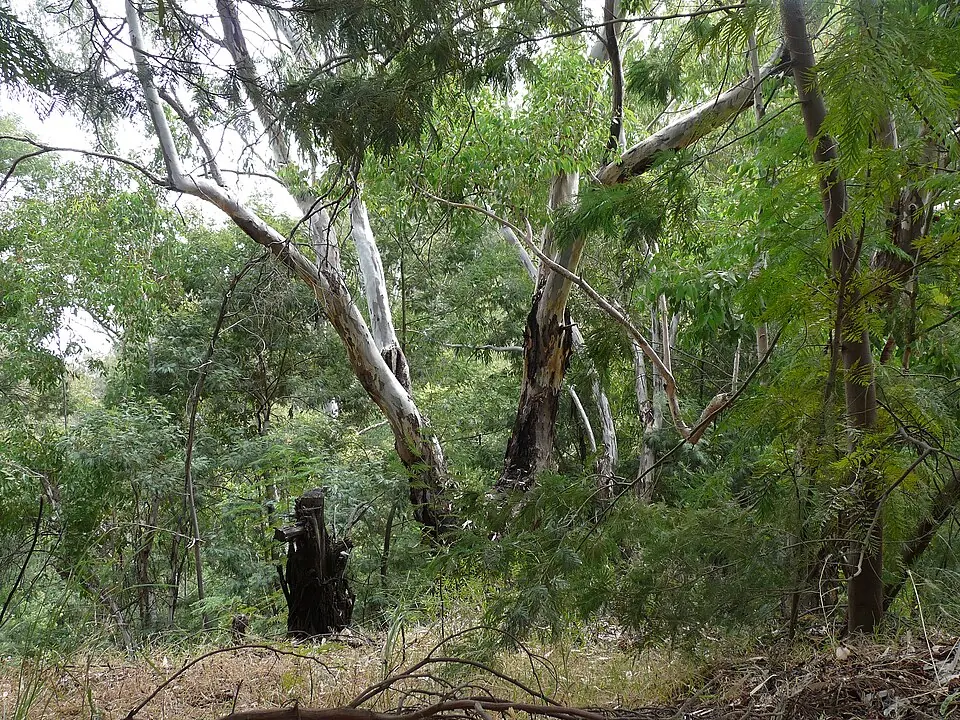
Eucalyptus woodland in the Monte Velha forest park on Fogo, Cabo Verde. This planted woodland is distinct from native forest remnants. — Ji-Elle. Original photograph · CC BY-SA 3.0. Cropped for the cards; photographs do not establish snake occurrence.

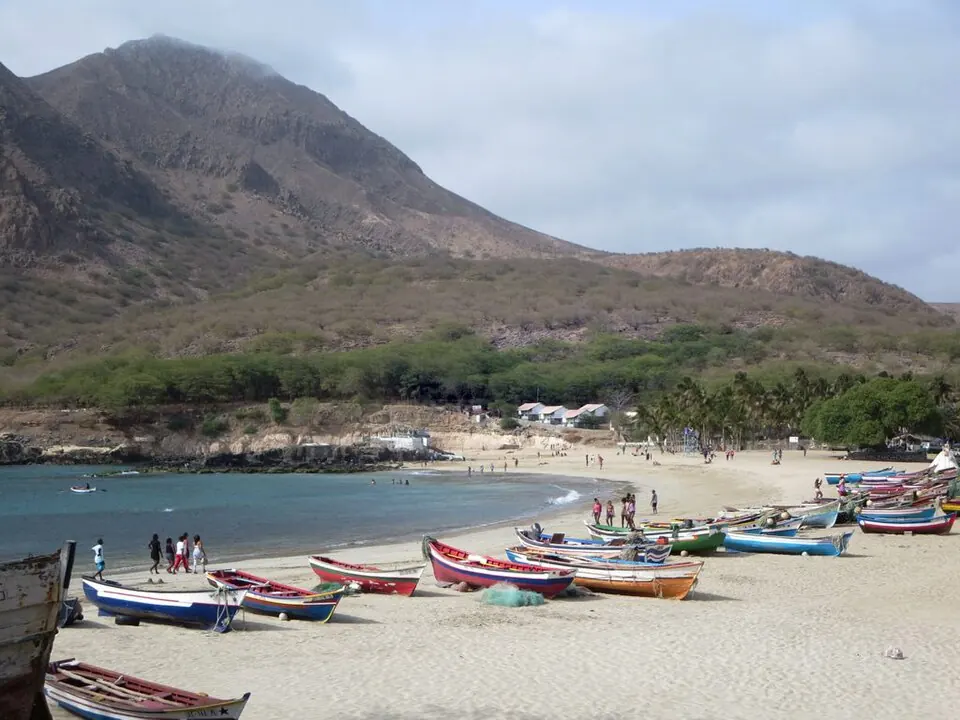
Beach, small boats and coastal hills at Tarrafal, Santiago Island, Cabo Verde. Fishing and recreational use are visible. — David Stanley from Nanaimo, Canada. Original photograph · CC BY 2.0. Cropped for the cards; photographs do not establish snake occurrence.

The species catalogue

Snakes · Boa Vista.

Only records naming this place appear below. These are extracted locality records, not complete island or regional inventories.

No supported locality records have been extracted for this selection. This is a research gap, not evidence that snakes are absent.

0 species · showing 0

No matching locality records.

Try another name or clear the filters. Absence from a regional list does not establish absence in nature.

Explore all 1 country records →

The research library

Sources & the checklist.

This edition lists 1 species with supported country records from checked taxonomic treatments and cited field studies. This total includes 1 record marked as introduced; it is not a native-species total. It is not a claim of a complete national inventory. Each account retains its source and check date; individual evidence entries retain their own review dates.

Range and taxonomy review

Country links use a single accepted species identity. Revised names and disputed records are kept visible here; uncertain records do not enter the listed collection or regional totals.

Indotyphlops braminus

Introduced occurrence

Hecht-Kardasz & Nickerson (2011), pp. 395–396, report two vouchers (UF 157346 and UF 157347), collected in late November 2009 at Zimbrão, Achada Fazenda, Santa Cruz municipality, Santiago, and identified by Van Wallach. The published name Ramphotyphlops braminus refers to the shared Indotyphlops braminus profile. This is an introduced species and a dated locality record, not confirmation of a present population. Reports of two additional snakes at Ribeira Zimbrão in January 2010 are explicitly second-hand and are not treated as additional verified vouchers. No occurrence on another Cabo Verde island is inferred.

Source 1 ↗

How the map and counts work

Search results were checked against distribution text and taxonomic qualifications. A geographic name alone does not establish a political country: New Guinea, the Solomon archipelago and Micronesia span more than one country or territory. Introduced and unresolved records require separate interpretation.

Place counts require explicit named localities, including valid type localities. Counts can overlap where sources name multiple places. Regional maps group historical boundary snapshots for navigation, while island outlines use Natural Earth; neither is a species range or an observation map. Small islands can be below the outline dataset’s resolution, so geographic reference markers and the directory remain available.

OpenStreetMap, Wambacher; geoBoundaries gbOpen ADM1, 2017 snapshot; Open Data Commons Open Database License 1.0. Map provenance →

  1. Boundary source and declared group membership ↗

    Historical geography and navigation only.

  2. Convention on Biological Diversity · Cabo Verde national profile ↗

    Historical draft prepared by the CBD Secretariat; awaiting Party approval. Used for landscape context; older statistics are not presented as current monitoring or a snake inventory.

  3. Vasconcelos et al. (2013), supplementary Appendix 8 ↗

    Historical and uncertain records; not a current snake census.

  4. INIDA (2021), Santiago inventory, pp. 89–90 ↗

    Santiago snake records are not transferred to other islands.

  5. Map boundaries, snapshot and group membership ↗
  6. Convention on Biological Diversity · Cabo Verde national profile ↗
  7. Hecht-Kardasz & Nickerson (2011), Geographic distribution: Ramphotyphlops braminus, Herpetological Review 42(3): 395–396 ↗
  8. The Reptile Database

    Individual treatments and locality evidence are linked from each species account.

  9. Meiri (2024): SquamBase 1.0

    Species-level literature measurements and ecological traits. Exact-name matches only; imputed or ambiguous fields are omitted. These summaries are not local observations.

  10. Natural Earth: public-domain geographic data

Continue through the Africa atlas →