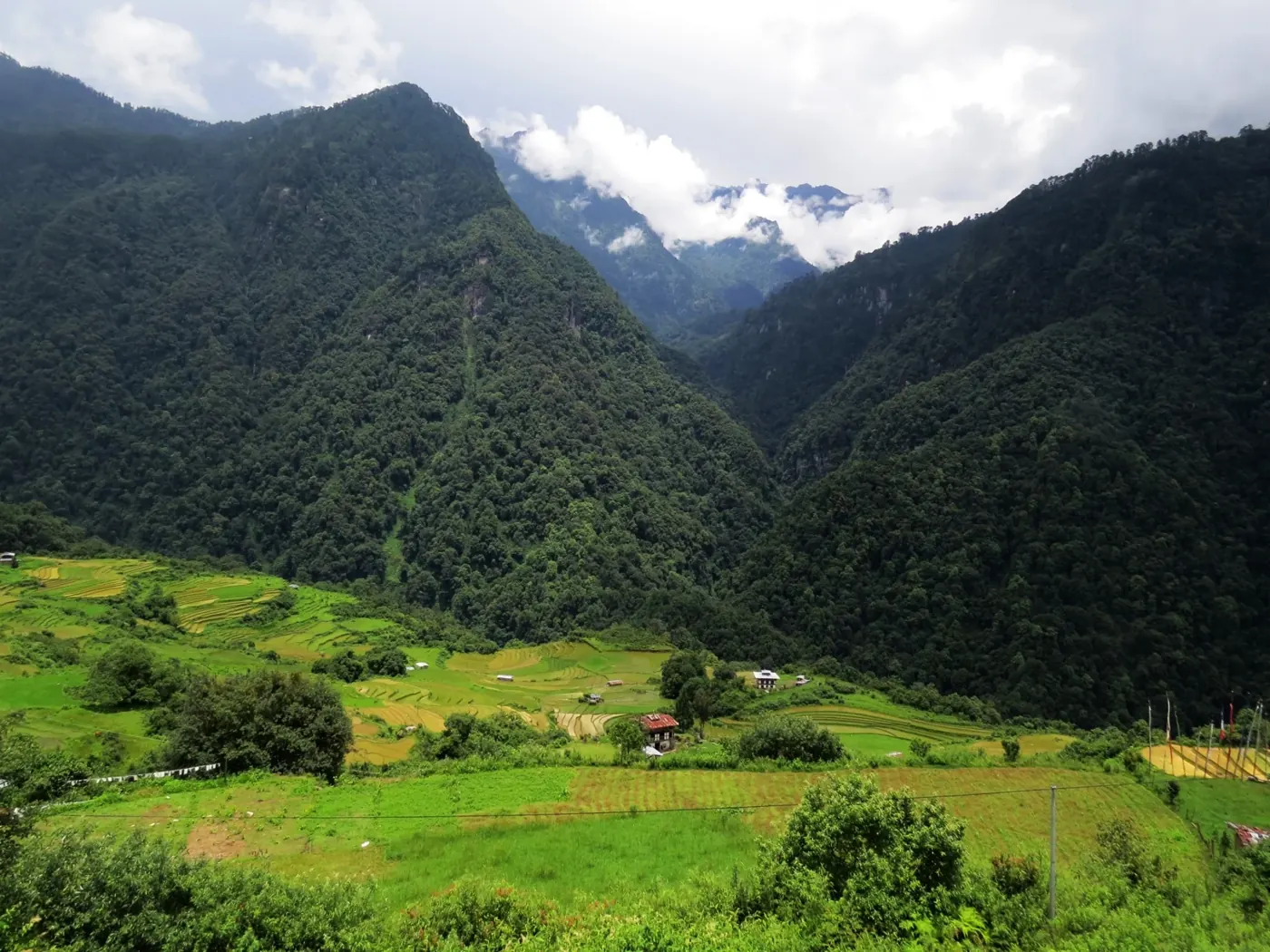
Forested mountains in Jigme Dorji National Park, Bhutan.

Bhutan · Habitat field guide

Mountain habitats

Vegetation can change markedly across a Himalayan slope.

Forested mountains in Jigme Dorji National Park, Bhutan.

Photograph: A. J. T. Johnsingh, WWF-India and NCF · Image source · CC BY-SA 4.0. Cropped to fill the hero; darkened for text legibility.

Understanding the environment

A sense of the habitat.

Vegetation can change markedly across a Himalayan slope.

Read closely
Vegetation, water and substrate
Local example
Jigme Dorji
Evidence scale
Named sites, not country-wide occurrence

Explore the structure · Select a zone to compare its structure and details worth recording.

Read the habitat

Select a zone to see what changes.

Start with elevation

Lower slope

Keep valley and slope records separate.

Observation prompts do not establish that a particular snake occurs in this zone.

Conceptual zones, not a measured transect or a map of snake occurrences.

Sources: Bhutan / UNESCO · Jigme Dorji proposal

Field notes · 01

Landscape context

Jigme Dorji’s proposal runs from broadleaf forest through mixed conifers to alpine meadows. Keep plant-zone observations separate from snake claims: alpine scenery is not evidence of alpine occurrence.

Sources: Bhutan / UNESCO · Jigme Dorji proposal

Field notes · 02

From habitat to an observation

Keep the locality, date and habitat description together. A landscape source explains the setting; only a verified species record establishes occurrence. The collection below may be smaller than the variety of environments described here.

Pressures on Bhutan’s habitats

What is at risk?

A site-specific assessment of pressures has not yet been extracted for this guide. The landscape sources below provide context; they do not establish a current threat level for each snake species.

What helps this habitat

Retain the local habitat mosaic and its connections. Interpret pressures using the cited site evidence and current local management guidance.

The connected collection

Snakes with habitat evidence.

These 3 species have supported country occurrence and an explicit habitat association in the shared account. The association may come from elsewhere in their range. This is not a complete local habitat inventory; the places above are landscape examples, not asserted collecting sites.

3 species · showing 3

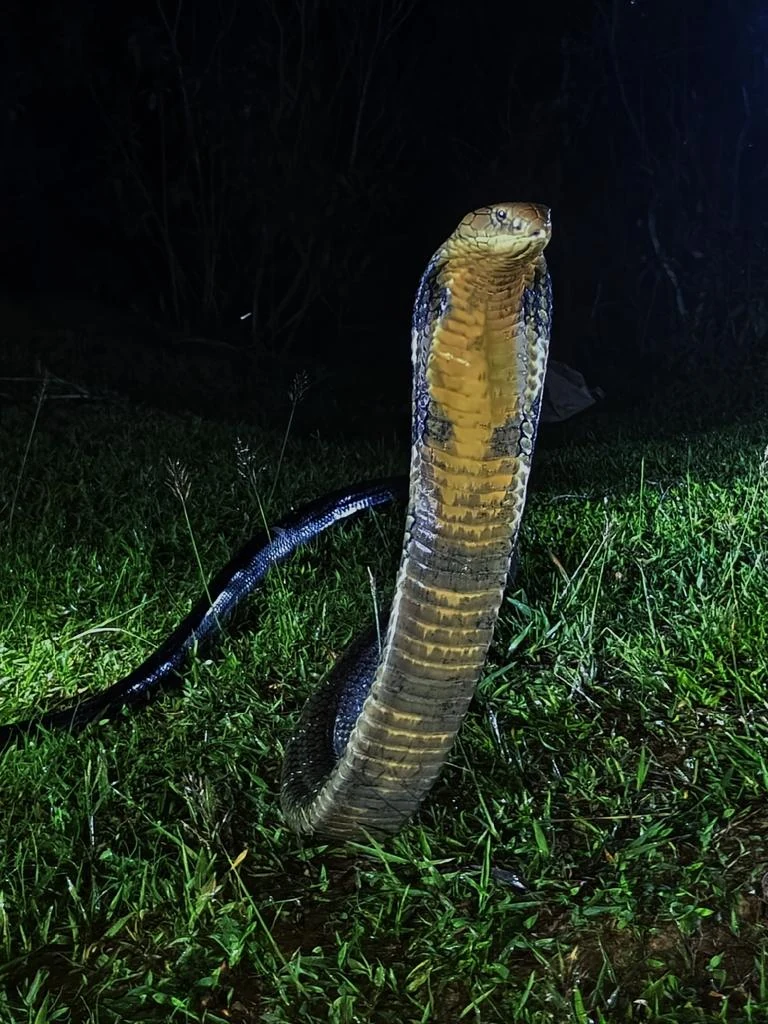
Ophiophagus hannah — India, 2026-05-29.

001 · Elapidae

Hamadryad, King Cobra

Ophiophagus hannah

(CANTOR, 1836)

VenomousPotentially life-threatening

Bhutan is explicitly listed in the checked individual taxonomic treatment. Bhutan: selected named 2019–2020 records from Table 1: Radi (2,057 m), Rolong (650 m), Lumang (1,030 m), Yangtse (1,810 m) and Bayling (2,032 m).

Read the species account →

Ankur Nandi · CC BY 4.0 · https://creativecommons.org/licenses/by/4.0/
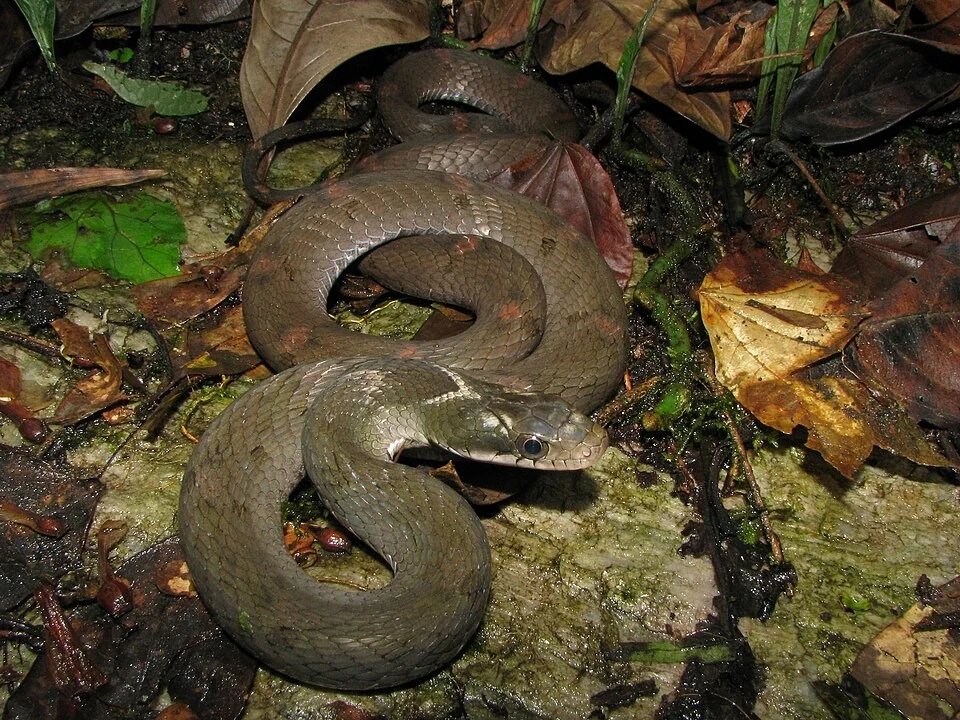
Pseudoxenodon macrops — real specimen photograph; identification follows the linked source.

002 · Colubridae

(Large-eyed or) Big-eyed Bamboo Snake, Mock Cobra

Pseudoxenodon macrops

(BLYTH, 1855)

Venom unknownNot yet assessed

Bhutan is explicitly listed in the checked individual taxonomic treatment.

Read the species account →

Umeshsrinivasan · CC BY-SA 3.0 · https://creativecommons.org/licenses/by-sa/3.0

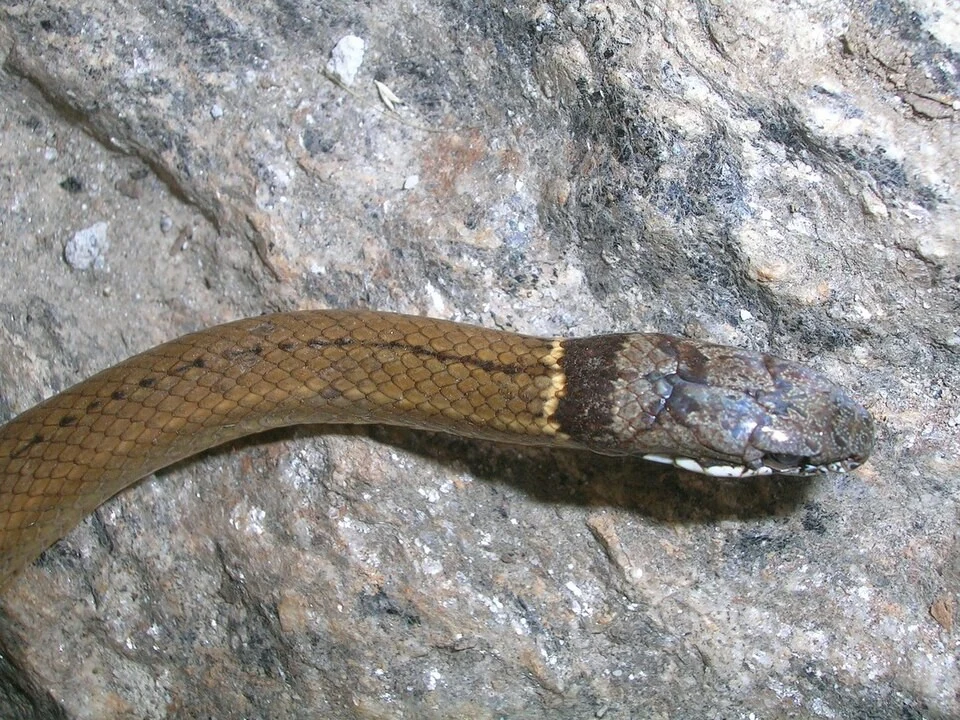
Sibynophis collaris — real specimen photograph; identification follows the linked source.

003 · Colubridae

Common Many-tooth Snake

Sibynophis collaris

(GRAY, 1853)

Non-venomous

Bhutan is explicitly listed in the checked individual taxonomic treatment.

Read the species account →

L. Shyamal · CC BY-SA 3.0 · https://creativecommons.org/licenses/by-sa/3.0

All 56 species in the country collection →

Read further

Evidence & sources.

Guide reviewed 11 October 2026. Source dates and geographic scope matter; landscape photographs do not establish species occurrence.

  1. Bhutan / UNESCO · Jigme Dorji proposal

    2012 Tentative List: forests, alpine meadows and watersheds; not an inscribed World Heritage property.

Continue through Bhutan

Explore another habitat.

01

Forests & woodland

Southern broadleaf forests and higher conifers occupy different elevations.

02

Rivers, lakes & wetlands

Catchments link mountain streams with valley wetlands.