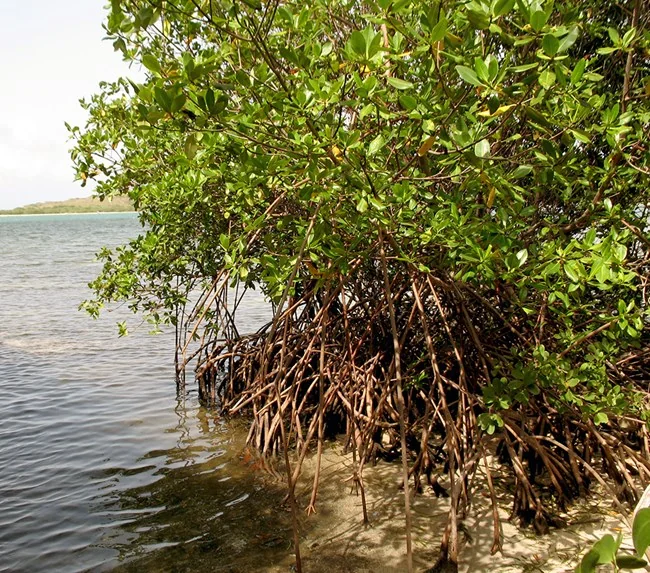
Mangroves at Salt River Bay, St Croix, United States Virgin Islands.

United States Virgin Islands · Habitat field guide

US Virgin Islands coastal vegetation

National Park Service monitoring includes mangrove and coastal forest settings. On St. John these occur near dry scrub, beaches and marine seagrass habitats.

Mangroves at Salt River Bay, St Croix, United States Virgin Islands.

Photograph: National Park Service · Image source · Public domain. Cropped to fill the hero; darkened for text legibility.

Understanding the environment

A sense of the habitat.

National Park Service monitoring includes mangrove and coastal forest settings. On St. John these occur near dry scrub, beaches and marine seagrass habitats.

Landscape
US Virgin Islands coastal vegetation
Evidence
Landscape context and species records are evaluated separately.

Explore the structure · Follow the named landscape settings

US Virgin Islands coastal vegetation

Select a zone to see what changes.

Margin

Coastal woodland

Mangroves bridge protected shorelines and terrestrial vegetation.

Use the linked source for the local setting; no animal occurrence follows from this zone alone.

A conceptual habitat reading, not a measured transect or a snake distribution map.

Sources: National Park Service · Plants of Virgin Islands National Park · National Park Service · Forest Vegetation · USGS · Invasive Central American boas in the US Virgin Islands
Field notes · 01

Read the local setting

National Park Service monitoring includes mangrove and coastal forest settings. On St. John these occur near dry scrub, beaches and marine seagrass habitats.

Sources: National Park Service · Plants of Virgin Islands National Park · National Park Service · Forest Vegetation · USGS · Invasive Central American boas in the US Virgin Islands

Field notes · 02

Keep the evidence at its proper scale

The country catalogue uses independently checked snake records. Habitat suitability alone does not establish occupancy, and a published historical record does not establish current abundance.

Sources: National Park Service · Plants of Virgin Islands National Park · National Park Service · Forest Vegetation · USGS · Invasive Central American boas in the US Virgin Islands

Pressures on United States Virgin Islands’s habitats

What is at risk?

What helps this habitat

Keep to established access routes, leave shelter in place and follow local protected-area rules. Report unusual introduced animals to the relevant local conservation authority.

The connected collection

Snakes with habitat evidence.

These 1 species have supported country occurrence and an explicit habitat association in the shared account. The association may come from elsewhere in their range. This is not a complete local habitat inventory; the places above are landscape examples, not asserted collecting sites.

1 species · showing 1

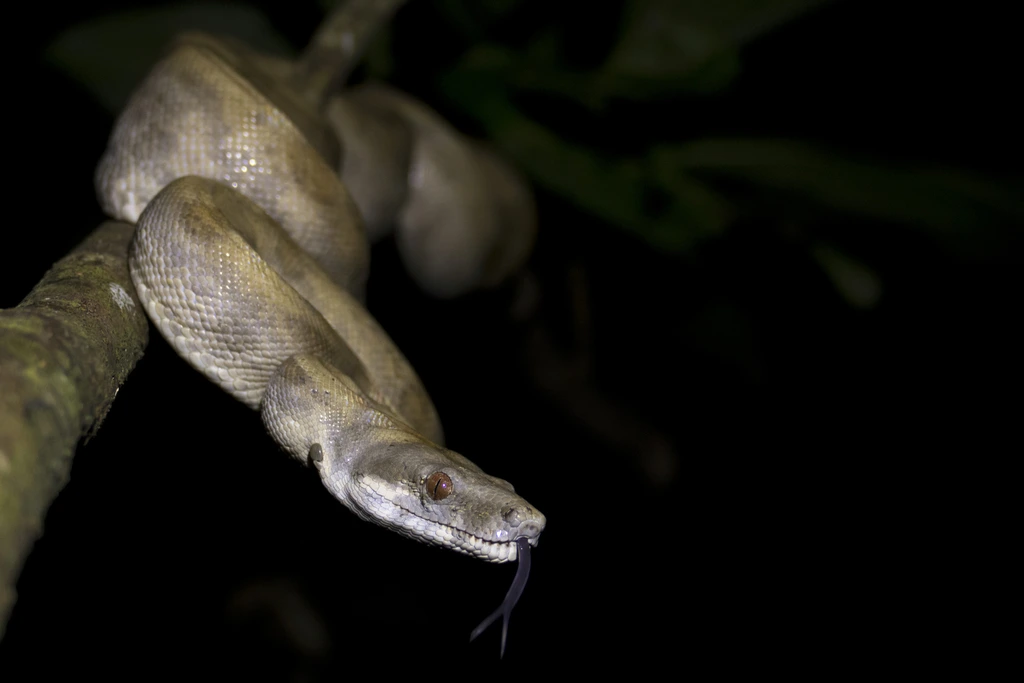
Boa imperator. Species portrait; the complete source frame is retained. Original observation dated 2021-09-28. This photograph does not establish occurrence in any additional state or province.

001 · Boidae

Central American Boa Constrictor

Boa imperator

DAUDIN, 1803

Non-venomous

Established introduced Central American boa on St. Croix, explicitly identified as Boa imperator by current USGS research; older Boa constrictor labels are not double-counted.

Read the species account →

Ewout Knoester · CC BY-SA 4.0 · https://creativecommons.org/licenses/by-sa/4.0/

All 7 species in the country collection →

Read further

Evidence & sources.

Guide reviewed 2026-10-28. Source dates and geographic scope matter; landscape photographs do not establish species occurrence.

  1. National Park Service · Plants of Virgin Islands National Park

    St John forest recovery, dry scrub and coastal mangroves. No snake occurrence inferred from vegetation.

  2. National Park Service · Forest Vegetation

    Tropical dry/moist forest and mangrove monitoring in US Virgin Islands park units.

  3. USGS · Invasive Central American boas in the US Virgin Islands

    Direct research programme identifies the established St Croix invader as Boa imperator, first sighted in 2012.

Continue through United States Virgin Islands

Explore another habitat.

01

Virgin Islands dry and moist forest

St. John’s secondary forests reflect plantation history, while connected woodland provides habitat for the native boa on St. Thomas. These different sources describe different islands.