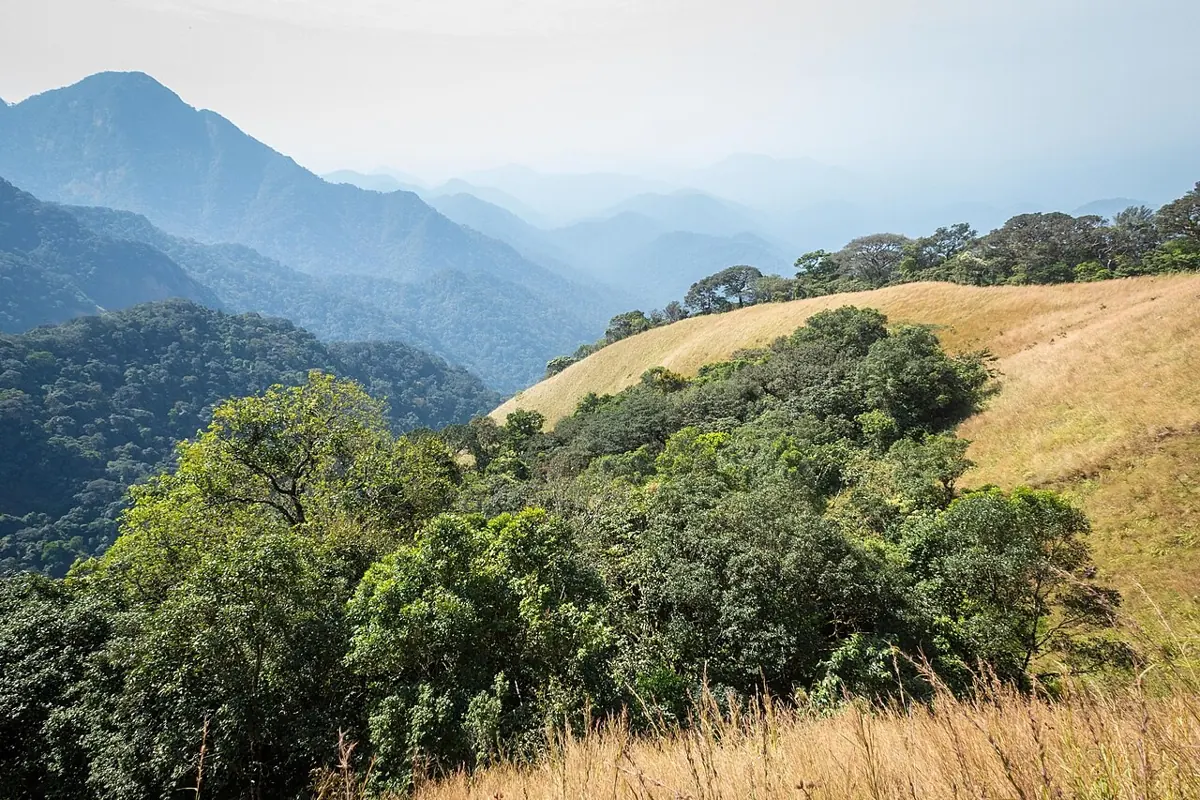
Montane forest adjoining open grassland at Anape, viewed from Prof Oates Mountain, Nigeria.

Nigeria · Habitat field guide

Forest & woodland

Cross River forests are a named southeastern forest setting. Mountain forest, rainforest and freshwater swamp forest are distinguished in the national account.

Montane forest adjoining open grassland at Anape, viewed from Prof Oates Mountain, Nigeria.

Photograph: Dotun55 · Image source · CC BY-SA 4.0. Cropped to fill the hero; darkened for text legibility.

Understanding the environment

A sense of the habitat.

Cross River forests are a named southeastern forest setting. Mountain forest, rainforest and freshwater swamp forest are distinguished in the national account.

Geographic scope
Nigeria; named examples and source scope matter.
Evidence scale
Landscape context is separate from species locality evidence.
Source chronology
Consult the original publication date; checked 12 October 2026.

Explore the structure · Select a layer to compare the details a locality record can preserve.

Read the setting in three layers.

Select a zone to see what changes.

Tree cover

Tree cover

Separate closed forest, open woodland and planted trees.

Compare this detail with the original field or museum record before assigning a habitat association.

These reading prompts explain how to interpret evidence; they do not assert that every feature occurs at every site.

Sources: Convention on Biological Diversity · Nigeria national profile

Field notes · 01

The documented landscape

Cross River forests are a named southeastern forest setting. Mountain forest, rainforest and freshwater swamp forest are distinguished in the national account.

Sources: Convention on Biological Diversity · Nigeria national profile

Field notes · 02

Connect habitat and locality

Use the species account to check whether a habitat statement applies to this country or elsewhere in the species’ range. A landscape photograph illustrates its own named place; it is not evidence of snake presence.

Pressures on Nigeria’s habitats

What is at risk?

A site-specific assessment of pressures has not yet been extracted for this guide. The landscape sources below provide context; they do not establish a current threat level for each snake species.

What helps this habitat

Retain natural vegetation and water connections where local conservation evidence supports them. Consult the linked national or site account for the pressures and management actions actually reported there.

The connected collection

Snakes with habitat evidence.

These 41 species have supported country occurrence and an explicit habitat association in the shared account. The association may come from elsewhere in their range. This is not a complete local habitat inventory; the places above are landscape examples, not asserted collecting sites.

41 species · showing 24

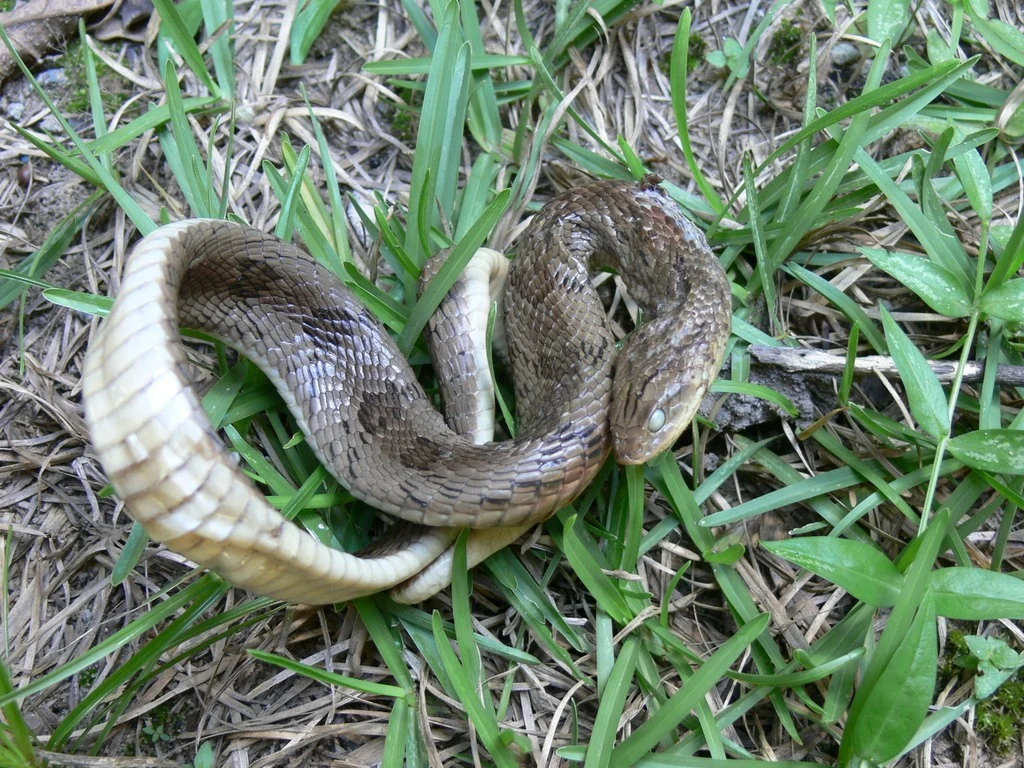
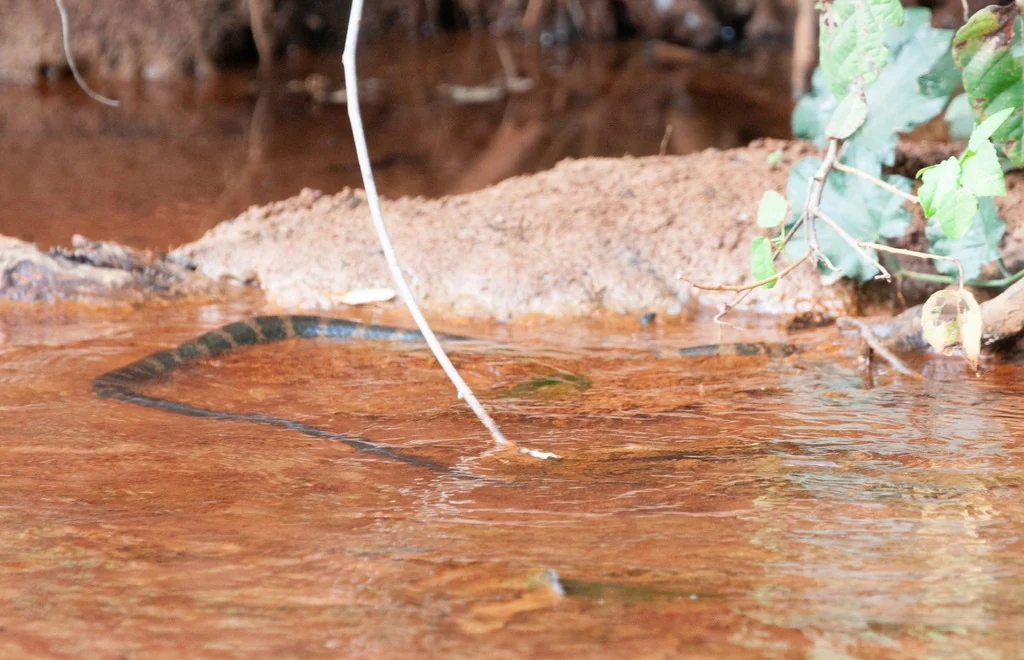
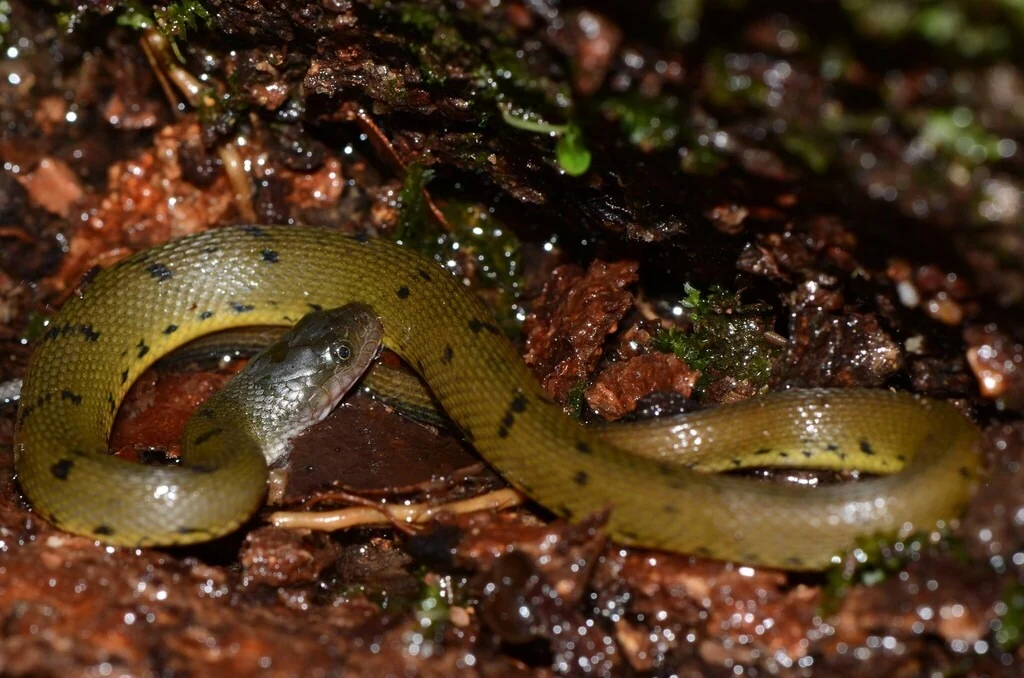
Afronatrix anoscopus; 3FJ6+JP Koakpo, Liberia; photographed 2021-05-13.

001 · Colubridae

African Brown Water Snake

Afronatrix anoscopus

(COPE, 1861)

Venom unknownNot yet assessed

The current taxonomic treatment explicitly lists this country. This is country-scale checklist evidence, not a claim of continuous occupancy or a complete regional inventory. South South states: observation GBIF 4852074614 (2024). The original iNaturalist entry was rechecked for research-grade identification, wild status and unrestricted coordinates; its…

Read the species account →

no rights reserved · CC0 · https://creativecommons.org/publicdomain/zero/1.0/
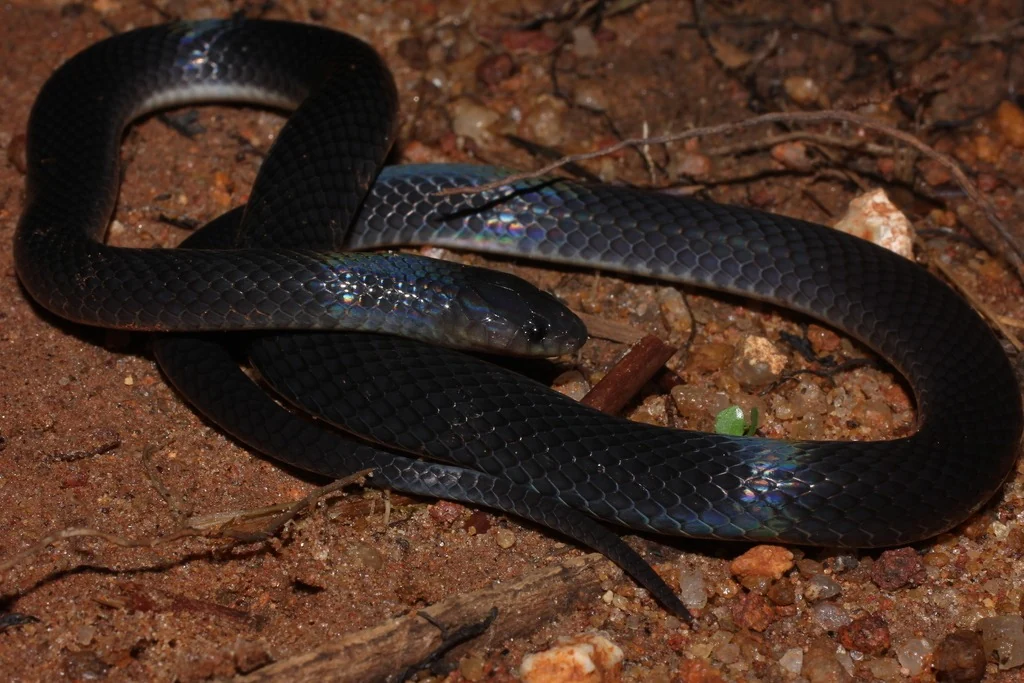
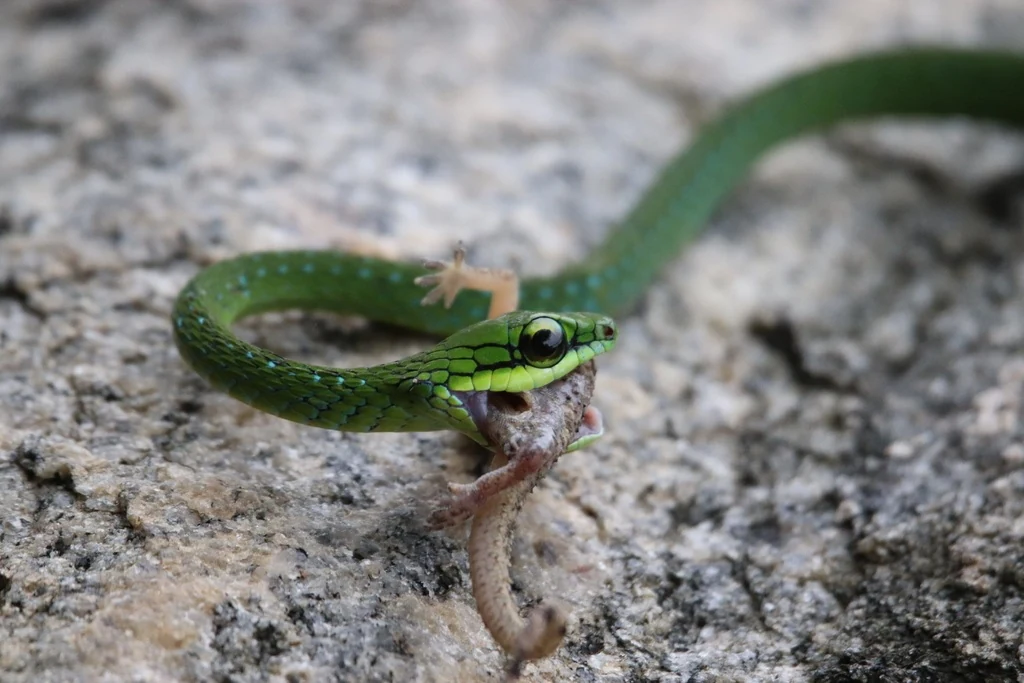
Aparallactus modestus; Jaedae, Liberia; photographed 2021-11-04.

002 · Atractaspididae

Western Forest Centipede-eater

Aparallactus modestus

(GÜNTHER, 1859)

Venom unknownEvidence inconclusive

The current taxonomic treatment explicitly lists this country. This is country-scale checklist evidence, not a claim of continuous occupancy or a complete regional inventory. Luiselli & Akani (1999), study area p. 100 and species-specific records in Table 2 p. 104, June–September 1997. Akwa-Ibom belongs to the South South atlas group. The surrounding…

Read the species account →

Ryan van Huyssteen · CC BY 4.0 · https://creativecommons.org/licenses/by/4.0/

Atheris chlorechis; Cavally, Côte d'Ivoire; photographed 2022-08-13.

003 · Viperidae

Green bush viper

Atheris chlorechis

(PEL, 1852)

VenomousClinical severity not established

The current taxonomic treatment explicitly lists this country. This is country-scale checklist evidence, not a claim of continuous occupancy or a complete regional inventory.

Read the species account →

no rights reserved · CC0 · https://creativecommons.org/publicdomain/zero/1.0/
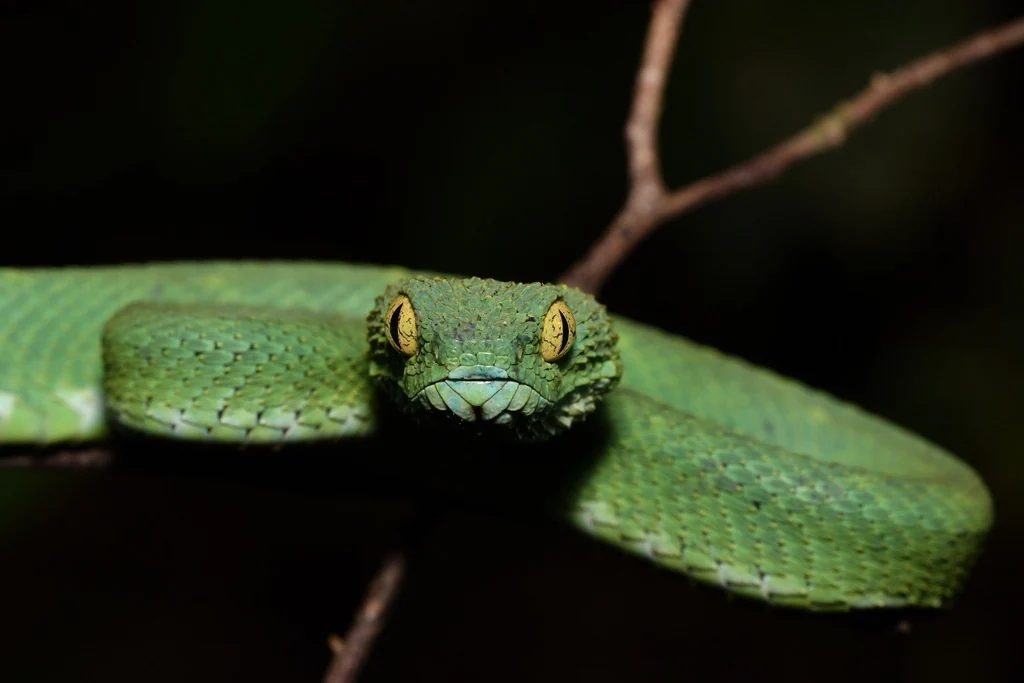
Atheris squamigera; Mawendi Hills, Cameroon; photographed 2012-02-20.

004 · Viperidae

Variable Bush Viper, African Bush Viper, Rough-scaled Bush Viper

Atheris squamigera

HALLOWELL, 1854

VenomousClinical severity not established

The current taxonomic treatment explicitly lists this country. This is country-scale checklist evidence, not a claim of continuous occupancy or a complete regional inventory. South South states: observation GBIF 6273830993 (1997). The original iNaturalist entry was rechecked for research-grade identification, wild status and unrestricted coordinates; its…

Read the species account →

Matt Muir · CC BY 4.0 · https://creativecommons.org/licenses/by/4.0/

Bitis gabonica; Lake Tissongo, Cameroon; photographed 2016-05-18.

005 · Viperidae

Gaboon Adder, Gaboon Viper

Bitis gabonica

(DUMÉRIL, BIBRON & DUMÉRIL, 1854)

VenomousClinical severity not established

The current taxonomic treatment explicitly lists this country. This is country-scale checklist evidence, not a claim of continuous occupancy or a complete regional inventory.

Read the species account →

Lucy Keith-Diagne · CC BY 4.0 · https://creativecommons.org/licenses/by/4.0/

Bitis nasicornis, photographed 2012-10-08. Identification follows the linked research-grade observation.

006 · Viperidae

Rhinoceros Viper

Bitis nasicornis

(SHAW & NODDER, 1792)

VenomousClinical severity not established

The current taxonomic treatment explicitly lists this country. This is country-scale checklist evidence, not a claim of continuous occupancy or a complete regional inventory. Luiselli & Akani (1999), study area p. 100 and species-specific records in Table 2 p. 104, June–September 1997. Akwa-Ibom belongs to the South South atlas group. The surrounding…

Read the species account →

Marius Burger (iNaturalist contributor) · CC0 1.0 · https://creativecommons.org/publicdomain/zero/1.0/
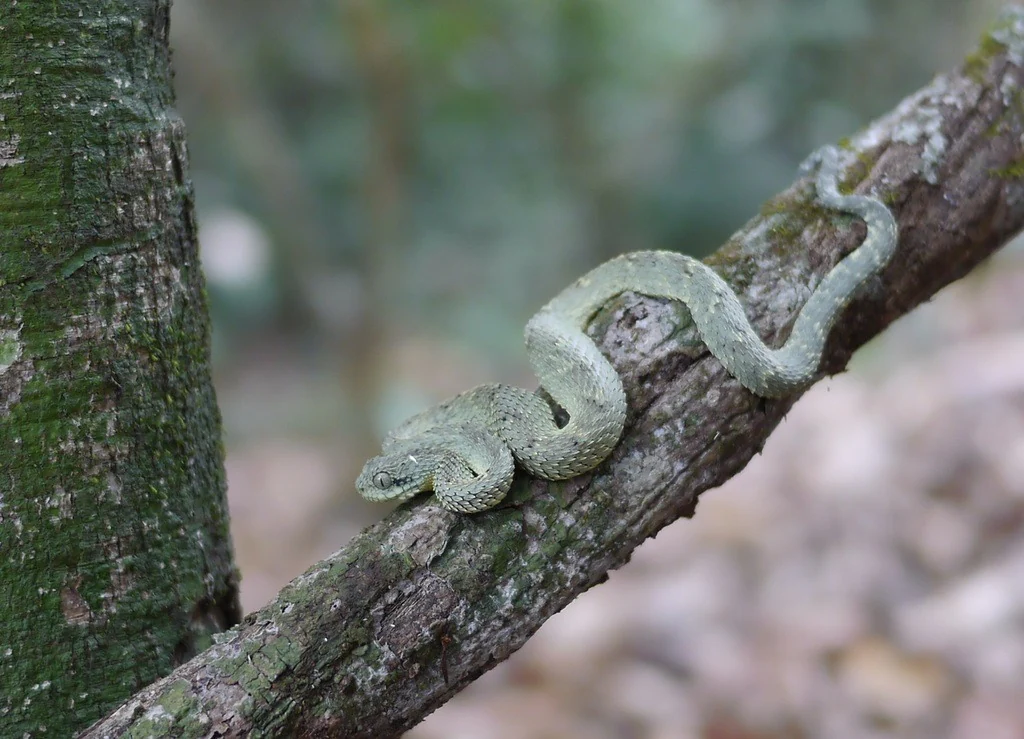
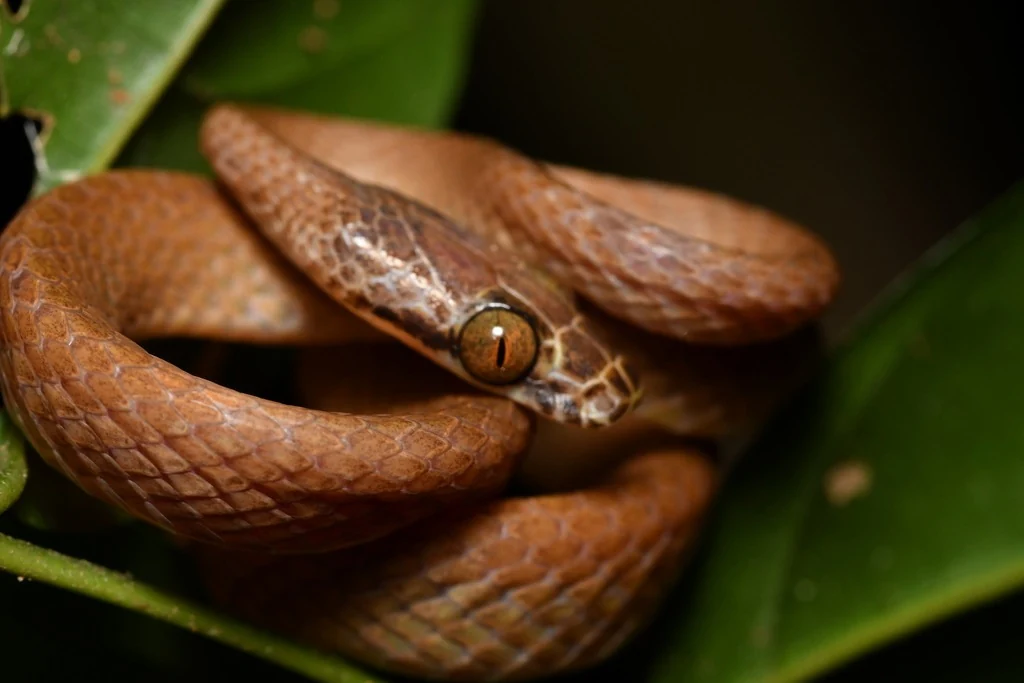
LamprophiidaeBoaedonPhotograph not yet documented

007 · Lamprophiidae

Striped House Snake

Boaedon lineatus

DUMÉRIL, BIBRON & DUMÉRIL, 1854

Non-venomous

The current taxonomic treatment explicitly lists this country. This is country-scale checklist evidence, not a claim of continuous occupancy or a complete regional inventory. Okwangwo Division, Cross River National Park, Nigeria, 1998–2001: Table 1 records this species with voucher catalogue number(s) 038. Cross River State belongs to the South South…

Read the species account →
Boaedon olivaceus; Atiwa West, Ghana; photographed 2025-02-26.

008 · Lamprophiidae

Olive House Snake

Boaedon olivaceus

(DUMÉRIL, 1856)

Non-venomous

The current taxonomic treatment explicitly lists this country. This is country-scale checklist evidence, not a claim of continuous occupancy or a complete regional inventory.

Read the species account →

Zac Peterson · CC BY 4.0 · https://creativecommons.org/licenses/by/4.0/

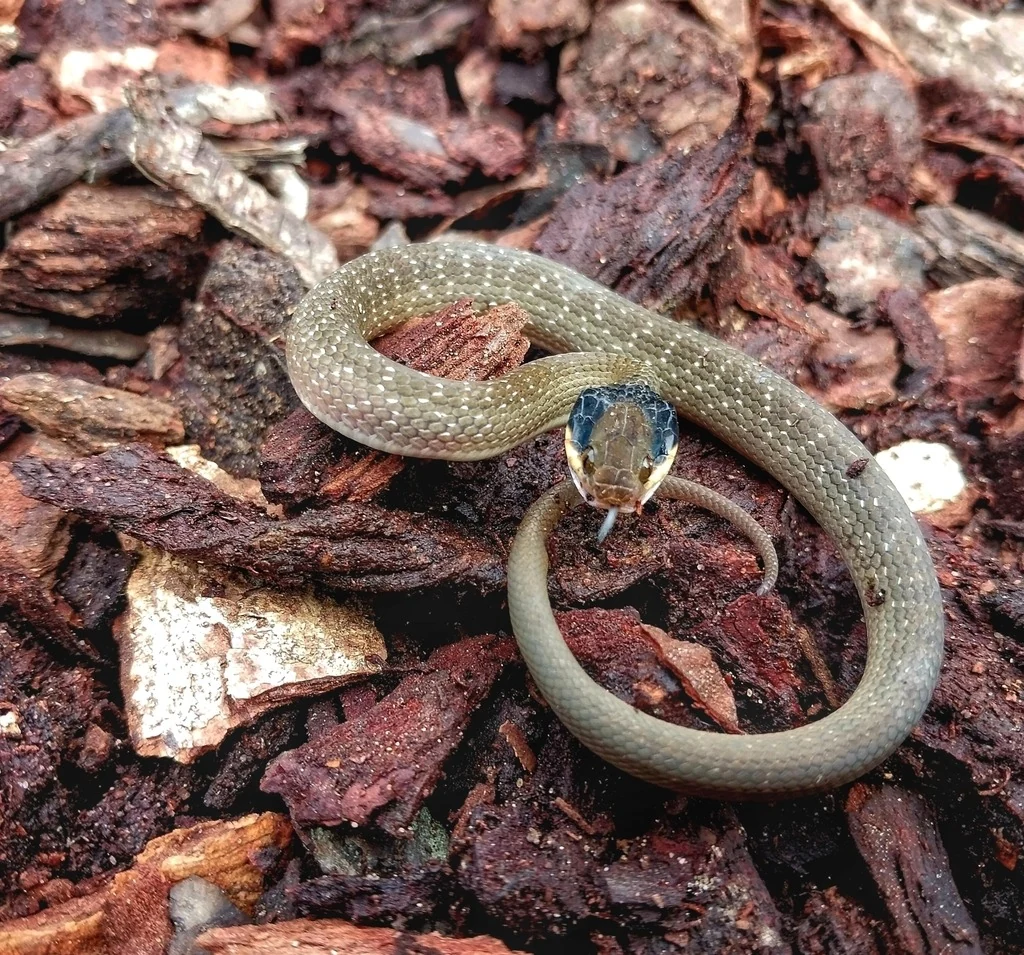
Bothrophthalmus lineatus; 3FM6+29 Koakpo, Liberia; photographed 2021-10-24.

009 · Lamprophiidae

Red-Black Striped Snake

Bothrophthalmus lineatus

(PETERS, 1863)

Non-venomous

The current taxonomic treatment explicitly lists this country. This is country-scale checklist evidence, not a claim of continuous occupancy or a complete regional inventory.

Read the species account →

no rights reserved · CC0 · https://creativecommons.org/publicdomain/zero/1.0/
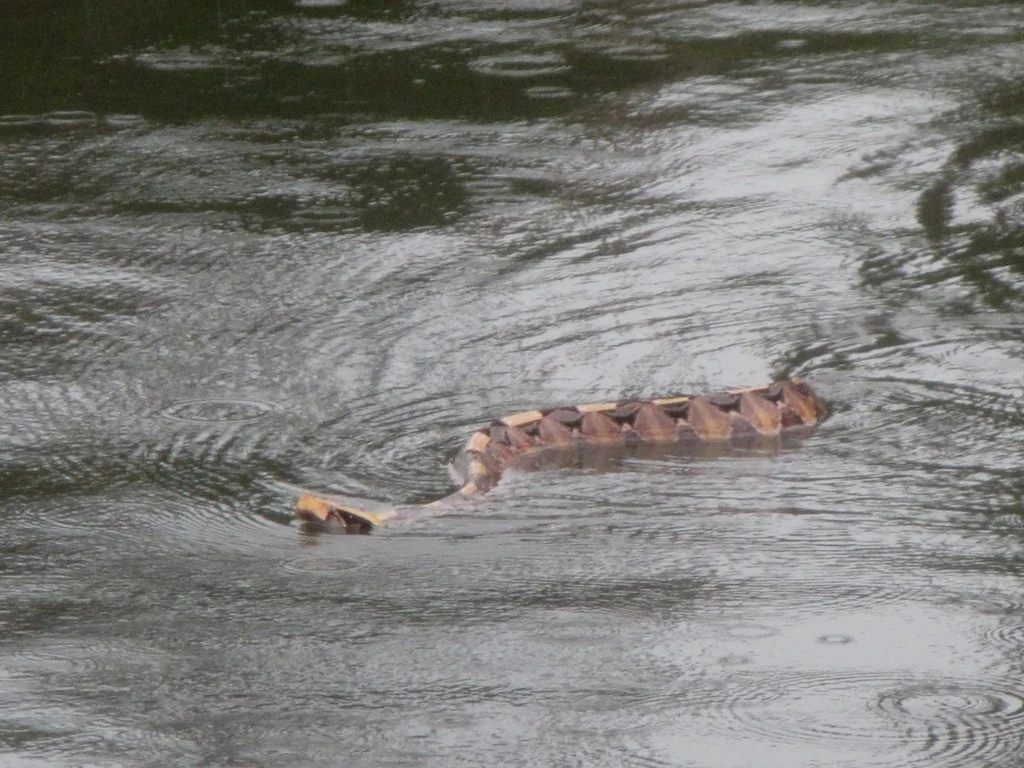
Calabaria reinhardtii; Loandjili, CG-KO, CG; photographed 2014-04-30.

010 · Boidae

Calabar Ground Python, African Burrowing Python

Calabaria reinhardtii

(SCHLEGEL, 1851)

Non-venomous

The current taxonomic treatment explicitly lists this country. This is country-scale checklist evidence, not a claim of continuous occupancy or a complete regional inventory. Luiselli & Akani (1999), study area p. 100 and species-specific records in Table 2 p. 104, June–September 1997. Akwa-Ibom belongs to the South South atlas group. The surrounding…

Read the species account →

no rights reserved · CC0 · https://creativecommons.org/publicdomain/zero/1.0/
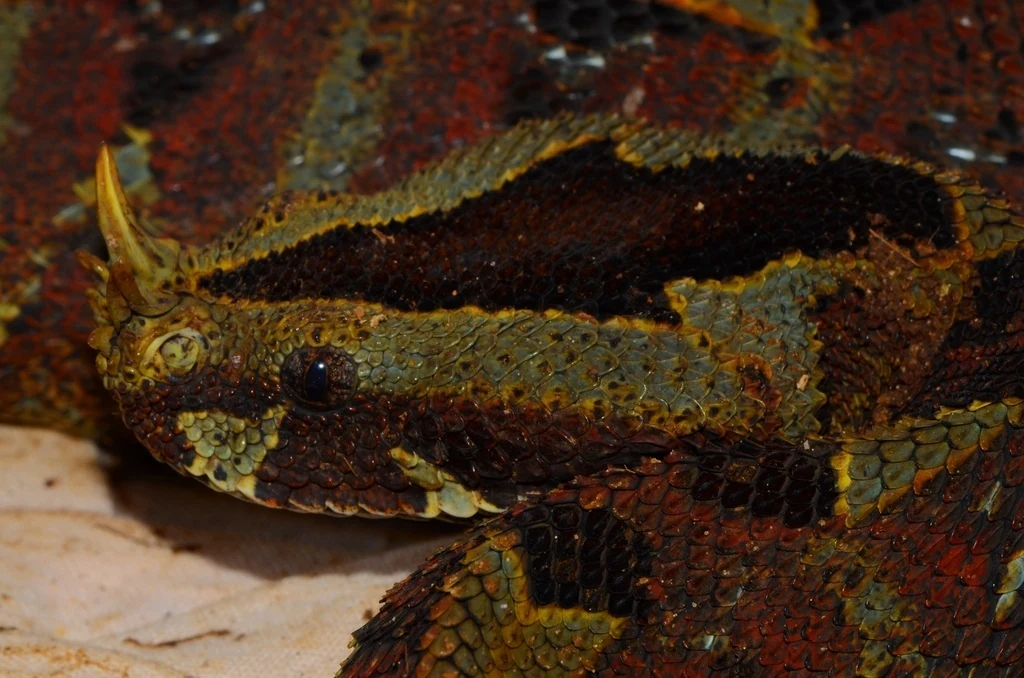
Causus maculatus; Lesio-Louna Reserve - Iboubikro, Republic of the Congo; photographed 2006-07-20.

011 · Viperidae

Spotted Night Adder, West-African Night Adder

Causus maculatus

(HALLOWELL, 1842)

VenomousClinical severity not established

The current taxonomic treatment explicitly lists this country. This is country-scale checklist evidence, not a claim of continuous occupancy or a complete regional inventory. Okwangwo Division, Cross River National Park, Nigeria, 1998–2001: Table 1 records this species with voucher catalogue number(s) 008, 010, 011, 021, 027. Cross River State belongs to…

Read the species account →

Tony King · CC BY 4.0 · https://creativecommons.org/licenses/by/4.0/

Crotaphopeltis hotamboeia; Campher's Drift, George, 6529, South Africa; photographed 2023-10-13.

012 · Colubridae

White-lipped Herald Snake, Red-lipped Snake

Crotaphopeltis hotamboeia

(LAURENTI, 1768)

Venom unknownNot yet assessed

The current taxonomic treatment explicitly lists this country. This is country-scale checklist evidence, not a claim of continuous occupancy or a complete regional inventory. Luiselli & Akani (1999), study area p. 100 and species-specific records in Table 2 p. 104, June–September 1997. Akwa-Ibom belongs to the South South atlas group. The surrounding…

Read the species account →

no rights reserved · CC0 · https://creativecommons.org/publicdomain/zero/1.0/
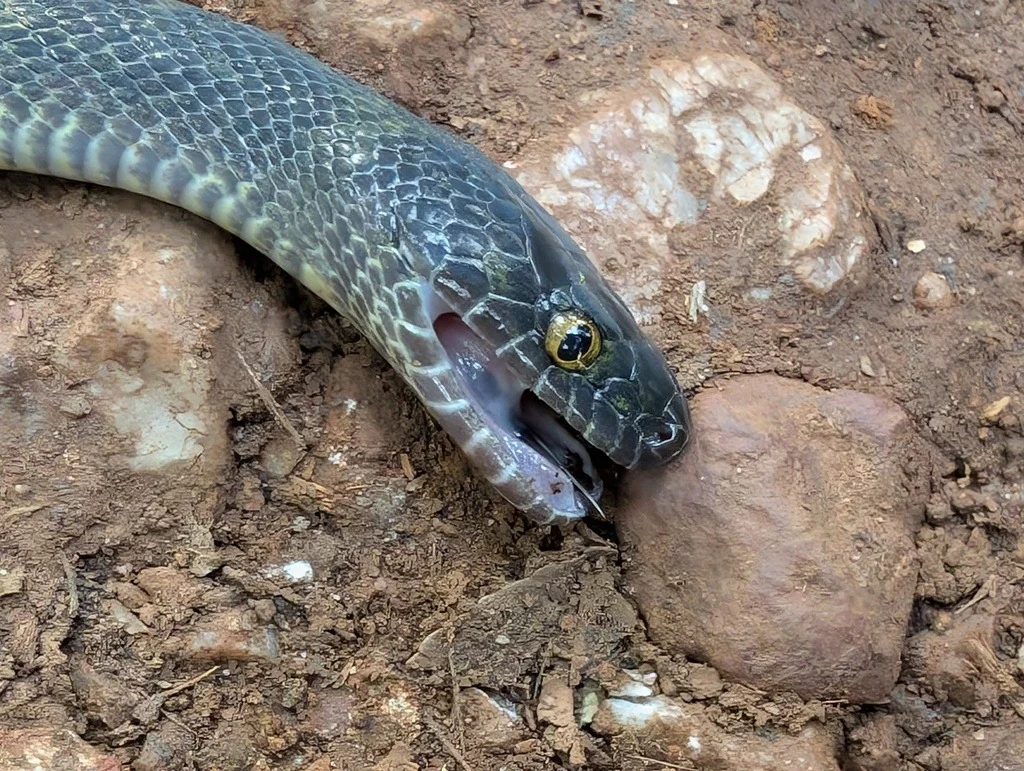
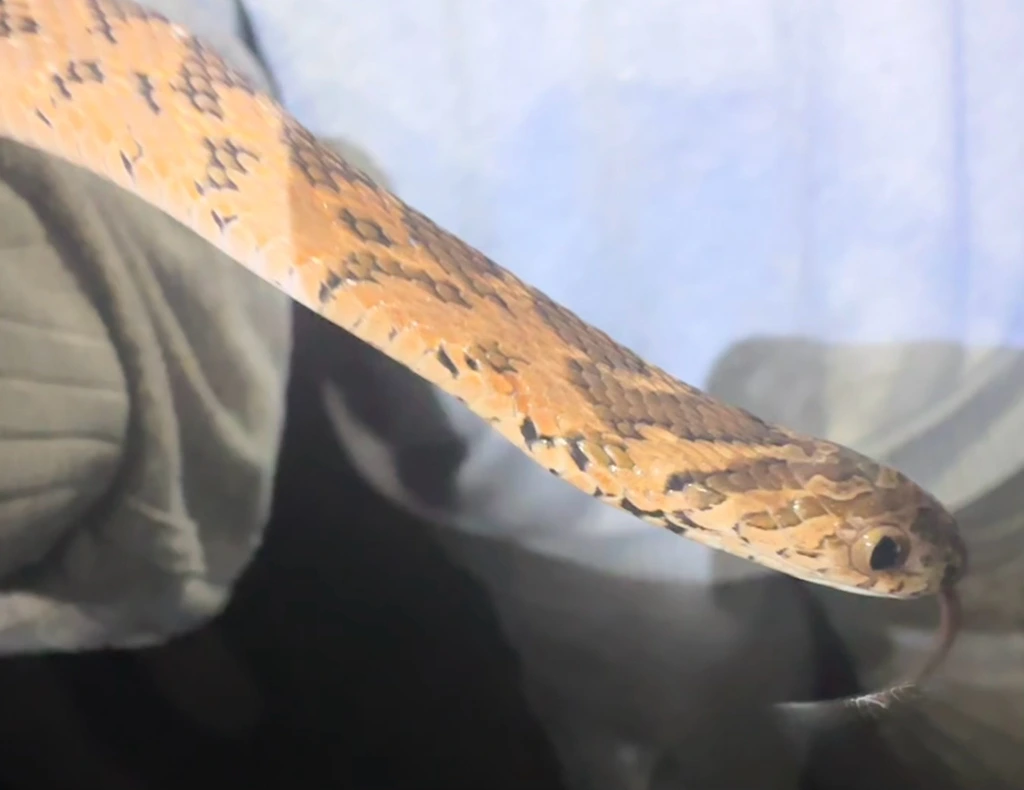
Dasypeltis confusa. Photographed through a transparent container in Angola; this is a handled specimen portrait. Original observation dated 2024-10-30; this portrait does not establish occurrence in other countries.

013 · Colubridae

Diamond-back Egg-eater, Confusing Egg Eater

Dasypeltis confusa

TRAPE & MANÉ, 2006

Venom unknownNot yet assessed

The current taxonomic treatment explicitly lists this country. This is country-scale checklist evidence, not a claim of continuous occupancy or a complete regional inventory.

Read the species account →

Robert Taylor · CC BY 4.0 · https://creativecommons.org/licenses/by/4.0/

Dasypeltis fasciata; Benso Oil Palm Plantation, Western Region, Ghana; photographed 2006-08-30.

014 · Colubridae

Western Forest Eggeater, Central African Egg-eating Snake

Dasypeltis fasciata

SMITH, 1849

Venom unknownNot yet assessed

The current taxonomic treatment explicitly lists this country. This is country-scale checklist evidence, not a claim of continuous occupancy or a complete regional inventory.

Read the species account →

B. Phalan · CC BY 4.0 · https://creativecommons.org/licenses/by/4.0/

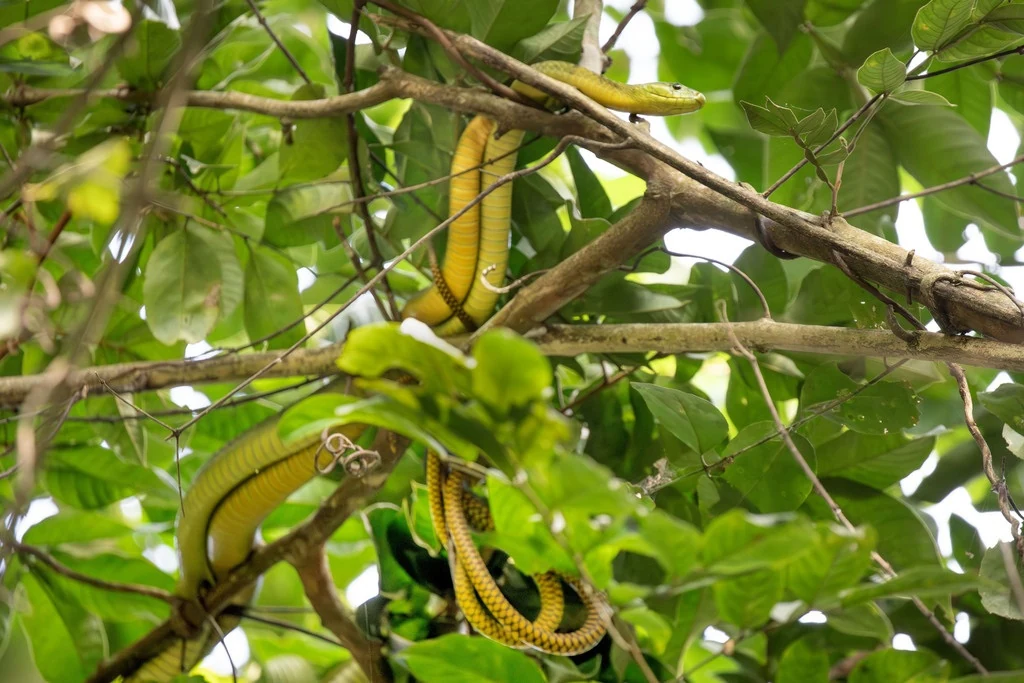
Dendroaspis jamesoni, photographed 2025-06-28. Identification follows the linked research-grade observation.

015 · Elapidae

Jameson’s (Green) Mamba

Dendroaspis jamesoni

(TRAILL, 1843)

VenomousClinical severity not established

The current taxonomic treatment explicitly lists this country. This is country-scale checklist evidence, not a claim of continuous occupancy or a complete regional inventory. Luiselli & Akani (1999), study area p. 100 and species-specific records in Table 2 p. 104, June–September 1997. Akwa-Ibom belongs to the South South atlas group. The surrounding…

Read the species account →

Kristof Zyskowski · CC BY 4.0 · https://creativecommons.org/licenses/by/4.0/

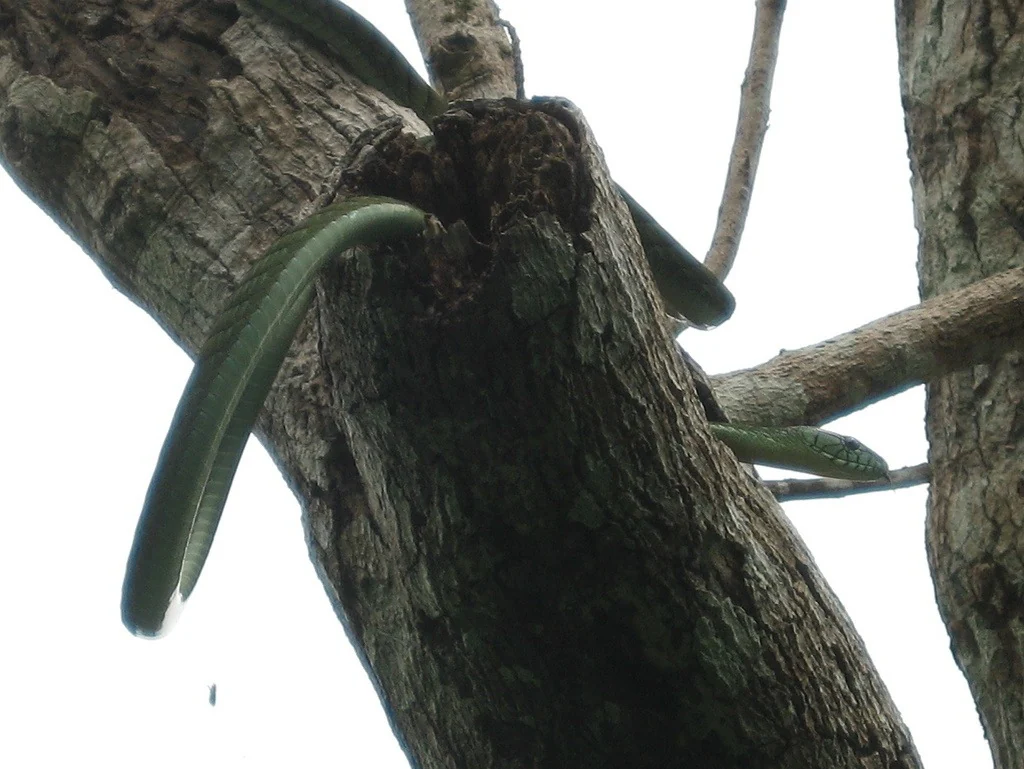
Dendroaspis viridis; Wassa West, Ghana; photographed 2007-08-21.

016 · Elapidae

Western Green Mamba

Dendroaspis viridis

(HALLOWELL, 1844)

VenomousClinical severity not established

The current taxonomic treatment explicitly lists this country. This is country-scale checklist evidence, not a claim of continuous occupancy or a complete regional inventory.

Read the species account →

B. Phalan · CC BY 4.0 · https://creativecommons.org/licenses/by/4.0/

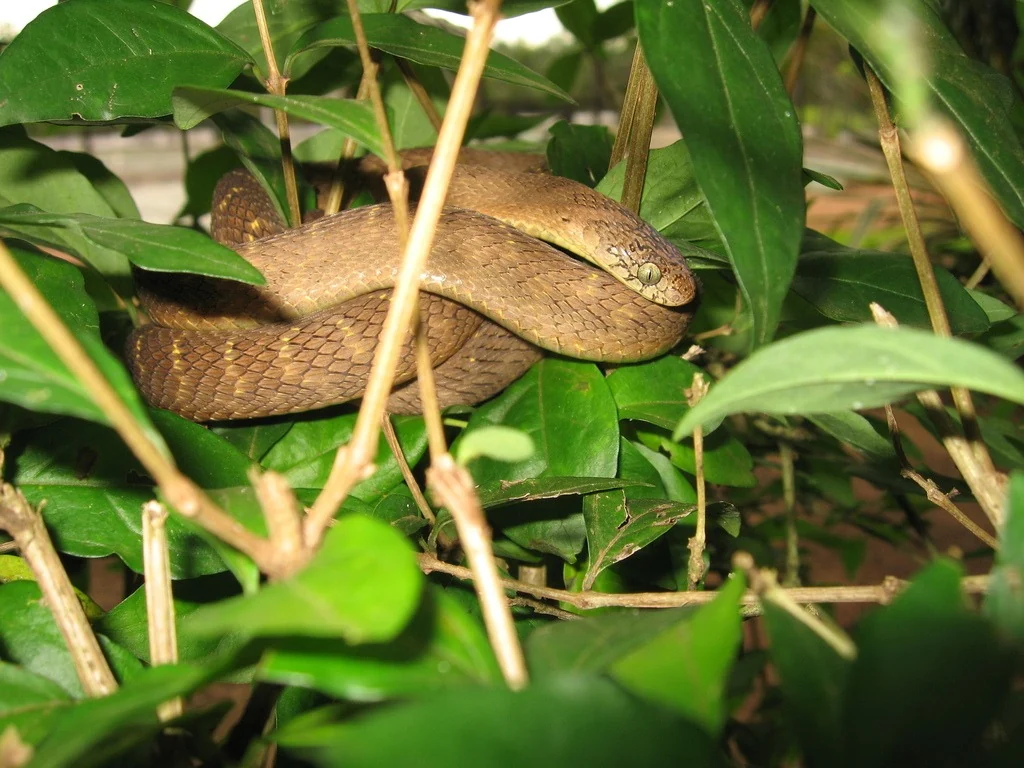
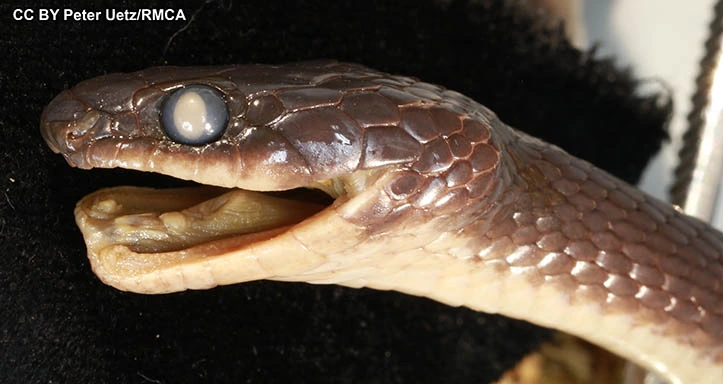
Dipsadoboa unicolor, preserved museum specimen RMCA 9386, head and anterior body, left lateral view. Photograph from the reference-image collection of Uetz et al. (2024).

017 · Colubridae

Günther's Green Tree Snake

Dipsadoboa unicolor

GÜNTHER, 1858

Venom unknownNot yet assessed

The current taxonomic treatment explicitly lists this country. This is country-scale checklist evidence, not a claim of continuous occupancy or a complete regional inventory.

Read the species account →

Peter Uetz / RMCA · CC BY 4.0 · https://creativecommons.org/licenses/by/4.0/

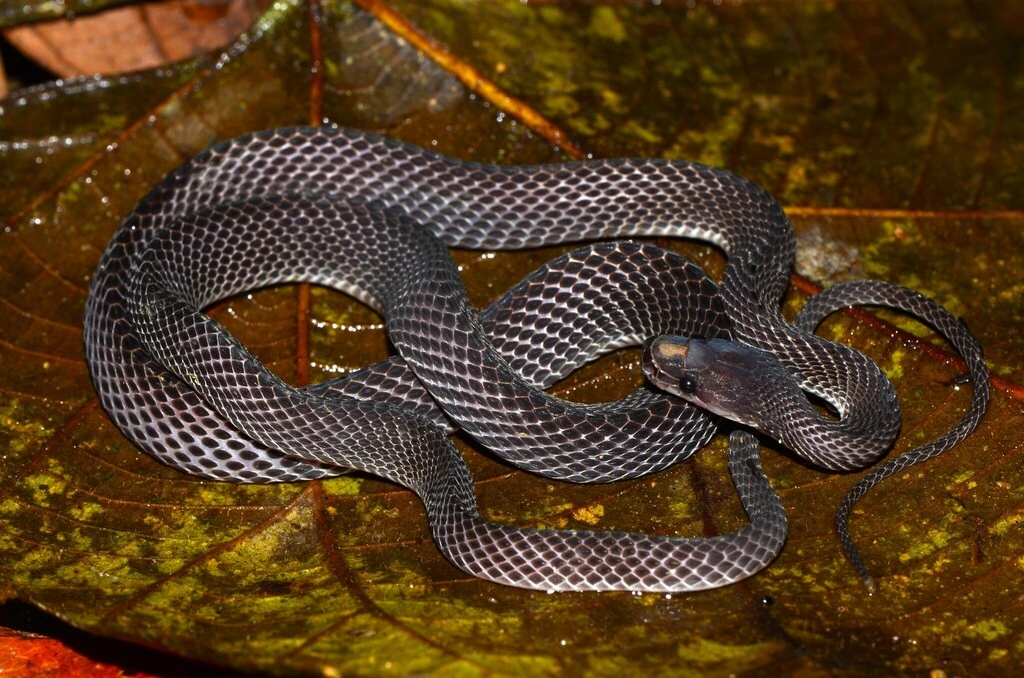
Gonionotophis klingi. Specimen portrait from Liberia. Original observation dated 2021-10-24; this portrait does not establish occurrence in other countries.

018 · Lamprophiidae

Kling’s File Snake, Matschie's African Ground Snake

Gonionotophis klingi

MATSCHIE, 1893

Non-venomous

The current taxonomic treatment explicitly lists this country. This is country-scale checklist evidence, not a claim of continuous occupancy or a complete regional inventory.

Read the species account →

no rights reserved · CC0 1.0 · https://creativecommons.org/publicdomain/zero/1.0/
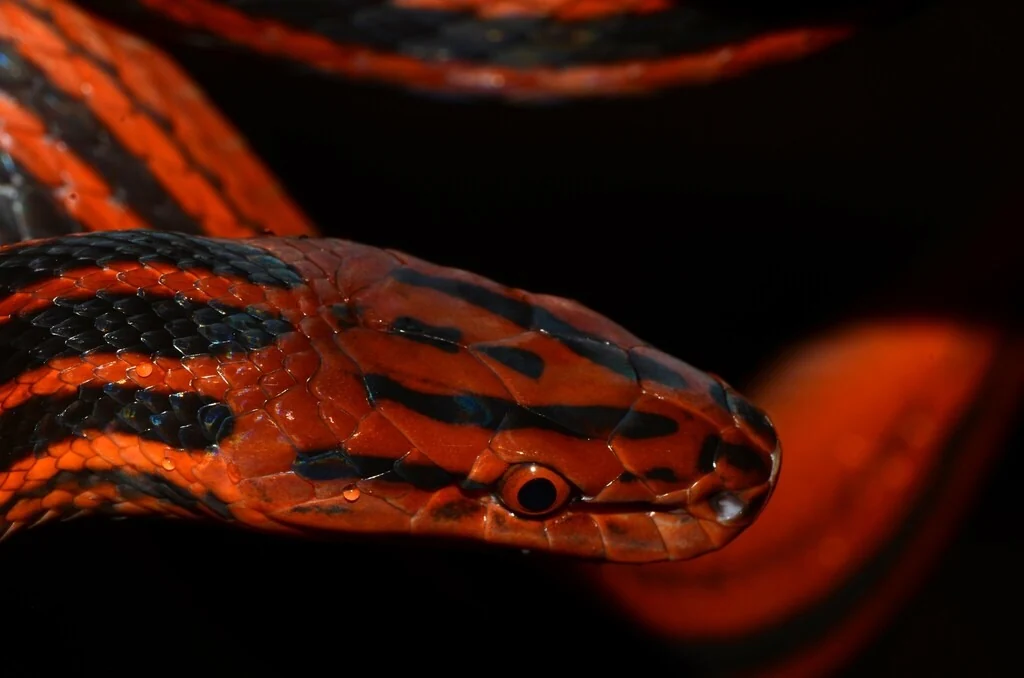
Grayia smithii; Forêt Classée du Kou, Burkina Faso; photographed 2010-02-09.

019 · Colubridae

Smith's African Water Snake

Grayia smithii

(LEACH, 1818)

Venom unknownNot yet assessed

The current taxonomic treatment explicitly lists this country. This is country-scale checklist evidence, not a claim of continuous occupancy or a complete regional inventory. Luiselli & Akani (1999), study area p. 100 and species-specific records in Table 2 p. 104, June–September 1997. Akwa-Ibom belongs to the South South atlas group. The surrounding…

Read the species account →

martin ingemansson · CC BY 4.0 · https://creativecommons.org/licenses/by/4.0/

Hapsidophrys smaragdina, photographed 2022-06-25. Identification follows the linked research-grade observation.

020 · Colubridae

Emerald Snake

Hapsidophrys smaragdina

(SCHLEGEL, 1837)

Venom unknownNot yet assessed

The current taxonomic treatment explicitly lists this country. This is country-scale checklist evidence, not a claim of continuous occupancy or a complete regional inventory. Luiselli & Akani (1999), study area p. 100 and species-specific records in Table 2 p. 104, June–September 1997. Akwa-Ibom belongs to the South South atlas group. The surrounding…

Read the species account →

Roland Godon · CC BY 4.0 · https://creativecommons.org/licenses/by/4.0/

Hormonotus modestus; Cavally, Côte d'Ivoire; photographed 2022-07-29.

021 · Lamprophiidae

Uganda House Snake, Yellow Forest Snake

Hormonotus modestus

(DUMÉRIL, BIBRON & DUMÉRIL, 1854)

Venom unknownNot yet assessed

The current taxonomic treatment explicitly lists this country. This is country-scale checklist evidence, not a claim of continuous occupancy or a complete regional inventory.

Read the species account →

no rights reserved · CC0 · https://creativecommons.org/publicdomain/zero/1.0/
LamprophiidaeLimaformosaPhotograph not yet documented

022 · Lamprophiidae

African File Snake, Crosse’s File Snake

Limaformosa crossi

(BOULENGER, 1895)

Non-venomous

The current taxonomic treatment explicitly lists this country. This is country-scale checklist evidence, not a claim of continuous occupancy or a complete regional inventory. Luiselli & Akani (1999), study area p. 100 and species-specific records in Table 2 p. 104, June–September 1997. Akwa-Ibom belongs to the South South atlas group. The surrounding…

Read the species account →

All 124 species in the country collection →

Read further

Evidence & sources.

Guide reviewed 12 October 2026. Source dates and geographic scope matter; landscape photographs do not establish species occurrence.

  1. Convention on Biological Diversity · Nigeria national profile

    Historical draft prepared by the CBD Secretariat; awaiting Party approval. Used for landscape context; older statistics are not presented as current monitoring or a snake inventory.

Continue through Nigeria

Explore another habitat.

01

Savanna & grassland

Semi-arid savanna forms one end of Nigeria’s national ecosystem range. It should not be treated as equivalent to southern rainforest.

02

Mangroves & tidal woodland

The Niger Delta supports extensive mangrove habitat. Tidal woodland and freshwater swamp are related but distinct environments.