Pressures and evidence limits
The source describes historical river regulation and marsh drainage as important changes to this landscape. Present water levels require dated local observations.
Sources: UNESCO · Hortobágy
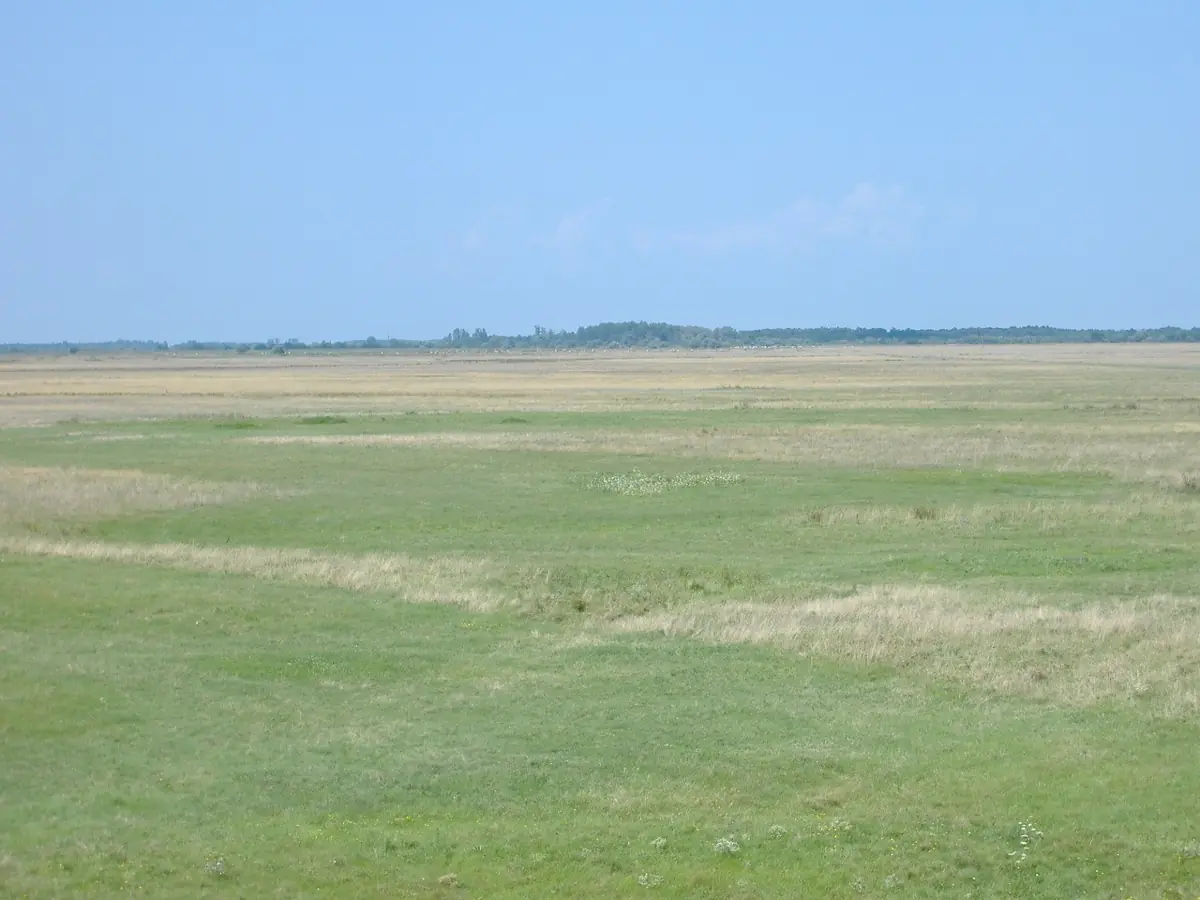
Hungary · Habitat field guide
Explore Hortobágy through the documented landscape and its visible structure. The named example anchors this guide; it does not represent every habitat in the country.
The open Hortobágy plain, Hungary; temperate steppe rather than tropical savanna.
Understanding the environment
Explore Hortobágy through the documented landscape and its visible structure. The named example anchors this guide; it does not represent every habitat in the country.
Explore the structure · Grass cover → rocky opening → wet depression
Select a zone to see what changes.
Continuity of cover
Describe vegetation height and continuity if visible. A wide horizon does not establish untouched grassland.
Keep observation date, photographed place and the source description distinct.
A conceptual reading sequence, not a mapped transect or an invitation to enter restricted terrain.
Sources: UNESCO · Hortobágy
Field notes · 01
Hortobágy is an open, alkaline steppe landscape on the Great Hungarian Plain, with short grass, marshes and managed fishponds. It belongs here to the atlas's broad open-habitat category, not to tropical savanna.
Sources: UNESCO · Hortobágy
Field notes · 02
The shared open-habitat category includes steppe here. Compare grassy cover, sparsely wooded ground, rock outcrops and wet depressions. Do not substitute tropical savanna assumptions for the documented continental setting. Seasonal appearance and long dry-wet cycles can be different signals.
Pressures on Hungary’s habitats
The source describes historical river regulation and marsh drainage as important changes to this landscape. Present water levels require dated local observations.
Sources: UNESCO · Hortobágy
Keep landform, water, vegetation and land use separate when reading the landscape. Use the linked species accounts for independently sourced distribution evidence.
The connected collection
These 1 species have supported country occurrence and an explicit habitat association in the shared account. The association may come from elsewhere in their range. This is not a complete local habitat inventory; the places above are landscape examples, not asserted collecting sites.
1 species · showing 1
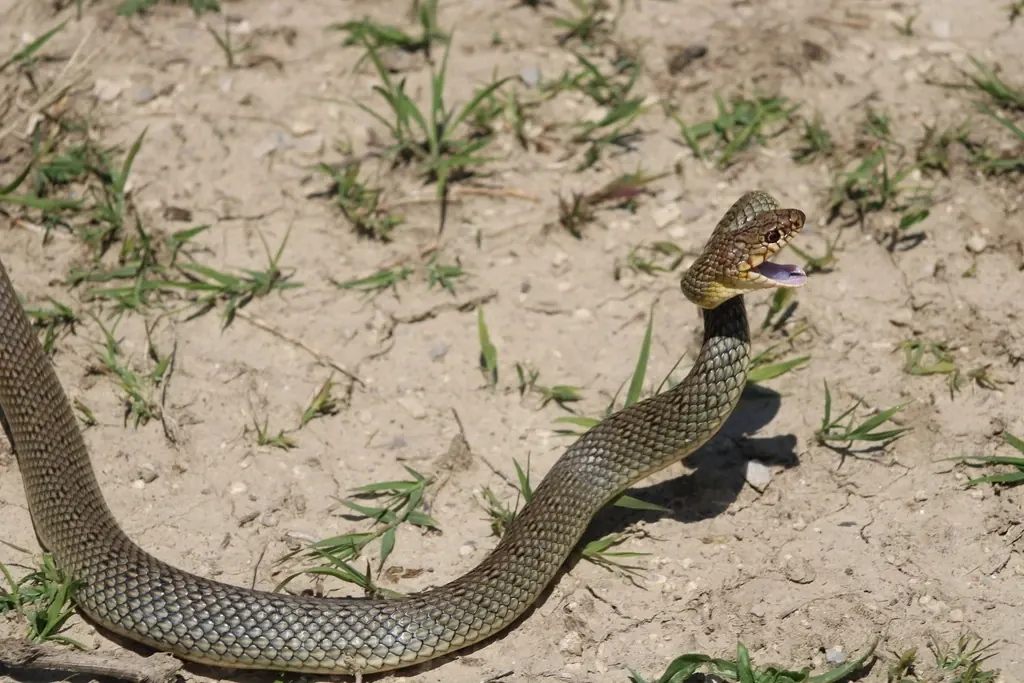
001 · Colubridae
Species account
Country explicitly listed in the checked taxonomic treatment. Five adult snakes were radio-tracked during 2016–2019 in a semi-natural landscape at Pesthidegkút, Budapest. This establishes a surveyed local population; it does not establish occupancy throughout the surrounding region. Winter-refuge coordinates are deliberately omitted.
Read the species account →Philip Schaffer · CC BY 4.0 · https://creativecommons.org/licenses/by/4.0/
Read further
Guide reviewed 11 October 2026. Source dates and geographic scope matter; landscape photographs do not establish species occurrence.
Named landscape description, read and checked 11 October 2026. Historic source dates remain explicit; not a snake survey or live access notice.
Continue through Hungary